


Likes
Comments
Share


@Grow4Releaf
Follow
/nov 30th.
Got days left now getting there tho, in no rush but good bit of milky/cloudy but coming down soon.
...
She's done basically .
Her sister was getting ready to be cut sat in a dark area at the new house.
Things got alil behind having to move locations like this.
But will be updating for a harvast shortly.
Stoked how these are smelling and looking!!
Be back soon with the proper updating. Just need to get situated .

Likes
12
Share


@Chubbs
Follow
420Fastbuds-FBA2510
I'm excited as it's tester time. Germination week is complete. I planted 3 seeds and had all 3 sprout within 48hrs of being in the soil. I do soak them for 48hrs in a glass of water before planting. I can't wait to see what the weeks to come will have in store. Happy Growing


Likes
71
Share


@Mosquito_Haarlem
Follow
Hoi leuk dat je een kijkje neemt.
Week 9 is begonnen en ze gaat onverstoord verder.( ik maak een telfout 🤦♂️🏽 eigenlijk begint week 9 over 2 dagen 😆)
Prachtige kleuren bladeren en de toppen worden dikker en dikker. Ze is eigenlijk te groot voor de tent, de hoofdtop staat 15 cm van de lamp verwijderd. Veel te dichtbij eigenlijk.
Heb niet al te veel bladeren weggeknipt (defoliation). Minimaal.
Ze drinkt wel zeer veel. Bijna anderhalf liter per dag.
Laten we kijken hoe zij zich deze week weet te ontwikkelen. 🧐
Ik zal gedurende de week nog verse foto's updaten, dus hou het in de gaten.
To be continued....
Day 59 begonnen met toevoegen van sugar royal

Processing
Likes
4
Share


@zombikush81
Follow
05/04/19#Friends for the moment I put two of the 5 girls into bloom.

Likes
18
Share


@GrowingisFunkO
Follow
Week 16 - 06/28 - 07/04
Light - 200 W HPS & 265 W LED
Day Temperature - 78 F
Night Temperature - 68 F
Humidity - 40 +/-5
D59 Flower - Came home from vacation to some fat sugar coated buds! I flushed them with FloraKleen and molasses, this should be the last one before I snip down the main colas. Since they are close to harvest, I spent about an hour defoliating so harvest will go a little quicker.
D60 Flower - So I pulled the ladies out to breathe, take pics, and to do a partial harvest. I cut the main colas off of all the plants and am allowing the lower bud sites to dense up. Until I harvest the lower part, here is the wet weight by plant: RG 1 - 177 g. RG 2 - 214 g. RG Clones - 88

Likes
21
Share


@puffin_ganja
Follow
Reduced base nutes and overall PPMs to about 800. Running 2.5 tsp of MKP (Mono Potassium Phosphate) per 50 gallon res.


Likes
3
Share


@mr_smooke
Follow
harvest was 4 days ago. she ended in 107 days of life of that 57 days in flowering. This girl grew some big and beautiful buds, the biggest buds of the tent. She grew stocky and short and smelling on forest fruit and of course that dank cannabis smell. buds will be in a dry box for 5-7 days. and then I will know the result of wight and taste. other info will update in a few days whit dry buds

Likes
5
Share


@Ensign420
Follow
Greetings fellow growers 🖖 and welcome to my first grow ever. This adventure actually started several months ago when I decided to stop buying flower from dispensaries and just grow my own bud. How hard can it be!?
This is actually my second seed of this strain. The first bean sadly died due to over watering (sorry girl, RIP). I was literally watering the cube to the point where water was dripping from the bottom, then heavily sprayed the humidity dome and tray with the vents completely closed. Everyday. Multiple times. I never let the dome or try dry out. So after about 8 days of not sprouting, there was a funky smell of rot. So that was that.
Later I learned that rockwool retains a lot of water and can easily drown seeds. So a wet/dry cycle is best for rockwool germination.
So even after hours of researching and digging through forums and tutorial videos, I was still under prepared for this journey. Did not consider how delicate the germination phase is. Oh well. Lesson learned. Reset and try again!
I hope everyone is safe and stoned during this corona crisis. Just like everyone else in the world, I want this pandemic to be over with. But in the meantime, let's grow some weed! 🖖
[START OF WEEK 01]
Day 01 - Monday - 08/03/20 - Total Days: 001
-----------------------------------
- [0830]: Light Schedule: 24Hrs/0
--- Soaked cube in 5.5 PH water for 10 min. Did not shake water out.
--- NO NUTES! Only PH'd down to control the PH levels.
--- Did not use the default hole (way too deep).
--- Flipped cube upside down and made a shallow hole for the seed (less than 0.25" deep).
--- Placed seed in and pinched hole close. No additional water added.
--- Sprayed the tray and dome with straight water (5.5 PH).
--- Vents are cracked opened a for ventilation (about 1/4 opened each).
--- Distance between the light and tray was 53"
--- AC was set to 80 °F
--- Exhaust fan was set to 86 °F
--- Room average temp was at 85 °F
--- Dome humidity was at 85-99% when sprayed.
--- Allowing to completely dry before respraying.
- [2200]: Dome and tray were completely dry! Sprayed only tray and dome with more water.
Day 02 - Tuesday - 08/04/20 - Total Days: 002
-----------------------------------
- [0845]: Sprayed dome and tray in the morning. Everything was dry.
--- Hoping for the best!
- [2130]: Everything was dry again, so sprayed dome and tray at night along with a light spray on the cube.
Day 03 - Wednesday - 08/05/20 - Total Days: 003
-----------------------------------
- [0830]: Everything was dry again. Resprayed dome and tray. Slightly sprayed cube.
- [2125]: Hooo damn!! She popped! Am little stub is visible! Resprayed dome and tray again.
--- Still going 24/0 for lights.
- [+0033]: Just checked up on her and I swear she grew a bit taller! Getting excited!
Day 04 - Thursday - 08/06/20 - Total Days: 004
-----------------------------------
- [0845]: Wow! Went from a little stub to fully sprouted overnight! Everything was pretty dry again so resprayed dome and tray.
- [2200]: Tap root is visible! Over 1" long too! Just resprayed dome and tray again.
-- Going to prep for hydroton transplant tomorrow!
Day 05 - Friday - 08/07/20 - Total Days: 005
-----------------------------------
- [0930]: She keeps growing!
-- Added a bit of CalMag to the spray bottle (8 drops to 650ml of distilled water). Resprayed dome and tray. Water was at a 5.4 PH with 141 PPM.
- [1045]: Prepped the bubble bucket with 4.5gal of water. Water is high enough to reach about 0.25" above the bottom of the net pot.
--- Added 3 drops of Superthrive
--- Added 3.5ml of CaliMagic
--- Added 2ml Hydroguard
--- Then PH'd down to 5.6
--- Solution Strengh: 120 PPM
--- Water chiller is set to 20 °C
- [1100]: Transplant time!
--- Filled the net basket 1/3 with hydroton. When placed in the bucket, air bubbles are not visible, but are slightly below the surface (slight digging will reveal the water/bubbles below).
--- Removed plastic on rockwool cube and placed in basket, then filled around and covered with hydroton. Making sure to block any light from passing through the net pot and into the nutrient solution.
--- Covered with a half-bottle dome sprayed with the CalMag water from earlier.
--- Hoping for the best!
- [1300]: Raised Bucket 5" higher. Now light distance is 48" to top of bucket.
- [1820]: Lowered tent exhaust temp to 76 °F
--- Lowered AC to 75 °F
--- Raised bucket even higher so light distance is 30" to top of bucket.
- [2300]: Looking good!
--- Sprayed dome and surrounding hydroton with more CalMag water.
--- Attached timer to light! So new 18 Hrs On/6 Hrs Off light schedule.
--- Lights On: [1600] (4pm)
--- Lights Off: [+1000] (10am the next day)
--- Decided to go with lights on during the evening/night and off during the later mornings/afternoon (the hottest part of the day) to see if temps can be controlled better.
--- Please survive girl!
Day 06 - Saturday - 08/08/20 - Total Days: 006
-----------------------------------
- [0800]: Everything was dry. Resprayed hydroton and dome.
- [2000]: Here first night cycle seemed to go well! Get'n taller!
--- Dry again. Removed the dome.
--- PH went up to 6.5 so PH'd down to 5.7
--- Ran the top feed drip ring for a bout a minute to wet the hydroton and rockwool with the nutient solution.
---Too scared to leave the top feed on 24hrs (I don't want over water her and cause dampening-off). Will let dry before re-watering.
- [2100]: After closer inspection, I think she's looking a bit yellow.
--- Decided to add a bit of grow nutes to the bubbler solution.
--- Added 2ml of Sensi Grow A
--- Added 2ml of Sensi Grow B
--- Solution strength after adding more nutes: 176 PPM
--- PH went up to 6
--- I hope that the extra chelating properties of the 'PH Perfect' solution is enough of a buffer for proper nutrient uptake.
Day 07 - Sunday - 08/09/20 - Total Days: 007
-----------------------------------
- [0800]: Water dropped a bit (mostly due to evaporation) so solution strength was at 190.
--- Checked PH again. Was still at 6, so PH'd down to 5.4
--- Ran the top feed for a minute to wet the hydroton a bit.
- [0915]: Since she's looking perky but still a bit yellow. So decided to up the nutrient concentration even more before lights out.
--- Added 2ml more of Sensi Grow A
--- Added 2ml more of Sensi Grow B
--- Solution strength after adding more nutes: 199 PPM
--- PH went up to 5.8
- [1700]: Checked nutrients.
--- PH: 5.9
--- Solution strength: 202 PPM
--- Added 4ml of Voodoo Juice
--- Added 4ml of B-52
--- PH after adding more nutes: 5.9
--- Solution strength after adding more nutes: 238 PPM
- [2130]: Decided to make a new foliar spray to address the continued yellowing.
--- Started with 500ml of distilled water.
--- Added 3 drops of CaliMagic
--- Added 3 drops of Sensi Grow A
--- Added 3 drops of Sensi Grow B
--- Added 3 drops of B-52
--- Added 1 drop of Superthrive
--- Solution strength: 164 PPM
--- PH was at 5.9 and did not adjust.
--- Gave her one spray.
--- Also sprayed the surrounding hydroton.
[END OF WEEK 01]


Likes
24
Share


@Greensoul920
Follow
Day 7 from switch to 12/12, ladies are show first sign of flower and they are start to stretch! I had to put another scrog net to separate all branches and to sustain the future buds, still watering with simple compost the made of worm casting and kelp, I don’t measure ph or ppm cause I’m in living soil. Happy growing and I’ll see u next week✌️🍁


Likes
24
Share


@GreenthumbGreen
Follow
Started flowering, everything is fine but some leaves look bad, what do you think about reason?
Likes
233
Share


@Tropicannibis_Todd
Follow
🐶 🐕 🐶 🐕 🐶 🐕 🐶 🐕 🐶
So this diary is dedicated to my Big Boy Midnite 🐶
Due to his age and trouble with his hips , he needs a little help so I will be making him special CBD and CBG Treats ....
So keep in mind that I will be doing a Bubble Hash Water Extraction with the SDR and CBG once that's done and dried I will be Decarbing it by then placing it on a sheet of parchment paper and placing in over at 220 degrees F for 20 to 25 min to fully decarb it .
Get ready for a paw-some treat that your furry friend will go nuts for! These peanut butter CBD or CBG treats are made with wholesome ingredients like flour, rolled oats, and natural peanut butter. Perfect for a special treat or a relaxing snack, your pet will love these bite-sized delights!
Ingredients:
• 2 cups of flour
• 1 cup of rolled oats
• 1/2 cup of natural peanut butter
• 1/4 cup of water or beef and or chicken broth
• 2 teaspoons of decarbed CBD or CBG
Instructions:
• Preheat your oven to 350°F.
• In a large mixing bowl, mix together the flour, rolled oats, and natural peanut butter.
• Add in the water and or broth and the CBD or CBG, and continue to mix until well combined.
• Roll out the mixture to about 1/2 to 5/8 inch thickness on a lightly floured surface.
• Cut the mixture into bite-sized treats using a cookie cutter.
• Place the treats on a baking sheet lined with parchment paper.
• Bake for 20 minutes, or until lightly golden brown.
Allow the treats to cool completely before serving to your pet.
Who says bacon is just for humans? These CBD or CBG treats are made with a yummy mix of flour, rolled oats, and cooked bacon. Your pet will love the taste and the benefits of CBD or CBG in each bite.
Ingredients:
• 2 cups of flour
• 1 cup of rolled oats
• 1/2 cup of cooked bacon
• 1/4 cup of water or Chicken and Beef Broth
• 2 teaspoons of decarbed CBD or CBG
Instructions:
• Preheat your oven to 350°F.
• In a large mixing bowl, mix together the flour, rolled oats, and cooked bacon be sure to grind up the bacon.
• Add in the water and or broth as well as the CBD or CBG, and continue to mix until well combined.
• Roll out the mixture to about 1/2 or 5/8 inch thickness on a lightly floured surface.
• Cut the mixture into bite-sized treats using a cookie cutter.
• Place the treats on a baking sheet lined with parchment paper.
• Bake for 20 minutes, or until lightly golden brown.
Allow the treats to cool completely before serving to your pet.
Happy Growing And Happy Smoking and for all the Puppies out there Happy Snacking 😊
Side Note , I will be adding future pictures and video of the process of making the cookies as well as letting everyone know how it helped Midnite 🐶 Plus I will also give it a go and give my thoughts on the terps and the effects ...
👉Soil Provided by ProMix.ca
👉Nutrients Provided by Agrogardens
👉Lighting Provided by MarsHydro.ca
👉Seeds Provided by Kannabia Seeds
...

Likes
1
Share


@syguy83
Follow
Strawberry banana from permium clone, DHN. Day 5, Roots starting to develop, giving it 450ppm of nutes.

Likes
9
Share


@Hypnogrow
Follow
Recovery week. Last week everything went to hell this week everything is looking up. Squanch Queen is turning into my favorite one of the bunch. She is super resilient and bounced back quickly, the Skywalker and Quarter Pounder are both going to finish early due to all the stresses and stunting early on in the grow. Squanch Queen looks to be going 9 to 10 weeks inspite of all the issues. Definitely a good strain from Night Owl to pick up if your a beginner, much more forgiving. I definitely want to try the Skywalker again with a better setup. Ph runoff is looking much much better.


Likes
39
Share


@Hazecat_420
Follow
Se realizó una defoliación en la parte más baja y en las 2 hojas más grandes de la parte superior para que pudiera entrar de mejor manera la luz a los brotes más pequeños. Se aplicó Voodo Juice para las raíces y Top Bloom para la floración, ya todas tomaron de buena manera el cambio del fotoperiodo. Seguimos 👽 ...
Likes
35
Share

@squalino
Follow
bonjour à tous
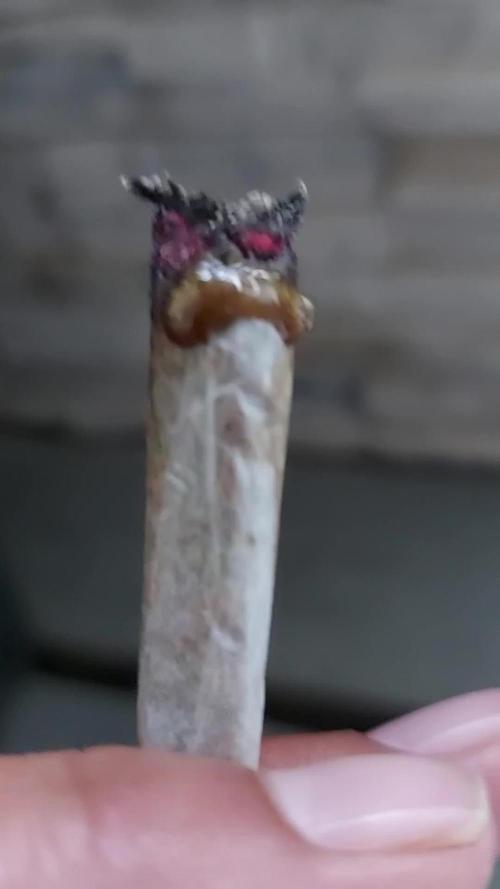
après quelques mois de curing voici la rosin de ma papaya .
je la trouve magnifique.
sa couleur a la lumière est splendide. on dirait de l'ambre.
à l'ombre elle paraît plus sombre .
sont goût tire dans le floral .un délice ❤️❤️❤️
ca puissance on en parle pas . un décollage au cerveau instantané. phénoménale.
Likes
34
Share


@MadeInGermany
Follow
Info:
Unfortunately, I had to find out that my account is used for fake pages in social media.
I am only active here on growdiaries.
I am not on facebook instagram twitter etc All accounts except this one are fake.
Have fun with the update.
Hey everyone 😃.
The lady grows exactly as she should 😍.
She looks beautiful and her growth is strong 👍.
I think that I will pot in 11 liters in the next few days.
Until then, I wish you lots of fun and all the best 😊
You can buy this Strain at :
https://www.exoticseed.eu/
Type:
Quick Sherbet
☝️🏼
Genetics:
75% Indica / 25% Sativa
Sunset Sherbet X Black Lemon
👍
Vega lamp:
2 x Todogrow Led
Quantum Board 100 W
💡
Bloom Lamp :
2 x Todogrow Led
Cxb 3590 COB 3500 K 205W
💡💡☝️🏼
Soil :
Canna Coco Professional +
☝️🏼
Fertilizer:
Green House Powder Feeding
☝️🏼🌱
Water:
Osmosis water mixed with normal water (24 hours stale that the chlorine evaporates) to 0.2 EC. Add Cal / Mag to 0.4 Ec Ph with Organic Ph - to 5.5 - 5.8 .

Likes
50
Share


@crimsonecho
Follow
going fine. that tip bleaching is here to stay :)
i’m defoliating and lollipopping everyday. couple of leaves here couple of leaves there a growth tip here a side shoot there..
watered yesterday with 3.5l or something. distilled dehum water.
caribe transitioned too fast. it didnt give me any stretch which was strange and cannalope as expected hasnt even started transitioning. i think caribe is gonna be overshadowed by the cannalope.
dinachem looks lighter in the photos but its not really that light green in color. dinachem x peyote cookies gave me more stretch than i expected but seed runs are always full of surprises haha they both finished stretching atm so they will start filling up in the coming weeks.
destroyers are fine too. yeah tip bleached a bit but leaves are very healthy otherwise. they feel soft and firm which is how they should feel. i’m plucking 10-20 leaves daily and it grows back the next day. they may give me a couple days of stretch but its not gonna grow much more than this. its not gonna double from here i mean and the 2nd destroyer is gonna be about 25% smaller than the 1st because as i mentioned not identical clones when transplanted but i’m still expecting exceptional yields and quality from both.
‘till next week!


