Likes
44
Share
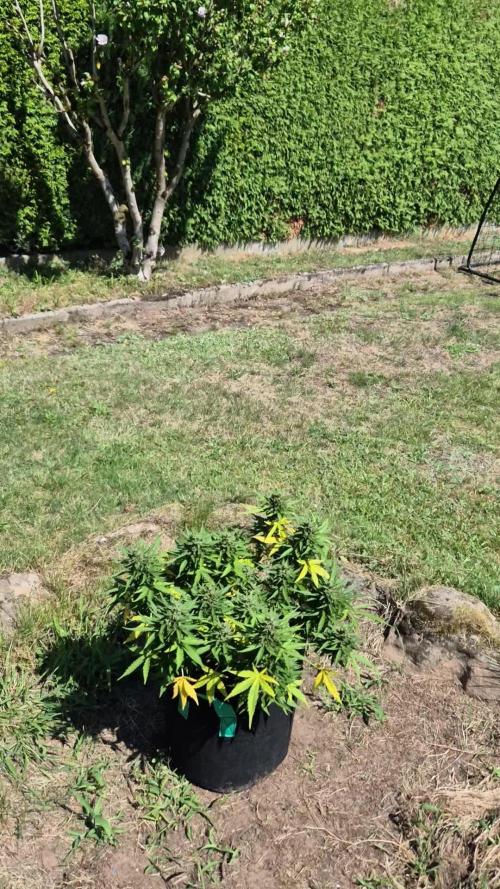
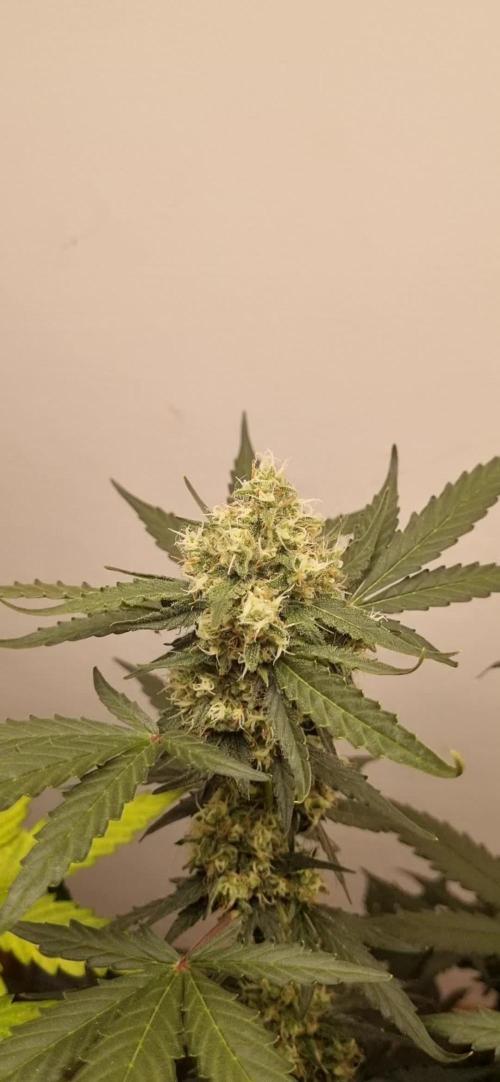
Unfortunately, I had to find out that my account is used for fake pages in social media. I am only active here on growdiaries. I am not on facebook instagram twitter etc All accounts except this one are fake. Hey everyone :-). The clone is developing well :-). Again it is very nice to see how explosive the growth is at Aerophonic is . As soon as it goes into the veggie phase, I will start training (topping) right away :-). After a maximum of 1 week of training, the net will be tensioned and you will be in bloom because you only need very little vegetarian phase with Aerophonic :-). This week the hood remains over the lady so that the humidity remains at 70% approx. Otherwise everything was kept clean and checked. Have fun and stay healthy 🙏🏻 You can buy this Strain at www.Zamnesia.com Type: Runtz ☝️🏼 Genetics: Zkittlez X Gelato 👍 Vega lamp: 2 x Todogrow LED CXB3590 COB 55 W 1 x Sanlight S2W 62 W 💡 Flower lamp : 2 x Todogrow LED CXB3590 COB 55 W 1 x Sanlight S2W 62 W 💡 ☝️ Grow Aero System : Growtool 0.8 ☝️ Fertilizer: Canna Aqua Vega A + B , Canna Aqua Flores A + B , Rizotonic, Cannazym, CANNA Boost, Pk 13/14, Canna Cal / Mag, Canna Ph - Grow, Canna Ph-Bloom ☝️🌱 Water: Osmosis water mixed with normal water (24 hours stale that the chlorine evaporates) to 0.2 EG. Add Cal / Mag to 0.4 Ec Ph with ph- to 5.2 - 5.8 💦 💧
Likes
8
Share
@Salokin
Follow
Week went again very uneventful. The plant does what she is supposed to be doing (gaining weight) :). Still lots of new pistils appearing overnight, I am checking the Trichomes daily, however, everything remains milky, with only very little % of amber trichomes. Once amber colours start increasing I will start flushing.
Likes
2
Share
@draco
Follow
awesome strain😍🙌 especialy who loves indica)) For the first time I grew such a beautiful bush. Blueberries were really felt in the aroma, but after drying and treatment, the cones acquired the smell of beta-caryophyllene - a very strong smell)) The effect is very relaxing and kills (!), it seems to me that I have delayed the harvest a little, so these bumps are equal to a tranquilizer, in addition, there is also gluttony, as well as a slight euphoria. For 12 weeks from the seeds, with the mode 18 6, LED 200W , 12 liters and with my new favorite fertilizers Advanced Nutrients, it turned out to collect 200 g. = 1gw I dried it for a day in growbox with ventilation, at a humidity of 60-70%, further along the banks and boxes, dried for about a week, the humidity when weighing 192g, plucked three times, gram 10-15. When weighing the humidity of the buds ~ 65% I really liked the gluttonous Straine, the food was 1-2-3 ml per liter, during the vegetation phase, at the flowering stage I poured 4-5 ml of the base. After 20 days, after the start of flowering, there was a defoliation. Harvest - washing with water, and a flavless finish, a day in the dark, also threw ice into the pot.
Likes
9
Share
Processing
Likes
9
Share
Found mould on both autoflowers so I've taken them both down to save what was left,, Bloody humidity and lack of sun 🙄
Likes
14
Share
Info: Unfortunately, I had to find out that my account is used for fake pages in social media. I am only active here on growdiaries. I am not on facebook instagram twitter etc All accounts except this one are fake. Flowering day 21 since the time change to 12/12 h. Hi everyone :-) . She has developed really well this week. it grows super in height 😀. I am very curious how it will develop. It was poured twice with 1.2 l per watering. Otherwise the tent was cleaned as usual and everything checked. Stay healthy 🙏🏻 You can buy this Strain at https://www.amsterdamgenetics.com/product/super-silver-haze/ Type: Super Silver Haze ☝️🏼 Genetics: Haze x Skunk #1 x Northern Lights Type: 70% Sativa – 30% Indica 👍 Vega lamp: 2 x Todogrow Led Quantum Board 100 W 💡 Bloom Lamp : 2 x Todogrow Led Cxb 3590 COB 3500 K 205W 💡💡☝️🏼 Soil : Canna Coco Professional + ☝️🏼 Fertilizer: Green House Powder Feeding ☝️🏼🌱 Water: Osmosis water mixed with normal water (24 hours stale that the chlorine evaporates) to 0.2 EC. Add Cal / Mag to 0.4 Ec Ph with Organic Ph - to 5.5 - 5.8 .
Likes
18
Share
Week 6 Report: White OG – Shaping Her Future 🌟 We’re at Week 6 of veg, and the White OG is thriving like a superstar! This week, I decided to take her structure to the next level by topping a few branches, and let me tell you—she’s loving it. 🌿 The growth is vigorous, and she’s shaping up beautifully to maximize her potential for flowering. Let’s dive into what went down this week and why it’s all so important for her journey. Branch Topping: Building a Strong Framework After recovering beautifully from her initial topping at node 7, it was time to refine her structure further by topping a few branches. For each branch, I left two nodes to ensure strong, healthy growth while encouraging a bushier canopy. Why Top Branches? Topping isn’t just for the main stem—it’s an essential technique for creating an even canopy and increasing yield potential: 1. Encourages Lateral Growth: By removing the top of a branch, the plant redirects its energy into the remaining nodes, encouraging side shoots to grow and fill out. 2. Maximizes Light Penetration: A bushier plant with more branches ensures that all parts of the plant get access to light, reducing shading and improving photosynthesis. 3. Improves Structure: A strong, evenly distributed framework sets the stage for a healthier plant that can support larger buds during flowering. The decision to leave two nodes per topped branch ensures a balance between promoting growth and avoiding unnecessary stress. Tent Conditions: Consistency is Key The room conditions this week have remained steady and perfect for her vegetative stage: • Temperature: Around 18°C—cool but manageable, keeping her growth steady. • Humidity: At 60%, maintaining just the right level to support her root zone and foliage. • Lighting: The Future of Grow (FOG) LED at 200 PPFD continues to provide optimal light for compact, strong growth. i will dim it up soon! These consistent conditions give her the environment she needs to recover quickly from topping and focus on building her structure. Nutrient Routine: Trusting the Pellets This week, I’ve continued with the Aptus Holland All-in-One Pellets as the primary nutrient source. They’re working their magic, providing a steady release of nutrients to support her vigorous growth. As a backup plan, I’m always ready to reintroduce All-in-One Liquid if she starts showing signs of needing more immediate nutrition. For now, she’s thriving, and the pellets are doing an excellent job of meeting her needs. Training and Future Plans Topping a few branches this week was just the beginning. I’m planning to continue topping over the next few weeks to shape her into a bushy, evenly distributed plant. By focusing on creating a strong structure now, she’ll be perfectly prepared for explosive growth when we flip her into flowering. Looking Ahead: Growth on Overdrive 🚀 As Week 7 approaches, I’ll be monitoring how she responds to the additional topping and ensuring her environment stays consistent. The goal is to encourage her lateral growth while keeping her stress levels low and her energy focused. A huge thank you to the incredible brands and community that make this journey so rewarding: • Seedsman Seeds for the top-tier genetics—don’t forget to use the DOGDOCTOR 10% off discount code! • Aptus Holland for their game-changing nutrient solutions. • Pro-Mix Soil for the perfect foundation with their HP Mycorrhizae + Bacillus blend. • TrolMaster for helping me maintain the perfect environment. • Future of Grow LED for reliable, efficient lighting. • Cannakan for kickstarting this journey during germination. • Grow Diaries for being the platform where we share, connect, and learn together. To all my followers, lovers, haters, and everyone in the community—you’re the heart and soul of this journey! 🌟 Bonus Content: New Episodes Weekly on YouTube! 🎥 Don’t forget to check out my YouTube channel for weekly episodes with tips, tricks, and behind-the-scenes action. Links are in the profile—come join the fun! Growers Love! 💚 DISCOUNT CODE - SeedsmanSeeds - DOGDOCTOR 10% off As always thank you all for stopping by, for the love and for it all , this journey of mine wold just not be the same without you guys, the love and support is very much appreciated and i fell honored and so joyful with you all in my life 🙏
 With true love comes happiness 💚🙏 Always believe in your self and always do things expecting nothing and with an open heart , be a giver and the universe will give back to you in ways you could not even imagine so 💚

 Friendly reminder all you see here is pure research and for educational purposes only 💚Growers Love To you All and remember to keep that smile big and alive 💚
Likes
18
Share
@Cauli
Follow
Weather was really changeable this week. Again, still think this ladies lost a lot of potential in the beginning. buds are getting a little bigger and look and smell very nice.
Likes
10
Share
Likes
6
Share
🌱 GMO Cookies — Week 5 (12/12 From Seed) Late Veg / Pre-Flower Transition General Vibe The girls are feeling amazing this week — calmly exploding, super elegant, and bushing up beautifully. Structure is compact yet full, with a very balanced expression across the canopy. No rush, no stress — just plants doing plant things. Training & Structure We’re continuing with very gentle LST — mostly bending and positioning leaves rather than aggressive branch work. The goal is simple: • Open light pathways • Encourage lateral growth • Let the plants decide their final shape They’re responding incredibly well: tight internodes, bushy profiles, and strong posture. You can clearly see the progression in the photos from the beginning to the end of the week. Growth Stage Observation By the end of this week, we’re starting to see early pre-flower signs. Nothing dramatic yet, but the transition is clearly beginning. ➡️ Next week’s update should start showing more defined flower development. ⸻ 💧 Nutrition & Water Strategy This week we introduced CalMag Pro — not because the plants are asking for it, but as a proactive step heading into flower. Why now? • We’re using collected rainwater + dehumidifier water, which is extremely soft • Before stacking base nutrients and supplements, we need to build a proper mineral foundation • This ensures stability and availability later, especially during stretch and early flower demand This is preparation, not correction. Autopot Zone We’re running two feeding zones in the tent (6 plants total), which is why you’ll see different measurements in the diary photos: • Autopot zone: mineral-based recipe only • EC: 2.29 • pH: 6.0 • (Organics don’t play well with Autopots — keeping it clean and stable) • Solution temperature: ~22–23°C across both zones • Slightly warmer on purpose to support root activity during colder weather ⸻ 🌡️ Environment • Humidity: ~58% • Temperature: ~21°C Outside conditions have been tough this week (4–5°C with 90–98% humidity), so honestly, we’re happy with how stable the room is holding. More importantly, the plants are reacting calmly and positively, which always matters more than chasing textbook numbers. CO₂ remains unchanged at ~666 ppm — steady and sufficient for this stage. We’ll reassess during flower. ⸻ 💡 Lighting & PPFD • Top light: 100% • PPFD: ~700–850 (depending on plant size) The girls are praying to the light — no pushing, no forcing. We let them grow how they want to grow. Under-Canopy Lighting (LumiFlora) By the end of this week, we’re turning on the under-canopy lighting for the first time. Why now? • Plants have grown past the fixtures • It’s time for them to start recognizing photons from all directions • This prepares lower growth for the coming stretch and flower set We’re starting very gently at ~30% power, then increasing slowly based on plant response. No shock, no rush — just layered light introduced with intention. Huge thanks to LumiFlora for supporting this phase with under-canopy lighting. ⸻ 🔁 Quick Recap (For Newcomers) • 12/12 from seed • Gentle, observation-first approach • No aggressive training or forcing • Focus on structure, balance, and plant response • Slow, intentional buildup heading into flower You can jump in right here and be fully up to speed. ⸻ What to Expect Next Week Expect: • Clearer pre-flowers • Stretch beginning to express • Training adjustments as structure reveals itself Don’t expect: • Heavy defoliation • Sudden pushes or drastic changes • Forcing the plants into anything they’re not ready for We observe, adapt, and respond — always. ⸻ 🙏 Thanks Massive thanks to everyone following along, sharing energy, and supporting the diary — and welcome to everyone new joining the journey. As always: Growers helping growers. Trust the plant. Trust the process. Much love 🌱 👽 New team member Meet Mr. Baggy Our new fluffy alien/beaver/whatever-he-is friend, won through a Grow Diaries contest. Expect to see him around — he’s officially part of the grow now. Week 5 Veg/pre-flower | 8×8 Tent | Master Conditions 🌍 External Environment (Context) • Outside temperature: ~5 °C • Outside RH: 92–96% (very high humidity) • Strong seasonal pressure influencing internal stability ⸻ 🌡️ Internal Tent Conditions • Tent temperature: ~21.8 °C (noted drop due to cold external temps) • Tent RH: ~58% → Very good considering outside conditions ⸻ 💨 Airflow & Circulation • Primary airflow: Bottom → top → wall return • Pattern: Full-room vortex circulation • Additional fans: Central airflow to break blind spots and mix layers • Goal: No stagnant pockets, uniform VPD across canopy ⸻ 💧 Water Source & Rationale • Water: Dehumidifier water + rainwater • Base EC: force • Systems designed to support plant intelligence, not override it FOR DISCOUNT CODES AND MORE JUST FOLLOW THE LINK https://website.beacons.ai/dogdoctorofficial 📲 Don’t forget to Subscribe and follow me on Instagram and YouTube @DogDoctorOfficial for exclusive content, real-time updates, and behind-the-scenes magic. We’ve got so much more coming, including transplanting and all the amazing techniques that go along with it. You won’t want to miss it.GrowDiaries Journal: https://growdiaries.com/grower/dogdoctorofficial Instagram: https://www.instagram.com/dogdoctorofficial/ YouTube: https://www.youtube.com/@dogdoctorofficial ⸻ Explore the Gear that Powers My Grow If you’re curious about the tech I’m using, check out these links: 🔆 Lighting & Environmental Control • Future of Grow — Advanced LED lighting technology https://www.futureofgrow.com/ DISCOUNT CODE: DOG20 • Lumiflora — Under-canopy LED lighting https://lumiflorade.com/ • TrollMaster — Environmental controllers and automation gear (past collaboration) ⸻ Genetics • Zamnesia Seeds — Genetics used in this project https://www.zamnesia.com/ ⸻ 🌱 Soil, Substrates, Boosters & Root Support • Plagron — Substrates, bio mixes, and supportive products https://plagron.com/en/ ⸻ 🎒 Storage, Curing & Preservation • Grove Bags — Curing and storage solutions https://grovebags.com/ ⸻ 📸 Photography Equipment & Tools (Not sponsors, but part of my creative toolkit) • Sony A6700 • Sony full-frame macro lens + few more • Stacking photography workflow - learning • iPhone (for behind-the-scenes shots) We’ve got much more coming as we move through the grow cycles. Trust me, you won’t want to miss the next steps, let’s push the boundaries of indoor horticulture together! As always, this is shared for educational purposes, aiming to spread understanding and appreciation for this plant. Let’s celebrate it responsibly and continue to learn and grow together. With true love comes happiness. Always believe in yourself, and always do things expecting nothing and with an open heart. Be a giver, and the universe will give back in ways you could never imagine. 💚 Growers love to all 💚 📸 P.S. – The Eye Behind the Lens All photos in this diary (for now — except for the ones showing the camera, which I took with an iPhone) are taken with a Sony A6700 paired with a Sony full-frame macro lens and a few more. Photography is part of the story — it’s how we share the fine textures, the glow, and the quiet details that words can’t always capture. I’ve also started experimenting with photo stacking — a technique where multiple images, each taken at a slightly different focus point, are layered together to create one perfectly sharp image from front to back. It’s not digital enhancement or AI; it’s pure photography — a way to reveal the plant’s beauty in microscopic depth, from trichome to petal. You’ll even see a few shots of "ghost me" capturing the shots — camera, lens, setup — because every grow deserves not just to be cultivated, but documented like art. FOR DISCOUNT CODES AND MORE JUST FOLLOW THE LINK https://website.beacons.ai/dogdoctorofficial NEW DISCORD - Official Server Invite Link : https://discord.gg/ksjAkA5T74
Likes
52
Share
Once again she passes my expectations, late to the show with trichome production. I'm surprised there is purple on the bud, maybe Purpinator does work. I thought I could see hints under the grow lights and thought my eyes were deceiving me, I was just being hopeful. But nah 2 of the 3(under the UV) have developed a beautiful tone of purple. I was never going to bother with a deep freeze but maybe the whole bud will change given conditions, that would be something, fingers crossed. 🤔 was a little skeptical that reducing temps humidity would change density, but it does, buds are solid something I've not been able to achieve before. Rule of thumb is never to surpass 60% RH in the flowering phase and try to progressively reduce it down to 40% in the last 2–3 weeks before harvest. The plant will react as it seeks to protect its flowers, responding by producing denser buds and a higher concentration of resin. Cannabis plants are sensitive to sudden temperature changes, especially in the flowering stage. Extreme heat or cold can impact bud density and overall yields. In nature as a defense mechanism from cold, the plant sensing sudden dips in temperature will attempt to remove the pockets of air within the bud, it achieves this by compacting itself in doing so to better protect itself from cold snaps which are normally indicators in nature that worse weather is on the way. Terpene levels are the highest just before the sun comes out. Ideally, you want as many terpenes present in your plants as possible when you harvest. Cannabis plants soak up the sun during the day and produce resin and other goodies at night. The plant is at its emptiest from "harvest undesirables" so to speak right before the lights on. Boiling cannabis roots during harvesting slows down the drying process. When you boil cannabis roots, it shocks the plant, closing the stomata on the leaves. This prevents massive moisture loss through the leaves, leaving only the floral clusters actively losing moisture at a reduced pace. I've always run a strict 60/60 and it took almost twice as long to dry to a snap than previous grows where I didn't boil for what it's worth. Chlorophyll is good for the plant but not for you. When you harvest the buds, even after you flush them, if you flush them, they’re still filled with chlorophyll. Freshly cut buds are greener than dried buds because they still contain loads of chlorophyll. However, when rushed through the drying process, the buds dry but retain some chlorophyll, and when you smoke it, you will taste it. Chlorophyll-filled buds are smokable, but they aren’t clean. Slow drying gives the buds enough time and favorable conditions to lose the chlorophyll and sugars, giving you a smoother smoke. How the plant disposes of the chlorophyll and sugars by a process of chemically breaking them down and attaching the decomposed matter once small enough to water molecules which then evaporate back into the ether. Time must be given to the process to break down the chlorophyll and sugars. Think of it like optimizing the environment for decay. All the nutrients it could ever need are in abundance, it eats nutrients based on its demand for growth, which is dictated primarily by available light. Plant growth and geographic distribution (where the plant can grow) are greatly affected by the environment. If any environmental factor is less than ideal, it limits a plant's growth and/or distribution. For example, only plants adapted to limited amounts of water can live in deserts. Either directly or indirectly, most plant problems are caused by environmental stress. In some cases, poor environmental conditions (e.g., too little water) damage a plant directly. In other cases, environmental stress weakens a plant and makes it more susceptible to disease or insect attack. Environmental factors that affect plant growth include light, temperature, water, humidity, and nutrition. It's important to understand how these factors affect plant growth and development. With a basic understanding of these factors, you may be able to manipulate plants to meet your needs, whether for increased leaf, flower, or fruit production. By recognizing the roles of these factors, you'll also be better able to diagnose plant problems caused by environmental stress. Water and humidity *Most growing plants contain about 90 percent water. Water plays many roles in plants. It is:* A primary component in photosynthesis and respiration Responsible for turgor pressure in cells (Like the air in an inflated balloon, water is responsible for the fullness and firmness of plant tissue. Turgor is needed to maintain cell shape and ensure cell growth.) A solvent for minerals and carbohydrates moving through the plant Responsible for cooling leaves as it evaporates from leaf tissue during transpiration A regulator of stomatal opening and closing, thus controlling transpiration and, to some degree, photosynthesis The source of pressure to move roots through the soil The medium in which most biochemical reactions take place Relative humidity is the ratio of water vapor in the air to the amount of water the air could hold at the current temperature and pressure. Warm air can hold more water vapor than cold air. Relative humidity (RH) is expressed by the following equation: RH = water in air ÷ water air could hold (at constant temperature and pressure) The relative humidity is given as a percent. For example, if a pound of air at 75°F could hold 4 grams of water vapor, and there are only 3 grams of water in the air, then the relative humidity (RH) is: 3 ÷ 4 = 0.75 = 75% Water vapor moves from an area of high relative humidity to one of low relative humidity. The greater the difference in humidity, the faster water moves. This factor is important because the rate of water movement directly affects a plant's transpiration rate. The relative humidity in the air spaces between leaf cells approaches 100 percent. When a stoma opens, water vapor inside the leaf rushes out into the surrounding air (Figure 2), and a bubble of high humidity forms around the stoma. By saturating this small area of air, the bubble reduces the difference in relative humidity between the air spaces within the leaf and the air adjacent to the leaf. As a result, transpiration slows down. If the wind blows the humidity bubble away, however, transpiration increases. Thus, transpiration usually is at its peak on hot, dry, windy days. On the other hand, transpiration generally is quite slow when temperatures are cool, humidity is high, and there is no wind. Hot, dry conditions generally occur during the summer, which partially explains why plants wilt quickly in the summer. If a constant supply of water is not available to be absorbed by the roots and moved to the leaves, turgor pressure is lost and leaves go limp. Plant Nutrition Plant nutrition often is confused with fertilization. Plant nutrition refers to a plant's need for and use of basic chemical elements. Fertilization is the term used when these materials are added to the environment around a plant. A lot must happen before a chemical element in a fertilizer can be used by a plant. Plants need 17 elements for normal growth. Three of them--carbon, hydrogen, and oxygen--are found in air and water. The rest are found in the soil. Six soil elements are called macronutrients because they are used in relatively large amounts by plants. They are nitrogen, potassium, magnesium, calcium, phosphorus, and sulfur. Eight other soil elements are used in much smaller amounts and are called micronutrients or trace elements. They are iron, zinc, molybdenum, manganese, boron, copper, cobalt, and chlorine. They make up less than 1% of total but are none the less vital. Most of the nutrients a plant needs are dissolved in water and then absorbed by its roots. In fact, 98 percent are absorbed from the soil-water solution, and only about 2 percent are actually extracted from soil particles. Fertilizers Fertilizers are materials containing plant nutrients that are added to the environment around a plant. Generally, they are added to the water or soil, but some can be sprayed on leaves. This method is called foliar fertilization. It should be done carefully with a dilute solution because a high fertilizer concentration can injure leaf cells. The nutrient, however, does need to pass through the thin layer of wax (cutin) on the leaf surface. It is to be noted applying a immobile nutrient via foliar application it will remain immobile within the leaf it was absorbed through. Fertilizers are not plant food! Plants produce their own food from water, carbon dioxide, and solar energy through photosynthesis. This food (sugars and carbohydrates) is combined with plant nutrients to produce proteins, enzymes, vitamins, and other elements essential to growth. Nutrient absorption Anything that reduces or stops sugar production in leaves can lower nutrient absorption. Thus, if a plant is under stress because of low light or extreme temperatures, nutrient deficiency may develop. A plant's developmental stage or rate of growth also may affect the amount of nutrients absorbed. Many plants have a rest (dormant) period during part of the year. During this time, few nutrients are absorbed. Plants also may absorb different nutrients as flower buds begin to develop than they do during periods of rapid vegetative growth. 432 Hz is said to be mathematically consistent with the patterns of the universe. Studies reveal that 432 Hz tuning vibrates with the universe’s golden mean PHI and unifies the properties of light, time, space, matter, gravity and magnetism with biology, the DNA code and consciousness. When our atoms and DNA start to resonate in harmony with the spiraling pattern of nature, our sense of connection to nature is said to be magnified. Another interesting factor to consider is that the A=432 Hz tuning correlates with the color spectrum while the A=440 Hz is off. Audiophiles have also stated that A = 432 Hz music seems to be non-local and can fill an entire room, whereas A=440 Hz can be perceived as directional or linear in sound propagation. Once you adopt the idea that sound (or vibration in general) can have an equalizing and harmonizing effect (as well as a disturbing effect), the science of harmony can be applied to bring greater harmony into ones life or a tune to specific energies. There is a form of absolute and of relative harmony. Absolute harmony can for example be determined by the tuning of an instrument. The ancients tuned their instruments at an A of 432 Hz instead of 440 Hz - and for a good reason. There are plenty of music examples on the internet that you can listen to in order to establish the difference for yourself. Attuning the instrument to 432 Hz results in a more relaxing sound, while 440 Hz slightly tenses up to body. This is because 440 Hz is out of tune with both macro and micro cosmos. On the contrary, 432 Hz is in tune. To give an example of how this is manifested micro cosmically: our breath (0,3 Hz) and our pulse (1,2 Hz) relate to the frequency of the lower octave of an A of 432 Hz (108 Hz) as 1:360 and 1:90. It is interesting to note that 432 Hz was the standard pitch of many old instruments, and that it was only recently (19th and 20th century) the standard pitch was increased. This was done in order to be able to play for bigger audiences. Bigger audiences (more bodies) absorb more of the lower frequencies, so the higher pitch was more likely to “cut through”. One of the oldest instruments of the world is the bell ensemble of Yi Zeng (dated 423 BC), tuned to a standard F4 of 345 Hz which gives an A= 432 Hz. The frequency of 345 Hz is that of the platonic year! Similarly many old organs are tuned in an A=432 as well; for example: St. Peter’s Capella Gregoriana, St. Peter’s Capella Giulia, S. Maria Maggiore in Rome. Maria Renold’s book “Intervals Scales Tones and the Concert Pitch C=128 Hz” claims conclusive evidence that 440 Hz and raising concert pitch above scientific “C” Prime=128 Hz (Concert A=432 Hz) disassociates the connection of consciousness to the body and creates anti-social conditions in humanity. The difference between concert pitch A=440 Hz and Concert A=432 Hz is only 8 cycles per second, but it is a perceptible difference of awareness in the human consciousness experience of the dream we share called existence.
Likes
11
Share
What a great start in the flowerstage, thats why i love growing so much. The super lemon haze that i got is a super pheno, i hope the buds will be amazin like the grow.
Likes
3
Share
@Tweak
Follow
I switched lights and lighting schedule last week, the stretch is in full swing and I’m starting to see some baby buds.
Likes
6
Share
@Headies
Follow
Okay, now they are really growing fast. I need to flip to flower!
Likes
11
Share
@Radagast_
Follow
26.07. Wedding Cake 1# Day 92# Wedding Cake 2# Day 86# Wedding has not grown much again this week, but it is still spreading abnormally, the trunk and branches are getting sickly thick, a huge difference from the last update... I don't think it will go much higher by the time it stretches, which would be ideal. Today it started to rain and it will rain for the next 4-5 days, while there will be storms for 2-3 days, and it will cool down a lot and the next 10 days will be much better weather... today I added another layer of netting to this row and pulled them through, in a few days I will add the third and let them grow through it. I forgot to take a picture of the second one, it will be in the next update..everything is the same with her, constantly hungry and thirsty, from the next feeding I'm going to force her with food, so let's see how much she eats because this is unreal lol Stay High and Keep Growing!!!
Likes
5
Share
Week 6 here and I'm going back to the 6/9ml macro/bloom amount. What do yall think so far? A little over halfway at this point.
Likes
7
Share
Es hat sich viel getan. Das Wetter war gut. Die Luftfeuchtigkeit und die Temperaturen sind teilweise extrem (40 Grad / 25 %Luftfeuchtigkeit). Die Pflanzen stört es soweit nicht. Die Auto Orange hat den Anfang gemacht. Mittlerweile (Tag 36) zeigen alle ihre Vorblüte. Die Auto Orange sind beide um die 60 cm. Die Lemon Kix sind alle sehr groß geworden. Da kratzen 2 an die 90 cm. Sie fangen auch an zu riechen. Der Wasserbedarf steigt auch. Giessen muss ich alle zwei Tage. Batboost bekommen sie bei jedem mal. Bloom wird bei jedem 2 Mal gegeben. Ein gewisses LST habe ich durchgeführt. Die Pflanzenbieger kann ich höchstens 2 Tage dran lassen. Sind sie länger dran brechen mir die Triebe am Bieger. Wahrscheinlich wäre das runter binden und am Topf befestigen die beste Option.