The Grow Awards 2026 🏆 









Likes
25
Share
@Le_Duc_Du_Bud
Follow
Salut amis cultivateurs ✌️✂️🌿
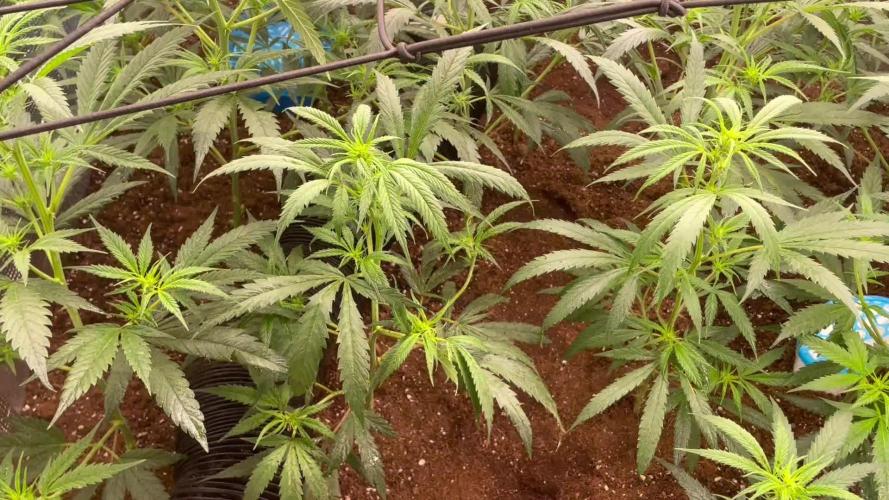
Aujourd'hui je pose la nouvelle semaine 🗓️
Comment vous dire que je suis impressionnée ❗
Les plante ce développement a merveille voyait par vous même 🙏
Elles ont fortement grandi, je suis monter a 1.5L par plante, elle consomme la totalité des nutriments et me le montre très très bien 😍🤗
Merci Kannabia 🙏 encore des variétés merveilleuses 😊
J'espère que dame nature sera me récompense 🌿🍁
Pour plus d'informations par rapport à ces génétique, je vous laisse cliquer ici : https://www.kannabia.com/fr



Processing
Likes
4
Share
@Birthdaycakeuk
Follow
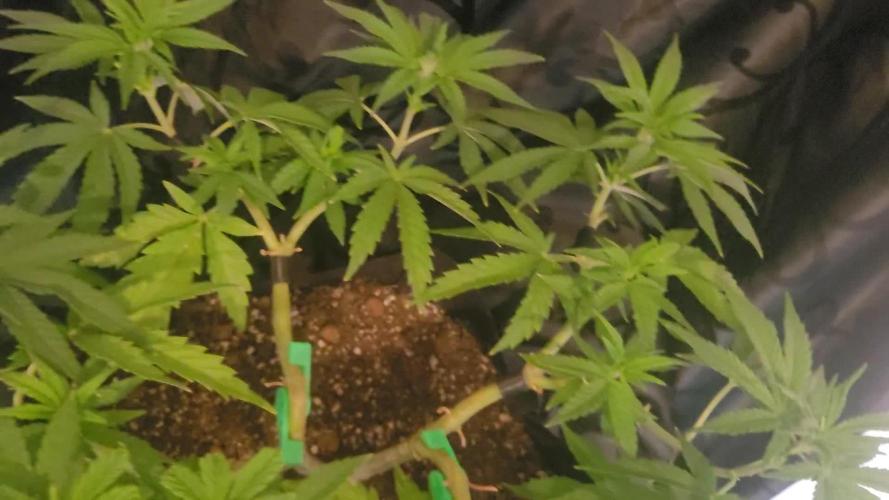
Week 3 started off well. Gave my plants nutrients for the first time. Lowered the water dose compared to last week and noticed more growth so sticking to less is more until the flower stage. The temperature has been consistent. This week also allowed me to top my plants. And I have seen the new stems coming out the plant. I’ve added a co2 bag hoping to see some difference. I did add a second fan in to just keep the leaves wafting but it reduced the temp so I took it out

Likes
10
Share
@ZombieKushAddicted
Follow
the girls are now in my backyard, they are in a 1.5 x 1.2m terrace completely amended by @elcaudilloorganicproducts
Likes
51
Share
@Bread_n_Buds
Follow
Here we are at the harvest of one of the masterpieces of the season, Ghost Train Haze Automatic by Zamnesia.
** We remind everyone that we have grown two plants per strain, one without the aid of any technique and the other instead worked with the techniques described below.
Technique used // The plant was worked with the MAINLINING technique, particularly successful in this case because the plant with a wide internodal distance put a lot of body until it swelled like a pig.
Better with the techniques or normal? It is a plant with a high distance between internodes, the Mainling was truly perfect. This time I am strong for the main lined plant. You can watch plant and I believe it will think the same
This is another confirmation that MAINLINING on AUTOFLOWERING in my opinion is only indicated in plants with medium-high internodal distance. This is a real monster not usual for soil in 11 lt pot.
Flower quality // The flowers are impressive, the classic haze shape is very long, some are really hard and heavy, I'm not crazy about the taste but by definition the pure haze taste is not among my super favorites but I love it anyway.
Check the article in your language // https://www.zamnesia.io/it/guida-growing-cannabis/333-lavaggio-delle-ceme
Trichomes // Here we have an absolute majority of milky and cloudy trichomes, still some transparent and some amber, it is not super ripe but for me it is fine.
Fertilizers // I am very happy with how I managed to unload the plant which at a certain point before going to flush was fed for a few days only with additives and then went to flush and we are discolored enough. This is a yellow that satisfies me to go to crop and vaporize a delicious plant with no residue of nutrients inside.
All Plagron fertilizers and additives in the green / 100% organic version have fully satisfied me. Choose your soil according to your style and calculate the sheet on the website www.plagron.com
The fertilizers instead are found in convenient all-inclusive packages on the Zamnesia website.
Try a seed of this variety belive in Zammi i superlove this strain..
---- https://www.zamnesia.io/en/12511-zamnesia-seeds-ghost-train-haze-auto.html
Zamnesia Description // From the day her cotyledons emerge from the substrate, Ghost Train Haze Auto will surprise you with her rapid growth and robustness. When she starts to flower, this short sativa will develop long and compact buds with pungent scents of spice, citrus and fuel.
Music and frequencies // For about 4/6 hours a day my plants listen to 432 Hz frequencies made especially for their well-being and sometimes a bit of black music to give them those vibrations that only music can give. www.radionula.com
All the best that mother nature has to offer is on ---- www.zamnesia.com
THE FLOWERS ARE MONSTROUSLY LARGE. HOLY MARY.

Likes
26
Share
@datrobspeoria
Follow
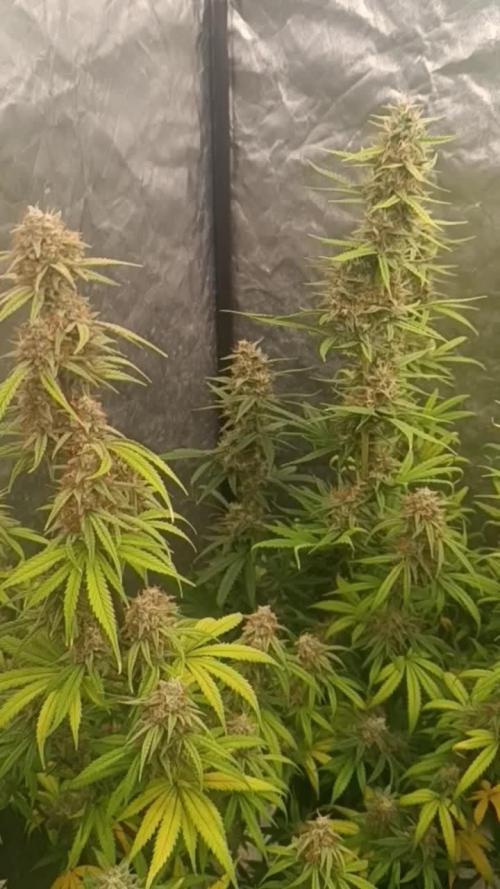
The Doctor is catching up to the Purple Ghost and is already covered in frost


Likes
13
Share
@WeedMan2020
Follow
Managed to pull exactly 4oz off my first ever grow!
Really impressed with the look of the buds and the density of them, along with the resin production is insane!
Only negative feedback I can give so far is that it smells nothing like any Mimosa I've come across and it smells extremely strong like an intense citrusy cleaning product! It's really off-putting at this moment in time especially when I burp the jars, the smell is very intense!
I read a few threads mentioning that sometimes this is normal and the cure mellows it out eventually.
I also read that Clementine has a very intense cleaning product exhale to it and aroma, which is leading me to think that this pheno is leaning more towards the Clementine more than the Purple Punch and that will really make me sad, cause the reason I love Mimosa is cause of the strong berries flavor and aroma!
Oh well I managed to pull 3 seeds out while doing a close trim so that's a bonus! Was a goal I was aiming for after hearing about a method from a friend and it paid off perfect cause those were the only 3 seeds in the whole crop and they look exactly identical to the one I germinated for this grow and the rest of the others in the pack! Lets hope they all turn out to be females!🤞
Well it's been a hell of an experience and I'll definitely be back with another run very soon!
Thanks everyone for all your support and advice and happy growing! 👊

Likes
14
Share
@TherealNICOGREEN
Follow
Er VIRKELIG BLEVET SÅ OVERRASKET 😱. Den er jo virkelig en god lille stærk pige med stor potentiale til at kunne leve op til sit mål om at få en top 10 placering bare ;) 🙏🏼💚

Likes
13
Share
@FlavoursUk
Follow
Day 44 - The smell is divine, and the buds are looking very pretty. Beautiful fade going on in the leaves, almost like a purple/red/black. Planning to tapper down the nutrients as we are coming closer to Harvest.
Crucial to keep the pH in range during flowering and being away a few days, I wasn't able to correct it until I was back. So they were drinking more water than uptaking nutrients.. leaving a high EC in the system. Corrected the issue by adding plain RO water, treated with cleanse, no nutrients.
They are now on track and could do with a last defoliation, but I've been holding it off. Will get around to it over the next few days.
The buds are sticky, smell great and rock hard. Dehumidifier was added to the tent to try lower the humidity to a better range.
Can't wait to see the end results and product. Another 2 weeks an I think we will be good.

Likes
13
Share
@Prilyfe13
Follow
What a journey! We started out with a fungal infection or dampening off. Either way, she survived to bring some of the hardest buds ever grown. Very impressed. The resilience of thos one is something to note. Currently the plant is in control of the humidity. But it won't be for very long. Not once the exhaust fan kicks in to max power.
The temp is stable at 61° f. Humidity is at 62%. Now 63 and climbing. 🤔. I adjusted it. And it won't stay still. It either plummets or spikes up. A tiny opening in the door dropped it super fast. While closing it up spiked it in the mid 60s. I'm trying to level it out at 55%. The temp is perfect. I should be able to do it. I can tweek it until it works properly.
.so I just pulled the roots out of the bucket. I had a whole bunch of goopy shit all in the roots in buried in the pebbles. What the hell is that? I'm trying to find out right now. It was all black and nasty. It smelled like soil. Not strong or anything, but like I didn't use soil. Anyway, I did use carboflush and it turned the water a super dark brown. Maybe that's part of it. Or maybe that was the problem all along. Black root rot? Root rot at all? The roots seemed fine. Just the sludge all in their business. How should I have cleared that out if I saw it? Dump plain water through the hydroton? I think I'll do that for my next run. Once a week top off into the hydroton. Makes sense. It should keep the roots clean?
12/16/2025
Day 1 of drying Papaya Cookies and the environment looks great. It swings a bit, but doesn't go over 61% and I haven't seen it go under 45%. I know it's a big swing, but the temp is solid at 61° and it's in range. I expect it to be a bit more controlled in a few days after the plant dries out a bit. You know, when she has less control over the humidity.
The goal is 61° and 53% humidity. I'm pretty sure I can keep it at 60%, but maybe I want 55%. I'm thinking 55% because it's the top of the ideal range and it still matches the temp. So it should I perfectly.
So for the setup. I don't think I properly explained it yesterday. The 2x2 is connected to the 3x3 with a 4" duct. You can see in the picture that the hose is installed on the top of the 2x2 and to the upper 6" port on the right side of the tent. There's a reason I'm telling you this. The 4" charcoal filter is on the left side of the tent. If it were on the right side I'd have to attach the dry tent to the left side of the 3x3. The goal is to exhaust the dry tent with the whole 3x3 circulating air throughout, before exhausting the dry tent. Instead of the filter being right above the port, sucking in way too much from the dry tent and neglecting the rest of the 3x3. It makes sense in my head. So far it's seems to be working. The air in the tent has been exhausting just fine. With the 2 circular fans running at level 7 dynamic mode, it moves the leaves just enough and mimics the outside world quite well without any harsh gusts.
I wonder. Seeing as though a cannabis plant needs to be pollinated, and it goes airborne, wouldn't having larger gusts of wind help a healthy cannabis plant to grow bigger buds as to catch the pollen? That makes sense to me. Don't overdo it, just a few little gusts just like September and October. At harvest season. I bet that will do something. Maybe I'll turn the speed up to 9 and see what happens. Wind burn on these leaves is the least of my problems. Plus, it'll be fine. Don't you worry.
Maybe she'll produce more trichomes and bulk up a bit more. It makes total sense. Without wind burn, just under where it would start to happen, I bet she will finish up nicely and have added a bit more bulk too.
12/17/2025
Day 2:
The humidity is bouncy. It stays in range from 46% to 61% I'd like to see it stabilize at 55%, but I don't think I'll see that until I have a bit more control over the space. It's funny. To bring the humidity up when it's low, I open the main tent and the air doesn't get pulled out of the dry tent making it more humid. I open the dry tent a little to drop the humidity. Either way, it's in range and the temp doesn't move at all. It warmed up here for the day and the temp went from 61 to 64 and holding steady.
Nothing else to report.
12/18/2025
Day 3 of drying and we are looking great! A lot of her smell has changed to a sharp pungent scent. Meh. I know it's gonna be back to some insanely good smell very soon. After all it's only day 3.
I woke up to the humidity hovering around 47% I was kinda hoping it would stay between 50% and 55%. No matter, I added a bowl of water to help keep the humidity up a bit. Hopefully it keeps it under control at 55%. Other than that, nothing else to report.
12/19/2025
So day 4 and I had to add a mini humidifier to the dry tent. It was dropping below 50% and I want it around 53%. The temp is 60° f. So now the humidity is at 54° and is leveled out. I'm guessing maybe 7 days? 10 to 12 days is what I'm going for. The longer the better, but I also have another plant that has to go in there and they won't fit together.
The only reason I'm concerned with it is because I'm starting new seeds today or tomorrow. Probably today and I'll be needing the 3x3 in the next week or 2. This little lady will be done by then, but my other plant might have to dry in the 3x3 and that'll take 10 to 14 days. By then the seedlings will be ready for their buckets. Or well, no. They will be ready for their buckets in about 10 days. If not less. Maybe 8 days. I usually add them to the final container just before the roots really start coming in. That way I'm not shocking them too much when they hit the medium.
Likes
45
Share
@AsNoriu
Follow
Day 92. Girls are runing to the end, foxtailing on one of Tangies is crazy, but bud is dence and i let her to go.
Now StrawberryCough have loads space, she loved nutes, leaves are a bit too dark for me, but she is flowering and its fun !
Made on her Fims , tried to understand how deep you need to cut, so she will have some strange grow 4sure.
Day 94. Early Tangie became TheRealFoxtailQueen ;)) thats it, i dont want to smoke tails, so she was choped aswell, sad , was hoping she will be my biggest girl from first 8...
Was puting ice as a test on Early bigger FastDiesel, so part of roots stayed wet, its easy to spot, that those cones in airpots really works great.
Day 95. Eve. Maybe Fatty could hang for 12 hours more, but i am leaving house for a bit and dont want them to overdry. Thats why tops are in seperate jar, not because it looks better ;) inside bigger tops, even when i trim them hard ( i could leave longer colas) still stemp is fat and keeps more mosture, that way its easier to cure them, humidity is more even trough each jar.
So now to the main point .... Weight .....
And the winner is ...... ;))) 69.65 !!!! Never hoped that much from her, my eye scales are way off ;)) i think thats the winner, only late FastDiesel or StrawberryCough can beat.
Bud dried 1-2 days too early for perfectness, but heating is on and its really dry weather in the house and dehumidifier triggers electrics ;)) i am flat out on max usage now ;)
I am in a choping spree ;) Slimmer Fat Tangie falls aswell, she smells crazy, dont know is it smart to dry like i do now, neighbours should smell it 4sure ;))
Smells is fruity from distance and citrus from close up ... Tangie in the best by smell and not so sad by quantity ;))
All girls running well, really happy and that makes me happy. The purpose of Theraphy Room - works !!!!
Day 96. Every day new champ ? ;)) Early Big FastDiesel very sticky, not rock hard, but hard buds in total of 73.61 !!! That strain i have in marks for summer, its a killer ;) if you smoke it, all neibourghood knows about it, maybe even all small town ;)))
Smaller Early FastDiesel is choped today,she easy could make two more weeks and gane weight, but her choped sister is too strong, cant have couch lock weed all day ...



Likes
35
Share
@GODSGIFT_2005_JM
Follow
🍼Greenhouse Feeding BioGrow & Bio Bloom
⛺️MARSHYDRO
The ⛺️ has a small door 🚪 on the sides which is useful for mid section groom room work. 🤩
☀️ by VIPARSPECTRA (models: P2000 & XS 2000)
Likes
13
Share
@userflp
Follow
harvesting due to the beginning of the spring equinox in the southern hemisphere and so the days have more than 12 hours of light. The plant showed signs of revegetation in recent days, the same occurred with two other plants that will make the posts and give continuity to the revegetation diaries of the plants. Att
colheita realizada devido ao ínicio do equinocio de primavera no hemisferio sul e com isso os dias tem mais de 12 horas de luz. A planta apresentava sinais de revegetação nos ultimos dias, o mesmo ocorreu com outras duas plantas que realizarei as postagens e darei continuidade aos diarios de revegetação das plantas. Att
👽
***update on effect after two weeks of healing;
ironically, even though I had harvested early due to revegetation, after 2 weeks of healing the herb shows strong citrus and herbal taste and smell. about the effects ... The wave is insane, almost completely cerebral, too strong. It was a good choice to keep it in revegetation and not pick up the other copy which I also let revegetate and make a diary. Att
Likes
17
Share
@Susquihanna
Follow
It is harvest day for Miss Sweet Skunk. Due to the excessive rain this week and two places of bud rot, Mother Nature forced me to take her down. 2 more weeks would have been nice but that didn't happen.
If you have been following me then you know that Miss Sweet Skunk encountered a terrible misfortune. It hailed one evening and one of her two colas was broken. My husband found her damage first and taped her up and then put a wire tie around her. According to the grow diary question/answer platform, I was able to learn that we had done the right thing and changes were good that she would recover from her injury.
Not only did Sweet Skunk recover, but she went onto growing at a height of 2 feet, 11 inches. That is just under 100 cm. According to Royal
Queen website, "Sweet Skunk Auto seeds produce plants that grow to a very manageable height of around 60–100cm." AND even though Sweet Skunk had a broken stem, she GREW!
This plant was a very tall and lanky plant. Her buds are plentiful but started out quite small. I wish I had another couple of weeks to see her reach her full potential, but that is left for another grow. For now, I am happy she survived all the weather that Mother Nature threw at her this week and it is a good day:)
**The last two pictures are pictures of my indoor grow of Sweet Skunk that I did NOT record on grow diaries. However, it is a great way to compare an outdoor grow and indoor grow of the same strain.
Stay turned for weigh ins.

Likes
2
Share
@KeemBboomin
Follow
Now that you are all caught up, we are in week three a flower. I just gave them a top dress feet of Gaia green just blown because I still have just a little bit up all purpose in there but other than that I look at them every morning, give a big smile and turn on their favorite Mosark album
Likes
38
Share
@Esoteric_growing
Follow
So I harvested the top half of the canopy at day 58 while leaving the bottom half to finish up for another week. Looks like the best yield so far running for my runtz muffin grows.
Also dropped the water temp at night to promote colouration of the buds which seems to be working very well.

Likes
13
Share
@TheeLemon
Follow
Left it alone since flipping. Nice amount of stretching. Almost covering the netting now.
Getting a little crowded, I should have done more defoliation
Likes
44
Share
@TheMachinist
Follow
*****New time lapse Day 25-88*****
Mar 4, 2018:
Did lots of staking and tying, after my removal of overcrowding fan leaves had many colas falling over.
...
Mar 2, 2018:
Gonna have to spend some time staking the smaller stalks, the larger colas are doing ok as their stalks are thicker. Underestimated how the stretch effected stability, have near 2' of just stalk below the canopy, could be genetics could be I had the light too high.
...
Feb 29, Mar 1, 2018:
Nothing new, more watering more swelling. Main cola's are approaching the size of soda can and some as large as a pint glass!
...
Feb 26,27,28; 2018:
Been a few days, Been out of town and am finally uploading the start of week 13. Feb 28 marks the end of week 6 of flowering. Due to my seeding issue the garden will probably go long on flowering, I'm guessing at least 3 weeks left, I'm still seeing all clear trichomes and the first batch of seeds are ripening so hopefully the pistils that the buds are now starting to produce will be the start end of flowering. Might try reducing the light from 12/12 to 11-11.5 light/12.5-13 dark to help signal the end of the season. Upon inspection of sample buds it seems seeding might be less than initially thought.
....
If anyone has experience harvesting seeded bud please sound off in the comments, from what I've read the timeframe for seeded buds tends to run long, I'm not all that interested in harvesting the seeds, but I want the buds to develop to their full potential