


Likes
Comments
Share


Likes
2
Share

@BasedBuds_89
Follow
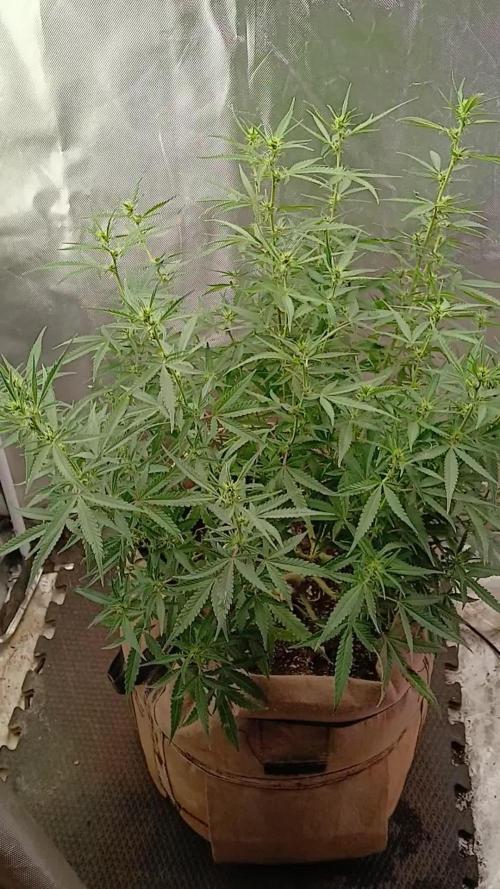
Had an awesome week, she finished her final stretch and now ill focus on one final defoliation and lollipop to redirect energy to buds.

Processing
Likes
7
Share


@frogDUDE
Follow
Growing Fast! Smells like fresh Fig newtons - loads of frost covering everything. Buds are Significantly Thicker than Barney’s Mimosa EVO, both were started from seed on the same day.
My Whole backyard smells like Peyote Cookies The garden smells Amazing!!!!!
Happy Growing

Likes
11
Share


@Leonweed10
Follow
Ultima semana consumiendo sus reservas....esperare a secar bien el sustrato después de el lavado de raíces y se vendra la cocecha!

Likes
4
Share

@GERGrowDesigns
Follow
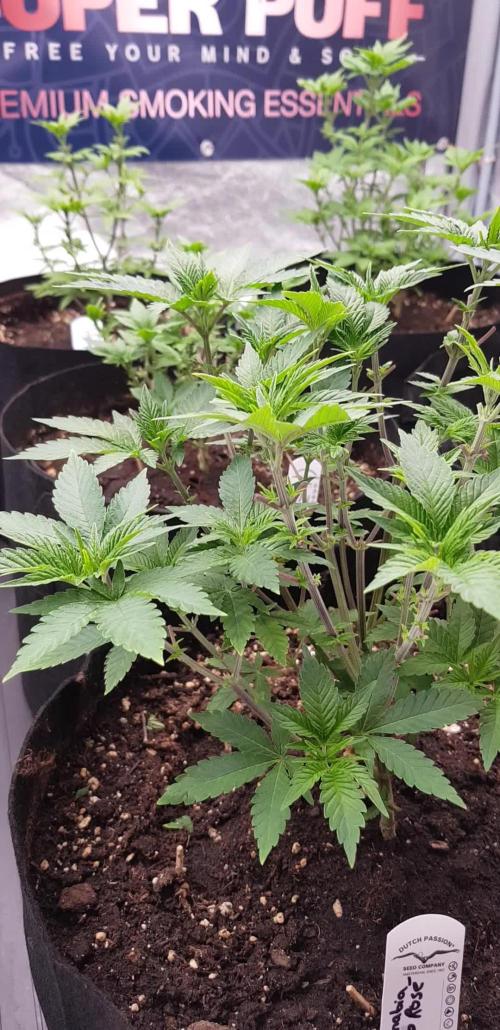
Welcome to Veg Week 5 of Kannabia Zoap Rosé
I'm excited to share my grow journey with you from my
Kannabia Seeds Project . It's going to be an incredible ride, full of learning, growing, and connecting with fellow growers from all around the world!
Check out Kannabia Seeds with my link [https://www.kannabia.com/de?ref=61966] and grab the germination device or the strains I used . Trust me – it’s worth it for sure !
Get another 20% Discount at all products using the code [GGD] at the checkout.
For this Project , I’ve chosen the Feminized Photo Strain Zoap Rosé :
Here’s what I’m working with:
• 🌱 Tent: 120x60x80
• 🧑🌾 Breeder Company: Kannabia Seeds
• 💧 Humidity Range: 60
• ⏳ Flowering Time: 56-63 Days
• Strain Info: 22%THC
• 🌡️ Temperature: 26
• 🍵 Pot Size: 20
• Nutrient Brand: Hy-Pro
• ⚡ Lights : 600W x 2
A huge thank you to Kannabia Seeds for allowing me to try my Best with this amazing collection from Photo Strains they managed to Sponsore . Big thanks for supporting the grower community worldwide! Your genetics and passion speak for themselves!
Let’s grow together – and don’t forget to stop by again to see the latest updates!
Happy growing!
Stay lifted and stay curious!
Peace & Buds!

Likes
10
Share


@RandomStreetMerchant
Follow
Hello, I have had the pleasure of growing this cultivar a few months back. this time I will only be growing 2 both being those awesome seeds from Barney's. I believe that letting these girls have more space will do wonders. as my last grow was quite cramped. that being said, I'm going to try to fill the tent up with the 2 mxop's ill be planting. Mimosa X Orange Punch (MXOP) is a fantastic cultivar and I cannot wait to show you guys how beautiful they get! have a good one!//05/25/23//
Likes
2
Share



Likes
Comments
Share


@OslyDabs_10
Follow
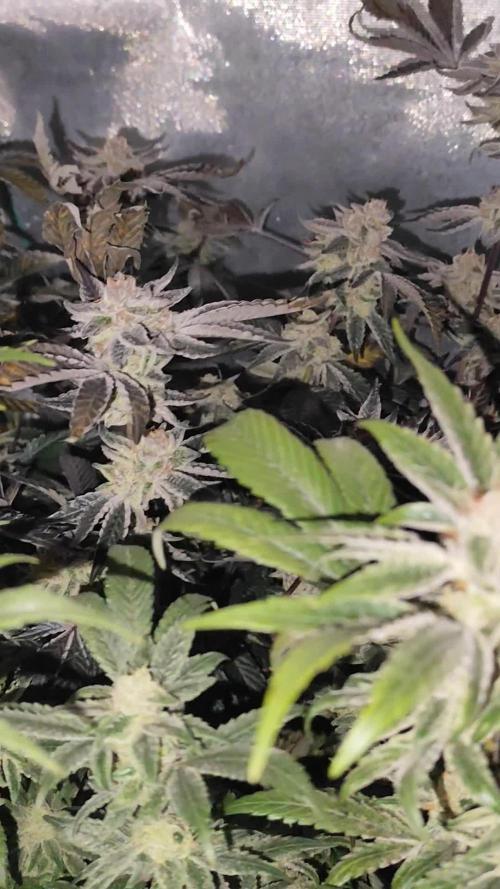
Aún las tenía metidas en casa por la noche, por qué las plante en pretemporada y no quería que se congelarán.

Likes
2
Share

@Smev1337
Follow
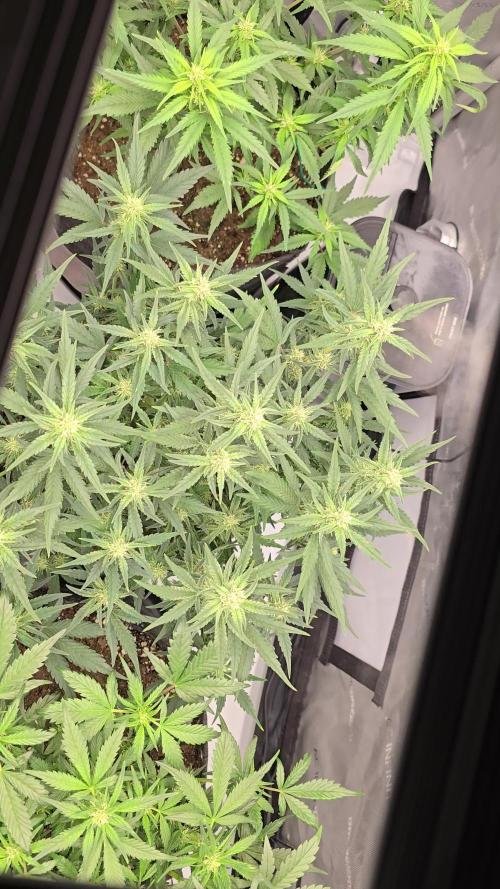
All 3 Plants are going good so far just the left one is giving me a lil bit headache but its fine, lets see how its gonna be next week i hope the left one is out of danger but we will see ✌️💚😎 happy growing all
Likes
16
Share


@TerpDaddy
Follow
Things are looking real good now. Blueberry is in full stretch and she’s gonna be a big girl. Grapefruit coming along real nice after early struggles. I am having some issues with light burn on my blueberry, but I think it’ll be alright.
Absolute explosive growth from the blueberry monster this week. She’s up to 43 inch and I’m loving the spacing she has. As you can see, not very much lst going on here, but that’s how I like it.
Grapefruit has been chugging along real nice. Just starting to flower now and she’s a bushy gal. I’m really looking forward to the flowering weeks ahead. I think these two are gonna be pretty.
Likes
28
Share


@m0use
Follow
This gul is getting Phat, ran into some NANNERS, got a few on the plant, picked em all off. Will harvest a week early probably. Excited to see if it makes any viable seeds if it pollinated at all, don't know if they would be sterile or how that works, as it was already pollinated by a female plant to be feminized in the first place. I do think I caused the nanners in this plant from giving it to much LST late into flower trying to dense up the buds.
the Humboldt Seeds webpage said its about a 9 week grow or 60-65 days till maturity at 30-60g/plant. So I am pushing it a bit already, I like the 13 week timeline just as a number, however I think it will be best to chop at 10 or 11 for this one. Will know if I don't post next Saturday as I will be waiting for the dry and yields.


Likes
34
Share


@BOMbolenath
Follow
The plant is developing well despite the high temperature.
During the week the weather got better, the plant is growing well.

Likes
32
Share


@MadeInGermany
Follow
Info:
Unfortunately, I had to find out that my account is used for fake pages in social media.
I am only active here on growdiaries.
I am not on facebook instagram twitter etc All accounts except this one are fake.
Flowering day 43
since time change
to 12/12 h.
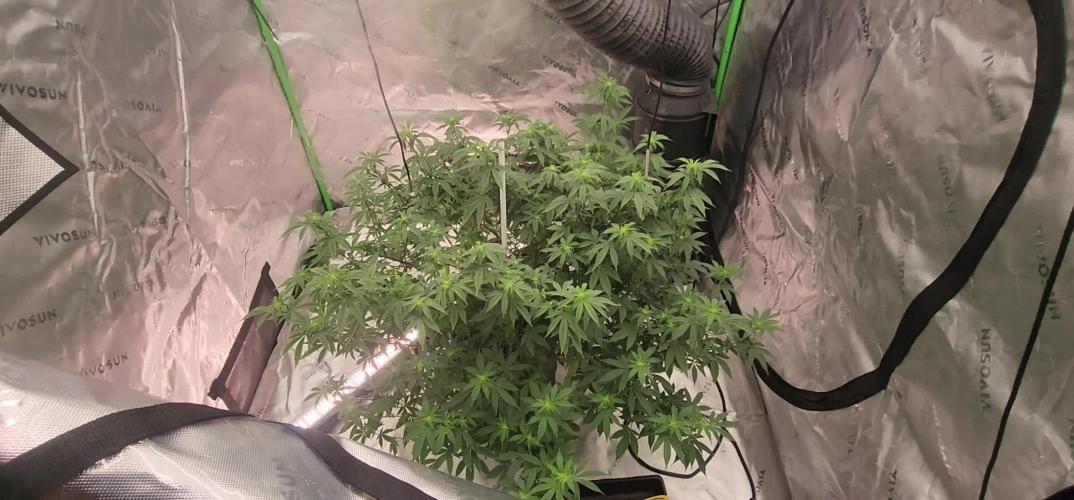
Hey guys, a quick update on the mini experiment :-).
Slowly but surely, the buds of this mini lady are developing very well :-).
It was poured twice this week with 1.2 l each.
Otherwise everything was checked and cleaned.
Stay healthy 🙏🏻
You can buy this Strain at :
https://www.zamnesia.com/de/5165-zamnesia-seeds-kalini-asia-feminisiert.html
Type:
Kalini Asia
☝️🏼
Genetics:
Black Domina x Purple Kush
👍
Vega lamp:
2 x Todogrow Led
Quantum Board 100 W
💡
Bloom Lamp :
2 x Todogrow Led
Cxb 3590 COB 3500 K 205W
💡💡☝️🏼
Soil :
Canna Coco Professional +
☝️🏼
Fertilizer:
Green House Powder Feeding
☝️🏼🌱
Water:
Osmosis water mixed with normal water (24 hours stale that the chlorine evaporates) to 0.2 EC. Add Cal / Mag to 0.4 Ec Ph with Organic Ph - to 5.5 - 5.8 .


Likes
17
Share

@GoodTimesOrganics
Follow
Hi liebe Community and Welcome Back! 🌿💚
Willkommen zur vierten vergangenen Blütewoche!
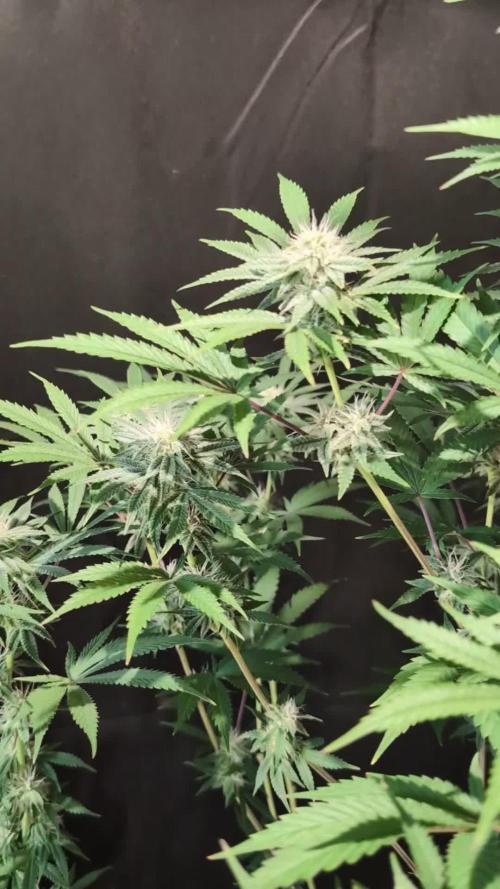
Hier im Weedefix Grow, erreichen wir aktuell eine höhe von 139cm. Und eine Breite von 62cm.
Die Pflanze hat einen moderaten Stretch hingelegt, welcher jetzt abklingt.
Beide Pflanzen sind jetzt tatsächlich gleich hoch.
Es zeichnet sich ein durchgängis schönes und gesundes Wachstum ab.
Allmählich entwickeln sich immer mehr Trichome rund um die Blütenansätze und auch schon sichtbar auf den Leafs.
Das Icing zieht sich bei diesem Pheno etwas stärker durch, dafür ist die Blütenstruktur etwas kleiner.
Durch dass Super Cropping ist die Pflanze sehr Stabil..
Auf jeden Fall Hilft die Technik der Pflanze, später die schweren Buds (hoffentlich) besser zu tragen, ohne dass Sich die Triebe zu arg runterbiegen oder sogar abknicken.
Diese Woche wurden nochmal wie angegeben 5ml Wachstum pro l Wasser zugegeben und damit gegossen.
Außerdem habe ich nochmal 3 Düngetabletten in die Erde gedrückt und zusätzlich von Mack noch 5g Trichoderma pro Liter Grießwasser hinzugefügt.
Die Umgebungsgegebenheiten sind aktuell gut:
—————
🌞 Temp: 27
🌚 Temp: 18°C bis 19°C
💨 RH: 56%
VPD: 1,00kPa
💡ppfd: 630 mpm
—————
Viele Grüße 👋
Likes
3
Share


@Briangrowss
Follow
I got some dark brown spots on the leaves after vita race , connected plagron and they told me I can spray it better in the morning as evening so the plant can absorb all the nutritions


