The Grow Awards 2026 🏆 






Likes
Comments
Share
@BasiGoToGrow
Follow
Week5
The week is over and all looks fine.
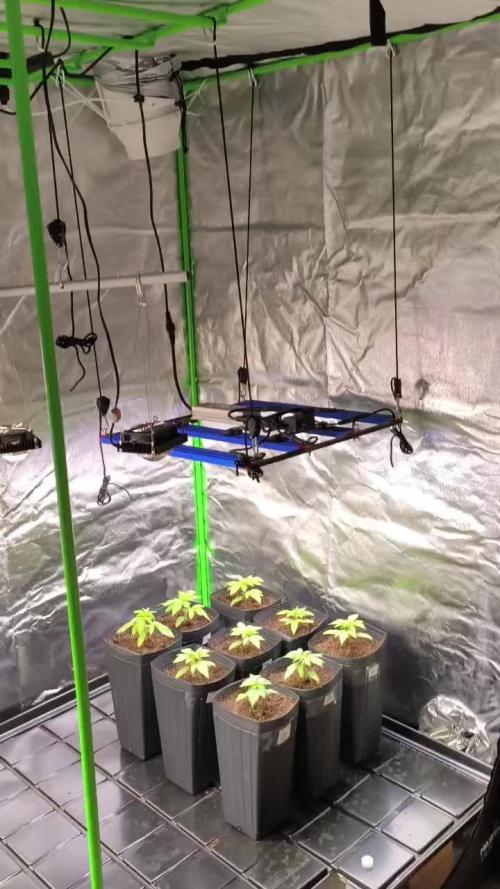
Both ladies are preparing to bloom and are growing. Orange Sherbet is now 28 cm tall. Bruce Banner has caught up a lot this week and is at 25 cm.
For 1 liter of water there was 0.5 ml of silicate;;
0.5 ml of Calmag;; 2 ml of BioNova BN-Zym, 2 ml of BioNova TheMissingLink;; 2 ml of BioNova Auto complete fertilizer and 1 ml of 100% organic algae juice.
Ph 6.0-6.3 23°C

Likes
74
Share
@AsNoriu
Follow
Day 92. First of 3 girls down. Amazing, super productive strain !!! Loved that girl a lot !
Others still to come...
Day 101. #1 is jared and #2 is chopped, busy day !
Day 111. #2 is Jared. Only Monster girl left. She is still pushing in ex dry tent.
Day 125. Last girl is down !
Day 135. 240 g of nugs from her !!!! My record breaker by a mile !
Happy Growing !!!


Likes
65
Share
@MadeInGermany
Follow
Flowering day 44
since time change
to 12 / 12 h
Hey guys :-)
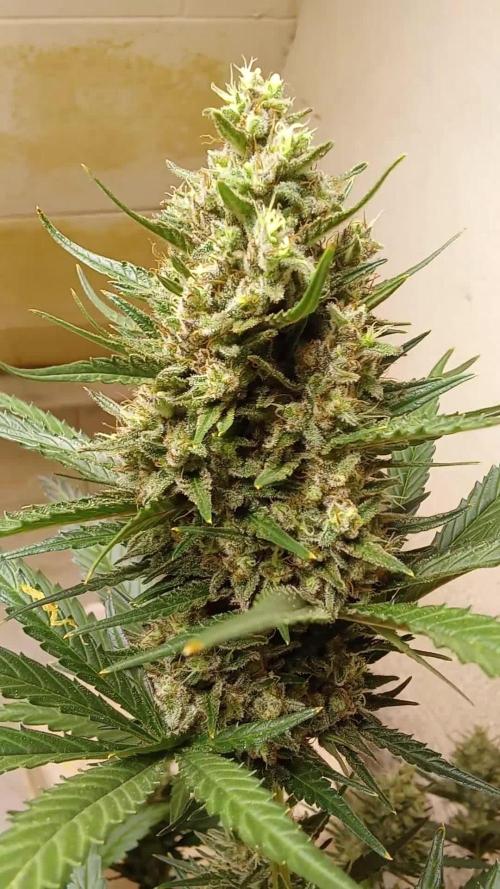
The buds are becoming incredibly beautiful and smelling better and better ☺️.
Today there was again the full load of food and will be slowly driven down as soon as it comes to an end :-)
Was watered 3 times a week with 1.2 l each (nutrients see table above)
Otherwise everything was cleaned.
Have fun and stay healthy 💚💚💚
👇🏼👇🏼👇🏼👇🏼👇🏼👇🏼👇🏼👇🏼👇🏼👇🏼👇🏼👇🏼
You can buy this Nutrients at :
https://greenbuzzliquids.com/en/shop/
With the discount code: Made_in_Germany you get a discount of 15% on all products from an order value of 100 euros.
👇🏼👇🏼👇🏼👇🏼👇🏼👇🏼👇🏼👇🏼👇🏼👇🏼👇🏼👇🏼
You can buy this strain at :
https://www.barneysfarm.com/dr-grinspoon-5
Water 💧 💧💧
Osmosis water mixed with normal water (24 hours stale that the chlorine evaporates) to 0.2 EC. Add Cal / Mag to 0.4 Ec Ph with Organic Ph - to 5.8 - 6.5
MadeInGermany

Likes
92
Share
@Roberts
Follow
Apple Fritter is doing well. I did some root pruning early in week. I slightly increased nutrition. Will be a few weeks till I change the lighting. She is growing in a New Level Hydro bucket, under the Spider Farmer SE5000 light at 60 percent. Thank you New Level Hydro, Spider Farmer, and Amsterdam Marijuana Seeds. 💪🌱🤜🤛🌱💪
Http://amsterdammarijuanaseeds.com
Thank you grow diaries community for the 👇likes👇, follows, comments, and subscriptions on my YouTube channel👇. ❄️🌱🍻 Happy Growing 🌱🌱🌱
https://youtube.com/channel/UCAhN7yRzWLpcaRHhMIQ7X4g
SE5000
https://amzn.to/3qFpAML
Spider Farmer Official Website Links:
US&Worldwide: https://www.spider-farmer.com
UK: https://spiderfarmer.co.uk
CA: https://spiderfarmer.ca
EU: https://spiderfarmer.eu
AU: https://spiderfarmer.com.au
Coupon Code: saveurcash
Www.newlevelhydro.com
Www.hygrozyme.com

Likes
29
Share
@GreenHouseLab
Follow
Amazing structured plant, little to no training all dense buds from this cross of Sugar Cane x Velvet Breath.
Likes
27
Share
@adam_pawloski87
Follow
Today is Day 50 !! We have started flower an they are just looking amazing! We have switched up the nutrients for flower, instead of 1 tsp bloom and 3 tsp of veg , we just swap 3 tsp of bloom and 1 tsp of veg !! Can’t wait to see what these laddies do this week!!


Processing
Likes
1
Share
@Organic_LarF
Follow
These 2 ladies go their separated ways, 1 stays lower but branching good and slightly paler green, the other dark green leaf and more height to it. But the branches go slower.
Rather impressed by the 2 hindus, who got like 4 to 5 days less than the sweet chees xl, and they are overtaking in growth now.
Thats it for this week
Grow tall!🍀🍀🍀
Likes
27
Share
@ButterfliesLittleFarm
Follow
Hello Diary.
The first week of vegetation is behind me and for now everything is fine. The temperature and humidity are satisfactory so I did not put the humidifier again.
I started adding BioBizz on a schedule for the first week but I didn’t water another Haze Berry with that which is a week late. He still only gets water.
Let’s take a look at this week’s review.
24/09/2020 - Day 1.
Photography. Haze Berry Auto # 1 has an official first day. I mean by the first day when the plant gets the other two leaves. Then it is no longer sprout.
Haze Berry Auto #1 - 8 cm
Haze Berry Auto #2 - 4 cm
Temp / Humidity on the farm - 26.3 degrees and 54% humidity.
26/09/2020 - Day 3.
Watering. First feeding. I regulated p.H. at 6.1 and added BioBizz's Root-Juice - 4ml / L, Bio-Heaven 2ml / L and Acti-Vera 2ml / L. Each plant received a liter of water, but Haze Berry # 2 received only water without BioBizz, since it is still too small :).
Temp / Humidity on the farm - 24.9 degrees and 45% humidity.
29/09/2020 - Day 6.
Watering. p.H. is regulated to 6.3 and I added BioBizz on a schedule for the first week. Like three days earlier. This time I watered with 1.5 lit.
Temp / Humidity on the farm - 24.2 degrees and 45% humidity.
30/09/2020 - Day 7.
Photography. The first week is officially behind us. Haze Berry # 1 is progressing nicely while the other is a week late. It will be interesting to constantly monitor both plants given this age lag.
Haze Berry Auto # 1 - 12 cm - Day 7.
Temp / Humidity on the farm - 24.7 degrees and 48% humidity.
What to say for the end of the first week except that the second Haze is a week late, but it doesn’t matter, I’ll have an interesting situation to compare, everything else is great. I am pleased with how the plants are progressing and I will try to please them as best I can. See you next week.

Likes
Comments
Share
@jojopfoh
Follow
transplanted on the 23 of feb from the solo cup to the 1 gal pot and given it's first nutrient feed. It is growing very quickly. I added a fan to the tent to promote a surdy stalk


Likes
13
Share
@ZoobZoob_farmZ
Follow
.😈💪🧑🌾🌱🌲☀️👌Hellriser Skunk’97 x Black Lebanon.
Hi everyone 👋 for the smell 👃 this one gives off a smell of kaki 🍑on a fruity skunky background And slightly peppery👌.
Useful links👇👇👇
https://geneseeds.eu/plant/black-hell/
https://marshydro.eu/products/mars-hydro-ts-1000-150w-led-grow-lights/?lang=fr
https://shop.greenhousefeeding.com/4-bio-nutrients
https://www.royalqueenseeds.fr/47-growing
https://biotabs.nl/fr/produit/bio-pk-5-8/
.

Processing
Likes
29
Share
@Damonkey
Follow
Nice to watch growing OS. Kind of slow at first but then really picks up some pace nearing the end. 2 of the plants, the buds I will definitely keep. Really nice fat juicy buds. Smell great and taste great. The high is quite heavy✌️🏻😎✌️🏻And has a rapid onset. Good night-time smoke, if I smoked this during the daytime I’d probably just smoke all day and not move. I’ll press for Rosin in the next few days too , I’ll upload info onto here at a later date.
Again thanks to Barney’s Farm for supply the seeds, you are super generous guys and the rewards of growing are generous too. Thank you thank you thank you. What a great little
string of genes you have to add to your catalog.
I’ll also update a smoke report later when the bud has cured and is ready for real consumption 😍😍😍
Update. The bud really is looking feeling and smelling better every day of the cure, these little nugs gonna be insanely strong. It’s already a knockout smoke, in a month she’ll be rocking 100%
About 25% of the dry bud is awesome quality the rest is still very good

Likes
13
Share
@Damonkey
Follow
Everything went well right through flush the last to show amber trichs were the Banana Crack, on harvest everything was well ready to come down. Everything is hanging to dry I’ll complete the harvest section in about a week. I’ve tested all three. Zour Apples is an Indica beast, super strong and dank. Banana Crack is a Sativa with a kick, it’s good and tastes great, strong bananas and ripe fruits. The Cherry is fantastic, smooth sweet and strong. All drying steadily 5 days down.


Likes
11
Share
@Microsun
Follow
Alright, the time is here, I’ve started the harvest but I don’t want to press the harvest button until I have all my info correct, but I’ll show some photos from my baby, we started a slow 6.0 flush about 2 weeks ago and finishing flush about 4 days ago. She was already fading but I had some problems since I fed her without thinking after having some drinks witch is obviously a very rookie move. But as I’m still learning it’s just another oof under the bridge, she was fading and I got some nice looking tricombs and I’m happy with the smell and size for her life cycle, I’m aiming for a slow dry and cure but my space is limited in my appointment and grow room so I have a drying tent set up but conditions could be hard to handle since the season change. Cheers. (And yes I didn’t wanna flush my auto but I figured it was the safest route.)


Likes
151
Share
@PapaNugs
Follow
These girls continue to shine in the finals days. It's day 63 and they arrive at their destination. Will start plucking them one by one. First one being plant 3 I believe. Then two then one. Reverse order of naming. Been getting water every day and will have the final pictures soon.

Likes
42
Share
@rhodes68
Follow
Four plants in all eventually
1/31 First of the Bond harvests, Pussy Galore first of the FFT-7s, two more follow.
Pussy Dry weight 312 grams
3/5 Holly 665 grams wet into dry - dry 98 grams
Two more F7s to go
3/25
Pussy-1 clone yields 1107 grams wet in dry --- dry yield 181 grams
One FFT-7 Remains Pussy-2 buds look a bit larger
3/28 Pussy-2 wet weight 1295 grams in dry. 242 grams dry. This concludes the FFT-7 harvests


Processing
Likes
1
Share
@Andres
Follow
she grows healthy ... al.aire free ... expect her potential with patience.......