The Grow Awards 2026 🏆
Likes
Comments
Share
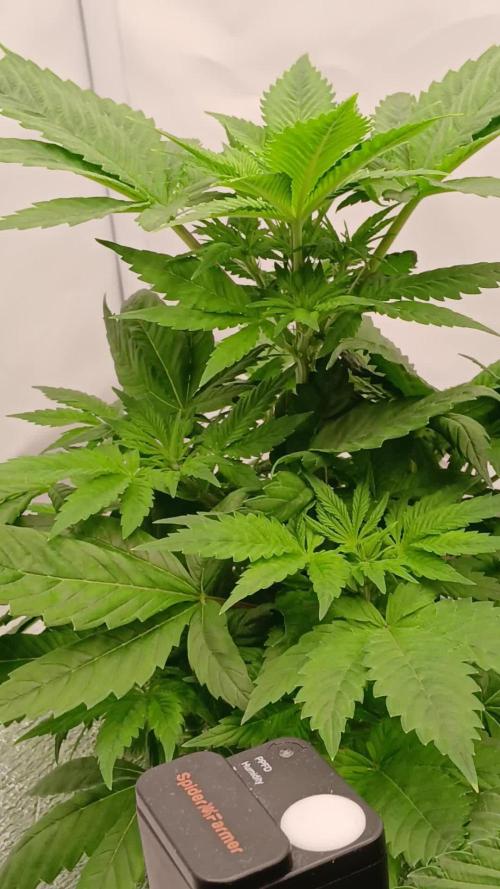
This week in my grow room has been full of developments. First, I added additional lights because I couldn't get the relative humidity (RH) under control. I ordered a dehumidifier, but it will take a few weeks to arrive, so I had to find a temporary solution. I also emptied the reservoir and refilled it with fresh water and nutrients. I secured the net to ensure it stays in place under tension. In two days, I plan to switch the light schedule to 12/12, hoping the plants will stretch a bit during the switch to avoid having overly large buds that aren't evenly spread. Seventeen hours later, I decided to keep the lights on a 16/8 schedule for a few more days. The plants are starting to show signs of something happening, so I want to see how they develop. I will keep you updated on the progress. Then, I received a message from my supplier that the dehumidifier would arrive today. Great news—time to spice things up! On June 2nd, the dehumidifier arrived, and I managed to get my Vapor Pressure Deficit (VPD) to 1.17! This is fantastic news, and I'm very curious how this will affect water usage. The dehumidifier seems pretty powerful, with water literally dripping out of the hose, so I'm no longer worried about high humidity levels. It's a shame it doesn't have a range setting, but I couldn't expect more for the price. I'm considering ordering the Dimlux Auxbox to set a working range and separate day/night settings. Thankfully, the dehumidifier has an auto-restart function after a power loss. On June 3rd, the night is over, and while my values are now more stable, I haven't noticed any significant differences in water absorption. What I do notice is that the pots seem much drier. The difference in leaf temperature compared to the room temperature has increased slightly, now about a 2˚C difference, indicating that evaporation has increased somewhat. Despite the dehumidifier cooling the air, the room temperature has risen. This is explainable since dry air heats up faster than humid air. The CO2 heater is also running significantly longer. So, although there are no immediately visible differences, there are indeed some changes. Today is the last short night of 8 hours, and tomorrow will be the first night of 12 hours. I am contemplating doing a 10-hour night first and will decide later tonight. After closely reviewing the video footage, I noticed some divergent colors on the leaves. My pH is currently 6.4, which I had adjusted to compensate for the low pH last week—a foolish decision in coco, I know. I plan to make videos of each individual plant for my records to investigate further. The light is too intense to inspect them up close, so the videos will help me get a better look.
Likes
47
Share
What's in the soil? What's not in the soil would be an easier question to answer. 16-18 DLI @ the minute. +++ as she grows. Probably not recommended, but to get to where it needs to be, I need to start now. Vegetative @1400ppm 0.8–1.2 kPa 80–86°F (26.7–30°C) 65–75%, LST Day 10, Fim'd Day 11 CEC (Cation Exchange Capacity): This is a measure of a soil's ability to hold and exchange positively charged nutrients, like calcium, magnesium, and potassium. Soils with high CEC (more clay and organic matter) have more negative charges that attract and hold these essential nutrients, preventing them from leaching away. Biochar is highly efficient at increasing cation exchange capacity (CEC) compared to many other amendments. Biochar's high CEC potential stems from its negatively charged functional groups, and studies show it can increase CEC by over 90%. Amendments like compost also increase CEC but are often more prone to rapid biodegradation, which can make biochar's effect more long-lasting. biochar acts as a long-lasting Cation Exchange Capacity (CEC) enhancer because its porous, carbon-rich structure provides sites for nutrients to bind to, effectively improving nutrient retention in soil without relying on the short-term benefits of fresh organic matter like compost or manure. Biochar's stability means these benefits last much longer than those from traditional organic amendments, making it a sustainable way to improve soil fertility, water retention, and structure over time. Needs to be charged first, similar to Coco, or it will immobilize cations, but at a much higher ratio. a high cation exchange capacity (CEC) results in a high buffer protection, meaning the soil can better resist changes in pH and nutrient availability. This is because a high CEC soil has more negatively charged sites to hold onto essential positively charged nutrients, like calcium and magnesium, and to buffer against acid ions, such as hydrogen. EC (Electrical Conductivity): This measures the amount of soluble salts in the soil. High EC levels indicate a high concentration of dissolved salts and can be a sign of potential salinity issues that can harm plants. The stored cations associated with a medium's cation exchange capacity (CEC) do not directly contribute to a real-time electrical conductivity (EC) reading. A real-time EC measurement reflects only the concentration of free, dissolved salt ions in the water solution within the medium. 98% of a plants nutrients comes directly from the water solution. 2% come directly from soil particles. CEC is a mediums storage capacity for cations. These stored cations do not contribute to a mediums EC directly. Electrical Conductivity (EC) does not measure salt ions adsorbed (stored) onto a Cation Exchange Capacity (CEC) site, as EC measures the conductivity of ions in solution within a soil or water sample, not those held on soil particles. A medium releases stored cations to water by ion exchange, where a new, more desirable ion from the water solution temporarily displaces the stored cation from the medium's surface, a process also seen in plants absorbing nutrients via mass flow. For example, in water softeners, sodium ions are released from resin beads to bond with the medium's surface, displacing calcium and magnesium ions which then enter the water. This same principle applies when plants take up nutrients from the soil solution: the cations are released from the soil particles into the water in response to a concentration equilibrium, and then moved to the root surface via mass flow. An example of ion exchange within the context of Cation Exchange Capacity (CEC) is a soil particle with a negative charge attracting and holding positively charged nutrient ions, like potassium (K+) or calcium (Ca2+), and then exchanging them for other positive ions present in the soil solution. For instance, a negatively charged clay particle in soil can hold a K+ ion and later release it to a plant's roots when a different cation, such as calcium (Ca2+), is abundant and replaces the potassium. This process of holding and swapping positively charged ions is fundamental to soil fertility, as it provides plants with essential nutrients. Negative charges on soil particles: Soil particles, particularly clay and organic matter, have negatively charged surfaces due to their chemical structure. Attraction of cations: These negative charges attract and hold positively charged ions, or cations, such as: Potassium (K+) Calcium (Ca2+) Magnesium (Mg2+) Sodium (Na+) Ammonium (NH4+) Plant roots excrete hydrogen ions (H+) through the action of proton pumps embedded in the root cell membranes, which use ATP (energy) to actively transport H+ ions from inside the root cell into the surrounding soil. This process lowers the pH of the soil, which helps to make certain mineral nutrients, such as iron, more available for uptake by the plant. Mechanism of H+ Excretion Proton Pumps: Root cells contain specialized proteins called proton pumps (H+-ATPases) in their cell membranes. Active Transport: These proton pumps use energy from ATP to actively move H+ ions from the cytoplasm of the root cell into the soil, against their concentration gradient. Role in pH Regulation: This active excretion of H+ is a major way plants regulate their internal cytoplasmic pH. Nutrient Availability: The resulting decrease in soil pH makes certain essential mineral nutrients, like iron, more soluble and available for the root cells to absorb. Ion Exchange: The H+ ions also displace positively charged mineral cations from the soil particles, making them available for uptake. Iron Uptake: In response to iron deficiency stress, plants enhance H+ excretion and reductant release to lower the pH and convert Fe3+ to the more available form Fe2+. The altered pH can influence the activity and composition of beneficial microbes in the soil. The H+ gradient created by the proton pumps can also be used for other vital cell functions, such as ATP synthesis and the transport of other solutes. The hydrogen ions (H+) excreted during photosynthesis come from the splitting of water molecules. This splitting, called photolysis, occurs in Photosystem II to replace the electrons used in the light-dependent reactions. The released hydrogen ions are then pumped into the thylakoid lumen, creating a proton gradient that drives ATP synthesis. Plants release hydrogen ions (H+) from their roots into the soil, a process that occurs in conjunction with nutrient uptake and photosynthesis. These H+ ions compete with mineral cations for the negatively charged sites on soil particles, a phenomenon known as cation exchange. By displacing beneficial mineral cations, the excreted H+ ions make these nutrients available for the plant to absorb, which can also lower the soil pH and indirectly affect its Cation Exchange Capacity (CEC) by altering the pool of exchangeable cations in the soil solution. Plants use proton (H+) exudation, driven by the H+-ATPase enzyme, to release H+ ions into the soil, creating a more acidic rhizosphere, which enhances nutrient availability and influences nutrient cycling processes. This acidification mobilizes insoluble nutrients like iron (Fe) by breaking them down, while also facilitating the activity of beneficial microbes involved in the nutrient cycle. Therefore, H+ exudation is a critical plant strategy for nutrient acquisition and management, allowing plants to improve their access to essential elements from the soil. A lack of water splitting during photosynthesis can affect iron uptake because the resulting energy imbalance disrupts the plant's ability to produce ATP and NADPH, which are crucial for overall photosynthetic energy conversion and can trigger a deficiency in iron homeostasis pathways. While photosynthesis uses hydrogen ions produced from water splitting for the Calvin cycle, not to create a hydrogen gas deficiency, the overall process is sensitive to nutrient availability, and iron is essential for chloroplast function. In photosynthesis, water is split to provide electrons to replace those lost in Photosystem II, which is triggered by light absorption. These electrons then travel along a transport chain to generate ATP (energy currency) and NADPH (reducing power). Carbon Fixation: The generated ATP and NADPH are then used to convert carbon dioxide into carbohydrates in the Calvin cycle. Impaired water splitting (via water in or out) breaks the chain reaction of photosynthesis. This leads to an imbalance in ATP and NADPH levels, which disrupts the Calvin cycle and overall energy production in the plant. Plants require a sufficient supply of essential mineral elements like iron for photosynthesis. Iron is vital for chlorophyll formation and plays a crucial role in electron transport within the chloroplasts. The complex relationship between nutrient status and photosynthesis is evident when iron deficiency can be reverted by depleting other micronutrients like manganese. This highlights how nutrient homeostasis influences photosynthetic function. A lack of adequate energy and reducing power from photosynthesis, which is directly linked to water splitting, can trigger complex adaptive responses in the plant's iron uptake and distribution systems. Plants possess receptors called transceptors that can directly detect specific nutrient concentrations in the soil or within the plant's tissues. These receptors trigger signaling pathways, sometimes involving calcium influx or changes in protein complex activity, that then influence nutrient uptake by the roots. Plants use this information to make long-term adjustments, such as Increasing root biomass to explore more soil for nutrients. Modifying metabolic pathways to make better use of available resources. Adjusting the rate of nutrient transport into the roots. That's why I keep a high EC. Abundance resonates Abundance.
Likes
18
Share
~ FASTBUDS TESTER #2206 ~ Well friends, here we go on another 'canna-venture' together! The grow room has had a complete remodel and some upgrades done to it including brand spanking new 4x8 and 4x4 tents and a Trolmaster Hydro X controller along with a new Control Panel. This tester strain is one of six tester strains that FastBuds has graciously provided me with and I'm looking forward to seeing what this girl has to offer when she's grown to her full potential! One drawback of 'testers' is I have little to no information on it other than its number and that it's an autoflower... 🤪 But, it's ALWAYS a blast growing them for me because not knowing a lot allows me to just concentrate on the essentials: Light, Environment, Water, Nutrients and possibly a bit of LST... not complicated, just basics like keeping a constant temperature and RH in the tent at a level that gives a good VPD, watering when almost dry and maintaining proper light levels according to their stage of growth. ____________________________________________________________________________________________________________________________________________________________________________________________________________________________________________________________________________________________________________________________________________________________________________________________________________________________________________________ ~THE SETUP~ ~Initially seeds were lightly scuffed, then soaked for 3 hours in 78℉ distilled water after which they were transferred to moist paper towels laid out in a Jiffy Pellet plastic starter tray with lid. Underneath the tray was placed a Vivosun Heat Mat with Controller that was set to 78℉ where they stayed until their tap roots emerged. ~Planted into Jiffy Peat Pellets that were hydrated with distilled water warmed to 78℉ with a 7.0 ph. ~Once roots emerge from the Jiffy Pellet they're transferred to their fabric pots. ~Grown 100% organic in a 4g Gronest fabric pot and a 3g fabric pot by Wraxly filled with Mother Earth 70/30 Coco/Perlite medium and initially amended with Dr. Earth 4-4-4 / Earthworm Castings / Dr. Earth Flower Girl 3-9-4 and Coast of Maine Stonington Blend Organic Plant Food 5-2-4. ~19/5 light cycle for the entire run with supplemental UVA added during flower. Lights are controlled by a Trolmaster Hydro X controller set for a 15min Sunrise/Sunset simulation. ~Top dressing every 3-4 weeks with slow release dry amendments and Earthworm castings. ~Straight water ph'd @ 6.2-6.8 when needed and bi-weekly Compost Tea's. ____________________________________________________________________________________________________________________________________________________________________________________________________________________________________________________________________________________________________________________________________________________________________________________________________________________________________________________ Weekly Updates: 12/29- Here we go into Week One of Flower! It's been a month since these pretty ladies popped out of the ground and they're both looking perfect and have pistils popping out everywhere! Their fabric pots were still heavy when lifted, and they looked happy, so I skipped watering today and will check them tomorrow morning after the lights come on. Since being topped roughly a week ago, they have two new shoots that are emerging and looking extremely healthy with excellent vigor and have a beautiful healthy green color! The #1 is now at 9" tall and the #2 a bit shorter at 7". 12/31- Today was a 'dry day and all I did was refill the humidifier and some canopy maintenance, tucking shade leaves and gently bending branches. It's been a little over four weeks since they were planted in their amended medium and it's time to give their microbes a good feed so they can continue to provide them with all the macro and micro nutrients they need so, yesterday they got a good watering with 0.5g of de-chlorinated water with GreenGro's Veg, Flower, Green Aminos, Natures Brix and Granular Myco added to it @ 1.5 tsp/g and then ph'd to 6.4 @ 73℉. 01/02- Today I watered them from the bottom with 0.5g of de-chlorinated water to which I added 3ml/g of Earth Juice OilyCann cal-mag to prevent any Cal-Mag issues they may encounter before they arrive. I also have the HLG 650R set 36" above canopy and it's set at 60% power which is being controlled by a Trolmaster HydroX controller. The tent environment is on point with temp's running 70 when the light's off and 74℉ with the light on. I'm keeping the RH at 55-60% right now but will drop it as flowering progresses. Finally, I've been keeping the VPD in the tent running 0.85 - 1.05 which I'm happy with! 01/04- They have both been doing really well getting watered every other day and yesterday they received 0.5g each of de-chlorinated water with 3ml/g of Fish Head Farms Fish Sh!t Soil Conditioner which was then ph'd to 6.3 @ 72℉. They're both doing fantastic but were really beginning to get choked up with growth so I went in and selectively removed a few shade leaves from both to get some light penetration down into their canopies to give that lower growth some much needed light. While I was doing that I also did a little more LST on both to also increase light penetration. Well, there goes another week in our journey and I'm looking forward to the coming weeks as flowering gets cranked up! 😍👍 😎💚 Thank you for checking out my passion in life! Please visit as often as you wish and I hope you enjoy this journey as much as I know I will! Grow Strong! 💪😎🤙
Likes
1
Share
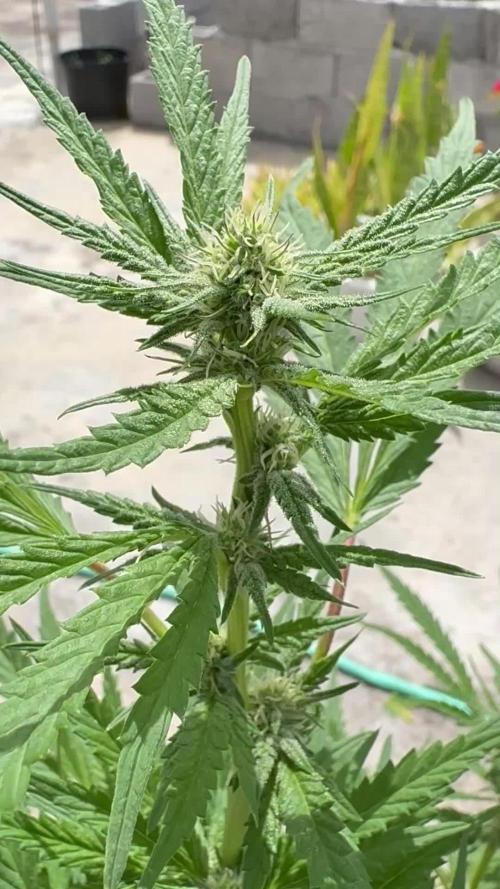
06/08/2025 20:15 Good climate but one day in the middle of the week had 2h of heavy Rain with some hail(FUCK) that damaged one branch of the frostbanger Gorilla z bumping and frosting all good Frostbanger unbelievable how frost It can be on her very first days of flower,this Will be frost and a banger😂 Apricot auto and Coco milk now transplanted ,had some problems bringing them here that's why they look sad Fucking boars this place Is so dangerous right now
Likes
34
Share
@rhodes68
Follow
Easy harvest not a terrible amount of leaves. Drying can be difficult at times depending on weather conditions due to the density of the buds, watch close. Dry went well
Likes
23
Share
So looking like it's getting very close to harvest going by breeders advice and others i've sen with this variety. Mostly orange hairs nw only a few whites and they're starting to receed into the buds so i wanna flush well for a week or so and see how it go's
Processing
Likes
25
Share
@Dunk_Junk
Follow
Day 77 - She's doing her thing this week. Pushing out trichomes. Looking good though! 😎
Processing
Likes
5
Share
@PETEROG
Follow
Hey guys everything is going great with these ladies all 6 germinated and popped up in 3 days after planting 1 of the six shooters is a lot smaller than its sisters so I've order LEMON PIE from FASTBUDS should be here tomorrow to take its place and I'm going to move the six shooter outside so if you would like to see its journey comment and like bellow ⤵️ The only thing I wish I did differently would of been starting these girls under a cfl or a cheap led to stop stretching but lesson learned if anyone has any question's please comment and thank-you all for your support ✌️
Likes
13
Share
Day 15-22/04/22 im going to start giving them bio grow on next watering tomorrow everything is looking good 👍. - Day 18-25/04/22 looking great really good 👍. - Day 21-28/04/22 all looking fabulous!!!!!!
Processing
Likes
14
Share
@DonPato
Follow
14 días desde la aparición de su fase de plántula y es como si estuviesen montadas en un cohete 😮! la mezcla de "Superguano" y "Microvita" de Top Crop en las medidas exactas, hace que las plantas crezcan increíblemente bien, fuertes y sanas, estoy enamorado sin duda alguna. Ahora comenzamos con la tercera semana, estoy sacando fotos diariamente para que se pueda ver el crecimiento de ellas, ayer domingo 17 de noviembre, hice el primer riego con 1,5 litros de agua con un 50% de "Top Veg", esto quiere decir 2 ml. de nutriente, por 1 litro de agua. No hice fotos de hoy en la mañana, pero en la tarde subiré un vídeo de como vienen. Les recuerdo que pueden ver más fotos y vídeos de todos mis cultivos anteriores, mis "tips" y otras cosas en mi instagram @donpato_cultiva. _______________________________________________________________________________________________________________________________________ 14 days since the appearance of its seedling phase and it is as if they were mounted on a rocket 😮! The mixture of "Superguano" and "Microvita" by Top Crop Nutrients in the exact measurements, makes the plants grow incredibly well, strong and healthy, I am in love without a doubt. Now we start with the third week, I am taking photos daily so you can see the growth of them, yesterday Sunday November 17, I made the first irrigation with 1.5 liters of water with 50% of Top Veg, this means 2 ml of nutrient, per 1 liter of water. I did not take pictures today in the morning, but in the afternoon I will upload a video of how they come. I remind you that you can see more photos and videos of all my previous crops, my tips and other things in my instagram @donpato_cultiva. have a nice week! ___________________________________________________ que tengan una hermosa semana., gracias por ver. Buenos humos!👽
Likes
6
Share
02.06. the previous week I took to cutting back everything except 8-10 branches per plant. Each arm remains with sprouts at the top only (like lollipoping but with the leaves still on). I contemplated for a while before doing this an compared with last year's growth. Definitely want less little stuff in the lower region and a cleaner structure overall. TMV on the Quick Sherbet leaves looks contained. White clover growing along well, gave 1g / L of greenhouse feeding bio enhancer. This week is mostly cloudy and rainy so expect slower growth but good progress.
Likes
37
Share
@rhodes68
Follow
11/23 Week 9 Start the week with a harvest, Pat LSD-25 Harvest day. Pat - 940 Grams wet will take a big hit on dry due to her structure but think she will dry out to about 150 grams see if Im right. Pics on the rest later Note on LD-25: We like to harvest these before the trics start going amber, the psycho-activity is unreal at that point. pics 11/24 Joan's buds are closing up so time to put her on a ripening feed as listed. Thinking 10 days to finish last few in flush 11/26 Pat the Tall yielded 158 grams dry Great work big girl now lets see what Blondie will do 11/27 Joan has gone on Phed water her buds have closed and no sense keeping it up ready to finish up Listed feed is latest for Blondie as she builds cotton balls 12/1 Sorry for the delays got an issue or two over here. New week tomorrow promise May harvest Joan tomorrow she is ready will depend on our schedule if not then the following day Not the monster my wife #HisHope grew last summer but a very respectable girl. Have a guess in mind but think I will sit on that my guesses have been pitiful of late 😝
Likes
10
Share
@Rko41
Follow
Super phénotype la couleur violet s’invite vu que c’est une fast elle avance rapidement j’ai griffer un peu de guano de chez top crop avec un peu de sel d’epsom
Likes
27
Share
###Deutscher Text unten The week started well until I noticed the yellow tips on day 24. I had actually ruled out overfertilization as I hadn't fertilized at all. Apparently, however, the nitrogen is released/absorbed irregularly in pre-fertilized soil. The Floragard Grow Mix is apparently very strong and more suitable for photoperiodic plants. I skipped the planned fertilization with Terra Vega accordingly. However, my girls survived the whole thing well and have now entered the flowering phase. On day 29, I gave them their first fertilization with Terra Flores. I'm currently watering one liter every 2 days. I had problems getting the humidity down. It was actually always over 60% in the grow tent. I had to open the tent and set up a dehumidifier in the room, so I get 40-50 LF, but the room also gets quite warm from the dehumidifier and half the house “smells” of the three ladies. Not ideal, the next grow will go outside in June. I have the feeling that I should defoliate the plants to give the buds more light. But I don't want to stress the plant, especially as it's an automatic. .... So far I've only tried to pinch off the large leaves. Maybe you have some advice for me! ###Deutsch: Die Woche begann gut, bis ich die gelben Spitzen am Tag 24 bemerkte. Eine Überdüngung hatte ich eigentlich ausgeschlossen da ich noch gar nicht gedüngt hatte. Anscheinend wird der Stickstoff in vorgedüngter Erde aber unregelmäßig abgegeben/aufgenommen. Der Floragard Grow Mix ist anscheinend doch sehr scharf und eher was für photperiodische Pflanzen. Die geplante Düngung mit Terra Vega habe ich entsprechend ausgelassen. Meine Mädels haben das ganze aber gut überstanden und sind jetzt in die Blütephase übergegangen. Am Tag 29 gab es dann doch eine erste Düngung mit Terra Flores. Ich gieße im Moment einen Liter alle 2 Tage. Hatte Probleme die Luftfeuchtigkeit runterzubekommen. Im Growzelt waren es eigentlich imm über 60%. Musste das Zelt öffnen und im Raum einen Entfeuchter aufstellen, so komme ich auf 40-50 LF, aber der Raum wird auch ziemlich warm durch den Entfeuchter und das halbe Haus "duftet" nach den drei Damen. Nicht optimal, der nächste Grow geht im Juni nach draußen. Ich habe das Gefühl, dass ich die Pflanzen entlauben sollte um den Buds mehr Licht zu geben. Ich will aber die Pflanze nicht stressen, vor allem weil es eine Automatic ist....Habe bis jetzt nur versucht die großen Blätte runterzudrücken. Vielleicht habt ihr ja einen Rat für mich!
Likes
201
Share
These seeds are very good genetics they withstand a lot of heat and they still remain looking healthy they struggle through it but they look like they're overcoming it I'm very proud of the genetics very proud of my light and my tent good luck GrowMie have fun
Likes
4
Share
I still can't believe how fast these plants are. Sensational, I believe that I will be carrying out the harvest soon
Likes
18
Share