


Likes
Comments
Share


@MasterKush714
Follow
06/10/2024 Roots roots Rootz!!!!
Had to take out a few that weren't moving along!!!
06/14/2024
They going in lfg!!!!

Likes
4
Share


@DontStopBelievn
Follow
First full week in 1 gallon pots. They will need to be topped soon, most likely between this weekend and early next week before update.
After the light goes off, I've been foliar feeding with a fine mist of 1:4 dilution of my usual hydro vegetative solution: 3.5 grams of General Hydroponics MaxiGrow, 3mL of Botanicare Cal/Mag, 4mL of Botanicare Hydroguard per gallon. adjusted using General Hydroponics pH down. Solution is stored in an aerated bucket. Will be moving to a 1:1 dilution.


Likes
1
Share


@Professor_Chaos
Follow
Beginning of week..
So I went ahead and did a late defoliation.. humidity is sitting too high in the tent.. its been around 50 - 55 % RH but it does sometimes get up to 60% RH.. removing some of these leaves should help lower the RH AND lower the chances of getting mold.. these are gonna be some fat colas.. and those are the ones mold can creep up on.. doing my best.. dehumidifier just cant keep up.. but I also dont run it inside the tent due to the heat that thing and it's transformer give off when it runs for over 24 hours or so.. but she shouldn't mold.. I've got 3 fans inside just moving air.. but of course, sometimes that isn't enough.. but we will see how this goes.. may even add another fan.. keep it on the floor of the tent an point it up.. we shall see! But damn she smells so amazing.. i can smell alot of similarities from the Mandarin Cookies in here.. which also has Mandarin Sunset as a mother.. just as this one does.. but you can smell the skunk along with it.. but not as powerful as the citrus.. aw man the citrus.. love that shit.. I even chewed on a trichome covered fan leaf.. very delicious! So glad I have 9 more of this strain and a few others from ETHOS.. next run may be some Aura Genetix.. I've gotta see what fast versions are all about.. I bougt some of the Peach Bellini.. should be pretty epic.. keep an eye out for that diary after this one!
Mid week..
Lower branches are getting plenty of light after the defoliation. The smell is getting intense. My carbon filter has began to smell like shit lol. Not literally.. but it stinks.. maybe like rotten skunk or something.. I've ordered a new one but I took that smelly one off for now.. so the whole block smells like member berries right now till the new filter comes in.. tomorrow. I couldn't figure out what the smell was untill i accidentally got my face into the exhaust fan wind.. smelled like rotten skunky shit.. lol. I guess I forgot things need to be changed out every so often.. just figured "air" running thru it wouldn't make it crap out so fast. Been maybe 8 - 12 months.. something like that. Never used one before this.. but running some ETHOS, it is a must! So citrusy! Purples are slowly coming in. She really reminds me of the Mandarin Cookies I grew.. but I also think the Mandarin Cookies was heavier on the Mandarin Sunset phenotype side.. and this one is pretty similar. Scent, growth, stretch.. but I know I cant say for sure that's what it is.. this is just what I believe is going on. But wow.. such a beautiful plant.. I've had to run a a few twist ties to other branches in order to keep them from flopping over, leaning on eachother and the sides of the tent.. should have scrogged I guess lol.. live and learn tho.. but so far its not too bad.. but this early on shows me what I might have to be dealing with in the next couple of weeks cuz they are beginning to get STACKED! I've said it before, and I'll say it again... ETHOS for the win 🏆
Later that day...
Wow.. going back in again and now she smells just like the Early Lemon Berry! Wth! How is that even possible?! She is doing amazing things! Some calyxes are beginning to turn purple. Some of the top leaves are as well. Tried to get some decent pics of it.. but I guess I cant figure the new phone out.. as you can see, some pics are a little blurry. And sometims the capture is delayed behind the flash and I still get a dark pic as if it didnt even flash.. but whatever.. I can't wait to see what she has to offer! Such a gorgeous girlie! So happy and excited for this one!
End of week..
Nothing left to do now but feed/water for about 1 more week and she will be ready for the 2 week flush!.. I normally like to just water as normal (without nutes, duh) for the entire 2 weeks and still keep checking runoff.. maybe FloraKleen once a week and then just water till harvest! So far, I am starting to see some milky! Still mostly clear, but that means she is getting closer! So excited! This girl really smells just like the Early Lemon Berry I grew! But still with a bit of sweetness to it too! Aw man I can't wait! Anyways... on to the next week!...


Likes
100
Share


@AsNoriu
Follow
Day 86 . I will chop first two today. Plant A and B, C stays for a week still, a bit airy and not mature , but she was in shade mostly ...
Spent almost 5 hours defoliating other plants and got too high and drunk a bit, so dry trim chosen for first two ;))))
Day 93. Last girl down ! Dry trim again !
@PurpleWorship just to prove my kilo idea I made a video for you ;))) this one was starved, she needed watering yesterday, so I could bump her to 1.5 easy .... Her sisters were heavier ;))) will do one more with monster Green Crack, can make a bet she will be above 2 kg easy ! ;)))
Made some bubble hash, got light brown and pinky colour at the end when dried. Lovely !
Happy Growing !!!

Likes
39
Share


@MariRemediesLLC
Follow
Everything is going good. Nothing to report. Grow babies, grow babies!
Likes
Comments
Share


@MrDainAndToeniAsiaCrew
Follow
This week, we feed mycorrhizal fungi to the plants and it gets the excellent results. The plants grow extraodinarily.



Processing
Likes
1
Share


@sandro20
Follow
got my dehumidifier delivered, set it up today, I'll see if it works.

Likes
4
Share


@Hix57
Follow
Jour 35 et tout roule ! Ma plante se développe à merveille, même si elle a décidé de stopper son élongation assez tôt, ce qui lui donne un aspect trapu et compact.
Je suis plutôt satisfait de mon suivi, car j'ai réussi à éviter les erreurs du passé, comme le surdosage d'engrais. La terre est suffisamment riche en nutriments organiques pour subvenir à ses besoins.
Hâte de voir comment elle va évoluer dans les prochaines semaines
Jour 35
Engrais : max mais pas de NPK sauf phosphore et potassium a petite dose.
Remarque : la plante ne s'est pas étirée suffisamment

Likes
20
Share


@eldruida_lamota
Follow
Que pasa familia, traemos nuevo diario, en primer lugar dar las gracias a Nara hydro que sin ellos esto no es posible.
Os enseño la primera semana de esta farm cheese de genofarm, una semilla con más de 3 años de conservación, tuvo un germinado en 48 horas sin problemas aparentes.
La introducimos a 0,5 cms en medio del sustrato, una maceta pequeña unas semanas mientras Coje fuerza.
Las vamos a crecer esta vez bajo un led TS-600 de la marca Mars hydro.
.
no olvidéis que comprando con el código an420 en mars-hydro.com obtendréis un pequeño descuento en cualquiera de sus productos.
.
Nos vemos la semana que viene con más familia 💪

Likes
13
Share

@Rlhjr413
Follow
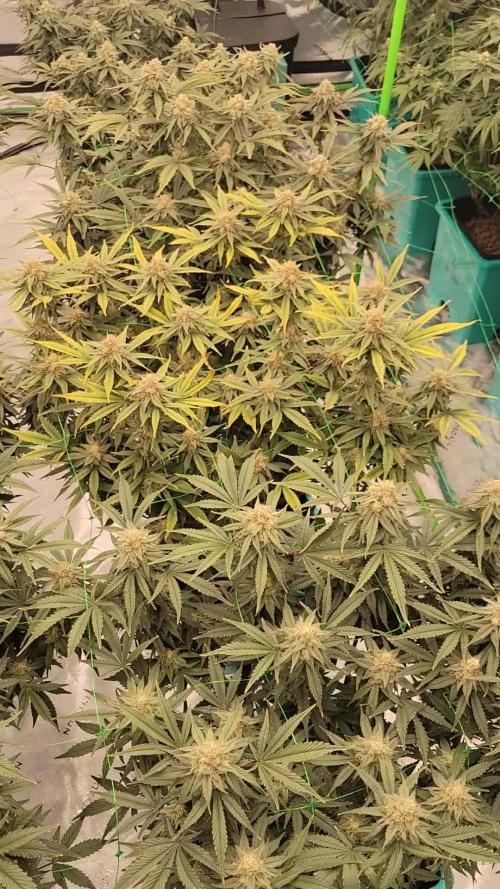
Mid week as always due to flip day and my schedule. One reddi whip on track other 11 taken there time. 1 of 10 dantes wrath just will not keep color its burning or draining nutrients rapidly. Wish reddi whip whole catch up with dantes wrath so they atleast can be pulled on same day.
Likes
4
Share


@estevencueto
Follow
Después de llevar 13 días sin postear nada sobre mis autos debo decir que van en buen camino, llevan una floración más avanzada. Sigo con la misma dinámica, riego a base de aloe vera y semillas germinadas de soja verde esta vez he comenzado a agregar silicio para fortalecer la planta. La receta de té es la misma que la de antes:
Tierra de cultivo 100g
Hummus de lombriz 200g
Guano de murciélago 80g
Puñado de compost de caballo (imagino que unos en la anterior toma también 40g)
Cola de caballo 2.5g
Espirulina 7g
Hidrolizado de kelp 20g
Ácidos fulvico 2ml
Melaza 90ml
Siempre oxigenado 24h
Preparado para 15 litros a las plantas más jóvenes al ser trasplantados hace poco les suministro diluido con una tercera parte de agua. Por la mañana aún llevando menos oxigenación les fumigo el te de compost también diluido a toda la terraza y les sienta genial.
Os dejo escrito como he preparado mi tierra y las enmiendas realizadas.
50% sustrato antiguo bien reposado limpio de raíces ( light mix) en este caso, llevan casi un año y no tienen mucho nutriente pero esta en buen estado.
50% basado en 35% fibra de coco 15%hummus de lombriz 2l perlita
Como extras nutrihemp, torta de neem y dolomita. Todo dosis recomendada. Sin medición de ph ni ec en ningún momento del cultivo. Es mi primera mezcla y por ahora las plantas transplantadas han tenido un cambio notable a como lo tenía al empezar el cultivo solo con tierra antigua y hummus. Tengo acompañando a estas auto a unas 6 feminizadas y otras 2 autos todas lucen verdes y sanas

Likes
45
Share


@MadeInGermany
Follow
Info:
Unfortunately, I had to find out that my account is used for fake pages in social media.
I am only active here on growdiaries.
I am not on facebook instagram twitter etc All accounts except this one are fake.
Flowering day 11
since time change
to 12/12.
Hi everyone 😀.
It has a very nice stretch and is developing really well :-).
Yesterday I got her GHSC Powder Feeding Bio Bloom for the first time given (2 g GHSC to 1 l coco).
In 14 - 20 days she will get another 1 g per l coco.
It was poured twice this week with 1.2 l each.
Otherwise the tent was cleaned and everything was refilled.
Have fun and stay healthy 🙏🏻
You can buy this Strain and Nutrients at :
https://greenhouseseeds.nl/
☝️🏼☝️🏼☝️🏼☝️🏼☝️🏼☝️🏼☝️🏼☝️🏼☝️🏼☝️🏼☝️🏼☝️🏼
Green House Seeds Company Cup Clone 🏆
Type:
Wonder Pie
☝️🏼
Genetics:
Wedding Cake x OG Kush
👍😍
Vega lamp: 2 x Todogrow Led
Quantum Board 100 W
💡
Flower Lamp : 2 x Todogrow Led
Cxb 3590 COB 3500 K 205 W
💡💡☝️🏼
Earth: Canna Coco
☝️🏼
Fertilizer: Bio Grow Feeding ( GHSC ) , Enhancer ( GHSC ) , Bio Bloom ( GHSC)
☝️🏼🌱
Water: Osmosis water mixed with normal water (24 hours stale that the chlorine evaporates) to 0.2 EC. Add Cal / Mag to 0.4 Ec Ph with Organic Ph - to 5.8

Likes
42
Share


@Only4passion
Follow
Harvest time I decide two hang the entire plant for a slow drying !!
I finally removed the plant to much humidity it was around 80%😥 it’s raining hard those days anyway I checked every buds and no mold so I switched to my old method .
📦 humidity now it’s 55% 👌
5 days of drying I try to keep humidity around 60 and 17 degrees to keep all terpenes n flavour, terpene don’t like low humidity ,heat ,and of course lightning ,see y’a next update 💪💪💪
I had 34g of nice frosty trim ,for the first time I’ve made some nice bubble hash amazing I love it!!!
I watch all of he’s videos he was the marster of hash RIP French cannoli 🙏🙏🙏

Likes
10
Share


@23Savage
Follow
here we go, day 12 from born, i think it goes little slowly, what you all think maybe add floratrio? "bloom,micro,grow"?


Likes
18
Share

@BlaKX
Follow
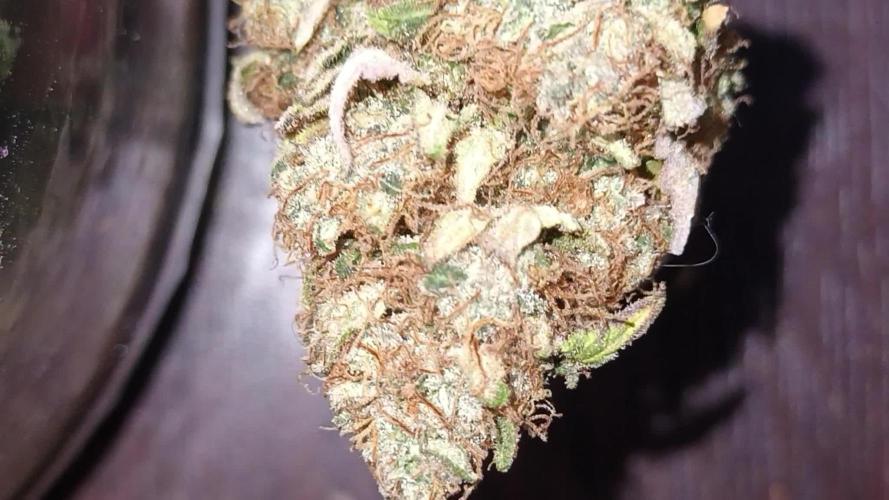
Sie konnte 70 Tage Blühen wie vom Hersteller vorgeschlagen. Mehr hätte sie auch nicht gebraucht man spürt eine gewisse sativa Dominanz was sich in der etwas längeren Blüte äußert was sich definitiv lohnt. Dank der Canna Terra Professional Plus Erde hat sie eine erhöhte Terpenen Produktion an den Tag gelegt ich hätte vlt. Mehr Dünger und ertrag erreichen können wollte aber bei diesem Grow mehr Wert auf Terpene und Trichome legen.
Gummibärchen mit Diesel Note würde. Ich das Aroma beschreiben:)


Likes
20
Share


@bhanga_garden
Follow
I ended up with a bit of a situation in my tent so I'm improvising a little bit. My other plant that was planted along side this one didn't make it so now I am going to get another one in there and get it ready for flower as well - it is going to take a little longer though to get that plant going and even then I won't be mainlining that one like I was planning to. Either way, this plant needed to be slowed down a little bit so I went ahead and stripped everything off of her other than topping and of course I left the branches that will become the foundation for the mainline.
She's super healthy and was growing incredibly well before I chopped her up - I'm confident that she'll make a full recovery and also that it'll slow down a bit so I can get another plant going!
Likes
1
Share


@Genji
Follow
Blütewoche 5 läuft ohne Probleme. Die Buds werden schnell schwerer. Muss mir wahrscheinlich bald Gedanken machen sie zu stützen.
Likes
2
Share

@DogDoctorOfficial
Follow
🍮 Chem Brûlée – Pheno A
Week 7 | Listening to What the Plant Is Saying
Welcome back to another chapter of the 8×8 Adventure!
One of the biggest lessons this project continues teaching me is that every phenotype speaks its own language.
Some whisper.
Some shout.
Some ask for almost nothing.
And others aren't shy about telling you exactly what they need.
Chem Brûlée Pheno A definitely belongs to that second group.
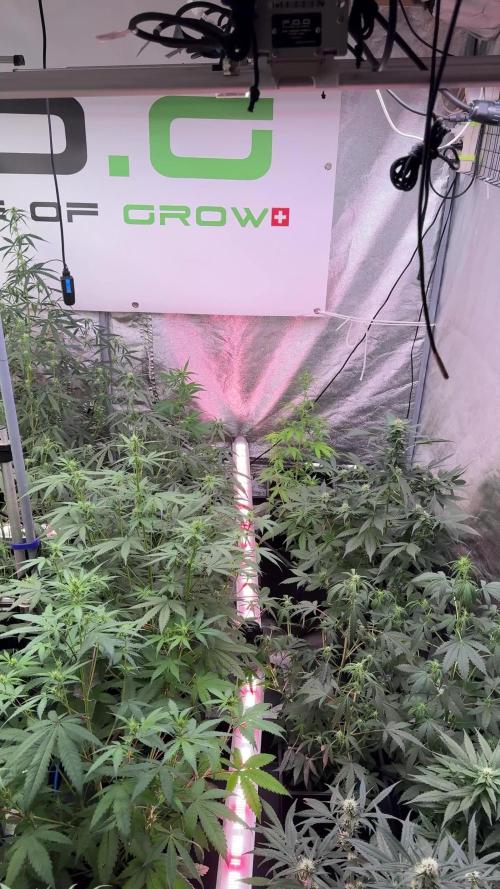
Standing at around 120 cm, she's what I would consider a medium-sized indoor plant. She isn't trying to dominate the room with height, nor is she hiding beneath the canopy. Instead, she's growing with a beautiful balanced structure, allowing every branch plenty of space to develop its own flowers.
This week she reminded me that healthy cultivation isn't about forcing plants to follow our schedule.
It's about paying attention when they ask for something different.
🌿 A Plant That Isn't Afraid to Ask
One of the first things I noticed this week was the colour of some of the older foliage.
Several lower fan leaves continued becoming lighter green than the rest of the canopy, clearly telling me that this phenotype wanted a little more nutrition than she had been receiving.
Rather than seeing this as a problem, I see it as communication.
One of the fascinating parts of growing twelve different cultivars side by side is discovering that every plant processes nutrients slightly differently. They all share the same AutoPot reservoir, the same environment, the same lighting and the same feeding schedule, yet each one responds according to its own genetics.
Chem Brûlée simply happens to be one of the hungrier ladies in the room.
The good news is that after increasing the EC for the entire reservoir, she's already beginning to respond beautifully. The newest growth is noticeably greener and healthier, giving me confidence that we made the right adjustment at exactly the right time.
Sometimes plants don't need dramatic interventions.
They simply need us to listen.
🌼 Building Beautiful Flowers
While the foliage has been asking for a little extra attention, the flowers certainly haven't slowed down.
The main cola continues becoming more defined every day, while bud sites keep stacking along every branch throughout the plant.
Fresh white pistils continue emerging everywhere, and it's becoming easier to imagine the shape these flowers will eventually take over the coming weeks.
The stretch is now beginning to slow.
Flower production is taking over.
Every day a little less energy goes into growing taller, and a little more goes into building beautiful colas.
This is where the fun really begins.
🍃 Letting the Plant Lead
Apart from increasing the nutrient strength, this has been another calm week inside the tent.
No heavy defoliation.
No unnecessary training.
Just careful observation and a little leaf tucking whenever needed to expose developing flower sites.
I've learned that during these early flowering weeks, patience usually gives better results than constantly reaching for the scissors.
The plant already has a plan.
Sometimes my job is simply to stay out of her way.
🍽️ Feeding
After seeing this phenotype asking for a little more nutrition, the reservoir strength was increased for the entire room.
This week's feeding consisted of:
• Terra Bloom – 2 ml/L
• Green Sensation – 1 ml/L
• Sugar Royal – 1 ml/L
• Power Buds – 1 ml/L
Along with small pH adjustments using Lemon Kick whenever necessary.
Since every AutoPot shares the same nutrient reservoir, individual feeding isn't possible. Fortunately, the entire room was ready for the increase, meaning Chem Brûlée benefits from the adjustment alongside all of her sisters.
🌡️ Environment
The flowering room continues running beautifully stable.
• Day temperature averaged 29°C
• Night temperature remained around 25°C
• Relative humidity averaged 60%
• Solution temperature stayed close to 22°C
• Root zone remained near 21°C
• Atmospheric CO₂ averaged 639 ppm
Providing the plants with a stable environment allows them to dedicate their energy toward producing flowers instead of constantly adapting to changing conditions.
Consistency continues to be one of the biggest advantages in this grow.
📸 Behind This Week's Photos
This week's photographs tell a wonderful story.
The close-up shots reveal beautiful clusters of fresh white pistils beginning to stack into proper flower sites, while the wider images showcase a very balanced plant with elegant branching and excellent spacing throughout the canopy.
You can also spot the lighter colour on some of the older leaves that first caught my attention this week, but the newest growth already looks healthier and much richer in colour.
It's always satisfying when the plant immediately shows you that she's appreciating the changes you've made.
Sometimes photographs become more than memories.
They become conversations between grower and plant.
🔍 Looking Ahead
Next week should bring another exciting step in her development.
I expect the flowers to continue stacking as the stretch gradually comes to an end and the plant shifts almost entirely into flower production.
I'll also be watching the foliage closely, hoping to see that healthier green colour continue spreading now that the feeding has been increased.
The plan remains exactly the same.
Maintain a stable environment.
Keep the reservoir consistent.
Observe carefully.
And let the plant do what she does best.
Sometimes growing isn't about constantly changing things.
Sometimes it's about making one good decision and giving nature the time to respond.
💚 Thank You
A huge thank you to everyone following this 8×8 Adventure.
Whether you've been here since Germination Week or you've only recently joined the journey, I'm incredibly grateful to have you along for the ride.
Special thanks to:
💚 GrowDiaries for creating a home where growers from every corner of the world can share knowledge and experiences.
🍮 Zamnesia for providing the incredible Chem Brûlée genetics that continue revealing their personality week after week.
🌱 Plagron for supplying the nutrition supporting every stage of this grow.
💡 Future of Grow LED for delivering powerful and consistent lighting throughout the flowering cycle.
🌿 LumiFlora for the under-canopy lighting helping every flower site receive the light it deserves.
🌡️ TrolMaster for maintaining the stable environment that allows every phenotype to perform at its best.
And finally...
Thank you to every grower, supporter, silent reader, friend and curious visitor who stops by these diaries. Every comment, question and discussion makes this project even more rewarding to share.
I'll see you all next week as Chem Brûlée Pheno A continues proving that sometimes the most beautiful plants aren't the ones that never ask for anything...
They're the ones that teach us how to become better listeners.
Growers Love, and happy growing everyone. 🌱🍮💚
