The Grow Awards 2026 🏆 







Likes
Comments
Share
@M420_GROWS
Follow
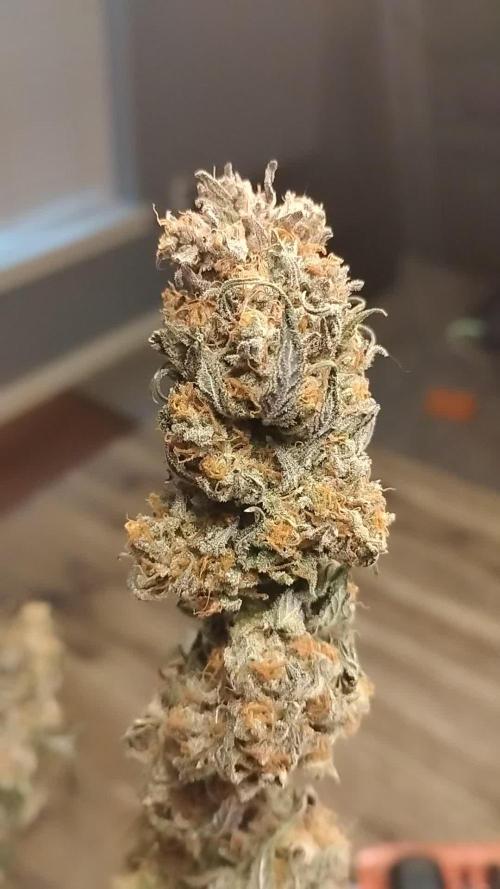
+5cm, I think reached her final height.
Smell is very strong and delicious.
There were a lot of leaves to trimm in this week. Getting difficult to trimm colas without touching young flowers - going to reduce defoliation.
Will continue to feed flowering mix, but still plan to switch to final parts mix very soon.
Spraying maybe every second day once a day now, keeping RH between 40%-60%.
Appreciate growing this one - very strong plant with delicious smell😍
[Setup]
- Tent: Sticky Experts 1m x 0.5m
- Light: 2 x Sanlight Q3W at 100% = 240W
- Pot: Nutriculture Oxypot Single filled with 10L solution

Likes
49
Share
@masterofsmeagol
Follow
8/1 Took another video but didn't upload either videos when I was in town. I'll have to upload later. I have a lot going on and I need to consult my diary more often. The Temps dramatically changed. I watered yesterday just a few that were light but then it poured all night. This morning things looked SUBSTANTIALLY better. I think as long as I can get some sunlight the next few days things will be alright. That streak of weather in the 100s really did a number on me and my plants. Everytime I go they seem to be looking better so I hope that they bounce back and I don't lose anything after all this work. Plants seem "strong" though. They appear very healthy. This just seems like a mistake I made that was substantially worsened by severe thunder storms we weren't supposed to get. If they don't come back before rain I may move the plants that haven't recovered yet inside the barn for the night. It really depends. I want them to dry out. I'm thinking of going and putting a fan in the cage on the smart pots. I just need to keep an eye on them.
UPDATE: I was worriedly watching my plants from the cams and got a message from my father saying my plants were "REALLY DROOPY." I got there and noticed they were WAY worse then earlier and it was sunny and 70's. I got my dude on the phone and sent him several pictures. Luckily I had a second opinion also from my father. A 3cu ft bag of 707 is 22 gallons. These pots were light like that. They just have a seven foot plant in them lol. I'm so happy. I was planning on bringing them Inside tonight in case of ANY rain, luckily I was able to ascertain THE REAL problem, consult my diary and askother growers. Things are looking good. I'm so happy I'm not overwatered.
8/2 Thank the Lord! And my father for his constant vigilance and my commercial buddy for always being there for me. I went over this morning and everything is back up. Plants definitely got stressed though. I think I was OVER and UNDER watering during those days where it was 100 degrees. It'd 68 today. I say this because as soon as I watered the plants they started picking right back up. Luckily I had a dry bag of 707 to pick up and compare with my 20 gallon grow bags and had my father check the weight as well. He's a forester and told me the weight was about tge same. I gave the big blue cheese in the back closer to 2 gallons until I saw some water coming out the bottom. The reason I think I may have overwatered is that the water evaporated as i had watered during the day or at night but not the 10% that they needed. I didn't QUITEgive them all their 10% last time more like I split the difference and did a gallon amd half. Some did get two though. I noticed some light yellowing going up one of the plants that I've watered the most. These plants are transitioning fast to flower. I think I've got the watering schedule down better and that's "don't water them on a schedule". I'll have to individually take note of the plants. Also on that plant and a few others I see minor nute deficiencies so as soon as I can feed I'm going too. I'm going to show my buddy all my info and ask his advice before i take the next step though. I can't believe they made it through this. Talk about anxiety. Wow.
UPDATE: Talked to my commercial buddy. He advised to pick off any of the dead leaves, (which I mostly already have there weren't many) and to wait until next water to feed. He broke it all down in a way i could understand. Then he broke the feeding down further for me so I now know where to start. He did say he thinks my only problem this year will be, "finding a place to store it" lol. I thought he was joking but he went out back and brought out five gallon buckets with screw top lids lol. This back and forth dialogue (with a professional) is seriously lowering my anxiety and giving me confidence that im doing the right thing. Hes never led my wrong and hes always been there. So has my dad. He said to take the old man out for coffee because he saved my ass! I opted for the bottle of whiskey instead. I'll be checking them later. I'm waiting to feed until next watering and I'm waiting to apply BT. I don't want to do anything to a plant that has been that stressed. I'm giving them a few days to chill. Then the twenties will get a quart of grow big, big bloom and calmag and I'll convert that measure to the same amount for the 30's, and 50's. I'm not sure EXACTLY how big that tote is but I think it's closet to 30 than to 40. So I've got a solid plan for the week. I think what I'll be looking to do next is get my supports up. The wind has been crazy but these plants (even when stressed) seemed super strong! Still no fungal stuff knock on wood.
UPDATE: Had to take the car to the mechanic and snag my wheeler to make it home. I sefoliated quite a few bog yellow fan leaves and some smaller leaves down low. Plants went through some stress thats for sure. I HAD to leave my phone with the wife as she had a telehealth appointment so I couldn't take pictures. I wish I could've because things are looking great. I can't wait until things dry out a bit and I can feed! I'm STILL in awe of how my plants look RIGHT NOW and how the looked yesterday. Another buddy said If I didn't see it (and I didnt know you) I wouldn't have believed it was even the same garden! I'll check AGAIN later if my car is ready. I'm anxious to feed and get my supports up. Plants are STRONG though.
8/3 Plants looked great this morning. I did notice what looked like nute deficiencies on the plants I've watered most. After speaking with a few local growers I decided to water. I watered everything a gallon. The containers got more. The 10 got less. Then i mixed up a feeding solution of 1 tsp grow big 2 big bloom and .5 calmag and fed the 20s approx 1.5 pints. A little less for the 10 and a little more for the bigger pots. I'm going to go back over and if I see no negative effects from earlier I'll use the rest of the solution. I'm hoping this was the right decision. It hasn't been enough time but the bags were light. Not SUPER light but last time I waited it didn't work out well for me. Two local growers have told me theyve been watering daily and they have plants in raised beds and right in the ground. I want my watering to be in the morning anyway. Hopefully this works out. I'll update.
UPDATE: Went back over and everything was standing up nice. They loved that water and the small dose of nures hasn't burned them so ill be able to use more next time. I used a Gatorade bottle thats 1.25 pints amd went from there. A total of two gallons was used on the garden. Things look amazing. Things are changing on the daily. I'm losing some leaves now. Well they aren't dropping off but I'm plucking them before they yet that far. I need to water in larger volumes I think. Plants are drying out too quick. Others are saying they are watering much more often as well. It really hasn't been raining and these plants are huge. I have lush green leaves but this transition and the added watering I think has leeched a lot of the nutrients from the soil. Since I have the fox farm that's what I'll be using. I still have a couple leaves that are destroyed by a fourkined plant bug. It's very identifiable so theres another I need to find. Also seeing chunks missing from leaves. I need to up my ipm game. I don't want to do more than one thing at a time though so I know what happened if anything goes wrong. Since i did the nutes today the spraying of BT or captain Jack's I'd going to have to wait. Despite losing these old fan leaves my plants are dense. Defoliating really helped with airflow. I also noticed some chlorosis on a few leaves. That's why I'm going to start doing the 10% minimum. I'm waiting until they are real dry then I'll give everyone (but big blue) their 10%. I got run off from big blue just from like a gallon amd a half today. I hope my 2 minute video uploaded. It says it dis but u bet it didn't. I'm trying again and I'm at 12%. Let's see if my patience lasts. Looks like it doesn't want to upload
8/4 Thunderstorms and heavy rain all night. It's supposed to rain steadily all day. Plants werent drooped or blown around looking or anything after this storm and I only have minimal supports up. I defoliated anything that needed it. Just a few yellow leaves on the bottom interior. More like nitrogen deficiency. I am watering to frequently though. Im noticing some chlorosis (minor) on old far leaves. Could just be that the soil is getting depleted but "if the brown surrounds your plant is drowned" and I noticed a few leaves like that. Just a couple bit i know what to look for. I hate to say it but i think ive almost got things dialed in for this grow. I will need to put up further supports. These are some STRONG plants. I shook them all off today. The seemed to love the nutes. Plants looked way better this morning than I was expecting. I need to up my watering volume to 10% everytime. I DID fine more pillar damage when defoliating and a four lined plant bug mark on the purple punch in the ten.
8/5 It's not raining right now but it Rained all day and night. Plants really seemed to likecthise nutes. I'll up it to a quart next feed. I defoliated what needed it. Found my FIRST totally yellow leaf of the season. Big old interior leaf i must've missed earlier. Smell has greatly increased. Seeing that these plants seem to have no ill effect from all this water I feel more confident about my ability to fully water them their 10%. Especially since they are massive plants. I have one daln near 8ft and it's damn near as wide. Real good airflow. I think this is gonna be my year. I certainly hope so. I need to get rid of that fourlined plant big but more importantly I need to deal with pillars proactively so next nice night I'm going to treat with bt. Super proud of myself so far.
8/6 Didn't rain much yesterday. In fact I stepped out my door and the sun was fully visible and bright while rain poured down around me. It wad a cool experience but the plants dodnt get much for water. I checked the weight this morning (heavy) and shook off the plants and did my normal morning inspection. I news to remove a pallet so I have more room. Plants are really trying to flower. Next week I'm gonna yet them with a stronger dose of nutes. Last year this was about the time I lost my crop. Knock on wood but this is the healthiest crop I've ever had. I MAY apply BT tonight. Haven't decided yet. I'll keep the diary updated.
UPDATE: Went over to check the plants that were WET and HEAVY this MORNING because of the windstorm. If dried the bags out completely. Everything but the 10 was drooping right over like before. Good thing I've got some pretty good intuition. I took two videos. I gave everything their 10% 2 gallons each and for each container plant. Plants were back up by the time I was done adding supports.
8/7 Sunny this morning. Plants looked good. Had to defoliate some dead leaves. I can't believe those grow bags dried out so fast yesterday! Its just the wind was so strong! Plants were right sideways! They got some syrong roots thats for sure. One of them (my canary) seemed light this morning! But we are getting an inch and a half of rain starting tonight into tomorrow so im not watering ANYTHING. I'm not sure what I'm going to do IF anything. I added to my supports. I COULD put EVERYTHING in the barn where we put heavy equipment. I'll probably at least bring a couple inside in case something horrible happens. Things arecreally doing good. Flowering up nice. Found a cicada on one yesterday. First time I've ever seen one. I'll update with what I decide to do.
UPDATE. My canary seems a little light and is losing lots more leaves im not sure if it's because of the transition to flower but I assume that has something to do with it. Plants still have MORE than enough leaves. Found a couple pillars and killed them. Took a video. I have one blueberry cheese that I hope doesn't have a fungal infection as it's losing more leaves. But it takes more water and is greener and fuller up top. I think I'm just worried because of last year. I've done what I can gor the storm so let's see what happens if I NOTICE it get too bad I can bring some indoors.


Likes
46
Share
@Rollex420
Follow
- 17-05-21 (Day 1)
// //
- 18-05-21 (Day 2)
three of the girls got out of the soil correctly!😊
while the Runtz sprout is the only one that still remains in its seed despite she already opened it for 2/3 day now..🤔
its root seems to struggle to grow or pierce the soil ..
I'm helping her by keeping the humidity higher since I put this bag, we'll see what happens 🤷♂️🏻
..Any advice will be welcome 🙏🏻
as always have a nice day and happy growing to everyone! 😊☮️💚
19-05-21 (Day 3)
..Unfortunately the Runtz Muffin is dead, was unable to come to life like her little sisters.
After three days, i tried to help her removing her seed husk.. but there was nothing to do 😢
So here is a new start!! 😊
I put this Lemon Tree “Freebie” seed to germinate aaand to replace the poor Runtz Muffin. 😕🙌🏻
We'll see how it goes this time.. 🤞🏻🍀
Sending positive vibes for you and your garden ☮️💚
20-05-21 (Day 4)
All the girls are doing great and continuing their grow.
The Lemon Tree is doing great too with its germination, that in just six hours the seed has opened!
Now I’ll wait that the sprout grow a tiny root of (1,5/2cm) at least, to pass it into the soil.
Happy grow fam. Stay smoky 😙💨
21-05-21 (Day 5)
With today the girls are in their fifth day of growth. 🙌🏻
Bio-heaven (amino-acids) added to the recipe (1ml/1L)
As you know after the death of Runtz Muffin, I have been germinating the Lemon Tree for two days now, today is the third day for her after an excellent germination, I have transferred it from the paper towel to the soil to make it grow.
Let’s see how she will grow, Despite being a week behind, I hope she grows strong, healthy and fast🤞🏻
Have a good weekend, lift up and relax. Peace ☮️ 💚
22-05-21 (Day 6)
The Lemon tree is officially out of the soil, ready to grow! 🙌🏻💚
The other girls are fine, they are on their sixth day of life and they love the environment where they are growing up.
..Plus they are always listening to music (Lo-Fi) 24/7 ☺️
I hope they like it.. 🤷♂️🏻😆
That's all for today. Have a good weekend gromies!! 🧑🏻🌾👩🌾🏻☮️💚
23-05-21 (Day 7)
Today last day of the first week for the girls and first day of life for the Lemon Tree!
The nourishment for them is always the same, except for the Lemon Tree which for the moment I am just spraying water to irrigate it.
..In this round I expect great things!
Happy growing to everyone! ☮️💚
Likes
10
Share
@AestheticGenetix
Follow
This was an experiment grow. Seeing if I can grow and flower in a 1 gallon pot with organic amendments. These buds actually turned out better than when I grew this same cut early this year with a bigger pot.
Chopped at day 55 of flower on 10/21/25

Likes
65
Share
@Dendegrow
Follow
Welcome to week six! 🌱 Week five was a complete success – all parameters are perfectly aligned. I’ve increased the water conductivity to a solid 3000 and bumped the CO2 level up to 1200 🌿. Light intensity is now set at 1400 µmol in the center and 1000 at the edges, which will keep the plants strong in their generative state 🌞. I’ll maintain these levels until the end of the third week and then start slowly removing the large fan leaves to ensure the buds get plenty of light 💡✨.
I’m also trying something new to activate the “Emerson effect” 🌄: I’m running the deep red lights for 5 minutes before sunset and for another 5 minutes after the day ends. This should give the plants a final boost in photosynthesis, helping to maximize their growth potential! Everything’s looking fantastic so far! The Black Cherry has rooted well across different experimental setups, and at the end of the grow, I’ll provide a full report on the best care techniques for both strains 🌺👌.
Willkommen in Woche sechs! 🌱 Die fünfte Woche lief perfekt – alle Parameter stimmen. Ich habe die Leitfähigkeit des Wassers auf satte 3000 erhöht und den CO2-Gehalt auf 1200 angehoben 🌿. Die Lichtstärke beträgt jetzt 1400 µmol in der Mitte und 1000 am Rand, was dafür sorgen wird, dass die Pflanzen stark im generativen Zustand bleiben 🌞. Ich werde diese Werte bis Ende der dritten Woche beibehalten und dann langsam damit beginnen, die großen Sonnensegel zu entfernen, damit die Blüten ordentlich Licht abkriegen 💡✨.
Zusätzlich probiere ich etwas Neues aus, um den „Emerson-Effekt“ zu aktivieren 🌄: Ich lasse das tiefrote Licht 5 Minuten vor Sonnenuntergang und 5 Minuten nach dem Ende des Tages weiterlaufen. Das sollte der Photosynthese einen letzten Schub geben und das Wachstum der Pflanzen maximal fördern! Bis jetzt sieht alles fantastisch aus! Die Black Cherry ist in verschiedenen Versuchsreihen gut angewachsen, und am Ende des Grows werde ich einen ausführlichen Bericht darüber abgeben, wie sich die beiden Sorten am besten pflegen lassen 🌺👌.

Likes
15
Share
@rolling_stoned
Follow
The buds look good and smell strong; Mix Two has some monster buds growing. I'm still trying to determine its variety, but I'm leaning towards a Bruce Banner. Looking at the grow overall next week, I will drop the PK13/14 out of the mix, and I'm thinking maybe the week after I start the flush. I've put up a little fly-through video to get a better idea of the grow.

Likes
14
Share
@PREPPYPUNK
Follow
will have to see but at 8 & 10 weeks, i think they look a little small. as long as i continue watering, this new maxsisun mf2000 should fatten these buds up. cant wait for next grow with the new light in 3x3 tent. this is becoming the best hobby i can recall next to working in my garden all summer. and this grow diary is great as you can have an honest review of progress etc...i have learned so much from this community. Thanks and Blessings for all!


Likes
23
Share
@SonomaSungrown
Follow
BOOMING.
Have had an unusual amount of thrips and noticed a few Katydid nymphs on Tuesday (7/22), so I hit everything with 1.5tsp Neem Oil and 1 tsp of Dr Brommers soap in a 1 qt sprayer.
I also decided to do my only planned dusting of Diatomaceous Earth.
Executed that on Wednesday, 7/23, and also top dressed with DE to attack larvae.
Thursday 7/24
Mixed up first batch of flowering top dressing.
I put it into a 55 gal garbage can and watered it to get the cooking process started.
Will only let it go for a week or so and then will top dress the girls.


Likes
12
Share
@KIOSKOdeCHUKI
Follow
Buenos humos amigos!!bonitos dias de agosto jueves 6 de 2020 un saludo desde españa con este entretenimiento aki os dejo


Likes
16
Share
@Tipton
Follow
Day 45 in flower... Trichomes are about 80% milk and no amber... The paint and big Z are 7-9 weekers and orange cake is 9-10... Def few weeks on the orange cake... But getting close to how I like it on the other two... The smells are outta this world... Orange cake smells like orange cake... Very orange like it's nuts... Never smelt anything like it tbh... The paint is a different pheno than previous ones because there's usually a chemical skunk smell but this is a fruity pebble smell with layers of earth smell and a sticky presence that doesn't go away for a long time lol... The big Z is another sweet smelling but more along the smell of a mouth full of Skittles and that dirt earth smell aftertones... They're awesome and I'm really excited!
Day 46
They fattened up over night! Coming to n end... I did find little clusters of amber trichomes on the paint and I can't find many clear on the big Z... So it's right where I want it!

Processing
Likes
15
Share
@GrowerFromHell
Follow
Week 8 of this beautiful autoflowering lady from Barney's Farm.
I'm in love with this strain, the plant is very strong and vigorous, the leaves are already covered with crystal trichomes. Continuing LST on the capical so i can keep all the Buds at the same height.
Likes
17
Share
@SkunkyDog
Follow
Hallo zusammen 🤙.
Sie wächst sehr schön und macht keine Probleme.
Rabattcode für den BIOTABS-Webshop https://biotabs.nl/en/shop/ GDBT420, damit erhalten Sie 15 Prozent

Likes
21
Share
@DreamIT
Follow
Sponsored by:
AMSTERDAM MARIJUANA SEEDS-💡VIPARSPECTRA💡-💐GREEN BUZZ LIQUIDS💐-🛠️WEDRYER🛠️
4/9 hello growerz. Here I am back with updates. the temperatures haven't dropped much yet but we are in bloom. Today I bath with fertilizer
__________________________________________
Personal advertising (contains affiliate links)
__________________________________________
🦄 Professional site, exceptional genetics for over 25 years and a new and very nice mascot!
✅https: //bit.ly/Amsterdammarijuanaseeds
__________________________________________
Did you know that Green Buzz Liquids fertilizers are 100% vegan? A complete line of products ready to give the best to each of your plants! Visit the site and see my journals to see how they work 🦄
🤯 And with the code "dreami t" you will immediately receive a 15% discount on your purchases
✅https: //bit.ly/GreenBuzzLiquidsPro
__________________________________________
👀 Are you looking for a good lamp to start with? 👀
🌞Viparspectra has something more than the others, take a look at their site.
⏩ Use "GDVIP" for an extra discount or "DREAMIT3" for an extra 5 %% discount
👀 Search for it on Amazon
✅Amazon USA: https://amzn.to/30xSTVq
✅Amazon Canada: https://amzn.to/38udUVe
✅Viparspectra UE: bit.ly/ViparspectraUE
✅Viparspectra USA: bit.ly/ViparspectraUS
______________________________________________
🌈 Tired of blowing on your weed hoping it dries quickly? Check out the Wedryer website! You will find a well-made accessory that will help your weed dry in just 8-10 days without the annoying risk of finding mold or other annoyances! (no affiliate links)
✅https: //bit.ly/Wedryer_
______________________________________________
📷🥇Follow the best photos on Instagram 🥇📷
https://www.instagram.com/dreamit420/
Backup
https://www.instagram.com/dreamit4200/
🔻🔻Leave a comment with your opinion if you pass by here🔻🔻
🤟🦄💚 Thank you and good growth 💚🦄🤟

Likes
6
Share
@valiotoro
Follow
Super easy trim✂️
The buds are super dense & sticky🤩
For the smell it’s cherry & blackcurrant with a gassy touch the Cherry Cola Diesel ⛽️🍒
Likes
5
Share
@Godsgrace
Follow
💫The week went great. After the first stress, growth seemed to slow down, but it worked out, the plant began to expand.
I water it every 3 days.
I continue to bend the stem along the axis of the pot.
I bend the branch that will pass through the fastest.
💚I started giving supplements late. Only on the 33rd day I gave him fish and everything else.
🍀 Week showed good growth, but it could have been better, let's see what happens with the additives. I continue to twist the stem in a circle (I don't know where to twist it). And I also cut off the leaves a little bit, about once a week, as they block the light (a friend says not to overdo it with defoliation, let's see what happens).🍀
Processing
Likes
17
Share
@Doobiefumes
Follow
this week is a bit frustrating im having some small issue with root rot im off to the store to buy some drip clean from house and garden and ill be doing a water change today i will also topped them after fourth set of leaves day 7 system flush and cleaned. adjusted ppm to 750 i will be using sterile rez from now on as i dont want to battle with pythium. added drip clean and peroxide 30% as suggested by my local hydro store now water looks pristine onto week 5 tomorow.