


Likes
Comments
Share


@fabialien071
Follow
Semana sel 2 de septiembre al 8 de septiembre 8 de septiembre, fotos del dia Jueves 5 de septiembre 2024.
Se regaron con Floralicius plus adicionado con Hidrol-pez + vitaminas.


Likes
Comments
Share


@Deepgrower
Follow
Empezamos cultivo #3 con la mítica weddingcake x frosty gelato y la nueva sky walker kush, cedida por un gran amigo cultivador, la cual ya se ganó un sitio en mi selección por los resultados de mi amigo con abonado mineral. Veremos si da los mismo resultado, o mejores, con un abonado completamente orgánico. Esperemos nos cautive como buena kush!

Likes
10
Share


@Dthebudguy
Follow
Bud development is going well smell is just starting to be noticeable happy with the grow great structure

Likes
1
Share

@psychonaut420
Follow
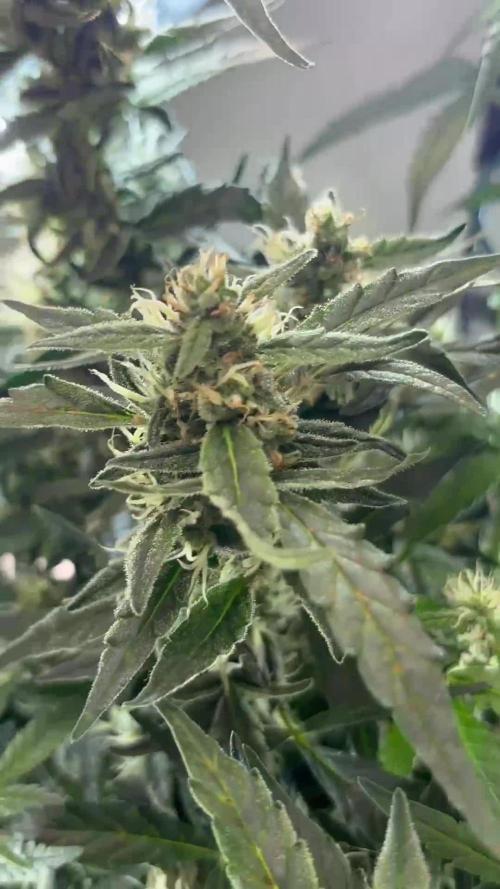
Buds have Been fattening up and making shape with the pistols sill stretching with slight change in colour for some of the pistols and are able to see the trichomes start to spread out and starting to get more frosty and the side branches are stretching out and stem thickness is also coming along nice nugs are quite sticky and the terpy smell has become more noticeable and I’m doing some light trimming to leaves covering lower bud sites for better light ab

Likes
40
Share


@valiotoro
Follow
easy trim✂️
The buds are Absolutely perfect,exactly what i was looking for🤩
Green pheno : cookie,diesel & gelato🍪⛽️🍦
Purple pheno : flower,sweet & honey🌸🍯
After 7 days on the dry rack she was ready for the jar to start the curing process.😋


Likes
52
Share


@Ultraviolet
Follow
Lacewings seemed to have mostly killed themselves by flying into hot light fixtures. I may have left the UV on which was smart of me :) Done very little to combat if anything but make a sea of carcasses, on the bright side its good nutrition for the soil.
Made a concoction of ethanol 70%, equal parts water, and cayenne pepper with a couple of squirts of dish soap.
Took around an hour of good scrubbing the entire canopy.
Worked a lot more effectively and way cheaper.
Scorched earth right now, but it seems to have wiped them out almost entirely very pleased.
Attempted a "Fudge I Missed" for the topping. So just time to wait and see how it goes.
Question?
If I attached a plant to two separate pots but it was connected by rootzone, one has a pH of 7.5 ish the other has 4.5. Would the Intelligence of the plant able to dictate each pot separately to uptake the nutrients best suited to pH or would it still try to draw nitrogen from a pot with a pH where nitrogen struggles to uptake?
Food for stoner thought experiments!
Another was on my mind.
What happens when a plant gets too much light?
Well, it burns and curls up leaves.
That's the heat radiation, let's remove excess heat, now what?
I've always read it's just bad, or not good, but when I look for an explanation on a deeper level it's just bad and you shouldn't do it.
So I did.
How much can a cannabis plant absorb, 40 moles in a day, ok I'll give it 60 moles. 80 nothing bad ever happened.
The answer, finally. Oh great........more questions........
Reactive oxygen species (ROS) are molecules capable of independent existence, containing at least one oxygen atom and one or more unpaired electrons.
"Sunlight is the essential source of energy for most photosynthetic organisms, yet sunlight in excess of the organism’s photosynthetic capacity can generate reactive oxygen species (ROS) that lead to cellular damage. To avoid damage, plants respond to high light (HL) by activating photophysical pathways that safely convert excess energy to heat, which is known as nonphotochemical quenching (NPQ) (Rochaix, 2014). While NPQ allows for healthy growth, it also limits the overall photosynthetic efficiency under many conditions. If NPQ were optimized for biomass, yields would improve dramatically, potentially by up to 30% (Kromdijk et al., 2016; Zhu et al., 2010). However, critical information to guide optimization is still lacking, including the molecular origin of NPQ and the mechanism of regulation."
What I found most interesting was research pointing out that pH is linked to this defense mechanism. The organism can better facilitate "quenching" when oversaturated with light in a low pH. Now I Know during photosynthesis plants naturally produce exudates (chemicals that are secreted through their roots). Do they have the ability to alter pH themselves using these excretions? Or is that done by the beneficial bacteria?
If I can prevent reactive oxygen species from causing damage by "too much light".
The extra water needed to keep this level of burn cooled though, I must learn to crawl before I can run.
Reactive oxygen species (ROS) are key signaling molecules that enable cells to rapidly respond to different stimuli. In plants, ROS plays a crucial role in abiotic and biotic stress sensing, integration of different environmental signals, and activation of stress-response networks, thus contributing to the establishment of defense mechanisms and plant resilience. Recent advances in the study of ROS signaling in plants include the identification of ROS receptors and key regulatory hubs that connect ROS signaling with other important stress-response signal transduction pathways and hormones, as well as new roles for ROS in organelle-to-organelle and cell-to-cell signaling. Our understanding of how ROS are regulated in cells by balancing production, scavenging, and transport has also increased. In this Review, we discuss these promising developments and how they might be used to increase plant resilience to environmental stress.
Temperature stress is one of the major abiotic stresses that adversely affect agricultural productivity worldwide. Temperatures beyond a plant's physiological optimum can trigger significant physiological and biochemical perturbations, reducing plant growth and tolerance to stress. Improving a plant's tolerance to these temperature fluctuations requires a deep understanding of its responses to environmental change. To adapt to temperature fluctuations, plants tailor their acclimatory signal transduction events, specifically, cellular redox state, that are governed by plant hormones, reactive oxygen species (ROS) regulatory systems, and other molecular components. The role of ROS in plants as important signaling molecules during stress acclimation has recently been established. Here, hormone-triggered ROS produced by NADPH oxidases, feedback regulation, and integrated signaling events during temperature stress activate stress-response pathways and induce acclimation or defense mechanisms. At the other extreme, excess ROS accumulation, following temperature-induced oxidative stress, can have negative consequences on plant growth and stress acclimation. The excessive ROS is regulated by the ROS scavenging system, which subsequently promotes plant tolerance. All these signaling events, including crosstalk between hormones and ROS, modify the plant's transcriptomic, metabolomic, and biochemical states and promote plant acclimation, tolerance, and survival. Here, we provide a comprehensive review of the ROS, hormones, and their joint role in shaping a plant's responses to high and low temperatures, and we conclude by outlining hormone/ROS-regulated plant-responsive strategies for developing stress-tolerant crops to combat temperature changes.
Onward upward for now.
Next!
Adenosine triphosphate
(ATP) is an energy-carrying molecule known as "the energy currency of life" or "the fuel of life," because it's the universal energy source for all living cells.1
Every living organism consists of cells that rely on ATP for their energy needs. ATP is made by converting the food we eat into energy. It's an essential building block for all life forms. Without ATP, cells wouldn't have the fuel or power to perform functions necessary to stay alive, and they would eventually die. All forms of life rely on ATP to do the things they must do to survive.2
ATP is made of a nitrogen base (adenine) and a sugar molecule (ribose), which create adenosine, plus three phosphate molecules. If adenosine only has one phosphate molecule, it’s called adenosine monophosphate (AMP). If it has two phosphates, it’s called adenosine diphosphate (ADP).
Although adenosine is a fundamental part of ATP, when it comes to providing energy to a cell and fueling cellular processes, the phosphate molecules are what really matter. The most energy-loaded composition for adenosine is ATP, which has three phosphates.3
ATP was first discovered in the 1920s. In 1929, Karl Lohmann—a German chemist studying muscle contractions—isolated what we now call adenosine triphosphate in a laboratory. At the time, Lohmann called ATP by a different name. It wasn't until a decade later, in 1939, that Nobel Prize–-winner Fritz Lipmann established that ATP is the universal carrier of energy in all living cells and coined the term "energy-rich phosphate bonds."45
Lipmann focused on phosphate bonds as the key to ATP being the universal energy source for all living cells, because adenosine triphosphate releases energy when one of its three phosphate bonds breaks off to form ADP. ATP is a high-energy molecule with three phosphate bonds; ADP is low-energy with only two phosphate bonds.
The Twos and Threes of ATP and ADP
Adenosine triphosphate (ATP) becomes adenosine diphosphate (ADP) when one of its three phosphate molecules breaks free and releases energy (“tri” means “three,” while “di” means “two”). Conversely, ADP becomes ATP when a phosphate molecule is added. As part of an ongoing energy cycle, ADP is constantly recycled back into ATP.3
Much like a rechargeable battery with a fluctuating state of charge, ATP represents a fully charged battery, and ADP represents a "low-power mode." Every time a fully charged ATP molecule loses a phosphate bond, it becomes ADP; energy is released via the process of ATP becoming ADP.
On the flip side, when a phosphate bond is added, ADP becomes ATP. When ADP becomes ATP, what was previously a low-charged energy adenosine molecule (ADP) becomes fully charged ATP. This energy-creation and energy-depletion cycle happens time and time again, much like your smartphone battery can be recharged countless times during its lifespan.
The human body uses molecules held in the fats, proteins, and carbohydrates we eat or drink as sources of energy to make ATP. This happens through a process called hydrolysis
.
After food is digested, it's synthesized into glucose, which is a form of sugar. Glucose is the main source of fuel that our cells' mitochondria
use to convert caloric energy from food into ATP, which is an energy form that can be used by cells.
ATP is made via a process called cellular respiration that occurs in the mitochondria of a cell. Mitochondria are tiny subunits within a cell that specialize in extracting energy from the foods we eat and converting it into ATP.
Mitochondria can convert glucose into ATP via two different types of cellular respiration:
Aerobic (with oxygen)
Anaerobic (without oxygen)
Aerobic cellular respiration transforms glucose into ATP in a three-step process, as follows:
Step 1: Glycolysis
Step 2: The Krebs cycle (also called the citric acid cycle)
Step 3: Electron transport chain
During glycolysis, glucose (i.e., sugar) from food sources is broken down into pyruvate
molecules. This is followed by the Krebs cycle, which is an aerobic process that uses oxygen to finish breaking down sugar and harnesses energy into electron carriers that fuel the synthesis of ATP. Lastly, the electron transport chain (ETC) pumps positively charged protons that drive ATP production throughout the mitochondria’s inner membrane.2
ATP can also be produced without oxygen (i.e., anaerobic), which is something plants, algae, and some bacteria do by converting the energy held in sunlight into energy that can be used by a cell via photosynthesis.
Anaerobic exercise means that your body is working out "without oxygen." Anaerobic glycolysis occurs in human cells when there isn't enough oxygen available during an anaerobic workout. If no oxygen is present during cellular respiration, pyruvate can't enter the Krebs cycle and is oxidized into lactic acid. In the absence of oxygen, lactic acid fermentation makes ATP anaerobically.
The burning sensation you feel in your muscles when you're huffing and puffing during anaerobic high-intensity interval training (HIIT) that maxes out your aerobic capacity or during a strenuous weight-lifting workout is lactic acid, which is used to make ATP via anaerobic glycolysis.
During aerobic exercise, mitochondria have enough oxygen to make ATP aerobically. However, when you're out of breath and your cells don’t have enough oxygen to perform cellular respiration aerobically, the process can still happen anaerobically, but it creates a temporary burning sensation in your skeletal muscles.
Why ATP Is So Important?
ATP is essential for life and makes it possible for us to do the things we do. Without ATP, cells wouldn't be able to use the energy held in food to fuel cellular processes, and an organism couldn't stay alive.
As a real-world example, when a car runs out of gas and is parked on the side of the road, the only thing that will make the car drivable again is putting some gasoline back in the tank. For all living cells, ATP is like the gas in a car's fuel tank. Without ATP, cells wouldn't have a source of usable energy, and the organism would die.
Eating a well-balanced diet and staying hydrated should give your body all the resources it needs to produce plenty of ATP. Although some athletes may slightly improve their performance by taking supplements or ergonomic aids designed to increase ATP production, it's debatable that oral adenosine triphosphate supplementation actually increases energy.
An average cell in the human body uses about 10 million ATP molecules per second and can recycle all of its ATP in less than a minute. Over 24 hours, the human body turns over its weight in ATP.
You can last weeks without food.
You can last days without water.
You can last minutes without oxygen.
You can last 16 seconds at most without ATP.
Food amounts to one-third of ATP production within the human body.

Likes
4
Share


@lasonda
Follow
after this week I will check the status of the tricoms and accordingly I will start the flush with Advanced Nutrients product



Likes
8
Share


@Skynets_Growing
Follow
Day98 is the Harvest day for Tamara and finally 1105 g wet for my first grow. I am satisfied with the result. Thx to FastBuds for the good strain and thx Tamara where Share 98 days with me and my fails 🤭🤗💚.
Processing
Likes
25
Share


@EelGrows
Follow
Week 10: This will be the final update before Harvest: I will update post harvest after the dry and weigh.
Day 64-66: Hmm these 4AM are a strange bunch lol. I seemed to have been wrong about 4AM#3 getting better in last week's update, after reviewing the pictures. After realizing this I decided to continue feeding the plants till the end albeit only Calmg and Boost(micro). I decided to give 4AM#3 a 125% dose of Calmg on Day 66. I was worried about root rot because even though she was a bigger plant she drank noticeably less water than the rest. I actually forgot to mention I have had a few fungus gnats during the grow starting at around day 35. I always let the plants completely dry out even until some leaves were really drooping from thirst, so I though I had them under control. I never noticed more than 1 or 2 at a time, which is also why I thought I had it out of control. Maybe they have something to do with 4AM#3's state, but I doubt it. Anyway, 4AM#1 and #2 are doing well. #1 has fully ripened with almost 95% cloudy trichomes, and some amber. #2 on the other hand could still use 7-10 days extra, but regretfully I cannot harvest then... #3 is at about the same stage as #2.
Day 67-70: Sadly I noticed too late, but that extra strong dose of Calmg seemed to confirm my suspisions... 4AM#3 had a heavy calmg deficiency... It really is noticeably improving this time! Leaves are regaining some slight saturation! And she drank her water very quickly this time! So bummed about having to harvest this weekend... Day 73... Oh well next time I will be able to harvest more freely and at different times for each plant if needed. She still has a good bit of cloudy trichomes on her calyxes though, around 40-60%, and very very few ambers, but her sugar leaves are already full of them. As for 4AM#1, looking great! gona be the smallest buds but definately the most dank! 4#2's massive buds are still having trouble staying upright, but looking forward to those for sure!
RED ALERT: Shiiiit... So as I was watering 4AM#3 on day 69, I noticed, what I'm pretty sure is, BUD ROT! Damn, I'll have a picture as part of this update. I had very bad experience with bud rot last fall(planted my autos too late in the summer, lost over half my plants and had to harvest early), but that was with 10C temps and 80%+ RH. I have FOUR fucking fans in this damn tent, and it's always over 20C! But I'll be honest, I knew if it was going to happen, it would be THAT part of the plant positioned closest to that oscillating fan I have on the peace of wood... The bud closest to it(in the corner) is in it's blind spot, doesn't get direct breeze on it. And that's the bud, and the ONLY bud that seems to have been affected. Strangely though, this bud rot feels different to the touch than the one I had last summer. Very dry, and like I said, very isolated to that ONE little part. I cut it out and have the rest of the bud drying as a tester in my room. And my entire room STINKS. I seemed to have been wrong about that last week also; The 4AM smells so much stronger than the White Cracks.
See you after the Harvest!! ;) It's been awesome and a fun learning experience!


Likes
14
Share


@ApothecAries
Follow
First time grower ! Ive been around the culture for many years and have always aspired to grow my own medicine ! I love the growing process and maintaining the plants health. That alone is therapeutic enough for me.
Thanks for checking out my grow, dont be afraid to ask any questions ! Any pointers are always considered and appreciated !
The Acetylsalicylic acid is 81mg Asprin / Gal water. It promotes root health when transplanting aiding in shock. It has numbing benefits and is an anti inflammatory. Ive always heard good results and ive had no problems using it for the first grow.
I cannot verify the breeder of the mother plant. I have no idea where he got his seed from.
Likes
4
Share


@CrazyDutti
Follow
Kein Dünger.
Keine anderen Zusätze.
Wasser p.h = 8.5
nach p.h down Anwendung 6,6
Gelbe Blätter weggeschnitten.
Likes
52
Share

@Growingdaddyo
Follow
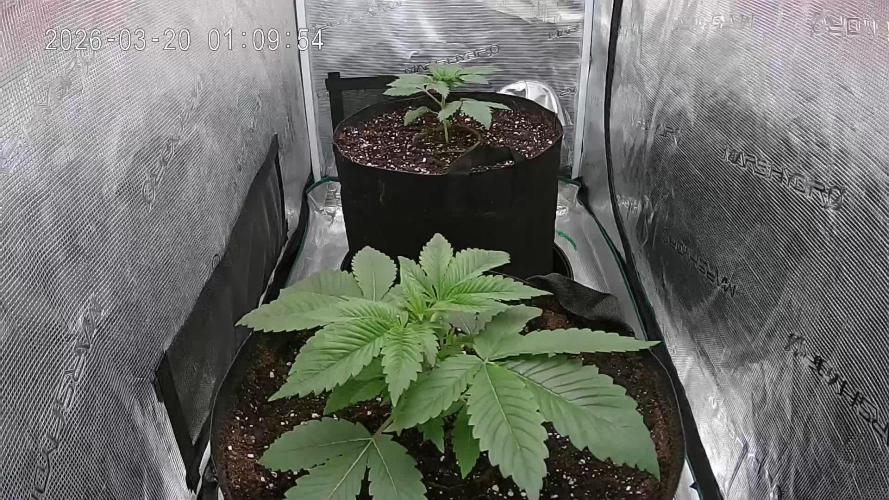
Die dritte Woche ist gestartet. Wächst bisher wie sie soll und das ziemlich flott. Darf gerne so weitergehen..
Habe die Lichtintensität etwas herunter geregelt, die Blätter kräuseln sich etwas.
18.03. Entwickelt sich und wächst sehr schön. Denke am Ende der Woche wird umgetopft.
Und auch hier bleibe ich bei 30 Liter Stofftöpfen. Als Drainageschicht kommen Plagron Pebbles zum Einsatz, ca. 3cm. Darüber ein Mix aus Plagron light mix, Plagron Batmix und zusätzlich etwa 10% Perlite.
Als Dünger nehme ich den Greenhouse biogrow. Davon 3 g pro Liter Substrat, also 90 g. Wird direkt mit der Erdmische gut vermischt.
Das neue zu Hause wartet bereits auf die Damen..
19.03. Umzug ins größere Zelt und Pott. Leider sind mir dabei ein paar Wurzeln abgerissen, hoffe der Schaden hält sich in Grenzen..
Habe zur leichteren Handhabung Drehteller unter die Untersetzer getan😅 isoliert zusätzlich vom kalten Kellerboden.
21.03. Habe mich entschieden an Tag 21 zu toppen und zwar oberhalb der 2. Nodie. Direkt das Training gestartet.
Jetzt darf sie sich erstmal davon erholen..
Likes
1
Share


@El_gordito99
Follow
•Seconda settimana•
Buongiorno ragazzi
Entrando nella seconda settimana ci siamo accorti che nonostante tutte le precauzioni qualche foglia restava gialla, sempre quelle sottostanti. Da notare che la pianta cresceva benissimo e i pistilli aumentavano di giorno in giorno. A metà settimana circa abbiamo aggiunto 15g a pianta di top dress flo, un preparato organico che è risultato molto efficace e positivo per la pianta, irrigando regolarmente come sempre senza però l’aggiunta di melassa, solo acqua. Per sette giorni dalla somministrazione. Arrivando quindi fino a metà della terza settimana. Ricordo di aumentare sempre la dose di acqua, controllando la pianta e rimanendo sempre costanti nei giorni.
Likes
5
Share


@420medic
Follow
Bulking up quite a bit with these girls and the trichomes level is off the charts with both the mutant and the banana purple punch.. the stretch is over so now it's just putting on the weight.
Likes
Comments
Share


@eldruida_lamota
Follow
Vamos familia, actualizamos la quinta y última semana de crecimiento de estas Forbidden Mochi fast de Seedstockers, salieron las 5 de 5, 100% ratio éxito.
Aplicamos varios productos de Agrobeta, que son increíbles para aportar una buena alimentación a las plantas.
Temperatura y humedad dentro de los rangos correctos dentro de la etapa de crecimiento.
La tierra utilizada es al mix top crop, por cambiar.
De 5 ejemplares seleccioné 4 para completar el indoor y trasplanté directamente a macetas de 7 litros y aplique de manera foliar el tetra 9, cambie el fotoperiodo a 12/12 y aplique una buena poda de bajos, se ven bien sanas las plantas tienen un buen color y progresan a muy buen ritmo.
Agrobeta:
https://www.agrobeta.com/agrobetatiendaonline/36-abonos-canamo
Hasta aquí todo, Buenos humos 💨💨💨


Likes
47
Share


@Northern_Ent
Follow
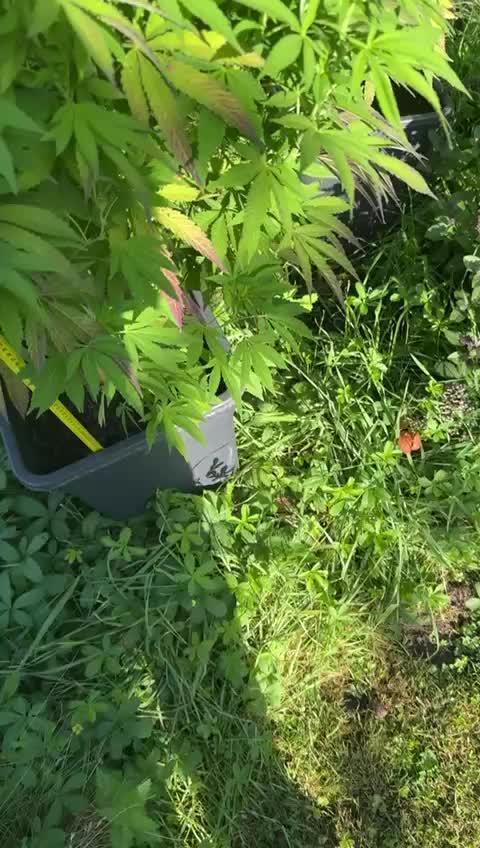
Aug 10: Blueberry Pie F1 Fast is doing great. Three weeks now moving her into the garage which is enough, and now I can just leave her in the yard which is easier and scores another couple hours of sunlight per day.
Nice solid start to flowering, and I like the schedule used this year for the force flowering. This strain is delivering on the promise of being big and fast.
Bright sunny day and I’ve got the UV lights on. About five hours today with the UV lights at mid-day. Buds are looking really good.
The bud development after 3 weeks is amazing. The buds got visibly much fatter just today. Compared to some fast plants in previous years, this one is about 2-3 weeks ahead. Very well suited to short season outdoor growing, but partially due to full darkness in the garage rather than just phyto-forcing with the far red light as I did last year. I’m still using the far red light, but putting them in the garage provides more darkness and helps get strong flowering started.
Aug 12: nice fat buds forming quickly, gotta like that.
Aug 14: fast, fast, fast. Flowers are progressing quickly.
Added three tablespoons of a 50:50 mix of Power Bloom and malted barley. Added as top dressing and then watered in.
Aug 16: cool, overcast all day, a bit of rain and smoky so not a nice mid-August day. Rain should help but out some fires in northeast BC, Yukon, and northwest Alberta. maybe. BC needs rain to break their record drought.
#seedsman420growoff
#seedsmanseeds
