


Likes
Comments
Share


@Hempface86
Follow
Today is day 28th so we are at the end of week 4 and as you can see she is showing sex so I imagine next week will be the start of flower.. I've added one picture along with the video and I'm hoping and praying that the video uploads if for some reason it doesn't I'll be back to add more pictures.. I will say Zamnesia Seeds has some great genetics and the people over there are amazing.. hope everyone is having a great week and their plans you're doing great and if you need some seeds in the future check out Zamnesia Seeds for all your seeds head shop and mushroom needs.. happy growing everyone ✌️😎💨
https://www.zamnesia.com/us/authentication?SubmitCreate=1&ref=j1up85x0
day 32 I added a couple pictures and another video to show just how good she's doing.. I hope everyone's doing well as you can see this girl is.. have a great day a great week God bless and happy growing ✌️

Likes
25
Share

@Salokin
Follow
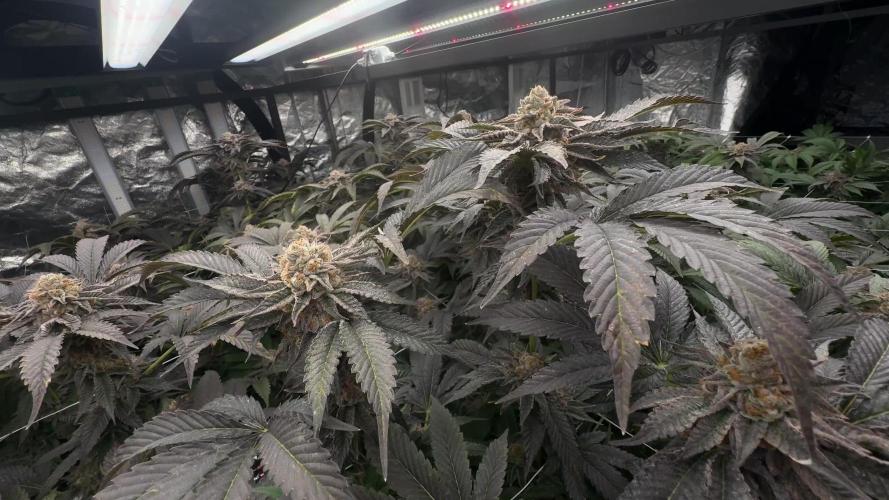
Week 8 Flower | GMO × Triangle Mints BX
Week 15 overall, and we are in the final stretch. One week out from harvest and the room is telling that story loud and clear. The fade is deep and progressing perfectly — the plants are drawing down everything they have left, channelling it all into the buds in one last push. The purple expression that showed itself last week has deepened across multiple plants, the calyxes are swelling, and the trichome coverage is dense across every site from top to bottom.
Watering climbed again to 8L per plant per 24h — the root zone is pulling everything it can get in these final days. pH holding at 6.2, EC stepped further down to 1.2 mS/cm as the fade protocol does its work and the plant takes over. Height unchanged at 110cm, lamp still at 20cm — nothing moves from here. Humidity holding at 50%, day temp 25°C, nights 23°C.
Feed stack stripped back to the essentials for the final week: Athena Fade carrying the programme, Canna CalMag Agent 1.1 ml/l, Aptus Regulator 0.1 ml/l. Nothing else. Clean finish, no interference — let the plant do the rest.
The candy gas is relentless at this point. Harvest is next week. The GMO × Triangle Mints BX delivered exactly what was asked of it.
Next update Sunday. Stay tuned
Likes
5
Share


@Minniesturps
Follow
This bad girl just looks like iv dipped her in sugar , been feeding her 2.5l every 2nd to 3rd day depending of soil moisture , she is as happy as can be im super pumped for this one shes starting to smell real pungent and sticky and we still have awhile to go , herbies again with the goods , these were free seeds i won amx i am not disapointed , the other is only purple cause she got put out side for 3 weeks as i was waiting on my new tent

Likes
3
Share


@Jeekk
Follow
Spiderfarmer humidifier got my 2x4 dialed in almost immediately. If it performs this well over time I'd recommend it greatly. Had some trouble with light burn because I briefly cranked up my light and uv at the same time lol. I stopped that. Thinking about flowering soon. If anyone sees this, what do you think?

Likes
6
Share

@Sebb_growt
Follow
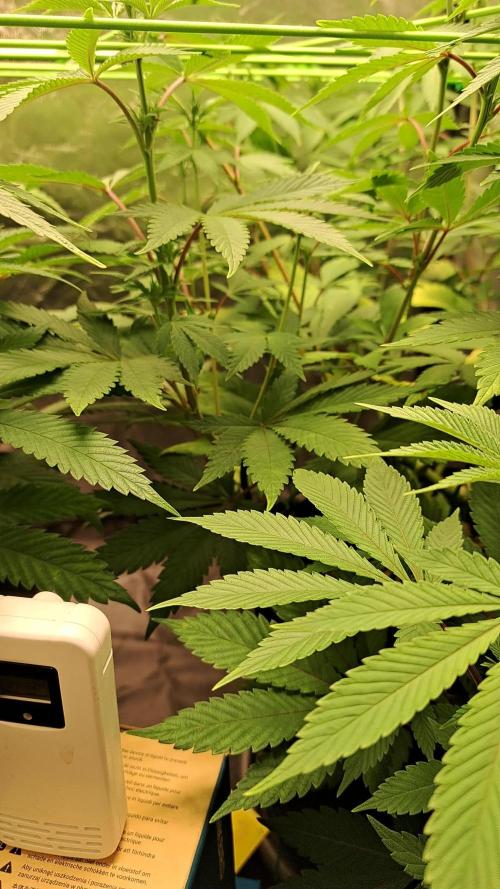
Die O.G. wächst unglaublich schön und hat einen guten stretch hingelegt. Auch hier geht die Blüte fleißig vorran und sie nimmt immer mehr Platz ein.
Sie ist mein Goldstück in diesem run und ich bin sehr auf die Blüte gespannt.
Likes
32
Share


@BigDaddyK
Follow
Spiderfarmer SF2000 - https://www.ebay.co.uk/itm/SF2000LED/223607946358
Likes
17
Share


@OrganicChronic
Follow
GMO (Garlic mushroom onion) was slow to flower but came on strong weeks 8 and 9 to produce some dense heavy sticky buds. The dry weight of the plant material is unsure, but I’ll report the weight of various bubble microns when dry. Pictures of the dry bubble and maybe a melt shot impending! To dry, I decided to microplane into pizza boxes lined with parchment. It’s been fun growing along with everyone on grow diaries. Awesome
Likes
74
Share


@AsNoriu
Follow
Day 82. First of two is down.
Day 88. Second down. Both will be decent by weight and structure, but smell and taste .... maybe after cure ? ;)))
Day 92. First went to jars. Will be hard to keep fingers away ... ;)))
Day 98. Both in jars ! 170 g of my very likeable smoke ;)
Will update later
Happy Growing !!!


Likes
8
Share


@Tontsekz
Follow
07-11 - Plants all looking healthy - good growth so far
08-11 - Plant nearest to the fan has bent over a fair bit - re-positioned away from the fan - bottom fan turned off - top fan still running
09-11 - Bent over plant is looking far better
10-11 - Watered with PH 6.02 water

Likes
16
Share


@Naujas
Follow
I will try to see what will happen :) the growing box is very small 40×40×120cm. the light is also weak :) niello -110w . interesting growth ahead :)


Likes
15
Share


@38PLAN
Follow
Siamo arrivati alla 10 settimana,una pianta ha incominciato il flush,quella al centro di destra.i fiori delle piante più avanzate sono grassissimi e ricchi di resina,questa pianta é davvero ECCEZIONALE,daremo qualche altra settimana di acqua e raccoglieremo la prima!ricordiamolo sono tutte autofiorenti.GORILLA COOKIES AUTO
Likes
16
Share


@DeepRootsGrowTrees
Follow
Fast Buds White Widow is a strain that is easy to grow she can handle some stress if you have issues. She makes a massive bud on the main stem mine was 80 grams freshly trimmed!! She doesn't stretch much if your growing in a confined space. I'll repost what the total is dried and cured and smoke report as well.
Smoke Report Update she's Earthy, Piney, with sweat citrus flavors, smooth pull, earthy, piney up front then then that sweat citrus when you exhale, really clean and smooth enjoyably smoke hits you quickly and then mellows out she has the ability to change your motivation level but not put you on the couch the rest of the day or night for the most part!!! 70% Indica 30% sativa. The total weight of the grow of 535 grams wet weight, when dried out to it was a total of 178 grams dry. That's a loss of 67% of the weight.
She's a plant with thricomes that cover the fat, stinky, and sticky buds. I didn't have any problems with her. She can take some nuts for a autoflower as she never showed any signs of nutrition stress. Easy grow, strong plant, dense sticky buds, she smells sweat with a earthy note. I would recommend to any grower new grower you really can't mess her up, advanced grower she will give you a great harvest.
Continue to grow your own medicine if you can or grow for someone you know that can't continue to make a difference in lives!!! Growdiaries is a great place to learn and connect with other like minded individuals!! Stay growing my friends!!!
Thank you for looking at the diary!!!


Likes
Comments
Share


@GrowAddict314
Follow
Been behind on updating this grow. Life is busy, but we’re in week 8 of flower. Buds are nice and hard, pistils are starting to change over. About 70% are brown. Also the buds are turning purple naturally without any temperature drops. Everything is smelling great, definitely more candy, creamy a hint of burnt rubber. Will start my flushing in a few days.
Likes
8
Share

@OrionSparkles
Follow
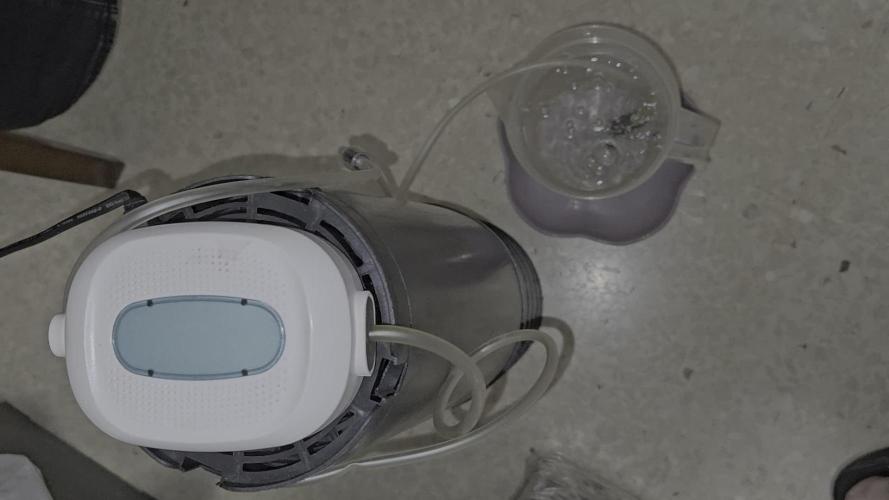
A week after transplanting, they seem to have settled in well; I continue watering with pH-adjusted water that I oxygenate using a small irrigation pump for about 12 hours. I will stick with this watering method until they strengthen.😗🙀

Likes
33
Share


@FreshCoastOrganics
Follow
These girls are getting bigger and bigger every day. I’d say week five is the beginning of pre-flower. I started with a very low dosage of nutrients to see how they will respond.
I’ve had to tie them down quite a bit but it has helped branch out new nodes and Bud sites that are comparable in size to the main cola. With the small environment I’m growing in I’ve also had to do a large amount of leaf tucking.
The EC and PH of the runoff was pretty spot on, I was around 800ppm, 1.6ec, and the ph was around 6.0. Overall I’d say that these plants are a hell of a lot happier than my other plants in the different medium. This is the Miller soils organic ammended soil, which is pretty decent but I prefer to control most of my grows so next time around I will be using either bio bizz light mix or light mix with 40%-50% coco and added perlite or pumice. I want to really see the full potential of these advanced nutrients products and see how they compare to other brands/amending with basic dry organics. I have so many seeds to play with so I will have a lot of diaries coming soon after these are harvested 😉

Likes
33
Share


@microgrowshow
Follow
One of my favourite plants to grow so far. I learned a TREMENDOUS amount, especially all the ins and outs of supercropping. Although I did end up breaking my stalk, she turned out quite nice! I can definitely see myself supercropping plants in the future just to play around. The terpenes are also really nice on this girl. I can't wait to make some bubble hash and rosin. And I generally can't wait to grow this girl again knowing what she needs now in terms of training. Will also be nice to see the difference with organic dry amendments vs the FF wet nutrients I used.
Likes
47
Share


@inversi0n
Follow
Wicked week.
Moving:
This week report starts with my moving to a new apartment.
It's actually not my first moving with a plant, but now it's kinda too big, so I asked my friends bag. Btw, the next day they stayed in different airports, so the bag didn't really smell after it 😂
I poured out the water from the bucket, gently placed it into the bag. And then the main rule I had is to keep the bad vertically while transplanting. And I'd suggest to just walk with the bag to the destination place, but since it was too far, I needed to order an uber. It was quiet hard to find the right car, because I cannot put it into a trunk, and I needed to order a truck or find a car with a large interior, so i could put near foot. I chose the 2nd one. Don't like extra attention 😁
Plant report:
The moving was quiet easy for her, and not for me. She recovered quiet fast after it. But here I forgot to tie her down, which is my mistake, and the next day the grow up a lot, so it wasn't enough thread length anymore.
Despite I don't use strings anymore, I still stretch her by myself with a bare hands few times a day. It actually works, just a bit worse, I guess.
Usually I grow in closets, but here they have no space for it. So I need to think about her future home.
I didn't want to buy a tent at the beginning, cause I think it's not that necessary.
I still think so, they are way more overrated than the other 'grower stuff', but may be it would be more comfy with it 😃
I forget, that my lamp was not 70% only, so I turned it to max now.
I also found out, that I got almost infected from bamboo(week 2) not only by aphid, but by ebanaya Sciara also. And they are growing their fucking babies in a wet ground. So I kind of buried them.
I wrapped opened medium in a package. Now I see and kill only 5 this little monster flying around, before that was counted in dozens.
I keep defoliating every day 4-8 leaves. To remove old useless leaves, or to open a new ones.
Finally, by the end of this week, preflower started.
After that smell also changed a bit, now it's less 'plant' and more 'buds' in the air.
Likes
1
Share


@ThatsmyGrow
Follow
Einfach den schönsten Wachstum den eine autoflower haben kann. Sie sieht super ausmacht. Ich liebe die strains von fastbuds.
Likes
175
Share


@the_curious_grower
Follow
no signs of pests during the grow. only one time i had ants trying to infest one plant but easily got rid of them by using cinnamon around the stem. she grows easy and is fun to train, you don't have to be an expert.
in the late flowering i got some budrot in both plants and stalled the harvest by inspecting and cutting it away daily, haven't lost a lot due to it.
i would recommend this strain as she is a high trichome producer, big yielder and easy to grow plant that gives nice buds with a good smell and greath high.
she is a strain that makes you talkative, giggly and euphoric and is surely gonna give you a good sleep. be sure to go easy on her as she is a strong breed.
an amazing strain to grow. she creates colourfull purple buds filled with trichomes that is really good for the chilling occasions, be sure not to have to go somewhere as she will last long and prepare for a joyfull evening with lots of laughing and good talks. i'll post more pictures after the drying process!