Likes
23
Share
Grow Report Woche 4: Technik, Topping & Tapferkeit Hallo zusammen 🌱👷‍♂️ Diese Woche hatte es in sich: technische Erweiterungen, kleine Rückschläge – und trotzdem geht’s weiter voran. Die Black Cherries vom Super Sativa Seed Club zeigen sich robust und widerstandsfähig, genau wie mein Optimismus! Blumat-Erweiterung 💧 Ich habe mein Bewässerungssystem aufgestockt und sechs zusätzliche kleine Blumat-Tropfer installiert, um auch die Oberfläche im Beet gleichmäßig feucht zu halten. - Vier Tropfer wurden direkt in die bestehenden Tropfringe integriert – so erhalten die Pflanzen Wasser von beiden Seiten. - Die restlichen Tropfer ergänzen das Setup rund um die Hauptwurzelbereiche. Ich bin gespannt, wie sich dieses doppelte Tropfsystem auswirkt – bislang sieht alles stabil aus. Astbruch – schnell reagiert Beim Verlegen der Tropfer ist leider ein getoppter Hauptast abgebrochen. - Innerhalb einer Minute habe ich ihn mit einem 3mm Blumat-Schlauch fixiert. - Nach zwei Tagen zeigt er wieder normales Wachstum – das nenne ich Notfallpflege mit Erfolg! - Der Größenunterschied wird durch gezieltes LST ausgeglichen – so bleibt alles in Balance. LST gestartet 🌿 Diese Woche habe ich auch mit dem Low Stress Training begonnen: - Jede Pflanze bekam ihre Triebe positioniert, um das Wachstum gleichmäßig und lichtoptimiert zu lenken. - Nur bei der Pflanze mit Astbruch habe ich vorsichtig agiert – dort wurden vorerst nur die unteren Triebe bearbeitet, damit sich die verletzte Stelle vollständig regenerieren kann. Kleines Chaos, große Zufriedenheit Es war eine anstrengende Woche, aber die Ergebnisse stimmen mich positiv: - Pflanzen sind vital, wachsen gut, und der Schaden wurde schnell behoben. - Der Übergang zur nächsten Wachstumsphase ist in vollem Gange – trotz kleiner Stolperer. 🎥 Zum Abschluss: Zeitraffer bis Woche 4 Die Pflanzen sind jetzt so groß, dass die Kamera eine neue Position bekommen hat – höherer Blickwinkel, mehr Übersicht. 👉 Der neue Zeitraffer zeigt die Entwicklung bis heute – von zarten Sämlingen zu kraftvollen Pflanzen. Ich hoffe, dass die nächsten Wochen etwas ruhiger verlaufen, damit ich mich voll auf die Pflege und Beobachtung konzentrieren kann – aber ich bleibe optimistisch und freue mich auf alles, was kommt! 🍒
Likes
422
Share
Hi all 🧑‍🌾 Welcome to my 🍌💜👊 week update. Hope everyone keeping well and having a good week. Thank you so much for your support on this bananas journey 💜💚💜💚 I am so happy to see how girls are developing in recent days. It's seems that Athena finally stopped her stretch and hoping that Xena will follow her sister very soon. Buds are gaining weight and size rapidly. Lots of nice colours and tonnes of trichomes on those buds already. Week 10 Dec 18-24 Dec 18-19 Mainly observation. Xena is still stretching like crazy. both girls are developing beautifully. Dec 20 First watering for this week. 7.5 ltr beetwen both. Runoffs PH's Athena 6.2 Xena 6.3. Dec 21 Due to lack of light at lower parts of conopy decided for another selective defoliation, lowered a bit tallest branches with colas dangerously close to light by tieing them to netting. Couple cm will make a huge difference here. Could not clear well at the back wall of the cabinet due to limited access.I'm very happy with final result. Dec 22-23 Joyful observation of my 🍌💜👊girls development 🧑‍🌾 Dec 24 All is looking great. It's seems that stretch is finally stopped. Girls looking healthy and happy. Second watering for this week. 8 ltr beetwen both. Both runoffs PH 6.2. It's the end of this week. Happy Xmas everyone 🤶🎄❄️🎁☃️✌️💚🌲🎅🎄 Stay tuned for new week update ✨🍀✨✌️💚
Likes
13
Share
DIVINE OG KUSH / DIVINE SEEDS WEEK #11 OVERALL WEEK #10 VEG This week she's still under heavy training to control her height and size she's had no issues during the veg cycle or with training!! So far no issues with the DIVINE SEEDS genetics!! Stay Growing!! Thank you for stopping by and taking a look it's much appreciated!! Thank you DIVINE SEEDS!!! BUDTRAINER.COM BUD CLIPS DIVINE SEEDS / DIVINE OG KUSH
Likes
3
Share
Week 5 since light switch to 12/12 The terps are AMAZING and very very strong. Entire place smells when I open the tent. And lingers for way too long. So hard to pin down the exact smell as it changes through the weeks. Sweet creamy skunky gas with a slight new shoe smell. Like that strong brand new fresh rubber or plastic smell you get when you open a brand new pair of sneakers. Everything the same as last few weeks. Same feeding and nutes. I switched to nutes that have zero nitrogen around week 3 but wish I waited another week as my leaves are getting yellow pretty fast already. Assuming it is the nitrogen that's causing it. Buds look super frosty though!!
Likes
8
Share
@Farmer1
Follow
Greetings growers,I took the two girls out of the greenhouse because it is getting very hot, they will finish flowering outside. Both are starting to produce beautiful compact flowers that are getting bigger every day. Starting to smell very good around here.😎
Likes
3
Share
So finally this week the plan was looking strong enough to be trained, initially I've lift the plant from his seedling bed, i moved her more on the side of the tent to have more space to bend her and give more open space to the lowest branch, after just 12 hours the plant was already fighting the training pointing the top cola to the closest source of light
Processing
Likes
10
Share
Start of week 3 I believe the girls are doing good a few minor worries but that’s at ease for now I think , i have added nutes at a low level and will increase once I see how the plants react to the introduction of the nutes .. Looking into starting lsd on some plants but not too sure wether it’s to early or so . will continue to update the week but for now Started lst on a few plants day 15 and seen good reactions by day 17 so quite happy with that and will continue this process I will also look into topping my plants as well but not just yet ... they seemed to like the nutes as well so all good week so far Soo topping done on 4 plants wasn’t as scary as it sounded haha let’s see how they recover ! Going to combine lst as well now Very good recovery it looks like and the end of week 3 looks promising with the plants happy growing
Likes
16
Share
As the plant enters the fifth week of flowering, the first trichomes have begun to form. The buds have started to thicken considerably during this week. They are becoming denser and more robust, which indicates that the plant is channeling its energy into producing larger, more resinous flowers. Throughout the growth process, the cannabis plant has shown no signs of health issues. It has remained vigorous and resilient, with no observable deficiencies or diseases. To ensure optimal light penetration and airflow, the plant was lightly defoliated this week. The cannabis plant is progressing well in its fifth week of flowering. The formation of trichomes, the thickening of buds, and the plant's overall health are all promising indicators of a successful flowering phase.
Likes
44
Share
@RakonGrow
Follow
Note : + jegliches Zubehör wird in der GermniationsWoche aufgelistet . Zeitraffer Videos folgen immer nachträglich. + videos werden so geschnitten das nur ein geschlossenes Zelt erscheint , ergo Fehlen paar reale Minuten (ca 1 Std) . ++ nur probleme mit der Zeitrafferkamera . Sorry für die Schrägen und halben Aufnahmen . Vielleicht schaff ich beim nächsten Grow da abhilfe zu leisten. Day 50: Wachstumstillstand bei 68cm . Day 51: + Höhe : 68cm + 2 Liter Flaschenwasser + + Dünger für Blühte + + + Canna Terrar Flores (Achtung wirkt wie PH-) + + + Canna Boost + + + Cannazym + + + Greenhouse Feeding BioEnhancer als PH+ Day 52: Kleine Entlaubung . Test MAX Licht : Main-Cola PPFD 1000 (16h) , sekundär Colas PPFD 750 (16h). Das wird mächtige Mangelerscheinungen geben . LED und Cal-Mag Probleme sind ja ein Standard Problem :)) Schauen wir mal was passiert bei so einer Autoflower. Day 53: + Höhe : 68cm + 1.5 Liter Flaschenwasser + + Dünger für Blühte + + + Canna Terrar Flores (Achtung wirkt wie PH-) + + + Canna Boost + + + Cannazym + + + Canna PH+ + + PH 5.81 Wegen Wetter Test verschiebung um ein paar Tage . Es wird hier einfach zu heiss im Zelt. Day 54: Weltuntergangsstimmung für meine Zoe . Dank des Super Wetters hab ich hier 77%-80% Luftfeuchtigkeit (draussen ist es noch höher ) und es wird auch noch warm . Ergo, schon gestern hat meine Pflanze extreme Probleme mit der Wurzeltemperatur bekommen und hat die Blätter hängen lassen . Ich hab das Licht runtergeschraubt und Abluft extrem erhöht. Ventilation direkt in die Pflanze sonst gibts Schimmel . Aber hilft halt nicht wirklich . Luftentfeuchter läuft auf Dauerschaltung und produziert dann auch noch Wärme, die ich überhaupt nicht gebrauchen kann bei den Temperaturen draussen lol. Ein Teufelskreis :(((((( Day 55: + 1.75 Liter Flaschenwasser + + Dünger für Blühte + + + Canna Terrar Flores (Achtung wirkt wie PH-) + + + Canna Boost + + + Cannazym + + + Canna PH+ + + PH 5.88 Draussen sind 31 Grad , ich hab den ganzen Growroom + Vorraum (meine Wohnung ) über Nacht runtergekühlt so weit es ging (23°C und 22°C). Das Licht noch weiter reduziert dafür näher an die Planze gemacht. Das ist wirklich das mindeste was noch geht. Liegt ca bei PPFD 600 an der Spitze . Wenigstens ist hier die Luftfeuchtigkeit im Rahmen , zwar immer noch zuviel (67% im Zelt) aber besser so als das hier die Hitze in die Höhe schießt . Nach 12h Licht (19:00 Uhr) wird dann wieder aufgedreht und die letzen Stunden mit mehr intensität nachgeholt was nachzuholen geht , denn dann gehen hier erst wieder die Temperaturen runter . Day 56: Läuft wie gestern ab 19:00 wurde das Licht aufgedreht und DLI nachgeholt .
Processing
Likes
17
Share
Likes
10
Share
Will be changing the metal halide to my gavita hps 600w bulbs the weekend now ther transitioning, no signs if mites too thank lord
Likes
7
Share
The A. Gold plants is measuring: 17 inches and received pH balanced water and nutrients/ approximately 34 oz per plant. We’re also trying to keep the humidity down. Normally the Dehumidifier helps a lot but it’s hard to keep down when it’s about to rain outside, hence why this week’s humidity is 81 degrees. Any tips would be helpful.
Likes
35
Share
another sucessfull week of just sitting here not growing much but still staying alive just waiting on a place to grow. I have some that will be finished next week, so harvest, clean and reset for the pot patch 2023 and grow this baby out for the contest.
Likes
7
Share
23.11.2025 – BT21 Das Lollipopping und das Entlauben haben sie soweit gut überstanden. Die Buds wachsen wie verrückt und der Geruch nimmt stetig zu! Allerdings gibt es auch Probleme. Beim Gießen waren 3,5 L wohl doch zu wenig, sodass sich vermutlich Salze im Substrat angesammelt haben. Dadurch kam es zu einem Nährstoffbrand und einer Nährstoffblockade. Da ich bei der Clementine Slush bereits eine leichte Überdüngung an den Blattspitzen hatte, ist das Ganze natürlich besonders ärgerlich. Beim Drain der Zoap Rose habe ich einen EC-Wert von 2,0–2,1 gemessen und bei der Apples & Oranges sogar 2,3–2,4, was selbstverständlich viel zu hoch ist. Beide Pflanzen wurden anschließend nur mit Wasser (pH 6,2) und einer Zugabe von Cal/Mag gegossen – die Zoap Rose einmal und die Apples & Oranges zweimal.
Likes
7
Share
@Salokin
Follow
Hi Guys, I really like the structure of this plant, as it fits my little growroom prefectly. She is in preflower now, so let’s see how much she will stretch. She already smells distinctively different to the mazaars, very Afghan ;)….
Likes
55
Share
High UV-B radiation can necessitate increased magnesium because it plays a crucial role in mitigating the stress and damage caused by UV-B exposure. High UV-B can lead to the production of harmful reactive oxygen species, and magnesium helps the plant's antioxidant systems and chlorophyll function to cope with this stress, making adequate magnesium supply essential for plant health under such conditions. Why UV? To do with the way anthocyanin is different from other pigmentations in that its colouration is not attached to the cell itself, it's a pH thing, if you force the color through high dose, as soon as she stops being in that environment, it will begin to revert back to chlorophyll, nitrogen deficiency causes anthocyanin to be produced in the first place, and nitrogen is needed to create new chlorophyll. When plants have a nitrogen deficiency, they produce anthocyanins to protect the leaves from stress while they try to salvage remaining nutrients, like nitrogen, before leaf drop. 24:1 C:N carbon&nitrogen ratio in medium will trigger autophagy, which will begin the dumping of nitrogen into the soil to feed micros as they FEED on nitrogen to convert carbon sugars into chemical energy via cellular root respiration (calcium/phosphorous VITAL for sugar processing). Couple the UV with a nitrogen dump for all the colors of the rainbow, and remove the possibility of allowing the conversion back to chlorophyll. 10/14 mimics late autumn, winter is coming, maximizing genetic expressions of desired purple genes if they do exist, I have seen no indications that I'd expect from previous grows. Oxygen is the oxidizer; if a soil cannot breathe, nothing good will EVER happen. Raised UV to lower the dosage. The leaves begin producing a protein hormone called florigen (produced via the Flowering Locus T gene). DELLA proteins. The plant measures the duration of the night by monitoring the amount of Pfr that has reverted to Pr. I imagine it like an egg timer with sand. You can speed up the flow of sand one way or another, determined by what type of red light and the ratio overall. The standard flowering cycle for many indoor plants is 12 hours of light and 12 hours of darkness. By applying a short pulse of far-red light at the very beginning of the dark cycle, a grower can trick the plant's internal clock. Forcing the conversion: A pulse of far-red light (730 nm) rapidly converts the active (P_{fr}) back into the inactive (P_{r}) form, simulating several hours of dark reversion. This amplified "sleep" signal causes the plant to believe the night started hours earlier than it actually did. For a short-day plant, this rapid reset means it can perceive a 14-hour night even though it only received 10 hours of darkness. This allows growers to use a 14/10 light cycle (14 hours of light, 10 hours of dark) without disrupting the flowering of short-day plants, as the far-red pulse makes the night effectively "long enough". This provides plants with more light for photosynthesis and can speed up the flowering process. What about all night? Or a pulse (15-30min)? High Pfr (Far-Red) overnight mimics a short night:If you maintain a high Pfr:Pr ratio overnight, the plant never receives the signal that a sufficient dark period has occurred. This mimics the conditions of a short night, during which Pfr levels remain high. Flowering is inhibited: As a result, the plant will not flower. This is the same effect that is observed when a flash of red light interrupts a long night, which instantly converts any Pr back to Pfr and resets the dark-reversion clock. But it's not that simple, I do not necessarily want a 14/10 for the entirety of the flower. Suppose you give a 12/12 with the pr/pfr conversion to make her more of a 10/14. It may not be the best option for the entirety of flower. A photoperiod cannabis plant will develop differently under a 14/10 light cycle compared to a 10/14 cycle during the flowering phase. The differing lengths of light and darkness trigger different hormonal responses, influencing the plant's growth, final yield, potency, and maturation time. A faster maturation time in flowering cannabis offers quicker harvests and lower potential risk, but can result in diminished potency, lower yields, and a less complex flavor and aroma profile comparatively. The trade-offs depend on the grower's priorities and the specific cannabis genetics. 14/10 physical light cycle with pr/pfr conversion for optimal yield to make the plant think it's on a 12/12. After the first 4/5 weeks of flower, when trichomes ramp up, I will change it to 12/12, keeping the pr/pfr conversion. I should switch her to a more 10/14. Although this is stressful, make sure she is not suffering from undue stress from other areas. If enough stress accumulates, there is a chance the increased levels of jasmonic acid will make her pop a few seeds. Be aware, play it by how she is at the time. If you want to make the 10/14 make sure one also applies a second pulse of far-red light (15-30min) two hours into the dark period. This mimics an even longer night, causing the plant to perceive a very short day of 10 hours and a long night of 14 hours. A pulse of only far-red light during a short-day plant's dark period will not disrupt its sleep. Unlike a pulse of red light, which would actively interrupt the dark period and inhibit flowering, far-red light promotes the biochemical state that signals a long, uninterrupted night. This simulates the shortening days of late autumn/winter and can stress the plant, triggering a defensive response. Some growers report that this low, controlled stress can increase resin and trichome production as the plant works to protect its flowers. This mimics a natural outdoor harvest cycle where days get progressively shorter and nights longer. Reduce relative humidity during the late flowering stage to around 30%. This is another controlled stressor that can boost trichome production while reducing the risk of mold. Unlock the full genetic potential and allow for maximal expression of desired genes during critical times. Autoflowers contain genetics from the Cannabis ruderalis subspecies, which evolved to flower automatically based on a predetermined internal clock, or age that flowers based on age rather than light triggers, red and far-red light do not play a role in initiating the flowering stage. However, they significantly affect other aspects of the plant's growth and morphology. The premise that autoflowers do not use phytochrome red (Pr) to phytochrome far-red (Pfr) conversion for any function is incorrect. Like other plants, autoflowers utilize the phytochrome system to sense their light environment and manage processes like germination, shade avoidance, and vegetative growth, even if the phytochrome system isn't what signals them to flower. Thank you 🙏 Almost time. Sound the horn! Maintaining 12-1600ppm by the morning's compensation point alone. She is consistently experiencing noticeable growth every day. Sulfur is in prior to flower, medium loaded with abundance, CEC charged, as the plant grows, so does its respiratory footprint. The exhaust fan starts to flare up at night far more often. The pH is unlocking hydrogen, allowing the plant to cycle CEC for its needs, which is optimal for soil microorganisms. It is charged with controlled doses of sucrose at optimal uptake temperatures. Full negative pressure diffusion setup linked to RH for nights, with negative pressure linked to daytime heat extraction. Just need to throw in the second net, switch spectral ratio and enjoy the show. The struggle of the butterfly to escape through its caterpillar sac strengthens its wings; without this struggle, it would not be able to fly.
Likes
83
Share
@RunWithIt
Follow
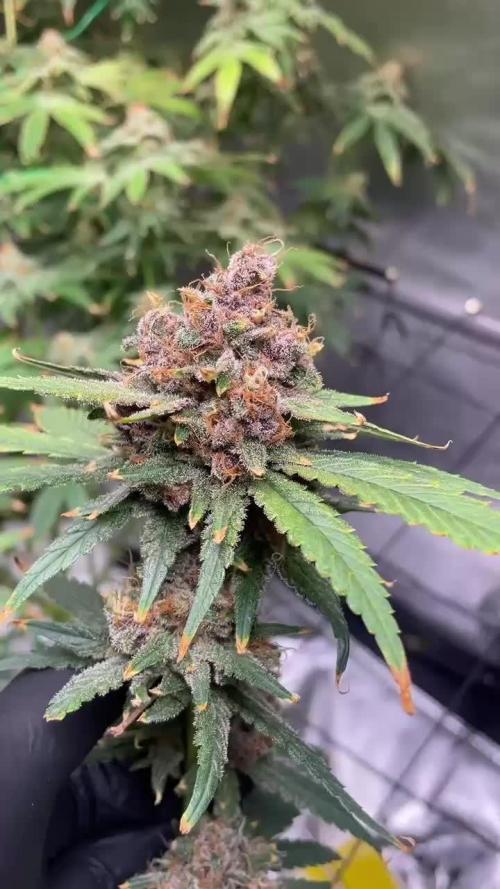
She's chunking up so much and just continues to get smellier and smellier! This plant's been getting compost tea and overdrive/ph perfect bloom only until end of this week, then I'll begin flush!
Likes
1
Share
Got a bunch of stuff in here, I change the water weekly.