


Likes
Comments
Share


@Aircoholic
Follow
Alright, that's it! Another branch snapping off under the weight of the buds? I'm calling it. It's harvest time! Her trichomes signal barely any clear, mostly cloudy with only few amber - the idea is, to have an indica that's not too couchy and not too tiring, but more balanced and clearer headed in effect.


Likes
6
Share


@GoldenWeedGrower
Follow
Legend
Timestamp: 📅
EC - pH: ⚗️
Temp - Hum: 🌡️
Water: 🌊
Food: 🍗
pH Correction: 💧
Actions: 💼
Thoughts: 🧠
Events: 🚀
Media: 🎬
D: DAY, G: GERMINATION, V: VEGETATIVE, B: BLOOMING, R: RIPENING, D: DRYING, C: CURING
______________
📅 D43/B06 - 28/05/24
⚗️ EC: 1.1 pH: 6
🌡️ T: 20°C H: 70%
🌊
🍗
💧
💼
🧠
🚀
🎬 1 TL video
______________
📅 D44/B07 - 29/05/24
⚗️ EC: 1.2 pH: 6.7
🌡️ T: 20°C H: 60%
🌊
🍗 Seaweed
💧
💼
🧠
🚀
🎬 1 TL video
______________
📅 D45/B08 - 30/05/24
⚗️ EC: 1.2 pH: 6.7
🌡️ T: 20°C H: 60%
🌊
🍗
💧
💼
🧠
🚀
🎬 1 TL video
______________
📅 D46/B09 - 31/05/24
⚗️ EC: 1.2 pH: 6.2
🌡️ T: 20°C H: 60%
🌊
🍗
💧
💼
🧠
🚀
🎬 1 TL video
______________
📅 D47/B10 - 01/06/24
⚗️ EC: 1.4 pH: 6.4
🌡️ T: 20°C H: 60%
🌊2L
🍗
💧
💼
🧠
🚀
🎬 1 TL video
______________
📅 D48/B11 - 02/06/24
⚗️ EC: 1.2 pH: 6.3
🌡️ T: 20°C H: 60%
🌊
🍗
💧
💼 Put some buds under the net
🧠
🚀
🎬 1 TL video
______________
📅 D49/B12 - 03/06/24
⚗️ EC: 1.2 pH: 6.4
🌡️ T: 20°C H: 80%
🌊6L
🍗 CalMag, Bloom A-B, Big Bud, Bud Candy, B-52
💧
💼
🧠
🚀
🎬 1 TL video


Processing
Likes
17
Share


@Hawkbo
Follow
Day 42, everything is chuggin along pretty healthy. Definitely some seeds in most of them which bugs me. The whole tent reeks tho which is nice. Some of the citradellics look like they are gettin pretty close so I'll start keeping an eye on them. I had to take the pics again and was strugglin so they arent my best. I have to go thru them still so I got the video up and tmm or as soon as possible I'll get the still shots up✌️
1 is seeded but healthy, havnt really smelled it but its sticky af. The plant has a beautiful structure but the buds are kinda ugly lookin despite the pink pistils. 2 is tryin to make it's way it's got some hideous lookin leaves but they are kinda cool in person they are the thickest leaves I've ever seen and the stems of the actual leaves are thick and almost perfect rectangles.


Likes
4
Share


@pzwags420
Follow
On day 1 week 3 flower I am slowly readjusting blumats after reset from fertilizer clog. The flower clusters are building. The leaves are still somewhat canoeing but it seems better since I dimmed light back to 75%. On day 4 I can tell that the stretch is over now. The girls tops are still too close to the grow lights, but it is too late to top/prune the plants so I may end up with some burnt colas. I am going to take the risk and know at the bare minimum I will have all the lower bud sites that are in the proper light intensity. On day 6 the flowers are definitely getting larger.The girls are starting to put off their blueberry smell nothing strong yet but it is building :). On day 7 the girls are doing well, i look forward to seeing the buds put on weight and smell :)

Likes
17
Share

@World_Breeders
Follow
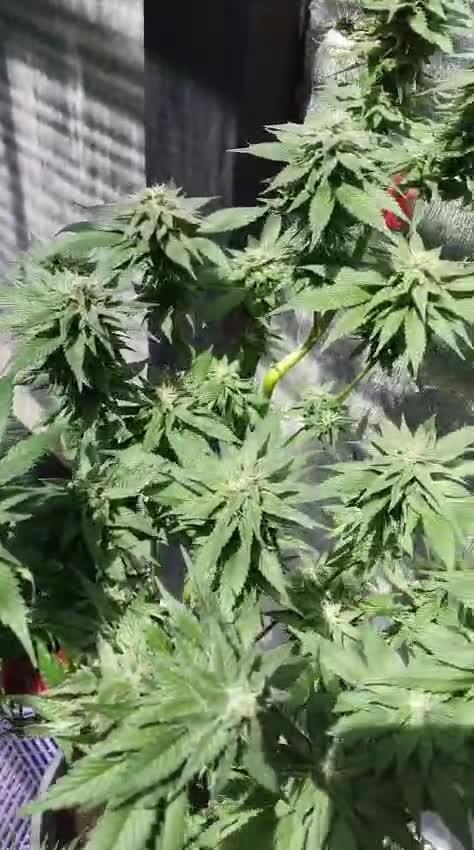
Pink Truffle is progressing very well into the final phase of flowering, showing a balanced structure with excellent flower stacking across every branch. The trained canopy has developed multiple uniform tops, each producing dense, well-defined buds with consistent size from the upper canopy to the secondary branches. Resin production has increased noticeably, with a thick layer of trichomes already covering the flowers and sugar leaves, giving the plant outstanding visual appeal. Buds continue to swell while maintaining good spacing and airflow, and the plant remains healthy with strong stems capable of supporting the increasing flower weight. Everything points toward a high-quality finish with excellent resin coverage and premium bag appeal.
Likes
45
Share


@GreenHouseLab
Follow
I tend to forget about her as im mesmerized by others, she’s the one with the best perfume currently in the room. It’s very possible she starts busting late flower, trellis is up show me what you got girl. Coated top down she is some sticky icky oooooh weee!
Yep hydro still in Veg Ive topped for a second round shit will be bonkers and going in the flower tent after this round. Will most likely initiate flowering in aboit 2 weeks or until she blows the top off this tent.
Stay Safe Stay Fresh
GHL
Likes
16
Share


@VIPgrower
Follow
Week 8 and four days in thing are starting to look great big dank buds like feet bottle size on the laughing budda watch tricombes closely learned a lot about how to flush a canabis plant I soil properly was hell with lots of ph water to flush it down to a tds of my tap water week to 2 weeks left should be ok I want clean clear smoke don’t want to have to count on the cure to fix harshness insane of amount of water to flush the girls but all made sense last week to 14 days she should be drinking water no clear no final flush or additives ph down that’s all ???? Anyone ever uuse a final phase or clear ?

Likes
9
Share


@Polishsmoker_pl
Follow
Yoyo 🤙🏽Juz kilka pierwsze 6 dni nowego projektu za mną . Wszystko ładnie rośnie, dziś maluchy dostały mikro dawkę odżywek na wzrost i ukorzeniacza , a za kolejne kilka dni wszystkie przesadzam do większych 3,5L donnic w których będą przez następne ok 10 dni po czym nastąpi selekcja i wybiorę tylko 6 najladnieszych i najsilniejszych roślin w docelowych 11 litrowych donnicach z czego jedna będzie uprawiana w living soil . Trening jaki zastosuję na każdej roślinie to lollipooping, (zobaczymy jak to wyjdzie 🤔 ). Niestety jedna odmiana nie wykielkowla dlatego odrazu kielkowalem kolejna a mianowicie GMO Cookies i ta ma dopiero 2 dni 🤣, myślę że 4 dni różnicy w całkowitej uprawie nie będą miały większego znaczenia.
Odmiany :
1x Dosi berry od outlawseed
1x Hulk berry od outlawseed
2x GMO Cookies od Panpestka.pl
3x Persian Pie od greenhouseseeds
3x Forbidden Fruta Cake od NARCOS SEEDS
3x Hardcore Mac od Nasha genetics
5x Black Apple od Lovecannabis.uk
Zapowiada sie ciekawy projekt💯😁👊🏿
Światło - 18/6
Temp dzień / noc - 28°C/22°C
Wilgotność - 80%
Ph - 6,5
EC - 0,5
Box - Spider Farmer LED
Lampa - spiderfarmer SF4000
Ziemia i odżywki - living soil I BAC
Już niedługo kolejne aktualizacje 👊🏿
Miłego dnia z buchem

Likes
17
Share


@OrganicBuds030
Follow
So langsam fangen beide Phenos an zu riechen. Pheno#1, die etwas größere Pflanze mit kleineren Buds, riecht leicht nach dem typischen Runtz Geruch und etwas doller als Pheno#2 mit sehr großen Buds. Beide Pflanzen sind schon gut frosty.

Likes
25
Share


@Cockpitloulou
Follow
So, this week I cut phosphorous intake in half, and did a small cleanup job, removing some leaves.
Plants look really healthy, except I would've expected they showed nitrogen deficiency signs since then, which suggest soil might be keeping some nutrients. Not sure if that's good or bad (certainly not a real issue tho). I started to flush yesterday; we'll see how it goes for the next few days.
I already see a few amber trichomes, so harvest is either for end of week or next one. I'll have to travel a few days next week-end, so I try to sequence everything the best I can :)
Also, I just heard about stem splitting, which doesn't seem to be a common technique among us; I'm not planning to do this to my plants (at least not yet), but I'd like to have your opinion on that; anyone tried ? What gives ?
See you next week friends !

Likes
45
Share


@Ultraviolet
Follow
2nd net is up. Early bud formations are promising. holding up to the extremes pretty well, some leaves taking minor damage, but overall, she is holding up, gave her 1 night at 50F see how she would react, stressful. Not advised as it messes with her metabolism, but I want to see if it triggers any anthocyanin response. Love to see her purp up but no signs yet.
My homework.
Rubisco regeneration is intrinsically linked to nitrogen supply because Rubisco is a major sink for nitrogen in plants, typically accounting for 15% to over 25% of total leaf nitrogen. The regeneration phase itself consumes nitrogen through the synthesis of the Rubisco enzyme and associated proteins (like Rubisco activase), and overall nitrogen status heavily influences the efficiency of RuBP regeneration.Structural Component: Nitrogen is an essential building block for all proteins, and the sheer abundance of the Rubisco protein makes it the single largest storage of nitrogen in the leaf.
Synthesis and Activity: Adequate nitrogen supply is crucial for the synthesis and maintenance of sufficient Rubisco enzyme and Rubisco activase (Rca), the regulatory protein responsible for maintaining Rubisco's active state. Nitrogen deficiency leads to a decrease in the content and activity of both Rubisco and Rca, which in turn limits the maximum carboxylation rate, Vmax, and the rate of RuBP regeneration Jmax, thus reducing overall photosynthetic capacity.
Nitrogen Storage and Remobilization: Rubisco can act as a temporary nitrogen storage protein, which is degraded to remobilize nitrogen to other growing parts of the plant, especially under conditions of nitrogen deficiency or senescence.
Nitrogen Use Efficiency (NUE): The allocation of nitrogen to Rubisco is a key determinant of a plant's photosynthetic nitrogen use efficiency (PNUE). In high-nitrogen conditions, plants may accumulate a surplus of Rubisco, which may not be fully activated, leading to a lower PNUE. Optimizing the amount and activity of Rubisco relative to nitrogen availability is a target for improving crop NUE.
Photorespiration and Nitrogen Metabolism: Nitrogen metabolism is also linked to the photorespiration pathway (which competes with carboxylation at the Rubisco active site), particularly in the reassimilation of ammonia released during the process.
To increase RuBisCO regeneration, which refers to the process of forming the CO2 acceptor molecule Ribulose-1,5-bisphosphate (RuBP) during photosynthesis, the primary methods involve optimizing the levels and activity of Rubisco activase (Rca) and enhancing the performance of other Calvin-Benson-Bassham (CBB) cycle enzymes.
Biochemical and Environmental Approaches:
Optimize Rubisco Activase (Rca) activity: Rca is a crucial chaperone protein that removes inhibitory sugar phosphates, such as CA1P (2-carboxy-D-arabinitol 1-phosphate), from the Rubisco active site, thus maintaining its catalytic competence.
•Ensure optimal light conditions: Rca is light-activated via the chloroplast's redox status. Adequate light intensity ensures Rca can effectively maintain Rubisco in its active, carbamylated state.
•Maintain optimal temperature: Rca is highly temperature-sensitive and can become unstable at moderately high temperatures (e.g., above 35°C/95F° in many C3 plants), which decreases its ability to activate Rubisco. Maintaining temperatures within the optimal range for a specific plant species is important.
•Optimize Mg2+ concentration: Mg2+ is a key cofactor for both Rubisco carbamylation and Rca activity. In the light, Mg2+ concentration in the chloroplast stroma increases, promoting activation.
•Manage ATP/ADP ratio: Rca activity depends on ATP hydrolysis and is inhibited by ADP. Conditions that maintain a high ATP/ADP ratio in the chloroplast stroma favor Rca activity.
Enhance Calvin-Benson-Bassham (CBB) cycle enzyme activity: The overall rate of RuBP regeneration can be limited by other enzymes in the cycle.
•Increase SBPase activity: Sedoheptulose-1,7-bisphosphatase (SBPase) is a key regulatory enzyme in the regeneration pathway, and increasing its activity can enhance RuBP regeneration and overall photosynthesis.
•Optimize other enzymes: Overexpression of other CBB cycle enzymes such as fructose-1,6-bisphosphate aldolase (FBA) and triose phosphate isomerase (TPI) can also help to balance the metabolic flux and improve RuBP regeneration capacity.
Magnesium ions, Mg2+, are specifically required for Rubisco activation because the cation plays a critical structural and chemical role in forming the active site: A specific lysine residue in the active site must be carbamylated by a CO2 molecule to activate the enzyme. The resulting negatively charged carbamyl group then facilitates the binding of the positively charged Mg2+ion. While other divalent metal ions like Mn2+ can bind to Rubisco, they alter the enzyme's substrate specificity and lead to dramatically lower activity or a higher rate of the non-productive oxygenation reaction compared to Mg2+, making them biologically unfavorable in the context of efficient carbon fixation. The concentration of Mg2+ in the chloroplast stroma naturally increases in the light due to ion potential balancing during ATP synthesis, providing a physiological mechanism to ensure the enzyme is activated when photosynthesis is possible. At the center of the porphyrin ring, nestled within its nitrogen atoms, is a Magnesium ion (Mg2+). This magnesium ion is crucial for the function of chlorophyll, and without it, the pigment cannot effectively capture and transfer light energy.
Mg acts as a cofactor: Mg2+ binds to Rubisco after an activator CO2 molecule, forming a catalytically competent complex (Enzyme-CO2-Mg2+). High light + CO2) increases demand: Under high light (60 DLI is a very high intensity, potentially saturating) and high CO2, the plant's capacity for photosynthesis is high, and thus the demand for activated Rubisco and the necessary Mg2+ cofactor increases. Mg deficiency becomes limiting: If Mg2+ is deficient under these conditions, the higher levels of Rubisco and Rubisco activase produced cannot be fully activated, leading to lower photosynthetic rates and potential photo-oxidative damage.
Optimal range: Studies show that adequate Mg2+ application can enhance Rubisco activation and stabilize net photosynthetic rates under stress conditions, but the required concentration is specific to the experimental setup.
Monitoring is key: The most effective approach in a controlled environment is to monitor the plant's physiological responses e.g., leaf Mg2+ concentration, photosynthetic rate, Rubisco activation state, and adjust the nutrient solution/fertilizer to maintain adequate levels, rather than supplementing a fixed "extra" amount.
In practice, this means ensuring that Mg2+ is not a limiting factor in the plant's standard nutrient solution when pushing the limits with high light and CO2.
Applying Mg2+ through foliar spray is beneficial to Rubisco regeneration, particularly in alleviating the negative effects of magnesium (Mg) deficiency and high-temperature stress (HTS). While Mg can be leached from soil, within the plant it is considered a mobile nutrient, particularly in the phloem. Foliar-applied Mg is quickly absorbed by the leaves and can be translocate to other plant parts, including new growth and sink organs.
Foliar application of: NATURES VERY OWN MgSO4 @ 15.0g L-1 in a spray bottle.
Foliar sprays are often recommended as a rapid rescue measure for existing deficiencies or as a supplement during critical growth stages, when demand for Mg is high. Application in the early morning or late evening can improve absorption and prevent leaf burn.
The starting point [of creativity] is curiosity: pondering why the default exists in the first place. We’re driven to question defaults when we experience vuja de, the opposite of déjà vu. Déjà vu occurs when we encounter something new, but it feels as if we’ve seen it before. Vuja de is the reverse—we face something familiar, but we see it with a fresh perspective that enables us to gain new insights into old problems. Come walk in the enchanted forest.
Likes
18
Share


@Grower_Of_Persia
Follow
my dry and cure style is this:
4 days of hanging upside down to get water activity lower to around 0.6 in 50% humidity and 26 C temp (i know its a little high but we are in a hot summer right now and i cant get it lower even with air conditioner) and then after 4 days of drying i remove leaves and stalks, trim buds and move them to jar for the rest of their life :D . and in the first 4 days of curing i open the jar door and let hem get some fresh air in the jar for about 5 minutes and close the jar door again, after 4 days of curing like that buds are smokable but they will get better as they getting cured about 1 month.
buds are one of the hardest as fucking rocks type of buds! very dense , compact , sticky , smelly , amazing at every aspect
growing stage was 56 days and flowering stage was 75 days total (harvested tops at day 64th)
the total weight of dry buds was : (plant #1 & #3 top buds 56 G + lower buds 22 G ) 78 G + (plant #2 top buds 47 G + lower buds 18 G ) 55 G + (plant #4 top buds 120 G + lower buds 67 G ) 187 G = 367 G


Likes
25
Share


@Gutismoke102
Follow
The girls are little stressed I topped them for the 3rd time and performed some super lst
I just released them of the lst and feed them some homemade labs and Recharge other then that they are doing great stay tuned thanks for following

Likes
15
Share

@Patres
Follow
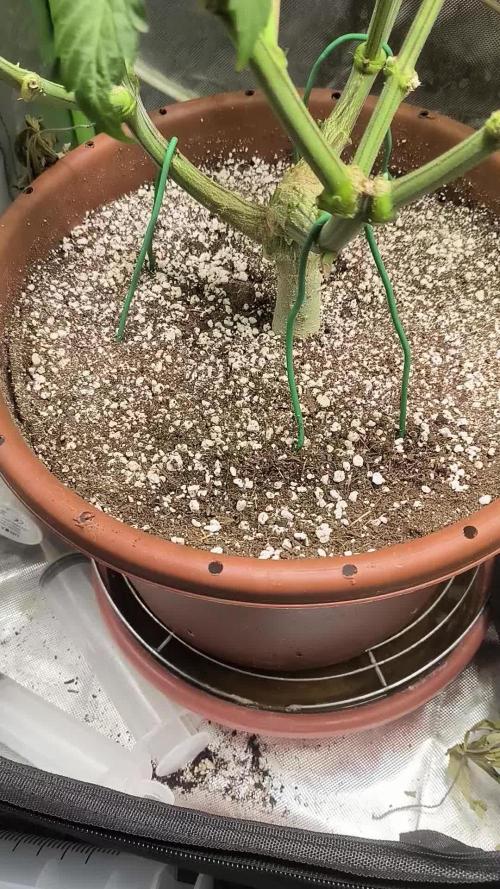
K.onec 10. Týdne holku jsem dnes pokosil, trichomy plně mléka a občas i nějaký ten Amber. Pupeny jsou tak těžké že při sundávání rostliny se větve samy lámaly pod tíhou palic. Až to bude suché přidám pár fotek hotového produktu. Jinak lepkavou brokolicí bych ohodnotil dobře, snadno se pěstovala, a nebyly s ní žádné větší problémy.

Likes
12
Share


@Naujas
Follow
Well, that day has come, the girl would have been really different if not for the high temperature, strong light, and a huge lack of potassium :( well, everything will be fine next time :) live and learn :) I am satisfied with the result, which is what I need :) got 200 gr of liquid :) gathered a lot of sugar leaf :) they are already in the sweet shop :D I will make an addition!! good growth and success :)

Likes
6
Share


@NewbieLearner
Follow
Amazing Colours! As you can see the colours on this plant at the end of its run are absolutely amazing. The buds didnt out as dense as I had hoped but I think thats just this pheno and we are busy hunting a denser pheno atm. what a great strain to grow though. no problems during the cycle of the plant and the colours make it so rewarding to grow! I would definitely recommend this strain to people who like fruity and colourful plants.
Barneys never disappoints really;)