


Likes
Comments
Share

@All_our_small_plants
Follow
Bewässerung: 500 ml jeden 3 tag in der zweiten Woche
pH-Wert: 5,8
EC-Wert: 0,6
Temperatur: 30ºC
Luftfeuchtigkeit 68%
Schädlingsbekämpfung:
PPFD: 200 µmol/m²/s
DLI
Düngemittel: organischer Dünger 4,2-0,8-4 💩
Besonderheiten: wir versuchen bei diesem Grow Effektive Mikroorganismen aus. Die Opfer Linsen sind wieder da 😜
-Tag 8 Heute hat sie Nematoden bekommen 😝
-Tag 10 Heute wurde sie mit organischem Dünger gegossen 4,2-0,8-4 💩
-Tag 12 wir haben ihr wieder etwas Dünger gegeben und wir haben entschieden dass wir sie nur mit organischem Dünger gießen werden um den Unterschied zum mineralischen Dünger zu beobachten 👋
-Tag 14 Sie hat heute nur Wasser bekommen. Sie wachst etwas langsamer als die anderen die gleichzeitig gekeimt sind

Likes
18
Share


@Mistertemps
Follow
First the trichomes then the plumping. Still at trichome production they all smell great. Gorilla Zkittles, Gelat.og, and elderberry smell soooo damn sweet and dank. GZ has this orange spice smell. 🤤🤤🤤🤤


Likes
1
Share


Likes
10
Share


@bigfloppa
Follow
Upgrade: the main cola is getting pretty dense, so I got a clip-on fan to control humidity! Another upgrade: grow tent!


Likes
4
Share

@SmokeyRich
Follow
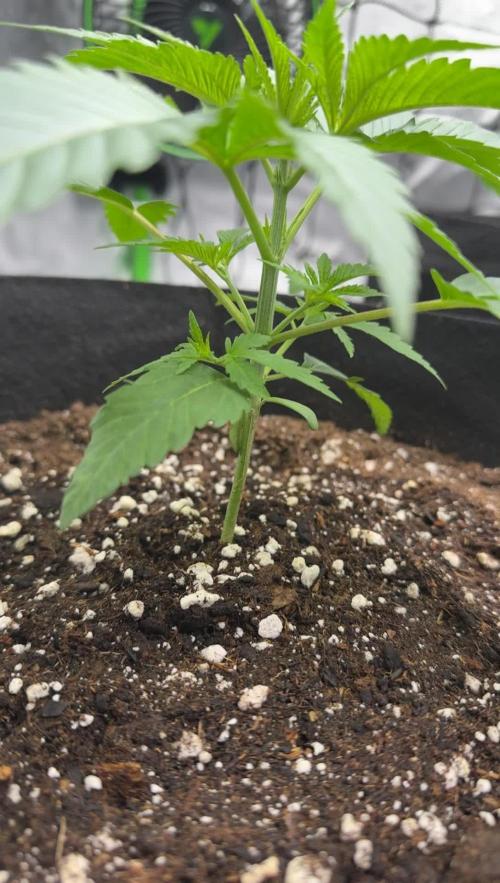
Week 4 , Bigger Babies ? They’re Working On Their Side Branches & Keeping Great Structure 💪🏽 . Space Queen Is Definitely The Bigger Monster For Now But That Can Definitely Change After Topping ✂️🍃 Whipped Biscuits Starting To Show Beautiful Symmetrical Branches 😍 I Think She’s Going To Surprise Me



Likes
2
Share


@Alpinefarmer
Follow
Ciao a tutti,
eccoci di nuovo, sono passati 8 giorni dall'ultimo aggiornamento.
oggi siamo arrivati al giorno 40 di fioritura, i fiori sono raddoppiati di dimensioni e sono gia duri come delle pepite che si riempiono di resina giorno dopo giorno aromatizzando tutto il locale di agrumi.
Negli scorsi giorni ho avuto un problema di sovrafertilizzazione, dopo una mia prima analisi penso sia un accumulo di nutrienti immobili contenuti nei concimi AN che ho aggiunto alla mia solita fertilizzazione dato che volevo azzardare e vedere se ci fossero dei miglioramenti.
Era dall'ultimo post che le piante iniziavano a mostrare segni di una concimazione troppo sostenuta, nella vasca l'EC era 2.4 e a partire dal giorno 35 dopo ogni 24 ore avevo un aumento dell'EC di 0.3-0.4, cosa che regolavo aggiungendo acqua riportandolo ad un valore di 2.4 e aumentando il PH a 6 per vedere se le piante riuscissero a metabolizzare meglio i nutrienti in eccesso, pensando che le piante lo avessero sopportato dato che le conoscevo e sapevo che potevano mangiare tanto tanto. ERRORE *****
il giorno 39 sono intervenuto cambiando la vasca e mettendo solo acqua con PH=5.8 che cambierò giornalmente almeno fino al giorno 41. quando poi tornero ad aggiungere i concimi ma ad una dose inferiore.
per il momento posso dire che l'aggiunta dei concimi AN non ha avuto gli effetti desiderati sulla dimensione dei fiori. Quantità e qualità della resina e dei suoi terpeni non posso notare alcuna differenza dato che attualmente le temperature sono relativamente basse e preservano bene tutti i terpeni motivo a cui attribuisco il loro grande profumo che come detto è inebrianti, adoro chiudere gli occhi e annusare le cime PURA AROMATERPIA :P
Vi direi addirittura per il momento di aver esagerato con i prodotti e ho pure speso soldi inutilmente creandomi un problema di concimazione
Likes
4
Share


@JeyGanesha
Follow
Seconda settimana di veg...la runtz che è nata prima dell'altra sta mutando in modo strano. Non avevo mai visto spostarsi il centro apicale..sembra che si è piegata e l'apicale sta crescendo come sé fosse un ramo laterale 😂🤣🤦💪

Likes
24
Share


@Daweed83
Follow
Ladies are great! buds are getting fatter and I’m expecting them to keep going bigger on the last weeks. I don’t see any issue still but please let me know if you do see any. 🖖🏽🖖🏽

Likes
199
Share


@CRiSPrGrow
Follow
First full on flower week for these, they seem really f-ing quick for some reason, maybe it's the smart protein ... At this rate i'm gonna have an august harvest fully 12 weeks from seed lol, i'm not holding my breath because i'm realistic, but that would be f-ing nice as shit lol anyway i'm just following these ladies' cycle and giving some flower nutrients as well as some flower specific micro , had some bioflo around so just used that - didnt really over think this one, i'm just enjoying the show, sneaked into their room while they were sleeping to snap some pics , pretty dramatic with the lighting , hope you enjoy these ! Just a word before I let you go : i do "touch up" these photos by clicking the magic wand on my phone's camera function, so if these appear "too much" or "too light" or whatever, just let me know i'll save time and effort , like i said, hope you enjoy these 🚀

Likes
18
Share


@valiotoro
Follow
Hello everyone week 6 of flower has passed for this Gelato auto 🍦
She’s ready 😍
Green Sensation 0,5ml/L
Spider Farmer SE7000 80%
have a great day and wish you all happy growing 😎
Likes
9
Share

@GreenEldritchGardens
Follow
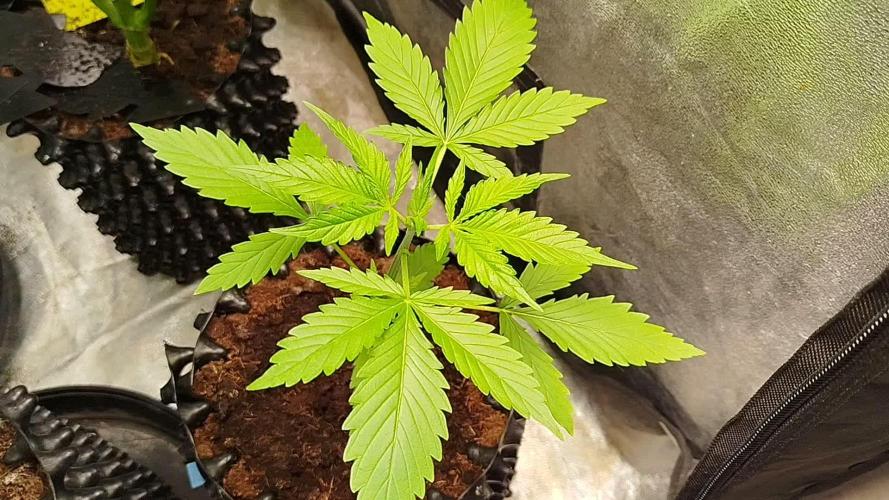
The Z up is now back to the tent, seems happy because the leaves are shining a lot and showing vivid colors.
This should be last week of veg, so gonna boost her up to flower with good nutes.
Likes
22
Share


@BiggestLittleGrower
Follow
Day 56f and week 8 and the girls are ripening up. Looking to harvest within the next 4 to 8 days. Just waiting for some more cloudy trichomes to show up. We've reduced our feeding to Canna Boost and Cannazyme only. For the last 4 days or so they will receive plain water. Really stoked how this girl has turned out so far and I can't wait to harvest her. Thank you everyone for likes and comments this far I so appreciate you guys. Growers love ✌️🏻-BLG
Video- https://youtu.be/NVoXwpqe9AQ
Likes
9
Share


@Cannabot
Follow
Last feed of bloom and then flush.Have a very soft spot for this plant,really dense hard bud that smells so sweet.Never gave a days issue from seed.Resistant asf that's for sure.Looking forward to harvest
Likes
91
Share


@PEAKYPLANTERS
Follow
Very well, my friends!
We are ready to try the Technique Scrog in the Peaky Gardens for the first time.
Although we practice manual irrigation, we will point to direct the airpot vessels to collect the water in inside after having it leaked into the boast!
Hard stems like tree trunks
Stay up to date
Likes
2
Share


@dauntless
Follow
Strain is Lemon Pie x Gorilla Cookies Auto R2
Grow started on July 8th, 2022
I dropped these directly into another pot with some plants that I was pretty sure were not awesome. I was right and these germinated quickly and are growing well.
Out of four, the two I kept were the best ones, so I named them 1 and 2
Direct to soil, same feed as my Green Gelato Auto grow, Flora Nova Bloom with all the good Gaia Green nutes and worm castings and myco in the soil already.
Crimson Clover is cover/companion
July 23, 2022
Day 15
My impression of these two autos so far: super fast growing, topped on day 15, 1st week of veg. I was NOT going to top them, but they are so fast, I need to buy some time, since the other plants are filling out now. I don't think she will slow down by much.
Likes
22
Share


@Chumpkilla
Follow
7/24/23 - Day 42 - Ok, so where to start? I'm going to go over the last couple days of issues/troubleshooting. We had an issue with the lights not coming on for a whole day/night cycle. That was a couple of days ago, and everything seems okay since then. I had some Canoeing/tacoing on the leaves once the lights were back on. I think I had the PH too low, 5.8. In flower, I should start moving it up the scale. Once I corrected the PH to 6.2, the canoeing/tacoing in the leaves seemed to be gone/almost gone.
I'm REALLY worried about the height of the plant. She is only 12 in. from the light that I cannot move. I added a second scrogg net???? I don't know if that's done a lot, but I'm going to try and stop if from growing straight up. I think the best I can do is give it a lean. So Ill call this the ScoggGL (GangstaLean). You'll see some pictures up top as I start the ScoggGL
I did the first big trim and pulled a 3-gallon bucket of fan leaves out. I cut off a few side branches I didn't want the plant to waste energy on. I trimmed so many leaves off it was crazy. The smells have been awesome! You all know the smell of the fresh plant stems and leaves as you trim and rub across them. It's one of my favorite smells, which is in full effect.
I noticed that I have some pistils growing. I know what that means, shes going to have some flowers here in the next week. I couldn't be more excited!!!!!
The roots are just downright ruthless; they have been growing out of control. I have a great picture of them in there with no water.
I should note that I did two things that might have solved the Tacoing in the leaves. It could have been one or the other, but it also could be a combo of both things. I did the trimming to get some airflow between the leaves and changed the target for my PH from 5.8 to 6.2. When moving into flowering, I should have already done that. But I did both things while the leaves were Tacoing, and now they are not. I wanted to make sure I noted that.
7/26/23 - Day 44 - Things are looking great. No more tacoing, she's growing and still drinking about 2+ gallons a day of water. I hope the vertical growth stops soon, I want to remove a ton more fan leaves, and I'm hoping that it spends more time growing around than up, I'm keeping some leaves on just to slow some vertical growth.
7/27/23 - Day 45 - She's sleeping right now, but I will chop some more fan leaves when she wakes up. She's growing too tall, and I need to find a way to stop her. I think shocking her system will help stunt her growth. How crazy is this, what a conundrum I'm in. Normally I stress out trying to find the right time to trim to avoid stunting growth. I always keep my plants busy and do one or two chops. I think they need to grow as mother nature intended. Let them grow and do one, maybe two fan leave chops. That's always been my motto and its always worked out great for me. This is now the exact opposite. Feels weird even thinking about it, doing a leave chop two weeks into flower..... ARE YOU INSANE!!!!!! Lol
The 2nd chop has happened. I took a ton of fan leaves off. It's time for the plant to slow down heal and start working on the buds! Let's see how this goes over the next couple of days. I added a timelapse of me chopping her up.
7/28/23 - Day 46 - After adding more water last night, I was checking PH, and I did a quick check on the ppm from the nutes. If it went from 600ppm down to 130ppm in a couple of days. So we decided to give her another dose of nutes so she has something to eat. I'll update you after she wakes up for the day.
If you are looking for this experience, check out https://www.getleaf.co/

Likes
6
Share


@Muravushka
Follow
4 unknown plants accidently popped from previous grow buds + Auto Gorilla Cookies surviving. text to edit
Likes
7
Share


@DayDream07
Follow
Day 31 (from sprout): Upon my return, I found that the plants were underwatered given they are in living soil this was especially bad. The first thing I did was to defoliate and to install a new trellis net. Sadly I was tired and couldn’t reach / see my plants well and ended up cutting off two valid branches from the gorilla skittlez
Likes
15
Share
@Labar
Follow
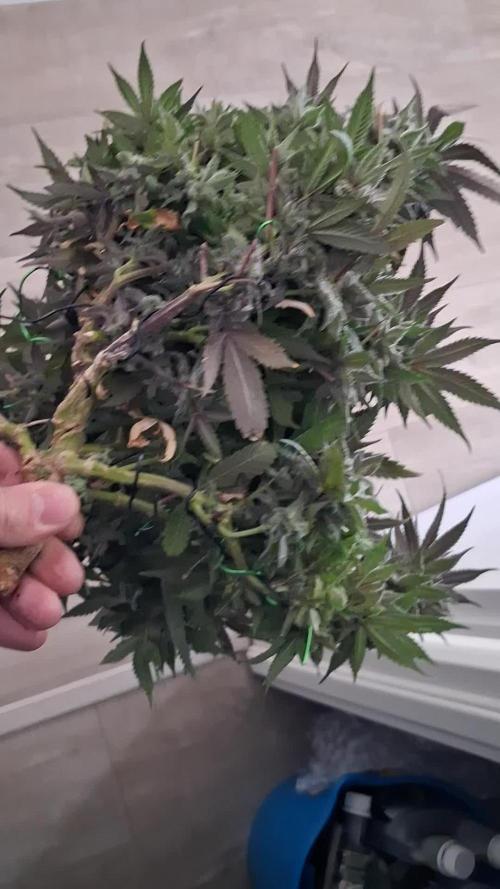
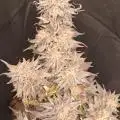
Very Nice strains. sweet, strong, fruits, citrus.
Second harvest with this phenotype.
Harvest more early than previously.
Purpose:
Organic product / short plant arround 25 cm height / do less.
172g , one plant did more the half.
Did less get more! Thx biotabs!