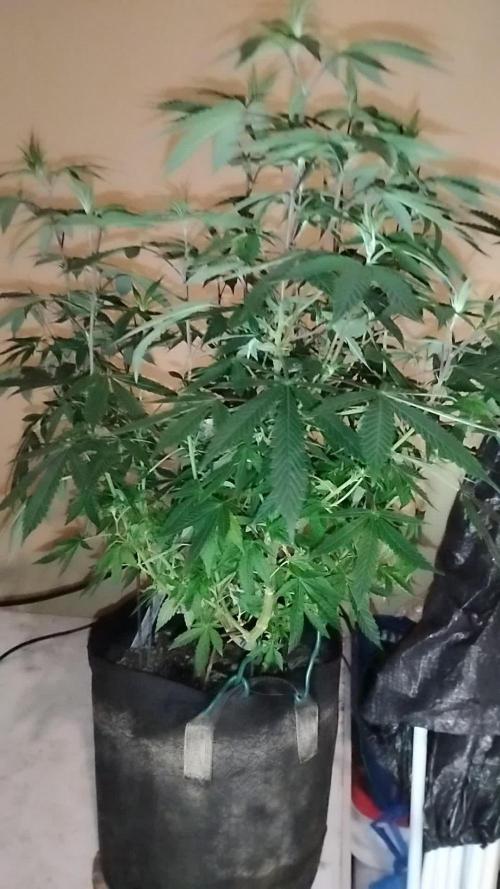
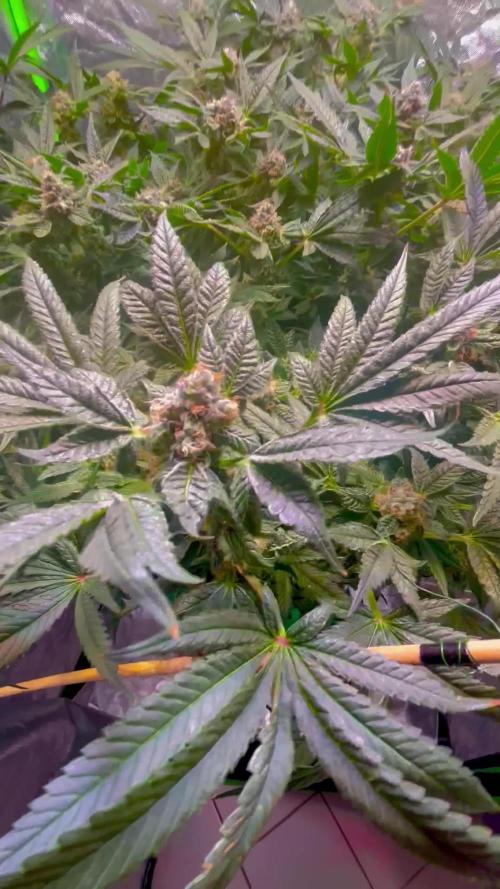
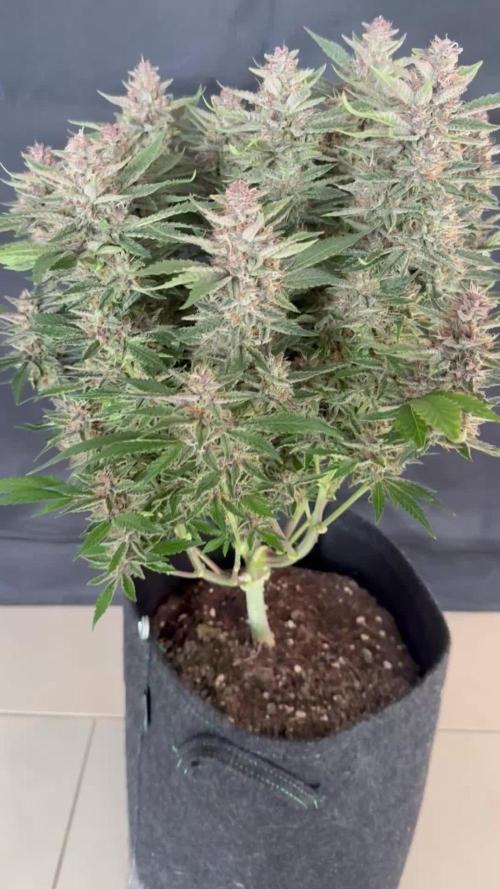
The Grow Awards 2026 🏆
Likes
Comments
Share
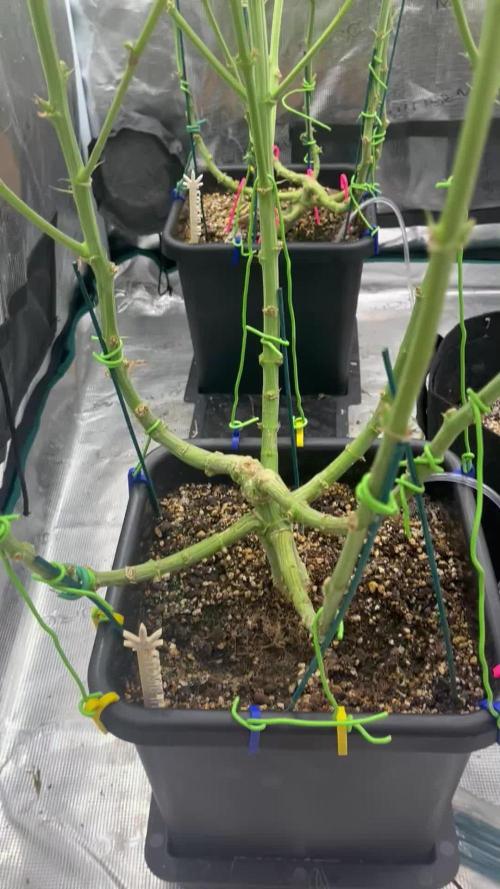
The buds are swelling nicely 🌱💨 and developing super well the terps are turning out amazing! 😍✨

Likes
3
Share
Esta semana la dejamos más tranquila a la Jack solo le hicimos un trasplante a 5 litros quedo bien , la dejamos recuperar unos días y después le hacemos las últimas podas y ya va a estar lista para florecer
Likes
57
Share
Oh yes, my friends .... Peaky is back stronger than before to compete with the best! Take a look at my updates The best crops and best regards
Likes
37
Share
It’s warming up outside so the a/c and dehumidifier are working a bit. Got the lights on during the night so just a few hours at lights on they work a bit hard. Cleaned up underneath removing any sucker shoots and leaf that was near the soil. Not much really. Mostly on #3 as I didn’t train out the branches as much and she grew tighter together, so I removed mostly all inner growth blocking light and that allowed a lot more penetration and flow. Left a few leaves below to die off naturally…more the better. Gonna put some Grub Grenades in the pots with some yellow sticky cards. Not because I see anything, just being cautious. I do see what looks like Springtails but don’t seem to be an issue yet. Still looking green and healthy so I’m happy! Grow on! Update Made a few adjustments. I let the tops grow into the tsw2000, 18” to tops. I didn’t like how they looked so I raised it back to 24” where I’ll keep it. The “Kind LED” I know from previous grows that it can’t get closer then 24”. But this is my first run with “Mars” so I’m still figuring out the distance for my setup with additional overlapping light intensity from other lights. With that being said another pod failed so I’m down 2-Kind LED’s now. Gonna remove all old tech and use all newer TS series lighting. All Mars moving forward. Seems to be a great light and when compared to other quality lights you can’t beat the price!
Likes
12
Share
Gracias al equipo de AnesiaSeeds, Marshydro, XpertNutrients y Trolmaster sin ellos esto no sería posible. 💐🍁 Coco Jambo: Con una composición genética 60% Sativa y 40% Indica, Coco Jambo es tu billete dorado a un verano sin fin, ofreciéndote una escapada a un mundo donde el sol nunca se pone en tu felicidad. Con unos niveles de THC que oscilan entre un relajante 30% y un estimulante 34%, Coco Jambo es un faro de euforia que guía a sus usuarios en un viaje a través de olas de serenidad y vibrante alegría. Su aroma es una celebración de los sentidos; imagina el momento de euforia al abrir un coco y descubrir que rebosa de las frutas tropicales más suculentas. 🌻🚀 Consigue aqui tus semillas: https://anesiaseeds.com/es/product/coco-jambo/ 💡TS-3000 + TS-1000: se usaran dos de las lámparas de la serie TS de Marshydro, para cubrir todas las necesidades de las plantas durante el ciclo de cultivo, uso las dos lámparas en floracion para llegar a toda la carpa de 1.50 x 1.50 x 1.80. https://marshydro.eu/products/mars-hydro-ts-3000-led-grow-light/ 🏠 : Marshydro 1.50 x 1.50 x 1.80, carpa 100% estanca con ventanas laterales para llegar a todos los lugares durante el grow https://marshydro.eu/products/diy-150x150x200cm-grow-tent-kit 🌬️💨 Marshydro 6inch + filtro carbon para evitar olores indeseables. https://marshydro.eu/products/ifresh-smart-6inch-filter-kits/ 🍣🍦🌴 Xpert Nutrients es una empresa especializada en la producción y comercialización de fertilizantes líquidos y tierras, que garantizan excelentes cosechas y un crecimiento activo para sus plantas durante todas las fases de cultivo. Consigue aqui tus Nutrientes: https://xpertnutrients.com/es/shop/ 💻 Trolmaster Tent-X TCS-1 como controlador de luz, optimiza tu cultivo con la última tecnología del mercado, desde donde puedes controlar todos los parametros. https://www.trolmaster.com/Products/Details/TCS-1 📆 Semana 3: Muy buena semana, he aplicado un riego solamente con agua de manantial para reducir la cantidad de sales acumuladas en el sustrato y se ha notado una mejoria . Creo que le quedan unas dos semanas por estirar, parece que va a ser una buena cosecha. Se mantiene un buen control del cuarto de cultivo gracias a @marshydro y @trolmaster. Mantengo las dosis de 1/3 de nutrientes recomendados por el fabricante. Potencia del foco 80%
Likes
42
Share
WEEK 5 - both ladies are stretching, no issue so far pleasure to grow 9L Pot I started notice pre flowering stage 12L Pot the is getting bigger but still in veg stage
Likes
16
Share
@Mrg7667
Follow
Just about up to normal feeding, some leaves are starting to get green back some not so much! tricombs are start to turn milky in allot of the chocolate marhsmellow and actually a couple of the DD i might me able to harvest both at the same time Smell is absolutely insane i can smell it around the corner from my apartment 😅
Likes
4
Share
Day 56, both ladies growing very well and the buds are getting frosty and large. The seed 2 plant is growing faster than seed 1 as the buds are bigger.
Likes
216
Share
@Ju_Bps
Follow
Hello my friends 👨‍🌾👩‍🌾, Still in GD Jail since 3 week, start to be long, thanks for your coms and likes I can't reply you my friends. The cherry cola 🍒🍒 start to be big in few times and lot of buds 🌲🌲🌲 💦I've given this week 3x 2l/plant - Water only - Water + cannazym + Sugar Royal - Water only PH@6 Lamp 75% Each times I try Purple strain, I'm always unlucky, still green... But I'm happy with the results. I've found thrips in my autoflower box, since 2 weeks i'm very busy and don't found time to solve this issue... See you next week and have a good week end my friends 🔥👨‍🌾👩‍🌾 Thank to Mars Hydro and @marshydrococo2 for sponsoring the FC3000 ❤️❤️, as well as @Fast_Buds for sponsoring the Seeds ❤️❤️ If you want a litle discount on your Mars Hydro order, add this coupon to your cart, Ju_Bps Thanks community for follow, likes, comments, always a pleasure 👩‍🌾👨‍🌾❤️🌲 Mars Hydro - FC3000 https://www.mars-hydro.com/fc-3000-samsung-lm301b-led-grow-light 42 Fast Buds - CHERRY COLA 🍒🌲 https://2fast4buds.com/seeds/cherry-cola-auto
Likes
12
Share
I am really happy that the plant is so beautiful. I am 100% sure that in better conditions it can give even more, now there is little time left to harvest. bye growers OKeyyy now the harvest day is 23/05! i love this strain ! looking for the second plant ;D
Likes
7
Share
@wascanna
Follow
👹 Oni Seed Co. 🍭 Dub Trop BX1 // Dubble Trop x Tropicanna Cookie F1 🍓 Straw-Picanna // Strawberry Bananna x Tropicanna Cookies 🌿 Tropicanna Kush // SFV OG x Triangle Kush 🔥 Sunburn // TKT (Triangle Kush x Tangie) x Tropicanna Cookies 🌱 VEG WEEK 2 📅 Day 1 - Moved to big boy tent (3x3 lol) because I can't control humidity in open space. 📅 Day 2 - Cruisin' 📅 Day 3 - Had a Trop Kush fall over with his big head. Going to bury deeper on transplant. 📅 Day 4 - So spoiled, got their own propagation tent today 📅 Day 5 - Chillin' 📅 Day 6 - Another Trop Kush propped up. 📅 Day 7 - No pics, just growin'
Likes
14
Share
@Terpyboyz
Follow
Alright lads 💪🏻 so we’re starting week 2 today - the girls are all having there own individual issues the joys or running multiple strains again 😂👌🏻, but we’re all looking really wellz so left side is looking a bit N def hungry still so I’ve upped the bio grow to 2ml and the right side is still showing she’s still got some nutes left from repot as shes good I’ve just left that to 1ml bio grow. All the clones are looking nice lush green, all starting to take shape now🕺 wait another 2 weeks until I start to flower them.. and see which of my keepers are as clones then take cutz off them before flowering my actual clones tent, keep the cutz in a separate tent and start popping more seeds of this next round. Either ripper seeds new limited edition or lit seeds can’t decide..😅, anyways gang cheers for stopping by until next week and we can see some bud formation happing 💪🏻 Update - end of week 2 of flowering - I’ve given them all a fair defoliation and taken a lot of lowers of to start focusing it on them tops. Still looking a bit pale lack of N but we should be okay if it seems keep progressing al just up feed to 2ml per litre. Other than that it’s going fairly smooth.
Likes
5
Share
This plant seems to have grown much denser and better than my first plant. I just got the ac infinity ventilation setup with controller 69 for my 2x2, still trying to learn, hopefully grow #3 goes even better. Stay tuned
Likes
19
Share
@Emmet354
Follow
Anyone got any thoughts wheter i should switch them to flower now?
Likes
10
Share
@Lazuli
Follow
Preflowers show up ill remove the lst next week and let them go I still only give hard tapwater everytime the soil feels dry the soil was fertilized for 100 days, this week runoff comes out at around 2000ppm
Likes
11
Share
This week was full of new growth! I switched the ladies to their bloom nutrients for the first time and they seem to love them. The budlets are getting bigger every day and the ladies are looking beautiful! I hope everyone has a Happy New Year! Be Safe and stay green! 🤙🏾
Likes
18
Share
Green light is radiation with wavelengths between 520 and 560 nm and it affects photosynthesis, plant height, and flowering. Plants reflect green light and this is why they appear green to our eyes. As a result, some growers think that plants don’t use green wavelengths, but they actually do! In fact, only around 5 – 10% of green light is reflected from leaves and the rest (90 – 95 %) is absorbed or transmitted to lower leaves [1]. Green wavelengths get used in photosynthesis. Chlorophyll pigments absorb small amounts of green wavelengths. Light that doesn’t get absorbed is transmitted to leaves that are shaded out from direct light. This means that leaves at the bottom of the canopy get more green light than leaves at the top. A high proportion of green wavelengths compared to other colors tells lower leaves that they are being shaded out, so they are able to react accordingly. Lower leaves may react by opening or closing their stomata or growing longer stems that help the leaves reach brighter light [1, 2, 3]. When it comes to growing cannabis, many cultivators are interested in the quality of light used for the flowering stage. In many plants, flowering is regulated by two main photoreceptors: cryptochrome and phytochrome. Both photoreceptors primarily respond to blue light but can also respond to green, although to a lesser extent. Green can accelerate the start of flowering in several species (although cannabis has yet to be tested) [1, 4, 5]. However, once flowering has begun, it’s important to provide plants with a “full spectrum” light that has high amounts of blue and red light, and moderate amounts of green, in order for photosynthesis to be optimized. Green light mediates seed germination in some species. Seeds use green wavelengths to decide whether the environment is good for germination. Shade environments are enriched in green relative to red and blue light, so a plant can tell if it is shady or sunny. A seed that senses a shaded environment may stay dormant to avoid poor growing conditions [1]. Some examples of plant species where researchers have documented this response are: ryegrass (a grass that grows in tufts) and Chondrilla (a plant related to dandelion) [1, 6]. Although green wavelengths generally tell plants NOT to germinate, there are some exceptions! Surprisingly, green wavelengths can stimulate seed germination in some species like Aeschynomene, Tephrosia, Solidago, Cyrtopodium, and Atriplex [1, 6, 7]. Of course, light is not the only factor affecting seed germination – it’s a combination of many factors, such as soil moisture, soil type, temperature, photoperiod, and light quality. When combined with red and blue light, green can really enhance plant growth [1, 8]. However, too much green light (more than 50% of the total light) can actually reduce plant growth [8]. Based on the most current research, the ideal ratio of green, red, and blue light is thought to be around 1:2:1 for green:blue:red [9]. When choosing a horticultural light, choose one that has high amounts of blue and red light and moderate amounts of green and other colors of light. Not many studies can be found about the effect of green light on cannabis growth or metabolism. However, if one reads carefully, there are clues and data available even from the very early papers. Mahlberg and Hemphill (1983) used colored filters in their study to alter the sunlight spectrum and study green light among others. They concluded that the green filter, which makes the environment green by cutting other wavelengths out, reduced the THC concentration significantly compared to the daylight control treatment. It has been demonstrated that green color can reduce secondary metabolite activity with other species as well. For example, the addition of green to a light spectrum decreases anthocyanin concentration in lettuce (Zhang and Folta 2012). If green light only reverses the biosynthesis of some secondary metabolites, then why put green light into a growth spectrum at all? Well, there are a couple of good reasons. One is that green penetrates leaf layers effectively. Conversely red and blue light is almost completely absorbed by the first leaf layer. Green travels through the first, second, and even third layers effectively (Figure 2). Lower leaf layers can utilize green light in photosynthesis and therefore produce yields as well. Even though a green light-specific photoreceptor has not yet been found, it is known that green light has effects independent from the cryptochrome but then again, also cryptochrome-dependent ones, just like blue light. It is known that green light in low light intensity conditions can enhance far red stimulating secondary metabolite production in microgreens and then again, counteracts the production of these compounds in high-intensity light conditions (Kim et al. 2004). In many cases, green light promoted physiological changes in plants that are opposite to the actions of blue light. In the study by Kim et al. blue light-induced anthocyanin accumulation was inhibited by green light. In another study it has been found that blue light promotes stomatal opening whereas green light promotes stomatal closure (Frechilla et al. 2000). Blue light inhibits the early stem elongation in the seedling stage whereas green light promotes it (Folta 2004). Also, blue light results in flowering induction, and green light inhibits it (Banerjee et al., 2007). As you can see, green light works very closely with blue light, and therefore not only the amount of these two wavelengths separately is important but also the ratio (Blue: Green) between these two in the designed spectrum. Furthermore, green light has been found to affect the elongation of petioles and upward leaf reorientation with the model plant Arabidopsis thaliana both of which are a sign of shade avoidance symptoms (Zhang et al. 2011) and also gene expression in the same plant (Dhingra et al. 2006). As mentioned before, green light produces shade avoidance symptoms which are quite intuitive if you consider the natural conditions where the plants grow. Not all the green light is reflected from the highest canopy leaves in nature but a lot of it (50-90%) has been estimated to penetrate the upper leaves at the plant level ((Terashima et al., 2009; Nishio, 2000). For the plant growing in the understory of the forest green light is a signal for the plant of being in the shade of a bigger plant. Then again, the plants growing under unobstructed sunlight can take advantage of the green photons that can more easily penetrate the upper leaves than the red and blue photons. From the photosynthetic pigments in higher plants, chlorophyll is crucial for plant growth. Dissolved chlorophyll and absorb maximally in the red (λ600–700 nm) and blue (λ400–500 nm) regions of the spectrum and not as easily in the green (λ500–600 nm) regions. Up to 80% of all green light is thought to be transmitted through the chloroplast (Terashima et al., 2009) and this allows more green photons to pass deeper into the leaf mesophyll layer than red and blue photons. When the green light is scattered in the vertical leaf profile its journey is lengthened and therefore photons have a higher chance of hitting and being absorbed by chloroplasts on their passage through the leaf to the lower leaves of the plant. Photons of PPFD (photosynthetic photon flux density) are captured by chlorophyll causing an excitation of an electron to enter a higher energy state in which the energy is immediately passed on to the neighboring chlorophyll molecule by resonance transfer or released to the electron transport chain (PSII and PSI). Despite the low extinction coefficient of chlorophyll in the green 500–600 nm region it needs to be noted that the absorbance can be significant if the pigment (chlorophyll) concentration in the leaf is high enough. The research available clearly shows that plants use green wavelengths to promote higher biomass and yield (photosynthetic activity), and that it is a crucial signal for long-term developmental and short-term dynamic acclimation (Blue:Green ratio) to the environment. It should not be dismissed but studied more because it brings more opportunities to control plant gene expression and physiology in plant production. REFERENCES Banerjee R., Schleicher E., Meier S. Viana R. M., Pokorny R., Ahmad M., Bittl R., Batschauer. 2007. The signaling state of Arabidopsis cryptochrome 2 contains flavin semiquinone. The Journal of Biological Chemistry 282, 14916–14922. Dhingra, A., Bies, D. H., Lehner, K. R., and Folta, K. M. 2006. Green light adjusts the plastic transcriptome during early photomorphogenic development. Plant Physiol. 142, 1256-1266. Folta, K. M. 2004. Green light stimulates early stem elongation, antagonizing light-mediated growth inhibition. Plant Physiol. 135, 1407-1416. Frechilla, S., Talbott, L. D., Bogomolmi, R. A., and Zeiger, E. 2000. Reversal of blue light -stimulated stomatal opening by green light. Plant Cell Physiol. 41, 171-176. Kim, H.H., Goins, G. D., Wheeler, R. M., and Sager, J. C. 2004.Green-light supplementation for enhanced lettuce growth under red- and blue-light emitting diodes. HortScience 39, 1617-1622. Nishio, J.N. 2000. Why are higher plants green? Evolution of the higher plant photosynthetic pigment complement. Plant Cell and Environment 23, 539–548. Terashima I., Fujita T., Inoue T., Chow W.S., Oguchi R. 2009. Green light drives leaf photosynthesis more efficiently than red light in strong white light: revisiting the enigmatic question of why leaves are green. Plant & Cell Physiology 50, 684–697. Zhang, T., Maruhnich, S. A., and Folta, K. M. 2011. Green light induces shade avoidance symptoms. Plant Physiol. 157, 1528-156. Wang, Y. & Folta, K. M. Contributions of green light to plant growth and development. Am. J. Bot. 100, 70–78 (2013). Zhang, T. & Folta, K. M. Green light signaling and adaptive response. Plant Signal. Behav. 7, 75–78 (2012). Johkan, M. et al. Blue light-emitting diode light irradiation of seedlings improves seedling quality and growth after transplanting in red leaf lettuce. HortScience 45, 1809–1814 (2010). Kasajima, S., et al. Effect of Light Quality on Developmental Rate of Wheat under Continuous Light at a Constant Temperature. Plant Prod. Sci. 10, 286–291 (2007). Banerjee, R. et al. The signaling state of Arabidopsis cryptochrome 2 contains flavin semiquinone. J. Biol. Chem. 282, 14916–14922 (2007). Goggin, D. E. & Steadman, K. J. Blue and green are frequently seen: responses of seeds to short- and mid-wavelength light. Seed Sci. Res. 22, 27–35 (2012). Mandák, B. & Pyšek, P. The effects of light quality, nitrate concentration and presence of bracteoles on germination of different fruit types in the heterocarpous Atriplex sagittata. J. Ecol. 89, 149–158 (2001). Darko, E. et al. Photosynthesis under artificial light: the shift in primary and secondary metabolism. Philos. Trans. R. Soc. B Biol. Sci. 369 (2014). Lu, N. et al. Effects of Supplemental Lighting with Light-Emitting Diodes (LEDs) on Tomato Yield and Quality of Single-Truss Tomato Plants Grown at High Planting Density. Environ. Control Biol. 50, 63–74 (2012).
Likes
2
Share
I found this strain very easy to grow and responded very well given the hot/humid weather we have here on the island. This strain held up very well to pest and mold/mildew
Likes
10
Share
Week 5 of flower and the buds are stacking up nice. Plenty of white hairs and the smell is starting to kick up. I’ve got 5 plants. 4 hydro, 1 soil. The soil nugs are getting fat!