


Likes
Comments
Share

@HUMO_Cultiva
Follow
Empezamos la semana 3 de crecimiento desde que brotaron sus primeros cotiledones, su crecimiento es explosivo!!
Pronto empezaremos hacer cortes apicales para empezar a entrenar y luego poner el Scrogg!!!!

Likes
2
Share

@DogDoctorOfficial
Follow
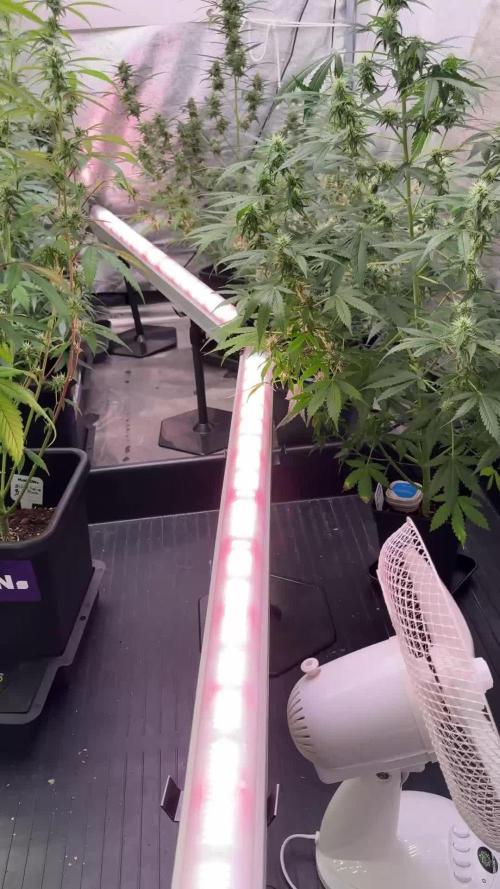
🌸 Week 9 – Opening the Door for the Flowers
Blueberry Muffin has always had an interesting personality in this tent.
She's not the tallest plant.
She's not the largest plant.
But she's been quietly building herself into a compact flowering machine.
And that's exactly why I decided that a little selective defoliation was appropriate this week.
We're not trying to strip her.
We're not trying to make her naked.
We're simply opening some space.
A few leaves here.
A little overlap there.
Removing foliage that is no longer helping the structure we're trying to maintain.
The goal is simple:
More breathing room.
Better light movement.
Better airflow.
Less unnecessary congestion.
And when you have twelve different plants sharing the same room, sometimes opening one plant slightly also helps the environment around her.
That's the beauty of working with the whole garden rather than looking at each plant in isolation.
✂️ Defoliation – It's About Purpose, Not Punishment
I've talked about this before, but this week is a perfect opportunity to repeat it.
Defoliation isn't about removing leaves because leaves are somehow "bad."
They're not.
Healthy leaves are incredibly valuable.
They're photosynthetic organs.
They're producing the energy the plant uses to grow and develop.
So when I remove a leaf, I want to have a reason.
Maybe it's heavily overlapping another leaf.
Maybe it's sitting inside an increasingly congested section of the canopy.
Maybe it's shading a developing flower while contributing relatively little to the structure.
Maybe removing it creates a much better pathway for air.
And sometimes...
it's simply part of cleaning the plant.
That's the approach we're taking with Blueberry Muffin.
Selective. Intentional. Moderate.
We're not trying to win a defoliation competition.
We're trying to create a healthier, more manageable flowering plant.
💨 Airflow Becomes More Important as Flowers Develop
This is where the timing becomes particularly interesting.
As the plant gets deeper into flower, the canopy naturally becomes more complicated.
Flowers get larger.
Leaves overlap.
Branches carry more biomass.
And spaces that were wide open earlier in the grow can gradually become pockets of dense vegetation.
That's not automatically a problem.
But it's something worth managing.
One of the reasons I wanted to open Blueberry Muffin a little more this week was simply to maintain air movement through the plant.
Good airflow doesn't mean blasting the flowers with a hurricane.
It means avoiding stagnant pockets of humid air trapped inside dense vegetation.
And as we move further into flowering, that's increasingly important.
Because nobody wants to discover a problem after flowers have already become dense.
Prevention is much easier than trying to fix a problem later.
💧 Helping the Room Breathe
There's another interesting side effect to opening the canopy.
The plants are collectively producing and moving a lot of moisture through transpiration.
When twelve plants are sharing a relatively enclosed environment, the canopy itself becomes a major part of the room's microclimate.
Opening congested areas gives moving air more pathways through the plants.
That can help reduce pockets of trapped humidity around the foliage.
And when the canopy breathes better, the whole room benefits.
Again, this isn't about expecting defoliation to magically control room humidity.
The ventilation system is still doing the heavy lifting.
But good canopy management can make the environment easier to manage.
And that's exactly what we're looking for.
💡 Every Photon Has Somewhere to Go
Blueberry Muffin is also at an interesting size.
She's approximately 75 cm tall.
That's not a huge plant.
And because she's relatively compact, I want to make sure the available light isn't unnecessarily intercepted by layers of foliage sitting on top of other foliage.
Yes, she has support from the under-canopy and inner-canopy lighting strategy.
And that's fantastic.
But additional lighting doesn't mean we should deliberately create unnecessary barriers between the light and the flowers.
If we can open a section naturally and allow more photons to travel through the canopy, why not?
We're not trying to expose every square centimetre of the plant.
We're simply making the canopy a little more efficient.
Sometimes the best lighting upgrade is simply...
removing something that doesn't need to be in the way.
🌸 The Flowers Are Taking Over Now
And this is where the photographs become particularly exciting.
The flowers are becoming increasingly obvious throughout the plant.
The white pistils are still doing a lot of the visual talking, but the individual flowering sites are gaining structure and substance.
She's moving away from that early-flower appearance where everything is basically a collection of little pistil-covered points.
Now we're beginning to see the plant building actual floral mass.
The branches are carrying their flowers with confidence.
The canopy has become more compact.
And the whole plant feels like she's entering another chapter.
This is the stage where I stop being interested in how much she's going to stretch...
and become much more interested in how much she's going to stack.
? The Blueberry Muffin Personality
One thing I really appreciate about this phenotype is how different she looks when compared with some of the other genetics in the tent.
She's not trying to dominate.
She isn't the tallest.
She doesn't have the most dramatic structure.
But she's developing her own little architecture.
And that's what this entire 8×8 Adventure is about.
Twelve genetics.
One room.
One general environment.
And twelve completely different answers.
Blueberry Muffin's answer seems to be:
"Give me some time."
And now she's starting to show us why.
💚 Nutrition – Staying the Course
There's no reason to reinvent the feeding programme this week.
We're keeping nutrition essentially unchanged.
Current feeding remains:
Terra Bloom — 2.2 ml/L
Pure Zym — 1 ml/L
Power Buds — 1 ml/L
Sugar Royal — 1 ml/L
pH Plus / Lemon Kick — as required
The plant continues receiving the same flowering nutrition rather than reacting to every small visual change with another adjustment.
That's important.
We made a structural intervention this week.
We don't need to simultaneously start changing everything else.
One change at a time makes the plant much easier to read.
🌡️ The Room Has Changed
And this week we do have a small but interesting environmental change.
The daytime temperature remains around:
29°C
But the night temperature is now approximately:
26°C
Last week we were around 25.6°C, so the difference isn't dramatic, but the overall night temperature is slightly warmer.
That means our day/night temperature differential is now smaller.
We're also sitting around:
RH: 60%
Solution temperature: 25°C
Root-zone/substrate temperature: 25°C
CO₂: ~693 ppm
Light schedule: 12/12
Watering: ~1.3 L per plant / 24h
Container: 15 L
And I actually like observing these little changes.
The room doesn't have to remain frozen in time.
What matters is understanding what changed and watching how the plants respond.
At this stage, with flowers getting denser, keeping the canopy open and maintaining good air movement becomes even more valuable.
🌙 Day vs Night – The Difference Matters
One of the things I enjoy about documenting these numbers is that they tell us more than a single temperature reading.
We're running approximately:
29°C during the day → 26°C at night.
That's only about a 3°C difference.
Earlier in the run, the difference was a little larger.
As the room changes, so does the relationship between temperature, humidity, transpiration and plant development.
And this is why I don't like looking at temperature or humidity as isolated numbers.
The plant doesn't experience "29°C."
It experiences:
temperature + humidity + light + airflow + root-zone conditions + CO₂ + time of day.
Everything interacts.
And right now, I'm happy with what the room is showing us.
We're watching it.
We're measuring it.
And we're adjusting when necessary rather than reacting to every little fluctuation.
🔬 One More Reason I Like This Defoliation
There's something else happening here that I think is easy to overlook.
Cleaning the plant isn't only about what remains.
It's also about what we can see afterward.
Once some of the unnecessary foliage is removed, I can see the flowering structure much more clearly.
I can see which branches are developing strongly.
I can see where flowers are stacking.
I can see where the canopy remains dense.
And I can see what might need attention later.
In other words...
defoliation also improves observation.
And for this project, observation is half the fun.
🔮 Looking Ahead
From here, I want to keep things relatively simple.
No unnecessary training.
No dramatic interventions.
No chasing numbers just because they're numbers.
We'll continue watching the flowers develop, monitoring the canopy and paying attention to how she responds to the cleanup.
The next stage should increasingly be about:
🌸 flower stacking
🌸 calyx development
🌸 increasing resin production
🌸 increasing flower density
🌸 maintaining airflow
🌸 keeping the environment stable
The framework is already there.
Now we're entering the part of the journey where patience becomes more important than intervention.
We've done our job.
Now...
let Blueberry Muffin do hers.
💭 Final Thoughts – Making Space for What's Coming
I think this week is a really good example of how I like to grow.
We didn't defoliate because someone told us:
"Week 9 means defoliation."
We did it because the plant changed.
She's becoming more compact.
She's developing more flowers.
The canopy is getting denser.
She isn't a particularly tall plant, so making the available photons work efficiently matters.
And with twelve plants sharing the same room, keeping air moving through the garden matters too.
So we opened her up.
Not dramatically.
Not aggressively.
Just enough.
And now she looks cleaner, more open and easier to read.
That's what I wanted.
Not a naked plant.
A better-organised plant.
And honestly...
she looks fantastic.
Blueberry Muffin may not have started this journey as the plant that immediately grabbed everyone's attention.
But she's slowly becoming one of those phenotypes where you look back at the earlier photographs and think:
"Oh... now I see what she was doing."
She's been building toward this.
And now she's starting to show it.
?🌸🔥
🙏 Thank You
A huge thank you once again to Zamnesia for giving us the opportunity to explore these genetics, Plagron for supporting the garden throughout the journey, Future of Grow for providing the light that powers this experiment, Lumiflora for bringing additional light into the inner and lower canopy, TrolMaster for helping maintain environmental stability, and of course everyone following this 8×8 Adventure on GrowDiaries.
Every week gives us another little lesson.
Sometimes it's about nutrition.
Sometimes it's about environment.
Sometimes it's about genetics.
And sometimes...
it's simply about knowing when to take a few leaves away and give the plant a little more room to breathe.
Blueberry Muffin is entering another chapter now.
The canopy is open.
The flowers are developing.
The room is stable.
And there's still plenty of story left to write.
Until next week...
Growers Love and happy growing! 🌱💚?
Likes
15
Share


@MG2009
Follow
09/29/2020
Washing off all the nasty dust, pollen,and such that has accumulated over her long veg and flower period.
She is 72.1 grams wet I guess she should dry out to around 18-22 grams. Which is fine as this was a tester to see if I will do again.
I am keeping a clone till I grow a few dozen more seeds, to see different phenotype/genotype. It will take some time but I am hunting for a UNICORN before I will stop! 🙏 lol
Good candidate for a grafting project
Will update the rest of the report in a couple weeks to let dry out and cure some before testing. I chose this strain because it is said to not make me hungry and no red eyes but I will let you know soon.🙏
10/07/2020
She's dry and jarred up final weight 21.2 grams. Smell of hay and sugar should improve over next couple weeks.
Preliminary smoke report, very smooth not much taste but feel it right away soon after first hit last 3.5 hrs. So just waiting on the cure for full flavor report.
Likes
57
Share


@Regenwurm
Follow
Das Licht auf 250 Watt MH geändert. 2 von den 6 Pflanzen zeigten Mangelerscheinungen (ich denke Cal/Mag) da mit reinem Regenwasser + geringe Menge an Nährstoffen gegossen wurde. Jetzt ist das Wasser zum gießen halb Leitungswasser und halb Regenwasser, seitdem mit einem EC Wert von 0,4 keine Probleme mehr. Das Wachstum ist soweit aus meiner Sicht okay. Da ich aufgrund der Außentemperaturen und der geringen Wattleistung der Lampe noch nicht mit aktiver zuluft arbeiten kann, ist ein CO2 Beutel oberhalb des Ventilator aufgehängt. Mit einem CO2 Messgerät wurden 490 ppm an den Pflanzenspitzen gemessen......

Likes
2
Share

@GreenEldritchGardens
Follow
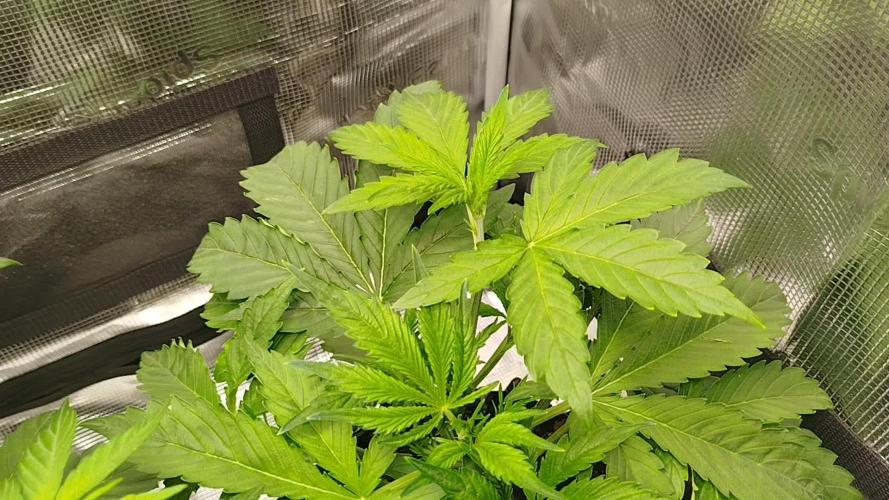
Since she was too small compared to other plants I moved her to a smaller tent with a 100w led for the moment, in some weeks she will go back to Sanlight.
I'm a bit worried that she will no flower, but she seems to indicate she is going pre flower. For sure will not take 65 days to harvest as the breeder claims.
If she flowers and give good fruits I'm happy 😊

Likes
6
Share


@MadeInGermany
Follow
Flowering day 57
since time change
to 12/12 h.
Hey guys :-)
The lady is slowly coming to an end 😍.
The buds start to swell extremely .
The trichomes mature day by day.
This week she was given a very light flush with Clean Fruits so that she can use up her remaining nutrients in the coming days 👍.
It will be harvested in the next 10-14 days 😍.
I can't wait to try them all :-) .
Otherwise everything was cleaned and checked.
Have fun and stay healthy 💚🙏🏻
👇🏼👇🏼👇🏼👇🏼👇🏼👇🏼👇🏼👇🏼👇🏼👇🏼👇🏼👇🏼
You can buy this Nutrients at :
https://greenbuzzliquids.com/en/shop/
With the discount code: Made_in_Germany you get a discount of 15% on all products from an order value of 100 euros.
👇🏼👇🏼👇🏼👇🏼👇🏼👇🏼👇🏼👇🏼👇🏼👇🏼👇🏼👇🏼
You can buy this Strain at
https://pcg.international/shop/pcg-int/
Water 💧 💧💧
Osmosis water mixed with normal water (24 hours stale that the chlorine evaporates) to 0.2 EC. Add Cal / Mag to 0.4 Ec Ph with Organic Ph - to 5.8 - 6.5
MadeInGermany

Likes
11
Share


@PanGrower
Follow
The leaves continue to turn yellow from the bottom.
It seems that I started fertilizing too quickly and the tips of the leaves burned a little
Likes
50
Share


@Fibro_Witch
Follow
I screwed up guys.
First of all, I'm very late updating and have a couple weeks to catch up on.
Second, my cheap LG phone was screwing up last week so I did some maintenance clean up on it and totally forgot to make sure I'd uploaded photos to my drive first. I'd uploaded the pictures of the Autos because I updated those diaries, but I didn't upload the pictures of the photoperiods before I deleted a bunch of photos to make more room so those are gone. I could have kicked myself, gahhhh!
Thankfully I at least have a video to share with you.
On 8/1 I got some spent hardwood substrate blocks from a local mushroom farmer just a couple miles down the road. The blocks are still full of live mycelium that create a symbiotic relationship with the cannabis plant by creating a network in the plants root system where it trades nutrients it takes up from the soil for the sugars it needs. The main reason I got them was for "Problem Child" to see if the mycelium can sort out her nutrient issues and get her in a good groove for flowering, but all the plants should benefit from it.
I'll have more for next week!
Likes
1
Share


@Loulouland80
Follow
This looks ready for harvest, flushing started 10 days ago, smell is so strong especially during the night, buds looks dense , even we still at the 9th week but this monster is ready for harvest.

Likes
15
Share


@420Consinc
Follow
----- WEEK 9 -----
----- Day 57 -----
Easy day of watching.
Just 1 pic today so far. not much reason to go downstairs to take a pic yet. Glookies is turning Purple on sugar and fan leaves now.
Harvest is very soon. I'd wager within 7 days now just going to depend on the High I get off tester nugs.
***Update***
I destroyed the trellis and took em out for some pics and vids.
Trichs = Tropicana is ready Tuesday, Wedding Cake probably Friday or within that weekend.
----- Day 58 -----
Last couple days.
Fed about 30ml of Cal/Mag and 30ml of Molasses.
Wanted to just keep the photosynthesis process and the plant in general alive for reveg. Was getting a bit too yellow for my liking.
Harvest soon.
----- Day 59 -----
Harvested Tropicanna Glookies today
Deleted this week by accident trying to make it a harvest week, so remade it.
Will add harvest week once plants are dry and tester has been smoked to give proper info
Put some more photos in. Basically the tent is 4 feet wide and the ruler is 12 inches long from bottom of duct tape
Really loving the colors of this plant.
------ Day 60 -----
Fed only the Wedding Cake - 5-10ml of Calimagic and 20ml of molasses (NO Liter level marked or PPM or PH, i could cut today its done but im just maturing the trichs)
Tropicanna Glookies is a friggin BEAUTIFUL strain.
Moved the Wedding Cake in the tent so largest nugs are furthest away from light and dropped light from 1000w to 600w to save electricity
Chop on Wedding Cake happens at mostly amber trichs. Prob 5-6 days max for that i'll know when I check trichs tonight and update with photo.
----- Day 61 -----
Wedding Cake is about 5% amber... so prob 6 days or so. Slow day today.
----- Day 62 -----
Feeding is today, going to just use some CaliMagic and Molasses again.
Trichs aren't golden yet, so not chop time ... 8-9 weeks is what it is supposed to take, but it's got at least another 5-8+ days until 30-40% amber trichs for Indica couch-lock effect to shine in the Wedding Cake.
Tropicanna could still be going right now, but I did not want more than 5-10% amber gold trichs to prevent a couch-lock effect. This has worked very well. On day 64 I will post a smoke report and full harvest/trim details as Saturday/Sunday is trimming. Will have dry weight results of Tropicanna (per plant, and as a whole).
Tropicanna being sent to lab for full analysis will post results when they arrive (Usually 2-3 weeks after sending sample via mail)
------ Day 63 ------
Nothing to talk about today, slow day. almost done.
*Update*
1 pic, i think it explains everything.


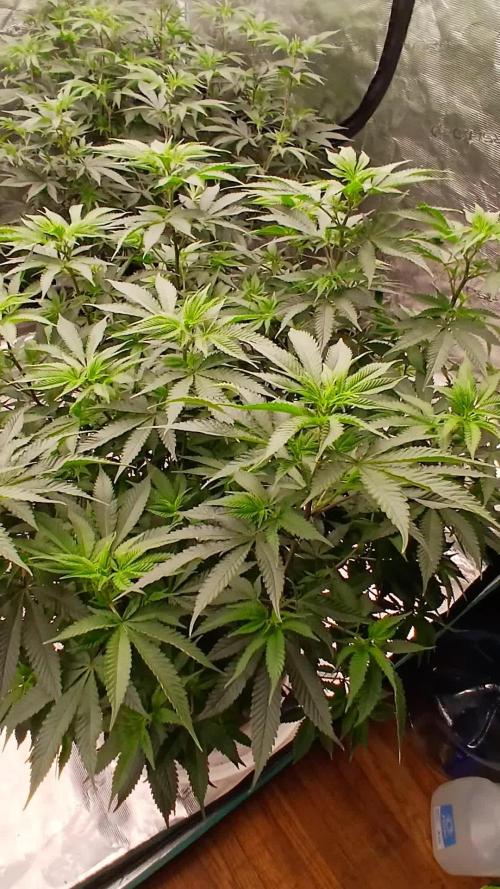


Likes
24
Share


@TerpTurtle
Follow
White Truffle x Red Pop by Detroit Seed Co
BuildASoil 3.0 LOYAL TO THE SOIL
Strawberry truffle | Vivosun 2x4 | Mars hydro sp3000 | 7 gallon pot
Chem 91 x Red pop | AC infinity 2x3 | AC Infinity Iongrid 24 | 5 gallon pot
Likes
1
Share

@deseed_uy
Follow
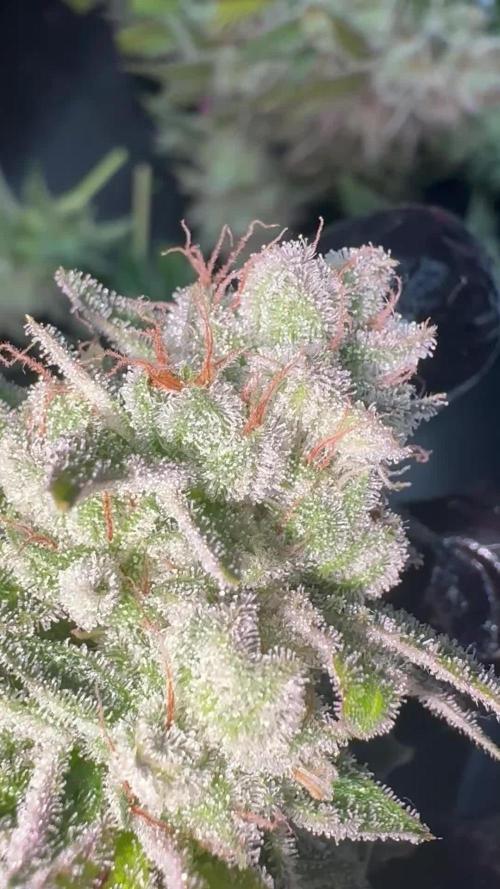
Este feno no fue de los mejores pero quedo mucho mejor con led que en exterior, una locura lo bañado en resina, las flores son mucho mas finitas y aireadas q el feno 1 y 2 pero muy linda genetica.

Likes
3
Share

@GERGrowDesigns
Follow
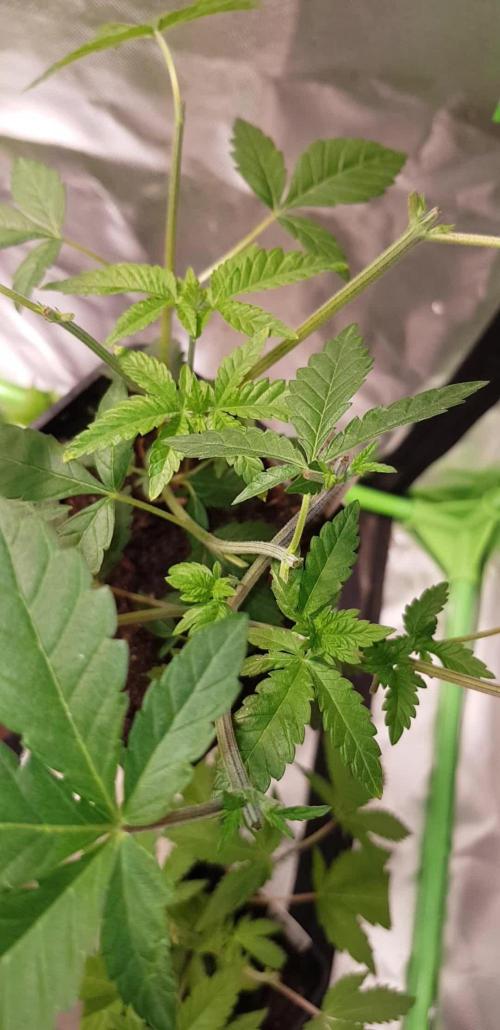
Welcome to Veg Week 3 of Kannabia Zoap Rosé
I'm excited to share my grow journey with you from my
Kannabia Seeds Project . It's going to be an incredible ride, full of learning, growing, and connecting with fellow growers from all around the world!
Check out Kannabia Seeds with my link [https://www.kannabia.com/de?ref=61966] and grab the germination device or the strains I used . Trust me – it’s worth it for sure !
Get another 20% Discount at all products using the code [GGD] at the checkout. little Holiday Present to the Community btw ☃️
For this Project , I’ve chosen the Feminized Photo Strain Zoap Rosé :
Here’s what I’m working with:
• 🌱 Tent: 120x60x80
• 🧑🌾 Breeder Company: Kannabia Seeds
• 💧 Humidity Range: 60
• ⏳ Flowering Time: 56-63 Days
• Strain Info: 22%THC
• 🌡️ Temperature: 26
• 🍵 Pot Size: 0.1
• Nutrient Brand: Hy-Pro
• ⚡ Lights : 600W x 2
A huge thank you to Kannabia Seeds for allowing me to try my Best with this amazing collection from Photo Strains they managed to Sponsore . Big thanks for supporting the grower community worldwide! Your genetics and passion speak for themselves!
Let’s grow together – and don’t forget to stop by again to see the latest updates!
Happy growing!
Stay lifted and stay curious!
Peace & Buds!
Likes
8
Share

@Yahti
Follow
This plant seems to be chugging along. Pistils are finally starting to tip in.
I ended up getting in there and redoing all the supports with poles.
Looking at it now, these stems are hella wimpy. I think I overcorrected and had a bit of the yips this run.
Trying to go minimal stress after the pink portal herm run a priori.
Too much wasted growth potential, should've directed growth earlier in flower.
Not sure if it is all stress related or she is starting to get sick.
I had to chop off a few auxiliary stems since they were drooped over and couldn't sustain turgor.
Those removed stems, were healthy looking and frosting up. But were sagging more than than 90°.
Not sure what is going on.
I was thinking they were just getting heavy, but starting to think it might be something else...
Ambient temps have cooled, so I'll be able to determine if the issue was environmental.
**Update | Sorry the aspect ratio is boogered. Took over an hour to upload and don't wanna mess with it again.

Likes
6
Share


@BigDripFelgo
Follow
Pink Airline (PinkCertz X JetFuelGelato)
Gave them a full day of darkness and flushed for two weeks with phd water after flushing with Advanced Nutrients Flawless Finish!
UVB light did increase trichomes and it appears it sped up trichome ripening, not 100% sure on the ripening tho.
WILL UPDATE AFTER DRYIN WITH DRY WEIGHT!
2/18/25 UPDATE..Pink Airline looks SUPER frosty and the colors are beautiful wow I am definitely proud of this strain I have created. She came in at 108 grams=3.8oz so literally a little under 4oz. I will have to grow a couple more and hope to find another pheno like this to keep due to how she grew, the look, bud structure, yield, scent and hopefully the high. Scent is VERY potent smells like fruits somewhat like grapefruit, berries, sweet and gassy candy wow!!

Likes
76
Share


@DogDoctorOfficial
Follow
🌸 Week 8 Flower – The Trichome Symphony Begins 🌸
Eternity Grow Cup
This week… it’s all about the frost. ❄️
We are diving deep into the universe of trichomes, those magical crystal-like structures that define potency, aroma, and visual beauty. Each pheno this week is presented with its own dedicated video — so everyone can witness the uniqueness and evolution of these genetics firsthand. The photos? Focused close and true on the trichomes and their stalks, the very essence of the plant’s protective and expressive language.
💎 What Are Trichomes?
Trichomes are tiny resin glands that cover the surface of cannabis flowers and sugar leaves. They’re responsible for producing and storing cannabinoids (like THC and CBD), terpenes, and flavonoids — the compounds that create the plant’s effects, scents, and flavors.
They act as the plant’s natural defense — from UV rays, pests, and environmental stress — and in return, they gift us with beauty, medicine, and art.
Why So Many Trichomes Here?
This room has turned into a crystal forest thanks to a harmonious mix of tech, care, and nature:
🔹 Spectrum Tunings:
Using the TrolMaster system, we’ve dialed in a spectrum rich in reds, far-reds, and UV at precise times to stimulate trichome production. The plants are responding in full.
🔹 Lighting:
The under-canopy power of the ICL 300s, combined with the canopy-level intensity of the Model 1s, is creating full-spectrum saturation from top to bottom. Buds are stacked, frosty, and glowing from every angle.
🔹 Nutrition Synergy:
The tag-team of Aptus Holland and Plagron has been flawless. The clean base, balanced micro and macro elements, and biostimulants have driven these girls into full expression mode. You can see the nutrition working in every crystal.
🌿 Where Are We Now?
We’re likely one week to ten days from harvest, but of course we’ll follow the plants’ signals. They’re still swelling and building — it’s the final stretch, and they’re sprinting.
Nerdy Note:
Trichomes can be bulbous, capitate-sessile, or capitate-stalked — and in this run, the capitate-stalked ones are standing tall and loaded. Expect a full cannabinoid and terpene profile when it’s time for analysis.( bro talk not lab hihihihi)
🌟 Let’s take a moment to recognize that we’re witnessing the peak of this cycle. This is living art, frozen in time by a camera lens but alive in scent and energy.
This Week’s Feeding Program
To support this explosive trichome production in Week 8 Flower, we’re feeding with precision and purpose. Every drop counts now, and here’s the clean, efficient mix we’re running:
• Aptus Holland – Regulator: 0.15 ml/L
• Aptus Holland – System Clean: 0.25 ml/L
• Aptus Holland – RO Water Condition: 0.8 ml/L
• Aptus Holland – All-In-One Liquid: 1.25 ml/L
• Plagron – Green Sensation: 1 ml/L
• pH set at 6.2
💧 We’re keeping it clean, clear, and consistent. No extra PK boosters or unnecessary additives. Just smart nutrition, tuned spectrum, and stable conditions to let the plants express themselves naturally. The synergy between Aptus Holland’s Clean Program and Plagron’s Green Sensation is clearly showing in every frosty bud.
This week, we’ve fine-tuned the spectrum to push the plants into full resin-production mode. I’ve reduced the white light intensity to 40% while keeping the reds and UVs running at 100%. This shift focuses energy on the wavelengths that directly stimulate secondary metabolite production—especially trichomes. Red light enhances flower development and density, while UV exposure encourages plants to produce protective compounds, like cannabinoids and terpenes, as a natural defense. This balance between lower photosynthetic pressure and high-spectrum stimulation is helping the girls finish strong, frosty, and full of character.
🙏 Massive thanks to all sponsors, followers, friends, and growers in the community. To the ones competing, to the ones just watching — THANK YOU. This is almost the end of the road, and every diary, every plant, every effort deserves respect.
💬 Don’t forget to follow the full 4K experience on YouTube, and for behind-the-scenes action and updates, join us on Instagram.
With Grower’s Love,
DD 🌱
Genetics - Runtz https://www.zamnesia.com/6000-zamnesia-seeds-runtz-feminized.html
Nutrients - Plagron https://plagron.com/en/hobby
- Aptus Holland https://aptus-holland.com/
Controls - Trol Master https://www.trolmaster.eu/
LED - https://www.futureofgrow.com/en
LED - https://www.thinkgrowled.com
Soil - https://www.promixgardening.com/en
Germination - Cannakan https://cannakan.com/?srsltid=AfmBOopXr-inLXajXu3QFgKXCXXos4F1oEvScjMKIB5MR5dk8-GJ-F49
DOGDOCTOR 15% off
Smoking Papers - https://ziggioriginal.com/
Terpene saver - https://grovebags.com/
As always thank you all for stopping by, for the love and for it all , this journey of mine wold just not be the same without you guys, the love and support is very much appreciloved and i fell honored with you all in my life
With true love comes happiness Always believe in your self and always do things expecting nothing and with an open heart , be a giver and the universe will give back to you in ways you could not even imagine so
As always, this is shared for educational purposes, aiming to spread understanding and appreciation for this plant. The journey with nature is one of discovery, creativity, and respect. Let’s celebrate it responsibly and continue to learn and grow together!
Growers Love To you All 💚
#EternityGrowCup #RuntzHunt #GrowersLove #CannabisCommunity #AptusHolland #ProMixSoil #TrolMaster #Zamnesia #Plagron #ZiggiPapers #Grovebags

Likes
10
Share


@oxieg3ngrows
Follow
This gorgeous beast is so damn heavy I've had to support every single branch with plant yoyo's. There are no joke about 15 of them on this one plant. Even the little branches need support because the flowers are so big and dense! Not to mention this girl smells so strong of gas, sour funk, and a little citrus!

Processing
Likes
21
Share


@LittleBigTrees
Follow
Switched from 24/0 to 12/12 at the end of day 14, also switched the 730nm Led's on. Its been 7 days the plants have started growing a lot faster but there's still no pistils showing.
I started feeding biobizz grow @ 2ml/l
At the moment there getting watered every 3-4 days.
The light is showing 25000lux on a lux meter app.
Likes
33
Share


@Hydro_sweetness
Follow
Hey Guys welkome back in week 11 of the Sensi Serds Silver Haze, this week i stoped giveing C4 from Mills nutrients and start to give Ultimate PK also from Mills nutrients, buds should start to bluk up and faten more and more by each day, crystals also started to cover the buds and leaves.
The NL #5 x Haze clonse are finale chilling, last week i started to gave A basic, B basic and “start” also all from Mills nutrients, i topper one already and the other one i will top this week.
Thats it for now hope you all enjoyed!
See you guys back in week 12 (almost there!)
