


Likes
Comments
Share

@DogDoctorOfficial
Follow
🌸 BlueBerry – Week 4 Flower Report
Grower’s Journal – Zamnesia BlueBerry | Entry 009
⸻
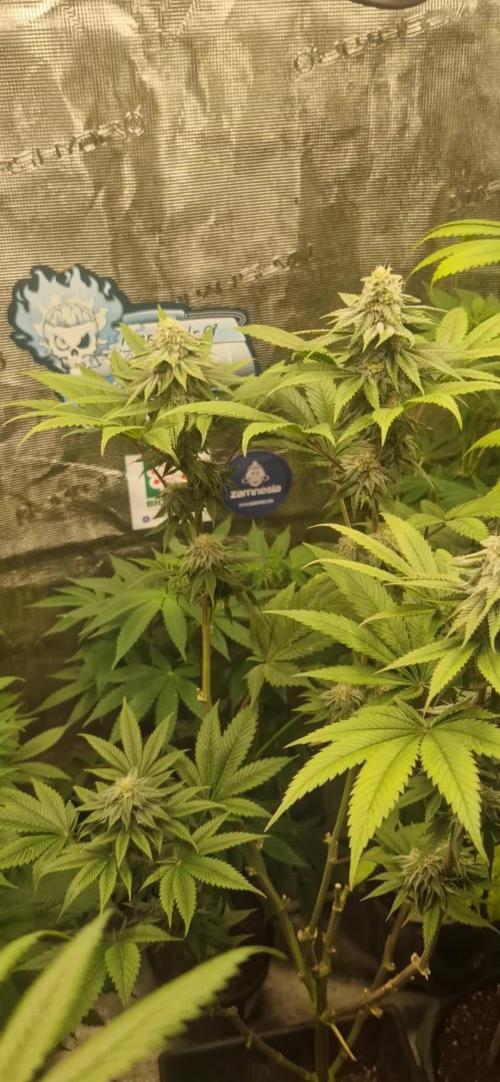
🌱 The Girls at Week 4
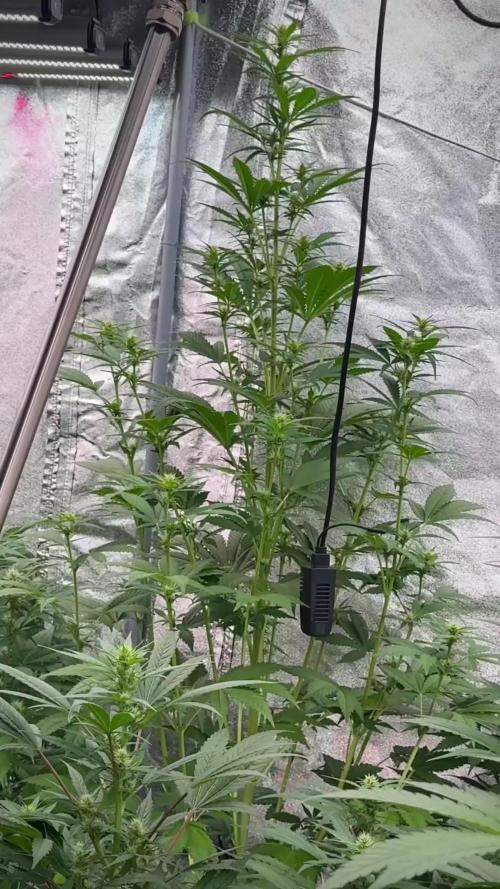
Both BlueBerry #1 and #2 are officially in their bloom stride.
• Structure: Stocky, balanced, strong branching.
• Stacking: Bud sites are forming beautifully and starting to swell.
• Frosting: Trichome production has begun — the first glitters catching the light.
They almost look like mirror images, which is a testament to the stability of these genetics. Every node is stacking just right, making this run a true delight to watch evolve.
⸻
💡 Under-Canopy Lights – The Hidden Secret
This week the under-canopy lights are proving their worth. Not only are the tops shining, but even the lowers are receiving enough energy to thrive. This setup is creating:
• Even growth across the whole plant.
• Healthier lower buds, not just popcorn.
• A canopy that feels alive from top to bottom.
It’s a real ecosystem of light, every layer glowing and working together.
⸻
Environment – Hot, Hot, Hot
Now, let’s talk about the truth of summer growing: the heat.
Temperatures are climbing so much that even taking pictures becomes a challenge. Let’s say this: by the time I’ve finished shooting the girls, I’m almost in “summer beachwear” mode 🌞👕😂. The garden is so warm and alive that it feels like stepping into a tropical bloom paradise, except instead of palm trees, I’m surrounded by BlueBerry flowers.
Humidity stays in balance, sensors are working, and despite the warmth, the girls are thriving.
⸻
🌿 Atmosphere & Gear
As always, the ecosystem setup is running smooth:
• TrolMaster brain + sensors keeping us updated.
• Spider Farmer + Aero Fans ensuring airflow in & out.
• Filters keeping everything fresh.
• LEDs (Future of Grow + ThinkGrow + Lumatek Zeus) pushing flower formation with perfect spectrum balance.
Every piece is connected, every reading aligned — it’s not just a grow tent, it’s a living orchestra of technology and nature working together.
⸻
✨ The Fun Side – Amnesia Moment
A little shoutout: taking care of the BlueBerry girls sometimes makes me forget the world outside (Amnesia closes, let’s call it that 😉). Between the heat, the scent of early terpenes, and the hypnotic way flowers are forming, time disappears in the room.
That’s the beauty of it — it’s not just gardening, it’s a whole-body, whole-heart experience.
⸻
🔮 Looking Ahead – Into Week 5
Next week, I expect:
• Flowers to bulk up heavily.
• Terpenes to become more noticeable, filling the room with the classic BlueBerry perfume.
• Trichomes to coat the buds more visibly.
• Room adjustments as needed once the AC comes into play, stabilizing the heat.
⸻
💬 Final Thoughts
Week 4 flower is the turning point — where the story moves from stretch to stack, from structure to sparkle. Both BlueBerries are stunning, almost identical, and thriving under both canopy and under-canopy light.
Yes, the heat makes it a sweaty job (half-naked photoshoot vibes 😅), but the result is worth it: strong, healthy, beautifully evolving BlueBerry ladies.
From genetics to gear, from environment to experience — everything is tuned for success. And now, it’s just about letting them shine. 🌸✨
DD (DogDoctor)🌱💚
📲 Don’t forget to Subscribe and follow me on Instagram and YouTube @DogDoctorOfficial for exclusive content, real-time updates, and behind-the-scenes magic. We’ve got so much more coming, including transplanting and all the amazing techniques that go along with it. You won’t want to miss it.
• GrowDiaries Journal: https://growdiaries.com/grower/dogdoctorofficial
• Instagram: https://www.instagram.com/dogdoctorofficial/
• YouTube: https://www.youtube.com/@dogdoctorofficial
⸻
Explore the Gear that Powers My Grow
If you’re curious about the tech I’m using, check out these links:
• Genetics, gear, nutrients, and more – Zamnesia: https://www.zamnesia.com/
• Environmental control & automation – TrolMaster: https://www.trolmaster.eu/
• Advanced LED lighting – Future of Grow: https://www.futureofgrow.com/
• Root and growth nutrition – Aptus Holland: https://aptus-holland.com/
• Nutrient systems & boosters – Plagron: https://plagron.com/en/
• Soil & substrate excellence – PRO-MIX BX: https://www.pthorticulture.com/en-us/products/pro-mix-bx-mycorrhizae
• Curing and storage – Grove Bags: https://grovebags.com/
⸻
We’ve got much more coming as we move through the grow cycles. Trust me, you won’t want to miss the next steps, let’s push the boundaries of indoor horticulture together!
As always, this is shared for educational purposes, aiming to spread understanding and appreciation for this plant. Let’s celebrate it responsibly and continue to learn and grow together.
With true love comes happiness. Always believe in yourself, and always do things expecting nothing and with an open heart. Be a giver, and the universe will give back in ways you could never imagine.
💚 Growers love to all 💚






Likes
1
Share

@Anon73
Follow
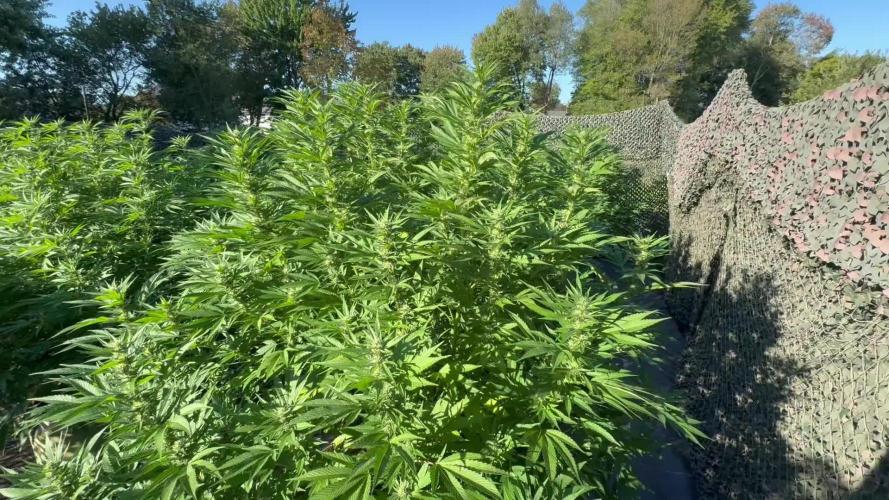
Still spraying with Monterey BT.
Minimal moth larvae damage.
Flowers are increasing in size as well as scent.
All plants are at different stages of flower within a week or two of progress.
I will add more plant support next week as the branches are increasing in weight now.
Most plants are taller than me now with many tops.
It will be quite the effort to roll out the support poles and accompanying twine.

Likes
24
Share


@DogDoctorOfficial
Follow
🌱 Divine Seeds Germination Report 🌱
Hey, fellow growers! 🌿✨
Welcome to the start of an exciting journey with Divine Seeds! We’ve kicked off our run with some incredible genetics: Moon Rock, Opium, Fractal, and Big Demon. Let’s dive into the germination process and introduce you to the amazing world of the CannaKan method!
🌟 The CannaKan Method: A Game-Changer! 🌟
The CannaKan method is revolutionizing the way we germinate seeds, ensuring higher success rates and stronger seedlings. Here’s why we love it:
1. Optimal Hydration: The CannaKan method ensures the seeds receive just the right amount of moisture, promoting rapid and healthy germination.
2. Temperature Control: By maintaining a stable environment, we provide the perfect conditions for our seeds to sprout.
3. Aeration: The method enhances air circulation, preventing issues like mold and damping-off.
4. Root Development: It encourages robust root growth, setting the foundation for vigorous plants.
🌱 Seed Germination Progress 🌱
Let’s check out how our Divine Seeds are doing with this stellar method:
1. Moon Rock 🚀
• Germination Rate: 100%
• Details: These seeds sprouted quickly, showing off their vibrant energy. The seedlings are already reaching for the stars!
2. Opium 🌸
• Germination Rate: 95%
• Details: Opium seeds are flourishing with elegance. Their delicate sprouts are a sight to behold, promising a beautiful journey ahead.
3. Fractal 🌀
• Germination Rate: 85%
• Details: Our shy Fractal seeds took a bit longer, but they’re coming through with unique patterns. They remind us that every growth journey is special.
4. Big Demon 💪
• Germination Rate: 100%
• Details: True to its name, Big Demon seeds are growing strong and bold. These seedlings are the powerhouse of our garden!
🌟 Key Observations 🌟
• Uniformity: The seedlings are consistent in their development, thanks to the precise conditions of the CannaKan method.
• Health: No signs of disease or malformation. The CannaKan method’s optimal environment is working wonders.
• Vigor: The seedlings exhibit vigorous growth, indicating a healthy start.
🌱 Next Steps 🌱
As our seedlings continue to grow, we’ll:
• Monitor their progress closely.
• Transition them to their next growing medium.
• Provide the best nutrients and care to support their journey.
Stay tuned for more updates as we nurture these incredible plants. We’re thrilled to see how they’ll flourish and share every step of the way with you.
Happy growing, and may your gardens be ever green! 🌿💚
#DivineSeeds #GerminationReport #CannaKanMethod #MoonRock #Opium #Fractal #BigDemon #GrowDiaries #PlantMagic #GreenThumb
Germination method 🌱 @thecannakan
Genetics
@divine.seeds
Nutrition
@aptusholland 🌿
@aptus_world 🌎
@aptus_es 🌍
@aptusbrasil 🌱
@aptus_thailand 🌿
@aptus_portugal 🌳
@aptususa_officiala 🍀
@aptusplanttechnz 🌺
@aptusplanttechaus 🍃
Ambient controls🎮
@trolmaster.eu @trolmaster.eu.support @trolmaster.support @trolmaster.agro
Soil @promix_growers_eur @promix_cannabis
LED - @lumatekeu
Watering- @autopot_usa @autopot_global
Love and attention- @dogdoctorofficial
#aptus #aptusplanttech #aptusgang #aptusfamily #aptustrueplantscience #inbalancewithnature #trolmaster #trolmastereurope #trolmastersecrets #Autopots
#GreenJoy
As always thank you all for stopping by, for the love and for it all , this journey of mine wold just not be the same without you guys, the love and support is very much appreciated and i fell honored and so joyful with you all in my life 🙏
With true love comes happiness 💚🙏 Always believe in your self and always do things expecting nothing and with an open heart , be a giver and the universe will give back to you in ways you could not even imagine so 💚
More info and complete updates from all my adventures can be found ⬆️link in the profile description ⬆️
Friendly reminder all you see here is pure research and for educational purposes only
💚Growers Love To you All 💚


Likes
325
Share


@Metatronix
Follow
Hallo to You all my familly and usual visitors. Thank you for stopping by and all the likes and comments....You make my day!
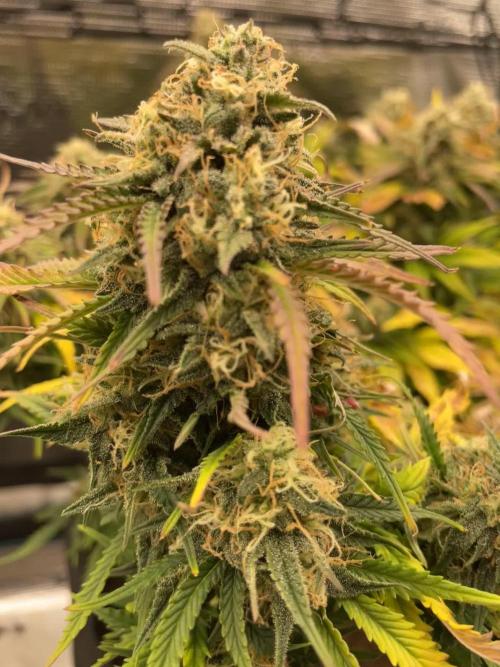
I gave the Blue Cheese a trim on 5th december and gave her four days of darkness, the chop was performed on december 9th I took a lot of photographs and videos commemorating these events for you to enjoy :)
I think she came out quite decent especially considering that she had some monster/deformed leaves till the 4th week of veg. also looking back I should have moved her to the bigger place in that time...she would be far more symmetrical ;)
It was a joy to work with Mars Hydro and their equipment in this grow. A big thanks to the Mars Hydro team for this opportunity, you truly provide first class grow kits and lamps.
That's all i have for you till the drying & curing process is over I will update then. I want to thank you all for accompanying me in this journey, all the likes and comments...You growmies make me feel here at GD at home thank you 🙌👊😇

Likes
3
Share

@Smev1337
Follow
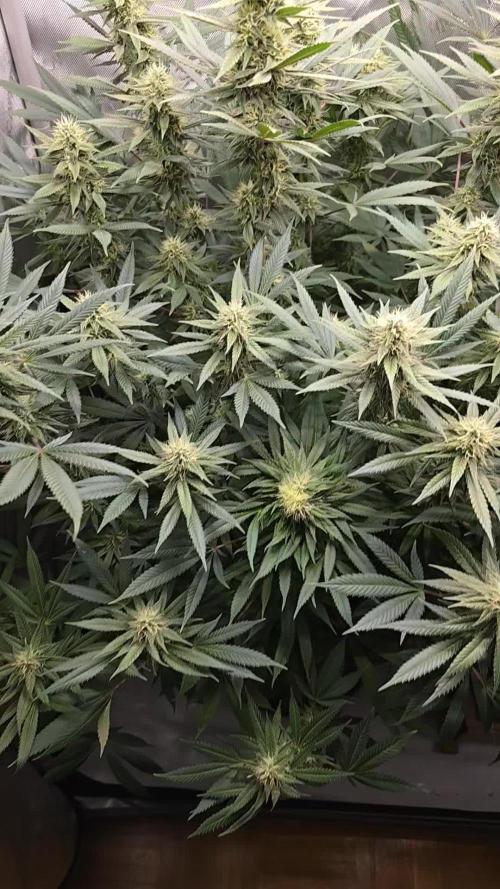
this grow is actually the biggest grow i ever had in my life (indoor) this is actually insane what head buds can form with the proper training and care taking of the plants💪👽 happy growing all!👌😁

Likes
5
Share


@Klausi_J
Follow
I tried stress training on 1 Plant and got rid of some big leaves on the tops which shadowed the
Likes
10
Share


@Growing_healTHCare
Follow
I am a day early but I am in the flower room and figured I would go ahead and update.
The girls are still pushing along. Sweet smell, very sweet with a bit of berry at this stage.
Branches have been leaning for awhile now, but I came into a room with a couple bent over but luckily not broken. Who am I kidding... I would have done a quick dry and enjoyed an early taste.
Week 7 is done at lights out and I will be 1 week from the early side of Barney's flowering window. I will be checking trichomes regularly from here on out looking for the signal that these girls are done.
I am uploading a quick video. I hope it turns out as good as it looks on my phone..
You know that you want to click that like button.. 😇
Edit: Been dropping night time temps and the dark colors are coming out. More so in the lowers but the tops are coming along.

Likes
1
Share

@Olduffybastard88
Follow
Missed a couple week so just updating as much as I can the now plants are doing brillant flowering away nicely not long now the smells are amazing

Likes
5
Share


@DemonDabsSolventless
Follow
🚨🚨🚨🚨🚨
Week III
🚨🚨🚨🚨🚨
A WEEK OF A LOT OF PATIENCE, PLANTS STOPPED AND I TRIED TO MODIFY THE WIDE ASPECT OF LIGHT TO UNLOCK THEM, AS I HAD ALREADY SCHEDULED LET'S PULL ON TO 6 WEEKS OF VEGETATION AND WAIT FOR BETTER DEVELOPMENTS
📝📝📝📝📝
Notes
📝📝📝📝📝
CHANGE IN THE WATERING JOURNEY, LEAVING 1 WATERING DAY FOR 2 DRY WATERING FOR EVERY DAY NO, BEING 1 WATERING WITH NUTRIENTS AND ANOTHER WATER ONLY.
📝📝📝📝📝

Likes
21
Share


@Jordy_klyff
Follow
26 giorno di fioritura, le ragazze stanno crescendo bene nessun problema riscontrato struttura resistente ,lampada led bavagreen 480w a 40 cm dalla cima ,soluzione nutritiva N20P20K20,TEMP-24 EC 1680 PH 6.0,provero ad aumentare lentamente EC della soluzione ,si accettano consigli per aumentare la resa se possibile


Likes
2
Share


@CannaIGrow
Follow
She’s growing well and finally starting to grow
out of her lil leaf mutation at the beginning.
Likes
3
Share


@Krautbauern
Follow
unfortunately we noticed some budrod in the headbud. we cut it generously sb, unfortunately the papaya cookies still need something and the weather is now autumnal cold and rainy. We'll see in 7 days at the latest, but hopefully there won't be any more budrod by then... It's the most beautiful of all the outdoor plants so far.

Likes
40
Share


@BudXs
Follow
Two distinct phenos growing here. Both small and tight with very nice frost and nice colors. There are MANY small buds. No main colas, so Im hoping that yield does not severely disappoint. Some very red stems on some of the specimens. Very interested to see the final form these girls take
Likes
5
Share


@Happydays58
Follow
03/01 - Day 57
All the girls have their pistils changing colors, buds growing by the day, (B) has has very sweet aromas coming out, & (C) is more earthy and peppery.
Still losing some fan leaves here and there on (A) & (D) from the Cal/Mag & Phosphorus defiance but nothing like 2 weeks ago.
03/05 - Day 61
Enjoying the process and maintaining the environment. Buds on (B), (C), & (D) are starting to get heavy. Maybe some foxtails starting on (C)??


Likes
32
Share


@PEAKYPLANTERS
Follow
Hello everyone, fellow gardeners! Welcome back to a new harvest in Peaky Gardens!
Growing this genetics was fun and easy , one of the three STRAIN has reached its peak and I can't wait to try it....it shines like a diamond! it is so beautiful that I thought of getting a gem to have it set and put on my finger😜
Stay updated
Likes
9
Share


@SeseGrows
Follow
Home Interior 90x90//
Do Si Dos 33 - Barneys Farm + Sour Diesel + Roadawg
//Semana 6 // FLORACIÓN
- Grotek Nutrients.
- Lumatek LEC 315w+ 💎 .
LEC 315w —> 100%
