The Grow Awards 2026 🏆
Likes
Comments
Share
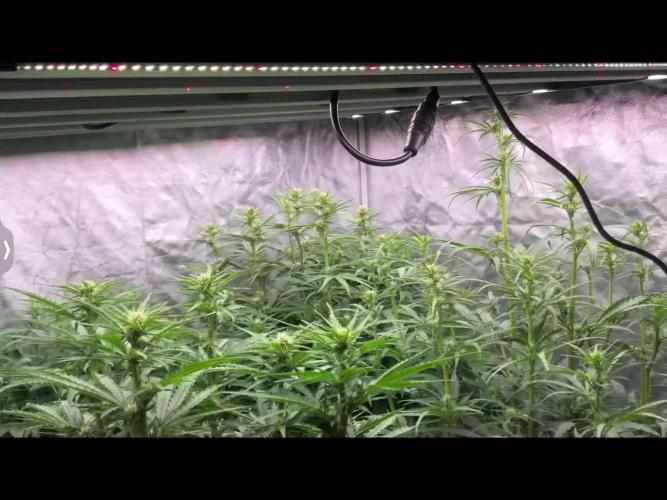
Nute mix is now 150ml A, 150ml B, 50ml PK13/14, 100ml Rhizo, 25ml CalMag and 25ml cannazyme. Nute mix information PH: 6.4 EC: 2.0 Temp: 21c They are doing far better than I would have thought but the proof's in the pudding. Not that smelly except for lights off.
Likes
19
Share
10. Mai Es geht weiter. Die Pflanzen haben Jetzt leider eine sehr kalte Woche hinter sich(vermutlich war es auch etwas mutig von mir bei 10 grad die Baby Boom Samen einzupflanzen😅) Ist nicht viel passiert. Habe auch keine weiteren männlichen geschlechtsteile bisher entdecken können. Kontrolliere weiterhin täglich. Es steht nun eine Sonnenreiche Woche an und ich hoffe auf guten Wachstum
Likes
18
Share
@valiotoro
Follow
The buds shine like a shooting star mad sticky too⭐️ First thing that hits me with the smell straight up like canned pineapples in syrup🤤🍍
Likes
76
Share
@Canna96
Follow
This week went very well, she is still stacking on flowers, and Piglet is now being fed about 5 gallons per day, with about 1 gallon of runoff, she feeds five times per day, every 3.5 hours with lights on, and then once in the middle of the dark period. She is still just being fed Armor Si, CaliMag, powder Maxi Bloom, and a PK liquid bloom booster. I use the runoff mixed with dehumidifier water to feed my tomatoe plants, and they absolutely love it. I have found that using dehumidifier water in a reservoir leads to funk within only a few days, even when using food grade Hydrogen Peroxide, so I only use it for instant feedings and for the tomatoes. I am still cleaning the reservoir once per week just to keep her and the pump/lines in good shape, and it only takes me about 10-15 minutes per week. I also added another bag of CO2 inside the tent and have a bag sitting in front of each air intake screen, as well as one hanging about the plant., I have also added several tubs of mushrooms growing both inside and outside the tent, with a breather on each one, so she is getting plenty of CO2. The heatwave is over for now and weather looks great for the next 8 days. I am estimating that she has about 2 weeks left to stack flowers, and then 2 weeks to ripen, so I am hoping to harvest her around the end of June but will have to wait on the trichomes to be sure. I plan to flush her for about 4 or 5 days before harvest with just plain water. Overall, I am very impressed with Ethos Genetics, and I now understand why everyone was recommending them to me when I wanted to try a photo period plant. I hope everyone had a weekend, stay safe, and Blaze On!!!
Likes
22
Share
@PhotonMan
Follow
05/14 500ml of water, PH 6.4, flawless finish 2ml/l. Aaaaand this is the last week of life for these 3 sisters! Starting flush. I think to harvest in next 7/10 days. The #3 become yellowish, the #1 has buds with some purple shade, the most beautiful flowers among the 3 plants. 05/15 600ml of water, PH 6.4, flawless finish 2ml/l. 05/16 -- 05/17 1lt of water, PH 6.3, flawless finish 2ml/l. 05/18 #2 and #3 are down, this is the end. #1 still under lights, I think to cut it in next 2 days. 05/19-- 05/20 #1 is down, GAME OVER!
Likes
7
Share
Plant going as wanted, INSANE growth, very special in the way it behaves. I cannot kill this thing no matter what you do. After the second schwazzing where I took I think 130+ leaves, it regend within 48 hours... I am not sure what to say, but I guess these mofos are made with some mastermind in the back. Im just blown away and that from a free tester seed.
Likes
11
Share
The reward for patience is patience itself! It has been a crazy adventure, to see i've come this far is incredible. It wouldn't be possible without this amazing community, you all helped me along this path and i am grateful! Special thanks to @Seedler for all of the knowledge and experience that has been shared with me along these months.
Likes
7
Share
@Treesus01
Follow
Used too much bloom nutes and some top leaves were starting to yellow so I flushed and have Been gentle since Few days later it was t from nutrients it could actually use a little more the lights I have were putting 1700-1800 ppfd on top canopy and was cooking my leaves I lowered the plant so it would get 1200 ppfd on top and it’s back to normal
Likes
12
Share
@Flavors
Follow
The budding has begun👀. Flowers are starting to mature pistols are turning to buds. Everything’s looking great! Looking forward to the buds putting on weight. Just continuing to water and added some bud candy for trichome production. The tropical cooler is super fruity dank smell if that is what you are looking for I highly recommend. The next best sent is the Super Lemon Haze x Gary Payton lemon tropical punch smell. The Blueberry Swirl has a zesty lemon smell. Fat Banana has a buttery lemon smell. Probably gonna pheno hunt Tropical Cooler later.
Likes
6
Share
This has by far been the most stressful part of the grow. as I'm trying to increase yield as much as possible, and in doing so f£&ked around and found out the hard way. She has gone into what I would say is severe shock this on the 31/1/25 will be the 3rd day of shock hopefully she can pull through and start growing again 🙏 🤞
Likes
34
Share
Seed 1 this plant is crazy and Growing super quickly never seen 30cm stretch in 1 week. Seed 2 is not as tall but more bushy with few steams same size tall. Very nice strain so far pleasure to grow.
Likes
45
Share
2nd net is up. Early bud formations are promising. holding up to the extremes pretty well, some leaves taking minor damage, but overall, she is holding up, gave her 1 night at 50F see how she would react, stressful. Not advised as it messes with her metabolism, but I want to see if it triggers any anthocyanin response. Love to see her purp up but no signs yet. My homework. Rubisco regeneration is intrinsically linked to nitrogen supply because Rubisco is a major sink for nitrogen in plants, typically accounting for 15% to over 25% of total leaf nitrogen. The regeneration phase itself consumes nitrogen through the synthesis of the Rubisco enzyme and associated proteins (like Rubisco activase), and overall nitrogen status heavily influences the efficiency of RuBP regeneration.Structural Component: Nitrogen is an essential building block for all proteins, and the sheer abundance of the Rubisco protein makes it the single largest storage of nitrogen in the leaf. Synthesis and Activity: Adequate nitrogen supply is crucial for the synthesis and maintenance of sufficient Rubisco enzyme and Rubisco activase (Rca), the regulatory protein responsible for maintaining Rubisco's active state. Nitrogen deficiency leads to a decrease in the content and activity of both Rubisco and Rca, which in turn limits the maximum carboxylation rate, Vmax, and the rate of RuBP regeneration Jmax, thus reducing overall photosynthetic capacity. Nitrogen Storage and Remobilization: Rubisco can act as a temporary nitrogen storage protein, which is degraded to remobilize nitrogen to other growing parts of the plant, especially under conditions of nitrogen deficiency or senescence. Nitrogen Use Efficiency (NUE): The allocation of nitrogen to Rubisco is a key determinant of a plant's photosynthetic nitrogen use efficiency (PNUE). In high-nitrogen conditions, plants may accumulate a surplus of Rubisco, which may not be fully activated, leading to a lower PNUE. Optimizing the amount and activity of Rubisco relative to nitrogen availability is a target for improving crop NUE. Photorespiration and Nitrogen Metabolism: Nitrogen metabolism is also linked to the photorespiration pathway (which competes with carboxylation at the Rubisco active site), particularly in the reassimilation of ammonia released during the process. To increase RuBisCO regeneration, which refers to the process of forming the CO2 acceptor molecule Ribulose-1,5-bisphosphate (RuBP) during photosynthesis, the primary methods involve optimizing the levels and activity of Rubisco activase (Rca) and enhancing the performance of other Calvin-Benson-Bassham (CBB) cycle enzymes. Biochemical and Environmental Approaches: Optimize Rubisco Activase (Rca) activity: Rca is a crucial chaperone protein that removes inhibitory sugar phosphates, such as CA1P (2-carboxy-D-arabinitol 1-phosphate), from the Rubisco active site, thus maintaining its catalytic competence. •Ensure optimal light conditions: Rca is light-activated via the chloroplast's redox status. Adequate light intensity ensures Rca can effectively maintain Rubisco in its active, carbamylated state. •Maintain optimal temperature: Rca is highly temperature-sensitive and can become unstable at moderately high temperatures (e.g., above 35°C/95F° in many C3 plants), which decreases its ability to activate Rubisco. Maintaining temperatures within the optimal range for a specific plant species is important. •Optimize Mg2+ concentration: Mg2+ is a key cofactor for both Rubisco carbamylation and Rca activity. In the light, Mg2+ concentration in the chloroplast stroma increases, promoting activation. •Manage ATP/ADP ratio: Rca activity depends on ATP hydrolysis and is inhibited by ADP. Conditions that maintain a high ATP/ADP ratio in the chloroplast stroma favor Rca activity. Enhance Calvin-Benson-Bassham (CBB) cycle enzyme activity: The overall rate of RuBP regeneration can be limited by other enzymes in the cycle. •Increase SBPase activity: Sedoheptulose-1,7-bisphosphatase (SBPase) is a key regulatory enzyme in the regeneration pathway, and increasing its activity can enhance RuBP regeneration and overall photosynthesis. •Optimize other enzymes: Overexpression of other CBB cycle enzymes such as fructose-1,6-bisphosphate aldolase (FBA) and triose phosphate isomerase (TPI) can also help to balance the metabolic flux and improve RuBP regeneration capacity. Magnesium ions, Mg2+, are specifically required for Rubisco activation because the cation plays a critical structural and chemical role in forming the active site: A specific lysine residue in the active site must be carbamylated by a CO2 molecule to activate the enzyme. The resulting negatively charged carbamyl group then facilitates the binding of the positively charged Mg2+ion. While other divalent metal ions like Mn2+ can bind to Rubisco, they alter the enzyme's substrate specificity and lead to dramatically lower activity or a higher rate of the non-productive oxygenation reaction compared to Mg2+, making them biologically unfavorable in the context of efficient carbon fixation. The concentration of Mg2+ in the chloroplast stroma naturally increases in the light due to ion potential balancing during ATP synthesis, providing a physiological mechanism to ensure the enzyme is activated when photosynthesis is possible. At the center of the porphyrin ring, nestled within its nitrogen atoms, is a Magnesium ion (Mg2+). This magnesium ion is crucial for the function of chlorophyll, and without it, the pigment cannot effectively capture and transfer light energy. Mg acts as a cofactor: Mg2+ binds to Rubisco after an activator CO2 molecule, forming a catalytically competent complex (Enzyme-CO2-Mg2+). High light + CO2) increases demand: Under high light (60 DLI is a very high intensity, potentially saturating) and high CO2, the plant's capacity for photosynthesis is high, and thus the demand for activated Rubisco and the necessary Mg2+ cofactor increases. Mg deficiency becomes limiting: If Mg2+ is deficient under these conditions, the higher levels of Rubisco and Rubisco activase produced cannot be fully activated, leading to lower photosynthetic rates and potential photo-oxidative damage. Optimal range: Studies show that adequate Mg2+ application can enhance Rubisco activation and stabilize net photosynthetic rates under stress conditions, but the required concentration is specific to the experimental setup. Monitoring is key: The most effective approach in a controlled environment is to monitor the plant's physiological responses e.g., leaf Mg2+ concentration, photosynthetic rate, Rubisco activation state, and adjust the nutrient solution/fertilizer to maintain adequate levels, rather than supplementing a fixed "extra" amount. In practice, this means ensuring that Mg2+ is not a limiting factor in the plant's standard nutrient solution when pushing the limits with high light and CO2. Applying Mg2+ through foliar spray is beneficial to Rubisco regeneration, particularly in alleviating the negative effects of magnesium (Mg) deficiency and high-temperature stress (HTS). While Mg can be leached from soil, within the plant it is considered a mobile nutrient, particularly in the phloem. Foliar-applied Mg is quickly absorbed by the leaves and can be translocate to other plant parts, including new growth and sink organs. Foliar application of: NATURES VERY OWN MgSO4 @ 15.0g L-1 in a spray bottle. Foliar sprays are often recommended as a rapid rescue measure for existing deficiencies or as a supplement during critical growth stages, when demand for Mg is high. Application in the early morning or late evening can improve absorption and prevent leaf burn. The starting point [of creativity] is curiosity: pondering why the default exists in the first place. We’re driven to question defaults when we experience vuja de, the opposite of déjà vu. Déjà vu occurs when we encounter something new, but it feels as if we’ve seen it before. Vuja de is the reverse—we face something familiar, but we see it with a fresh perspective that enables us to gain new insights into old problems. Come walk in the enchanted forest.
Likes
34
Share
@Salokin
Follow
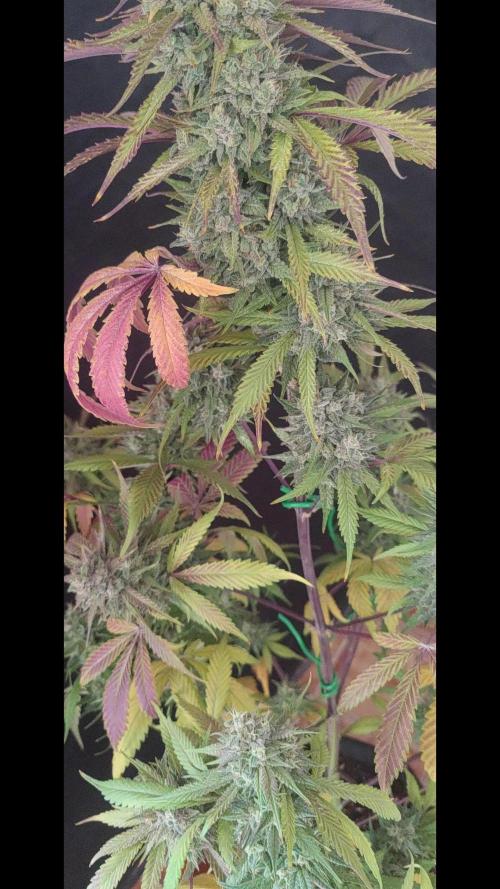
Hello Growmies, As we approach the zenith of week 11, the crescendo of our Watermelon Candy F1 Hybrids' lifecycle is upon us. In harmony with the symphonic change in colors, their leaves continue the fade, a beautiful degradation that nature orchestrates so well, offering a visual feast that marks the prelude to their grand finale. Each Watermelon Candy, from #1 to #3, has now fully embraced the transition, parading a spectrum of colors from golden yellows to deep purples, like the setting sun giving way to twilight's embrace. The buds, dense and resplendent with trichomes, now resemble crystalline sculptures, each one capturing the essence of our nurturing dedication. The aroma has deepened, each inhalation a tapestry of earth and sweetness, indicative of the rich, flavorful experience soon to be savored. It's a heady bouquet that promises much to the connoisseur and a testament to the TrolMaster's steadfast governance over their environment. Watermelon Candy #1, with its standout bud formation, is a sculpture in botanical form, a true marvel of genetic and environmental synergy. Its siblings, #2 and #3, are not a step behind, flaunting their heavy blossoms with a gravitas that speaks to the imminent harvest. With the harvest scheduled for next week, the excitement is palpable. Our routine remains unaltered; like the beat of a drum leading to the climax of a song, we maintain the rhythm that has served us well thus far. The anticipation of the cut is an excitement unto itself - the final act in our labor of love. Patience is our companion in these final days as we prepare for the harvest. The Watermelon Candy F1 Hybrids stand at the ready, soon to transition from their vegetative state to a form that will bring joy and relief to many. Stay lifted, Salokin
Likes
6
Share
Fine 4 settimana di flow procede tutto bene 2 LH2P mangiano di piĂš rispetto le altre, alla fine le due ermafrodite dopo aver eliminato i rami con i fiori maschi non se ne sono piĂš formati quindi ottimo ormai dovrei essere fuori pericolo ma continuo a controllare
Processing
Likes
29
Share
Feed Started With Tap Water Left Overnight For Chlorine/Chlorides To Evaporate. Next Day. Starting EC of our water is 0.10-0.15. I added 1ML of Regenaroot Per Litre. Then Used Canna Terra Flores Until EC measured 0.7. I then used the mighty bloom enhancer by the ml until my EC measured 1.3 Always Give A Little Sprinkle Of Great White Into The Mix Finally i PH'd the mix to 6.2. Made sure the feed was of adequate temp (21c) and continued to feed. 😎
Processing
Likes
6
Share
Looks like she's not gonna have any issue so far,everything goes smoothly,let's see how she develops day by day,Hope you like my work guys! I work with passion and dedication everyday,I love my cannabis and I love to grow this amazing plant!.
Likes
84
Share
March 11th. So its fact, one of Three Survivied Thats a Pity... but iam thinking about cloning The Survivor is a strong Little one... In 7 Weeks she will be a "Big Mama" Atm Iam setting up another "Babytent" with another Light... stay Courious... Iam finishing and actualising Tomorrow March 13th. Iam done with setting up Now i have another Babytent. and Inside the New Viparspectra XS-1000 and the other Stuff to run the Envoirement I already ca see a difference between both Tents. If you stand outside and just look with Eyesight the Viparspectra seems to be brighter// has another color of Light. I made a Unboxing Video for more informations. Amazon: http://url-9.cn/0y9i Amazon US: https://amzn.to/3e0P2bk Amazon CA: https://amzn.to/3bTnEJC Amazon discount Code: it10mlarimar XS1000 10% it15mlarimar XS1500 5% it20mlarimar XS2000 5% it40mlarimar XS4000 5%