


Processing
Likes
Comments
Share


@xX_The_Chef_Xx
Follow
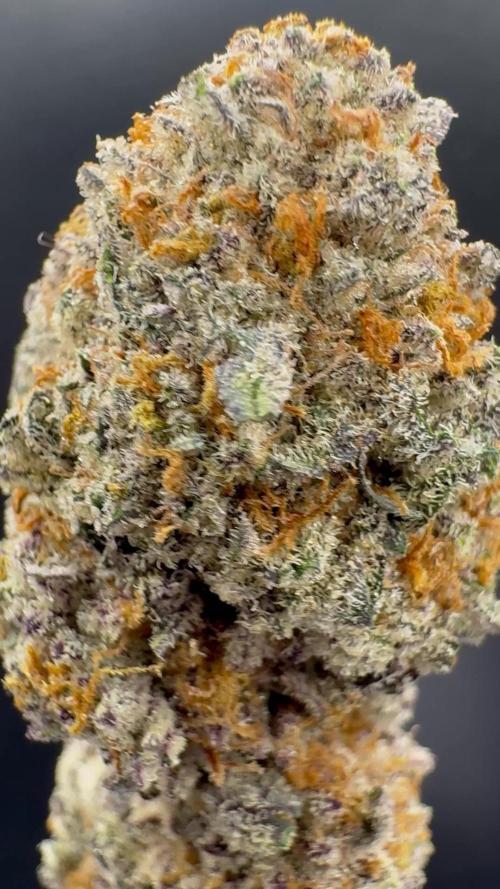
The plants are still growing at a good pace. Just finished their 1st week on 12-12. They definitely filled out so we went ahead and did like a 40 % defoliation to help the light get through all those branches. Waiting to see the start of the stretch and some more early signs of preflower. I was short on time or inwould have more up close shots of early signs, I'll edit mid week and update on how they bounced back from the trimming.



Likes
30
Share


@Mazgoth
Follow
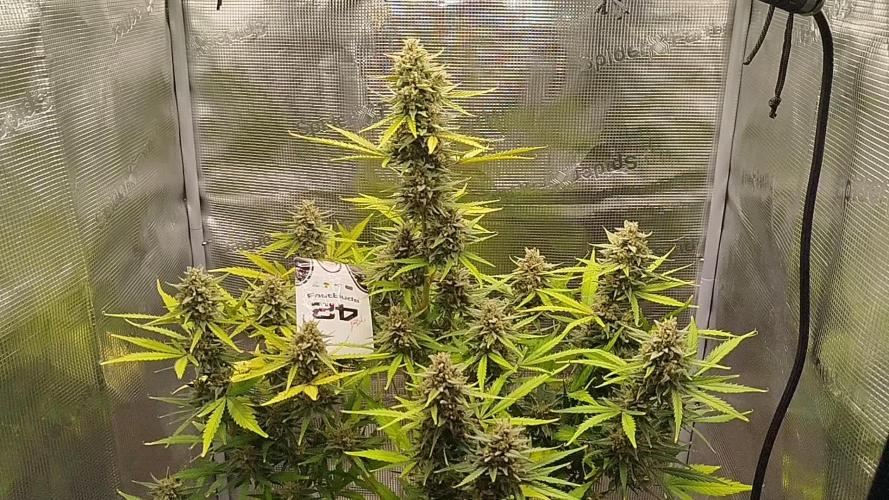
Going little bit slower but will see,(UPDATE D51)i put an CFL 200W lamp at day 48 until harvest,the older lamp was a waste of time and waste of money,hope the plant will get a lot bigger with this light

Likes
21
Share

@GreenEldritchGardens
Follow
Amazing plant! Lovely terms even in 12/12!
Before the Heatwave blasted Germany I decided to cut her and hang, next week I'll post harvest results
Likes
9
Share


@OS_Farmz
Follow
Aк-47 вытянулся до рекордных 96.6 см в высоту. В целом растения выглядят здоровыми, начали образовываться первые соцветия. На этой неделе начну добавлять Terpenator (3мл х литр).


Likes
4
Share
@ThatsmyGrow
Follow
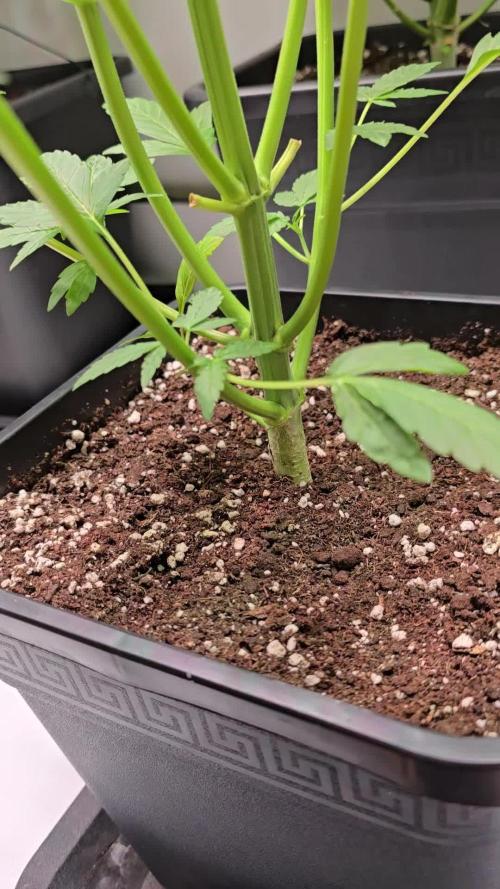
The Lemon Cherry Gelato is a really strong plant. Even though it's being pushed around from both sides, it's still managing to hold its own. I hope we'll soon see how beautiful its buds will be, even if there aren't many.

Likes
2
Share



Likes
11
Share


@Professor_Daank
Follow
Ummm... get Advanced Nutrients. The amazing difference is differently amazing. I can't say anything bad about GHE, it's just insanely better than over here on the Advanced Nutrient side of things. Noticeable differences in 3 days.
If you have any questions, send me a message. I've done a ton of research on Advanced Nutrients and can basically tell you "what's what" in comparison to GHE and save you a couple bucks. Knowledge is power, friends!
I'm still using my GHE Diamond Nectar in-place of Advanced Nutrients Rhino Skin until the bottle is gone. It's all humic acid, no big deal. I'll change to AN when I'm done.
My buds are purple. Never in a million years would I have guessed I got purple genetics on my first grow. We'll see if they stay around!
Defoliation: Only larger fan leaves to open canopy.
Day 46 - 8/12: We had a huge storm that did not knock our power out, luckily. All of the girls are thriving and tomorrow I receive the remaining nutrients. They are going fucking bananas. Temps are 77s and humidity is 45-55. Perfect.
Day 47 - 8/13: Holy fuck.

Likes
42
Share


@Dr_Boom
Follow
She's starting to bulk up, and I've cut my nutrients back in anticipation of the flush. She is a beauty and I love the colors she is displaying. I'm starting to get a distinct smell of burnt tires and rotten organic from her, with just a hint of sweetness. I love the smell! I added some plant ties this week to hold some of her branches up. Many of her branches are starting to droop under the weight of the buds, but nothing I can't handle. No problems this week and she is looking great.
Likes
37
Share


@Kirsten
Follow
So the plants survived without light in my garage for 2 days, thank goodness!
FBP2 is the best plant by far. She had stacked lots of tight buds, orange pistils coming in nice. Nice bushy structure to her. Super happy with her progress.
Royal Critical is doing great, progressed further than all the others so far, lots of orange pistils, curling inwards towards the buds, still white pistils too, so not ready obviously. Not as dense a structure as FBP2, but much better than FBP1 and FBP3, which you can see are way behind both the others. They're looking super straggly. Not sure that they'll improve much at this stage unfortunately.
Still I'm pleased overall with this grow, as it's my first and I have learnt a lot about the necessity for LST, and genetics being different from plant to plant.
Hopefully we'll be able to harvest the Royal Critical here soon, then FBP2. As for the other 2 plants, I guess I'll have to wait and see.

Likes
10
Share


@420pete
Follow
Chop day. Everything is looking and smelling incredible. The range of smells I've got so far are: floral, grape, blueberry, gas, burnt rubber, tangerine, funk. Everything appeared fully mature beside the Cambodian x Meat Breath and Pak Man so decided this was the best time to cut them down.


Likes
9
Share


@NicoKh
Follow
so normal grown, i've made her some LST technique for a while and respond perfectly, nothing to complain, she wa so strong , if i do it again i'll do topping or fim for sure


Likes
88
Share
@squalino
Follow
🌿 Journal de Culture : Mac 1 Autoflower
– "Bee Happy" 🐝 (Semaine 11)
#Dryrocket
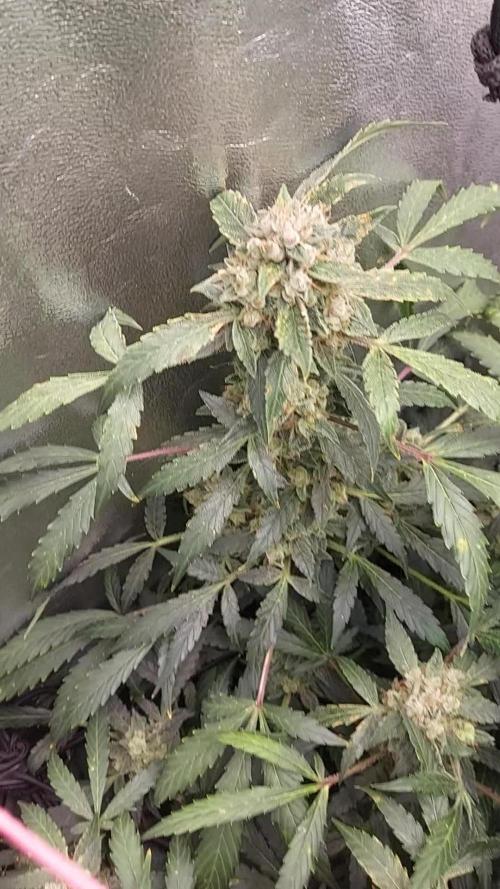
On entre doucement dans la dernière ligne droite. La production de résine atteint son paroxysme et les choix stratégiques pour la récolte commencent à se profiler.
Un Grand Merci
Un merci tout particulier à @mia_biotabs et @Mrs_Larimar pour leur accompagnement tout au long de cette aventure, ainsi qu’à tous les cultivateurs qui suivent ce ce journal depuis le début !
Je tiens également à remercier chaleureusement @Dryrocket de me donner l'opportunité de tester leur appareil. J'espère sincèrement que j'aurai assez de silice pour mener à bien cette session avec, ça s'annonce super intéressant ! ☺️
Paramètres de Culture & Environnement
Taille : Toujours stable à 91 cm.
Le problème de colocation : "Bee Happy" est toujours très impactée et cachée par l'envergure de sa grande sœur Spirit. À cause de ce manque d'espace et de cette ombre imposée, il m'est encore difficile de me prononcer précisément sur la structure globale de la plante et sur l'estimation finale de la quantité. On fait avec, mais le potentiel est clairement là.
Climat & Environnement :
Les constantes restent inchangées. Lampe calée à 40 cm de la canopée, températures fixées à 24°C jour / 21°C nuit, et déshumidificateur en marche pour maintenir l'humidité à 60%.
Nutrition & Gestion de l'Eau
Système :
Le réservoir Autopot gère toujours l'arrosage automatique de fond en eau claire.
Ration du jour :
J'ai donné aujourd'hui une dose légèrement réduite par rapport à la semaine dernière : 4 ml de Liquid PK 5-8 Biotabs. On commence à lever le pied doucement en vue des prochaines étapes.
Étude des Trichomes & Structure des Buds
C'est ici que l'on constate une vraie divergence génétique. Les têtes de "Bee Happy" gonflent de façon totalement différente de celles de Spirit :
La structure :
Alors que Spirit développe des fleurs longilignes en forme de "sapin", "Bee Happy" nous sort des têtes ultra-compactes, très denses et groupées, qui ressemblent à des têtes de choux-fleurs.
L'évolution des trichomes :
Le givre est tout simplement impressionnant et très épais. À la loupe, les trichomes sont presque majoritairement laiteux. Il reste encore quelques trichomes transparents isolés et très peu d'ambrés pour le moment.
État général :
L'odeur sucrée est toujours bien présente et très agréable. Excellente surprise du côté de la santé globale : l'absence de sénescence se confirme, toutes les feuilles nourricières disponibles sont encore bien vertes et captent le moindre rayon disponible.
Perspectives pour la suite 🏁
Au vu de l'évolution des trichomes (majoritairement laiteux), le pic de THC est tout proche. Je pense que je vais la mettre au rinçage dans pas très longtemps. L'idée va être de couper le PK pour laisser la plante vider ses réserves et consommer les nutriments restants dans le sol avant la coupe.
Merci à tous d'avoir suivi cette mise à jour !
La fin approche pour "Bee Happy" et le test de l'appareil Dryrocket s'annonce très lourd pour la suite des événements.
À la semaine prochaine !

Likes
17
Share


@JuicyFruit
Follow
Day 69 - 15/11/19
Were finally here at harvest and im happy with the result :) i planned as much as i could and winged the rest :)
I collected lots of small, early harvest buds and left them to dry. kept a small bit for bongs and put all the really sticky trim in the freezer! gonna make cannabutter with it next week :)
I liked the strains i chose from RQS, they took every newbie mistake i threw at them :D ive learned so much and it shows in my other diaries :)
Il update this harvest a couple of times through this last week to show the effects of drying and curing, other than that thanks to all for helping and check out my other diaries to see how ive progressed :)
Update - 18/11/19
I dried the buds for a couple of days and wow they dry well :) smoked them in a bong and it got me over a rough few days.
I didnt see the point in curing this as i only got a couple grams. and to even get a couple of grams off a plant that had such a bad transplant just shows how resistant they are.
I loved this strain, the smell was funky and it was a joy to grow. Thank you RQS!
Likes
5
Share


@Random80
Follow
I was keeping them as low as possible with LST, now I ll try to keep buds away from each other.
Likes
19
Share


@Comfrey
Follow
Day 80
This morning I started defoliating Tropicana. She will be in the darkness for the next days. I already harvested a part of the head flower and let it dry trimmed. Because of extreme weather conditions and very high humidity I got a little bud rott. I found it out quit early I think. So I hope nothing will not happen any more. Just harvesting relaxed and drink a Tropicana tee.
Day 81
I decided to cut her down in the evening. The humidity in the basement room is high and I don‘t want to risk here anything anymore. Waiting for my first homegrown weed to be vaped.
Day 82
Tropicanas flowers hanging to dry in my basement. I check them once per day with a strong light.
Day 83
Same same. The smell is wonderful like a bit of gas combined with a fruity flower bouquet. Our neighbors in the house like the smell, too. 🙏
Day 84
I could try my first homegrown weed. It‘s absolutely tasty and have a very smooth vape. I was very surprised cause it‘s not cured yet. A longer vape report will follow when it‘s dried and cured.
Day 88
All flowers, sugar- and tee leafs are trimmed and filled in glasses for curing. I open twice per day for 20 minutes. Boveda packs 58% inside.
I will fill out the rest of the diarie when my buds are dried, cured and vaped. So far this was a very exciting journey for me. Growing cannabis and even legal on our balcony. Feels still a bit unreal, but it’s real!
Thank you for reading my diary! Thanks to all the people who worked on legalizing cannabis in Germany, especially to the „Deutscher Hanfverband (DHV)“!
I will give more updates and write a vape report after curing several weeks. Maybe with some Tropicana Cookies baked in Comfreys garden kitchen.
Processing
Likes
6
Share


@Alejangrow
Follow
3 more weeks of veg then gonna throw them all into flower. 🌺
These are definitely coming along nicer than my last widow run.😅
Gonna do a little lollipopping on these this week & a little defoliating in the process. 🍭


