The Grow Awards 2026 πŸ†
Likes
Comments
Share
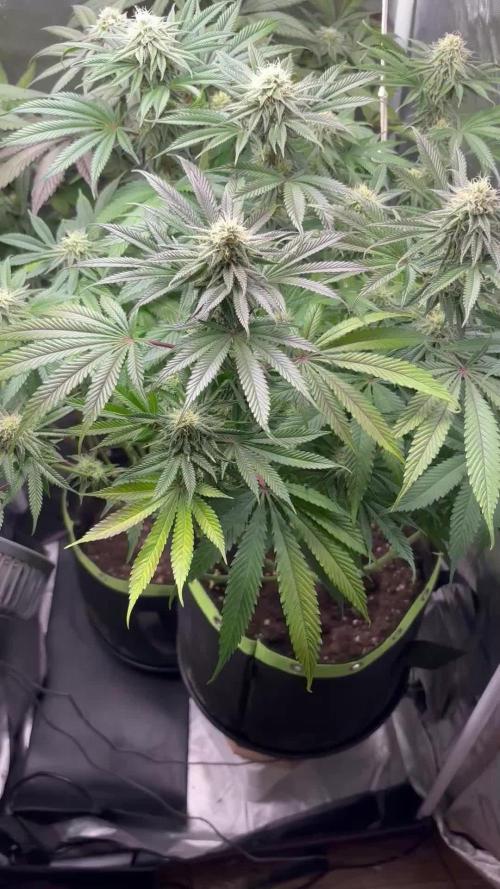
Welcome to Flower Week 2-3 of Divine Seeds Auto Ak 47 Xl I'm excited to share my grow journey with you all as part of the Divine Seeds Autoflowering Competition 2025. It's going to be an incredible ride, full of learning, growing, and connecting with fellow growers from all around the world! This Lady moved into the 12/12 light Photo tent because of the height For this competition, I’ve chosen the Feminized Automatic strain: Auto Ak 47 Xl Here’s what I’m working with: β€’ 🌱 Tent: 120x60x80 β€’ πŸ§‘β€πŸŒΎ Breeder Company: Divine Seeds β€’ πŸ’§ Humidity Range: 60 β€’ ⏳ Flowering Time: 59 Days β€’ Strain Info: 21-24%THC β€’ 🌑️ Temperature: 26 β€’ 🍡 Pot Size: 0.5l β€’ Nutrient Brand: Narcos β€’ ⚑ Lights : 200W x 2 A huge thank you to Divine Seeds for allowing me to be a part of this amazing competition and Sponsoring the Strains. Big thanks for supporting the grower community worldwide! Your genetics and passion speak for themselves! I would truly appreciate every bit of feedback, help, questions, or discussions – and of course, your likes and interactions mean the world to me as I try to stand out in this exciting competition! Let’s grow together – and don’t forget to stop by again to see the latest updates! Happy growing! Stay lifted and stay curious! Peace & Buds!
Likes
10
Share
@JreyBudz
Follow
She is growing amazing and very fast. I did some training on the lower branches to get them some light and did some defoliation on unneeded leaves. I’m watering every other day now still only adding nutrients every third watering. I’m ready to see some of these buds start stacking!!!
Likes
30
Share
So far these plants have shown nothing but resilience and a will to grow I have put quite a bit of effort in but I’m sure I’m lacking in one or two spots but you would never be able to tell by the Look at the plants they seem quite happy and they are relatively patient with a new grower lol
Likes
2
Share
@TEKNOGROW
Follow
CONTEST TEKNOGROW BIG BUDDHA SEEDS BUDDHA TAHOE GROWER GIOVANNI
Likes
55
Share
What's in the soil? What's not in the soil would be an easier question to answer. 16-18 DLI @ the minute. +++ as she grows. Probably not recommended, but to get to where it needs to be, I need to start now. Vegetative @1400ppm 0.8–1.2 kPa 80–86Β°F (26.7–30Β°C) 65–75%, LST Day 10, Fim'd Day 11 CEC (Cation Exchange Capacity): This is a measure of a soil's ability to hold and exchange positively charged nutrients, like calcium, magnesium, and potassium. Soils with high CEC (more clay and organic matter) have more negative charges that attract and hold these essential nutrients, preventing them from leaching away. Biochar is highly efficient at increasing cation exchange capacity (CEC) compared to many other amendments. Biochar's high CEC potential stems from its negatively charged functional groups, and studies show it can increase CEC by over 90%. Amendments like compost also increase CEC but are often more prone to rapid biodegradation, which can make biochar's effect more long-lasting. biochar acts as a long-lasting Cation Exchange Capacity (CEC) enhancer because its porous, carbon-rich structure provides sites for nutrients to bind to, effectively improving nutrient retention in soil without relying on the short-term benefits of fresh organic matter like compost or manure. Biochar's stability means these benefits last much longer than those from traditional organic amendments, making it a sustainable way to improve soil fertility, water retention, and structure over time. Needs to be charged first, similar to Coco, or it will immobilize cations, but at a much higher ratio. a high cation exchange capacity (CEC) results in a high buffer protection, meaning the soil can better resist changes in pH and nutrient availability. This is because a high CEC soil has more negatively charged sites to hold onto essential positively charged nutrients, like calcium and magnesium, and to buffer against acid ions, such as hydrogen. EC (Electrical Conductivity): This measures the amount of soluble salts in the soil. High EC levels indicate a high concentration of dissolved salts and can be a sign of potential salinity issues that can harm plants. The stored cations associated with a medium's cation exchange capacity (CEC) do not directly contribute to a real-time electrical conductivity (EC) reading. A real-time EC measurement reflects only the concentration of free, dissolved salt ions in the water solution within the medium. 98% of a plants nutrients comes directly from the water solution. 2% come directly from soil particles. CEC is a mediums storage capacity for cations. These stored cations do not contribute to a mediums EC directly. Electrical Conductivity (EC) does not measure salt ions adsorbed (stored) onto a Cation Exchange Capacity (CEC) site, as EC measures the conductivity of ions in solution within a soil or water sample, not those held on soil particles. A medium releases stored cations to water by ion exchange, where a new, more desirable ion from the water solution temporarily displaces the stored cation from the medium's surface, a process also seen in plants absorbing nutrients via mass flow. For example, in water softeners, sodium ions are released from resin beads to bond with the medium's surface, displacing calcium and magnesium ions which then enter the water. This same principle applies when plants take up nutrients from the soil solution: the cations are released from the soil particles into the water in response to a concentration equilibrium, and then moved to the root surface via mass flow. An example of ion exchange within the context of Cation Exchange Capacity (CEC) is a soil particle with a negative charge attracting and holding positively charged nutrient ions, like potassium (K+) or calcium (Ca2+), and then exchanging them for other positive ions present in the soil solution. For instance, a negatively charged clay particle in soil can hold a K+ ion and later release it to a plant's roots when a different cation, such as calcium (Ca2+), is abundant and replaces the potassium. This process of holding and swapping positively charged ions is fundamental to soil fertility, as it provides plants with essential nutrients. Negative charges on soil particles: Soil particles, particularly clay and organic matter, have negatively charged surfaces due to their chemical structure. Attraction of cations: These negative charges attract and hold positively charged ions, or cations, such as: Potassium (K+) Calcium (Ca2+) Magnesium (Mg2+) Sodium (Na+) Ammonium (NH4+) Plant roots excrete hydrogen ions (H+) through the action of proton pumps embedded in the root cell membranes, which use ATP (energy) to actively transport H+ ions from inside the root cell into the surrounding soil. This process lowers the pH of the soil, which helps to make certain mineral nutrients, such as iron, more available for uptake by the plant. Mechanism of H+ Excretion Proton Pumps: Root cells contain specialized proteins called proton pumps (H+-ATPases) in their cell membranes. Active Transport: These proton pumps use energy from ATP to actively move H+ ions from the cytoplasm of the root cell into the soil, against their concentration gradient. Role in pH Regulation: This active excretion of H+ is a major way plants regulate their internal cytoplasmic pH. Nutrient Availability: The resulting decrease in soil pH makes certain essential mineral nutrients, like iron, more soluble and available for the root cells to absorb. Ion Exchange: The H+ ions also displace positively charged mineral cations from the soil particles, making them available for uptake. Iron Uptake: In response to iron deficiency stress, plants enhance H+ excretion and reductant release to lower the pH and convert Fe3+ to the more available form Fe2+. The altered pH can influence the activity and composition of beneficial microbes in the soil. The H+ gradient created by the proton pumps can also be used for other vital cell functions, such as ATP synthesis and the transport of other solutes. The hydrogen ions (H+) excreted during photosynthesis come from the splitting of water molecules. This splitting, called photolysis, occurs in Photosystem II to replace the electrons used in the light-dependent reactions. The released hydrogen ions are then pumped into the thylakoid lumen, creating a proton gradient that drives ATP synthesis. Plants release hydrogen ions (H+) from their roots into the soil, a process that occurs in conjunction with nutrient uptake and photosynthesis. These H+ ions compete with mineral cations for the negatively charged sites on soil particles, a phenomenon known as cation exchange. By displacing beneficial mineral cations, the excreted H+ ions make these nutrients available for the plant to absorb, which can also lower the soil pH and indirectly affect its Cation Exchange Capacity (CEC) by altering the pool of exchangeable cations in the soil solution. Plants use proton (H+) exudation, driven by the H+-ATPase enzyme, to release H+ ions into the soil, creating a more acidic rhizosphere, which enhances nutrient availability and influences nutrient cycling processes. This acidification mobilizes insoluble nutrients like iron (Fe) by breaking them down, while also facilitating the activity of beneficial microbes involved in the nutrient cycle. Therefore, H+ exudation is a critical plant strategy for nutrient acquisition and management, allowing plants to improve their access to essential elements from the soil. A lack of water splitting during photosynthesis can affect iron uptake because the resulting energy imbalance disrupts the plant's ability to produce ATP and NADPH, which are crucial for overall photosynthetic energy conversion and can trigger a deficiency in iron homeostasis pathways. While photosynthesis uses hydrogen ions produced from water splitting for the Calvin cycle, not to create a hydrogen gas deficiency, the overall process is sensitive to nutrient availability, and iron is essential for chloroplast function. In photosynthesis, water is split to provide electrons to replace those lost in Photosystem II, which is triggered by light absorption. These electrons then travel along a transport chain to generate ATP (energy currency) and NADPH (reducing power). Carbon Fixation: The generated ATP and NADPH are then used to convert carbon dioxide into carbohydrates in the Calvin cycle. Impaired water splitting (via water in or out) breaks the chain reaction of photosynthesis. This leads to an imbalance in ATP and NADPH levels, which disrupts the Calvin cycle and overall energy production in the plant. Plants require a sufficient supply of essential mineral elements like iron for photosynthesis. Iron is vital for chlorophyll formation and plays a crucial role in electron transport within the chloroplasts. The complex relationship between nutrient status and photosynthesis is evident when iron deficiency can be reverted by depleting other micronutrients like manganese. This highlights how nutrient homeostasis influences photosynthetic function. A lack of adequate energy and reducing power from photosynthesis, which is directly linked to water splitting, can trigger complex adaptive responses in the plant's iron uptake and distribution systems. Plants possess receptors called transceptors that can directly detect specific nutrient concentrations in the soil or within the plant's tissues. These receptors trigger signaling pathways, sometimes involving calcium influx or changes in protein complex activity, that then influence nutrient uptake by the roots. Plants use this information to make long-term adjustments, such as Increasing root biomass to explore more soil for nutrients. Modifying metabolic pathways to make better use of available resources. Adjusting the rate of nutrient transport into the roots. That's why I keep a high EC. Abundance resonates Abundance.
Likes
Comments
Share

Os fertilizantes tenho usado alternadamente em intervalos de 3 a 4 dias entre as regas . Pois tive que recolher as plantas para a estufa. Quebrei as ponteiras para nΓ£o alongar muito a planta pois tenho limites de altura da iluminaΓ§Γ£o e quero ver se ela fica mais cheia de botΓ΅es no caule .
Likes
10
Share
@HighRez
Follow
The Quebec Blues are starting to develop more now during flowering I’ll start feeding Diablo nutrients cal mag and monster frost every feeding during flowering. These plants have been growing well and just need defoliations for airflow and flowering sites. I’ve been following diablos feeding calculator 3x a week, and the plants seem to be growing well. Ph is balanced each feeding. I’ll start documenting weekly flower development starting the next week.
Likes
6
Share
Update of Goofiez 2 of compound genetics!! On RDWC it’s literally super fast grow !! We are doing a pheno hunting of 12 plants and we seed 4 of them that are the best at the moment
Likes
10
Share
@Lazuli
Follow
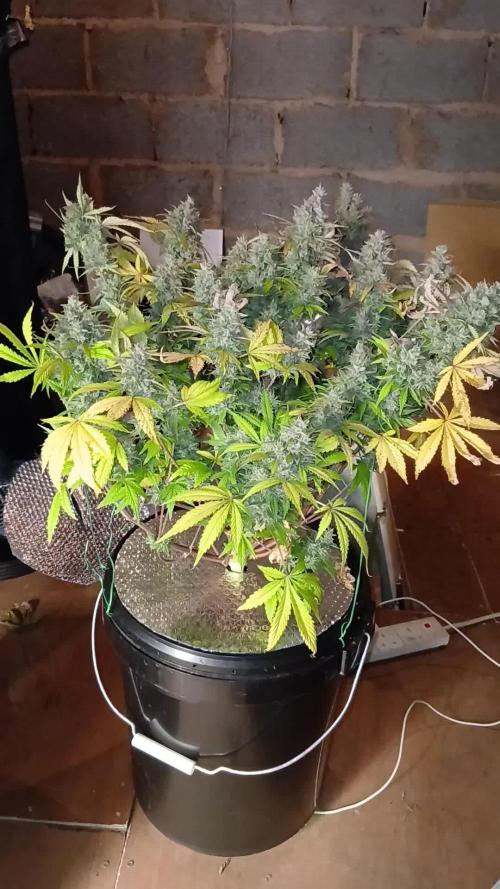
Grew in freezing temperatures my tent was barely 16 celcius,
Likes
79
Share
Week 11: The Culmination of a Botanical Odyssey! Greetings, fellow cultivators! As we stand on the threshold of greatness, Week 11 marks the culmination of an extraordinary journey with our beloved Epsilon F1. Join me as we embark on a retrospective voyage, celebrating the triumphs and tribulations that have shaped our grow, and prepare to reap the rewards of our labor. From humble beginnings to towering magnificence, our Epsilon F1 has been a beacon of resilience and beauty throughout her growth cycle. With each passing week, she has defied expectations, surpassing milestones and blossoming into a botanical masterpiece. From the delicate tendrils of her seedling stage to the majestic colas of her flowering phase, she has captured our hearts and ignited our passion for cultivation. But let us not forget the tools and techniques that have guided us on this transformative journey. From the cutting-edge genetics provided by Royal Queen Seeds to the innovative nutrients crafted by Aptus Holland, our arsenal has been fortified with the finest resources available. Each piece of equipment, from the grow lights to the ventilation system, has played a vital role in creating the optimal environment for our plant to thrive. Ah, but it hasn't been without its challenges. From nutrient deficiencies to environmental fluctuations, we've encountered obstacles along the way that tested our resolve and ingenuity. But with perseverance and a steadfast commitment to excellence, we've overcome every hurdle, emerging stronger and more resilient than ever before. As we approach the final days of our grow, we pause to reflect on the significance of this moment. It's not just about harvesting buds; it's about harvesting memoriesβ€”memories of late nights in the grow room, tending to our plant with unwavering dedication; memories of shared triumphs and camaraderie within the grow diaries community; memories of a journey that has forever changed us as cultivators and individuals. And so, dear friends, as we bid adieu to Week 11 and prepare to embark on the harvest, let us revel in the beauty of this momentβ€”a celebration of growth, resilience, and the boundless wonders of nature. May our harvest be bountiful, our buds potent, and our hearts filled with gratitude for the privilege of bearing witness to the miracle of life. But wait, there's more! Before we partake in the harvest festivities, let us indulge in a special photo shoot, capturing the essence of our Epsilon F1 in all her glory. With each snapshot, we immortalize the beauty and splendor of this momentous occasion, creating memories that will last a lifetime. Join me, dear friends, as we embark on this final chapter of our Epsilon F1's journey. Until next time, happy harvesting, and may your gardens be forever green! #EpsilonF1HarvestCelebration #Week11Culmination #BotanicalOdyssey #RoyalQueenSeedsGenetics #AptusHollandNourishment #GrowDiariesCommunityStrength Genetics -Epsilon F1 @rqs_esp @royalqueenseedssp @rqsglobal Food - @aptusholland @aptus_world @aptus_es @aptus_portugal @aptusbrasil @aptusplanttechaus @aptus_thailand @aptusplanttechnz @aptususa_official LED @lumatekeu Controls - @trolmaster.eu @trolmaster.agro @trolmaster.support As always thank you all for stopping by, for the love and for it all , this journey of mine wold just not be the same without you guys, the love and support is very much appreciated and i fell honored and blessed with you all in my life With true love comes happiness , Always believe in your self and always do things expecting nothing and with an open heart , be a giver the universe will give back to you in ways you could not even imagine so #aptus #aptusplanttech #aptusgang #aptusfamily #aptustrueplantscience #inbalancewithnature #trueplantscience #rqs #ApoloMission #MoonHarvestAdventure #playwithlego #lego #legotime #legovideo #tothemoonandback More info and complete updates from all my adventures can be found Link in the profile description Friendly reminder all you see here is pure research and for educational purposes only Growers Love To you All
Likes
55
Share
@Max1973
Follow
Day 57 - The girls are bursting with flower....... looked abit light (the main tops looked a light green, showed signs of nutrient deficiencies), so upped the Dutch Master Gold One Flower, it's 1000 ppm now.... thinking about Defoliation... outside temperatures are middle of winter, 0oC to 20oC (32oF to 70oF) .... but typical high low is 5-15oC (40-60oF)......... surprisingly the LED's warm the tent upto 20-24oC, this is important point.... i am running the lights, 6 pm to 6 am... 12hrs lights on all night, and all day is night mode...... during the day is the highest temps of the day... and during the lowest temps, they have the light heat ....... Day 61 - I trimmed em .... this was the third defoliation..... things are starting to get sticky..... ah i'm just going to wing it.... they are 2 months (8 wks) from seed.... idk what i'm doing....... i did some serious stress bending today, and had to put afew tie downs in..... my theory is to hurt em as much as i can without killin em.... to make em harder, stronger, faster, more stressed, so they can survive anything..... grow em stronger...... the smell is zero in the home, but once i got them out for their 2 week haircut, they started producing some strong wet kisses, that were sticky and wet.... the aroma of heavenly ladies was abundant...... 😎😎 idk... this tastes so good.... it's like some kind of weird berry combo goodness.... i'm vaping vanilla custard atm and this is so good with vanilla custard.... vanilla custard kush n cookies... haha watch the video......... 😎
Processing
Likes
1
Share
everything changed on week 4 grow tent and cob led came to show how a good light is important. from now til last 2 weeks, only indoor growing goodbye CFL's, you worked well. + LST and ferts (2ml + 0.25) Defoliation started Removed branches from 1st node
Likes
64
Share
@yan420
Follow
FERMAKOR BARREL MIX – BASE IN USE (Testing on the Fantasy Feast girl we pulled out of another diary https://growdiaries.com/diaries/274722-grow-journal-by-yan402 ) (FERMAKOR BASE SYSTEM KOH VERSION diary https://growdiaries.com/diaries/278391-grow-journal-by-yan402) (Urea & Micros on the way β€” first week running without them) πŸΆπŸ’§πŸΆπŸ’§πŸΆπŸ’§πŸΆπŸ’§πŸΆ πŸ’§ 30 L Barrel – Current Working Mix πŸΆπŸ’§πŸΆπŸ’§πŸΆπŸ’§πŸΆπŸ’§πŸΆ Step 1 – Calcium Nitrate (Part A) 7 L warm water (~35–40 Β°C) β†’ added 45 g Calcinit, stirred until fully clear. That’s the calcium + nitrogen backbone for the feed. Step 2 – FERMAKOR PK Base (Part B) 15 L water in the main barrel β†’ added 30 ml FERMAKOR PK Concentrate, mixed well. This forms the main P + K part of the formula. Step 3 – Combine Solutions Slowly poured the Calcinit mix into the barrel while stirring β€” no reaction, still crystal clear. That confirms the mix is stable and precipitation-free. 🌿 Step 4 – FPJ / FFJ Batch Added 30 ml homemade FPJ (fish + veg batch) β‰ˆ 1 ml/L. Color shifted to a light-amber tone β€” looks alive and active. πŸ‹ Step 5 – Citric Acid Balance Added 1 tsp citric acid after everything was blended to fine-tune pH and help chelate micros later on. πŸ“¦ Step 6 – Top Up & Check Filled to the 30 L mark with plain water β†’ pH tested with drops, showing yellow-green β€” roughly 5.8 – 6.0 range. Nice clean look, stable smell, no residue. πŸ’§ Current Base Ingredients (Active Mix) Warm Water β‰ˆ 22 L total Calcinit 45 g β†’ N + Ca foundation FERMAKOR PK Base 30 ml β†’ P + K support Citric Acid 1 tsp β†’ Chelation + pH balance FPJ / Fish Emulsion 30 ml β†’ Organic enzyme booster Result: clean amber mix, mild and balanced. I’ll let this version run for a week before adding anything. πŸ‘€πŸ‘€πŸ‘€πŸ‘€πŸ‘€πŸ‘€ Observations and changes πŸ‘€πŸ‘€πŸ‘€πŸ‘€πŸ‘€πŸ‘€ 27.10.25 VW27 noticed some min burnt tips so I decreased Calcium Nitrate 45 to β†’ 40g, decided to add two more elements micros and Epsom salts just to make sure they got everything, Fetrilon Combi 1 (Micros): 0.5 g, Epsom salts: 8 g 28.10.25 VW27 she seems devoid of any deficiencies, seems ready for the flip to 12/12 02.11.25 VW27 girl is looking good so I decided to stop making daily videos and do a standard once a week update. 09.11.25 aVW28 7 days since flip,stretch in full swing, first pistils showing, leaf color deep and healthy. Slight tip burn early week β†’ gone after pH stabilized. Feed stayed clear, no residue, roots clean and sweet-smelling, did what I hope is a last cleanup and pruningπŸŽ₯ 10.11.25 VW29 added Phosphoric acid pH down to the schedule for flowering stage. 14.11.25 FW1 FERMAKOR PK Micros 40 β†’ 50 ml 23.11.25 FW2 got some burnt tips, observe and act accordingly in case it worsens, diluted by 25% for this week. 05.12.25 FW3 about 2 weeks ago Calcium Nitrate 35 g β†’ 25 g, FERMAKOR PK Micros 50 ml β†’ 60 ml 12.12.25 FW4 Calcium Nitrate 25 g β†’ 20 g, FERMAKOR PK Micros 60 ml β†’ 80ml 16.12.25 FW4 Calcium Nitrate 20 g β†’ 17 g, FERMAKOR PK Micros 80 ml β†’ 110 ml πŸŒ±πŸ’¦πŸŒ±πŸ’¦πŸŒ±πŸ’¦πŸŒ±πŸ’¦πŸŒ±πŸ’¦πŸŒ± 🌿 Day to day tasks & actions 🌿 πŸŒ±πŸ’¦πŸŒ±πŸ’¦πŸŒ±πŸ’¦πŸŒ±πŸ’¦πŸŒ±πŸ’¦πŸŒ± Fed about 5l a day of #1 and on the weekends I do a pure FERMAKOR PK flush 2l runoff (*RUNOFF reused for tomato plants) πŸ’§πŸ’§πŸ’§πŸ’§πŸ’§πŸ’§πŸ’§πŸ’§πŸ’§ 🌱 Nutrients in 30 L #1 Veg – FERMAKOR πŸ’§πŸ’§πŸ’§πŸ’§πŸ’§πŸ’§πŸ’§πŸ’§πŸ’§ Calcium Nitrate (Calcinit / Nitcal): 45 β†’ 40 g β†’ 35 g β†’ 25 g β†’ 20 g β†’ 17 g = 1.50 g/L β†’ 1.33 g/L β†’ 1.17 g/L β†’ 0.83 g/L β†’ 0.67 g/L β†’ 0.57 g/L = 207 ppm N / 253 ppm Ca β†’ 184 / 225 β†’ 161 / 197 β†’ 115 / 141 β†’ 92 / 113 β†’ 78 / 96 PK Concentrate (FERMAKOR Base): 30 β†’ 40 ml β†’ 50 ml β†’ 60 ml β†’ 80 ml β†’ 110 ml = 1.00 β†’ 1.33 ml/L β†’ 1.67 ml/L β†’ 2.00 ml/L β†’ 2.67 ml/L β†’ 3.67 ml/L β†’ balanced 1:1 P:K + light micros (from extract) Home-made FFJ/FPJ (Fish + Veg): 30 ml = 1.00 ml/L Epsom Salt (MgSOβ‚„Β·7Hβ‚‚O): 8 g = 0.27 g/L β†’ ~26 ppm Mg + ~35 ppm S Fetrilon Combi 1 (Micros): 0.5 g = 0.017 g/L β†’ Fe 0.7 ppm Β· Mn 0.7 ppm Β· Zn 0.3 ppm Β· Cu 0.3 ppm Β· B 0.1 ppm Β· Mo 0.02 ppm Phosphoric Acid (pH down) + Citric Acid (chelation): as needed β†’ First set pH with phosphoric acid, then add a little citric only if you want extra chelation Target pH: 5.8 – 6.0 (drop test yellow-green) πŸ“¦ TOTAL: Liquids: 60 β†’ 70 β†’ 80 β†’ 90 β†’ 110 β†’ 140 ml per 30 L = 2.00 β†’ 2.33 β†’ 2.67 β†’ 3.00 β†’ 3.67 β†’ 4.67 ml/L Solids (CaNO₃ + Epsom + Fetrilon): 53.5 β†’ 48.5 β†’ 43.5 β†’ 33.5 β†’ 28.5 β†’ 25.5 g per 30 L = 1.78 β†’ 1.62 β†’ 1.45 β†’ 1.12 β†’ 0.95 β†’ 0.85 g/L YouTube Link: https://youtube.com/-m8h?si=A7x4Zlr2kj-_ga31
Processing
Likes
6
Share
This is one amazing grow. Especially in a micro grow with a 5L fabric pot. I’ve increased the GHE bloom and cleaned up leaves at the bottom and fan leaves covering flowers. More light penetration.
Processing
Likes
97
Share
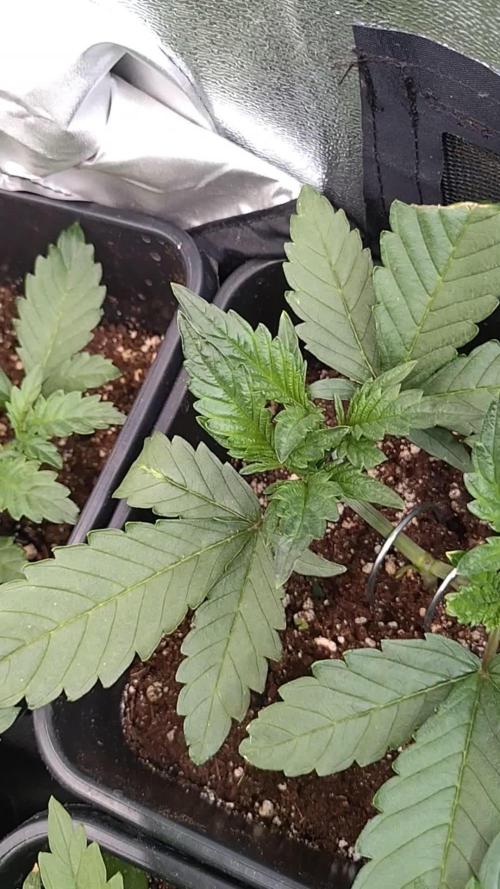
Week 2 and the girls are looking more yellow and funky than I like. I'm pretty sure my soil is just way too hot. I tried flushing it through, but that just seemed to lead to general overwatering issues. I'm planning on transplanting to larger pots with more neutral soil this weekend and hope that will help straighten things out.
Likes
14
Share
05/25/22 changed nutrient water PH 6.11 TDS 932. Planning on doing a small defoliation, plant has alot of leaves. Removed LST. 05/26/22 PH 6.19 TDS 906 05/27/22 PH 6.15 TDS 780 05/28/22 PH 6.09 TDS 900 found a couple leaves with spots. Calcium deficiency? Checked PH was fine, checked PH pen, was not fine 😒, recalibrate to proper and recheck PH. running at PH 5.67. Added PH-up and flushed. Fingers crossed 🀞 05/29/22 PH 6.13 TDS 915 had to tie plant, the weight is making it tip in pot. Plant was leaning on back wall. 05/30/22 PH 6.18 TDS 756 05/31/22 PH 6.10 TDS 900