


Likes
Comments
Share

@OlyGrower
Follow
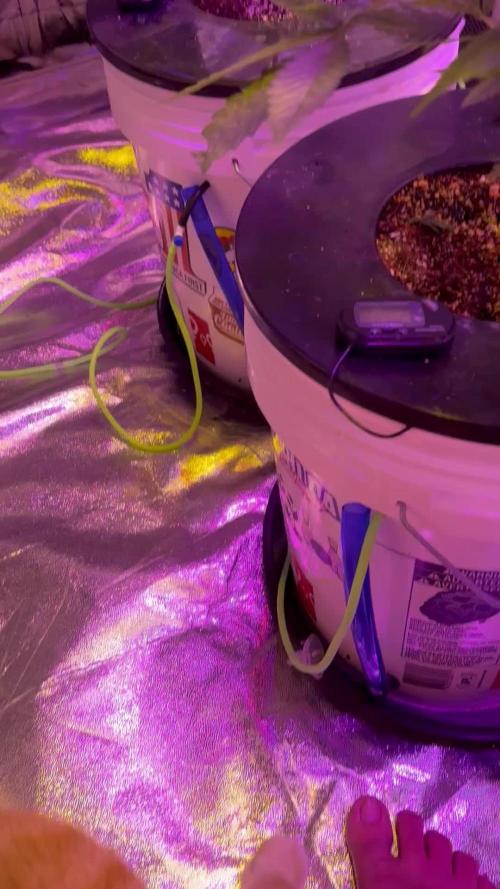
Day 36, start of Week 6-
Seeing good growth the last week. Had to get a new HPS bulb so stuck w the metal halide this last week till it gets here. All is good. Got a gorilla cookies that is growing uncharacteristically slowly so I decided to go a different way and run a Purple Lemonade FF in its place. Got no time for slow growers

Likes
15
Share


@AustinRon
Follow
LJ4Q23 Flower 10
HARVEST WEEK
_______________________________
Environment Targets (Flower 10 - Harvest)
- Scotoperiod: [ 13, h] # Contiguous dark hours daily
- TemperatureMax: [ 78, °F]
- RH: [57, %]
- VPD: [ 1.2, mS]
- LightIntensityMax: [ 750, µMol/m2/s]
- LightDistance: [ 16.5, “]
Fertigation Plan:
- RLA Hydro Chart, EC 1.3 - 0.8
- Primer A: [ 6, ml, gal]
- Primer B: [ 6, ml, gal]
- Silica Skin: [ 2, ml, gal]
- Resin Bloom: [ 2, ml, gal]
Penultimate 3 Days (before Harvest)
- RLA Resin Bloom, EC: 0.8
__
Wed Jan 31, 2024
LJ4Q 64:F:9:1
EC: 1.3
- [x] Runoff Amount: [ 550, ml]
- [x] Runoff EC: [ 3.3, mS]
__
Thu Feb 1, 2024
LJ4Q 65:F:9:2
- [x] Runoff Amount: [ 650, ml]
- [x] Runoff EC: [ 3.2 , mS]
__
Fri Feb 2, 2024
LJ4Q 66:F:9:3
Refresh/Dilute Reservoir, EC: [ 1.1, mS] - IF Refresh - Resin Bloom Only @ [ 8, ml, gal]
- [x] EC Reservoir, Dark: EC: [ 1.3, mS]
- [x] Add 1 Gal, w/ Resin Bloom [ 8, ml, gal], Reservoir EC: [ 1.1, mS]
- [x] Runoff Amount: [ 800, ml]
- [x] Runoff EC: [ 3.2, mS]
__
Sat Feb 3, 2024
LJ4Q 67:F:9:4
- [x] Reduce Feed Duration from 4 Minutes to 3 Minutes (775 ml Runoff is a tad high, yes?)
- [x] Trichome Check - Are we Ready to Harvest Tuesday?
- [x] Runoff Amount: [ 775, ml]
- [x] Runoff EC: [ 2.9, mS] # First Day with Runoff EC Coming Down . . .
__
Sun Feb 4, 2024
LJ4Q 68:F:9:5
- [x] Runoff Amount: [ 550 , ml]
- [x] Runoff EC: [2.9 , mS]
- [x] Dilute Reservoir to EC: [ 0.8, mS] # Resin Bloom: [ 8, ml, gal], EC: 1.0
__
Mon Feb 5, 2024
LJ4Q 69:F:9:6
Add another gallon w/ 8 ml Resin Bloom Only . . .
EC Solution: [ ?, mS]
EC Reservoir: [ 0.9, mS]
- [x] Runoff Amount: [ 75 , ml]
- [x] Runoff EC: [ 4.5, mS]
__
Tue Feb 6, 2024 # HARVEST DAY 70 !!!!
LJ4Q 70:F:9:7

Likes
1
Share

@Ninjabuds
Follow
Growace.com air cube discount code NINJABUDS
ELUFAH.com and amazon Elufah products discount code NINJABUDS
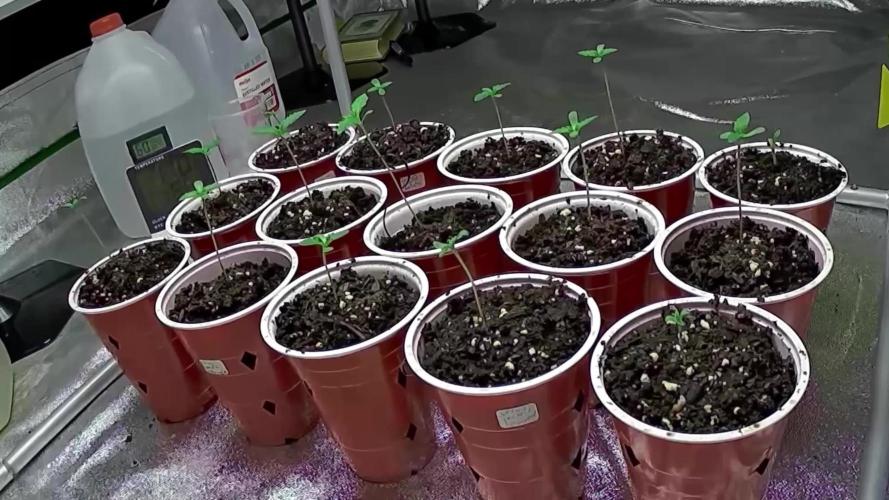
I finally choose witch 6 plants I am going to keep and I transplanted them into the air cubes
Wedding gelato was a hard one to choose both of the seedlings were both healthy and strong
Also I set up the grow pro’s under canopy lights getting them ready for when the plants are ready for those to kick on

Likes
12
Share


@m0use
Follow
Plant did ok, not the best result and far below my expectations for it. I found that growing them in pots with other plant is a no go from now on for autos. they just don't grow all that well when their root space is being shared, all my autos from a few breeders did poorly when I grew them like this. however the ones I kept in their own pot did much better, the Ganja farmer brand is good, just wish they had some CBD/CBG strains in their catalogue. This will all be for friends and family.
@GanjaFarmerSeeds, If you like the images or videos I can send you raw files that have not been shrunk and contain no watermarks, if you feel I am in the top 3 of your BDOTY Contest that is :D

Likes
4
Share


@stolen_cheese
Follow
Finally decent temperatures and we can start the flower! They recovered well from the temperature shock and show some growth.
They got a massive haircut and trained. Now they can enter flower stage.
Each plant got 50 g of Wizzy's Flower 6-8-10 organic fertilizer, 3 g / 10 L of Plant Booster and 1g / Liter Weedtamines. A few days ago. Tomorrow they'll get their dose of Pflanzengeflüster (Plant Whisper) to increase flower production.

Likes
15
Share


@I_Identify_As_A_Dan
Follow
Week 11 for Peyote Zkittlez by @seedsman
Even though she seems to be doing okay, I'm expecting a nice amount of side growth from all her colas but she's doing slower than I would expect.
Maybe i give her a nice dry back this week... see if we can get extra root growth weather seems to be stable from here on out between 32-35 degrees.
Actually thinking of running a super long extension cord to get a fan down there, but its a good 50 Meters from the house😂

Likes
152
Share

@GreenHobbit
Follow
The Hobbit Hole – Woche 13
? BAAAAUM FÄLLT! – Das Ende einer Outdoor-Reise
Woche 13 – und heute endet die Reise für die letzten beiden Bewohnerinnen des Hobbit Holes.
Die Gelato hat das Hobbit Hole bereits vor knapp zwei Wochen verlassen und hängt seitdem kopfüber im Schuppen. Aufgrund des sehr feuchten Wetters trocknet sie deutlich langsamer als erwartet. Nach inzwischen 12 Tagen ist sie immer noch recht feucht, aber das Wichtigste: bislang keinerlei Anzeichen von Schimmel. Einen ersten kleinen Probebud gab es trotzdem schon. 😅
Und dann gab es noch eine kleine Überraschung: In der Gelato habe ich einen einzelnen Samen gefunden – und gestern auch einen in der Cinderella. Woher die Bestäubung kam, bleibt wohl eines der kleinen Geheimnisse Mittelerdes. 😂
💜 Purple Punch
Was soll ich zu ihr noch sagen?
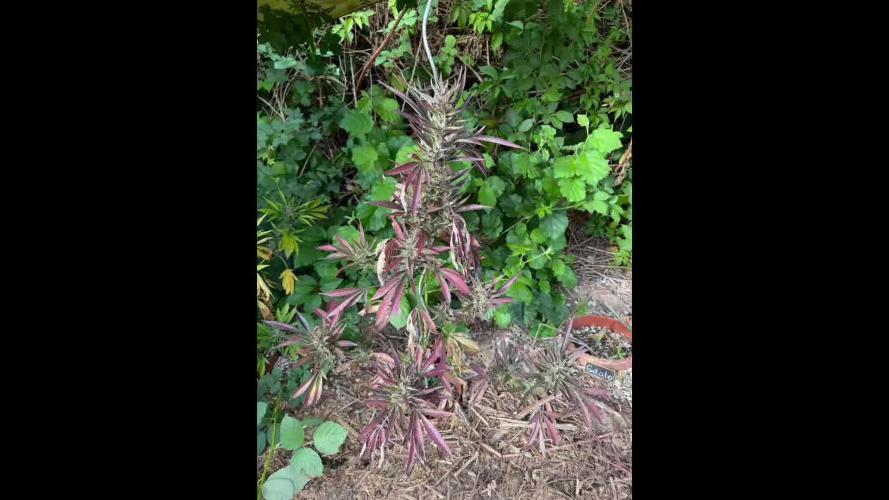
Die Purple Punch hat sich in ihren letzten Wochen optisch komplett verwandelt. Aus einer eher unscheinbaren grünen Pflanze wurde zum Ende eine tiefrote bis violette Schönheit. Besonders in der Sonne kommen die Farben zusammen mit der dicken Trichomschicht unglaublich zur Geltung.
Sie ist sicherlich nicht die Pflanze mit den größten oder kompaktesten Buds dieses Runs geworden – aber optisch ist sie für mich definitiv eines der Highlights des gesamten Projekts.
Und vor allem: Trotz der dauerhaft hohen Luftfeuchtigkeit und des schlechten Wetters sehen die Blüten bis zum Schluss sauber aus.
👠 Cinderella
Cindy sieht inzwischen aus, als hätte sie selbst beschlossen, dass es reicht. 😅
Das Laub ist massiv ausgefadet, viele der großen Blätter sind bereits gelb oder komplett abgestorben. Gleichzeitig stehen an den Trieben noch überraschend schöne, stark bereifte Buds.
Die Makroaufnahmen zeigen überwiegend milchige Trichome, daneben noch klare und vereinzelt bernsteinfarbene Köpfe. Vielleicht hätte sie unter perfekten Bedingungen noch etwas Zeit bekommen können.
Aber perfekte Bedingungen haben wir momentan definitiv nicht.
Die letzten Wochen waren kühl und vor allem viel zu feucht. Das zusätzlich gespannte Tarp hat die Pflanzen zwar vor direktem Regen geschützt, aber irgendwann überwiegt das Risiko den möglichen Gewinn durch ein paar weitere Tage Reife.
Deshalb fällt heute die Entscheidung:
Cinderella und Purple Punch werden geerntet. ?
Lieber etwas früher als Budrot
Das war wahrscheinlich die wichtigste Lektion dieses Outdoor-Runs.
Indoor kann ich Temperatur, Luftfeuchtigkeit, Licht und Bewässerung kontrollieren. Im Hobbit Hole entscheidet dagegen irgendwann Mutter Natur, was gespielt wird.
Das Wetter der vergangenen Wochen war alles andere als freundlich. Trotzdem haben die Pflanzen durchgehalten und ich konnte sie dank Regenhaube und später zusätzlichem Tarp weitgehend trocken halten.
Jetzt möchte ich mein Glück aber nicht weiter herausfordern.
Nach den letzten Fotos, Videos und Makros heißt es deshalb heute:
BAAAAUM FÄLLT! 🌳?😂
Damit ist der aktive Grow im Hobbit Hole 2026 beendet.
Aber das Diary ist noch lange nicht vorbei. 😏
Als Nächstes folgen die Ernteberichte, die finalen Trockengewichte und natürlich die Rauchberichte der drei Sorten. Die Gelato macht dabei den Anfang.
Was als kleines Outdoor-Experiment in einer überwucherten Ecke des Gartens angefangen hat, ist für mich zu einem meiner spaßigsten Projekte dieses Jahres geworden.
The Hobbit Hole will return.
Und nächstes Jahr darf dort etwas Größeres einziehen.
Processing
Likes
10
Share


Likes
14
Share


@madlangs
Follow
All going well, apart from it Looks like both gorilla cookies are hungry might start giving them both some biobizz bloom
15.1.23
Turned water off in morning. 7 hours later watered
Put 70g pk tea brewed for 32 hours in 3.75L water with 1tsp (4g) of bactrex
Ph down to 6.6 from 7.6
Ec 3.0. Brought down to ec2.5 by adding water so gave each 750ml
in bottom off tray
Turned water back on following morning
Likes
61
Share


@Cyrusdavirus
Follow
Chopping these little ladies was pretty simple because of their size but trimming was a sticky mess I had to clean my shears after every buds because of the amount of resin. I will be growing this strain again with an actual veg so I can see how great it really is and I definitely recommend you try it as well


Likes
55
Share

@Condocannibus
Follow
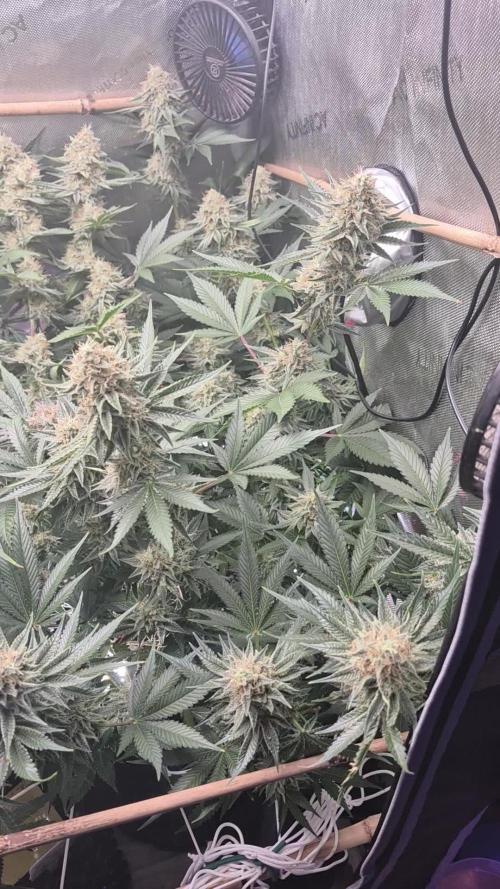
Shes bulking up tent smells so good.
My environment this year is so good no big temp swing rh in check. Shes loving life.
Thank you to everyone on grow diaries I watch I learn.

Likes
11
Share


@evAq22
Follow
Guys I wish I could tell you something about the grow. But honestly I'm just letting my plants do their thing... I mean it's living soil it's like set and forget.
08.05.2025
Trimmed the cover crop

Likes
12
Share

@Brujha77
Follow
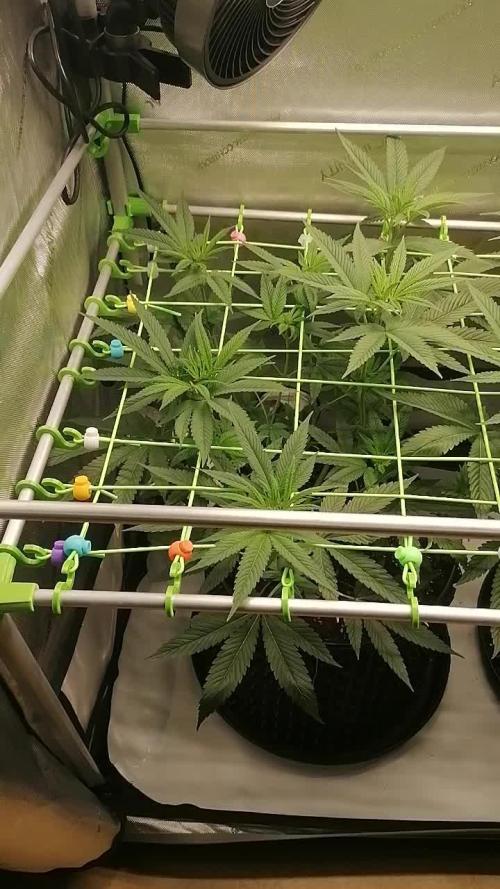
Start Woche 2 Blüte
Tag11 Blüte
Die linke ist etwas hinterher bzw. wächst etwas gedrungener.
Die rechte sieht richtig gut aus. Schön kräftige Seitentriebe.
Bei beiden nun auch die ersten Zeichen der Vorblüte zu sehen👍🥀
Likes
19
Share


@Nofeckingclue79
Follow
Hi Growmes
I'm happy with both my girls again about two weeks out should be week 13 of flower it's not 16 but again I'm not going to change it because not the easiest app to use but hopefully I will get better the more diaries I do🤞🤞 I've got the 9th of February as D-day for me I have ordered a jewelers loop so when it arrives I will be keeping my eye so I don't harvest too early or too late from what I've been reading I want about 70% amber tricones for the high I'm looking for every time I open the tent door my mouth starts watering😂🙏👍
Likes
6
Share


@La_VecinaCannabica83
Follow
Han crecido bastante,hoy las voy a regar y aplicaré BioGrow y BioEnhancer de Greenhouse Feeding en el sustrato.
Likes
14
Share


@GodZilla_Owner
Follow
Week 10 Update – Full Throttle with Advanced Nutrients 🌱
I’m now feeding 100% of the Advanced Nutrients schedule with all components. I noticed a slight calcium deficiency in the AN plants, so I’ve increased the base nutrients from 75% to 100%. Advanced Nutrients CalMag Xtra remains at 1ml/L, and it has been reliable throughout the grow with 0 EC osmosis water.
BioBizz#1 – BT42
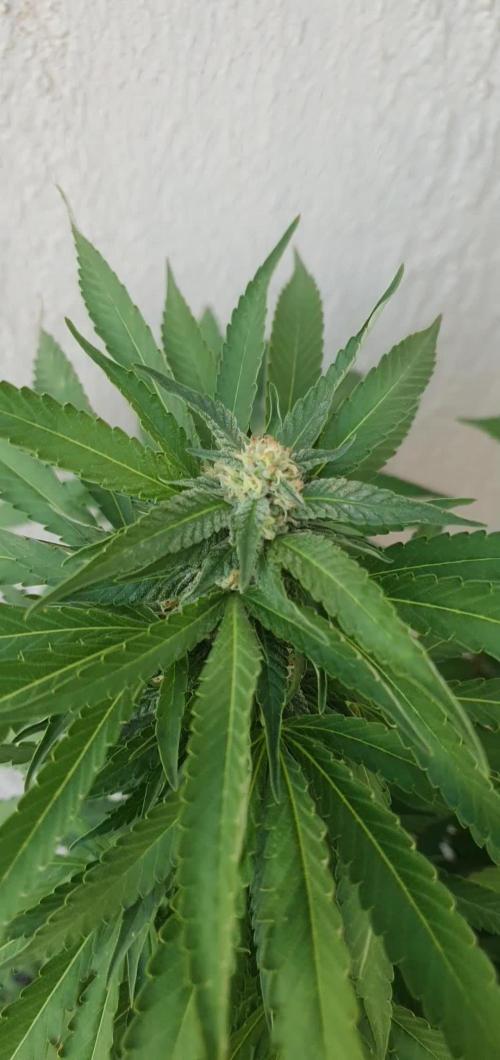
The trichome ripeness is mixed—there are both amber and clear trichomes, so it’s not quite consistent yet. CalMag issues show up occasionally, but nothing that’s throwing me off balance—she’s doing fine! 🤞
AN#4 – BT42
She’s asking for a bit more calcium here and there but continues to dominate BioBizz#1 in terms of development.
EC: 2.5
pH: 6.4
Drain: pH 6.1 (EC not measurable due to organic soil).
AN#3 – BT38
This plant is visually about 2 weeks behind the others. The space between her and the lamp is down to 1-2cm—a disaster, but there’s nothing I can do at this point. PPFD is off the charts (1200), but she’s handling it and developing beautiful buds. Big respect to this strain—the stretch was no joke!
Humidity is well under control at



Likes
22
Share


@Dankbudz84
Follow
The strain handled all my mistakes as a new grower great and is one of the reasons why I chose these strains. Just to name, bad Ph, over watering, over feeding was giving full dose instead of half, not watering to run off, not checking ppms and flushing right before harvest instead of weeks prior. I was not expecting the trichomes to look like diamonds as the video doesn’t do any justice. They really sparkle.

Likes
54
Share


@nonick123
Follow
Bienvenidos a la semana #7 😀😬😐🙏
Día 46 (26/06)
CC & RB han reaccionado super bien a los nuevos abonos!
Tienen un verdor espectacular!
NL no para de engordar, y tiene el olor típico de las Northern Lights de la Old School. Vaya pasada! 😀
Las OF siguen consumiendo sus hojas de abanico y tienen el mismo tratamiento que el resto... Me da que es una cepa bastante débil... 😑
Día 47 (27/06)
Continuamos con organic way!
Se echa en la parte superior del sustrato
11 gramos de harina de huesos
11 gramos de guano de murciélago (por planta)
Se riega con la siguiente mezcla: 1 ml/l de Melaza + 30 ml/l de Té de Hummus
OF#1 = 250 m
lCC y RB = 500 ml
NL = 1.000 ml
NL está cogiendo un grosor de cogollos y un olor de la vieja escuela brutal! 😬
Día 48 (28/06)
Día nublado. Nada que decir
Día 49 (29/06)
Mi primer riego con EC controlada
Gracias maestro @deFharo por los consejos!
Mezcla: 1 ml/l de Melaza + 40 ml/l de Té de Hummus en agua del grifo reposada
ph = 6.5
EC = 1.6
OF#1 = 250 m
CC y RB = 250 ml
NL = 0 ml (la maceta está muy pesada)
Día 50 (30/06)
No hay necesidad de riego
Los colores son impresionantes y los cogollos están engordando y cubiertos de tricomas :-D
Día 51 (01/07)
Gracias al maestro @deFharo introduzco una nueva receta al cultivo: el Guanato
Os la dejo más abajo, pero el mérito es todo de @deFharo
Mezcla de riego: 1 ml/l de Melaza + 5 ml/l de Humato PK + 5 ml/l de Guanato en agua del grifo reposada
ph = 6.4EC = 1.680
OF#1 = 250 ml
CC y RB = 500 ml
NL = 1000 ml
__________________________________________________________________________________
Receta de Guanato
Ingredientes:
125 gr de guano de murcielago
1 litro de agua (osmosis o grifo reposada)
25 g de hidróxido de potasio
Pasos
1- Disolver el Hidróxido de Potasio en 500 ml de agua
2- Añadir el guano de murcielago y remover
3- Revolver o agitar varias veces
4- A las 24 horas añadir el resto del agua (500 ml) a 40 - 50 ºC
5- Revolver varias veces al día durante al menos 3 días (alargarlo hasta 6-7 días si no hay prisa)

Processing
Likes
3
Share


@Mr_nugs_lover_David
Follow
She looks fantastic, the smell of the buds is very kushy I can feel some piney notes and also some earthy notes, week see how she keeps developing those purple buds! 💚 🌱 ✌️ 💎
