


Likes
Comments
Share


@Ozgrow
Follow
just about finished up this week. Choc mint 1 is about ready for chop. Chopped couple of main colas as i seen couple of signs of budrot. Dropped lights down to 400w each as temps are starting to rise above 30c.
Choc mint 2 is looking unreal. Heaps of huge colas,think i will pull the most of this one. Will probably give till day 65.


Processing
Likes
3
Share


@BlueDream17
Follow
When I attempted to defoliate her I guess I got too close to the main vein and killed the 8th branch, shitty. 7 tops it is
The only video for all my diaries, don't have the time to wait for it to upload the video to every diary. Pretty disappointed in my strawberry but maybe she just wasn't the gal for me. She has one branch that never fully recovered from defoliating her. I'll try again next grow but maybe super-cropping and topping her is a better training route. I'm excited and kind of worried to see what kind of colas I get from a 9 week old plant plant with only 2 nodes on each branch. Please stretch...
Likes
16
Share

@GelatoGandalf
Follow
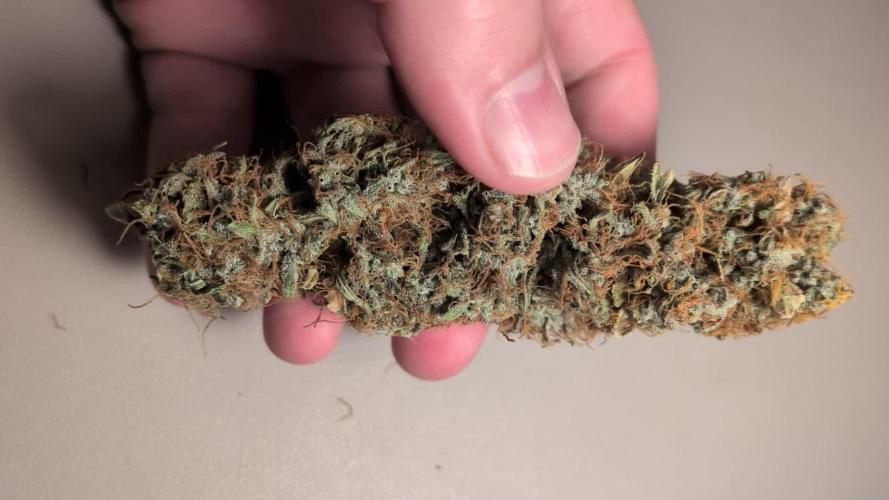
This grow turned out to be quite a journey.
Originally, this run was meant to be a simple between-grow project, something to keep the season going outdoors, without too much effort. But plans changed, and the Orange Sherbet ended up in the tent, where it took a completely different direction than expected.
She grew big and strong early on, but the LST was tricky. she didn’t respond very well at first, and shaping her the way I wanted took a lot of time and patience. It was interesting to see how she stretched and filled out later, but overall, the structure stayed somewhat awkward to manage.
Throughout the grow I struggled with CalMag and potassium balance. I tried several adjustments, sometimes with high CalMag doses, but it never fully stabilized. It’s still unclear if that came from the strain itself or from the BioBizz line, but it made the mid-to-late phase more difficult than I had hoped.
The flowering time was also much longer than advertised. the breeder mentions around 9 weeks, but in reality this one took closer to 14–15 weeks total. What was supposed to be a quick side project turned into a long, demanding run.
On the bright side, she delivered a very solid yield. a bit over 160 g of trimmed buds plus another 50 g of popcorn, well above 1 g/W. The aroma is lovely after 10 days of curing: creamy, with vanilla and a subtle orange note returning.
However, the buds are airy, not as dense as I hoped. The effect and flavor are great, but visually it’s more on the average side.
Even so, this grow was one of the most instructive I’ve done.
I learned a lot about deficiency management, humidity control, watering and how far genetics and environment interact.
Going forward, I’ll take a break from autos and focus on photoperiod strains again. I just prefer the control and predictability they offer.
All in all: not my prettiest grow, but a very valuable one.
About drying in dry ferm/dry age and regular drying: the material in the bags took a few days longer to dry which is said to be good (regular dry was 7 days, bags was 9 or 10). initially I think the buds from bags look better but now in curing I can't really tell a difference, not visually and not in the nose. Let's see how everything evolves over time but honestly I am not expecting it to differ a lot from regular drying.

Likes
12
Share


@Kakui
Follow
Nuevo cultivo, volví a plantar Jamaican Dream, está vez solo se hará LST y defoliación, nada de apical(Main Lining).
Se ha aprendido de errores y atrasos del cultivo anterior, esperando no cometerlos en este cultivo.
Para este cultivo de usarán los nutrientes de la línea Grotek(mega pack), además de micorrizas great white.
Las semillas germinaron al tercer día de plantadas en el sustrato, al igual que el cultivo anterior. Esperaré a que crezcan hasta unos 3 nodos para hacer transplante a maceteros definitivos de 18 litros.
Germ2, han estirado suficiente para remover el plástico, se regaron con agua de osmosis con CalMag a 0.6 EC y pH 6.5, se espolvoreó great white en el sustrato. Se instalo un humidificador en el indoor y se bajó a un 70-80% la potencia del LED.
Germ3, se mantienen en 80% de humedad a 23 grados, se humedece el sustrato.
Germ6, están creciendo al ritmo esperado, se humedeció el sustrato, los parámetros están correctos.
Germ8, primer riego con Vitamax Pro y SoloTek Grow de Grotek, 0.8 EC, y un poco de great white en polvo al sustrato. Creciendo bien.

Likes
5
Share


@Bluemels
Follow
Tag 35: Bisher steckt die Bubble Kush das runterbiegen relativ gut weg. Sie entwickelt sich doch recht langsam und gemächlich im Vergleich zur Triple g die ich gerade parallel anbaue.
Tag 39: Beginn Scrog.

Likes
9
Share


@wheedtobeus420
Follow
Day 69. She’s is coming along amazing. Got her ph under control she is in her bulking phase the pistols are just now turning amber. She’s beautiful. I’m very pleased with her. Can’t wait to grow the others. Really excited to she her progress.


Likes
3
Share

@AestheticGenetix
Follow
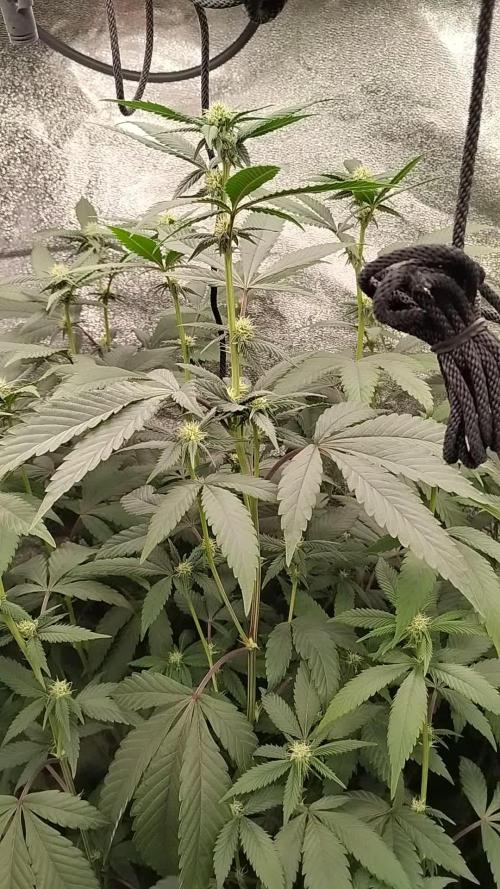
Hopefully she doesn't stretch too much more. She's getting close to the light. I really need to get in there and clean up the underbrush and everythinh


Likes
2
Share


@Altitonans_Fulmen
Follow
The thoughts shared in this journal are my own—a snapshot of personal understanding at the exact moment of writing. It is not intended as a reference of absolute fact, but rather as an exercise in ἐπίνοια (epinoia): an exploration of thought, intuition, and creative insight.
Epinoia(ἐπίνοια) is a Greek term meaning thought, intention, purpose, or conception, stemming from "mind" (nous) and "upon" (epi), representing the mind's reflective or creative process, used in philosophy (Aristotle, Gnosticism) and theology to discuss understanding and divine names, appearing once in the New Testament for the "intent of your heart" (Acts 8:22). It signifies the mind's operation to form ideas or designs, contrasting with raw data or innate perception, and in Gnosticism, it's an emanation of divine wisdom (Sophia).
"Φsis" is a stylized spelling of the Ancient Greek word φύσις (physis), which translates directly to "nature" or the intrinsic essence of a living thing.
Exploring the deep intersection of science, intuition, and creative insight often leads to breakthroughs that challenge our understanding of what is possible. When we approach high-performance cultivation not just as a hobby, but as an exercise in pushing a biological system to its absolute genetic ceiling, the results can transform from simple data points into profound proof of concept. Achieving a highly optimized environment requires a shift in mindset away from empty promises and directly toward verifiable proof, building true confidence through a detailed archive of past lessons and strategic adjustments.
This philosophy turns a standard space into a precise mass and energy balance equation, where every variable is managed to eliminate biological bottlenecks entirely. In a recent project four individual plants produced 344 grams, 280 grams, 445 grams, and 255 grams respectively, resulting in a total harvest of 1,324 grams, or 47.2 ounces, of dry product. Operating with a 600-watt light source inside a four-by-four footprint, this brings the final efficiency to an exceptional 2.21 grams per watt.
To put this in perspective, the standard traditional indoor benchmark has long been established at 1.0 grams per watt, while expert commercial operations target 1.5 grams per watt, and elite commercial systems push the envelope between 1.8 and 2.0 grams per watt. Reaching 2.21 grams per watt places the outcome squarely within the top 0.1 percent of global benchmarks, acting as a true statistical outlier that demonstrates what happens when flawless environmental parameters meet a cultivar pushed to its maximum potential. Reaching this level of mastery demands that we move past the common trap of the mirror fallacy, where the ego mistakes its own limited perspective for universal truth and views different ideas as personal threats. True progress requires curiosity and dismantling the illusion that our immediate viewpoint is the objective standard, shifting the focus instead toward how a system actually operates under the absolute laws of physics. In a high-performance setup, maximizing output is never about adding random additives or forcing growth, but rather about systematically removing the limitations that hold the organism back. By maintaining a perfect vapor pressure deficit, ideal root-zone oxygenation, and precise structural canopy training every single minute of the cycle, the plant is freed to express 100 percent of its DNA potential without any lingering genetic latency.
Managing a dense canopy inside a tight footprint presents the ultimate challenge of mitigating stagnant air and preventing moisture issues. Overcoming this bottleneck relies on a sophisticated synganic approach, which seamlessly marries the precise control of synthetic mineral inputs with the natural resilience of active organic living soil. This method transforms the room into a closed-loop system where the internal microclimate is entirely isolated from external weather fluctuations and pests. Rather than openly exhausting the atmosphere, the air is continuously recirculated, enriched, and scrubbed using 264-nanometer ultraviolet light.
The foundation of this thriving ecosystem is a comprehensive substrate composition designed to provide perfect aeration, structural integrity, and biological buffering. The primary media base integrates expanded clay aggregates, coir chunks, premium coco coir, sphagnum peat moss, horticultural perlite, vermiculite, pumice, and volcanic basalt rock. To continuously condition the soil and fine-tune mineral availability, the mixture is amended with agricultural gypsum, wollastonite, dolomitic limestone, basalt rock dust, micronutrient-rich volcanic ash, greensand, crushed seashells, biochar, and shungite. This mineral architecture creates an incredibly stable environment where active soil biology naturally prevents salt toxicity and ensures steady, reliable nutrition throughout the entire life cycle.
Living organisms within the substrate play a vital role in maintaining this delicate biological balance and breaking down organic material. Red wigglers continuously process organic matter into easily accessible plant nutrients while aerating the media; specialized predatory mites offer excellent biological control against common soil pests, and pillbugs excel at breaking down tough, woody elements. These biological components are further supported by a rich layer of organic amendments including high-phosphorus steamed bone meal, high-nitrogen dehydrated blood meal, fish bone meal, cold-processed kelp meal, dehydrated moringa powder, spirulina powder, and marine crustacean biomass rich in chitin. Combined with biological inoculants like mycorrhizal fungi, premium worm castings, and concentrated humic and fulvic acids, the entire system operates as a flawless biological transducer of light and energy.
Ultimately, shifting our perspective to view a grow space as a complete mass and energy balance equation changes the entire nature of agriculture. Success ceases to be a matter of luck or anecdotal habits and instead becomes the predictable result of meticulous design, patience, and the strategic elimination of failure. When science, biology, and engineering converge so harmoniously, we gain a deeper appreciation for the intricate natural systems that sustain life and growth. By sharing these detailed insights and refining our techniques, we can continue to unlock the absolute maximum potential hidden within the living world around us.
Comprehensive Substrate Composition:
1. Substrate Base & Aeration Media
Expanded Clay Aggregates (Hydroton Pebbles)
Coir Chunks & Horticultural Coco Coir
Sphagnum Peat Moss
Horticultural Perlite
Horticultural Vermiculite
Horticultural Pumice
Volcanic Basalt Rock
2. Mineral Amendments & Soil Conditioners
Agricultural Gypsum (Calcium Sulfate)
Wollastonite (Calcium Silicate)
Dolomitic Limestone (Calcium Magnesium Carbonate)
Basalt Rock Dust (Trace Mineralizer)
Azomite (Micronutrient-Rich Volcanic Ash)
Glauconite (Greensand)
Crushed Seashells (Calcium Carbonate Source)
Pyrolyzed Carbon Feedstocks (Biochar & Horticultural Charcoal)
Elite Shungite (Carbonaceous Mineraloid)
3. Organic Nutrient Amendments
Steamed Bone Meal (High Phosphorus)
Dehydrated Blood Meal (High Nitrogen)
Fish Bone Meal (Phosphorus & Trace Calcium)
Cold-Processed Kelp Meal (Ascophyllum nodosum)
Dehydrated Moringa Oleifera Powder (Botanical Nutrient)
Spirulina Powder (Arthrospira platensis / Cyanobacteria Nutrient)
Marine Crustacean Biomass (Shrimp & Crab Chitin)
4. Biological Inoculants & Organic Acids
Mycorrhizal Fungi Inoculant (Endomycorrhizae / Ectomycorrhizae)
Vermicompost (Premium Worm Castings)
Humic & Fulvic Acids (Concentrated Humates)
Human Body
65% Oxygen (in all liquids and tissues, bones, and proteins)
18% Carbon (everywhere)
10% Hydrogen (in all liquids and tissues, bones, proteins
3% Nitrogen (in all liquids and tissues, proteins
1,5% Calcium (lungs, kidney, liver, thyroid, brain, muscles, heart, bones)
1% Phosphorus (urine, bones, DNA)
0,35% Potassium (enzymes)
0,25% Sulphur (proteins)
0,15% Sodium (in all liquids and tissues) (in terms of salt)
0,05% Magnesium (lungs, kidney, liver, thyroid, brain, muscles, heart)
Plant
Mother-nutrients: Carbon 47%, Oxygen 43%, Hydrogen 4%.
Macro-nutrients: Nitrogen 3%, Phosphorus1%, Potassium1%, Calcium1%, Magnesium0.5%, Sulfur0.5%.
Micro-nutrients: All the rest combined 1%
More energy, more blueprint.
Although CO2 is a naturally occurring gas that both humans and plants use, it is invisible and odorless and can be fatal at high-levels. If you’re supplementing carbon dioxide in your grow room, ensure there are no leaks in any CO2 devices and always use a CO2 monitor and alarm.
0.02% Life unsustainable
0.03% Life OK
0.04% Current ambient atmospheric co2
0.04%-0.1% =400-1000ppm standard indoor co2.
0.1%-0.2% = 1000- 2000 ppm (prolonged exposure: drowsiness).
0.2%-0.4% = 2000-4000ppm (Headaches, fatigue, stagnation, stuffiness, poor concentration, loss of focus, increased heart rate, nausea).
1% is toxic
5% is quick death.
"Dabo vobis quod oculus non vidit, nec auris audivit, nec manus tetigit, quod in cor hominis non ascendit."
Likes
19
Share


@4Haut
Follow
Hi@all, it is the end of the fifth week, I started some low-stress training to bend the lower branches towards the light. It worked really well. Three days ago, I topped the "head". I hope she's recovering from it in the next days/week. So far, everything seems to be going well and it’s really enjoyable. 😎🌿
My only concern is the 40x40 cm tent – I think it might be a bit tight in there...
Greetings ✌️


Likes
3
Share


@Nofeckingclue79
Follow
Even with the heat she has given me quite a big yield and that's with lack of watering and also training badly so I could have got a better yield if I have had paid more attention to her so until next time ✌️ out my fellow Growmies

Likes
11
Share


@GRow_M8s
Follow
This week I ll water with just rain water for a couple of times. Maybe I ll give it another week of feed after but not sure yet. It will depend of how they go.
Smell is really intense. Special Lime Haze smells herbal and cheese.

Likes
2
Share


@Saintvicious
Follow
Leaf scaring getting worse but seems to have stopped progressing. Buds look amazing and can't complain about tricome production.
Likes
31
Share


@IndicaVibeMe
Follow
Love the nugs coming In.
12/9/23 - Update, the Royal Dwarf auto is very tint. She's only 1 foot tall and already has 25 bud sites! I'm very happy with the flowers coming in, no 🍌 nanners or hermie characteristics! She's 100% female, and fits her name "Itty-Bitty"
Likes
15
Share


@Njanne
Follow
Harvest time for this ripe lady. She isn't as tall as most of my other plants, but her colas are huge, and dense and heavy. We've already sampled a test bud, and she's a heavy hitter with plenty of indica... next post will be the harvest post... stay tuned.

Likes
Comments
Share

@hassehujasse
Follow
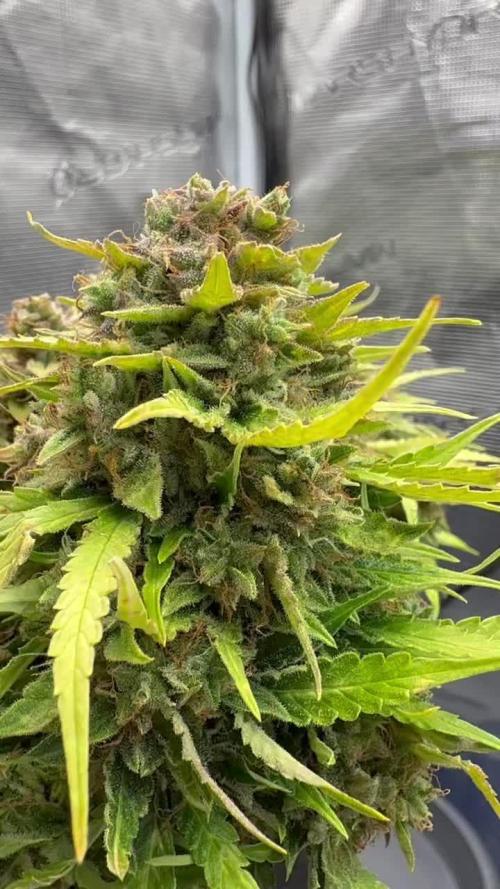
Driving to harvest through German AutoBahn
Aceleramos al cosecha
Likes
35
Share


@Hiroots420
Follow
09/07/2021 (F DAY 42)
El olor es sumamente intenso, todo marcha muy bien!
13/07/2021 (F DAY 46)
Continuo con los dos riegos semanales de 3 litros de te y las plantas están super contentas, Sweet cheese ya está amarillentando y es sin dudas la mas rápida.
Pomelo Haze es la mas lenta y espero tenerla 1 a 2 semanas mas dentro del indoor luego del corte de las damas.

Likes
12
Share


@Farmboyconnor
Follow
Growth is exploding, nodes are coming in hot! .happy with the progress so far. These girls will fill out nicely .
Likes
18
Share


@GekyumesMom
Follow
Pondering grow techniques.... I like low maintenance 🤣
I'm really bad at time🤦♀️🤣 I also joined grow with Jane n that says zkittles is at 19 days
So somewhere in there
4/25 wedding cake 5ml of nutrients
4/27 Gemma 😍
