


@Koda11
Follow
Beginning: 12/11/2020 10:30 Pm
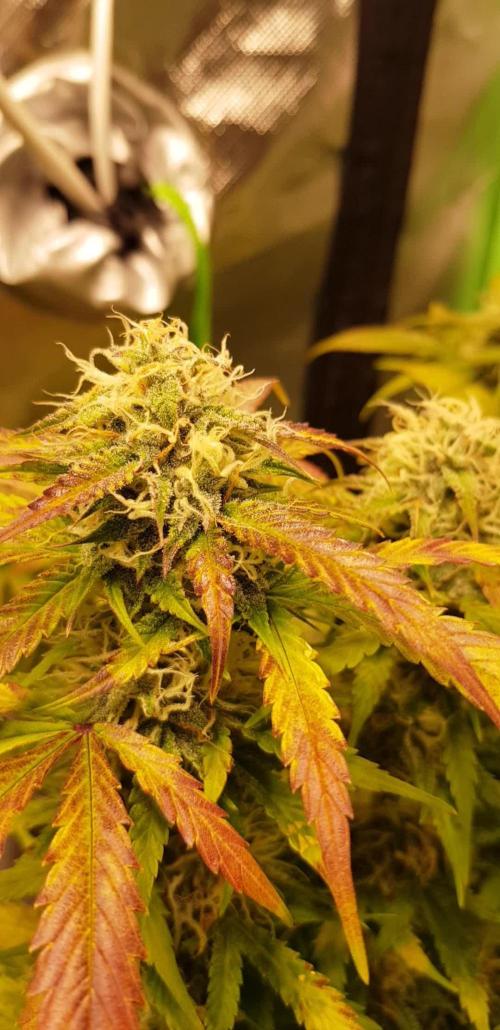
12/12/2020 5:30 Pm approximately Purple Hulk Auto
MSNL Seeds (First and only seedbank I use as of right now)
(5Gal Fabric Pots) 2 Lemon OG Fem Auto-
Genes: OG Kush x Lemon Haze (High Times Cannabis Cups in 2008 and 2009, alongside first prize at the IC420 Growers Cup)
Flowering: 8 Weeks
Plant Height :Medium 100cm-180cm
Harvest: 300 - 400g/m²
THC: 15-18%
(5Gal Fabric Pot) Purple Hulk Fem Auto-
Genes: GDP x Big Bud
Flowering: 8-10 Weeks
Plant Height: Short 60cm-100cm
Harvest: 300-400g/m²
THC: 19-22%
-Placed under 18/6 light schedule.



@GERGrowDesigns
Follow
Welcome to Flower Week 5-6 of Divine Seeds Auto Fractal
I'm excited to share my grow journey with you all as part of the Divine Seeds Autoflowering Competition 2025. It's going to be an incredible ride, full of learning, growing, and connecting with fellow growers from all around the world!
For this competition, I’ve chosen the Feminized Automatic strain: Auto Fractal
Here’s what I’m working with:
• 🌱 Tent: 120x60x80
• 🧑🌾 Breeder Company: Divine Seeds
• 💧 Humidity Range: 50
• ⏳ Flowering Time: 60 Days
• Strain Info: 23%THC
• 🌡️ Temperature: 26
• 🍵 Pot Size: 0.5l
• Nutrient Brand: Narcos
• ⚡ Lights : 200W x 2
A huge thank you to Divine Seeds for allowing me to be a part of this amazing competition and Sponsoring the Strains. Big thanks for supporting the grower community worldwide! Your genetics and passion speak for themselves!
I would truly appreciate every bit of feedback, help, questions, or discussions – and of course, your likes and interactions mean the world to me as I try to stand out in this exciting competition!
Let’s grow together – and don’t forget to stop by again to see the latest updates!
Happy growing!
Stay lifted and stay curious!
Peace & Buds!



@Scottydarkmoonbuds
Follow
Love these two strains. This is my first outdoor grow with fast buds. They both smell great. I need to get some Dr Zymes soon to help with little pests other than that it's been smooth growing

shorts_status_processing


@Leeyum
Follow
I can’t say enough about my love for this strain. Stunning looks, irresistible smell, and incredible smoke. I can’t wait to taste her she smells just like my first blackberry. That earthy sweet berry yankee candle type of smell. I’m addicted to growing her. My favorite strain to this day. Everything is going smoothly as she is fattening up. I’m gonna begin the slow fade on her and won’t be giving her much nutrients unless I think they’d be affective.


@Bread_n_Buds
Follow
Our #17 or rather this new creation by Seeds Mafia that we are growing with love is starting to get serious.
autoflowering like this.
We have started with fertilizers for growth which we give in reduced doses together with the rooting agent for the entire vegetative phase.
Music of the week provided by Radio Nula from Slovenia.
https://radionula.com/
Thanks to friends of Seeds Mafia try this and their other creations
seeds > https://seedsmafia.com/en/
Light and tent > https://marshydro.eu/products/marshydro-sp3000-led/?lang=it
shorts_status_processing


@Mr_nugs_lover_David
Follow
This wonderful plant is amazing man, I have fallen in love with this strain and the hard rocks nuggets she has produced, beutiful orange pistils, it's just pure fire. Very dense and compact nuggets guys, she's been 100% organic grown, she has been watered with pure water and beneficial bacteria all the way and also with guano liquid by guanokalong, the aromas are very complex is very gassy stinks like a skunk however it's got some piney in and kush aroma,definitely awesome man need to keep growing this strain many more times no doubt.


@Frank_cultiva
Follow
Mismos riegos que la semana anterior de acuerdo a la tabla de advanced nutrients.
Las 4 nenas que están en floración(maceteros de 11lt) beben mucha agua, 8lt cada dos días y reciben un riego a la semana con nutrientes, el resto de riegos sólo con agua.
Mientras que las otras 2 que siguen en vegetación (maceteros de 30lt) están bebiendo 9lt cada tres días, también con sólo un riego con nutrientes por semana.
Saludos! Muy buenos humos a toda la gente que le da vida y vibra positiva a este mundo 💚🍀🤓








@Fatnastyz
Follow
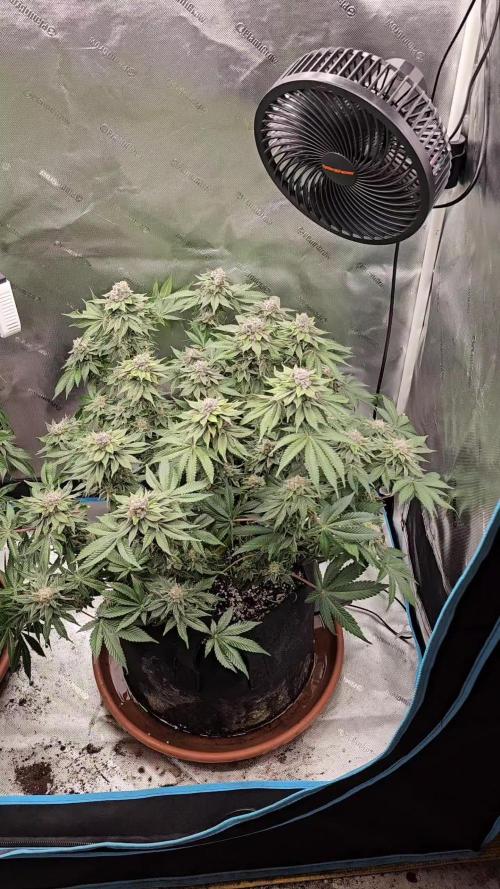
Week 4 Flower
6-5 Day 52 from seed.
Bit slow on this week updating.
But she hasn't missed a step, even if I have!
She smells great! I'm really digging the gas and stink from her. Already got my mouth watering 🤤.
Top dressed flower girl 1/4 cup poo and sprinkled a little mykos in with it, watered with recharge Sunday, reg water on Tuesday. Took my ecowitt to 14% in 2 days. After a full water. 😁
Opened the tent for air. Last week vpd has been between 1.5-1.6. moved up from 1.3-1.5. She seems to be ok with it so far!


@berlinbeginner
Follow
Ladies doing fine.
Worm castings are magic. SD2 is getting greener. I topdressed all the plants with worm castings


@Ultraviolet
Follow
You don't become confident by shouting affirmations in the mirror, but by having a stack of undeniable proof that you are who you say you are, outwork your self-doubt.
Nitrogen fixation is a chemical process by which molecular nitrogen (N2), which has a strong triple covalent bond, is converted into ammonia (NH3) or related nitrogenous compounds, typically in soil or aquatic systems but also in industry. The nitrogen in air is molecular dinitrogen, a relatively nonreactive molecule that is metabolically useless to all but a few microorganisms. Biological nitrogen fixation or diazotrophy is an important microbe-mediated process that converts dinitrogen (N2) gas to ammonia (NH3) using the nitrogenase protein complex (Nif).[2][3]
Nitrogen fixation is essential to life because fixed inorganic nitrogen compounds are required for the biosynthesis of all nitrogen-containing organic compounds, such as amino acids and proteins, nucleoside triphosphates and nucleic acids. As part of the nitrogen cycle, it is essential for agriculture and the manufacture of fertilizer. It is also, indirectly, relevant to the manufacture of all nitrogen chemical compounds, which include some explosives, pharmaceuticals, and dyes.
Nitrogen fixation is carried out naturally in soil by microorganisms termed diazotrophs that include bacteria, such as Azotobacter, and archaea. Some nitrogen-fixing bacteria have symbiotic relationships with plant groups, especially legumes.[4] Looser non-symbiotic relationships between diazotrophs and plants are often referred to as associative, as seen in nitrogen fixation on rice roots. Nitrogen fixation occurs between some termites and fungi.[5] It occurs naturally in the air by means of NOx production by lightning.[6][7]
All biological reactions involving the process of nitrogen fixation are catalyzed by enzymes called nitrogenases.[8] These enzymes contain iron, often with a second metal, usually molybdenum but sometimes vanadium.
Green clover (Fixation)
White clover (Fixation)
Red Clover. (Fixation)
Yellow Clover. (Fixation, deeper roots)
Sweet Thai Basil. (Terpenes)
Italian Basil. (Terpenes)
Chamomile.(Oil production)
Borage.(Pest attraction taste)
Lavender.(Pest attraction smell)
Marigold(Pest attraction visual)
Mycorrhizae are beneficial associations between mycorrhizal fungi and a plant’s root system. Mycorrhizal fungi spores germinate in the soil, creating filaments (hyphae) that penetrate the root cells, thus establishing a symbiotic relationship. This collaboration leads to the development of both intra-radical and extra-radical networks of filaments, enabling efficient exploration of the soil for enhanced access to nutrients and water. Consequently, these vital resources are transferred to the plant, resulting in numerous benefits for crop cultivation.
Various mycorrhizal products are available in diverse formulations (powder, granular, and liquid), concentrations, and qualities. Ongoing advancements in products, technologies, and research are reshaping our understanding of mycorrhizae. Despite these positive developments, certain misconceptions persist. In the following discussion, we aim to clarify the truths and dispel the myths surrounding mycorrhizae products.
MYTH #1
A HIGHER NUMBER OF MYCORRHIZAE SPECIES MEANS BETTER RESULTS.
Contrary to common belief, having a higher number of mycorrhizae species in a product does not translate to better results; in fact, it often yields the opposite outcome. A plant can sustain only one association with a particular mycorrhizal fungi species. Introducing multiple species creates competition among them, which is not advantageous for the plant. The initial colonizer does not ensure the highest success; instead, it gains precedence. It is recommended to select a product with a concentrated presence of a single mycorrhizae species known for its effective performance, rather than opting for a product with multiple species at lower concentrations.
MYTH #2
ECTOMYCORRHIZAE ARE EFFECTIVE FOR CANNABIS PLANTS.
Although ectomycorrhizae can colonize five to ten percent of plant species, cannabis is not among them. Ectomycorrhizae do not penetrate the root cells; instead, they develop around the roots and on the exterior. For cannabis plants, it is essential to seek out endomycorrhizae. Endomycorrhizae are capable of colonizing 70% to 90% of plant species, including cannabis. Unlike ectomycorrhizae, endomycorrhizae penetrate the root cells, forming structures like arbuscules for the exchange of nutrients and water with the plant.
MYTH #3
WHOLE INOCULANT (PROPAGULES) PERFORM BETTER THAN ONLY VIABLE SPORES.
The propagule count specified on most mycorrhizae products indicates the presence of spores (viable and unviable), hyphae, and root fragments. However, it is crucial to note that only viable spores, those with the capacity to germinate, can successfully colonize a plant’s root system. Spores are to mycorrhizal fungi what seeds are to cannabis plants—a fundamental component enabling fungi reproduction. Consequently, even if a mycorrhizal product boasts millions of propagules, its effectiveness hinges on the presence of viable spores. Without viable spores, the product will not contribute to plant development. Therefore, the genuine value of a mycorrhizal inoculant lies in the quantity of viable spores it contains, as only viable spores can efficiently initiate symbiosis.
MYTH #4
ALL METHODS OF APPLICATION YIELD IDENTICAL RESULTS.
To establish the symbiosis, mycorrhizal fungi spores must be close to the plant roots. The optimal recommendation is to directly apply mycorrhizal inoculant to the roots, either in powder, granular or slurry form. This method ensures maximum proximity between the spores and the roots, facilitating a rapid establishment of symbiosis. Particularly with crops like cannabis, which have a short growing cycle, employing this technique is the most effective way to obtain optimal benefits. Alternatively, techniques such as blending the inoculant with the soil are effective, but there may be a delay in the establishment of symbiosis. This is because the roots need to grow and come into contact with the dispersed spores throughout the growing media.
MYTH #5
MYCORRHIZAE CAN ONLY BE GROWN ON LIVING PLANTS.
While the predominant method for commercially producing mycorrhizae involves growing them on the root systems of living plants (in vivo production), it is not the exclusive nor the optimal technique. In fact, this production approach has notable drawbacks that the “root organ culture” method just does not have (in vitro production). In vitro production occurs in meticulously controlled, aseptic laboratory conditions, allowing for the consistent generation of products that are viable, highly concentrated, species-specific, and free from pathogens. Achieving such precision and quality is impossible when relying on the cultivation of mycorrhizal fungi on plants exposed to external conditions.
In conclusion, it is crucial to take all these factors into consideration when choosing the appropriate product for your crop to fully harness the wide array of benefits provided by a high-quality mycorrhizal product.
STRONGER PLANT – Stress resistance.
FASTER GROWTH – Improve plant structure and shorter veg time.
INCREASE YIELD – Overall more biomass.
IMPROVED QUALITY – Increase cannabinoids and terpenes content.


@MonsieurDeLaRuche
Follow
Day 22 : Today was repotting day! I prepared my living soil demetheart system, I added terralba products and dynomyco mycorrhizae!
I added molasses mixed with reverse osmosis water, elycitor and humic and fulvic acids!
my tco is in preparation for 24 hours, I use the tco pack from terralba, to which I add many elements and bacteria
Hollywood x white runtz is in great shape! nothing to say
Day 28 : Here is the end of week 4, everything is going very well!! I will carry out the topping on day 29 and incorporate the TCO + defoliation!!
this variety is very vigorous, very compact and has small internodal spaces! but I have a good feeling, it seems resistant to stress! we will see a few days after the topping


@Dpizzle1986
Follow
Tricomes telling me she's pretty much done.. gonna let her go maybe another week.. she's super dense, Budd are hard as a rock..


@SolitudeCorners
Follow
🌿Week 4: Defoliation & SCROG Setup
Week 4 was all about structure and airflow.
The canopy was getting bushy fast, with a ton of inner growth, so we went in for a solid defoliation session across the board. Lower fans, overlapping leaves, and shaded internodes were cleaned up to let light penetrate deeper into the canopy and reduce potential humidity traps.
Right after that, we finally dropped the SCROG net, stretched out gently across the canopy to guide the branches horizontally and prep for flower stacking. Some of these phenos are already reaching for the sky, so the timing felt just right.
Captured a full-time-lapse clip of the defoliation + netting process. It’s super satisfying watching the chaos turn into clean lines. Nature meets intention.
Feed Bloom since 20/6
22/6 Defoliation
🌱 Plant Response:
After defol, they bounced back fast. Tops are perky, leaves are praying, and stretch is continuing in a controlled way. The structure’s more open now — better airflow, better light distribution, better everything.


@SooSan
Follow
Dans l'ordre:
1) Afghan Peach x Blue Monkey
2) Gelato Cake
3) Fast Critical Poison
4) Tropical Fuel
5) Hindu Kush
6) (Blueberry x Black Domina) X (Kosher Kush x Mk-Ultra)
7) Blueberry
8) Herz OG
9) (Blueberry x Black Domina) X (Kosher Kush x Mk-Ultra)


@CreatureCreator
Follow
Not much going on yet. Added some 3d printed supports to make sure they don't start flopping over. Not sure if it's the strain, or my idiocy, but these bastards are soooo leggy. Grr. Watering daily to 15% runoff with MegaCrop 2 part in RO at 0.6EC and 5.6pH. Found Mega Crop gives very stable pH on the right range without any pH up or down needed. Took one day off (3/18) watering to water with Silica Boost at 6ml/gal concentration pHed to 5.4. PPFD 300 at canopy for DLI of 20. PPFD was about 20 for first week while I was prepping and sanitizing the grow room, which might explain the leggyness. If they don't look better after topping, I might pull them and try a different strain.
3/20 - this grow is inspired by the techniques of Bruce Bugbee (PPFD, nutrition, EC monitoring, substrate, environment, etc) and the concept of VPD control, both of which served me very well in the past. The grow room has dual PID controls in my PLC regulating the temperature and humidity to lock in the VPD based on plant age. In later veg and flower, I had CO2 injection on a PID, but that ultimately failed because I couldn't get the humidity down as it got huge. Had too many vent cycles. This year, hope to source or kludge an in-line dehumidifier so I can keep the sealed chamber where it needs to be without wasting CO2.
3/22 no more vertical growth, thank god, leaves and roots are slowly catching up. Patience. EC to 0.7
