


Likes
Comments
Share


@GardenSchool
Follow
February 9, 2021 (Week 5, Day 36): Start of week 5 of veg begins with more adjustments to the LST. Tons of stem growth, had to tie down Unknown 1 and Unknown 2's growth. The plants are almost to the outside of their pots, then I'll begin upward growth. Probably in the next few days. Gelato 1 is bushy as hell and just won't stop growing. The stems are massive. The minor nitrogen toxicity in the plants has completely subsided - no more drooping tips. Medium is still wet from yesterday. Lightly tilled the topsoil. Adjusted tent's passive intake and blocked out a heat vent in my grow room to help lower temperatures a bit; last night temperatures dipped another 2℉ further than average during lights out to 68℉. I'm now getting the 10℉ (68℉-78℉) swing I was looking for. Averaging 60% rH and 75℉. No other news today.
February 10, 2021 (Week 5, Day 37): Temperature dipped another 2℉ last night to 66℉. I think this new passive intake setup is working great so far. Plants are growing like mad and look perfectly healthy. Last night I went to change the humidifier water and noticed the pre-lights out droop, so they're definitely in the rhythm now. Adjusted LST and further lowered canopy to promote flat and lateral growth. Unknown 1 is already to the outside perimeter of its pot, so it will start growing vertically now. Gelato 1 isn't far behind Unknown 1, another day or so and it will be ready to stretch. Unknown 2 is a little shorter than the other two plants but I think that's just due to the difference in strain at this point. Since it's a little more squat I will let it grow vertically as soon as I let Gelato 1 go. I'll just have to make sure its bud sites are getting appropriate light and air through flower. Medium is still moist - lightly tilled topsoil. Averaging 60% rH and 74℉. Happy hump day, friends! 🐫 *PM Update: While changing the humidifier this evening I noticed a tragedy unfolding. Unknown 2's main stem has split in half. It has always been the runt out of the three plants, but this seems bad. I have added a grow question asking for advice and seeing if what I've done is adequate. I tied the stem back together in a cross-hatch with garden tie and then used a zip-tie to cinch the stem back together. I don't know what I've done wrong, but I am guessing this strain doesn't take well to high stress training like I've been doing. The other plants are much hardier. I will try to find a good veg stage vitamin-B supplement for my next grow to aid with stem growth. What a sad day.
February 11, 2021 (Week 5, Day 38): 12-hours after Unknown 2's stem split in half and it appears my repair is working. The plant looks just as healthy as it was without any drooping or shock, so it still seems to be thriving. I'm glad the split happened on the runt and not on one of the other plants. The other plants look great and are plugging right along. Gelato 1 is so damn leafy it just doesn't quit. Starting to notice staggered node development on Unknown 1 and Gelato 1, so these plants are definitely at maturity now. I think another week in veg will do. Didn't adjust any LST this morning as I am going to start transitioning to vertical growth now (and I'm also now terrified of splitting another main stem). Medium is still slightly moist. Tilled half-inch of top soil. It's pretty cold here right now and the tent dipped to 64℉ last night. That's about as low as I want to go, so hopefully it will stay between 64℉ and 68℉ nightly. Averaging 60% rH and 73℉. Nothing else for today.
February 12, 2021 (Week 5, Day 39): Watered with nutrients today; 4 liters per plant 5.7 pH + 2ml/l pH Perfect Grow + 2ml/l pH Perfect Bloom + 1ml/l Cal-Mag Plus. Plants are looking perfectly healthy. Time to juice and see what happens. Unknown 2 doesn't seem to be affected at all by the stem splitting. My repair seems to be holding for now. Starting to see the growth sites pop up vertical on all the plants. Hopefully we'll see plenty of vertical growth over the next several days. Averaging 60% rH and 74℉.
February 13, 2021 (Week 5, Day 40): Plants are looking good this morning. Vertical growth looks good and the growth sites are becoming more obvious. Soil is still wet this morning. Haven't adjusted LST in two days now. Hopefully this growth keeps up and we can switch to flower in the next week or so. Averaging 60% rH and 72℉. Nothing else to report today.
February 14, 2021 (Week 5, Day 41): Medium is still wet this morning. Tilled half inch of top soil. Saw about another half inch of vertical growth overnight. Unknown 1 is leaving the other plants in the dust now. It's lanky and wants to stretch. It's also starting to get interesting coloration on its main stem near the base; like purple-red veins. Gelato 1 is just a mess of leaves. The base has the diameter of a quarter, it's huge. Interestingly, it is also starting to smell very sweet and creamy already. I have a feeling it's going to reek. I'm trying not to defoliate until I get more vertical growth. All these leaves seem to have air and light so I don't see any reason to get rid of them yet. Averaging 60% rH and 74℉. Happy Valentine's day, everyone! 😍
February 15, 2021 (Week 5, Day 42): Plants were starting to stack leaves so I defoliated each plant today by taking the second nodes on the top and bottom sets of growth stems, leaving the left and right growth stems with all their nodes. After the haircut the plants look great. Medium is partly-dry. I'll let it go for another day and water tomorrow. I readjusted the LST by removing the first set of braces and adjusted each branch so it produces a completely flat canopy. So far Unknown 1 is the lankiest plant and is about half an inch ahead of the others. The growth I am seeing is amazing. The stems are very healthy as are the leaves. Seems to be growing about half and inch or so of stem per 24 hour period. This should mean one more week of veg and then I will switch to a 12/12 lighting cycle. Next week I'll let these plants grow vertically and Monday night (February 22) will be its first night of 12/12. I'll only change this plan if I don't see enough vertical growth. I am dealing with relatively limited space, so I have to make sure I keep these plants under control in anticipation for the flowering stretch. Gelato 1 is seriously starting to smell amazing - it is throwing 4-5 pre-flowers at every single node and it is filling my grow room with a sweet creamy scent. The other plants have pre-flowers as well but nothing to the extent of Gelato 1. Averaging 60% rH and 72℉. Because I am seeing drastically lower temperatures, I'll lower the humidity to 55% next week and keep it there until mid to late flower.
One more week of veg and onto the next adventure: flowering! So excited! See you next week! 👽

Likes
1
Share
@Yamamoto420
Follow
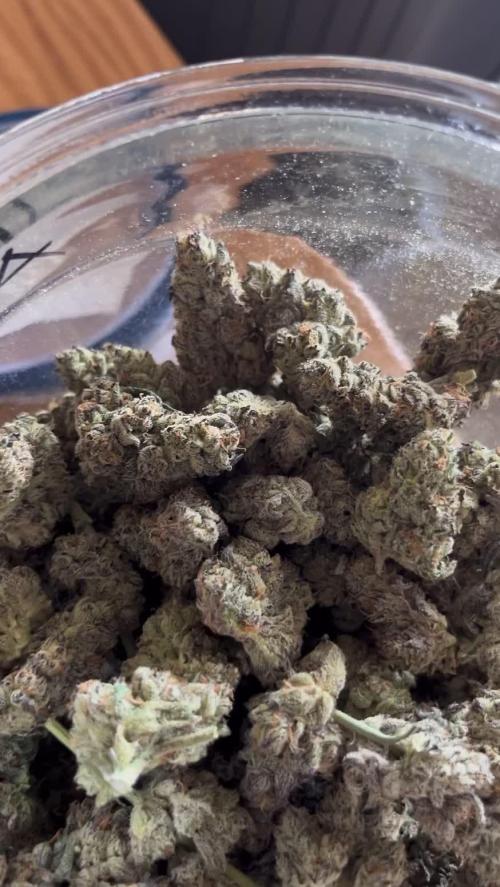
Overall it was fun and easy to grow it, the plant grow fast and the buds are full of Trichomes and dense
but unfortunately the company that i bought the seeds hermed and its not the first time..
Likes
19
Share


@babyoda
Follow
I am missed over time 1 week, now blowing with nutritions. We are in last 2 week run i am very excited she is gorgeous.

Likes
23
Share


@goeser
Follow
Iam still waiting for one plant to dry.
I will upload all details in 2-3 days.
But what i can say is that i am happy with that strain and plants. I had nothing, only 7L pots and the sun (which was not regulaly shining well). Plus a bit of alga grow and plagron green sensation.
The plants where all up to 1m high .
The buds are reaaaaly sticky and frosty.
I am impressed that i get no dry mouth after smoking it what is amazing haha.
Cant wait to grow this strain again but in bigger pots, they should grow huge and with good quality buds.

Likes
8
Share


@420DeepGrow
Follow
Semana 6: Engorde Precoz
Las Auto Pablo Escobar dejan atrás el estirón y enfocan toda su energía en engordar cogollos. Los cálices se inflan con ritmo, los pistilos empiezan a cambiar de tono, y el olor se hace más denso. El verde sigue intenso, la planta está en su mejor forma. Riegos ajustados, clima estable y luz bien repartida permiten una floración sólida, sin estrés ni sorpresas.
Seguimos creciendo fuerte! 💪


Likes
13
Share


@MJ_LIVINGSOIL
Follow
We plan to pre-flowering in next week. In this week we are stop topping in these girl. And make
160 cola per 1 plant and training with maintenance cut for Top bud every cola.
We use compost tea and craft organic fertilizer to take nutrient to soil and plant can use it for flowering stage.

Likes
23
Share


@Ganjagrandaddy
Follow
What can i say about this amazing success story from Barneys Farm. They were a breeze to grow and took whatever i theew at them without a hitch. the bigger pheno girls were amazi g with growth spurts and went easily more than double in stretch. I ran out of silicon and calmag which did hold them back a little during flower. In true Gorilla strain style , they were floppy with their weights from about week 6 and i suggest staking early on for a better control of their bud position. Without my lazy growing practices ( being resolved for the fast bud run shortly !) , i feel this strain is a winner. rhe smaller phenos were unfortunate but still gave nice buds to smoke. I would recommend this stesin to growers at all levels. easy if you want it to be but would meet you every step of the way with more complex training methods too. Love Gorilla Skittelz. Thanks for sticking around and commenting. Would happily share a bowl with you all.

Likes
6
Share


@Fonzi
Follow
Ich habe mit 2 Pflanzen Probleme von Anfang an. Eine Black Jack#1 zeigt genetische Probleme von Anfang an und zickt extrem.
Die Sweet Amnesia#2 blüht extrem langsam.. die anderen zwei Pflanzen entwickeln sich normal und sehen besser aus
Likes
15
Share

@masterofsmeagol
Follow
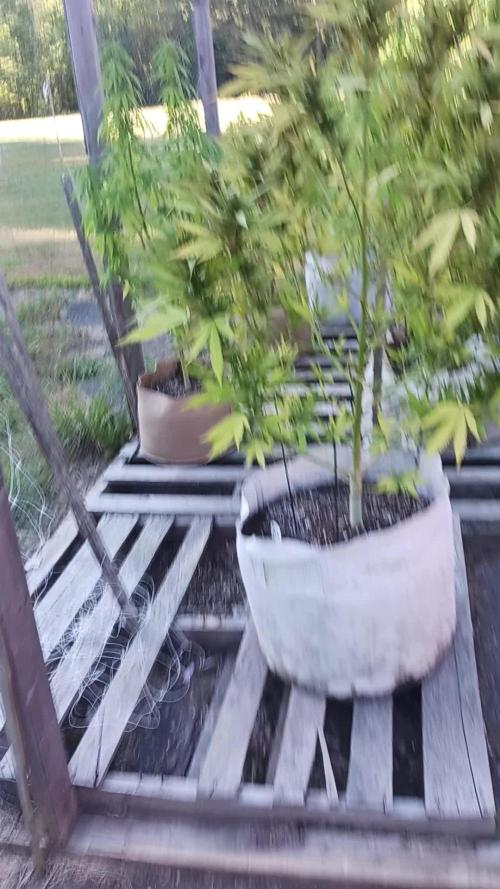
8/17 Watered everything but the 50. Found two leaves with sep markings on the pink kish in the 50. Definitely not using old soil again. I'm pretty sure THIS plant contracted it from the soil and not the way the others did with the lawn mower and birdseed hijinx. It's supposed to rain for the first time basically all summer. It's am 80% chance so I HELD OFF ON PLANT DOCTOR AND DID NOT APPLY as I'm supposed to have a clear day after. I'll apply the plant doctor in the morning. I'm hoping this rain will knock down a bunch of those thrips. They seem to be on a small branch on a plant or two. One or two leaves show damage and I'll pick them off. I figure I'll get them after I apply plant doctor. I'll use either citric acid or just my regular bt-k pillar treatment with Castille or liquid soap. That will kill them as well. I'm on really worried about it. I also might just buy a bunch of lady bugs and unleash them once things get further along.
EDIT: TOOK A QUICK VIDEO AND A COUPLE PICS. HOPEFULLY WE GET THIS RAIN. IF NOT IM GOING TO TREAT THE THRIPS THAT ARE ON TWO PLANTS NOW. I THINK IM GOING TO GO WITH BT-K FOR NY PILLARS AND HOPE THAT THE DISH SOAP IN THE MIX KILLS THE THRIPS. I HAVE LOTS OF DIFFERENT OPTIONS SO ILL FIGURE SOMETHING OUT. BUDS SEEM TO BE EXPLODING IN GROWTH. OH AND THANKS TO THE OUTDOOR GROWER THAT MESSAGED OFFERING TO HELP. I APPRECIATE THAT. THANKS.
8/18 We got the rain we were expecting. It was sheet rain for a few hourscand rained during the night. Everything was drenched and it was cold (50°F). I shook off the special kush that's way further in flower. I decided to use the leafblowrr despite the risk of spreading anything. I did it so that it wasn't ever blowing TOWARDS another plant but still. I was hoping it might blast off some thrips that might have survived that torrential rain. We've never had a dry summer like this. I'll moniter things. My water day is tomorrow so I assume that's when the girls will get their plant doctor dose. It's a great time of year for cannabis growers. We get to watch all the hard work we've put in literally pay off. It's very peaceful in the garden.
EDIT: Went over at about one to check things out and do some minor defoliation. I checked on the thrip situation and I dont know if I blasted them off with the leafblower or if the rain washed them away bit I doubt it. Ivecmade the decision to treat these little bastards. It's on one plant but it's started to spread to another branch on another plant. I probably just overlooked it but still. Seeing that it rained like he'll and I'm seeing like zero signs of septoria I'm going to treat everything. At least I think I am. I haven't decided what to use. I think I could just use bt and soap and I'd probably be alright. I'd feel better doing that as it's something I'm familiar with. Outdoor growing. It's always something.
8/19 In the 40's last night. Hopefully that will help with the thrips. I was hurried and since today tops at 72° I only watered the 10th planet big mk ultra and the chem dog with preventative plant doctor. I'm not seeing hardly any septoria and if I do itsca random leaf. I mixed up 3tsp of citric acid and some Dawn in a 2 quart hand sprayer and treated the 10th planet that I thought had heat stress and the Pink kush in the ten gal that has the damage. I also treated a branch on my good tenth planet. It was the only branch with markings so I think I've got it early enough. I'm just wondering the best way to tackle this. The pink kush I'm sure, could handle spinosad. That strain is much later flowering. I'll see how the citriccacid works and go from there. If the other girls need water they'll get it when I get home alongcwith plant doctor. I've got some work to do. I'll keep this updated. Opinions are always welcome.
UPDATE: THE PLANT IN THE TEN I SPRAYED LOOKS BETTER THAN WHEN I SPRAYED IT! I ALSO DIDNT WATER AS ITS UNDER 70° AND EVERYTHING I WATERED LOOKS WORSE THAN WHAT I DIDNT. WATERING NEEDS CHANGE QUICK WITH A 40° TEMP SWING. THESE THRIPS ARE GONNA HAVE A FEW MORE NOGHTS IN THE 40'S. THE CITRIC ACID SEENED TO KILL ON CONTACT. MY PROFESSIONAL BUDDY ADVISED TO ORDER GREEN LACEWINGS AS OPPOSED TO USING SPRAYS. HE SUGGESTED SPOT TREATMENT BUT AFTER MY RESEARCH ON THRIPS THAT WONT HE AS EFFECTIVE. I HAVENT DECIDED WHAT TO DO. I MAY ORDER THE LACEWINGS AND I MAY CONTINUE AND ROTATE TREATMENT. I DONT WANT TO OVERREACT (WHICHVI TEND TO DO) BUT I ALSO DONT WANT ALL MY LEAVES TO DIE. ILL KEEP THIS UPDATED. IM PLANNING TO GO OVER TONIGHT AND CHECK THINGS OUT. I MAY SPRAY A FEW MORE PLANTS AND WATER WHILE IM THERE. ITS TIME FOR THERE PLANT DOCTOR PREVENTATIVE.
8/20 I watered the two kush in the back WITH THE PREVENTATIVE DOSE OF PLANT DOCTOR as they were dry I assume due to the wind they get. The one in the 50 I found one sep leaf. Looking carefully arpund the garden I can tell that I have a thrip infestation. First time I've fought this and it seems most people don't really know what to do besides predators at the beginning of the season. I'm too far along for spinosad. At least thats what I've been told. My pro buddy said to try to spot treat it. It's not bad bit I'm afraid it might be worse than I think. The plants I treated with citric acid look MUCH better. I think I'll dial the dosage of citric acid down and start with that tonight and switch up treatments. I can get rid of them it's just going to take a ton of work. I think I've had them before and I attributed to something else. I so think that the very early pink kush plants could handle spinosad. I hope so. The plants I watered the other day look overwatered. The plants I didn't water look GREAT. The special kush in late flower looks happier than I've ever seen her. The difference being we went from 104° one day to 72 the next with 46° night Temps. This week is highs of 70's lows of high 40°'s. I've got a lot of work cut out for me. Didn't do a video as I didn't have time but I'll do one.
EDIT: Nothing needed to be watered at noontime and I'm trying to not overwater so I left them. The two I watered this morning are fine. I'm glad I caught this thrip bullshit when I did bit it sounds like it's going to be a HUUUGE pain in the ass to beat. One thing right after another. I've found those suction marks and the silvery shit they leave behind on pretty much every plant now. I'm thinking me using the leafblower (away from the other plants I THOUGHT) must have blown a bunch of them around. I'm not seeing a lot of bugs. Mainly feces. I did find a couple adults. Honestly, I've probably had these before and not known it or attributed it to something else. Literature I'd all about spinosad which of course I have on hand. AI told me I could use spinosad in early flower so MAYBE I could treat the pink kush plants with it but ill have to figure something else out for the other girls. I'm planning to treat tonight depending on where the research takes me. Not sure exactly what I'll be using but I'll keep this updated.
8/21 IT got cold last night. It was low 40's when I went to the garden. I watered the special kush in late flower and the mk ultra I kept natural. Did some defoliation. Found little feather on a large branch. Birds have been helping with pillars. I left out the plant doctor on those watering as septoria has pretty much been eradicated. Plants are drinking significantly less water. It went from 104° day time to 72°. Same with the nighttime Temps. Luckily with Temps like this the thrips don't seem to have spread. I found a couple lacewi g eggs while looking for pillars. Hopfully they will help. Maybe spot treatment and decoliation will he enough. I'll update as I go.
EDIT: Went back over around noon and put up blue sticky traps and did some defoliation. I may go back tonight and treat some stuff. Not sure yet.
8/22 This is the last of the cold weather. At least for a week. It will be like 70s today but temps WILL go up so I need to figure out what to do about these thripsxandcstick to it. Doesn't look like it's spreading but I've seen adults now. The sticky traps caught one. I killed one but I'm seeing lots of yellowing leaves. I know they are flowering but still. I watered today butvi watered much less. I gave the two kush invthe back a half gallon each. I gave the special kush in the 10 half a gallon, the mk ultra 1 gal, 10th planet's both got half a gallon I think but I mightve given the big one a whole gallon and chem dog got a half gallon. Once Temps stabilize watering will be more consistent. I need to factor in the change since they are floweringcas well. I've seen some enormous locusts that I've chased away. I don't SEE the thrips but they are there. I killed ONE adult this morning. I haven't seen any sep leaves in a while so that's a bonus. Pink kush is far behind the rest in flower.


Likes
27
Share


@Frosty_farm
Follow
Wow..week 8. Shouldn't she be flowering by now? She's doing a lot better, her leaves are green again and she's growing. I'm proud of her. added some co2 to the tent, I'm curious to see what happens. Day 60.... I'm bringing back her to life. 😊. Day 63 I believe she's alive with all that green

Likes
4
Share


@Ganjatalks
Follow
8th week , 4th of flora
They are tall, strong and healthy
Using the same fert proportions as vegetative stage.
They reached 77cm tall
Likes
3
Share


@DrDirvenCom
Follow
it's too hot, buds could be fatter... we,ll see what happens towards the final weeks.
Day 69, foto 1.
Caramelo upside down 🙃. The main stem still standing up. (see foto 2, day 69)

Likes
55
Share


@Vincent_Van_Grogh
Follow
This is our beagle. She’s 10 yrs old now.
Been with me across three continents.
She likes medicating on trim sometimes.
Starting a journal of her twilight years.
I update my plant diary weekly.
Might as well do one for her too. :)
To healthy dogs and fat buds! 🐶🌱😎
Processing
Likes
27
Share


@Piquillo
Follow
Second week went good. The only issue is humidity goes up quite a bit when lights are off. I'll just add more wind to prevent further issues. What do you guys think? Also, I noticed some top leaves clawing and growing thin, like tacoing upside down. Still long weeks ahead, we'll see how it goes ;) 😅 😄
Thank you and happy growing!


Likes
8
Share


@eldruida_lamota
Follow
Que pasa familia, seguimos confinados, pero a full, y miren estas green ak xL , están dándolo todo.
Ph controlado ya tenemos la limpieza de raíces y pronto cortaremos, no obstante, seguimos regulando la humedad la temperatura y sobre todo el ph que lo ajustamos en 6,5.
Tenemos una algo quemada por la sobre fertilización de las últimas semanas , aun así maduro bastante bien.
En estos tiempos malos, buenos humos para todos fumetillas

Likes
9
Share
@Trinidad
Follow
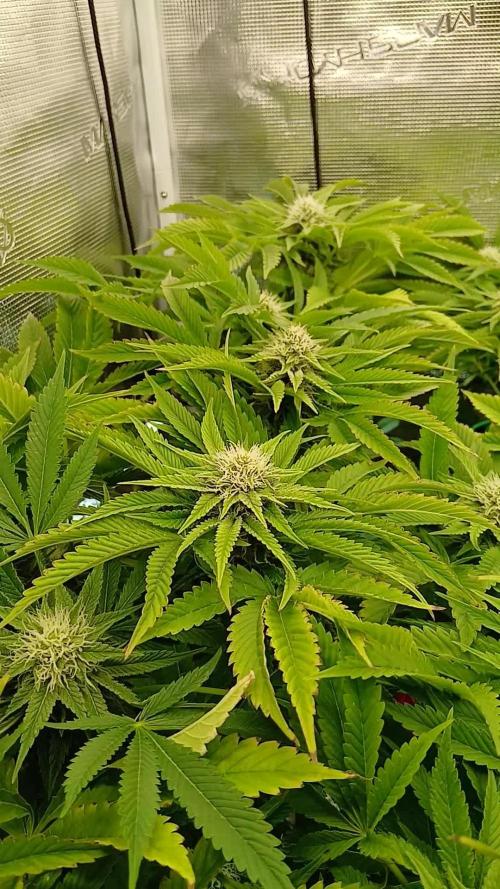
Gorilla Runtz. Seedsman.
Day 80,
Day 32 since 12/12
I added in AC infinity supplemental lights to the under canopy for experimental purposes. I use these for my seedlings however, I decided to use them to see if I notice any difference. I used them on my 1st indoor run (Wurlz F1) and thought they made little difference but I'm thinking just to give it all I got on this lady. I am also using marshydro IR and UV supplement lights. We will see if all these give me a bountiful harvest with the most frosty and dense buds I have ever grown.
Fresh reservoir change out today. She drank all 16 liters I added in 7 days ago. I will be adding another 16liters.
The mushrooms at the end of the video is Copelandia Hawaiian, which is said to be 5 times more potent than regular magic mushrooms. Big up to Zamnesia.

Likes
2
Share


@JBOrganix
Follow
A bit burnt lol. Ooops I'll still finish her off and hope for the best. Should still be some decent smoke 👌This thing is the creature if I ever seen one in the garden. What a chunk of lettuce 🤣🤣🤣👏 Should be an interesting turn out!

Likes
10
Share

@Enochian
Follow
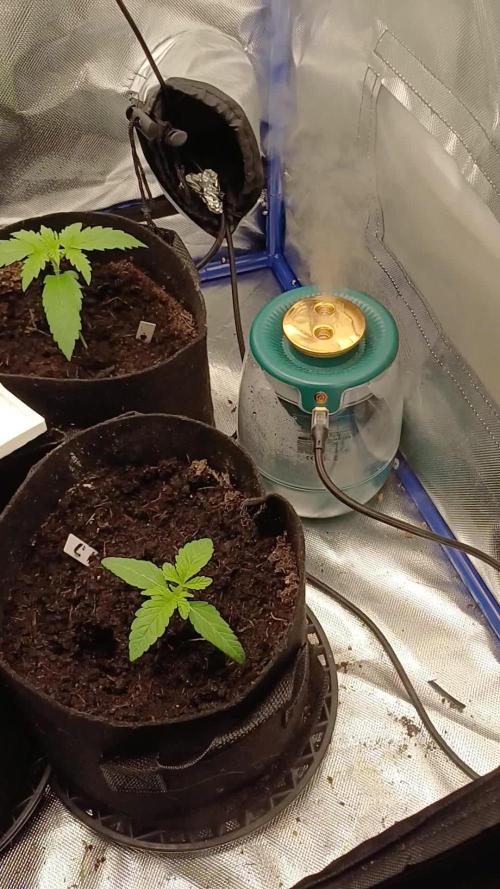
A slow start but they finding their pace now. Added another light to this tent. 150 to 200W all in. Temp is steady but humidity low so added a humidifier. Temp 24/25 humidity 50 and VPD around 1 to 1.2. Not much to say for this week. Onwards and upwards as they say.
Likes
9
Share


@Goldenboy2020
Follow
8/17 everything going well. Have nice canopy. They plants are also stretching a lot. Got a pH soil tester and also test moisture so now when to water. Also got pH water tester.
8/20. Buds starting to form on every plant but one. Found my PH of soil is high so trying to bring it down.
8/23 last day of week 7. I think everything going well. They have stretched about 5 inches. I have been listing few and moving around scrog and grow out. No discoloration or any real issues. Well see how goes. I not sure if did to much defloation.
