


Likes
Comments
Share


@AlbaDiary2
Follow
Buenos humos jardineros💚💚💚💚
Aquí os traigo la acualizacion de estas gigantes q no paran de crecer!!
Tened esto en cuenta a la hora de plantarlas en interior, a mi me está dando la lata totalmente, jajajaj
Pero bueno, q todos los dramas sean esos, que las plantas crezcan mucho!
Para la semana más! Pensad en verde😘😘😘😘😘🌱💚


Likes
5
Share


@Stankystan9
Follow
New microscope came in, just in time to start checking trichs on CP. I never realized how hard it is to keep a steady hand for a proper shot, so hopefully I’ll have better focused shots soon...
Appears they’re mostly clear, I like that couchlock high so I’m going for mostly amber but maybe partial harvest?
I don’t know. Comments, suggestions, opinions, all are welcome here. For now I can wait.

Likes
3
Share

@SkullRipper
Follow
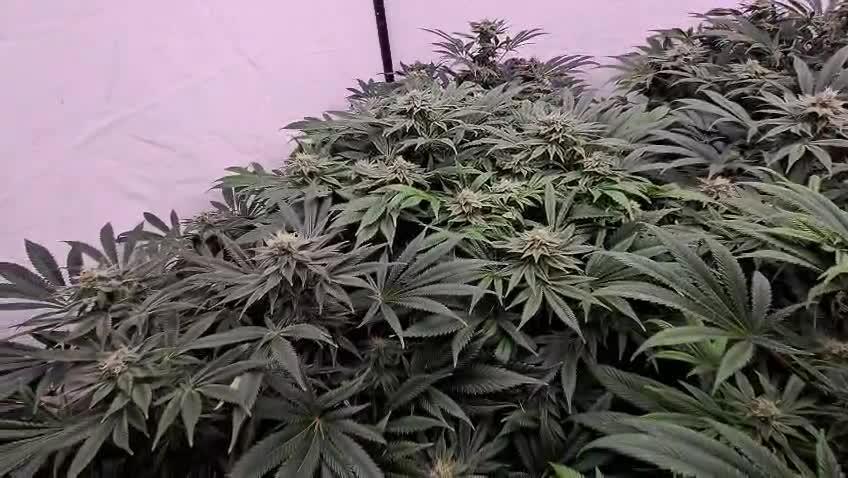
Day 40 of week 6 flowering,
Overall very pleased with the quality so far
Plants seem happy and producing a lot of crystal's
Hopefully the next 3 weeks will see a nice amount of bud swelling
Ttfn Skully

Likes
66
Share


@Neo09
Follow
Since 18.6.➡️12/12
⚠️I love thoose clones, the
are really fit and strong⚠️
Bluebery pancake's became ADVANCED NUTRIENTS - Sensi Bloom, BigBud, Budcandy and Nirvana


Likes
25
Share


@cheetah844
Follow
Growing nicely, I'm hopeful she will be colorful later on in her life. She will be going outside, I have wind blowing to strengthen the stems up to prepare for mother nature.

Likes
6
Share

@GoodTimesOrganics
Follow
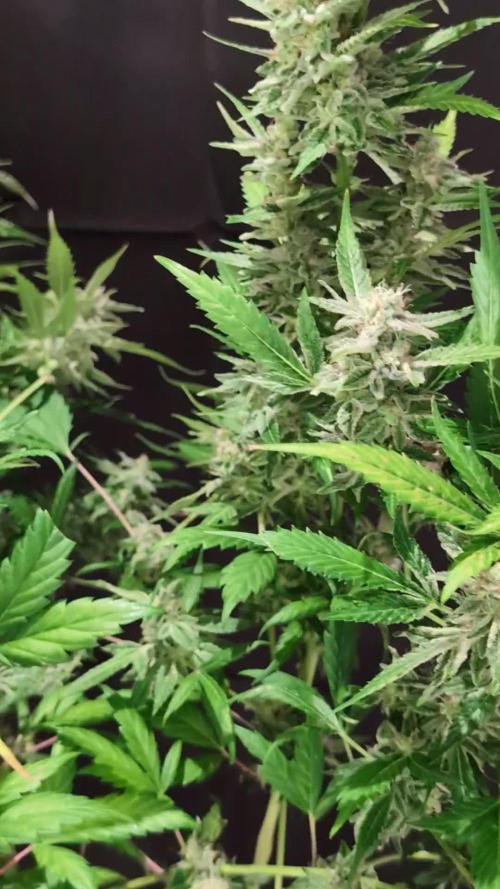
Liebe Community💚 es war Zeit ein Projekt zu Ende zu bringen und diese Erfahrung mit euch zu teilen.
Was lässt sich sagen? Leidenschaft! Das ist das was uns antreibt! Beobachtungen und Entwicklung steckt in uns jedem und die Leidenschaft auch mit euch meine Erfahrungen zu teilen liegt mir sehr am Herzen.
Wir geben uns große Mühe, hier von uns kultivierte Züchtungen zu präsentieren.
Processing
Likes
5
Share


@GaiaGreenGiant
Follow
New weekly uploads for a glimpse of what’s happening in the Cabbage Patch!
She’s loving life!
Day 38 - Wanted to rid her of some lower growth so I decided to make a lil video. Cheers 🍻
Likes
15
Share


@ShadowGrows
Follow
A great week for the girls, started with some defoliating after figuring out where our net would be. Mostly the lower leaves and lowest sets of bud sites that would be popcorns or larf later. Also took a couple larger fan leaves to open them up for the light, and tied down the freshly healed topped main stems to even out the canopy. The diary was extended 2 days (and our diaries are late lol, birthdays) as we are flipping on the first of July, the net is around 70% full or more as of dropping it and tucking some branches. I'll probably shift them slightly, they'll be in the same spots but moved to give Blue Dream some extra tucking space. She's Sativa dominant and likely to stretch the most along side Apex and possible Citradellic Sunset but the journal's i've seen her stretch wasn't as severe lol. With extra tucking space, and being next to the taller hybrids it should help keep the right side canopy balanced. Both sides have their own 4x4 light. Bud Ignitor has been added on the last day. We will continue defoliation for the first two weeks of flower focusing on the under side of the canopy where it's shaded, and removing any suckers we find.
There were signs of a Ph imbalance on Citradellic Sunset which is my own error, tap water Ph vs Nutrient Ph, not in soil anymore! lol But she has recovered happily and is growing vigorously.
Still no new TDS meter so we stick close to the feeding schedule from Advanced Nutrients with some tweaks. We feed twice a week, Feed/Feed/Water. So instead of the full 4ml of base nutes we use 3ml each watering and they seem happier. 2ml of the additives but most are only added once a week except for Sensi Cal-Mag, Bud Candy and now Bud Ignitor (we also will use Big Bud, Nirvana and Overdrive twice a week). The final watering is PHd to be the same as the feed watering. Max strength base nutes have always burned the tips of my plants, I almost backed off to 2ml of base nutes twice a week as 3ml gave slight tip burn to the smaller Say Less and White Wedding but they have adjusted to it and new growth is healthy. I will most likely edge up to 3ml more gradually next grow. We are still new to scrog but I feel we are off to a better start this round, last time the net was completely full and I don't want a second net.


Processing
Likes
25
Share


@Kikiwindsurf
Follow
20/3/2020: Finally Im gonna try with LST because of im growing indoors in night and outdoors during day and the artificial light will be much more efficient with this technique. Probably I will let Lemon Haze grow naturally , at least at the starting.
Stay tunned !!
Processing
Likes
6
Share


@MissSolasolita
Follow
End of week 1 of flower
Started LST today
She is doing very well
The other Power Plant in shared pot has grown 5cm this week and is in full flower by 1 week

Likes
8
Share


@Black_Widow
Follow
Привет садоводы !
Неделя летит за неделей
Сегодня я снова поменял раствор на новый и добавил стакан заваренной сушеной крапивы, богатой микро элементами
Растение чувствует себя хорошо, за неделю еще вытянулось на 10 сантиметров
Если дотронуться до листьев со смолой , то пальцы потом сильно пахнут лимоном с лаймом
Цветки имеют небольшой размер , но я надеюсь, что они себя еще покажут !

Likes
3
Share

@Daw33d41
Follow
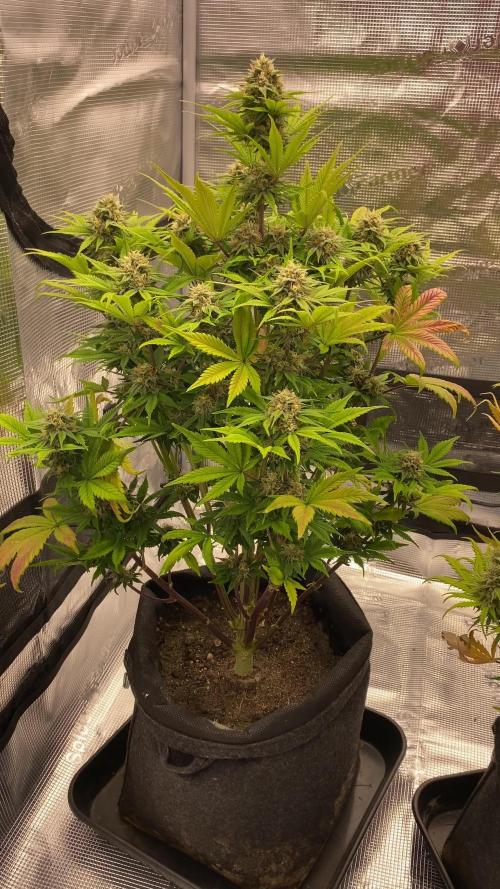
🇺🇸 Week 5 of flower. Getting close to the finish line. Buds have bulked up nicely, tons of sugar everywhere and a strong smell coming through. Had a few days where I couldn’t get temps below 28–29 °C, and I think that caused quite a bit of yellowing on the leaves.
Also added some NPK (Top Dress by Lurpe) because of the purple stems.
Trichomes are around 60% milky, no amber yet. Not rushing it.
🇨🇿 Pátý týden květu. Pomalu jdeme do finále. Palice pěkně nabraly na objemu, všude hromada cukru a výrazná vůně. Pár dní jsem bojoval s teplotou, nešla dostat pod 28–29 °C a podle mě to odnesla spousta listů, které zežloutly. Ty které šly nenásilně rukou jsou pryč. Přidal jsem taky NPK (Top Dress od Lurpe) kvůli fialovým stonkům. Trichomy jsou zhruba z 60 % milky, amber zatím nikde. Nikam nespěchám.

Likes
1
Share

@HUMO_Cultiva
Follow
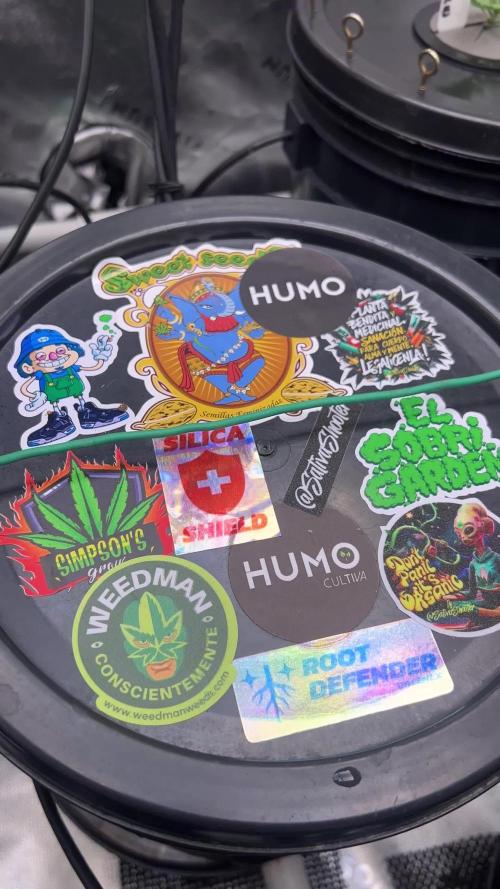
Empezamos la semana 3 de crecimiento desde que brotaron sus primeros cotiledones, su crecimiento es explosivo!!
Pronto empezaremos hacer cortes apicales para empezar a entrenar y luego poner el Scrogg!!!!

Likes
5
Share


@Lifesgarden420
Follow
Great genetics with the best nutrients always produces awesome results
Every harvest continues to get better
These ladies are healthy and happy

Likes
43
Share


@Le_Duc_Du_Bud
Follow
Salutations amis cultivateurs 🍁🌿
Aujourd'hui on débute la 5 semaines de floraison 🗓️
La Colombian jack et magnifique, je lui donne 2 litres de nutriments tous les 2 jours, aucun problème de carence.
Je pense qu'elle restera de Petite taille , du fait a une coupe en semaine 2 de croissance trop tôt .
On voit maintenant des belle banane ce formé, odeur et incroyable ❤️🍁
Merci Kannabia variétés fantastiques 💥
Merci xpertnutrients impressionnant 💥

Processing
Likes
7
Share


@420keef
Follow
So i had to take all my plants inside because i found bud rot on 2 of them & the weather wasn’t going to get any better, had to transform my bedroom into a grow room😂 & i have 2 more plants which i am going to finish next to a window.. The smaller plant to the right is a Northern light by zamnesiaseeds that has a seperate diary if you are interested! I really hope the bud rot doesn’t spread anymore & if anyone has any tips or tricks for that they are always welcome!

Likes
9
Share


@MrGreen92
Follow
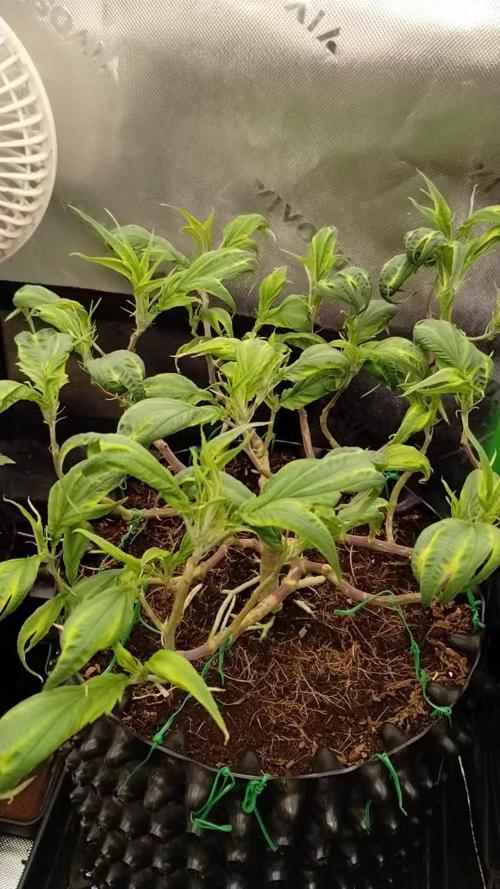
All of my plants with a case of calcium deficiency this week, mainly the best growing one which is showing it really bad 😪
Have halved the nutrients and feeding them CalMag with their food daily to hopefully stop the calcium deficiency getting any worse..
Nearly there now anyway maybe a few more weeks maximum so will just have to see how it goes and learn some lessons.
Think I'll be growing 6 full size photoperiods next time, gonna do some research through the week to pick the soil, coco or maybe hydro. Then probably get another led light if temperature is gonna be an issue in a bigger tent, if not I've got a 600w MH and hps I can use.
Thought I'd be alright not watering them everyday and was gonna do every other day but think it may be too late to do this now. She's covered in orange spots even worse than before after not watering for 1 night so can imagine the roots are fucked because of me overwatering them 😪 they've got a week or 2 left so hopefully the best one won't die..



Likes
27
Share


@adam_pawloski87
Follow
This week went really well ! Today we are at day 79 from seed an looking beautiful! One Forbiddin Runtz got chopped an hung to dry out an the rest are still flushing out through the rest of this week! Very nice looking fades coming along on the fan leafs from purple to green , so beautiful ! So happy with these genetics from @fastbuds_genetics! Super sticky an smell is so amazing, room full of purple punch’s an Forbiddin Runtz the smell you can’t beat, so many berries!!! Well stay tuned for next week! Cheers y’all