


Likes
Comments
Share


@Mr_nugs_lover_David
Follow
Very enjoyable grow, awesome cultivar, this is what I work for, my nuggets have been grown with love and dedication and the final result is a a plant that has been very thankful and she has provided me amazing sticky flower with those red hairs that I love so much, very strong cerebral buzz, sativa high definitely, makes me remember a lot sour diesel, definitely super pungent loud 🔊 aroma coming from the jars but she was stinking the grow tent when she was there, amazing strain!

Likes
4
Share


@GoodTimesOrganics
Follow
Die Pflanze geht nach wie vor in einen echt enormen Stretch. Langsam wird der Platz echt eng.
Eine sehr hoch wachsende Pflanze, welche ihre volle Energie in einen Haupttrieb steckt, welcher zusätzlich noch einige Seitentriebe ausbildet.
Auch hier ist es eine spannend zu beobachtende Entwicklung. 💚


Likes
18
Share


@HashCakes
Follow
Really struggling with this gal now. PH fluctuation is so rapid. 5.6 to 7.0 in the first 24 hours of a change. Switched to the GH trio from FF and added in the Cal Mag

Likes
5
Share


@Bread_n_Buds
Follow
Our Zookies Automatic are very cute.
Remember that we are growing 1 Plant worked with the techniques and one left to grow without cutting techniques to preserve its speed.
In this diary we find the plant that is growing nice and open with a main lining that works very very well. The plant is at medium internodal distance and this has allowed us to work on the mini brunches from the beginning with more ease until creating the classic T shape from main lining. We are opening everything very well and we have arrived at the second topping or at the third internode after the first topping, the mainfolding one. I am very happy with how this one is opened but the best in this sense is the King Louis Auto that you can find in the other diaries.
The comparison is the salt of the experience so the plant of the other diary will be worked very differently go and see it to compare them.
We have started the Plagron fertilization program, we are in 100% organic configuration, the soil is recycled Promix + 1/3 fresh soil + 10% Perlite + RQS Mycorrhiza Mix (4 g in the mix, 1 g under the small fiber pot).
We are administering // 1 ml/l Power Roots - 1 ml/l Pure Zym - 1 ml/l Sugar Royal - 3 ml/l Alga Grow
We have sprayed Vita Race Foliare 3 ml/l.
https://plagron.com/en
The doubts about the compatibility between Pure Zym and mycorrhizae have been dispelled, they can get along according to Plagron experts. If someone tells you that enzymes eat mycorrhizae, which in principle may seem possible, explain to them that it is not true.
https://www.royalqueenseeds.it/growing/452-easy-roots-mix-di-micorrhize.html
Is a top strain of the last few years very high level of thc ---- https://www.zamnesia.io/it/11174-zamnesia-seeds-zookies-auto.html
Brief description of Zamnesia // The result of the cross between Animal Cookies, GG#4 and ruderalis, this compact variety produces top quality buds, maintaining all the charm of a modern US hybrid. Thanks to the hard work of the Zamnesia genetics team, Zookies Automatic is easy to grow, fast flowering and exceptionally vigorous. Regardless of whether you grow indoors, outdoors or in a greenhouse, if you are looking for a stable autoflowering strain that is quick to harvest, Zookies Automatic is definitely the one for you.
Like all Zamnesia autoflowers, Zookies Auto promises rapid harvests of top-quality bud with minimal effort. And she delivers on that promise. After germination, Zookies Automatic plants grow vigorously for around 3–4 weeks. At the end of the pre-flowering phase, plants typically reach a height of between 90–110cm, depending on the size of the pot.
The new strains are fantastic and the old ones are no exception... p.s. no hermaphrodites so far, can you growers say the same?
You can find the entire world of growing on Zamnesia and more, just take a look at the site and you will find "all the best that nature has to offer" in various shapes and colors.
--- // www.zamnesia.com


Likes
19
Share


@MagicoVerde
Follow
Runtz Muffin has start stretching quickly, I had to add a bamboo stick to avoid problems once the buds get dense. I’m happy with the first days of flowering so far. 1st lollipopping has been done too few days ago to redirect the power in to canopy’s. During this week I’ll add an extra co2 exhale bag to increase the chance of a good day bar buds 🤞🤞🤞🤤🤤

Likes
24
Share


@3lementa1
Follow
Growing well. Just fed 12 cups Ph'd water (6.3). Lots of cold humid air coming in from outside, plus with the half soil half coco mix I think they're holding water a long time. They're only needing water once a week right now.
They were not impressed with the water-only feeding. Some leaves got burnt tips, some got small yellow dots that look like spores or insects but I don't think are either. I think it's some kind of nutrient or pH unhappiness. I only gave 2/3 of the amount of water I normally would, hoping that they will dry out soon and I can give a proper feeding and check runoff pH.
I left them alone for a couple days and boosted the 1000w back up to 100% to dry things out a bit more. The buds loved it but I think it's damaging the leaves a bit. I put it back down to 75% just now.
I forgot to adjust the intake fan from outside down to low overnight from medium during the day and leaf temp was down to 13.3c when I woke up. Can't be doing that either.
Likes
17
Share


@Naujas
Follow
She is much prettier than she was a week ago :) I remembered that I have my first grow light, which is more compact and it will give me more space, so I changed my light, now the girl's side branches get light too:) I add a lot of video memes, because I really want to win Iphone16 pro ;) and those who don't take risks don't drink champagne:) good luck to everyone.
Likes
31
Share


@DudeGrowsWeed
Follow
Dropped RQS Diesel Automatic this week, she has not sprouted out of the soil yet, but its only been 4 days. I expect her to pop in the next 24-48 hours. I'll add new pics once she sprouts.
Planning a slightly different strategy with this girl. no HST, only LST, and FIM'ing instead of topping. Looking forward to watching what happens.
She is front-center in the group pics.
My Perpetual Harvest strategy…. Originally my plan was to start 2 seeds each month, but had some seeds from one breeder that did not germinate early in my rotation. Ultimately, this caused single seeds to pop and messed up my 2 at a time plans. But, that seemed to work out OK, because now I think starting one seed every 3 weeks is a better strategy. This should provide me with 4-5 plants at a time, instead of 6. By the way, I never had any germination problems with seeds from other breeders. (I don’t want to bad mouth any breeders, but the seeds that didn’t germinate came from a popular breeder/advertiser that is most commonly known by 4 letters).
Plants get fed once weekly on weekends. Seedlings get water only. Plants in vegetation get water and Recharge. Flowering plants get water, Recharge and Big Bloom (Fox Farm). Feeding is done using 2 gallon watering can. Any additional waterings during the week are given on an as needed basis per plant. I lift the plants to help determine which plants are more dry (lighter) and provide water any plants via water bottles and watering spikes.
I also rotate each plant 90 degrees every day in an effort to make sure the plants get equal lighting from all sides. I rotate the plant in place by turning the pot 90 degrees (I am not rearranging the layout of the plants in the tent on a daily basis).
The soil is an ‘organic super soil’ I mixed myself using organic top soil, organic potting soil, organic compost, organic peat moss, organic perlite, organic vermiculite, lime, epsom salt, expanded clay pellets and Jobe’s organic fast start. I am also recycling my soil and water with Recharge when using recycled soil.
For plant training I have tried a variety of things, but my plans here are to do LST bending only, no HST this time. Around 3 week I'll do a FIM cut/pinch once there are 4-5 nodes established. I will also be doing some defoliation around the 3rd week of flowering. I have been doing HST bending and having good results, but think the HST may be causing the plants to take longer to harvest. I hope LST only will help increase harvests while getting me to harvest sooner.
Setup:
1- Grow Tent 24”x48”x72”
2- Viparspectra 300W LED’s (1-V300 & 1-R300)
1- Hanging 100w CFL (26w actual)
1- Carbon Filter w/ 190cfm Fan & 4” ducts
1- 6” clip-on fan
1- 700w electric heater - oil filled radiator (in front of air intake behind tent)


Likes
6
Share
@ukojesita
Follow
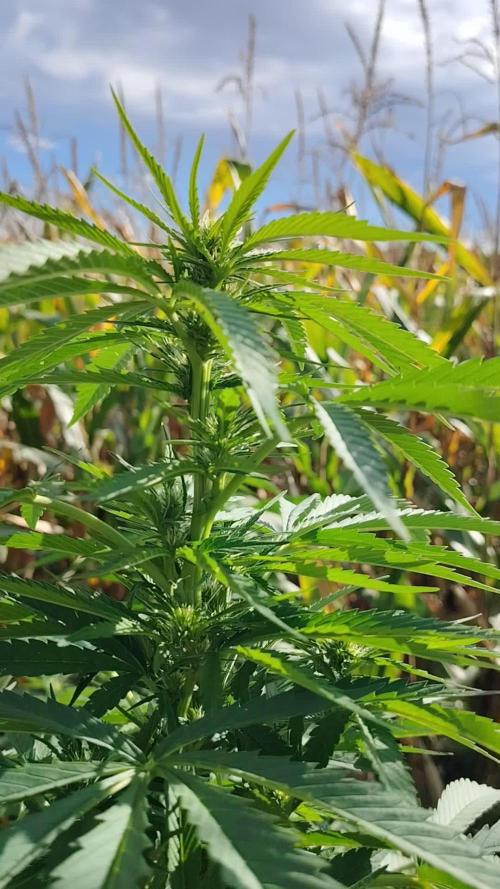
Zdarec pěstiči, tak to konečně začalo kvést, no to bude zase na knop v půlce října.
Přemýšlím že na příští rok změním odrůdu. Zatím Čus.

Likes
37
Share


@Regenwurm
Follow
Jeden Airpot mit 25 l Wasser pH 5,8 geflusht. So lange bis der Drain auf ca. EC Wert 0,25 lag. Dann anschließend 3 Tage nicht gegossen. Die Lady hat jetzt Herbst und alle Blätter verfärben sich in hell grün, gelb, lila! Die Trichome sind nach wie vor trüb! Keine Entdeckung von braunen Trichomen, dies ist auch nicht gewünscht. Es soll beim rauchen ein schönes aktives high entstehen, nicht zu stark. Aufgrund der Unterschiede zwischen Tag und Nachttemperatur sowie der geringe Luftfeuchtigkeit von ca. 35 % Feuchte entsteht Harz ohne Ende. In 3-4 Tagen wird geerntet😬😬😬😬 ich bin aufgeregt

Likes
13
Share


@CanabisLoverHobbyGrower
Follow
Great week,.. put some real size on and can honestly see the buds growing daily, check and feed in a morning and at night and can visibly see a difference,.. ones gone purple ones stayed green but both look healthy, really happy so far, roll on next week 👌
Processing
Likes
5
Share


@GrowXown
Follow
Looking forward to my first ever grow. Any tips is welcomed, growing a Critical XXL CBD strain.
Its been exciting this far seeing the rapid growth under the full spectrum E900 LED light.

Likes
8
Share


@DogDoctorOfficial
Follow
💙 Project Blue Tent – Week 13 💙
🥒 Pickle Lemon Haze F1 – Pheno B
🌸 Same Tent, Different Genetics, One Beautiful Frosty Girl! ❄️💙
Hello everyone, and welcome back to another chapter of Project Blue Tent! 💙🌱
My friends, here we go again!
Another week, another beautiful girl, and another reason to spend far too much time standing in front of the tent with a camera in my hands! 😂📸
LOOK AT HER!
Pickle Lemon Haze F1 Pheno B is looking absolutely beautiful. She's super frosty, the aroma is amazing, and those white pistils are still giving us plenty to look at as she continues towards the finish.
But before we get carried away with the photographs, let's take a moment to explain what's happening inside Project Blue Tent this week.
We have four plants sharing the same tent, the same general environmental conditions, the same lighting setup, the same irrigation system, and the same reservoir.
But we're working with two different cultivars: Blue Waffle F1 and Pickle Lemon Haze F1.
Same room. Same ecosystem. Same passion.
But two different cultivars, different genetics, and plenty of individual characteristics to appreciate!
This week, we're continuing to lower our nutrient concentration, reducing the overhead LED output gradually, and keeping the two LumiFlora under-canopy fixtures running.
We've also stopped using PLAGRON Green Sensation, which is an important correction to the nutritional updates I mentioned in the previous reports.
Power Buds remains in the recipe for now, while Hydro A and Hydro B have both been reduced.
We're moving into the final stage of this journey, and I'm particularly curious to see how the four girls progress from here.
Will they finish together, or will some be ready before the others?
Will we have half the room ready for harvest first, or will the whole room finish around the same time?
I genuinely don't know yet, and that's one of the things I'm looking forward to discovering!
But today, we're giving Pickle Lemon Haze F1 Pheno B her own chapter.
Let's get into it! 💙🌿
🌸 WEEK 13 – ANOTHER BEAUTIFUL GIRL APPROACHING THE FINISH
We're now in Week 13 of flowering, and the entire room is gradually moving towards the final stage.
The structural work has already been completed. The plants have been trained, topped, managed through the stretch, and supported with our SCROG setup.
The second layer of support remains in place, the airflow system is established, and the under-canopy lighting experiment continues.
At this point, we're concentrating on observing the plants, maintaining the environment, and making gradual adjustments where we believe they make sense.
We're not trying to change everything at once.
Instead, we're lowering the nutrient concentration, reducing the overhead lighting output gradually, and bringing the temperatures down as we progress through this final stage.
And meanwhile, the girls are doing what they do best.
Developing their flowers, showing us their individual characteristics, and giving us plenty of reasons to keep the cameras ready!
Pickle Lemon Haze F1 Pheno B is looking fantastic.
She's compact, frosty, and full of character.
And the smell?
Absolutely amazing! 😂💙
🥒 PICKLE LEMON HAZE F1 PHENO B – HER OWN MOMENT IN THE SPOTLIGHT
One of the things I love about keeping separate diaries is that every plant gets her own story.
Although Pheno B shares the room with her Blue Waffle F1 sisters and another Pickle Lemon Haze F1 plant, she's still an individual plant with her own development to document.
We're not simply copying the same description from one diary to another.
We're looking at the individual plant, recording what we see, and following her progress as she moves towards the finish.
Her structure is beautifully established, the flowers are looking impressive, and the frost is one of the first things that catches my attention.
And then we have those white pistils!
They're still very noticeable, giving the flowers a beautiful appearance as the plant continues developing.
She's not finished telling us her story just yet.
And honestly, I'm happy to let her take her time.
We're approaching the final stage, but we'll continue observing the overall development rather than deciding that she's ready based on one characteristic alone.
The flowers, the pistils, the trichomes, and the general condition of the plant all form part of the picture.
For now, Pheno B is looking outstanding, and I'm enjoying every moment of documenting her journey.
❄️ THE FROST – ANOTHER REASON TO GRAB THE CAMERA
You know me by now, my friends.
If there's frost to photograph, there's a good chance you'll find me standing in front of the plants for far longer than I originally intended! 😂📸
And Pheno B is giving me plenty of reasons to do exactly that.
The close-up photographs reveal the intricate details of the flowers and the surrounding sugar leaves.
There's so much to appreciate when we take the time to look closely.
From a distance, we can see the overall structure and the way the flowers are distributed throughout the plant.
But when we move closer, we start noticing all those little details that make macro photography so enjoyable.
The trichomes.
The pistils.
The developing flower structure.
The different textures across the flowers and sugar leaves.
And all those details that are easy to overlook when we're simply looking at the entire canopy.
That's one of the reasons I enjoy focus stacking so much.
It gives us another way to document the plants and share a closer look at what we're seeing inside the tent.
And this girl is certainly making the effort worthwhile!
She's frosty, she's beautiful, and she's giving us another fantastic subject to photograph.
💙❄️🌸
? WHITE PISTILS – SHE'S STILL PROGRESSING
One of the most noticeable characteristics in this week's photographs is the amount of white pistils still showing across the flowers.
And honestly, I love seeing how the plant continues to develop.
The pistils remain prominent, even as we're moving further into the flowering cycle.
This is a useful observation to record, but it's important to remember that the colour of the pistils alone doesn't tell us exactly how mature a plant is.
Different flowers can develop at different rates, and pistils can remain white even as other parts of the plant continue maturing.
That's why we're looking at the whole picture rather than relying on one visual sign.
We're observing the flowers, following the changes in the trichomes, and keeping an eye on the overall development of the plant.
Pheno B is still progressing, and we'll continue documenting her until we have a clearer picture of when she'll be ready.
She's an ace, my friends!
😂💙
And I don't want to rush her just because we're excited to see the finish.
Good things take time, and we're going to give this beautiful girl the attention she deserves.
📸 PHOTO STACKING – FEWER STACKS FOR THIS GIRL, BUT STILL PLENTY TO SEE
Photography continues to be a big part of Project Blue Tent.
This week, we've included several photo stacks, along with a video showing a little more of the focus-stacking process.
Some of the plants have more stacks than others this time around.
That's simply how the photography worked out this week.
Every plant presents slightly different opportunities, and the time available for photographing, processing, and stacking the images isn't unlimited.
Sometimes we manage to produce several stacks of a particular plant, while another gives us fewer finished images.
And that's perfectly fine.
The purpose isn't to make every diary identical.
It's to document each plant as well as we can and share the results with the community.
The video gives you a little glimpse behind the scenes, showing more of the process involved in creating these detailed photographs.
Focus stacking takes patience. We capture multiple images at different focus distances and combine them to produce a final image with a greater depth of field.
When working with small details, that can make a big difference to how much of the subject we can bring into focus.
Of course, the result depends on the source photographs, the conditions during capture, and the stacking process itself.
But I really enjoy experimenting with this technique.
It gives us another way to appreciate the flowers, and it allows us to share details that a single photograph might not capture as clearly.
So, even though Pheno B has fewer stacks than some of the other girls this week, she's still getting her own photographic spotlight.
And I'm happy with that!
A few beautiful stacks, a look behind the scenes, and another chapter in our growing photographic record.
📸💙🌿
🌿 SAME TENT, SAME ECOSYSTEM – BUT TWO DIFFERENT CULTIVARS
This is something worth repeating throughout Project Blue Tent, because it's an important part of what we're documenting.
We have four plants sharing the same tent.
Two Blue Waffle F1 plants.
Two Pickle Lemon Haze F1 plants.
They share the same general environment, the same reservoir, the same irrigation system, and the same lighting arrangement.
But they belong to two different cultivars.
And that's where things become particularly interesting.
Although the growing conditions are shared, we shouldn't expect every plant to develop in exactly the same way.
Different cultivars can have different growth characteristics, flowering patterns, and expressions.
Individual plants can also show their own differences within a cultivar.
That's why we're keeping separate reports rather than treating the entire room as one uniform group of plants.
Pickle Lemon Haze F1 Pheno B deserves her own observations, her own photographs, and her own record of development.
And the same goes for every other girl in this tent.
The shared environment gives us a common starting point for comparison.
The individual reports allow us to document what actually happens.
That's the beauty of this project.
Four plants. Two cultivars. One ecosystem.
And plenty to learn from every one of them! 💙🌱
🌡️ THE ROOM IS GETTING COOLER – PREPARING FOR THE FINAL STAGE
Now let's talk about the room, because the environmental adjustments apply to all four plants.
We're gradually lowering both daytime and nighttime temperatures as we move towards the finish.
Our current daytime air temperature is approximately 25°C.
During the night, when the plants are resting, we're aiming for around 19–20°C.
We've also brought both the solution temperature and substrate temperature down to approximately 21°C.
These changes form part of our approach to the final stage of the grow.
We're interested in maintaining a balanced environment while observing how the plants continue to develop.
Cooler conditions can influence colour expression in some cultivars, but the response depends on the individual genetics and the overall environment.
We're not assuming that every plant will respond identically.
Instead, we're observing each girl separately while keeping the shared room conditions as consistent as possible.
That's particularly interesting now that we're approaching the finish.
We have two cultivars in the same tent, and I'm curious to see whether their finishing timelines will be similar or whether we'll see a more staggered progression.
We'll keep monitoring the plants and let the observations guide us.
💧 HUMIDITY – OUR NORMAL TARGET IS AROUND 55%
Our normal relative humidity is approximately 55%.
You might notice that some photographs show a higher reading when I'm working inside the tent.
That's because the humidity can temporarily rise while I'm moving around, checking the equipment, taking photographs, and breathing inside the room.
Even with the air conditioning running, those temporary changes can show up on the controller.
For the report, we're using approximately 55% as the normal operating humidity.
The goal is to maintain stable conditions while continuing to monitor the plants throughout this stage.
As always, the room readings give us a reference point, but we still need to consider the overall environment and the conditions around the canopy.
💡 OVERHEAD LEDS – GRADUALLY REDUCING THE POWER
We've now reduced the overhead LED output to approximately 90%.
From here, the plan is to continue lowering the power gradually, by around one or two percentage points per day.
We're taking a measured approach rather than making a sudden change.
The objective is to manage the lighting as the plants approach the finish while keeping the wider environment in mind.
We're not chasing maximum output simply because the equipment can deliver it.
We've already established the canopy, and now we're adjusting the lighting gradually while observing how the plants progress.
Light intensity is only one part of the picture.
Temperature, humidity, plant condition, and the overall lighting arrangement all matter too.
So we'll continue making gradual adjustments and observing the results rather than assuming that one setting is automatically best for every situation.
💡 TWO LUMIFLORA FIXTURES – THE UNDER-CANOPY EXPERIMENT CONTINUES
The two LumiFlora 150W full-spectrum under-canopy fixtures remain part of our setup.
They're arranged in an X-cross configuration beneath the canopy, supplementing the primary lighting from above.
For now, we're keeping their output around 90–95%.
We'll continue with this approach through the remaining stage, potentially lowering the output closer to the end.
The reason we're experimenting with supplemental lighting beneath the canopy is to explore how it affects the lower flowering sites and the overall distribution of light throughout the plants.
We're particularly interested in observing how the flowers in different positions develop as the plants progress.
Could this lighting arrangement help the different parts of the canopy develop more uniformly?
That's one of the questions we're exploring.
But we're not going to claim a result before we've documented it.
We're keeping the setup consistent, observing the plants, and recording what happens.
That's what makes this project interesting.
It's not simply about adding more equipment.
It's about understanding how the different parts of the environment work together and learning from what we observe.
💧 IRRIGATION AND DRAINAGE – KEEPING THE SYSTEM RUNNING
The automatic irrigation and drainage system continues supporting all four plants.
They're sharing the same reservoir, which helps us maintain a consistent nutritional approach across the room.
The recorded watering volume is approximately 1.6 litres per plant over 24 hours.
That's our recorded figure, while actual water demand can still vary depending on the plant and the conditions.
We continue observing the system and making sure everything is operating as expected.
At this stage, we don't need to make unnecessary changes to a system that's working well.
We want to maintain consistency, monitor the plants, and concentrate on documenting their progress.
Sometimes the best thing an irrigation system can do is keep working quietly in the background while we enjoy looking at the flowers!
😂💧🌿
🌱 NUTRITION UPDATE – LOWER EC AND NO MORE GREEN SENSATION
Now, this is an important update, and I also want to correct something from the previous reports.
We've now stopped using PLAGRON Green Sensation.
We've also reduced both Hydro A and Hydro B, bringing the overall nutrient concentration down.
The reason for the lower EC is therefore not simply the reduction in Hydro A and B. We've also removed Green Sensation from the current recipe.
At this late stage, I've decided that we don't need to continue adding the PK product to the reservoir.
Power Buds remains in the recipe for now, while we continue reducing the overall nutrient concentration.
The current recorded recipe is:
PLAGRON Hydro A – 1.8 ml/L
PLAGRON Hydro B – 1.8 ml/L
PLAGRON Power Buds – 1 ml/L
PLAGRON Green Sensation – discontinued
PLAGRON pH Plus and pH Minus – used as required for pH adjustment
The pH shown in the current diary screenshot is approximately 5.98, and the EC is around 1.86 mS/cm.
Those readings are consistent with the lower nutrient concentration we're now running.
Our target is to keep the pH close to 6, allowing for small variations above or below that point.
We don't want to spend the entire day chasing a perfectly fixed number when the reading is already within our intended range.
We monitor it, make adjustments when necessary, and avoid unnecessary interference.
The nutrient changes are being applied across the shared reservoir, so Pickle Lemon Haze F1 Pheno B is receiving the same general solution as the other girls.
This is also an important correction to the earlier reports.
I mentioned Green Sensation in the previous nutritional descriptions, but we have now stopped using it, and the current recipe needs to reflect that change.
From this week onward, the reports will document the updated recipe accurately.
Consistency in the grow matters.
Accuracy in the diary matters too.
And that's exactly what we're aiming for! 💙🌱
🌸 THE HARVEST QUESTION – WILL THEY FINISH TOGETHER?
This is something I'm particularly curious about now.
We have four plants sharing the same room, but two different cultivars.
And even though they're progressing together, there's no guarantee that every plant will be ready at precisely the same time.
The differences between the cultivars, along with individual plant development, could mean that we end up with a staggered finish.
Perhaps some of the girls will be ready before the others.
Perhaps the whole room will progress towards harvest together.
At this stage, I genuinely don't know.
And that's part of the excitement!
I'm looking forward to observing how each plant develops from here, comparing their individual progress, and deciding when each one is actually ready.
I'm not going to force the decision simply because one plant appears further along than another.
We'll continue looking at the flowers, monitoring the trichomes, and considering the overall maturity of each plant.
The aim is to make the decision based on the individual plants rather than the calendar alone.
Will we harvest half the room first?
Will we have a full-room harvest?
Let's see!
I'm very curious to find out, and I'm sure the coming weeks will give us plenty to talk about.
💙🌿
🔭 WHAT I'M WATCHING NEXT
As we move closer to the finish, I'll be keeping a close eye on several things.
I'm watching the development of the flowers and the changing appearance of the pistils.
I'm monitoring the trichomes and the overall maturity of the plant.
I'm interested in how the flowers continue developing under our gradually reduced overhead lighting and the supplemental under-canopy fixtures.
I'm also watching how the plants respond to the cooler temperatures and the lower nutrient concentration.
And, of course, I'm comparing the progress of our two Pickle Lemon Haze F1 plants with the two Blue Waffle F1 girls.
Will the different cultivars finish at similar times?
Will one group be ready before the other?
Will individual plants within the same cultivar also show differences in timing?
Those are the questions we'll continue exploring.
For now, we're keeping the system stable, making gradual adjustments, and giving each plant the time she needs.
No unnecessary rushing.
No assumptions.
Just observation, documentation, and a little excitement about what's coming next! 😂💙
💙 FINAL THOUGHTS – SAME PASSION, SAME LOVE, ANOTHER BEAUTIFUL GIRL
My friends, Pickle Lemon Haze F1 Pheno B is looking absolutely outstanding.
She's super frosty, she's beautiful, and the aroma is incredible.
The white pistils are still very noticeable, and we're continuing to watch her as she progresses towards the final stage.
The room is moving into a different phase now.
We've lowered Hydro A and Hydro B, stopped using Green Sensation, and kept Power Buds in the recipe for the moment.
The EC has come down, the overhead LED output is now around 90%, and we're gradually reducing it further.
The two LumiFlora under-canopy fixtures remain part of our experiment, while the temperatures are being lowered for the final stage.
The irrigation system continues running, and the four girls are sharing the same general environmental conditions.
But even in this shared environment, each plant has her own story.
Pickle Lemon Haze F1 Pheno B is giving us plenty of reasons to smile.
The flowers are beautiful, the frost is impressive, and the aroma makes spending time in the room an absolute pleasure.
And now I'm genuinely curious to see how the harvest timing develops.
Will we have half the room ready first, or will all four plants finish together?
Only time will tell.
We'll continue observing, documenting, and making decisions based on what the plants show us.
That's the way I want to finish this project.
With the same passion.
The same love.
The same curiosity.
And the same appreciation for every individual plant that has brought us this far.
Four plants. Two cultivars. One beautiful ecosystem.
And another week closer to discovering how this story ends.
Let's keep the cameras ready, my friends!
😂💙🌸❄️
💬 COME JOIN THE DOGDOCTOROFFICIAL DISCORD COMMUNITY!
Before we finish, I want to invite everyone to join our Discord community!
If you're already there, you know how much fun we have together.
And if you haven't joined yet, you're more than welcome!
We've built a beautiful community where growers can share their experiences, exchange ideas, show their gardens, ask questions, and enjoy the hobby together.
No level required.
No need to be an expert.
Everyone is welcome, and we want people to feel comfortable joining the conversation.
We also organize giveaways and photo championships, with prizes for the winners!
It's a fantastic place to meet other growers, share photographs, learn from one another, and become part of a community that feels like family.
So come and say hello!
💙 DogDoctorOfficial Discord:
https://discord.gg/dogdoctorofficial
Join us, introduce yourself, share your garden, and become part of the fun.
Everybody is welcome!
🙏 A HUGE THANK YOU
A huge thank you to Zamnesia for making Project Blue Tent possible and giving us the opportunity to document these beautiful Blue Waffle F1 and Pickle Lemon Haze F1 plants individually.
Thank you to PLAGRON for the Hydro nutrient line supporting this project, including the products we've been using throughout the journey.
A massive thank you to Zamnesia for the Phytonaut LED lighting, curved scissors, and clip fans that have become important parts of this ecosystem.
Thank you to Mars Hydro for the irrigation and drainage equipment helping us maintain consistency throughout the tent.
And a special thank you to LumiFlora for the 150W full-spectrum under-canopy fixtures that we're using to explore supplemental lighting beneath the canopy.
Thank you to GrowDiaries for providing the platform where we can document the plants, share our photographs, record our experiments, and learn from the entire process.
And, of course, thank you to everyone following Project Blue Tent!
Your support makes sharing these individual reports even more enjoyable.
We're getting closer to the finish, but there's still plenty to observe, document, and appreciate.
Until next week, my friends...
More flowers.
More frost.
More photographs.
More observations.
And hopefully, a clearer idea of which girls will be ready first!
Growers Love, happy growing, and take care everyone! 🌱💙🥒🌸❄️

Likes
7
Share


@NCgrower252
Follow
44oz of plant food mix is given to 5 plants (3- Colombian Gold, 2- Grandaddy Purple). All 3 of the Alcapulco Gold plants are still receiving pH balanced water- no nutrients. They’re measuring 10” tall.
Colombian Gold and Grandaddy Purple measurements range from: 12.5”-18.5”

Likes
13
Share


@raulmoat123
Follow
Week 3 flowering some flowering quicker then others which is expected as its about 15 different fire strains
I have had to show my diaries in 3 parts this is my inhouse gentics I am so glad to finally get my hands on these , I'm pheno hunting a massive summer run with some fire gentics.
I have inhouse
2x platinum gushers
2x terples
1x dolato s1
1x slurmint
All from seed so hopefully I find a nice pheno
I also have seedsman
2x strawberry banana grape which are both the biggest in tent
2 x peyote gorrilla
2 x wedding cake limited editions . Smells aboustley fire already 🔥
I have zamiensa seeds
3x larry bird kush one of the phenos are smelling like nothing I have smelt before
Barneys farm
3x phantom OG which was clones from my last run
Phoenix seeds
X5 super kush clones from my last run
Also I have grew 2 super silver haze OG which I got as freebies from seedsman they smell beautiful 😍


Processing
Likes
10
Share


@LockDownGrow
Follow
Been a tuff week as my ph pen failed so had signs of defiantly
But that’s now corrected so hope it didn’t set them all back too much

Likes
62
Share


@MeaCulpa
Follow
I hope I can get my humidity down further.
Otherwise everything is fine.
Have a good New Year!
Likes
10
Share

@CannaArchive
Follow
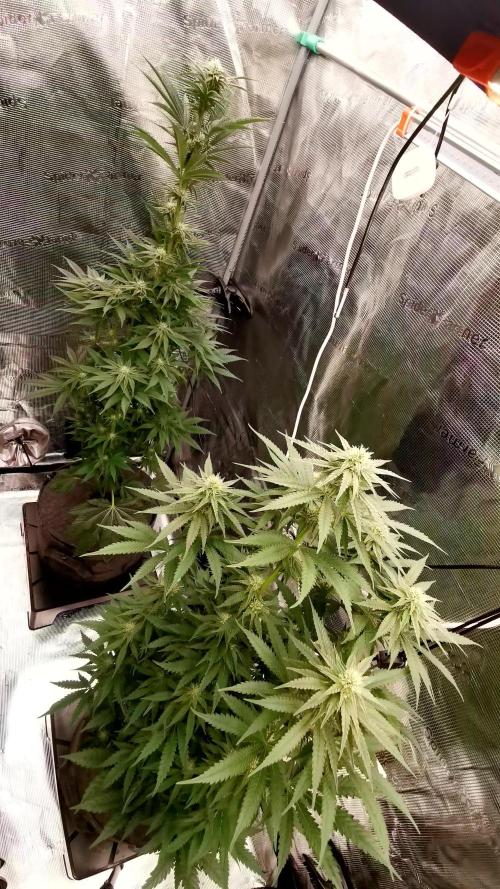
Both plants continued progressing through early flowering this week 🌸
Vertical growth slowed but has not completely stopped yet, so the light fixture had to be raised again to maintain proper distance.
• Height now approx. ~110 cm
• Stretch slowing but still slightly ongoing
• Bud sites becoming clearly visible across the canopy
Light intensity was increased to ~950–1000 PPFD ☀️
Environmental conditions remained stable:
• 25.5°C temperature
• 50–55% RH 🌡️
Trichome production began appearing toward the end of the week ✨ Resin is now visible on both the sugar leaves and the bud sites, though aroma is still very mild at this stage.
Phenotypic differences remain noticeable:
• Pheno #2 is slightly ahead in flower development and continues to grow very compact around the main stem
• Pheno #1 maintains a more open structure
Water demand remains high during early flower:
• ~4L every 2 days until runoff 💧
Feeding this week:
• 1x Orgatrex
• Otherwise water + BioBizz CalMag
Defoliation was performed again this week ✂️ Slightly more leaves were removed than the previous week, improving light penetration without causing excessive stress.
Midway through the week, Pheno #1 showed clear signs of hermaphroditism. Initial pollen sacs were discovered and carefully removed. Despite close monitoring, additional pollen sacs continued to develop toward the end of the week.
Due to this progression, the decision was made to remove the plant from the tent to prevent any risk of pollination. The plant was cut down and processed separately, as it was clearly expressing unstable traits.
Overall, the remaining plant continues to develop well, with visible resin production and improving bud formation ?🔥
