


Indica Spring/Summer Season 2025







Soil

Perlite

Vermiculite

Expanded Clay

Indoor
Room Type
ScrOG
weeks 4-9
LST
weeks 6, 8-9
Defoliation
weeks 7-9, 11
9 liters
Pot Size
1 liters
Watering
Start at Harvest
G
Germination2y ago


Nutrients 4
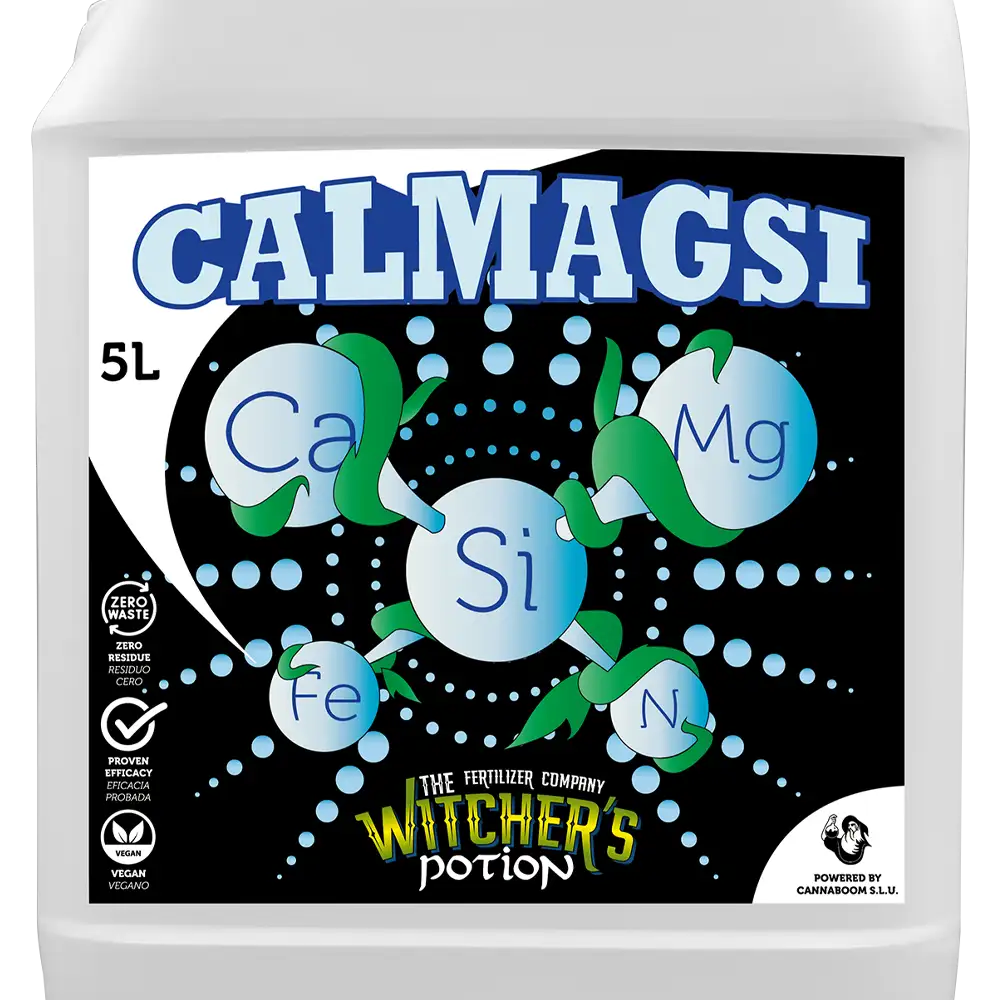
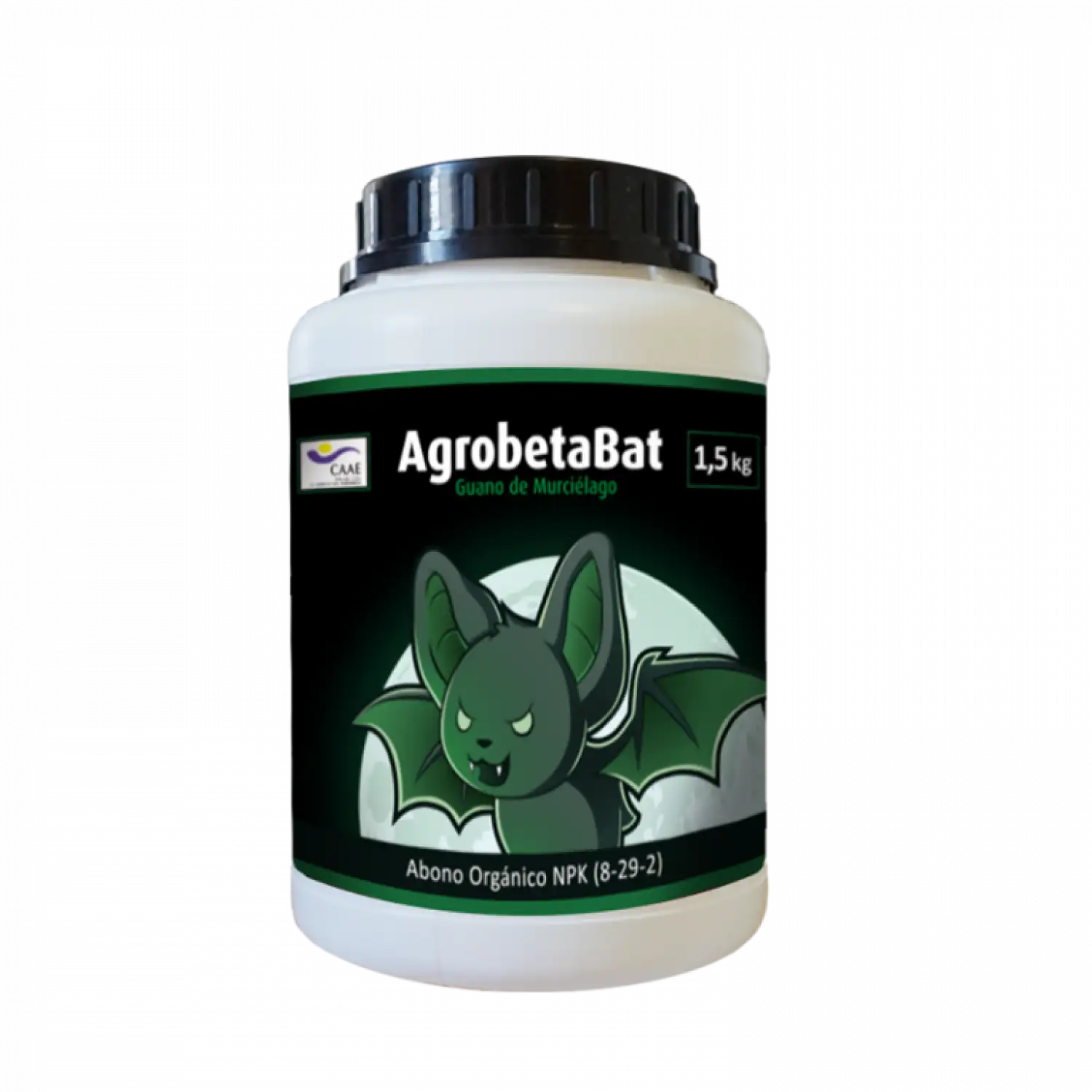
Ugro Rhiza 1200
0.78 mll

Deeper Underground
0.5 mll
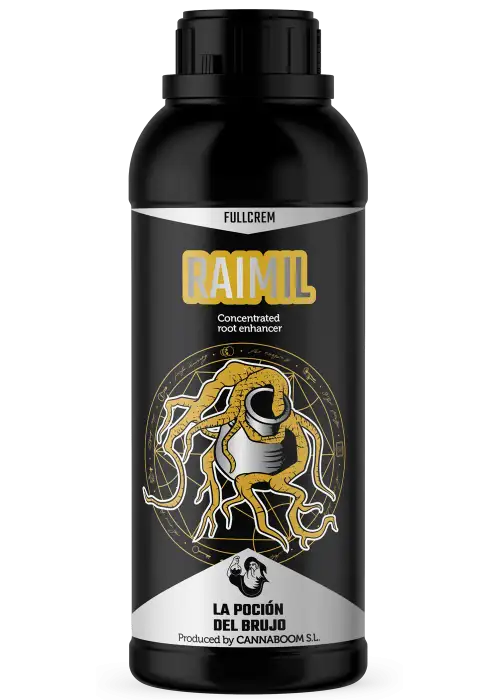
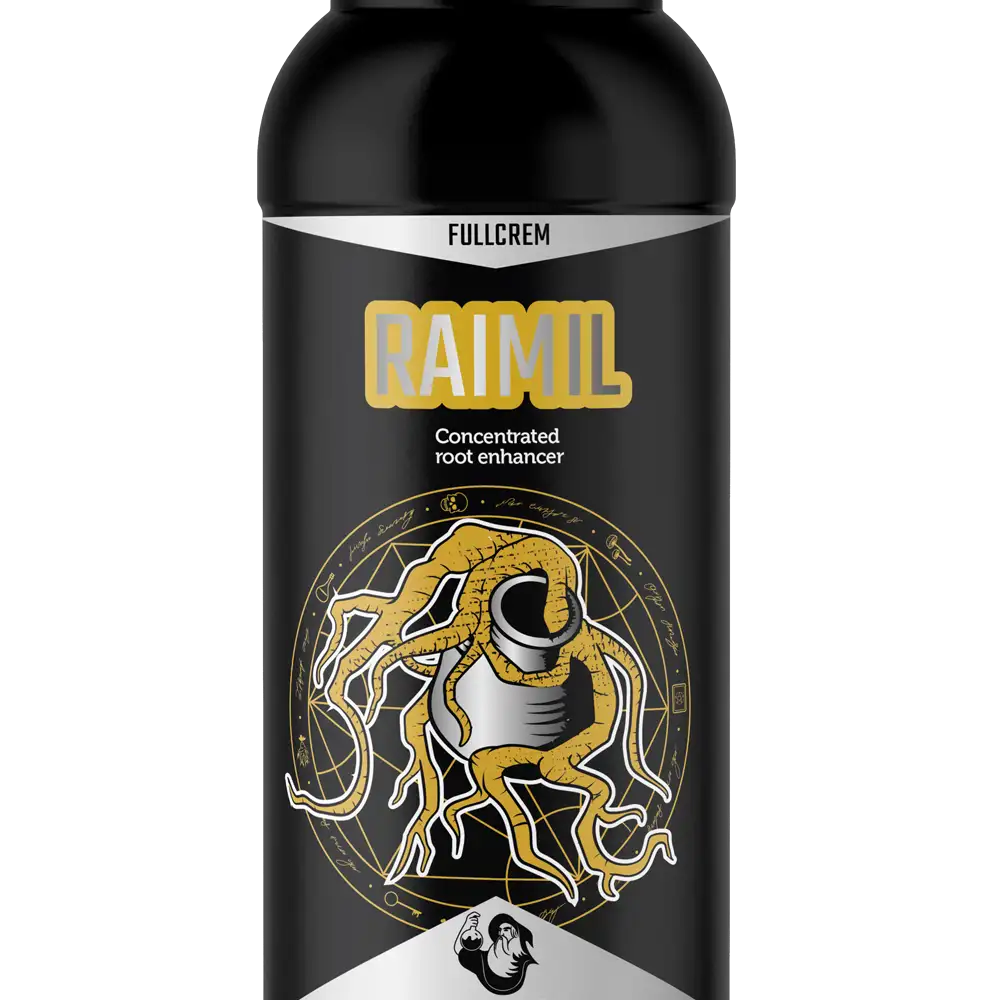
Raimil Fullcrem
0.1 mll
TommyBVRSA75 Brothers, we have returned with the same determination and eagerness to do it right as always.
As you have seen, it's the season for late spring and early summer, focusing on Mr.Hide Seeds and their incredible Indicas.
So that we also have some Kush but hybrid to bring out the lights from the Lockdown Kush by Sensi Seeds.
Throughout the season, we will be sharing the good stuff.
420 for everyone and 😹
3 likes
comments
Share
Used method
Peat Pellet
Germination Method
Grow Questions

TommyBVRSA75started grow question 2y ago
Any specific opinions on the performance of Indica genetics in summer, considering indoor conditions with daytime temperatures averaging 28ºC and around 20ºC at night? Relative humidity between 45 and 60%. What to expect from the development of Indica strains like this?
Solved
Other. General questions
likes
00110001001001111Oanswered grow question 2y ago
The stuff you buy has been so interbred, it's absurd to call something indica or sativa at this point. Only in very specific contexts would it matter... And even then there is a chance they are just lying for the perception and potential sale.
mixing an inidica and sativa does not mean the progeny will be 50% of the traits from each plant evenly.. repeat that several times, even if you mathematically should retain 50% of each subspecies genetics... it just gets more and more jumbled (genetic recombination invovled in meosis). They will not magically share dominance.. it'll be about the alleles invovled for any 1 trait.
These terms may have had some correlation to outcomes at one time, but not if they've been interbred a bunch of generations. And, only a correlation, not causation.
Whether the breeder info is accurate or not is another debate... if they say it's a shorter plant, i'd plan for that... no matter what % indica listed.
if you control the relative humidity, you set it relative to temperature. Use a VPD table to see a safe combination of Temp and RH%, but stay at 65% or below to avoid microbial blooms.
1
Week 1. Vegetation2y ago


5 cm
Height
18 hrs
Light Schedule
25 °C
Day Air Temp
5.6
pH
No Smell
Smell
214 PPM
TDS
67 %
Air Humidity
23 °C
Solution Temp
24 °C
Substrate Temp
21 °C
Night Air Temp
9 liters
Pot Size
0.5 liters
Watering Volume
30 cm
Lamp Distance
501 PPM
CO₂ Level
Nutrients 3

Top Veg
2 mll

Green Explosion
1 mll
Raimil Fullcrem
0.2 mll
TommyBVRSA75 Brothers growers.
Week 1 - (Seedling - Early Vegetative)
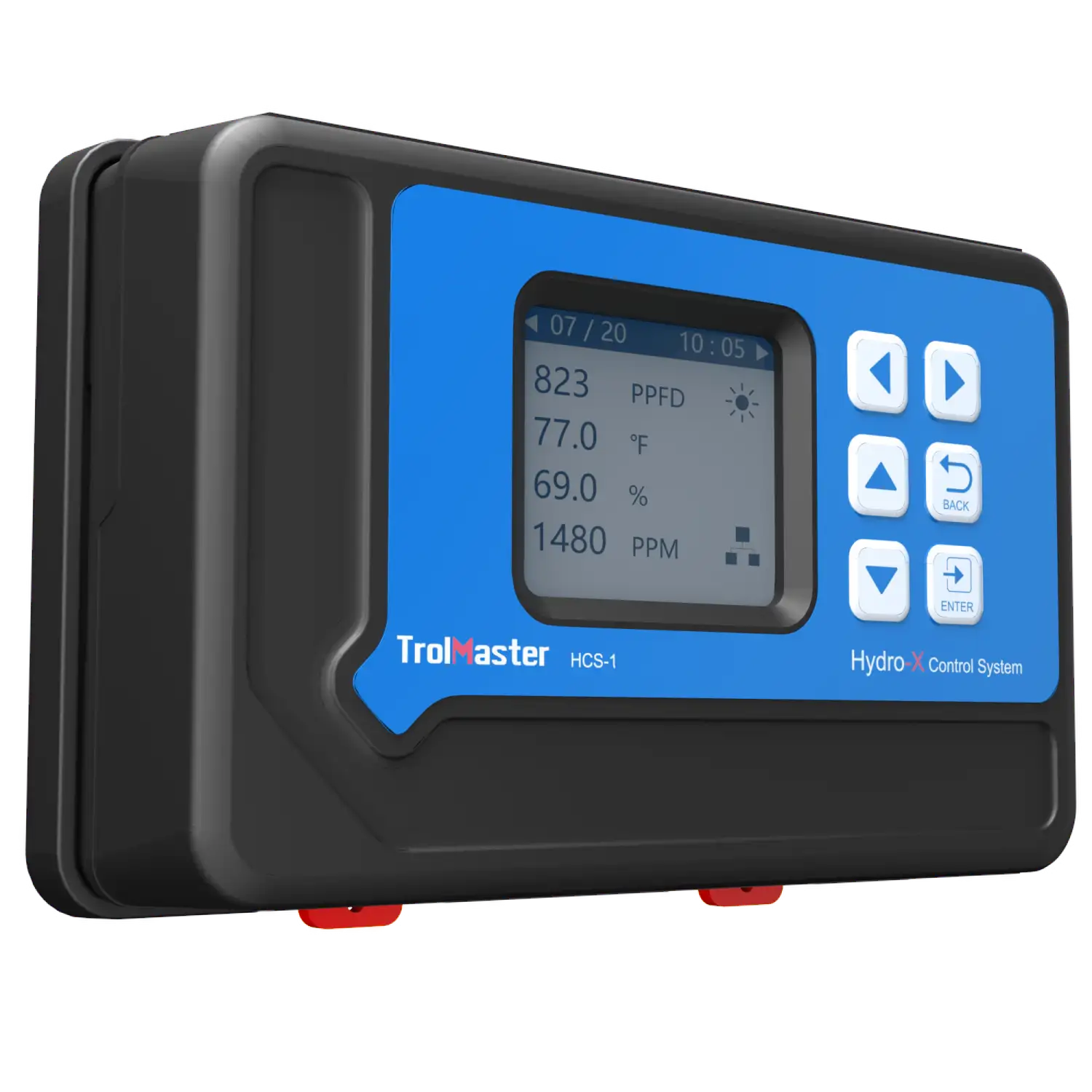
1 - Great conditions for the season with incredible values to start. The TrollMaster graph shows a perfect alternation between maximum values (in light) with an average of 26ºC; minimums (in darkness) around 20º on average and the VPN differential over 0.60 and 0.75, meaning perfect VPNs for seedling beginnings. Still, a small note on the temperatures in spring, which are already high and suggest a very hot summer, leaving short margins for the harvest to occur at the latest by the first week of July (or yes... or if...)
2 - A lot of push and a perfect start for Mr. Hide's indicas (the Shisha; the California Pearl and the Jekyll Kush)... the hybrid, if you look closely, has slightly burnt tips but it happened that when I removed the shell from the seed, I touched the leaf buds and caused this damage, which compromises development, as both the stem and the cotyledon leaves seem very healthy. With this, for some brother growers at the beginning, don't panic over damaged initial leaves, as that would be concerning if the stem or the cotyledons (those 'round leaves' at the beginning that are nothing more than the albumen coverings of the seeds, or the structures that even within the seeds guard and provide nutrients in the early stages of germination).
3 - An important note to tell the brothers that in terms of germination, I'm using some jiffys that are not made of fine peat material but rather jiffys made from coarsely ground coconut shells and blonde peat, which since I've been a grower for over ten years, have the highest germination rate and allow for very rapid root development. With one of these jiffy plugs, soaked in a chlorine-free water solution and 0.2 ml per liter with Raimill Fulcrem (the concentrated Raimil from Cannaboom - a very high-quality organic rooting agent; along with a small dilution of Ugro Rhiza 1200 mycorrhizae (powder with mycorrhizae and trichoderma and Bactor S13 bacteria (where there is an incredible bacteria from the Polimixya family that converts phosphorus into ammonia nutrition, providing exceptional nutritional support during flowering) and also the BACTrabe bacteria compound based on the magical Azosprillium brasiliensis, which promotes growth at over 40% more than what would happen without this bacteria and is an unbeatable soil quality promoter. VERY IMPORTANT, brothers growers at the beginning; much more than spending a fortune on nutrients, whether organic or synthetic chemicals, if you get good soil, and I mean without contamination from pests like pupae and other larval stages that, although invisible, will end up developing pests that can ruin an entire work cycle in two days. That's why it won't be about spending up to 15 dollars (12 euros) on a good substrate... I always work with this without advertising, but for me, Canna Professional 50 liters (without fertilization) is my choice for its composition, its excellent EC; its texture and the proper percentages of perlite and vermiculite, it's always been my choice... plus it's very good in its porosity and is a substrate that even after many months doesn’t tend to clump together, allowing for excellent root development. Additionally, it’s a substrate that after a couple of seasons and washed with Canna Flush, stays alive and ready for new cycles, and I've even done crops in substrates with at least four cycles. As long as the roots are disturbed and the used substrate is evaluated with mycorrhizae; some enzymes; vermiculite and perlite to maintain soil structure. The conductivity (EC) is resolved without excessive soil washing, so it's a mistake, for example, to run water continuously in the substrate, much for washing salts, living matter and for drastically altering conductivity with disastrous physical and chemical changes.
4 - Finally, something very important is the use of tap water. By balance, it turns out to be very good as it has a perfect pH rate and its conductivity is also within optimal limits... but chlorine and its derivatives (and this gives an idea to countries where disinfection still uses chlorinated agents, as there are countries where disinfection is done with methods like UV radiation and ozone application, but for those who find themselves with water treated by chlorinated agents (chloride; hypochlorite and others), it’s very simple to convert chlorinated water into 'clean' water... that is, put it in a 5-liter bottle, with sunlight exposure and wait a minimum of 24 to 48 hours. The chlorine will settle at the bottom and carefully try to transfer it to containers avoiding mixing or using the portion at the base where the chlorine is. Tap water has a pH of 7.0 and it’s easy to correct for the necessary pH rates for the development phases. Generally, germination with pH between 5.5 and 5.7; vegetative with an increase according to the weeks from 5.6 to a maximum of 5.8/5.9 and finally flowering with pH between a base of 5.9 to a maximum of 6.5. It’s very important to always understand the EC of the system and take into account the input EC, that is, what is found in the prepared water solutions in use and the resulting variation from the introduction of nutrients and always evaluate the output EC and many times in the pot plates understand if the pH is elevated and if the EC is overloaded... it’s a beginner's mistake to think that preparing the irrigation solution and measuring the pH and EC means that the values of pH and EC in the substrate are as prepared... so it’s very important to always measure the output water, as it’s indicative of the conditions that the root system faces in the substrate.
To all 420 always and Green 💚💚 greets.
Tommy
2 likes
comments
Share
2
Week 2. Vegetation2y ago


14 cm
Height
18 hrs
Light Schedule
26 °C
Day Air Temp
5.6
pH
No Smell
Smell
347 PPM
TDS
63 %
Air Humidity
22 °C
Solution Temp
23 °C
Substrate Temp
21 °C
Night Air Temp
9 liters
Pot Size
0.5 liters
Watering Volume
30 cm
Lamp Distance
501 PPM
CO₂ Level
Nutrients 5
MycoFeed
3 mll

Organic Growth Nutrition
2 mll

Power Roots
1 mll
TommyBVRSA75 Week 2 (Vegetative) - day 20 since germination
1 - Very good signs since the last diary entry. The indicas (and I repeat that the Mr.Hide hybrids that are mostly in this season are indicas at a minimum ratio of 75 Indica / 25 Sativa for the California Pearl, being even more loaded in Indica proportion, the Jekyll Kush or the Shiska) are showing very good size, with the broad character of the leaves being very indicative of the high genetic load and as such a phenotypic expression of Indicas. The 60 Sativa / 40 Indica hybrid of the Lockdown Kush from Sensei Seeds that you saw at its seedling beginnings, which had some damage on its primary leaves, has overcome that minor issue and as I indicated, especially to those with less experience, sometimes even at the moment the seed shell is released it can damage the primary leaves and be mistaken for burnt leaves, making it easy to perceive in a few days if there have been excesses in lights/nutrition/watering or if it was due to physical action that may have damaged the leaves. So the Lockdown Kush has bounced back with great quality and I wouldn't expect anything less from what Sensi Seeds offers in its genetics.
2 - For those who are starting and using diary information on GD, the Mr.Hide genetics that are in development are essentially hybrids with a high Indica load, so what can you expect in their development? First, the broad character of the leaves, meaning long leaves and in proportion with short "fingers." In their growth and due to this character of broad leaves and much shorter internodes, and more because Indicas tend to be smaller than Sativas, you need to try from the beginning that these leaves do not hinder the secondary branching from getting light and be very mindful in early spring/summer that there is a very necessary airflow circulation to the branching generated based on the primary leaves. In Indicas, this issue is very important for future flowering points to be generated, and LST strategies in these Indica phenotypes are mandatory. This ensures that in the grow structure there are no shaded areas that cover and hinder the development of the groups of branches and leaves that come from the stem for the secondary leaf group and where the flowering points are formed, and also allows air to penetrate throughout the structure. It may even seem strange to you, but if there is no care to ensure light and air dispersion over the grow, Indicas can develop "microclimate" points over the entire height of the grow, meaning areas where there is a lack of light and air and where conditions for the development of fungi like powdery mildew are created due to high temperatures and little penetrating air, which can ruin the final result, as once those "dark" areas are infected by this fungus, it spreads throughout the plant and attacks leaves and buds, and controlling it once it occurs becomes very difficult.
3 - Given the dates of this season and the characteristics of heat and humidity where I am, it is very important that the defense against pests and diseases starts even before germination and especially preparing the substrate for growth, using agents that have become a practice that every good grower must maintain. Defense against exogenous agents to the plant starts with choosing a quality substrate and bringing to light the indispensable development agents. Thus, a quality substrate and the use of mycorrhizae that ensure nutrient integration and a first defensive barrier against fungi that act on the root system. Trichoderma should also be present as a defense element against fungi and bacteria. Additionally, the use of growth bacteria that optimize the integration of atmospheric nitrogen for an increase in quality during the vegetative phase and so that in flowering phosphorus can be converted into ammonia products for the plant to integrate in an expanded manner. The use of these resources also allows for a much better supply and integration of available water in the root system (in summer, even indoors, conditions impose a greater availability of water and with mycorrhizae, the root system integrates water more effectively) and there is an effective saving of nutrients that must be supplied to the grows, as the action of mycorrhizae and bacteria allows the grow to integrate nutrients much better.
4 - Regarding the issue of incomplete genetics, I will be very attentive to the material from Mr.Hide Seeds, as besides what I told you in the first entry about deformed leaves in the California Pearl, it is also noticeable that in the primary leaves of Mr.Shiska, there has been similar deformation. These deformations may be connected as factors of lights or watering due to excess or deficiency, but as I tell you and from my experience, generally, complete genetics usually do not have expression failures like deformed leaves or where the "fingers" do not separate properly, and as I said, two strains from the same bank showing altered phenotypes that should supposedly be normal from day 1 raises alarm bells. The only time I had a problem with a feminized strain that "gifted" me a hermaphrodite plant, it also started with "errors" in the normal development of its leaves. So be alert, alert, and even more alert to see what comes out in these two strains I mentioned. The reputation of Mr.Hide Seeds is still a mystery to me, and just because it is a bank that has few evaluations and diaries here on GD, makes this season heavily focused on their strains a test of fire, and I will be watching day by day for any less expected surprises and to see if there are still "errors" in the phenotypes. As I said, stable and quality strains almost never present deformities in their growth... generally, strains that still need stabilization work often show alterations, and if deformed leaves do not define what the final result will be, they are often an indication of low genetic stability, and low genetic stability can lead to a final result far from what is desired.
In the next entry, I will bring in detail what the development will be towards the advancement of the vegetative phase of these strains and due to the excellent development in the 20 days since germination and the start of the cycle, let's say the vegetative phase is today about halfway and at maximum, we will count 21 more days as the maximum limit for the change to flowering conditions - changing lights to a 12/12 cycle; fitting branch groups into different SCROG gaps; increasing watering from 0.5l to 1l daily and also increasing pH in watering water and of course changing nutrients from nitrogen-based nutrients to magnesium, phosphorus, and potassium.
A grower hug to the brothers and to all 420 Always. Keep enjoying the most beautiful plant in the universe!!!
Your brother, TOM!
5 likes
comments
Share
3
Week 3. Vegetation2y ago


29 cm
Height
18 hrs
Light Schedule
27 °C
Day Air Temp
5.7
pH
Weak
Smell
421 PPM
TDS
62 %
Air Humidity
23 °C
Solution Temp
24 °C
Substrate Temp
22 °C
Night Air Temp
9 liters
Pot Size
0.5 liters
Watering Volume
30 cm
Lamp Distance
484 PPM
CO₂ Level
Nutrients 8
bacNature
0.5 mll
Gold Complete
2 mll
Ascophyllum nodosum
3 mll
TommyBVRSA75 Week 3 - Full Vegetative
1) Incredible the vigor of the strains and the great response to the increased light (the dimmer has been turned from 80% to 100% and watering every two days at a rate of 1 liter). So right now we have the 420 watts maxed out with a setup of two Mars Hydro TS 1000 panels X 2 + 4 TLED 25 watts (52 cm) with two for vegetative and two for flowering.
2) The grows almost double in height each week, and the indica phenotypes are very noticeable (especially the more hybrid grow, which is the Lockdown Kush from Sensei Seeds, which is 60% S / 40% I, has largely incorporated the indica phenotype with super wide leaves and a very clear structure of short internodes, hinting at the bushy structure it will have). On the contrary, Mr. Shiska, which is largely a genetically heavy hybrid with a high percentage of indica, has displayed the most sativa characteristics so far. Narrower leaves and a significant number of secondary leaf clusters that exceed the coverage of primary leaves, which are also not as wide as those of the other grows.
3) So regarding phenotypes, there are three grows that will clearly be indicas, and the bushy characteristics with wide primary leaves and secondary clusters with short to medium internodes in large quantities are very evident, which is indicative of many flowering sites, which is what we want if we are looking for plenty of buds. Don't forget that generally, indica buds are rounder, smaller, and denser (usually loaded with resin).
4) Very noteworthy is the evidence that even being at the beginning of the vegetative stage - around the second week of the cycle - the pungent aroma is already very noticeable, particularly from the two Kush strains of the season - the Lockdown from Sensi and Mr. Jekyll from Mr. Hide. The sweet aroma of the Kush genetics is already evident, and given the dates of late spring and summer when the cycle will take place, it will be important to have resources to mitigate the smell, as indicas are magnificent in everything, not only in terms of cannabinoids but largely due to the strength of their terpenes, and if in the early vegetative stage, the emission of terpenes is already clear, with the advancement of the cycle - rising temperatures and lower humidity percentages, the smell will become stronger. So let's gather materials and knowledge to prevent odors from escaping the controlled space. Generally, the best tool I've started using, which is very effective and economical due to its low cost compared to other odor mitigation methods, is using - my house in total has less than 55 m² - two rooms, a living room, a kitchen, a bathroom, and a support room for the terrace - and as I mentioned, in three of the rooms, I have three ozone generators of 10 watts each, which operate at a rate of producing two minutes of ozone every two hours. The production of ozone should not occur in the room where we sleep, but the set of three ozone generators, which operate alternately, allows for a great "drop" in the sweet aromas of cannabis, and since I started using this system, the use of carbon filters in the grow area has become dispensable, resulting in significant energy savings - the carbon filters that are permanently connected have a higher wattage and also tend to reduce humidity in the grow area, and while in winter this is not usually problematic, in summer when I used carbon filters, it often happened that humidity levels, which were almost perfect at over 60%, dropped to below 40%, and in summer, low humidity and during the "lit" cycle in summer, temperatures can sometimes exceed 32ºC, become limiting factors for the quantity and quality of bud production.
If for sativas, heat and low humidity (at acceptable levels, meaning temperatures above 30ºC and humidity below 45%) are conditions for producing high-quality buds... for indicas, it must be taken into account that high heat and low humidity can be limiting conditions for what we desire.
So we always have to consider what summer imposes as conditions and try to keep them at the optimal point, and it's advice for those who are just starting out in growing, which I wouldn't recommend to someone who still has little knowledge and structure, the cultivation of hybrids heavily loaded with indica genetics.
It has never been a problem to grow sativas in winter even with low temperatures and very high humidity... but on the contrary, it is necessary to take summer conditions very much into account for the development of indicas. Winter is not a problem for sativas, but summer can be very problematic for indicas, and you need to have some skills and structure (like humidifiers or dehumidifiers and good quality ventilation systems) to do things right and have a perfect understanding of what can be stress factors or growth enhancers for indicas with high heat and low humidity.
Generally, I always tell the grower brothers who are starting to use air conditioning as little as possible, especially those who have the terrible habit of setting the air conditioning to 20ºC when it's 35ºC outside, as the temperature generated by air conditioning tends to be more of a stress factor than a stability factor for a grow.
5) I'm still in doubt whether in the next three weeks, and particularly in the last ten days of this period, I will close the vegetative stage with a light cycle that I have already practiced a few times in summer, which is a double daily light cycle to double the strength of the vegetative stage. So one way to elongate the height of the indicas is to do the double cycle, meaning instead of 18/6 light/dark, an effective way to enhance vegetative growth, particularly in summer, is for example, to do 9/3/9/3 with two light cycles of nine hours interspersed with three hours of darkness. These are the designated bi-daily light cycles. Generally, in summer cycles, an incredible way to double the normal vegetative growth of a simple 18/6 cycle is to do the bi-daily cycle of 9/3/9/3 in the final two weeks of vegetative growth. The two light periods have the particularity that whenever they turn on, and in this case, twice in the same day, it makes the grow react as if there were two days in one. The two dark periods of three hours allow for biological rest and open capacity for two circadian cycles for the grow. This way, in just one day, you have two cycles, effectively doubling the vegetative time, and in this manner, in ten days, we achieve twenty light/dark cycles. Very importantly, I have done this process in winter, and something happens that is not as noticeable or effective, the evidence of vegetative growth.
When I apply the 9/3/9/3 in summer, it enhances vegetative growth, and very importantly, by not having the system on for 18 consecutive hours, generally the temperature does not reach such high levels. With the two dark periods of 3 hours and the 9-hour light periods, generally, the temperature in the grow room does not rise as much as in 18/6, and twice a day, we create conditions of lower average temperature, and the relative humidity does not drop as much.
After 10 to 15 days of the 9/3/9/3 cycle, I usually give about three to five days of 18/6 (just one cycle) so that the grow integrates into the flowering light cycle of 12/12 light/dark without much stress. That is, it is very, very important that the grow understands that we are transitioning from 18/6 to 12/12, and if we do not give those three to five days and maintain the 9/3/9/3 just before the transition to the 12/12 flowering cycle, there will be an increased tendency to adaptation stress, and what will happen is not that the flowering cycle won't start, but while there is this adaptation, we will have at least a week in which the grow seems to "stop," which is not good - neither for the physiology of the grow nor economically with energy costs, to keep a grow in suspension for a week, and according to some growers, it could even incur the possibility of generating particular phenomena like hermaphroditism due to light stress.
Next week we will continue to provide updates on how the four grows of the season are developing. In the last ten days, the vigor and push of the strains are very noteworthy, giving a standout performance so far to the Mr. Jekyll Kush and Lockdown Kush while maintaining a strong focus on Mr. Shiska, which seems to be developing more modestly (it’s not by chance that I have already removed the kelp solution (Ascophyllum nodosum), which is one of the best organic things you can add to a grow showing signs of stress, and Mr. Shiska shows some leaf curling, which is a sign of stress, possibly due to lights or a more resistant nature to nutrient use.
If other factors are considered, flowering is approaching, and I will seek to give all the strength I can to ensure that the vegetative stage ends up being the best possible, so we have an abundance of flowering sites and quality phenotypic structure for an excellent result.
420 Always and Green greets to the grower brothers. Keep enjoying the most beautiful plant in the universe.
A hug from your brother,
TOM.
3 likes
comments
Share
4
Week 4. Vegetation1y ago


40 cm
Height
18 hrs
Light Schedule
26 °C
Day Air Temp
5.8
pH
Weak
Smell
680 PPM
TDS
63 %
Air Humidity
23 °C
Solution Temp
24 °C
Substrate Temp
22 °C
Night Air Temp
9 liters
Pot Size
1 liters
Watering Volume
30 cm
Lamp Distance
511 PPM
CO₂ Level
Nutrients 12
Gold Complete
1.5 mll
Organic Grow 10-7-9
2.5 mll
Agro Molasses ( Agro Melaza )
4 mll
TommyBVRSA75 Week 4 (Final Vegetative Phase - Day 30 since germination)
1) Amazing growth dynamics in the vegetative phase and very defined characteristics for each strain, especially highlighting the quality of hybrids, particularly the LockDown Kush from Sensei Seeds, which has the most balanced percentage of sativa/indica traits but is developing more in its Indica character, even though its base percentage would be 60 Sativa to 40 Indica. It is developing with a very present Indica character (very long leaves and internodal spacing from medium to short, and its Indica bushy phenotype is already very evident). Conversely, the strains from Mr.Hide Seeds - the Shiska; the Jekyll Kush and the California Pearl, which have hybrid characteristics clearly leaning towards Indicas (70/30; 80/20 and 75/25), are developing phenotypes at this final moment of the vegetative phase that lean towards Sativas, with leaves having finer tips, and it stands out a lot, for example, in Mr.Shiska and Mr. California Pearl, the structure of firs, with a central branch where a central cola will develop that is already very well designed and a variety of secondary flowering points. Regarding Mr.Jekyll Kush, it shows a very evident character in terms of its bushy nature, and both Jekyll Kush and Lockdown Kush are already showing some intensity of the pine terpenes that Kush strains usually present.
On another note, there is a somewhat concerning observation of a more negative reaction with some leaf tips on lateral flowering points where some burnt spots were visible, but with the addition of Gold Complete, it was possible to correct this very effectively in just a few days. The mentioned burning likely occurred due to the sensitivity that Mr.California Pearl has to nutrients, and when a nitrogen boost was given with the Green Explosion from Top Crop, the Gold Complete compound, a very balanced formula with fulvic and humic acids, kelp, and some amino acids from Brutalzym by Cannaboom, it was possible to rectify that imbalance, which was very punctual and not extensive to the grow.
2) By definition, looking ahead to the end of next week, the light cycle will change from the current 18/6 to the flowering set of 12/12. I haven't made the change yet because there have been some temperature fluctuations in recent days. Last week, we had a maximum temperature of almost 29ºC during light hours, and in the last five days, the rain returned with increases in relative humidity in the grow area and a significant drop in temperature during the 6-hour dark period. It is always important to inform my fellow growers that to balance temperatures more safely, the 18-hour light period should be between 7 PM and 1 PM the next day, and the 6 hours of darkness should coincide with the afternoon (the period between 1 PM and 7 PM). This way, it's possible that humidity during dark hours does not exceed 70% (if the dark hours coincide with nighttime hours, relative humidity can exceed 80% in my area of residence, which can be a stress factor and limit good development). Similarly, looking ahead to summer, the dark hours - the 12 during the flowering phase are framed between 1 PM and 1 AM, which is an effective way for the hottest part of the day to coincide with dark hours in the grow area, thus preventing temperatures from exceeding 30ºC. These balances are very important if the strains we have this season are Indicas, as they develop better with lower temperatures and tend to reach stress limits when grown in summer. In summary, next Friday - 30 days after the seedling phase, the light cycle will change, and we will move to 12/12 to induce flowering, as at least three of the strains, with the exception of Lockdown Kush, are already starting to show conditions for flowering induction.
3) The light cycle change is imposed after the evidence of the presence of Indica genetics and the fact that, generally, Indica flowering is much faster than Sativa flowering, setting the limit after May 1 (when we change the light cycle) so that within a maximum of 60 days, the growth is completed in preparation for the final "Flush" days and the cut and drying.
4) Hybrids with predominantly Indica traits are generally more sensitive to large nutrient inputs and available water in the system. Therefore, it is very important to keep in mind that we are developing grows in 9-liter airpot pots, so in summer, we will need to ensure regular watering and balance nutrition according to the watering. That is, it is mandatory that in recurrent waterings, there is no tendency to provide nutrition that represents an excess, which would limit the best possible development of buds - both in quantity and quality - as buds in the Indica phenotype are very particular in their characteristics - very dense; heavily resinous and with that round character that is so typical.
5) The vegetative growth has already reached the limits for using the SCROG net to start the growth outline of branches. Initially, with the change to 12/12 lights, we will still have vertical growth for the next two to three weeks, so it will be very important to start placing guides and positioning the branches for better development. In Indica phenotypes, it is crucial to consider that there tend to be areas covered by wide leaves with areas receiving little light, and with summer temperatures, we need to be very aware of the constant need for regular defoliation to avoid true "microclimate" areas in the grow, to prevent mold and other agents that can "ruin" the season if we are not attentive to that. Therefore, Indicas require almost daily attention to ensure we achieve the best possible and expected results in the end.
So, just one more week and a shoutout to all the growers. 420 always and Green Greets to all the fellow growers and anyone who is passionate about the most beautiful plant in the universe.
Next week, if God Jah wills, we will be here showing you the development of the season and how we start our flowering cycle.
A hug to everyone. Always yours,
TOM
4 likes
comments
Share
Used techniques
ScrOG
Technique
5
Week 5. Flowering1y ago


65 cm
Height
12 hrs
Light Schedule
27 °C
Day Air Temp
5.9
pH
Normal
Smell
680 PPM
TDS
68 %
Air Humidity
23 °C
Solution Temp
25 °C
Substrate Temp
22 °C
Night Air Temp
9 liters
Pot Size
1 liters
Watering Volume
30 cm
Lamp Distance
516 PPM
CO₂ Level
Nutrients 14
Bachumus Evolution F (Trabe)
4 mll
Gold Green
1.5 mll

Boost
2 mll
TommyBVRSA75 Week 1 of flowering phase (sprouting day 21/04/202)
1) Radiant and magnificent the development of the hybrid strains with Indica genotype ancestry (the three strains from Mr. Hide Seeds - Mr. Shiska USA / Mr. Jekyll Kush / Mr. California Pearl and the hybrid strain with a 60/40 Sativa/Indica ratio).
At the beginning of flowering, it is very clear that the Sativa traits in these hybrid strains, despite having genetic reasons (and their phenotypes) marked at 70/30 (Ind./Sat.); 80/20 (Ind./Sat.) and 75/25 (Ind./Sat.) in agreement in this order of Mr. Shiska USA // Mr. California Pearl // Mr. Jekyll Kush, have revealed a lot of clear Sativa phenotypes and I will explain. In the three mentioned strains, the nature of the leaves with narrow tips is very clear; internodes are relatively short between each other and also the bushy structure in a general fir shape where a central cola is designed where a central bud of very prominent dimensions will develop and then in medium to low areas, a set of secondary branches where a very significant number of branches will develop where the secondary bud set will be produced under greater stress limits.
It is therefore very clear that the three referred strains, taking out the smallest percentage of Sativa phenotype, show in this flowering entry, the characteristic structure of a "Christmas tree" and from their outlines, it is very clear that we will have the already mentioned central cola that will be of very significant thickness and all the secondary buds in the base areas. All the buds will be very significant regarding a very resinous character and the spherical buds that are very typical of Sativa phenotypes. Additionally, the terpene line of Sativa buds tends to have a very pungent pine aroma; sweet notes and that earthy finish that is the trademark of Kush strains and much of the OG heritage.
In contrast, the fourth strain in order and because the three that have already been mentioned belong to the same bank - Mr. Hide Seeds - in the case of Lockdown Kush from Sensei Seeds, being a very particular 60/40 (Ind./Sat.) hybrid genetic, has revealed a genetics that stands out for the enormous width of its primary leaf group at the base. The Lockdown Kush from Sensi is also a strain with a very definitive characteristic, let's say the enormous size of its primary leaf set, the enormous width of the leaves; the alternating arrangement of its primary leaves and we must also take into account the enormous crossing of an incredibly pungent character of terpenes and extremely sweet aromas.
The Lockdown Kush will be a strain to which it is necessary to pay extreme attention in the defoliation plan, as the width of the leaves and the crossing of the alternating types of the same will be very important so that there are no areas of the grow that remain with a disastrous combination of characters such as shade, heat, and high humidity.
That area of wide leaves covering secondary branches - where conditions for bud outlines occur - must be closely monitored, as with summer conditions - high temperature and humidity - if regular defoliation is not carried out, it may create conditions for the expansion of extremely serious pathogens.
In this regard, it is never too much to keep in mind the emergence of fungi such as mildew, rimam, and botrytis.
Additionally, root-level pathogens, fearsome at this time, include some with enormous grow lethality levels such as Fusarium or Pythium.
These are not only critical pathogens in their development but are also very aggressive in their expansion and are very quick in the way they eliminate any grow.
Moreover, and if that weren't enough, for example in the case of Fusarium, if after its emergence a widespread disinfection of the grow medium and even the entire house is not carried out, the Fusarium spores remain latent and it is very easy that despite throwing away pots and growth media, the following year, the spores will have conditions for reproduction and Fusarium will develop again in a very fast and aggressive manner.
It is never too much to inform fellow growers and emphasize that every year you proceed to inoculate mycorrhizae and especially what I consider one of the most effective "shields" of protection in cannabis growing, which is the use, YES OR YES, of Trichoderma harzianum and in all possible applications - whether at the foliar level; at the root level, at the seed level, and in symbiotic combinations with mycorrhizae; with grow bacteria and with other agents.
In recent years, the contribution of these fungal, bacterial, and other agents has been very important for effective pest control without the need to burden the grow with neem oil; with "old school" insecticides like Cypermethrin; or some agents that in my opinion, while being very effective in what is desired, create very deep imbalances in what is considered biomes like the bacteria Bacillus thuringiensis. This agent for controlling butterflies, pupae, and caterpillars is the "final solution" to butterflies, their eggs, their pupal stages, and caterpillars, eliminating them at a rate of almost 100%, but for me, everything is very simple, "nature hates a vacuum" and for a bacteria to cause massive extinction of these insects, something is altered in the biome that will ultimately cause problems in the life cycles of other plant species, animals, saprophytes, or others, and I always tell friends who are passionate about nature and specifically about cannabis grows. Eliminating butterflies, caterpillars, and pupae will have a biological impact that cannot be quantified... that is... just to keep our grows protected from pests, some agents that allow controlling the development and inter-species biological relationship should be used. In other words, we certainly do not need our grow to be jeopardized by a pest that puts it at risk, but for nature as a "whole," it is not, in my opinion, valid to use an agent like Bacillus thuringiensis, which eliminates 100% of butterflies and their stages, from eggs to pupae and from there to caterpillars and then to butterflies. In Biology, it is always necessary to take into account that butterflies/caterpillars have a function and that if we remove a "total exterminator" like Bacillus thuringiensis, we will be creating an "imbalance" at the biome level and with that, we may soon have imbalances in the food chain; in bacteria, nematodes, and other living beings that need butterflies/caterpillars for their cycle and that in nature, if as "humans" and for "our utility," we use a bacteria to eliminate the caterpillars/butterflies that eat the leaves of the grow... nature and its plan are perfect... For some reason, there is a need for caterpillars and butterflies to eat the leaves of Cannabis spp. (without causing a loss of control and a threat to our intention). For example, butterflies have pollination functions and the action of caterpillars has, for millennia, a stress stimulation function, which has led to the refinement of terpenes and even the production structure of molecules like THC ∆-9. In other words, the stress that butterflies and caterpillars induce, with their feeding cycle, for example in the cannabis grow cycle, is of transcendent importance to the evolution of cannabis.
So let's imagine that from day 1 of Cannabis spp., we had started loading the soils and leaves of cannabis with Bacillus thuringiensis, so that caterpillars and butterflies wouldn’t eat the Cannabis... how would we have butterflies that would pollinate? How could cannabis, due to stress, push its cannabinoids and terpenes?
That’s why, as I tell you, for me, "final solutions" like Bacillus thuringiensis are a very dangerous field and are by definition, contrary to nature in its perfection. If the idea is to have a "perfect" grow, the "perfect" is, in my opinion, species that interrelate, that "pull" from each other and where the principle of symbiosis is ensured... cannabis needs caterpillars to feed on it, as the caterpillars gain from that biological relationship in food; in the development of butterflies that will pollinate cannabis providing genetic variability and the feeding of caterpillars and butterflies will lead to the chemical response of the plant, pushing cannabinoids, increasing their rates, and creating the development of terpenes that will be fundamental for "entourage" effects that will improve the final product.
2) In the flowering entry, it is worth highlighting the excellent growth rate each week. This transition from vegetative to flowering with the change to 12/12 in the light cycle from on to off has been scheduled taking into account that April 24 (the day of the light cycle change) coincided with the new moon (lunar cycle where stress is lower and where changes have less impact).
It has also been very important to be "on the ball" with the water in the system, as in 9-liter pots, it is easy to provide excess water, the characteristics of air pots also have a tendency for substrate to dry out faster and with that, it must be kept in mind that watering will have to be done according to need.
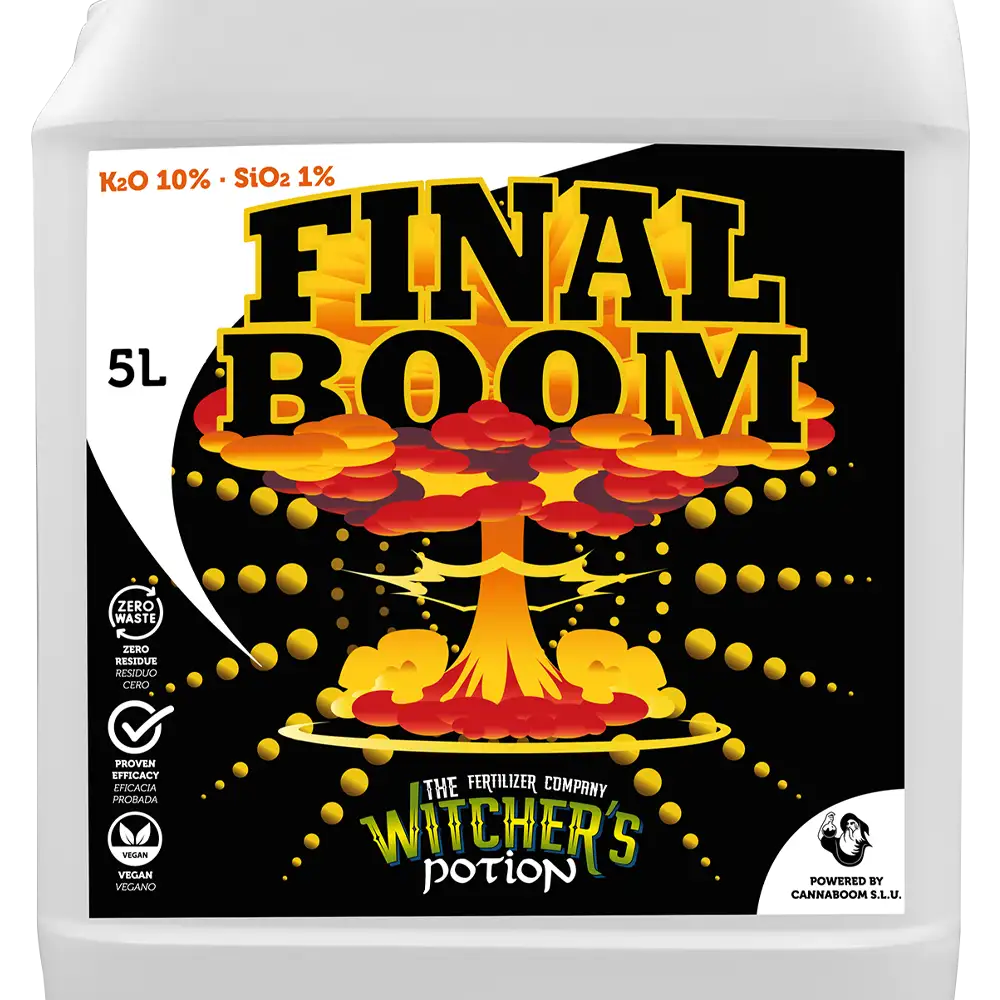
This week, as a corrective measure, I thought it necessary to do foliar sprays between waterings using elements that are indispensable at this beginning of flowering. Although Hesi Boost is not organic, when used simultaneously as a foliar spray with Big One from Top Crop; C4 from Mills; Ultra MG from Gold Label and also Organic Bloom from B.A.C.
So enjoy, brothers, and may next week and entry be clear for you about the wonderful work that is developing and I am very clear that we are on the brink of a magnificent season.
420 Forever and may green always be in our hearts.
Hug,
Tom
2 likes
comments
Share
Used techniques
ScrOG
Technique
6
Week 6. Flowering1y ago

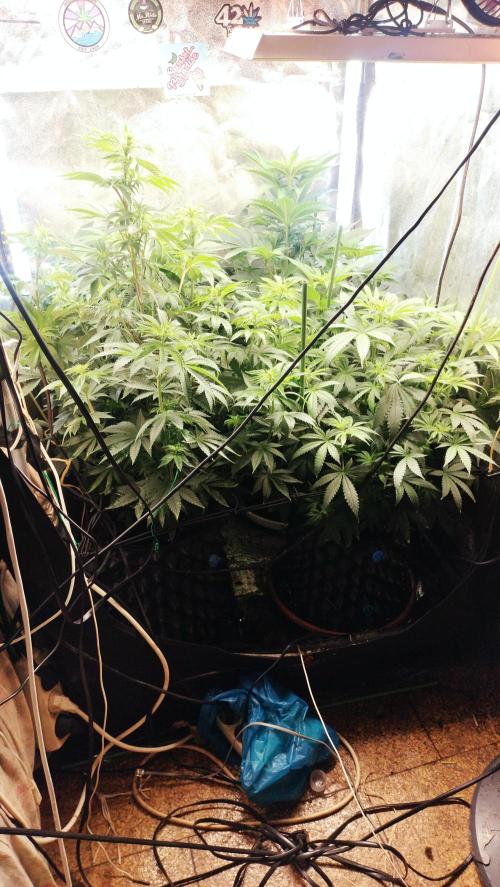


85 cm
Height
12 hrs
Light Schedule
27 °C
Day Air Temp
5.9
pH
Normal
Smell
720 PPM
TDS
75 %
Air Humidity
23 °C
Solution Temp
24 °C
Substrate Temp
23 °C
Night Air Temp
9 liters
Pot Size
1 liters
Watering Volume
30 cm
Lamp Distance
545 PPM
CO₂ Level
Nutrients 17
Ascophyllum nodosum (Kelp Solution)
3 mll
Mycofeed
4 mll
Bachumus Evolution F
4 mll
TommyBVRSA75 Indica Spring/ Summer Season 2025 - Flowering week 2 - 44 days since seed germination.
1) Right now, I'm really enjoying the conditions that are proving to be unbeatable for a perfect cycle.
It's almost as if I had asked the cannabis gods at the beginning of this cycle for the temperature/humidity variables and the VPD differential to be what could be on a standard chart for what is necessary for perfect conditions.
The vegetative and the cycle at 18/6, and if I interpret the Trolmaster graphs and what the limits of perfection are for the seedling/vegetative and flowering cycles we have, they were designed to maximum perfection.
Looking at the limits of lights on or off, the temperatures have always shown a nearly constant variation between 23ºC minimum and 28ºC maximum, and if the fluctuations of relative humidity are between 58% and 75%, this week, being early spring, we've had higher humidity than usual.
With this, it's easy to see that the intervals of the VPD factor (dynamic calculation between temperature and humidity), throughout the 44 days we've been in this cycle, the perfection of conditions has been present every week, with optimal VPD conditions in the vegetative weeks - between 0.55 and 0.85; for flowering, and that's where we are, the VPDs are between 0.85 and 1.25, and almost as if by magic, the conditions this year and in this season, largely because the temperatures are very mild and we've had plenty of rain in the old Iberian Peninsula, we are experiencing OPTIMAL conditions, and from my experience, it is in these early flowering weeks that 90% of the success of the final harvest lies, and if you take a look at what we've recorded in the diary and each weekly entry, there's excellent growth in the vegetative stage, and it's already very clear that we have perfect grows with unbeatable central cola structure and then a secondary base structure full of future flowering points, which is incredible how wonderful the development of these four strains is showing.
2) Three dominant indicas that are measuring up with phenotypes leaning towards perfect hybrids - and regarding Mr. Hide Seeds strains - the Shiska USA; the Jekyll Kush and the California Pearl, and a true spectacle, the Lockdown Kush from Sensi Seeds, which as a complete hybrid (60S/40I) sets the standard for a beautiful Indica phenotype with very broad leaves, but with vertical growth leaning towards Indica with a notable central cola.
3) If you notice all the details... NOT A SINGLE LEAF with a burn spot or underdevelopment, and on the way to the third week of flowering and much in the lighting period, some very loaded terpenes, very sweet, which are the KUSH genetics making their presence known and above all of excellent quality.
4) Unbeatable lower lateral structures with perfect internodal spacing, but noteworthy is the enormous amount of flowering buds that are revealing themselves in all four strains in growth. It's no mystery, and experience tells us, we will have super productivity, and to achieve outstanding results, we need to be attentive to defoliation during the grow, so that the entry of light and air allows for top-class buds in the end, and yes, the strains we have been growing for years are outstanding in every way.
Perfect in terpenes; with wonderful phenotype structures and with unbeatable grow structures so that in the end we can achieve a flowering with the plus that Indica phenotypes gift us, with abundant resin, super dense buds, and extremely attractive aromas that make you enjoy every puff of smoke as if it were the last.
Brothers, 420 always and that green hug to the universe of a plant that is peace, love, and understanding among men and with what nature has of the most beautiful.
LOVE...
TOM
likes
comments
Share
Used techniques
LST
Technique
ScrOG
Technique
7
Week 7. Flowering1y ago


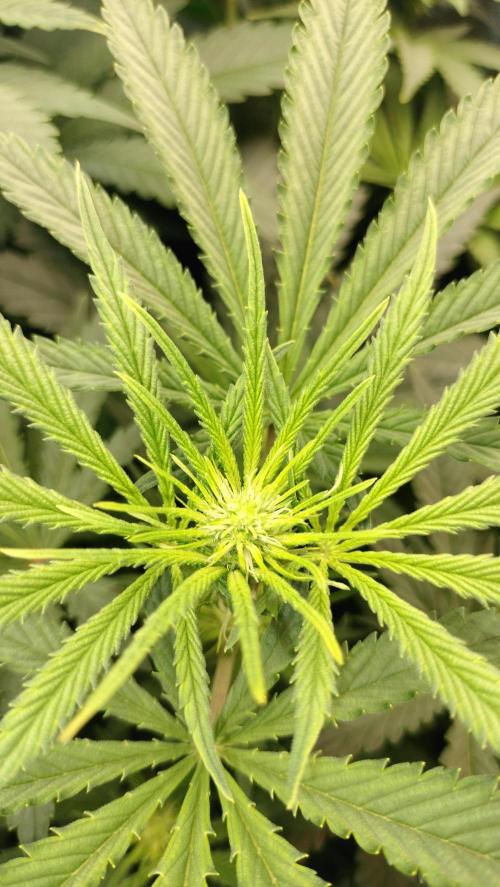


100 cm
Height
12 hrs
Light Schedule
27 °C
Day Air Temp
5.9
pH
Normal
Smell
720 PPM
TDS
71 %
Air Humidity
22 °C
Solution Temp
24 °C
Substrate Temp
23 °C
Night Air Temp
9 liters
Pot Size
1 liters
Watering Volume
30 cm
Lamp Distance
498 PPM
CO₂ Level
Nutrients 17
BacHumus Evolution F
4 mll

CANNA BOOST Accelerator
2 mll

CANNAZYM
2 mll
TommyBVRSA75 Spring/Summer 2025 - Flowering Cycle - Week 7 (day 50 since the start)
1) Let's see, brothers... if at the beginning I could ask for something that could be defined as perfect conditions for growing, this season we are having it, and the expression of growth is unbeatable, as you can see in the photos.
Not a single point of nutrient excess, nor a sign of over or under irrigation, and some strains that are "the mother" of how good they are.
2) Although the selection was largely based on the high limits of Indica genetics in these hybrids, the growth has had its whims, and since they are hybrids (like 95% of the seeds available on the market), it's very curious that the hybrids most loaded with Indica have revealed themselves mostly in their Sativa phenotype. On the contrary, the Lockdown Kush from Sensei Seeds, which should be the hybrid with the highest Sativa expression, has expressed its Indica character more exuberantly with its long leaves.
2) Two of the strains have developed a very typical "pine" growth - Lockdown Kush and Mr. Shiska USA, with a prominent central cola and lower lateral secondary branching. But in the photos, you can see that all the strains have developed a large number of flowering points, with one of the most balanced internodal spaces you could ask for, and they will certainly be super productive.
Regarding the other two strains, Mr. Jekyll Kush and Mr. California Pearl have phenotypes with numerous leveled flowering points at their tops, which are indicative of equally high future productivity.
So we have two phenotypes that find expression spread across the four strains, and the incredible genetics of the strains from the Mr. Hide Seeds bank is noteworthy, as well as the usual excellence of Sensi Seeds with this Kush Lockdown.
3) The sweetening smell of the Kush is very present, and in the strains we have in the grow, if the Lockdown and Mr. Jekyll are pure Kush and their smell brings those very clear Afghan hash tones, the aroma of Mr. California Pearl and its paternal Critical Mass is also in line with the more traditional Kush. Therefore, the only one that stands out is Mr. Shiska, which perhaps has terpenes leaning more towards something citrusy, but it also has a significant load of Afghan genetics from its paternal Big Bud.
4) This week has been the first to start LST measures and, above all, a very judicious defoliation, as I hadn't yet started to "clean" the base of the grows. With the defoliation, it has been possible to have the wonderful surprise of understanding the enormous amount of resin present alongside the stems and primary leaves that have been removed to create spaces for light penetration and the indispensable airflow that allows for gas exchange and oxygenation between the substrate and the atmosphere.
For those who don't know what the right point and moment for defoliation is, I'll explain it in the simplest way possible. I'm not a supporter of extreme defoliation like "Lollipopping" defoliations, but defoliation is a basic condition for a quality and optimal quantity harvest.
After the appearance of the first signs of flowering, it is necessary to defoliate, and it must be done mandatorily. NOTE, never, but never defoliate autoflowers, and for anyone who does autoflower grows, forgive me and don't get mad, but I don't consider "growers" the brothers who dedicate themselves to growing this type of plant. I always say something my grandmother told me about haste and people who don't do it with patience, and those who decide to plant autoflowers usually have in mind to put seeds in the ground and before they germinate, they're already dreaming of the joints they're going to smoke and want what takes 8 weeks to be something like what takes 14 weeks to grow. My grandmother used to say, and not a few times, "To the bitches that hurry, blind puppies are always born," and the autoflowers are the "blind puppies."
In autoflowers, there is no time to impose control, and the banks that focus on selling these types of strains put them on the market for a growth countdown to get smoke in the heads of those who are starting and know little about this. Experience tells growers that no matter how much they sell you "now for 15 euros and in two months we give you buds the size of stones and with 40% THC." No matter how aggressive you make the nutrients; no matter how good your lights are; and no matter how much you use light cycles from start to finish of 24 hours on, the buds will always be of lower quality; the quantity you get will always be less; and no matter how much they put paternal strains to give you terpenes and colors that they sell on the internet more like hamburgers than real buds, my question to anyone who goes for autoflowers is... what good are colorful buds treated with Photoshop if in the end, when you dry them, the buds are pretty much the same... they might be darker or more or less loaded with sugars, but the truth about cannabis is always the same... CONTROL OVER WHAT YOU DO, SO YOU HAVE THE RESULT YOU EXPECT AND HAVE SOMETHING OF THE HIGHEST QUALITY... and that is only obtained with time and much more with variables that when you're in photoperiods, you can control.
And I explained... for example, it's not possible to defoliate autoflowers because when you do defoliations, your grow "stops" for a couple of days, and if you stop in autoflowers, fewer days mean fewer buds, lower quality buds, and much more, non-defoliated lower areas of the grow will occupy areas where light and air won't enter, and what will happen is that instead of having impressive buds, in the end, you'll have in those areas what are designated as "snowflake buds" that after drying are nothing.
You only become a grower when you work with photoperiods, and that's because, look, you control, for example, the size of your grow, as you can give it the vegetative time you want and switch to flowering when the conditions are right, thus controlling factors like lights; like the type of nutrition according to each cycle; and very, very importantly, photoperiods allow you to make decisions that can evaluate less good strains or expand the potential of what is magnificent.
Defoliation allows you to remove everything at the base of the grow that won't serve you at all, whether they are primary leaves that cease to be important in the photosynthesis process; you clean what we call "vampire branches," which are secondary growth shoots on branches that, since they cannot find themselves in areas that receive optimal light and aeration, if you don't remove them, they take away the strength you need in the top areas where you will have the first-quality buds. Moreover, defoliation in lower areas when entering flowering is crucial to allow light and air into the substrate, and with that, the positive arbuscular bacteria and fungi allow your roots to integrate water optimally and convert phosphorus and potassium into ammonia (which is the food for plants). And when you head towards the end of the grow, much more than the importance of photosynthesis based on leaves and biomass of these (i.e., the amount of leaves), it is beneficial that the organisms that make your soil a living soil are the ones that work as integrators of ammonia and sugars that will be the foundation of the best terpenes and the THC that your grow will produce.
So, around the second week of flowering begins, you should always start to defoliate your grow with criteria, and defoliation always starts in the lower areas of your grow, and from there on, always keep in mind if the vampire branches are present because they will only serve to take away strength from the grow (hence "vampires"). In the upper areas of the grow, only remove older primary leaves or those that start to burn over time, as burned leaves, in general, cover points where light is needed to fatten buds and lose photosynthetic potential, and that is the philosophy of defoliation.
5) The last point of the week is also the beginning of LST (low stress training), meaning that by twisting branches, you can create spaces for the development of flowering shoots and direct your branches to where you can maximize a final harvest.
6) Just a final note for you to see the TrolMaster profile, which is very revealing that the conditions this season are a true precision clock, where we have had perfect VPD in vegetative and now in flowering, indicating that the conditions throughout the cycle are unbeatable.
To everyone, a mega 420 and Green greets to all the brother growers.
Hugs,
TOM
1 like
comments
Share
Used techniques
ScrOG
Technique
Defoliation
Technique
8
Week 8. Flowering1y ago


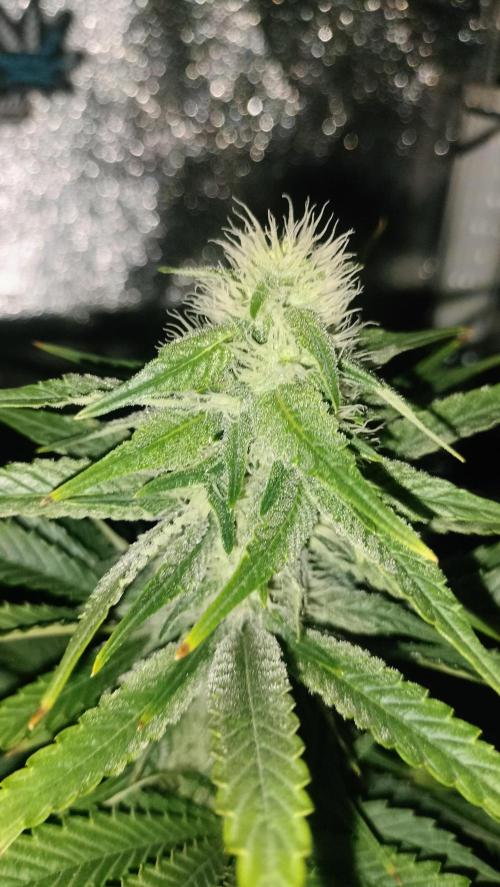


105 cm
Height
12 hrs
Light Schedule
28 °C
Day Air Temp
6.0
pH
Strong
Smell
698 PPM
TDS
75 %
Air Humidity
23 °C
Solution Temp
25 °C
Substrate Temp
23 °C
Night Air Temp
9 liters
Pot Size
1 liters
Watering Volume
30 cm
Lamp Distance
442 PPM
CO₂ Level
Nutrients 21
BacHumus Evolution F
4 mll
Mycofed
4 mll
Cultivers Fruit Fattening
1.3 mll
TommyBVRSA75 Day 60 - alternating between 3 to 4 weeks of flowering.
1) The growth sequence and conditions have been unbeatable up to this point in this entry to the eighth week of the growth cycle. A fully blooming stage where the created conditions have been perfection, and the respiration parameters of the system measured by the VPD (vapor pressure deficit) are at mathematically designed limits with nocturnal limits of vegetative transpiration and perfect flowering limits (between 1.00 kPa and 1.16), which is why the four strains in development are thriving in quality this season.
2) Outstanding the number of flowering points and the fantastic internode insertion indicative of solid buds for the remainder of the cycle. Day 60 under such conditions assures us that in a month, we will be harvesting super plants that have perfectly condensed the incredible genetics in their phenotypes.
3) Indeed, the choices made at the beginning of germination aimed to harness the Indica potential of most hybrids, and as things are, the phenotypic expression is very much in sativa lines and not entirely so, largely because the Shisha and more recently the Jekyll Kush have showcased a pine structure with very notable central colas capable of producing central buds with close internodes and a very visible explosion of trichomes along with a remarkable group of terpenes and resins.
4) The citrus and sour strawberry aromas of the Shisha are crystal clear; the pure Kush from the Jekyll Kush and the Lockdown (the only strain distinct from the Mr.Hide that has been the choice for the season... the Lockdown is part of the Sensi Seeds offer and the quality is indisputable) and the California Pearl is the only one with a somewhat different organoleptic character, as it combines three strains that are very distinct, but I eagerly await the result of the cross, much due to what a TrainWreck and a Critical Mass can represent in the same specimen.
5) The development of the phenotypes of the four grows is fantastic, and I have always kept a close eye on the essential need for defoliation, especially since the growth vigor is abundant. I am very clear that removing everything that is excess at the base of "vampire branches"; secondary growths without significant impact, and branches that represent obstacles to the supply to upper levels are mandatory removals, and these weeks are crucial for defoliation to have a significant impact on the final result. As I always tell my brothers, in photoperiodic grows and not automatic ones, no matter how much defoliation has those three to four days of growth slowdown, the ongoing supply of Phosphorus and Potassium, while always considering the need for enzymatic contributions that allow for more effective root integration, the act of defoliation and removing what won't yield well in the future as prime material (let's say top-level buds and removing what might pass as "snowflake" type "buds" should be done as soon as possible.
6) The fattening nutrition is already underway, heavily based on products in the molasses line such as Top Candy; Mycofed; Cultivers Engorde and the Bachumus Evolution F, and also the heavily loaded supplements of Brutal Buds at a rate of 1g per liter of irrigation and very much at the rate of PK 56-34, which is the explosive development bomb for fattening and bud size.
So, on day 60, it is clear from the indicators that we are 4 weeks away from harvest and that throughout this time we should strengthen the amount of PK, sugars, always keep in mind the very good VPD conditions we have, and create conditions for a season that I am very clear will be one of the most successful in terms of quality and quantity that this season's grows will yield.
420 to the grower brothers, and may God Jah always keep us safe.
Green greets!
TOM
3 likes
comments
Share
Used techniques
LST
Technique
ScrOG
Technique
Defoliation
Technique
9
Week 9. Flowering1y ago


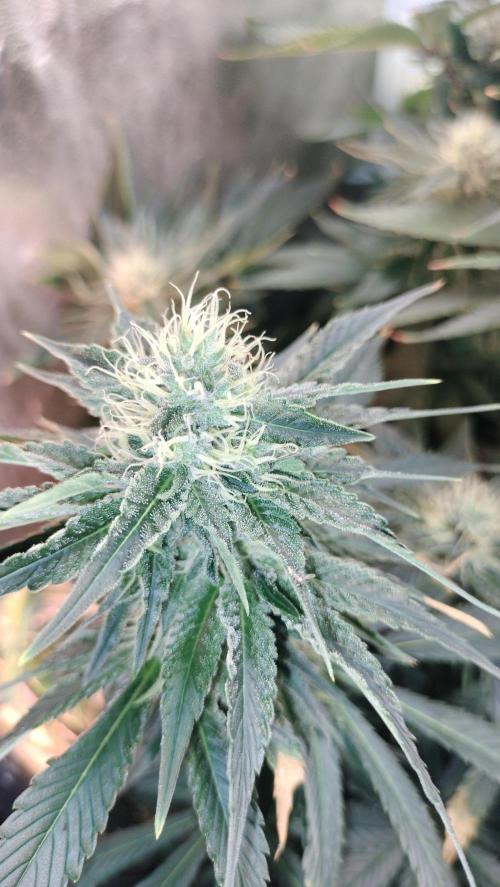


113 cm
Height
12 hrs
Light Schedule
29 °C
Day Air Temp
6.2
pH
Strong
Smell
724 PPM
TDS
77 %
Air Humidity
24 °C
Solution Temp
25 °C
Substrate Temp
24 °C
Night Air Temp
9 liters
Pot Size
1 liters
Watering Volume
30 cm
Lamp Distance
478 PPM
CO₂ Level
Nutrients 16
Flowering 4.4.8.
2.5 mll
Mega Buds 0-50-32
1 mll
natureBAC
1 mll
TommyBVRSA75 Spectacular flowering growth point with bud growth in size and organoleptic character.
Scents loaded with resins very much like Kush and incredible colors and aromas that express genetics of the highest quality.
It is clear that around June 20th, I will make the cuts and start the drying, taking full advantage of the lunar influence in the waning phase, which will be key for top-quality buds.
The whole season has been based on the strength of indicas, where the consistency of temperature and humidity has played a major role in something unbeatable.
We are in a consistent defoliation to allow optimal air and light entry, and towards the end of the cycle, we have already brought out the Brutal Buds dust and its PK 50-36 dose, which induces fantastic bud growth.
Brothers 420 always and pushing forward with the good things coming our way.
I am thrilled with the quality we will have heading into summer, and the super Indicas will be memorable.
Green greets to everyone.
1 like
comments
Share
Used techniques
LST
Technique
ScrOG
Technique
Defoliation
Technique
11
Week 11. Flowering1y ago


114 cm
Height
12 hrs
Light Schedule
30 °C
Day Air Temp
6.3
pH
Strong
Smell
470 PPM
TDS
75 %
Air Humidity
25 °C
Solution Temp
26 °C
Substrate Temp
24 °C
Night Air Temp
9 liters
Pot Size
1 liters
Watering Volume
30 cm
Lamp Distance
512 PPM
CO₂ Level
Nutrients 5
Mega Buds 0-50-32
1 mll

FlashClean
3 mll

PK 13-14
1.5 mll
TommyBVRSA75 Well, brothers... day one of the countdown.
Today we've kicked off the final flush and loaded the Flash Clean system from T.A. in a quantity that satisfies the flush ratio.
Dilution of Flash Clean at 3 ml/L with an exceptional watering of almost two liters per pot.
Result and why three weeks ago we had already used Flash Clean to remove accumulated salts in the system and the logical thing happened: solution coming out satisfactorily as a first impact of removing the last salts.
In the coming days, and this until just the 11th, meaning the countdown will be 9 days, continuing with chlorine-free water at 6.2 pH and obviously without nutrients, with a significant reduction of EC in these next eight days, always giving enough water to produce runoff from the entry and out through the holes of the airpots, which are so good at preventing excessive nutrient concentration and which is crucial so that in eight days and two applications of Flash Clean it will be super clean and amplifying sugars and cannabinoids and of course... terpenes of the highest quality.
And you ask me... Tom, why until the 11th and not the 10th or the 9th??? Because after the 11th, the cut will happen on the 12th, we will be under a full moon and that is the moon phase that allows for superior concentration in the buds of resins, terpenes, and the natural sap of the grows in upper parts. With this and with a perfect flush, the final result will be unbeatable, and even more so if you want to concentrate terpenes and cannabinoids, try to have the final trimming occur at a time when the tides in your area are favorable, and if you are right by the sea, it will be better understood, that the cut should happen when it is going from empty to full. That also ends up having an influence.
This simple meeting of the moon phase and more now in June in the northern hemisphere will allow for the water that remains in the system at the bottom of the stems and towards the roots to be cut, and with that, drying will be faster and the quality of primary drying will be superior, making the curing process much more profitable.
So the cut on the 12th/13th at the latest will be a cut where the buds will already be in reduced water, which would be for example from full moon to waning quarter where much of the weight of the cut ends up being water, and you will have to wait longer, plus the loss of mass that will result in very hard buds and without water.
This is how the moon cycle works in plants, and choices must be made.
From the photos, you can see... completely developed and matured buds with an incredible result of indicas... what an impressive smell of typical Afghan hashish from the Kush parents that in practice all the strains I have put in this season will yield impressive quality and a smoke that will be scandalous.
You are surely seeing and the countdown I pointed out was fulfilled... indicas... stable temperatures... perfect genetics and the proof that for indicas, it is possible and desirable that instead of going for "automatic" puffs, the photoperiodic indicas of a lifetime have very short cycles with 12 weeks from seed to cut and drying, and they are ready.
Important point, "polla" automatics would take you less than two weeks, and the difference is that here there will be buds in enormous quantities compared to the best of the automatics, and the yield of these photoperiodic indicas is simply close to four times what you could obtain with "automatics." Do you understand now that less than a month difference in the end, the result is unbeatable.
So remember, indoors and in temperate climates in spring, an indicas season from seed to cut takes 12 weeks, and the difference between 12 weeks of excellence or 9 weeks of rush and genetics where ruderalis is what gives it the "steroid of haste".... in the end, everything is different and between 9 weeks of lights in a complete 18/6 cycle or 12 weeks where at week 4 you switch from 18/6 to 12/12... rationalization of electricity and resources. Do the math and try to understand now why always, but always, the regular photoperiodics are "the real thing" and don’t let those banks that dominate advertising and sell you "FB" automatics as the best... lie to you... simple and more because in the end, colorful buds like they were global fast food hamburgers are not the best.
So enjoy the last photos of the buds already ready and in their full nuances... because in two weeks the next photos will be well "trimmed" and upside down.
Another quality season will come to an end with promises of wonderful things.
420 always and much love and affection to all the grower brothers.
You are phenomenal 👽.
5 likes
comments
Share
Used techniques
Defoliation
Technique
12
Week 12. Harvest1y ago
Happy Harvest Day!


10/10
Rated
An interesting strain due to its very classic Indica character. Very Afghan in its terpenes and perhaps one of the most consistent Shiskas on the market.
Productive and with very good buds in density.
The resin is incredible...
Show more
Original
Spent 75 days
Ger Veg Flo Har
210 g
Bud wet weight per plant
1
Plants
0.65 m²
Grow Room size
Normal
Difficulty

Happy
Positive effects

Insomnia
Medical effects

Earthy
Taste
Height
Day air temperature
Air humidity
PPM
PH
CO2
Light schedule
Solution temperature
Night air temperature
Substrate temperature
Pot size
Lamp distance


TommyBVRSA75 In the end, everything went as anticipated. Need to cut three days before the full moon but already with a very advanced waxing, which suggests that the sap from the grows was already in the buds. It has been hard work as the heat today has been incredible even inside the house.
In the end, a great experience and highlights in the cut for the bud density of the Lockdown Kush and especially the Jekyll Hide with a very special varnish-like aroma.
3 likes
comments
Share
Equipment Reviews

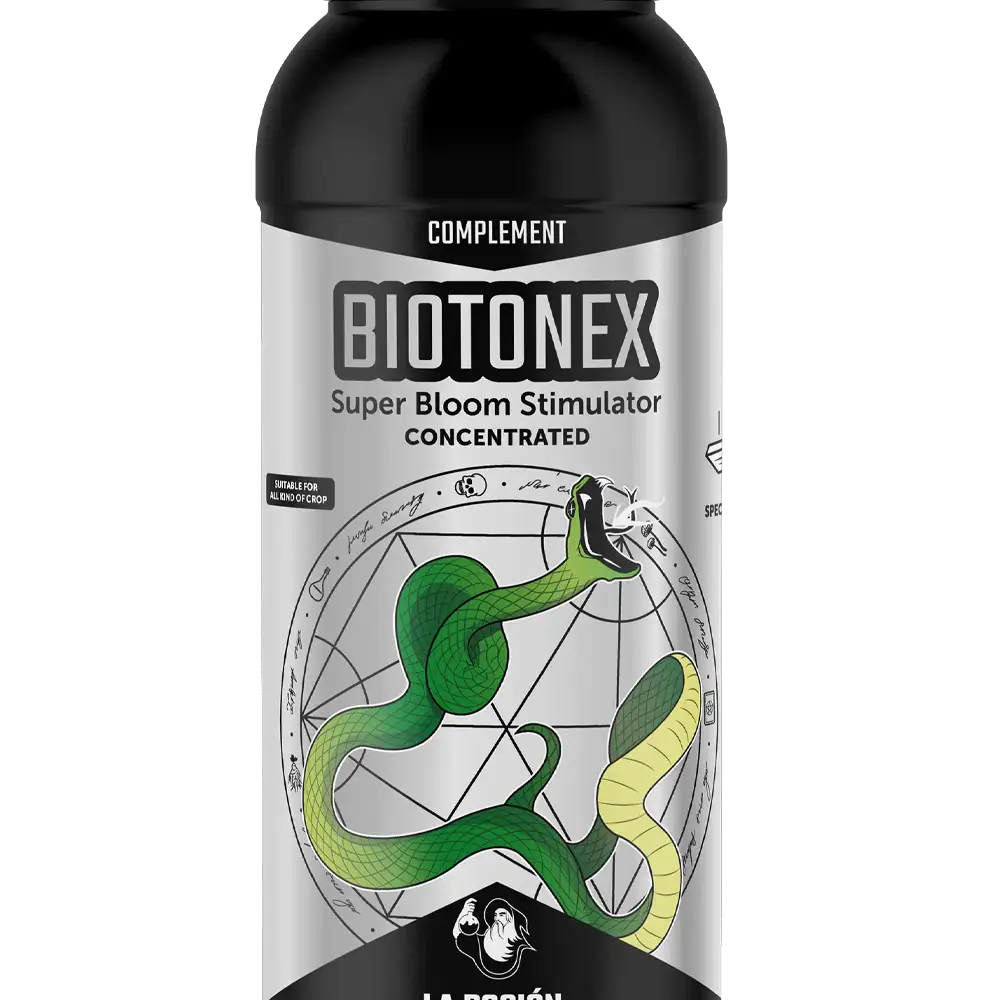

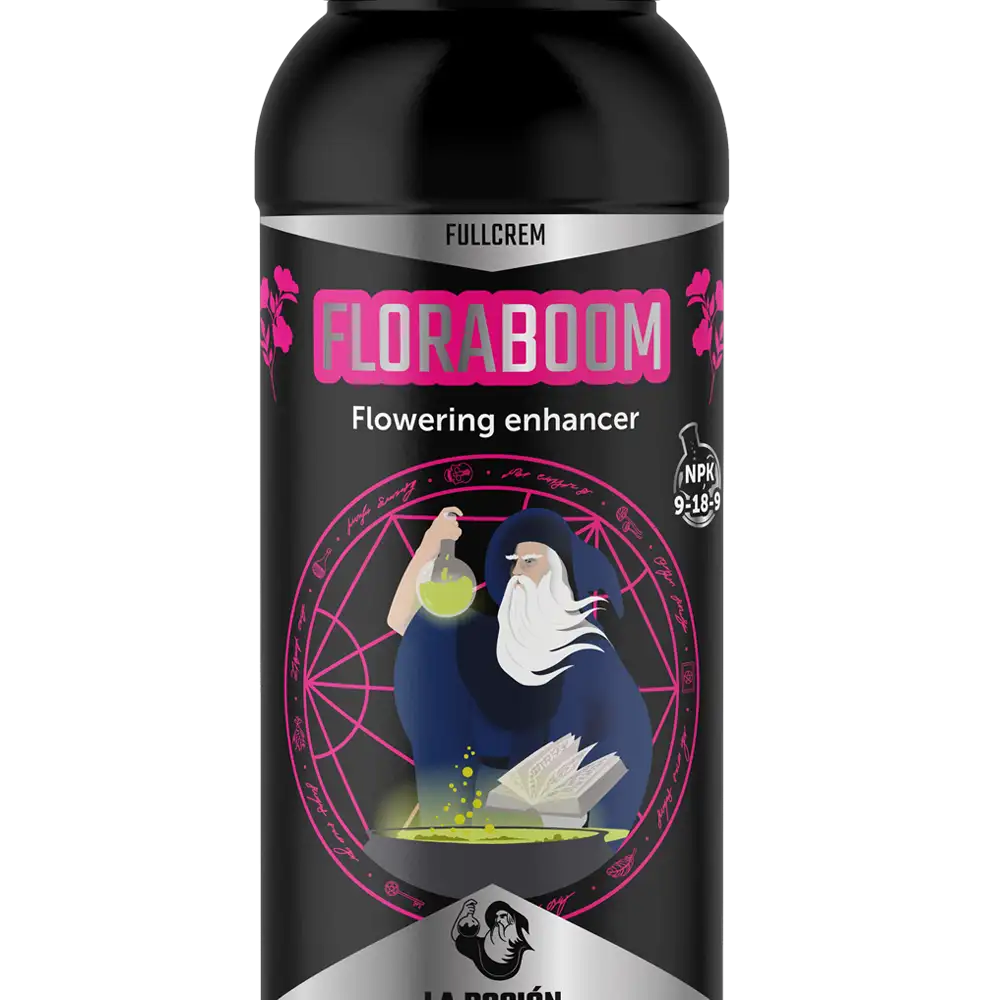
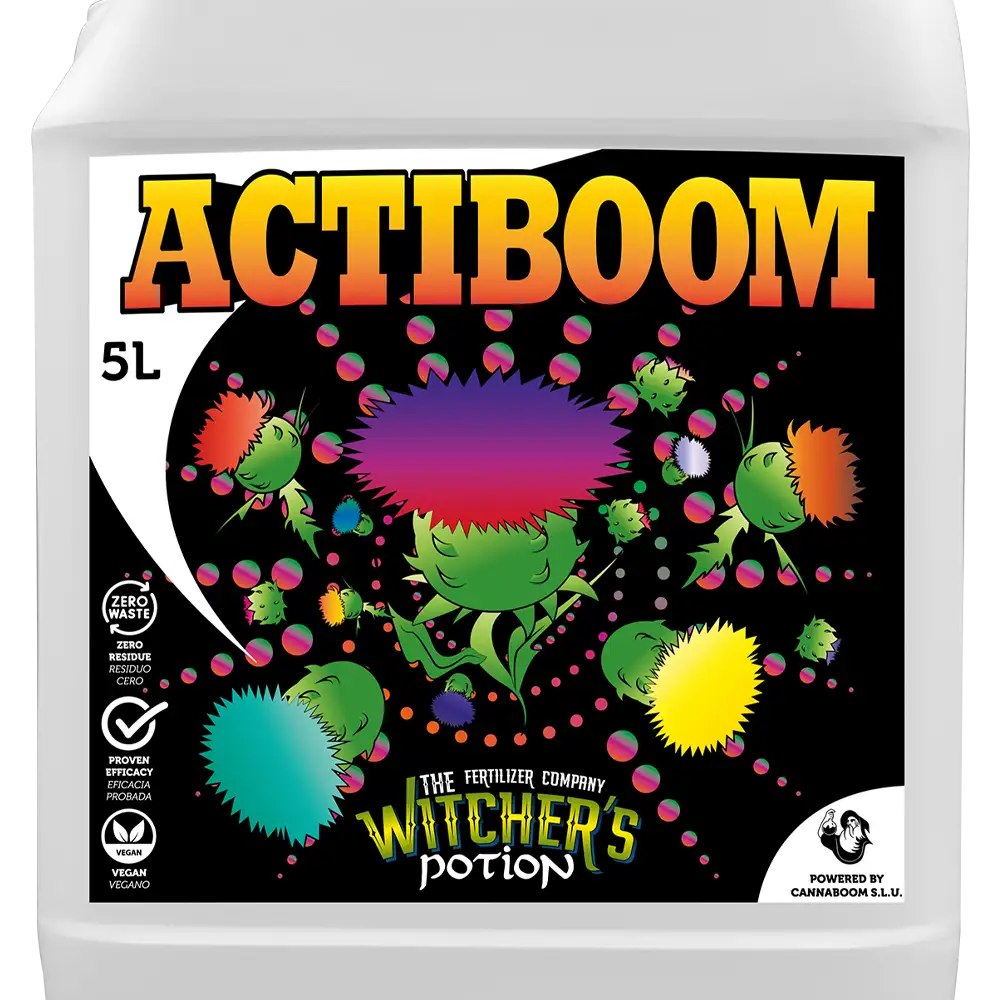

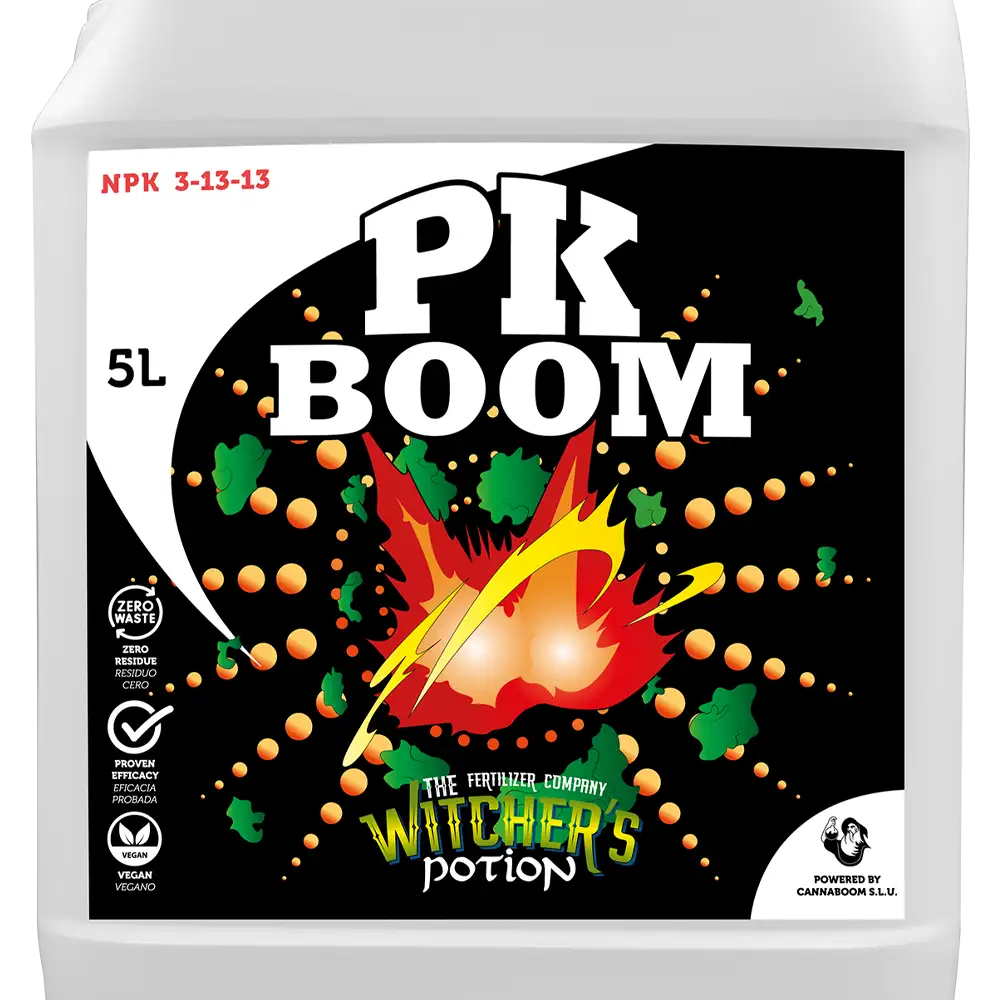






12
Week 12. Harvest1y ago
Happy Harvest Day!
10/10
Rated
Uno de los Kush más increíbles en términos de resinas y de terpenos especiales que ya he algun día plantado.
Un muy pungente aroma de barnices y un clásico olor de diesel, dejan adivinar que será una cepa de super calidad de humo. He probado la "tijera" del corte y me he quedado en otra galaxia.
Es de esas cepas con un pedigree Kush que no engañan y es muy poderosa en su primera reacción a la primera calada que le das.
Me interesa sobremanera la evolución de su curado por los terpenos muy especiales que tiene.
Una cepa muy, pero muy prometedora...
Show more
Translate
Spent 75 days
Ger Veg Flo Har
186 g
Bud wet weight per plant
165 g
Bud dry weight per plant
1
Plants
0.65 m²
Grow Room size
Normal
Difficulty

Euphoric
Positive effects

Pain, Anxiety
Medical effects

Flowery, Diesel, Herbs
Taste
Height
Day air temperature
Air humidity
PPM
PH
CO2
Light schedule
Solution temperature
Night air temperature
Substrate temperature
Pot size
Lamp distance


TommyBVRSA75 Very, very promising and surely the star of the season. I loved the exotic aromas and the quality - medium size and density of the buds.
4 likes
comments
Share
Equipment Reviews
12
Week 12. Harvest1y ago
Happy Harvest Day!
10/10
Rated
La cepa a crecimiento en esta temporada con carga híbrida mixta entre sativa y indica más reseñable
Cogollos de enorme tamaño en las colas centrales con parentalidad muy clara de la Big Bud.
Muy cargada en afgano y una cepa que ha demostrado un fenotipo muy particular, pues existían segundo las informaciones, una posibilidad muy particular del desarrollo de hasta tres fenotipos y más...ha sido una super productora que impresiona por el peso y densidad de sus cogollos.
Show more
Translate
Spent 75 days
Ger Veg Flo Har
262 g
Bud wet weight per plant
182 g
Bud dry weight per plant
1
Plants
0.65 m²
Grow Room size
Normal
Difficulty

Creative, Energetic
Positive effects
Insomnia, Depression
Medical effects

Woody
Taste
Height
Day air temperature
Air humidity
PPM
PH
CO2
Light schedule
Solution temperature
Night air temperature
Substrate temperature
Pot size
Lamp distance


TommyBVRSA75 The strain that would have the most predefined Indica characteristics but has ended up giving us the greatest organoleptic and even physical traits of an Indica.
Despite having Kush parents, the parental strain that has become most popular in this grow has been Big Bud, and the incredible size of the buds on the main cola is very noticeable... true rocks in density and with a weight that matches this characteristic.
Very resinous and loaded with trichomes...
Let's see its evolution in curing, as there is a terpene that I understand to be quite related to the S.F.V (San Fernando Valley) family and has very OG characteristics at its base.
Let's see later what the smoke report I will make tells us about this strain.
Of all, this is the one I understand to be the biggest mystery.
4 likes
comments
Share
Equipment Reviews
12
Week 12. Harvest1y ago
Happy Harvest Day!

10/10
Rated
Crecimiento complicado mucho en parte por el carácter de buds de base de grandes dimensiones y donde ha sido necesario gestionar espacio para crecimientos permitiendo la entrada de luces y aire y ha sido una constante a lo largo de las semanas, defoliar la Lockdown Kush mientras crecía.
Ha sido en los días finales expuesta a una área del armario de grow donde el aire era más complicado en la circulación y mucho el problema ha sido intentar con mucha pendência limitar el crecimiento de moho.
Al final algunas de la base tenían algún moho exterior que ha sido limpio con un pincel y con una solución de limón y bicarbonato en los cogollos de base.
Los de arriba y más maturados están perfectos y es una cepa de altísima calidad siempre en la linea de lo que Sé si sabe hacer.
Como comentario final, es muy presente la enorme cantidad de resina presente y la expresión de uno de los fenotipos posibles que determinaron, que más que una sola cola central, el grow se producirá en media docena de colas que crecieron de manera uniforme y con resultados maravillosos.
Este mismo fenotipo ha sido el que en regla como grow crecía a menor tamaño vertical y que en lugar de una cola central, desarrolló muchas y en la linea de un fenotipo tendiente a sativa, pero que de sativa nada tiene.
Muy bellos los colores tendientes a rojo y morada y la opción de una cosecha con los días de grow en los cuales se hizo, en mucho pasó por un conocimiento previo de esta cepa y saber qué esta cepa es de las que convierte en un tiempo muy rápido la estructura del THC a CBG y si su nombre ya es Lockdown, si la dejas madurar en demasía, el carácter narcótico te tumbará sin que llegues a disfrutar de la panoplia de efectos que presenta.
Relatório de humo : muy clara la linea afgana con un prolongado aroma a hash y con algo de terpenos cítricos de la SFV de su genética.
Una cepa con un humo tremendamente psicoactivo pero también con un carácter de relajamiento de cuerpo muy presente. En toda la linea es una cepa cough lock sin duda alguna y es de las cepas que sirve para fumarse en casa sobre el final del día, pues te tumba sin que sea necesario mucho.
Pese a que era de las cepas de la temporada la más hibrida, ha revelado en gran medida su carácter Indica, siendo un verdadero "tortazo" cada calada de humo. Y como os he dicho, hay que tomarse la cosa de espacio pues el "stone" es simplemente arrollador.
Cuanto a calidad organoléptica es una de las Kush de Sensi Seeds y son un montón, de las más interesantes en su perfil de terpenos y más, después de secado, un yeld por encima de 200 gramos, ha sido tremendo mucho por qué fue un grow que no supero el metro y el peso de la masa de cogollos mucho pasó por las características de estos, muy resinosos y además muy compactos.
Show more
Translate
Spent 75 days
Ger Veg Flo Har
232 g
Bud wet weight per plant
203 g
Bud dry weight per plant
1
Plants
0.65 m²
Grow Room size
Hard
Difficulty
Earthy, Citrus
Taste
Height
Day air temperature
Air humidity
PPM
PH
CO2
Light schedule
Solution temperature
Night air temperature
Substrate temperature
Pot size
Lamp distance


TommyBVRSA75 The most beautiful and interesting of the four strains to grow this season.
Incredible terpene quality and an absurd amount of trichomes integrated into buds of an absurd density, and each of the buds is heavy as rocks.
A very strong Afghan aroma and a typical hash dimension that doesn't deceive about the parentage of this strain.
It impressed me because it's not excessively tall, but due to the very short internodal spaces, it's one of those strains that presents an almost continuous flow of buds with tremendous thickness and density.
As a Senso genetic, there's no doubt about its intermediate level, and the most complex part of this grow was the very present need for defoliation at the base since the abundance of thick and impressively hard leaves made trimming feel like cutting something with the consistency of cabbage leaves.
It has developed into one of its possible phenotypes, the one that leans more towards its hybrid character with a very present indica character, which allowed for a harvest around 80 days, while for example, some other phenotypes set the optimal harvest at 100 days, and based on the evidence, extending growth by more than two weeks and due to the change in indoor temperatures to very high levels and equally very high humidity, which would only bring unnecessary stress for the VPD metrics (transpiration values of the grow), and a lot of why in the most recent week and after the start of the flush, it became clear that the buds at the base were vulnerable to mold, so as a countermeasure on harvest day, I washed the base buds applying with a brush a solution of chlorine-free water with lemon and baking soda in dosed parts for each liter of water.
No tricks... it will be an incredible strain in its smoke... but we'll talk about that later.
420 to all the grower brothers, and may God flood us with his most wonderful plant of existence.
8 likes
1 comment
Share
Equipment Reviews
1 comment
Sort by
popularity
popularity
newest
oldest

Yan420 commentedweek 121y ago
Congrats growmie 🍻👌♥️
like 1

the end.
Enjoying this diary? Follow for more updates!

Prefer the old Diary view?
Go back to the old Diary view