


Need advice from experienced autoflower growers on the effects of Cal-Mag deficiency and the effects of stress

Dumbledoorstarted grow question 9mo ago
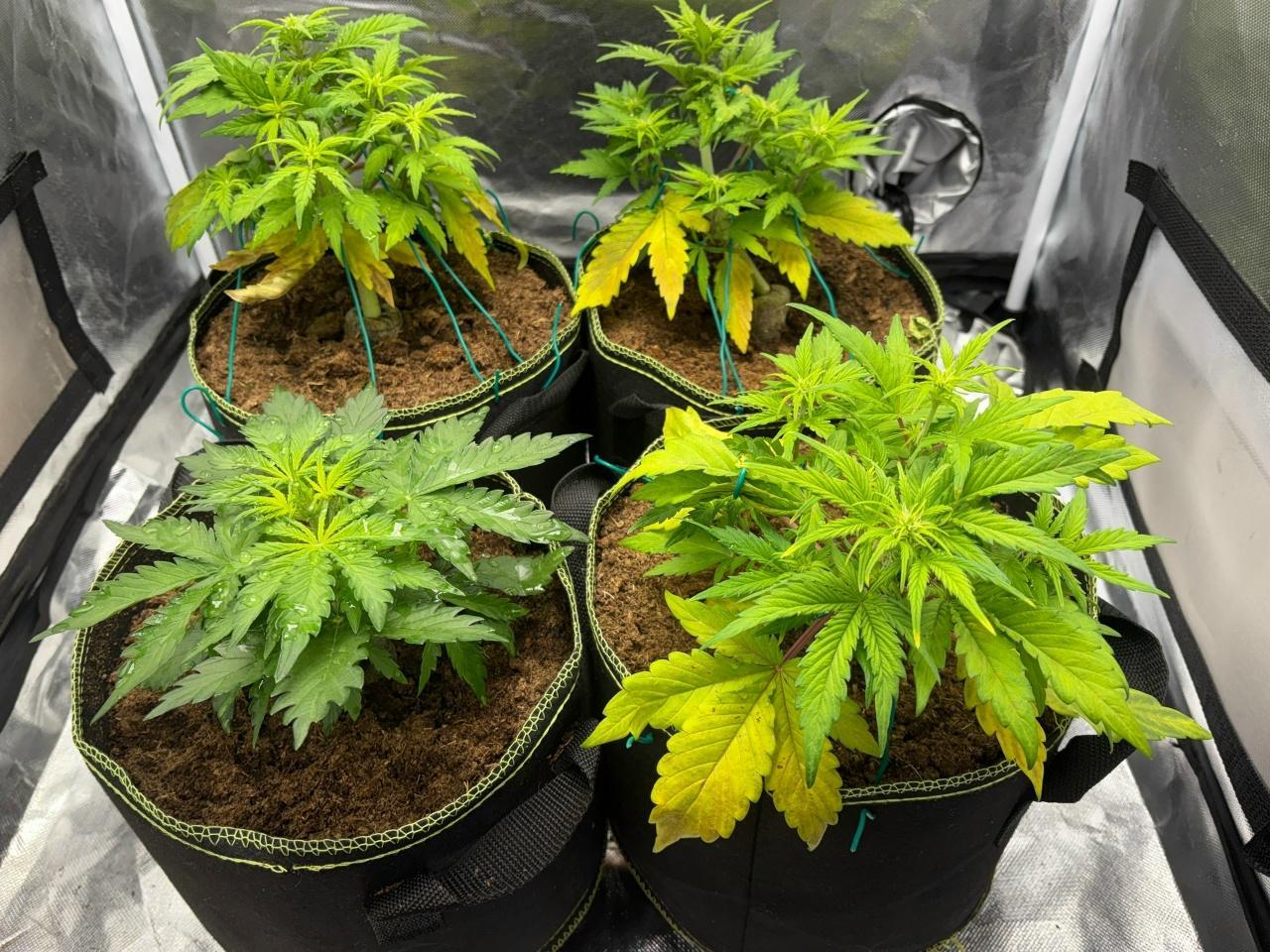
Do you think the plant will be able to produce a quality harvest after the effects of a Сa-Mg deficiency and a 24-hour absence of light? I had a sad experience when an autoflower experienced a lot of stress and produced a harvest with a weak effect.
Open
Other. Smoking
Setup. Strain · Autoflowering
Feeding. Deficiencies
likes
Answer

Sodaboianswered grow question 9mo ago
Your leafs are getting too wet downside.
Yellow leafs can come Back.
You need some potassium bro
likes
Complain

GolliGrowsanswered grow question 9mo ago
I’d answer them something like this:
Your plants still look absolutely capable of giving a good harvest. A Ca-Mg issue and one 24-hour dark period are more likely to reduce yield a bit, not completely ruin potency. The new growth still looks fairly healthy, which is the main thing.
If you’ve corrected the Ca-Mg and they get back on a stable light schedule, good watering and decent environment, the buds can still turn out strong. Just expect maybe a little less weight, not a totally weak effect like with a heavily stunted auto.
likes
Complain

PLANTPARENTHOOD420answered grow question 9mo ago
The effect of it should be fine man do what you can to correct it and keep on going these things happen but dont gi e up!!
1 like
Complain

Organomananswered grow question 9mo ago
Can't see any evidence of a cal or mag deficiencis, three of the plants are suffering with a nitrogen deficiency though and probably lacking P and K also.
Not sure what you are feeding them, but the dosages are off.
Also, avoid wetting the leaves and bunching them up with tie wire........scrunched up leaves can invite molds and fungi.
Weak buds in your previous grow could be down to your application of needless defoliation........without the leaves making energy, the plant can, not produce healthy trichomes in large amounts.
All of the plants energy to grow and thrive is made by the leaves........less leaves = less energy being made = less potential.
Notice how healthy the plant front left looks with all its leaves compared to the other three.
There is hardly ever a genuine need to defoliate.
24 hours without a light once is not going to harm anything, but removing large amounts of energy making, life sustaining leaves will.
Anyway, sort out your N/P/K deficiencies and there will still be a chance to harvest quality buds.
In a situation like this, a diary would really help to pinpoint what you are doing wrong.........also asking for help sooner wouls have been better, now being so advanced makes it harder to rescue these plants compared to if you had asked questions 2 weeks ago when things were no doubt already looking suspect.
1 like
Complain

00110001001001111Oanswered grow question 9mo ago
One 24 hour period of no light or a slight deficiency will not cause a harvest to be drastically different. Auto or photo is irrelvant to this. Though autos are generally weaker plants to start, so any less than optimal outcome will draw them down further than a photoperiod due to lower starting point on average.
That is an overt N-deficiency. Maybe, there was a misdiagnosis? Auto or photo is irrelevant, again. They really aren't as much different as most perceive, anyway. The trigger to flower is 99% of the difference. Maybe, some potential carryover from ruderalis evolving in northern latitudes, but the ruderalis genetics as a whole are severely reduced in autoflowers when made correctly, so assuming they have all of those traits is a false perception of the peanut gallery.
You are not providing enough N in this picture provided and no signs of either Ca or Mg problems - at least not seen from this far. But, the N-deficiency is screaming, 'help!'
People that think autoflowers are drastically different are confusing cause and effect. i joke about them being wearker, but even that is not so huge of a difference at this stage.
Miscellaneous:
Stop foliar sprays. either going to cause mold onen day or clogging up stomata which will impact CO2 intake -- a much more important limiting factor than just about anything else. Light and carbon are the first priority to worry about and shouldn't be skimped on for the benefit of other things. Wet plants invite pathogens. Roots are for nutes and stomata are for transpiration. A foliar spray can be effective at deliving nutes to a locale, but this should only be done in extreme contexts that should also be 100% avoided with basic competency. When healthy, foliar sprays are a form of masturbation... makes people feel good but doesn't do much for the plant.
Calcium deficiency -- yellowish-brown spots that will probably start near the top but not on the top leaves -- has some mobility.
Magnesium deficiency -- rust colored spots along with interveinal chlorosis. This will be mid and lower part of the plant as it is a bit more mobile, i believe. The other key difference -- when you see visible symptomsm of Mg deficiency, it's 4-6 weeks delayed from the actual physical deficiency. So, when you see it, any fertilization adjustments for 'next time' need to start 4-6 weeks before you saw the symptoms to be most effective.
The point is, these are 2 different problems. There is no such thing as a calmag problem. you can have both a ca and an mg problem, coincidentally, but it is not a calmag problem. You can use other products than calmag to mitigate each. epsom is a good source for Mg, for example. calmag tends to be diluted and makes you buy a shit ton of unneccessary bottles over time.
Incorporate something like cal-nitrate and you'll never have a calcium problem nor a need for "calmag" at all. it's like watching people ram their head into a brick wall and deciding to do it again, and again, and again... if a formula doesn't provide enough, adjust the formula or use different brand of products that do a better job etc...
1 like
Complain

sanibelislanswered grow question 9mo ago
Plants are resilient. Give them what they need and they can be very forgiving. Good luck
1 like
Complain

AestheticGenetixanswered grow question 9mo ago
Your plants are also showing signs of being starved of nitrogen. If you're feeding your plants, then it's probably a pH issue, rather than lack of nitrogen
1 like
Complain
AestheticGenetixanswered grow question 9mo ago
Calcium and magnesium are important. Calcium builds cell walls which are how buds are made. You can correct the cal mag deficiency and everything will be fine.
Your plant will want extra cal mag around week 3-4 of flower to build and swell your buds.
Just stay on top of it and it should all be ok.
1 like
Complain