


to defoliate or not to defoliate autoflower
gammacrownsstarted grow question 8mo ago
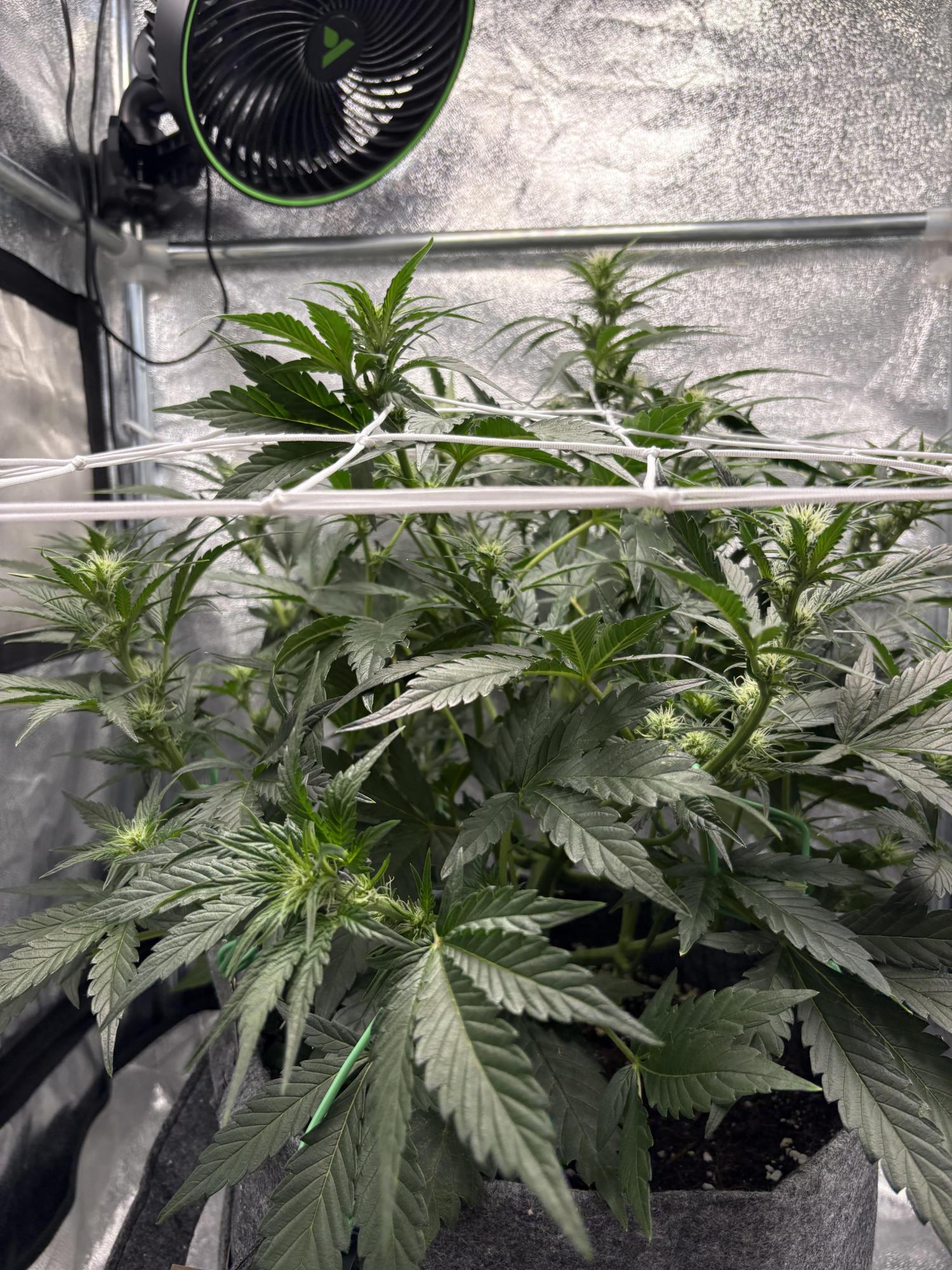
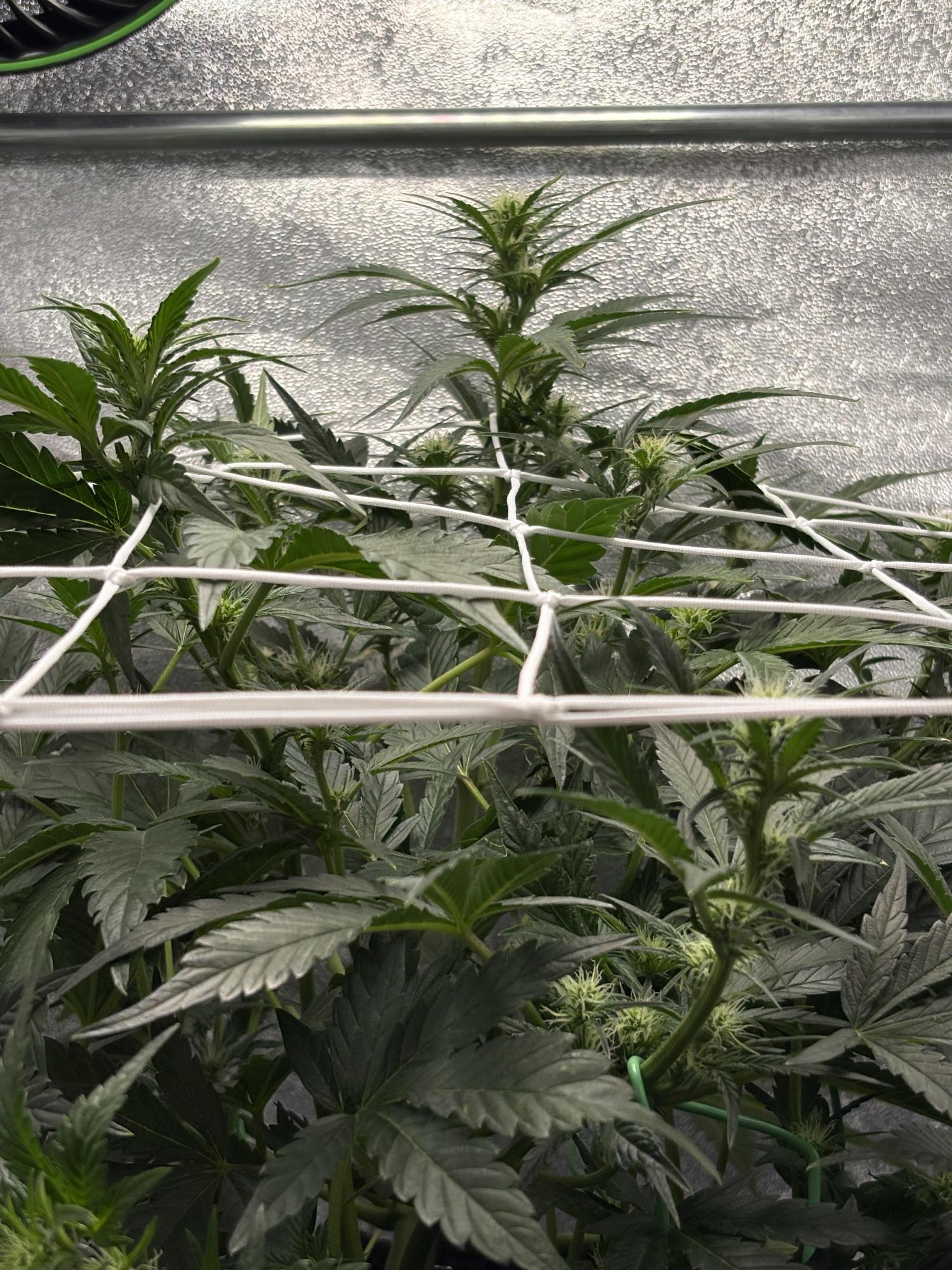
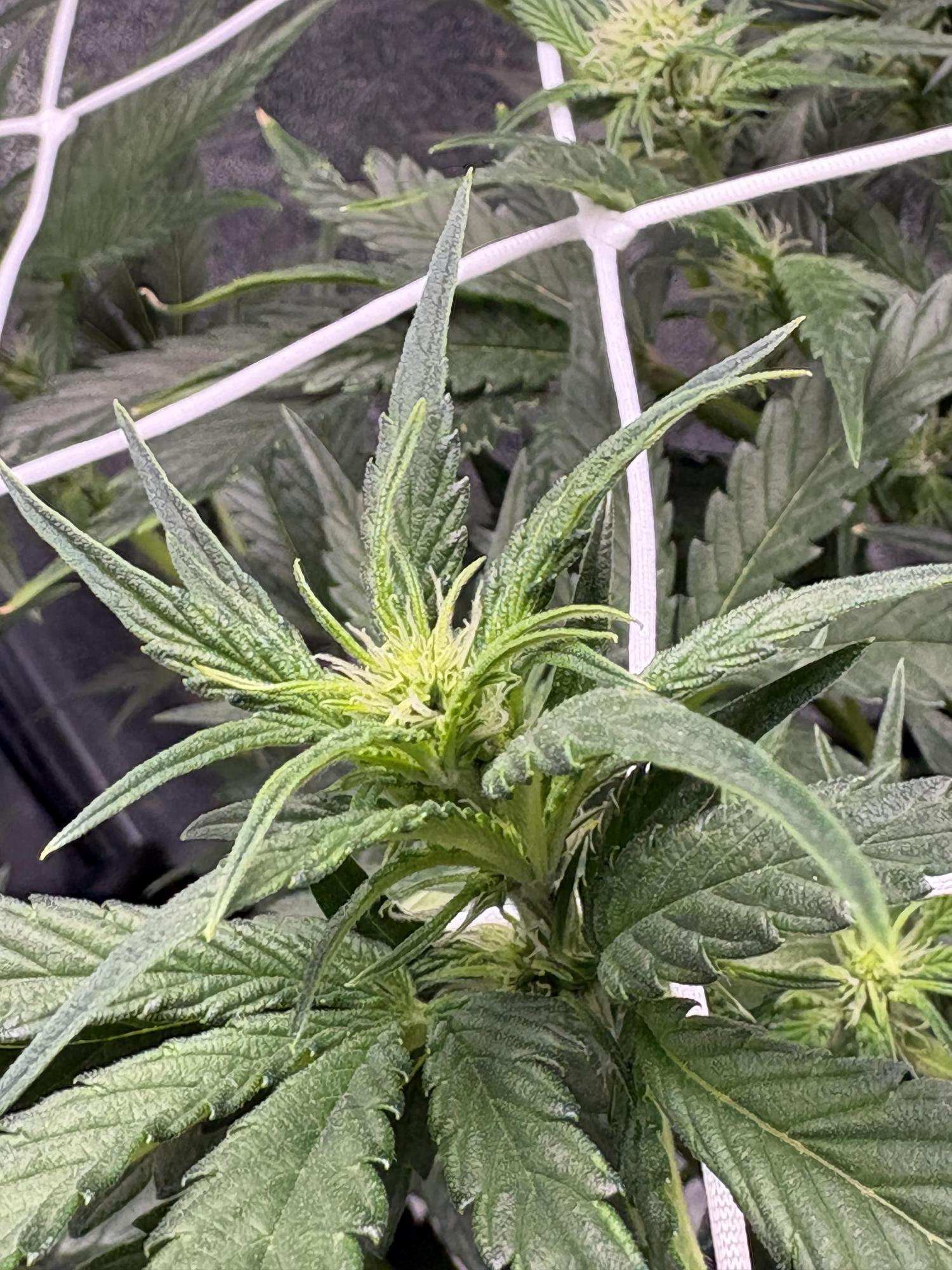
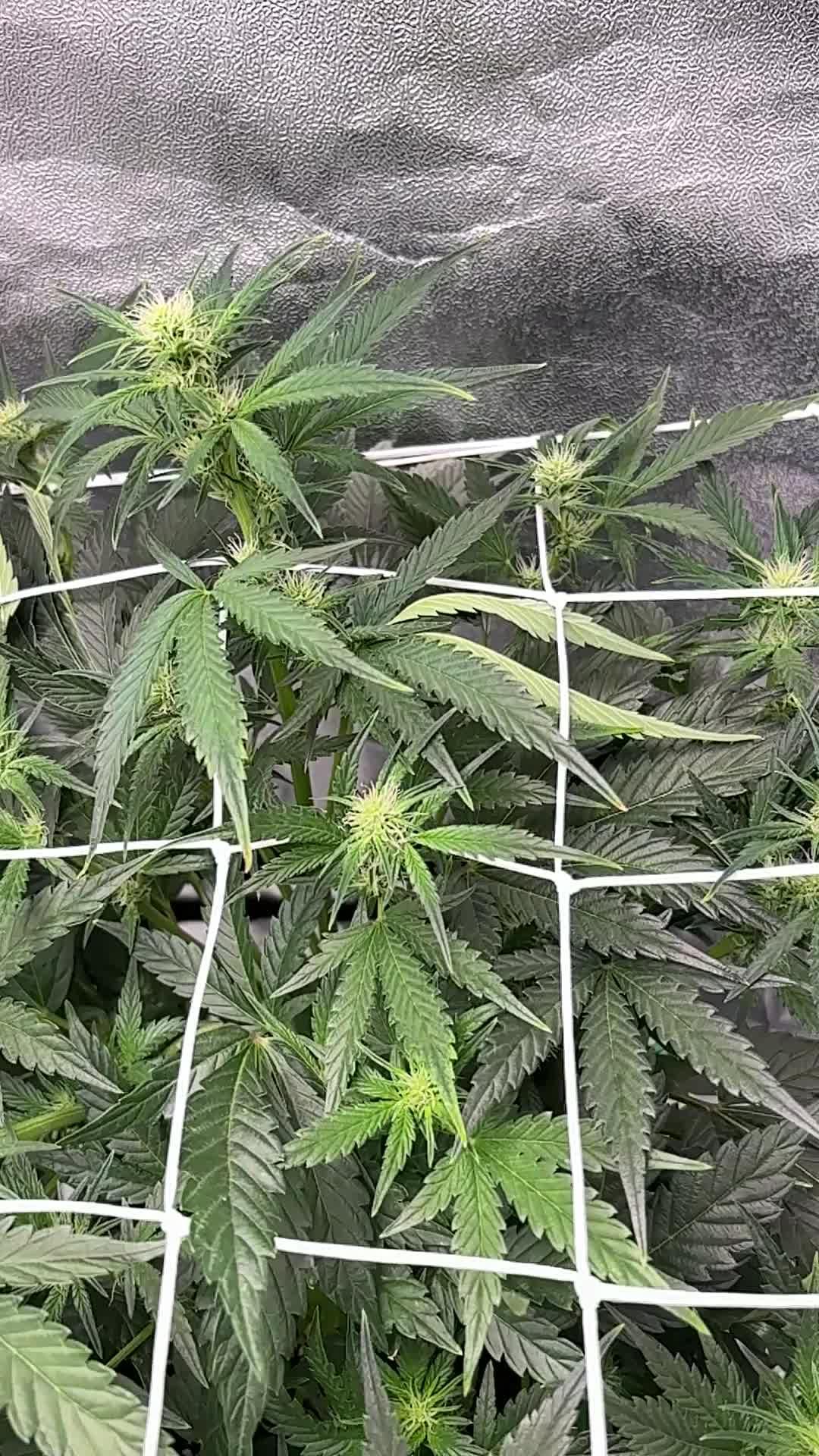
hello, its week 5-6 of my bubble kush auto and i am thinking if i should defoliate it? if so, where to start?
Solved
Techniques. Defoliation
likes

Hashyanswered grow question 8mo ago
Personally I'd leave her alone, she has plenty of space for good air flow. She does look like the leaves are dark and shiny which could mean she has had a little too much nitrogen but it's not easy to tell with the pictures.

wolfvbanswered grow question 8mo ago
Salam gammacrowns! 👋
You are 100% right to be cautious. Since she is still on the smaller side and just kicking into early flower, taking scissors to her right now is way too risky. Autos will easily stunt if you stress them during this critical transition! 🛑
Instead of cutting, let's use a zero-stress Modern Engineering trick: Leaf Tucking. 🛠️
The Fix: Take those massive fan leaves that are blocking the middle and just gently bend and tuck them down and under the lower branches or under your SCROG net strings.
This instantly exposes your hidden bud sites to direct light and improves airflow without removing a single "solar panel" or shocking her engine! Keep the scissors in the drawer for now, tuck the leaves, and let her stretch. 🚀
Happy Growing! 💚
likes
Complain

Ultravioletanswered grow question 8mo ago
Plant is too small to warrant removing any leaf, photosynthesis by day, cellular respiration 24/7. Even during daylight if a leaf is not performing photosynthesis due to being in a less that optimal position for photosynthesis then it uses that "free oxidative" capacity to perform cellular respiration instead.
95% a new growers focus will be directed towards daylight and the capture of carbon, often giving the illusion that its the end all be all, when its really not. Photosynthesis itself is responsible for about 10% of the energy (ATP), with cellular respiration being responsible for the processing of that other 90% of that energy (ATP)
If you defoliate you remove every single leaf that could potentially perform cellular respiration (daytime), but the only leaves left are 100% photosynthesis. Meaning you are placing 90% of a plants atp pool is processed at night.
Vpd is for daytime transpiration.
There is little to no transpiration at night. Vpd 10x less effective..but good luck finding a guide that will explain that to you. The biggest mistake is holding high daytime rh overnight, not caring what happens at night or jist letting it chill, if RH sits anywhere near 70% there will be next to zero oxidative phosphorylation occurring. Instantly your plant is bottlenecked to 10% of it's daily energetic atp potential. Almost no carbon gets processed and converted.
Defoliating has its time and place, but from my study and experience I find it best to leave everything and let the plant do its thing, at most cut the lowest nodes or "that which you know will be of no use come harvest". How do you know what that is? Experience is the best teacher my friend 🧡.
Mitochondria are the power cells of the plant, removing them is in no way shape or form going to magically open up more budsites. ATP and how much the plant has to spend each cycle is the defining factor of how much "work" gets done.
With a little side lighting you can move from a 2d canopy to a 3d, ensuring that 100% of the plant is properly saturated, zero larf.
2 likes
Complain
Similar Grow Questions
Solved

WillyWonka
I flipped the lights to 12/12 seven days ago, 14 days in to the life of the CBD babies. Is this too soon? Yesterday I changed to 11hrs on 13hrs off, because I was expecting a lot more growth in the last seven days. Am I being too eager after not growing a Photoperiod in a while?Week 3
Techniques. Defoliation
7y ago
2
3
Solved

FoxyT
Got a problem with my humidity. Since my plants grew out my 4x4 (1,2m²) tent the level inside increased to 70%
By opening the tent it droppes back to 50% but I need to have the tent closed in my environment
Any suggestions and help by decreasing the humidity is very appreciatedWeek 8
Techniques. Defoliation
8y ago
3
2
Solved

Machamp
First time grower: Should i defoliate? If yes, where should i cut it? I fear to do something bad.How to defoliate/should i defoliate my Wedding Cake Auto and Godzilla cookies auto? Some leafs of my Wedding Cake auto are getting yellowish, as you can see in the picture
My Wedding Cake Auto is too close to the LED (she is too tall). What should i do?
1y ago
20
7
Solved

HylianGrass
This is not a “help needed” question but instead, is there Anyone around here that could guess how long until harvest?! Looking fo 80% white and 20% amber trichomes. I do have a lens to chek em i just like the take a guess thing and see different opinions !! Thank fellow growersWeek 13
Techniques. Defoliation
8y ago
1
1


Solved

SION420
Hey guys.
I have 4 Autos and 4 Photos Flowering exactly at the same time (long story) I have 8 weeks till I HAVE to harvest. I've just gone from 20/4 to 13hr on and 11hrs off for 5 days. Should I now go 12/12 or should I stay on 13/11 to give the Autos an extra he of light?Week 7
Techniques. Defoliation
7y ago
3
4


Solved

dutdut
Does anyone else get a brown film around the water line in your reservoir? I have never had a problem using maxibloom but received Two pints of A+B advance nutrients. I also see this when using floranova. Could anyone shed some light on this. Tap water starts 5.5 ph slowly raisesWeek 6
Techniques. Defoliation
8y ago
5
2
Solved

Wadadli_Kush
i am doing outdoor grow adding lighting for 6hrs daily. two 30w LED flood light 800lmn output covered with blue carpenters tape to give a blue hue along with two 100w red flood lights.
plants 8 weeks old. if i upgrade to 450w fullspectrum outdoor light will it cause hermophedite?Week 8
Techniques. Defoliation
7y ago
2
1
Solved

teabee
so I accidentally re-vegged some plants, I had my timer set incorrect, I am curious what I should expect...I swapped them back to 12/12 immediately after I noticed. I believe my timer was messed up from about week 2 to 4, will they still mature but just take a few extra weeks?Week 14
Techniques. Defoliation
7y ago
1
1
Solved

me9001
is it worth taking clones from a plant that has tmv will the clones keep the virus. ?Week 7
Techniques. Defoliation
7y ago
1
1
Solved

Skill_Murray
When I checked the run off from this weeks watering - PH was 7.6 and TDS was reading 1975ppm. I had added Dolomite Lime to the soil as some had recommended. Could this cause the high PH levels? Any suggestions on how to bring it down? Worried about nutrient lockout. Thanks!Week 3
Techniques. Defoliation
9y ago
4
7
Solved

liliarose
Should I defoliate next week?Should I defoliate next week? Advise what would be better, leave the leaves until harvest, or defoliate leaves heavily now to expose buds only? Check my diary for photos! https://growdiaries.com/diaries/186142-grow-journal-by-liliaroseWeek 7
Techniques. Defoliation
3y ago
6
3
Solved

mr_green_thumb_ottawa
question of the day lol can anyone tell me what is the technique i am using ?? and for what reason i am using this technique??Week 6
Techniques. Defoliation
7y ago
3
1
Solved

Masryflip
Wanted to know when is the best time to defoliate. As well what is the best practice ?Week 14
Techniques. Defoliation
8y ago
1
1
Solved

Dillsnills
I do not like to defoliate but this plant is very bushy, opinions advice on whether to defoliate a little bit or not? Advice opinions appreciatedI don't like to defoliate at all unless I have to, this plant is very bushy and was wondering what other ppl thought on if I should defoliate or let her keep going, week 4 flowering pineapple Express Auto fastbuds, I have good air flow and keep tucking leaves.advice appreciated.
Setup. Strain - Autoflowering
Techniques. LST
Techniques. Defoliation
5y ago
3
2
Solved
liliarose
Should I defoliate next week?Should I defoliate next week? Advise what would be better, leave the leaves until harvest, or defoliate leaves heavily now to expose buds only? Check my diary for photos! https://growdiaries.com/diaries/186142-grow-journal-by-liliaroseWeek 7
Techniques. Defoliation
3y ago
2
7
