


Likes
Comments
Share


@Testefumate
Follow
Perfetta in tutto uno dei semi che sarà sempre nella mia grow (aroma e sapore unico )LEMON SKUNK FOREVER


Likes
15
Share


@Organic473
Follow
Slow growth this week in my opinion. The dosage of fertilizer was increased to 2 tablespoons. Let's see how that goes during the week.

Likes
15
Share


@SweetheartOG
Follow
Girls are doing well with the LST. Kosher cake was topped last week and now has what looks like 8 heads.
3rd of June have given the girls living soil veg.

Processing
Likes
36
Share


@The_Projexx
Follow
Whats going on ladies and gents we on the start of week 3 !! CH#2 did not make the cut so she has been removed from the tent and replaced with a mystery strain in the dome that will be revealed soon enough ! That being said CH#1 has been turned into a cloning project for future breeding projects that I have lined up . We are boosting up the nutrients from 0.5 ml/l to 1.0 ml/l CH#1 is responding well to the nutrient regime she is just really stretched out but I will be transplanting her soon enough and that problem will be fixed . Other then that no real complaints from this cat this week , just sailing it smooth .
A big thank you to everyone who comes out and checks out the diary . A special thank you goes out to all my followers who come out daily and weekly to check out the updates much love and respect for you folks !
-Happy Growing!

Likes
6
Share


@SecretC8keSociety
Follow
Today will mark 3rd week on Sunday 6/18/23 🌱. Double the size they all about 6 inches now. Looking pretty healthy. Starting to intake more waters. Each weeks I up the PPM to 1200 within Lotus nutrients sitting at 6.3 PH.
Likes
4
Share

@Bud_vista
Follow
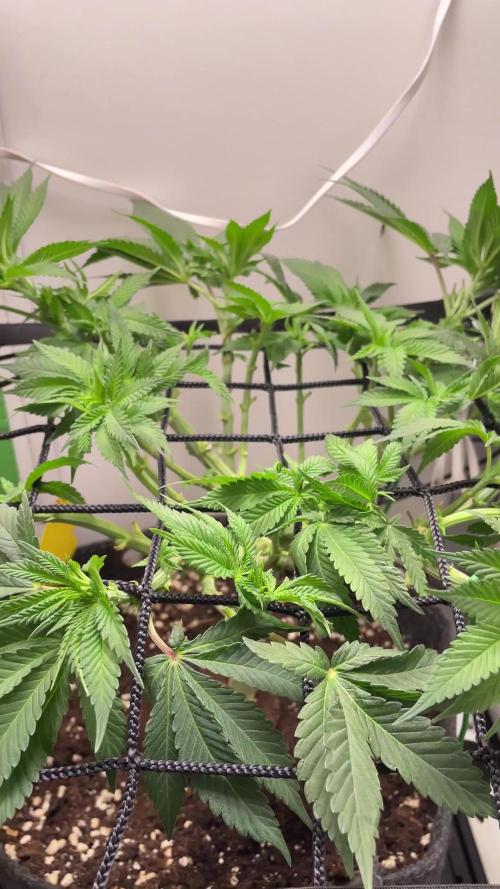
Welcome to week 7 of my White Truffle grow!
I switched to flowering 5 days ago, 12/12 light cycle. No signs of pistils yet, shes growing nicely, but no crazy stretching. Since this is my first time growing photos, I'm really excited to see how the week goes :)
I need to defoliate a lot, because the humidity is a little too high after watering the plant
Likes
3
Share


@MicroHidroGrow
Follow
Día 25.
Las plantas vienen muy bien. Han mostrado un crecimiento tremendo. La variedad Tropicana viene muy bien y muy ramificada. Estoy aplicando una técnica diferente por cada planta de esta variedad. Tengo una con LST, otra con vorte apical. Otra con HST y otra sin corte estructural, pero si voy sacando las ramas que van a quedar muy bajas. Las Polaris empezaron a estirar y se va viendo interesante. Pero al ser esquejes revegetados, veré en base a los resultados si la guardo o no.
Likes
7
Share


@MrGrowthSpurt
Follow
Easy strain to grow, it is true to it's name and grows some big buds. You will need to tie them up or use a trellis to keep them from dropping.
Overall I am satisfied with my results with over 2 ounces per plant.


Processing
Likes
13
Share


@NOLOGIK
Follow
The plant has the classic structure, low and wide, both have the same characteristics only the vase changes the sample #A and larger, but it seems that this does not bother you at #B! it grows smoothly. I defoliated to allow more air and light ... they are at the beginning of the 5 week and they seem excellent!☺️
Processing
Likes
3
Share


@Ilusionweed1
Follow
Buena semana para estas nenas,creciendo de manera impresionante y con unas buenos brazos, teniendo algunos problemas con las hojas, resuelta que el humificador el agua no era purificada lo que implicó que las hojas de las niñas se estaba llenando de mucho calcio que no la dejaba respirar bien, trate de quitarle las manchas y quedo peor, pero de todo se aprende, cambie el 💧 a agua purificada y listo aunque algunas quedaron manchadas 🔮del resto quedando hermosas muy sanas y con tallos muy fuertes 🌾seguiré informando como van estas nenas 🍃
Likes
8
Share


@RainerWinklerGrow
Follow
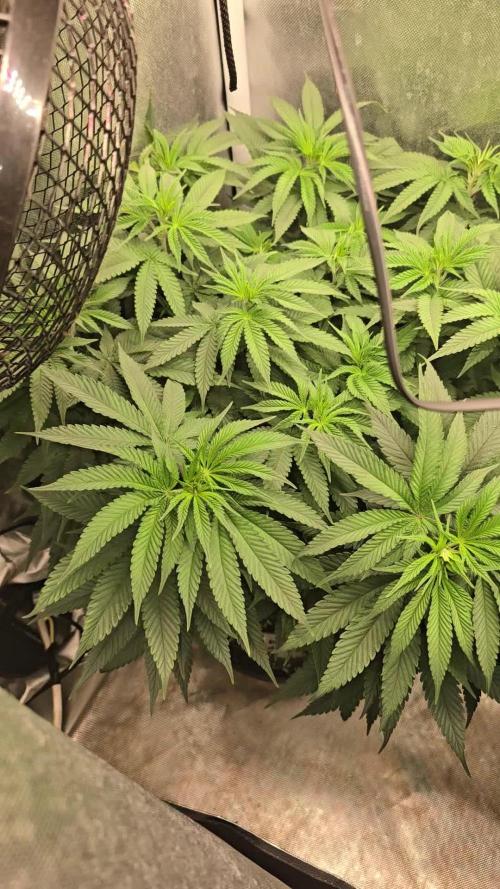
This should be up to week 2-3 of flower, where the Mimosa x Orange Punch, which had the earlier Mutation, started herming on the mutated part, which i noticed a bit too late and it pollinated some of the other buds, i cut all of the affected bud sites of, in the end the furthest away runtz got pollinated but the others luckily barley did and only had like 5-10 seeds in total.



Processing
Likes
43
Share


@Master_weeda
Follow
Jour42 defolliation
Stretch 10 centimètres
Jour47 arrosage avec de l'eau ph6.3 à laquelle j'ajoute 1ml par litre d'eau de topmax biobizz

Likes
27
Share


@Jungle_James_Grows
Follow
Not really done much last week, they got a bit of light burn from LED. Which I've now move up.
But new growth seems to be doing ok.
Cover crops are coming on fantastic.
26/6 Friday
V) She is the bid sister of the group so I'm going to top her today
29/6
V) Has got 4 new grow tips started where I topped her.
The rest are catching up nicely now. Will start some LST in the next couple of days.
2/7 Done a bit if training on the girls today.
Bent four of them over.
The fifth one that I topped I didn't bend her yet, I just did some leaf tucking and she is coming on fantastic.
3/7 They have all bounced back brilliantly and heading towards the lights.
5/7 End of week 3 and going to do some more LST on them as the have bounced back from the last lot of training.
Likes
16
Share

@Hempcules
Follow
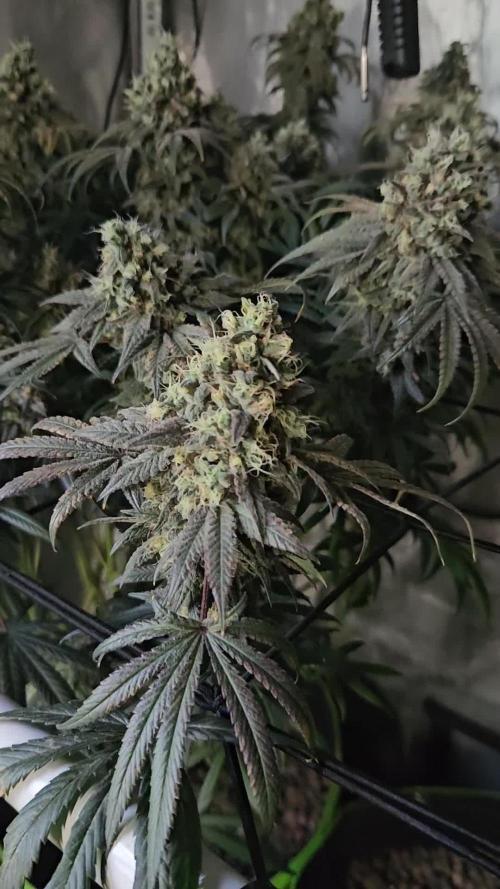
WEEK 16
Everything went quite smoothly this week. Temperatures have dropped a bit, and the plant is looking good.
The flower volume is steadily increasing, though I think it will still take about two more weeks until harvest. The trichomes are mostly still clear and milky. Other than that, I’m looking forward to a strong final.
PPFD: 1000µmol/m²/s
Water: 1x water 2x nutrient solution
Vpd: 1,8Kpa

Likes
9
Share


@HUMO_Cultiva
Follow
We start week 3 of bloom!! Goofiez 2 amor compound genetics it’s the champions!!

Processing
Likes
12
Share


@Tazard
Follow
These are clones that I managed to take from my summer garden that became a disaster due to a heat wave that we had breaking 100 year records. I expect everything to be 48” in height at maturity.


Likes
46
Share


@DogDoctorOfficial
Follow
Week 2 & 3 Veg Report: Runtz Battle 🌿🔥
Hey, green enthusiasts and fellow growers! 🌱✨ We’re diving into weeks 2 and 3 of our Runtz Battle, and it’s been a thrilling ride! From transplanting to new pots to experimenting with nutrient setups, there’s a lot to cover. Let’s dive into the details and celebrate the progress of our green champions!
Week 2 Progress 🌟
In the second week, our Runtz plants showed tremendous growth and resilience. Here’s a snapshot of what’s been happening:
• Growth Surge 🚀:
• Both Runtz strains exhibited rapid growth with robust stems and lush foliage. Their healthy, vibrant green leaves are a testament to their thriving condition.
• Leaf Development 🌿:
• New leaves are expanding, and the plants are absorbing nutrients efficiently, laying a solid foundation for future development.
Transplant to Final Pots 🌱✨
We’ve made a significant upgrade by transplanting our Runtz plants into their final 15L Autopots. Here’s the scoop on the transplant:
• New Home 🌟:
• The Runtz plants have been moved to spacious 15L Autopots, providing ample room for their roots to expand. This upgrade ensures they have the space to thrive and reach their full potential.
• Soil and Nutrients 💧:
• We’re using Pro Mix Mycorrhizae soil, which is rich in beneficial microbes and nutrients. To boost the soil’s fertility, we added 75 grams of Aptus All-in-One pellets, a touch of MycoMix, and a touch of MicroMix. This mix ensures a strong, healthy start with balanced nutrition and enhanced root development.
Week 3 Progress 🌿💚
In week 3, the plants have absolutely loved their new environment and are showing remarkable growth:
• Transplant Success 🚀:
• The Runtz plants have adjusted beautifully to their new pots. They’re thriving, with enhanced growth and vitality, ready to take on the next phase.
• Autopots Activation 🌟:
• We’re now plugging in the Autopots and letting gravity do its thing. This efficient watering system ensures our plants receive consistent hydration with minimal effort.
• Nutrient Strategy 🌿:
• With the soil rich in biolife and nutrients, we’ll be focusing on using only Regulator and CaMg Boost in the reservoir from now on. The plan is to test if these organic inputs, combined with the soil’s inherent nutrients, can sustain our plants through their growth cycle.
LED Lighting & Climate Control 🌟🌡️
To support our Runtz plants, we’re using top-of-the-line equipment:
• Lumatek Zeus 465 Compact Pro 💡:
• This powerful LED light provides full-spectrum illumination, ensuring our plants get the optimal light they need for vigorous growth. The compact design and high efficiency make it perfect for our setup, promoting healthy and even canopy development.
• TrolMaster Hydro-X Controller 🌡️:
• The TrolMaster Hydro-X is our go-to for precise climate control. With its 3-in-1 sensor, it monitors temperature, humidity, and light intensity, allowing us to maintain the perfect growing environment. This advanced controller ensures our plants stay in their ideal conditions, enhancing growth and overall health.
The Excitement Ahead 🌱💚
As we move forward, we’re excited to see how our Runtz plants respond to their new environment and nutrient strategy. This experiment with organic soil and minimal added nutrients is sure to provide valuable insights and showcase the resilience and adaptability of our plants.
Stay tuned for more updates as we continue this green adventure! Here’s to a week of growth, discovery, and green magic. 🌟🌿
#RuntzBattle #Week2And3Veg #CannabisCommunity #Autopots #ProMixMycorrhizae #LumatekZeus #TrolMasterHydroX #GreenMagic #GrowStrong #StayPositive
Genetics Runtz F1 @zam.nesia Runtz auto @kannabiaglobal
Nutrition
@aptusholland 🌿
@aptus_world 🌎
@aptus_es 🌍
@aptusbrasil 🌱
@aptus_thailand 🌿
@aptus_portugal 🌳
@aptususa_officiala 🍀
@aptusplanttechnz 🌺
@aptusplanttechaus 🍃
Ambient controls🎮
@trolmaster.eu @trolmaster.eu.support @trolmaster.support @trolmaster.agro
Soil @promix_growers_eur @promix_cannabis
LED - @lumatekeu
Watering- @autopot_usa @autopot_global
Love and attention- @dogdoctorofficial
#aptus #aptusplanttech #aptusgang #aptusfamily #aptustrueplantscience #inbalancewithnature #trolmaster #trolmastereurope #trolmastersecrets #Autopots
#GreenJoy
As always thank you all for stopping by, for the love and for it all , this journey of mine wold just not be the same without you guys, the love and support is very much appreciated and i fell honored and so joyful with you all in my life 🙏
With true love comes happiness 💚🙏 Always believe in your self and always do things expecting nothing and with an open heart , be a giver and the universe will give back to you in ways you could not even imagine so 💚
More info and complete updates from all my adventures can be found ⬆️link in the profile description ⬆️
Friendly reminder all you see here is pure research and for educational purposes only
💚Growers Love To you All 💚

Likes
19
Share

@Kirsten
Follow
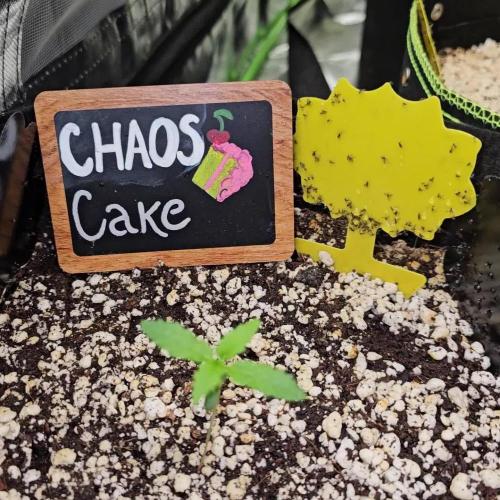
The seedling is doing really well. We are progressing at a normal pace.
There isn't much else to report this week. These weeks are always slow and pretty boring.
I'm just keeping the medium sufficiently watered.
Thank you for checking in this week and hanging out in the comments 😁💚✌️🌱🤞🧡
