


Likes
Comments
Share


@Tipton
Follow
Day 45 in flower... Trichomes are about 80% milk and no amber... The paint and big Z are 7-9 weekers and orange cake is 9-10... Def few weeks on the orange cake... But getting close to how I like it on the other two... The smells are outta this world... Orange cake smells like orange cake... Very orange like it's nuts... Never smelt anything like it tbh... The paint is a different pheno than previous ones because there's usually a chemical skunk smell but this is a fruity pebble smell with layers of earth smell and a sticky presence that doesn't go away for a long time lol... The big Z is another sweet smelling but more along the smell of a mouth full of Skittles and that dirt earth smell aftertones... They're awesome and I'm really excited!
Day 46
They fattened up over night! Coming to n end... I did find little clusters of amber trichomes on the paint and I can't find many clear on the big Z... So it's right where I want it!

Processing
Likes
2
Share


@Valedor
Follow
Seguimos retirando las fan leaf's que ya no son tan necesarias en todas las nenorras, el sistema de las automáticas continua en el lavado de raíces, el sistema regular continua floreando y madurando, considero que la próxima semana estaremos cosechando la White widow y la mamá mía


Likes
24
Share


@Easygrower
Follow
Hello growers day 78 in the garden with the purple lemonade iv had some nice purple coming through the bud are looking sweet iv checked her closely she is at about 35% amber so she will be coming down very soon can’t wait to taste her until next week happy growing and be safe✌️

Likes
10
Share


@Beardacious_buds
Follow
Plants are taking off. Canopy is full. Anvil in the middle taking her sweet time to flower. Gonna be a huge plant!


Likes
3
Share

@Wizardgreen317
Follow
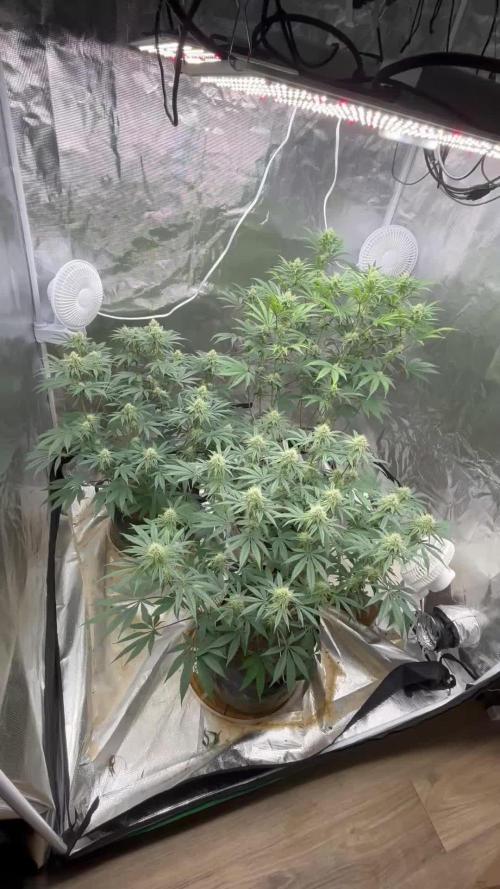
Well this week has been interesting the smalls are all there they all varied but they don’t stink which is a good think but at night my room definitely smell like cake batter lol crazy usually I tell ppl they over do it like my plants smell like this .. they need a lot but they smell wonderful and there bbm crosses are small..



Likes
5
Share

@El-Ecko
Follow
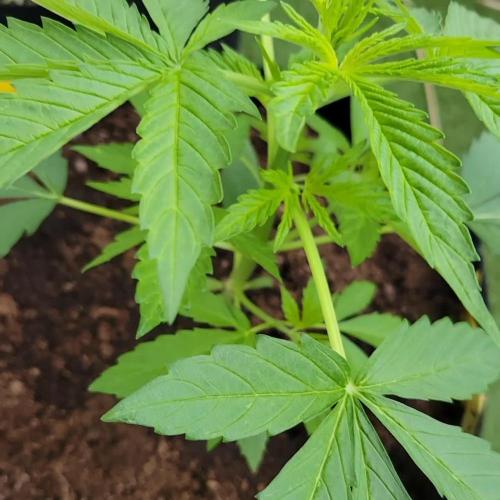
Week 4: Vegetative Growth
Brrrrrr🤧
It’s been a really cold week for this time of year so far—just under 15 degrees during the day and between 6 and 8 degrees at night.
It’s supposed to stay this way for a few more days.
But the Gelato is doing great anyway.💪 The temperatures don’t seem to bother her, even though her growth has slowed down a bit... at least that’s how it seems to me.
Still, I’m very happy... and she’s also starting to give off a little scent.😍
Likes
29
Share


@gottagrowsometime
Follow
Welcome to my Slurircane Diary sponsored by MSNL & Spider-Farmer
Week 7, early flip and attempt at reveg into early week 8 but decided I liked the look of her cola potential and decided to throw her into flowering. From the reveg attempt I thought a ratio on/off would be best if it leaned more on the off, so a 13-11 off / on was set for early week 8 and till fattening (when the stretch is over, 'pre flower)
This is a bit of a weird one for me, well more a 1st. I'm not 100% sure. But I do remember this getting 3 13.5hr days as did my whole tent. As my cheap timer ran for an extra hrs off when it was meant to be on. So, put it into a flip. And I tried for over a week to reveg, I'm sure if I pushed on. I would of gotten to reveg. (I'm not sure how long it takes, am very pleased though with this spectrum even without the IR that the flip time is quick. So, after a week 7 was finished. I decided to push on to a 13-11 off/on to induce her. I'll increase it to 13-11 on/off in fattening. Sadly has the pre flip and then attempt at reveg make all her nodes very stiff. And near to LST. After pre flower I'll hard defol and attemp to distance the colas. Surprisingly with her been a dom indica her leafs are very Stavia style. Very thin. Would make an ideal candidate for scrog. She is very healthy and been the most responsive with co2/heat. Although growth was stalled from my reveg attempt, I'm sure i cut a good few CM from her Height by reversing it again. I should of looked up how long it takes to reveg 1st. Lessons learnt. I still have an amazing pheno. (I'm a few weeks ahead in Real Time)
Defoliation
So, this was done lots on this girl. As my plans for her were changed due to poor attention. So, start of wk 7, what I thought was still a few weeks out from me flipping. But, after my abandoned attempt of reveggin. She was in limbo and I decided to risk it with a hard defoliation. (Looks like it was done in pre flower, it wasn't, It was just coming back into veg, but would of taken weeks to get it growing fully again, and at looking I'm happy with it so I pushed again with my Defol to get colas. You can find this on grow weed easy "full tutorial for flowering") am gonna leave her now until she's out of pre flower, she's 35cm or so tall. I don't see putting on much height. As my reveg attempt will for sure hanmer her stretch.
Diet
Was planning on taking Alga Grow off for the last 10 days r so off grow. So, I only had a few days off it, and its on Alga Bloom now.
Thanks to my sponsors from MSNL & SPIDER-FARMER. Just harvested the GranDaddyPurple Auto. (BEST AUTO I'VE EVER GROWN SO FAR, TASTE, SMELL & STRENGHT BEATS ALL PAST AUTOS, BUDS DOWN) will be uploading the weeks on that soon. I've too many diaries. I knew this. So, I plan to do 2 wk updates at a time for 70% of my diaries, so pics and info will be added as those it was a weekly update. Also, I don't put up a harvest wk for a month until the cure.
Thanks to my sponsors from MSNL & SPIDER-FARME, look forward to working with your more. And trying a lot more of your products. #convert.
Much appreciation to all ppl who stopped by and did your thing. Look forward to seen your work if I know you dropped by of course. Either way. Thanks for stopping by


Likes
4
Share

@eldruida_lamota
Follow
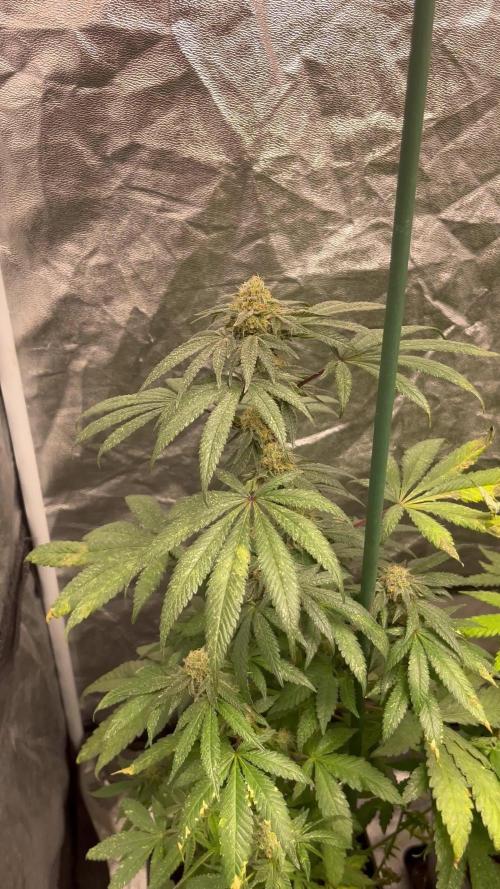
Que pasa familia, vamos con la sexta semana de floración de estas Mandarin Panties feminizadas de Seedstockers.
Vamos al lío, las plantas se trasplantaron a macetas de 7 litros.
El ph se controla en 6.5, la temperatura la tenemos entre 24/21 grados y la humedad ronda el 50%.
El ciclo de crecimiento puse 12h de luz, el foco está al 100% de potencia.
Tenemos como visitante de nuevo los trips, compré depredadores que colocaré a principios de semana.
Me gustaría estar más encima este cultivo pero la salud me está impidiendo un poco estar 100% con el proyecto.
- os dejo por aquí un CÓDIGO: Eldruida
Descuento para la tienda de MARS HYDRO.
https://www.mars-hydro.com
Hasta aquí todo, Buenos humos 💨💨💨

Likes
14
Share


@LokalGrenz
Follow
Still just water and some fish shit
Jan. 1 Happy New Year welp to start new year off drop my very cheap PH meter in the bucket water and now the readings are off and I probably watered them today with wrong pH water Sour diesel looks cool didn’t water today soil was still moist but the amnesia haze be

Likes
8
Share


@Squaregrouper
Follow
The tree is very fruity has a extremely sweet fragrance mixed with pineapples like a pineapple dum dum but when you brush against the tree or rub a bud.. it is reminiscent of old school Bubblicious bubble gum the pink kind they sold back in the 80s.

Likes
2
Share

@xTaps
Follow
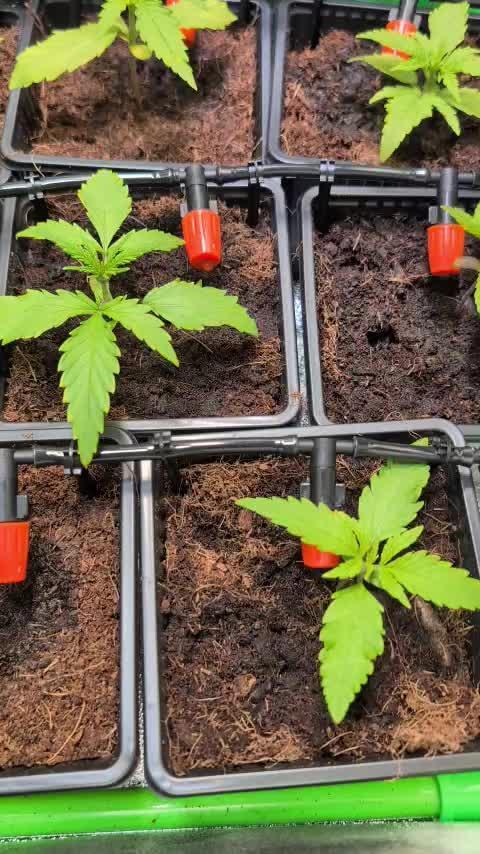
The Caramel Automatic did not germinate.
02.08, installed the DIY Drip Irrigation System.
Getting watered 3 times per day, 5L water from the Spider Farmer Dehumidifier with Advanced Nutrients pH Perfect Micro, Grow and Bloom. Also some T.A Calmag.
05.08
Day 12, Topped the Do-Si-Dos and the White Widow.
06.08
Day 13, New Nutrient Solution, topped all Easy Buds and the Wedding Cake.
This week, I gave only 1.8ml for the 5l, will see what happens if I lower the calmag a bit. Watering times set to 15 minutes for 2 times per week.

Likes
198
Share


@DevilsBud
Follow
FLOWERING STARTS
In the the new marshydro set-up
120x120x200 4'x'4
FC-4800 lamp
Pubes are showing on all of them happy days in the absolutely amazing marshydro tent 👌🏻💯👌🏻 and no balls in the room yet so that's good at least i know that first grow i had issues with hight but with my 120x120x200 that not going to be end problem so stretch like ya never stretch before 💪🏻 i am prepared now lol the FC-4800 is a beast and still tweaking hight dimmer don't want to burn them but also want to utilize the lamp as much as I can but will get under control 🤘🏻😎🤘🏻
1/11/21
Did some last defoliation and spread the plants out bit Tru the tent got lamp dialed in dimmer around 55% and hight around 45cm above the plants and every week will bump up the dimmer with 5% they are looking very good healthy and i am very proud of the results so far gave the proper nutrients and the normal watering in between everything cool in the hood
Will be updated soon happy growings Growmies
visit www.marshydro.eu
for your best gear and use the PROMO CODE: DEVILSBUD
Some info about the Marshydro FC-4800
Superb Quality LED Chips: The whole light is composed of 1206 pcs Samsung lm301b and Osram 660nm chips. More than two times as many LEDs are used to drive the grow lights at low currents and to avoid overdrive. Quality is guaranteed and efficiency is up to 2.8 μmol/j.
Even PAR Distribution and High PPFD Output: The multi-light bar design and the densely distributed light chips enable the LED grow lights to achieve the optimum PPFD required for plant growth over the entire effective coverage area.
Specifically Designed Spectrum: To ensure even plant growth, blue and red light are enhanced on the basis of a full spectrum combination. Not only does this accelerate plant growth, but it also improves the yield and quality of the plants at the same time.
Dimming Daisy Chain Function: The dimming function saves on electricity costs and enables brightness from 10% to 100% for the different stages of plant growth. A single master light can connect up to 30 lights in a daisy-chain system.
Business LED Grow Light: The light's wavy heat sink dissipates heat quickly and the IP65 waterproof allows the light to operate in humid conditions. 180° collapsible feature for easier installation. All these features provide favorable assistance for commercial cultivation.
And some tent info
●【Lock All Light Insid】MARS HYDRO Grow Tent Interior is made of diamond mylar. Non-toxic to the environment, no harm to plants. High-quality 1680D canvas being double stitched, (ALL OTHERS BRAND grow tent is 601D canvas) which is tear-proof for perfect light locking, No light leaks or rips at all.
●【Durability Grow Tent】Stable Metal corner adapters and poles are the trustful supporters of the tent. No rusting nor paint-falling. Quick easy tool-free installation. Carries strong heavy-duty SBS zippers, double layer lining to create a light-proof seal.
●【Easy Observation of your Plants】Special peeks window made by double layers of cloths. Observe the growing conditions of your plants without opening the tent and avoid disturbing plants. The peek window also serves to dissipate heat and ventilate air.
●【Removable Tray Keep Clean】The package includes a removable waterproof floor tray to hold soil and fallen leaves. The tray can be taken out easily to wash. Removable and water-proof makes cleaning easy.
●【Good Ventilation&Fast Assembly】 Circular double-sleeved vent holes with adjustable nylon strap for air circulation by exhaust fan, ducting, carbon filter, or reflector. Better allows proper light, heat, and airflow. Quick tool-free installation. Reinforced by a sturdy metal frame to ensure security and stability, supports up to 140lb. Perfectly safeguard your plants to thrive even in winter


Likes
48
Share


@pifflestikkz
Follow
Day 22
22/07/24 Monday
Nothing new to report. Starting to see them beautiful fans appear that's all 😁✌️
Day 23
23/07/24 Tuesday
Feed today, giving her straight all nutes Inc flowering nutes.
I will update the dose as they grow and develop a bigger hunger.
Video updates 💚
Day 24
24/07/24 Wednesday
She was doing a climb, so I have topped her today 😁 she's strong I'm sure she will recover well 🤞
Day 26
26/07/24 Friday
Plain de-chlorinated tap water pH 6 today, 1L.
Day 28
28/07/24 Sunday
Feed today with De-chlorinated tap water pH 6.
She is showing recovery from topping now.

Likes
17
Share


Likes
1
Share


@Gumbassman
Follow
Looking little drippy so I water with ph on 6.5 and raise the light about 25cm later I start lst she looks a little def too don’t know if it’s cuz of water or mb a bug issue.
Likes
31
Share


@Chubbs
Follow
SuperSativaSeedClub
PurplePunchOGauto
Week9
What up grow fam. Weekly update on these three. Two of the three seem to be growing good as the other has been fighting me since the beginning. I decided this week to transplant from 1gal pots to 3gal to see if maybe it'll fix my leaf burning issue. Over all super excited to see what the next couple weeks will bring. All in all Happy Growing

Likes
46
Share


@Dr_Rook
Follow
Esto ha llegado a su fin, podría haberlas dejado otra semana más, pero resulta que lo que creía que era una plaga de trips termino siendo de araña, se ha propagado muy lentamente porque las condiciones eran desfavorables para ellas, pero al final han terminando invadiendo mi jardín. No podía verlas sufrir más y he decidido cortar por lo sano.
A pesar de la plaga las flores tienen un aspecto muy bueno, y el olor cítrico-dulce están intenso que me recuerda a un foie gras gourmet. Presagio que va tener muy buen sabor, deseando ya de catarlas
