




@Xabii
Follow
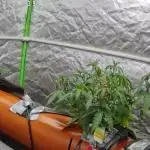
Transplanted the plant to the NFT Setup.
Values are average of the day.
DATE - EC(us/cm)
20250412 ~1000
20250413 ~1000
20250414 1458
20250415 1492
20250416 1517
20250417 1535
20250418 1541
DATE - PH
20250412 ~6
20250413 ~6
20250414 5.65
20250415 5.67
20250416 5.66
20250417 5.65
20250418 5.64
DATE - ORP (mV)
20250412 #
20250413 #
20250414 -42
20250415 -45
20250416 -14
20250417 -37
20250418 23
DATE - °C - RH% (Tent Temp/RH)
20250412 22.1 41
20250413 22.7 39
20250414 23.5 49
20250415 23.4 54
20250416 23.7 52
20250417 23.6 51
20250418 23.6 51
DATE - °C (Reservoir)
20250412 #
20250413 #
20250414 19.8
20250415 20.2
20250416 20.3
20250417 20.1
20250418 19.6
DATE - CF
20250412 #
20250413 #
20250414 14.58
20250415 14.92
20250416 15.17
20250417 15.35
20250418 15.41


@Wescoas
Follow
Let the girls do their thing for the most part this last week. Started to stack up real nice, started to notice white pistils coming in. After 2-3 days there were more popping up and some beginning to flush to orange. Decided to LST and defol one last time, watered without any nutes. Today marks week 5 with the ladies, and I will officially say they are ending their veg cycle and transitioning into flower. Cranked the fans up tonight to circulate more air, tapering humidity down. Been pretty easy going so far



@DogDoctorOfficial
Follow
Ghost Train Haze — Week 8 From Seed (Week 3 Flower)
12/12 From Day One — Zamnesia Room
This report focuses on the tallest, most expressive girl in the room — the wild card aiming for the moon.
She’s delayed compared to others.
She’s the tallest.
She’s pushing hard.
And she’s completely in flower now.
⸻
🌱 How We Got Here (For Anyone Just Joining)
This run started 12/12 from seed.
No long veg.
No artificial holding pattern.
Straight into reproductive signaling from day one.
Room philosophy:
• Match light to structure.
• Match feed to metabolism.
• Match environment to stage.
• Read the plants, not the chart.
We are not forcing uniformity.
We are scaling intensity per plant.
This Ghost Train Haze is one of the most delayed in flower transition — genetic expression, not environmental issue.
She stretched aggressively.
She claimed vertical territory.
Thankfully we’re running a 2.45m tent, which allows:
• LEDs high enough for safety
• 1300 µmol at the top
• Still enough power to feed the rest of the canopy
No panic bending.
No emergency topping.
Structure allowed to express.
⸻
Environment Snapshot
• Canopy Temp: ~28°C (now tapering toward 26°C)
• RH: ~70% (now reducing toward 60%)
• CO₂: 1000+ ppm passive enrichment
• PPFD: 800 → 1300 µmol
On paper:
28°C + 70% RH looks aggressive.
In reality:
Massive airflow changes everything.
We run:
• Strong horizontal circulation
• Vertical displacement
• Active intake + extraction
• Under-canopy airflow
Moving 70% RH behaves very differently from stagnant 70%.
Leaf VPD Room VPD.
Under strong LEDs, leaf temp runs slightly above ambient.
Add 1000+ ppm CO₂:
• Higher photosynthesis rate
• Reduced stomatal opening requirement
• Higher humidity tolerance
• Sustained metabolism
She’s not surviving.
She’s pushing.
⸻
💡 Lighting Strategy — Scaled, Not Ego-Driven
We are not blasting evenly.
• Big tops: up to 1300 µmol
• Smaller plants: ~800 µmol
Usable photons only.
No ego lighting.
Under-canopy lighting:
• Reduces larf
• Activates lower bud sites
• Improves uniformity
• Supports airflow stability
We fill blocked zones.
We don’t replace top light.
Everything connects.
⸻
🔴 End-of-Day Red (15 Minutes)
We run a 15-minute red pulse after lights off.
Phytochrome management:
• Influences Pr Pfr balance
• Supports flowering signaling
• Does NOT extend photoperiod
Signal manipulation.
Not day length manipulation.
We experiment.
We observe.
We document.
No magic claims.
⸻
🌿 Feeding Strategy — Week 3 Flower Adjustment
She’s hungry.
Soil EC: ~0.9
Feed EC: ~2.4
As long as runoff EC stays stable:
We maintain strength.
High metabolic demand → High input.
Now let’s talk additions.
⸻
➕ Why Add Power Buds + Green Sensation (1ml/L each)
🔸 Power Buds
Early/mid flower stimulant.
Purpose:
• Encourages faster flower set
• Supports early bud formation
• Enhances transition speed
• Helps synchronize hormonal shift
For a slightly delayed genetic like this one:
This supports catching up structurally.
⸻
🔸 Green Sensation
Late flower metabolic support.
Functions:
• PK boost
• Magnesium support
• Iron chelate support
• Enhances carbohydrate transport
• Supports resin & density
At Week 3 flower:
Bud sites are formed.
Stacking begins.
Demand increases.
We introduce it now to:
• Support density
• Fuel aggressive metabolism
• Maintain color stability
⸻
Current Full Recipe
Weekly top feed:
• CalMag Pro (always first when mixing)
• Terra Bloom (base NPK)
• Power Buds
• Green Sensation
• Pure Zym
• Sugar Royal
• Vita Race (foliar where applicable)
Order matters:
CalMag → Base Nutrient → Additives
Why?
Calcium first stabilizes solution chemistry.
Then macro base.
Then supplements.
Avoids precipitation.
Maintains availability.
⸻
Autopots vs Hand-Fed Plants
Important distinction.
Autopot girls:
• Mineral base in system
• CalMag + Terra Bloom + Power Buds at higher base strength
• Weekly full-spectrum top-feed with full additive recipe
Why mineral-heavy in Autopots?
Because:
• Constant moisture
• No traditional dryback cycles
• Salt accumulation risk
• Organic residues can clog system
• Predictability is critical
Mineral base ensures:
• Stable EC
• Predictable uptake
• Clean lines
• Consistent delivery
The weekly additive top-feed:
Reintroduces biostimulants and secondary support.
Two systems.
Two strategies.
Same plant biology.
⸻
🔥 Metabolism Status
She is drinking daily.
Aggressively.
That tells us:
• Transpiration is strong
• Photosynthesis is high
• Root zone oxygenation is sufficient
• EC strength is appropriate
When they stop heating like crazy:
We taper.
We don’t force finish.
We signal season.
Light taper.
EC taper.
Humidity reduction.
Temperature reduction.
Autumn simulation.
⸻
About This Girl (The Tall One)
She’s aiming for the moon.
Wild structure.
Long internodes.
Strong apical dominance.
But:
• No bleaching
• No tacoing
• No stress claw
• No stalled metabolism
She’s happy.
Very happy.
Genetics are expressing.
Environment is supporting.
Structure is respected.
⸻
🔮 What To Expect
Over the next weeks:
Expect:
• Vertical stretch slowing
• Calyx swelling acceleration
• Resin increase
• Water consumption gradually decreasing
• Slight EC demand drop
• Color stabilization before fade
Do NOT expect:
• Explosive vertical growth
• Sudden nutrient demand spikes
• Drastic leaf expansion
We are past that phase.
Now it’s density time.
⸻
🙏 Gratitude
To:
• The GrowDiaries platform
• The community
• The OGs
• The new followers
• The lovers
• The critics
• The silent watchers
• The sponsors
• Everyone sharing knowledge
We grow together.
We learn together.
We refine together.
This plant brings us into the same room.
Across countries.
Across styles.
Across philosophies.
One love for the plant.
One love for the craft.
Growers Love. 💚
📡 DELETED @ 1K Please stay tuned.we never quit https://www.youtube.com/@DOGDOGTHEDOCTOR NEW
🙏 Thank you for your patience and continued support.
FOR DISCOUNT CODES AND MORE JUST FOLLOW THE LINK https://website.beacons.ai/dogdoctorofficial
📲 Don’t forget to Subscribe and follow me on Instagram and YouTube @DogDoctorOfficial for exclusive content, real-time updates, and behind-the-scenes magic. We’ve got so much more coming, including transplanting and all the amazing techniques that go along with it. You won’t want to miss it.
GrowDiaries Journal: https://growdiaries.com/grower/dogdoctorofficial
Instagram: https://www.instagram.com/dogdoctorofficial/
YouTube: https://www.youtube.com/@dogdoctorofficial Deleted by Youtube
Vimeo : https://vimeo.com/dogdoctorofficial Under construction stay tuned ⸻
Explore the Gear that Powers My Grow
If you’re curious about the tech I’m using, check out these links:
🔆 Lighting & Environmental Control
• Future of Grow — Advanced LED lighting technology
https://www.futureofgrow.com/
DISCOUNT CODE: DOG20
• Lumiflora — Under-canopy LED lighting
https://lumiflorade.com/
• TrollMaster — Environmental controllers and automation gear (past collaboration)
⸻
Genetics
• Zamnesia Seeds — Genetics used in this project
https://www.zamnesia.com/
⸻
🌱 Soil, Substrates, Boosters & Root Support
• Plagron — Substrates, bio mixes, and supportive products
https://plagron.com/en/
⸻
🎒 Storage, Curing & Preservation
• Grove Bags — Curing and storage solutions
https://grovebags.com/
⸻
📸 Photography Equipment & Tools
(Not sponsors, but part of my creative toolkit)
• Sony A6700
• Sony full-frame macro lens + few more
• Stacking photography workflow - learning
• iPhone (for behind-the-scenes shots)
We’ve got much more coming as we move through the grow cycles. Trust me, you won’t want to miss the next steps, let’s push the boundaries of indoor horticulture together!
As always, this is shared for educational purposes, aiming to spread understanding and appreciation for this plant. Let’s celebrate it responsibly and continue to learn and grow together.
With true love comes happiness. Always believe in yourself, and always do things expecting nothing and with an open heart. Be a giver, and the universe will give back in ways you could never imagine.
💚 Growers love to all 💚
📸 P.S. – The Eye Behind the Lens
All photos in this diary (for now — except for the ones showing the camera, which I took with an iPhone) are taken with a Sony A6700 paired with a Sony full-frame macro lens and a few more.
Photography is part of the story — it’s how we share the fine textures, the glow, and the quiet details that words can’t always capture.
I’ve also started experimenting with photo stacking — a technique where multiple images, each taken at a slightly different focus point, are layered together to create one perfectly sharp image from front to back.
It’s not digital enhancement or AI; it’s pure photography — a way to reveal the plant’s beauty in microscopic depth, from trichome to petal.
You’ll even see a few shots of "ghost me" capturing the shots — camera, lens, setup — because every grow deserves not just to be cultivated, but documented like art.
FOR DISCOUNT CODES AND MORE JUST FOLLOW THE LINK https://website.beacons.ai/dogdoctorofficial
NEW DISCORD - Official Server Invite Link : https://discord.gg/ksjAkA5T74


@SintrexGrow
Follow
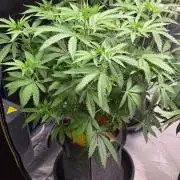
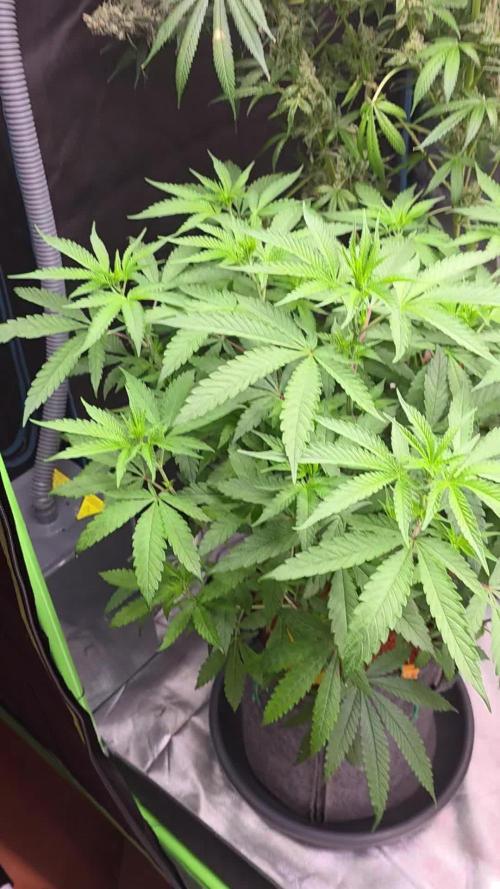
Due that i used the VPD Chart, I had 30 days of veg on this Autoflower plant.
Now the plant started preflowering and started it's stretch.
The plant responded very well after being topped, which i was very happy with. As this was my first ever topped Autoflower.
I always tweak the LST everyday depending on how its growing.
My main goal is maximum yield with multiple colas, using organic and vegan nutes.
The plant looks very healty and 0 deficiencys till now 💪
This week i started adding bloom nutes to help her with the flip.


@all_about_420
Follow
Das finale Kapitel des Wachstumszyklus ist abgeschlossen und die grüne Schönheit steht in voller Pracht bereit für den nächsten Schritt. Nach konstantem Feinschliff und gezieltem Training präsentiert sich die Pflanze mit einem absolut dichten, vitalen Blätterdach und perfekt austarierten Trieben auf einer optimalen Arbeitshöhe. Die Nährstoffaufnahme ist makellos, das Blattgrün strotzt vor Gesundheit und die Verzweigung verspricht eine grandiose Blütenbildung. Pünktlich zum Wochenende fiel nun der finale Startschuss für die generative Phase mit der Umstellung der Beleuchtung auf den klassischen 12/12-Rhythmus, um den anstehenden Stretch einzuläuten.


@FlavoursUk
Follow
Started off by setting up the growing environment and dialling everything in such as;
RO Water for the RDWC hydroponic system.
Water Heater being set at 20 degrees C.
Water chiller being set at 21 degrees C.
pH being set at 5.7/5.8
Room Temp and humidity 20/23 Degrees C / 60%/80%RH.
Instead of using rockwool cubes to place my seeds, I put them directly into the clay pebbles. I then used a DIY humidity dome to place over the seeds until they make an appearance.
I have been top feeding RO water every 6 hours.
Foil was used to cover the net pot to ensure no light leaks were going into the system. Highly important in DWC.
Will add some light nutrients once seeds are more established.
Until the next one!


@thefrozenking
Follow
great week! they are really getting dence. had to tie up the wedding glue and put up a trellis to keep it upright.
down to base nutrients. will flush next week.


@DonGrowian
Follow
02.02.2024:
Heute ein paar erste Erntebilder...
1 1/2 Pflanzen habe ich bereits fertig.
Die Erntemenge ist nicht so hoch, wie im letzten Grow, wird sich aber wohl etwa bei 300g insgesamt einpendeln.
Bis jetzt sind es 680g Nassgewicht.
Weiteres gibt es dann, wenn ich mit der Ernte fertig bin.
Auch weitere Fotos kommen noch
Update 05.02.2024:
Die 3 Dos Si Dos sind jetzt fertig. Es sind nass aus 3 Pflanzen etwa 1190g nass.
Jetzt fehlen noch die beiden Glue Gelato.
Leider sind die Pflanzen sehr klein geblieben, so dass sie nicht so viel Licht bekommen haben.
Die Menge wird entsprechend kleiner ausfallen. Aber auch dazu wird es noch ein Update des Reports geben.

shorts_status_processing


@DrGanj
Follow
Tapering nutes off for the flush. Also added a small amount of Barley as a top dress to help her finish off.



@Ultraviolet
Follow
Yellow butterfly came to see me the other day; that was nice.
Starting to show signs of stress on the odd leaf, localized isolated blips, blemishes, who said growing up was going to be easy!
Smaller leaves have less surface area for stomata to occupy, so the stomata are packed more densely to maintain adequate gas exchange. Smaller leaves might have higher stomatal density to compensate for their smaller size, potentially maximizing carbon uptake and minimizing water loss. Environmental conditions like light intensity and water availability can influence stomatal density, and these factors can affect leaf size as well. Leaf development involves cell division and expansion, and stomatal differentiation is sensitive to these processes. In essence, the smaller leaf size can lead to a higher stomatal density due to the constraints of available space and the need to optimize gas exchange for photosynthesis and transpiration. In the long term, UV-B radiation can lead to more complex changes in stomatal morphology, including effects on both stomatal density and size, potentially impacting carbon sequestration and water use. In essence, UV-B can be a double-edged sword for stomata: It can induce stomatal closure and potentially reduce stomatal size, but it may also trigger an increase in stomatal density as a compensatory mechanism. It is generally more efficient for gas exchange to have smaller leaves with a higher stomatal density, rather than large leaves with lower stomatal density. This is because smaller stomata can facilitate faster gas exchange due to shorter diffusion pathways, even though they may have the same total pore area as fewer, larger stomata. Leaf size tends to decrease in colder climates to reduce heat loss, while larger leaves are more common in warmer, humid environments. Plants in arid regions often develop smaller leaves with a thicker cuticle and/or hairs to minimize water loss through transpiration. Conversely, plants in wet environments may have larger leaves and drip tips to facilitate water runoff. Leaf size and shape can vary based on light availability. For example, leaves in shaded areas may be larger and thinner to maximize light absorption. Leaf mass per area (LMA) can be higher in stressful environments with limited nutrients, indicating a greater investment in structural components for protection and critical resource conservation. Wind speed, humidity, and soil conditions can also influence leaf morphology, leading to variations in leaf shape, size, and surface characteristics. Small leaves: Reduce water loss in arid or cold climates.
Environmental conditions significantly affect gene expression in plants. Plants are sessile organisms, meaning they cannot move to escape unfavorable conditions, so they rely on gene expression to adapt to their surroundings. Environmental factors like light, temperature, water, and nutrient availability can trigger changes in gene expression, allowing plants to respond to and survive in diverse environments.
Depending on the environment a young seedling encounters, the developmental program following seed germination could be skotomorphogenesis in the dark or photomorphogenesis in the light. Light signals are interpreted by a repertoire of photoreceptors followed by sophisticated gene expression networks, eventually resulting in developmental changes. The expression and functions of photoreceptors and key signaling molecules are highly coordinated and regulated at multiple levels of the central dogma in molecular biology. Light activates gene expression through the actions of positive transcriptional regulators and the relaxation of chromatin by histone acetylation. Small regulatory RNAs help attenuate the expression of light-responsive genes. Alternative splicing, protein phosphorylation/dephosphorylation, the formation of diverse transcriptional complexes, and selective protein degradation all contribute to proteome diversity and change the functions of individual proteins.
Photomorphogenesis, the light-driven developmental changes in plants, significantly impacts gene expression. It involves a cascade of events where light signals, perceived by photoreceptors, trigger changes in gene expression patterns, ultimately leading to the development of a plant in response to its light environment.
Genes are expressed, not dictated! While having the potential to encode proteins, genes are not automatically and constantly active. Instead, their expression (the process of turning them into proteins) is carefully regulated by the cell, responding to internal and external signals. This means that genes can be "turned on" or "turned off," and the level of expression can be adjusted, depending on the cell's needs and the surrounding environment. In plants, genes are not simply "on" or "off" but rather their expression is carefully regulated based on various factors, including the cell type, developmental stage, and environmental conditions. This means that while all cells in a plant contain the same genetic information (the same genes), different cells will express different subsets of those genes at different times. This regulation is crucial for the proper functioning and development of the plant.
When a green plant is exposed to red light, much of the red light is absorbed, but some is also reflected back. The reflected red light, along with any blue light reflected from other parts of the plant, can be perceived by our eyes as purple.
Carotenoids absorb light in blue-green region of the visible spectrum, complementing chlorophyll's absorption in the red region. They safeguard the photosynthetic machinery from excessive light by activating singlet oxygen, an oxidant formed during photosynthesis. Carotenoids also quench triplet chlorophyll, which can negatively affect photosynthesis, and scavenge reactive oxygen species (ROS) that can damage cellular proteins. Additionally, carotenoid derivatives signal plant development and responses to environmental cues. They serve as precursors for the biosynthesis of phytohormones such as abscisic acid () and strigolactones (SLs). These pigments are responsible for the orange, red, and yellow hues of fruits and vegetables, while acting as free scavengers to protect plants during photosynthesis.
Singlet oxygen (¹O₂) is an electronically excited state of molecular oxygen (O₂). Singlet oxygen is produced as a byproduct during photosynthesis, primarily within the photosystem II (PSII) reaction center and light-harvesting antenna complex. This occurs when excess energy from excited chlorophyll molecules is transferred to molecular oxygen. While singlet oxygen can cause oxidative damage, plants have mechanisms to manage its production and mitigate its harmful effects.
Singlet oxygen (¹O₂) is considered a reactive oxygen species (ROS). It's a form of oxygen with higher energy and reactivity compared to the more common triplet oxygen found in its ground state. Singlet oxygen is generated both in biological systems, such as during photosynthesis in plants, and in cellular processes, and through chemical and photochemical reactions. While singlet oxygen is a ROS, it's important to note that it differs from other ROS like superoxide (O₂⁻), hydrogen peroxide (H₂O₂), and hydroxyl radicals (OH) in its formation, reactivity, and specific biological roles. Non-photochemical quenching (NPQ) protects plants from damage caused by reactive oxygen species (ROS) by dissipating excess light energy as heat. This process reduces the overexcitation of photosynthetic pigments, which can lead to the production of ROS, thus mitigating the potential for photodamage. Zeaxanthin, a carotenoid pigment, plays a crucial role in photoprotection in plants by both enhancing non-photochemical quenching (NPQ) and scavenging reactive oxygen species (ROS). In high-light conditions, zeaxanthin is synthesized from violaxanthin through the xanthophyll cycle, and this zeaxanthin then facilitates heat dissipation of excess light energy (NPQ) and quenches harmful ROS.
The Issue of Singlet Oxygen!!
ROS Formation: Blue light, with its higher energy photons, can promote the formation of reactive oxygen species (ROS), including singlet oxygen, within the plant.
Potential Damage: High levels of ROS can damage cellular components, including proteins, lipids, and DNA, potentially impacting plant health and productivity.
Balancing Act: A balanced spectrum of light, including both blue and red light, is crucial for mitigating the harmful effects of excessive blue light and promoting optimal plant growth and stress tolerance.
The Importance of Red Light:
Red light (especially far-red) can help to mitigate the negative effects of excessive blue light by:
Balancing the Photoreceptor Response: Red light can influence the activity of photoreceptors like phytochrome, which are involved in regulating plant responses to different light wavelengths.
Enhancing Antioxidant Production: Red and blue light can stimulate the production of antioxidants, which help to neutralize ROS and protect the plant from oxidative damage.
Optimizing Photosynthesis: Red light is efficiently used in photosynthesis, and its combination with blue light can lead to increased photosynthetic efficiency and biomass production.
In controlled environments like greenhouses and vertical farms, optimizing the ratio of blue and red light is a key strategy for promoting healthy plant growth and yield.
Understanding the interplay between blue light signaling, ROS production, and antioxidant defense mechanisms can inform breeding programs and biotechnological interventions aimed at improving plant stress resistance. In summary, while blue light is essential for plant development and photosynthesis, it's crucial to balance it with other light wavelengths, particularly red light, to prevent excessive ROS formation and promote overall plant health. Oxidative damage in plants occurs when there's an imbalance between the production of reactive oxygen species (ROS) and the plant's ability to neutralize them, leading to cellular damage. This imbalance, known as oxidative stress, can result from various environmental stressors, affecting plant growth, development, and overall productivity.
Causes of Oxidative Damage: Abiotic stresses: These include extreme temperatures (heat and cold), drought, salinity, heavy metal toxicity, and excessive light. Biotic stresses: Pathogen attacks and insect infestations can also trigger oxidative stress. Metabolic processes: Normal cellular activities, particularly in chloroplasts, mitochondria, and peroxisomes, can generate ROS as byproducts. Certain chlorophyll biosynthesis intermediates can produce singlet oxygen (1O2), a potent ROS, leading to oxidative damage. ROS can damage lipids (lipid peroxidation), proteins, carbohydrates, and nucleic acids (DNA). Oxidative stress can compromise the integrity of cell membranes, affecting their function and permeability. Oxidative damage can interfere with essential cellular functions, including photosynthesis, respiration, and signal transduction. In severe cases, oxidative stress can trigger programmed cell death (apoptosis). Oxidative damage can lead to stunted growth, reduced biomass, and lower crop yields.
Plants have evolved intricate antioxidant defense systems to counteract oxidative stress. These include: Enzymes like superoxide dismutase (SOD), catalase (CAT), and various peroxidases scavenge ROS and neutralize their damaging effects. Antioxidant molecules like glutathione, ascorbic acid (vitamin C), C60 fullerene, and carotenoids directly neutralize ROS. Developing plant varieties with gene expression focused on enhanced antioxidant capacity and stress tolerance is crucial. Optimizing irrigation, fertilization, and other management practices can help minimize stress and oxidative damage. Applying antioxidant compounds or elicitors can help plants cope with oxidative stress. Introducing genes for enhanced antioxidant enzymes or stress-related proteins over generations.
Phytohormones, also known as plant hormones, are a group of naturally occurring organic compounds that regulate plant growth, development, and various physiological processes. The five major classes of phytohormones are: auxins, gibberellins, cytokinins, ethylene, and abscisic acid. In addition to these, other phytohormones like brassinosteroids, jasmonates, and salicylates also play significant roles.
Here's a breakdown of the key phytohormones:
Auxins: Primarily involved in cell elongation, root initiation, and apical dominance.
Gibberellins: Promote stem elongation, seed germination, and flowering.
Cytokinins: Stimulate cell division and differentiation, and delay leaf senescence.
Ethylene: Regulates fruit ripening, leaf abscission, and senescence.
Abscisic acid (ABA): Plays a role in seed dormancy, stomatal closure, and stress responses.
Brassinosteroids: Involved in cell elongation, division, and stress responses.
Jasmonates: Regulate plant defense against pathogens and herbivores, as well as other processes.
Salicylic acid: Plays a role in plant defense against pathogens.
1. Red and Far-Red Light (Phytochromes):
Red light:
Primarily activates the phytochrome system, converting it to its active form (Pfr), which promotes processes like stem elongation and flowering.
Far-red light:
Inhibits the phytochrome system by converting the active Pfr form back to the inactive Pr form. This can trigger shade avoidance responses and inhibit germination.
Phytohormones:
Red and far-red light regulate phytohormones like auxin and gibberellins, which are involved in stem elongation and other growth processes.
2. Blue Light (Cryptochromes and Phototropins):
Blue light:
Activates cryptochromes and phototropins, which are involved in various processes like stomatal opening, seedling de-etiolation, and phototropism (growth towards light).
Phytohormones:
Blue light affects auxin levels, influencing stem growth, and also impacts other phytohormones involved in these processes.
Example:
Blue light can promote vegetative growth and can interact with red light to promote flowering.
3. UV-B Light (UV-B Receptors):
UV-B light:
Perceived by UVR8 receptors, it can affect plant growth and development and has roles in stress responses, like UV protection.
Phytohormones:
UV-B light can influence phytohormones involved in stress responses, potentially affecting growth and development.
4. Other Colors:
Green light:
Plants are generally less sensitive to green light, as chlorophyll reflects it.
Other wavelengths:
While less studied, other wavelengths can also influence plant growth and development through interactions with different photoreceptors and phytohormones.
Key Points:
Cross-Signaling:
Plants often experience a mix of light wavelengths, leading to complex interactions between different photoreceptors and phytohormones.
Species Variability:
The precise effects of light color on phytohormones can vary between different plant species.
Hormonal Interactions:
Phytohormones don't act in isolation; their interactions and interplay with other phytohormones and environmental signals are critical for plant responses.
The spectral ratio of light (the composition of different colors of light) significantly influences a plant's hormonal balance. Different wavelengths of light are perceived by specific photoreceptors in plants, which in turn regulate the production and activity of various plant hormones (phytohormones). These hormones then control a wide range of developmental processes.


@RoccosForest
Follow
Plants growing slowly, having a problem with mold and I went and got hydrogen peroxide and that seems to control the area of it when sprayed.


@GERGrowDesigns
Follow
Dear Growers ,
Welcome to Week 9 or Flower week 6 // Day 63-70 from Kannabia Lemon Haze Auto .
Incase of Moving to a New Home . I Decided to skip some Weeks from every Diarie of the 12x12 Automatic Project . Everything should be Normal in the next Weeks .
Whether you're a beginner or an expert, you are warmly invited to join, ask questions, and share your own experiences along the way!
Project Setup & Conditions:
• Brand/Manufacturer: Kannabia Seeds
• Tent: 222cmx150cmx150cm
• Light: 2x 720 Watt Full Spectrum
• Humidity: 50%
• Soil: Narcos Organix Mix
• Nutrients: Narcos Products
• pH Value: 6
The Pictures Showing genetic 1 and 2 of Lemeon Haze Auto
If you want Germinitation results like mine , check out Kannabia Seeds with my link [https://www.kannabia.com/de?ref=61966] and grab the germination device or the strains I used . Trust me – it’s worth it for sure !
Get another 20% Discount at all products using the code [GGD] at the Checkout .
Stay curious and keep up Growing —we look forward to welcoming you back for the next chapter soon!


@Wicked_Stix
Follow
The voodoo juice x platinum hermed this week so moved it to it's own tent. We have 6 plants remaining in the room. I cut out the maxigro this week. They are getting .5 tsp per gallon of maxibloom now. Seems to be keeping everyone happy. Not much to report other than that. Buds seem to be progressing pretty nice.


@MadeInGermany
Follow
Flowering day 12
since time change
to 12/12 h.
Hey everyone ☺️.
Once again a wonderful week goes by 😀.
It has developed so far and is now slowly starting to develop its flowers :-).
As soon as the first forms of buds can be seen (I think in 5-10 days) 2 g GHSC Powder Feeding Bio Bloom per liter of substrate are added.
In the third week, 1 g per liter of substrate is added so that it lasts through to the end :-).
This week it was poured 3 times with 1 liter each 👍.
The entire tent was also cleaned and the electronics checked for functionality.
The humidifier was refilled every day and fresh osmosis water was drained into the tank for the coming week ☺️.
The plants have all been checked for health and pests 👍.
Next week the bamboo sticks are inserted towards the end for support and the lowest shoots are removed so that at the end the energy is not wasted in the lower area 👍.
Otherwise there is nothing more to report this week :-).
I wish you a lot of fun with the update 😎.
Stay healthy and let it grow 🍀.
You can buy this Strain at
https://www.barneysfarm.com/blue-cheese-34
Type:
Blue Cheese
☝️🏼
Genetics:
Blueberry
X
Original Cheese
👍
Vega lamp:
2 x Todogrow Led
Quantum Board 100 W
💡
Bloom Lamp :
2 x Todogrow Led
Cxb 3590 COB 3500 K 205W
💡💡☝️🏼
Soil :
Canna Coco Professional +
☝️🏼
Fertilizer:
Green House Powder Feeding
☝️🏼🌱
Water:
Osmosis water mixed with normal water (24 hours stale that the chlorine evaporates) to 0.2 EC. Add Cal / Mag to 0.4 Ec Ph with Organic Ph - to 5.5 - 5.8




@Jbjibman
Follow
Plants are looking great.
Wedding cake smells like heaven and is frosty and sticky.
It is not ready for harvest though. Trichomes are milky but found no amber coloured trichomes. I'll give her another week.
Did some defoliation on all three plants and Another topping for SL.
Wedding cake has a few big buds on the lower parts of the plant that are really close to each other. I had to bend them away from each other to avoid bud rot and help with ventilation.
Additionally I had to pick out small black flies (Gewittertierchen) out of the Buds.
I cut out the small popcorn buds of Hype1 with no chance for sunlight and healthy growth. Hopefully she will focus on the main buds on the top.
Don't worry keep growing;)


@BLAZED
Follow
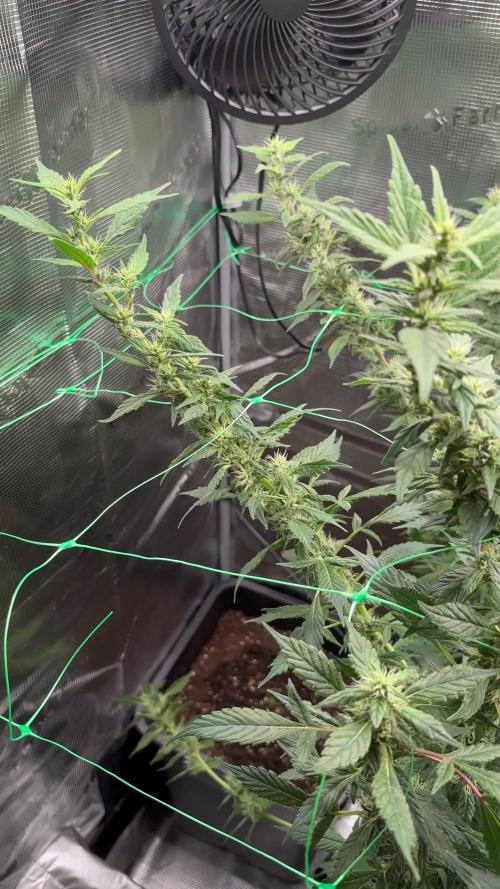
Week 3 (27-11 to 3-12)
What's good everyone?
We started this week off with removing the 2 bottom shoots.
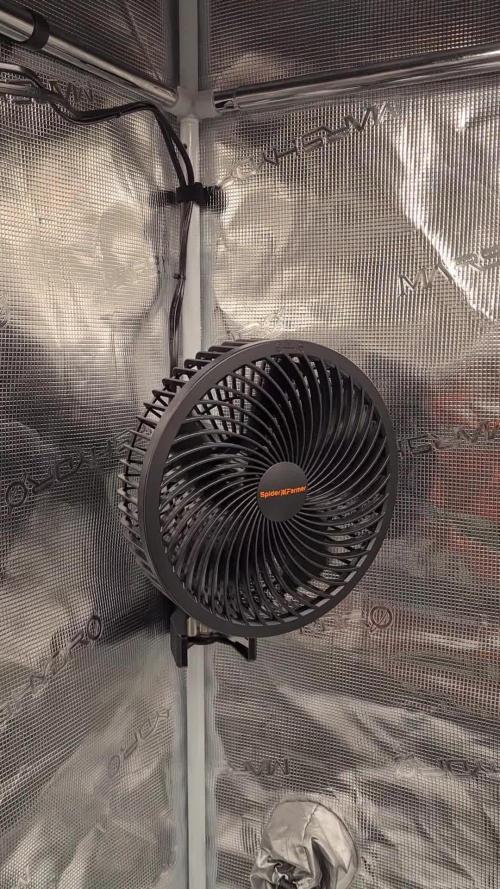
The next day Santa came early 😁 Got 2 new clip fans and the AC5 Power strip from Spider Farmer.
The power strip has 5 outlets you can control in the app, they can be turned on based on a time cycle, humidity or temps.
It comes with a sensor that monitors light, temperature, and humidity.
And a soil sensor that monitors soil moisture (VWC), temperature, and electrical conductivity (EC).
It also has a light adapter to connect 2 lights, that can be controlled in the app aswell.
The app shows the current VPD, i try to keep this around 1.0.
In the middle of the week we topped her aswell.
The next day we increased the light intensity from 30% to 35%.
LUX: 13.000/13.500 to LUX: 15.000/15.500
This week's growing conditions were 17.9°C to 22.4°C with a humidity of 55.5% to 67.6% and watered 2 times with 0.5L.
See you next week!


@nastyy
Follow
Flushed the sleepy joe. Moved in to another tent, harvest was supposed to be in two days, but got budrot in 6 of the biggest colas today. So I had to cut the plant down before and removed the bad buds. It’s drying now and I will look at the buds everyday now. The total wet weight of the plant with the stem was around 3000g and the top buds I removed was 129g wet




@BruWeed
Follow
Para el lavado de raíz le agregue en total 60L de agua y utilicé Flawless Finish para barrer cualquier residuo que le quede.
En total en humedo tengo 127g de una sola planta. Su olor es muy fuerte y se siente lo citrico.
En estos momentos se encuentran en curado, la corte hace 7 dias aproximadamente.
Se ven muy bien, estan super pegajosos y muy lindos.
Nunca había cultivado una AK-47, muy linda planta y muy conforme con resultados obtenidos. Gracias al banco de semillas Seeds Mafia.
