




Likes
43
Share


@Enollam
Follow
Servus zusammen 🏽
Herrlich einfach bisher
Gab das erste Mal p-k 5-8 dazu...
Die schnellste Dame im Zelt mit der weitesten Entwicklung
Macht Spaß zuzuschauen

Likes
9
Share

@Miketama
Follow
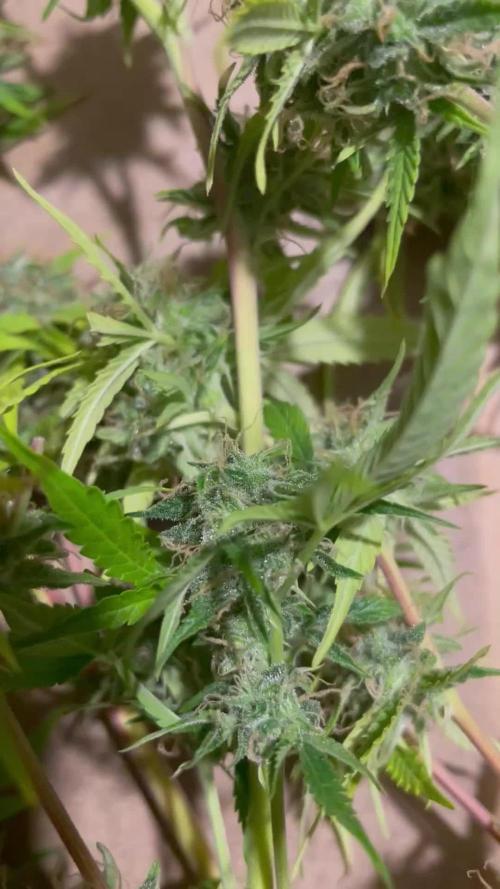
Grown together with 3 other strains in a total of 0.36m² using Migro Aray 2 (125W). Variable dimming: W1 60%/24h, W2-10-11-12 60%/20h, W3-5-8-9-13 80%/20h, W6-7 100%/20h. Average consumption ~24W per plant.

Likes
7
Share

@DogDoctorOfficial
Follow
🌸 Week 7 – Flower Stage: When Trouble Knocks, We Learn
Grower: Dog Doctor
Strain: Super Silver Haze
Breeder: Zamnesia Seeds
Light: Future of Grow Black Series 600W & ThinkGrow ICL-300
Environment: 8x8 Shared Tent – Controlled by TrolMaster System
Temp: 29.4°C (day) / 25.6°C (night)
Humidity: 64–68%
CO₂: ~720 ppm
Soil Temp: 24.8°C
Watering: Manual (Hand Watering)
Water Mix (per L):
• Aptus Regulator – 0.15 ml
• Aptus CalMag Boost – 0.25 ml
• Aptus All-In-One Liquid – 1 ml
• Plagron Power Buds – 1 ml
• Plagron Sugar Royal – 1 ml
• Plagron Green Sensation – 1 ml
⸻
🌿 The Week the Storm Passed Through
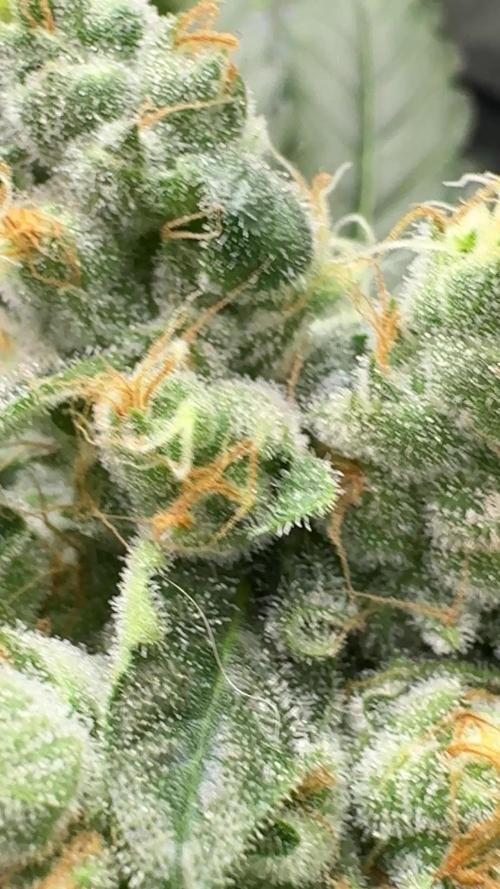
This week brought a little challenge to the garden — bud rot made an appearance. It’s never a welcome guest, but it’s part of the growing journey, and it teaches you more than any perfect run ever could.
It started small: a couple of darker spots noticed deep inside one of the colas. Upon closer inspection, we confirmed it — Botrytis cinerea, or as growers call it, bud rot. Thankfully, it was localized and quickly handled, removing all affected material carefully to avoid spreading spores.
Despite how dramatic macro photos can make it look, the loss was minimal. The rest of the canopy remains healthy, strong, and radiant under the LEDs. The girls keep thriving like the true champions they are.
⸻
🧠 Educational Spotlight – What Is Bud Rot (and What It Isn’t)
Bud rot is a fungal infection caused by Botrytis cinerea. It thrives in warm, humid, stagnant environments — the kind of microclimate that can form in thick buds during late flower.
It usually begins inside the bud, invisible at first, and works its way outward, leaving behind a grayish-brown, dusty rot that can ruin entire flowers if unnoticed.
Early warning signs:
• Brown or gray fuzz inside the cola
• Dry, dead sugar leaves sticking out of healthy buds
• A musty or “old hay” smell
Prevention is everything:
🌬️ Keep strong airflow through and between plants
💨 Maintain active extraction and oscillating fans
🌡️ Lower humidity to 50% or below during late flower
🌗 Avoid large night/day temperature swings
✂️ Remove excess inner foliage (selective defoliation)
For a deep dive into identifying, preventing, and treating bud rot, check out Zamnesia’s excellent guide:
🔗 Zamnesia – Bud Rot: The Cannabis Grower’s Guide - https://www.zamnesia.com/grow-weed/563-bud-rot-cannabis-grower-guide
⸻
💬 Reflection – The Grower’s Responsibility
Let’s be honest — this one’s on me. It’s a new setup, and with every new tent comes a new rhythm to learn. The temperatures are still higher than I’d like, and humidity sometimes pushes the edge. But that’s what growing is — progress through imperfection.
The key is to act fast, learn faster, and never let one small setback derail the entire grow. The good news: both Super Silver Haze phenos continue to look absolutely stunning — symmetrical, resilient, and full of that legendary vigor that made this strain an icon.
⸻
🌸 What to Expect Next
As we move into Week 8, we’ll be:
• Reducing humidity and increasing airflow
• Keeping close watch on moisture and leaf density
• Fine-tuning the TrolMaster environment controls
• Allowing buds to fatten, harden, and mature into their final form
We’re entering the critical ripening phase, where patience and precision make all the difference.
⸻
🌾 Grower-to-Grower Corner – Preventing Bud Rot
Since every grower faces this risk sooner or later, here are a few small habits that make a massive difference:
1. Prune with intent: Create small “air highways” between branches so moisture can escape.
2. Nighttime is key: Rot thrives in cool, humid nights. Keep fans on and air moving even when lights are off.
3. Monitor VPD: Around 1.2–1.4 kPa is ideal for mid-late flower; beyond 1.6 increases risk.
4. Inspect daily: Use your eyes and your nose — the first clue is often a smell, not a sight.
5. Clean the space: Mold spores can live in your tent, filters, and even fans. Sanitize between runs.
Remember: Bud rot doesn’t mean failure; it means evolution. Every grow that survives it creates a smarter grower.
⸻
💚 Closing Thoughts
This week was a humbling reminder that even under the best light, nature still has the final say. But she also rewards those who pay attention, act fast, and grow with love.
The Super Silver Haze continues to honor her legacy — strong, aromatic, and beautifully structured.
Thank you to Zamnesia Seeds, Aptus Holland, Plagron, Future of Grow, ThinkGrow, and TrolMaster for helping make this journey what it is.
With roots grounded and hearts steady, we keep going — greener, wiser, stronger.
Growers Love to all,
💚 Dog Doctor
📲 Don’t forget to Subscribe and follow me on Instagram and YouTube @DogDoctorOfficial for exclusive content, real-time updates, and behind-the-scenes magic. We’ve got so much more coming, including transplanting and all the amazing techniques that go along with it. You won’t want to miss it.
• GrowDiaries Journal: https://growdiaries.com/grower/dogdoctorofficial
• Instagram: https://www.instagram.com/dogdoctorofficial/
• YouTube: https://www.youtube.com/@dogdoctorofficial
There’s a new series blooming and it’s more than just plants. It’s about process, patience, and paying attention.
⸻
Explore the Gear that Powers My Grow
If you’re curious about the tech I’m using, check out these links:
• Genetics, gear, nutrients, and more – Zamnesia: https://www.zamnesia.com/
• Environmental control & automation – TrolMaster: https://www.trolmaster.eu/
• Advanced LED lighting – Future of Grow: https://www.futureofgrow.com/
• Root and growth nutrition – Aptus Holland: https://aptus-holland.com/
• Nutrient systems & boosters – Plagron: https://plagron.com/en/
• Soil & substrate excellence – PRO-MIX BX: https://www.pthorticulture.com/en-us/products/pro-mix-bx-mycorrhizae
• Curing and storage – Grove Bags: https://grovebags.com/
⸻
We’ve got much more coming as we move through the grow cycles. Trust me, you won’t want to miss the next steps, let’s push the boundaries of indoor horticulture together!
As always, this is shared for educational purposes, aiming to spread understanding and appreciation for this plant. Let’s celebrate it responsibly and continue to learn and grow together.
With true love comes happiness. Always believe in yourself, and always do things expecting nothing and with an open heart. Be a giver, and the universe will give back in ways you could never imagine.
💚 Growers love to all 💚

Likes
12
Share

@420DeepGrow
Follow
📆 Semana 9
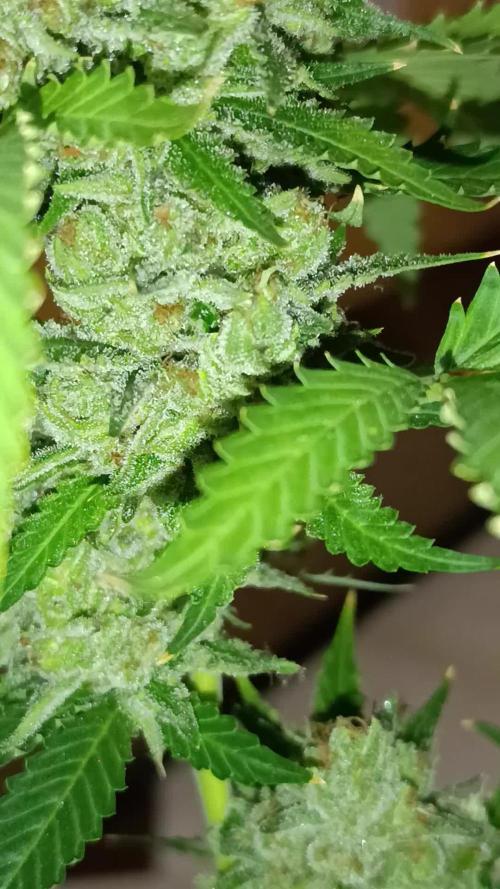
Los cogollos llegan al final del ciclo completamente formados, con una gran densidad, dureza y una producción de resina muy elevada. Los pistilos continúan oscureciéndose y retrayéndose, mientras los aromas alcanzan su máxima intensidad y el perfil terpénico se muestra cada vez más definido.
El fade avanza de forma natural y la planta concentra sus últimos recursos en terminar de madurar las flores, completando el engorde y alcanzando el punto final de cosecha.
Esta última semana estuvo marcada por la evacuación, dificultando el mantenimiento de la rutina habitual de cultivo. Aun así, las plantas consiguieron completar el ciclo con un resultado muy satisfactorio.
¡Seguimos creciendo fuerte! 💪

Likes
15
Share


@BlackDragon22
Follow
Finalmente ci siamo quasi... Le strawberry banana sono state divise con due contenitori da 20L...la n° 1 (la più piccola) è in flush.. Mentre l'altra sta andando ancora con overdrive per questa settimana. Odore pazzesco, una corsa lunghissima dovuta a errori di ec per metà cultura.. Ora non si sbaglia più 😎 non vedo l'ora.

Likes
14
Share


@Kreewl
Follow
Bienvenidos de nuevo! No tengo mucho que contar, sigo con flush hasta que vea los tricomas algo más maduros. De momento me parecen tres cepas muy potentes, cada una con una caracteristica diferente. Pronto tocará cosechar, pues estamos en el día 56 de flora. Seguiré actualizando durante la semana, un saludo!


Likes
Comments
Share



Likes
6
Share

@India_Calcoen
Follow
27-08-2026
Somehow it’s hard for me to keep updating the progress of my cannabisplants. I wanted to do it weekly, but it just doesn’t happen. Our fruits and vegetables need to be harvested and our animals want a lot of attention too! I’m so happy growing with Biotabs, I hardly have to do anything and if I don’t have time, my plants are growing anyway.
In week 16 (first signs of pre-flowering) all the plants got watered with 5 litres of water with 20 ml of Bio PK 5-8 and in week 20 again, 20 ml of Bio PK 5-8 diluted in 5 litres of water. This is the third time I had to water the plants manually. I just love this way of growing. Perfect for someone with a chronic illness.
Flowering started earlier than last year. I’m so happy, maybe these Early Versions will finish in time, before the autumn rains are coming.
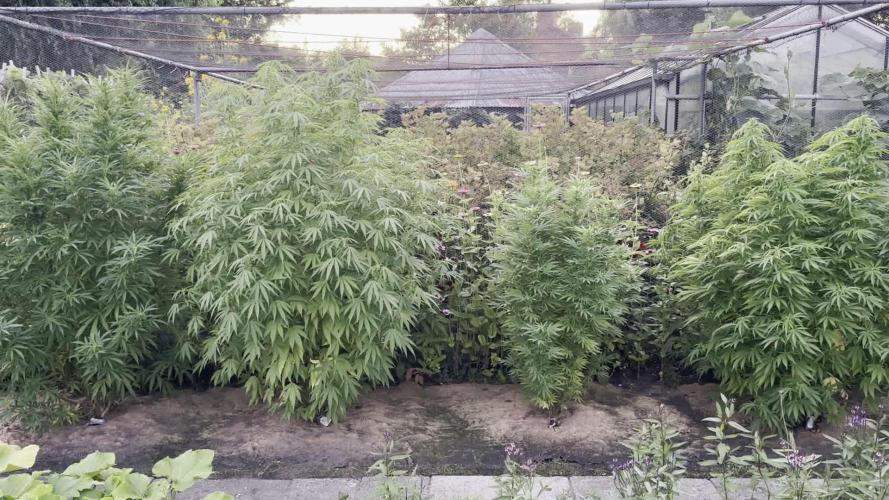
The plants have a nice green colour. I still need to ‘shave the legs’ and cut some branches and leaves away at the inside of the plant. Especially now when it rains sometimes I want them to dry quickly. I already removed two baskets of leaves and small branches from NL x Big Bud and Burger Kush.
GMO Fast isn’t flowering yet. She is only showing a few pre-flower hairs. I think she won’t make it in time… GMO Fast also had some issues during a summer storm with heavy winds and rain. One of her main branches came down. It was still attached to the centre of the plant, but it began to rot and I had to cut it out. I lost 25% of this plant. It’s my own fault. She is over 2,5 metres now and her height makes her susceptible for wind. It makes me think about securing all my plants with long bamboo-poles or sticks. If the flowers start growing, all those branches will get heavy eventually. Maybe it’s time to prioritize the cannabisplants at this moment…

Likes
14
Share


@Phurlax
Follow
Day 78: watering 2 gal of ph water a few amber trichomes on some buds extended night cycle to 20/4
Day 82: trimmed off most fan leafs hung up to dry have a humidifier to keep it 50-60% and the temp will be 50-70°F smells super good again.
Day 88: put into jars havent trimmed yet about 12 to 15 grams in each jar and there 12 jars so im guessing about 4 oz total after trimming
Finished trimming finally have been curing for 8 days dank smell more and more everyday.
Ended up with a dry weight of: 4.39 Oz
Smoked 1 test joint and tasted alot like a dryer sheet.
31.45 grams of trim I will make into wax
Likes
13
Share


@FlavoursUk
Follow
Since sprouting above ground I've been top watering RO water until the roots hit the water.
I also covered the net pots with reflective film to avoid any light leaking into the rdwc system to avoid any issues later on in the grow.
Day 5 - Roots are starting to touch the water so I'm expecting the growth rate to pick up soon 😏
Trol master unit is set up and connected to my light at 40% and on a 18/6 lighting schedule. Very handy unit if I must say.
Until the next update

Likes
8
Share


Likes
4
Share

@GERGrowDesigns
Follow
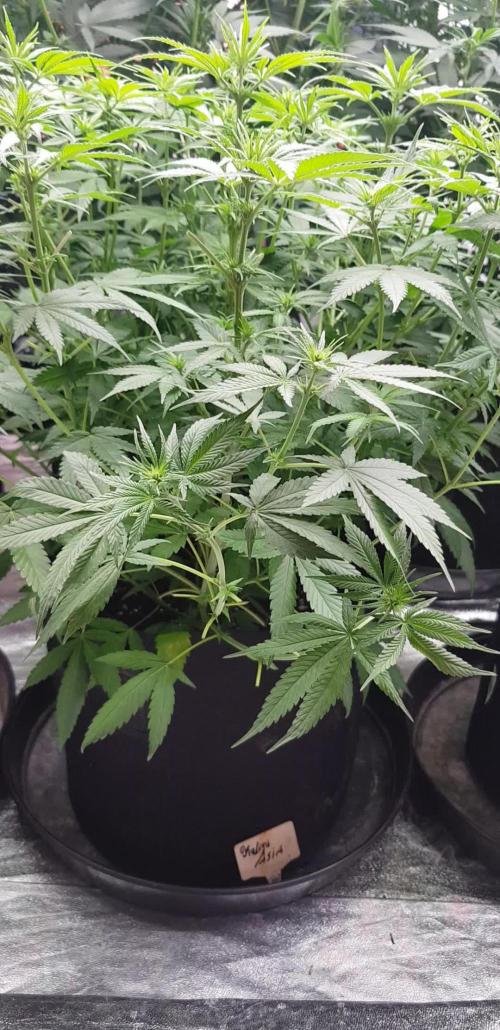
Welcome to Flower week 1 of Zamnesia Kalini Asia
I'm excited to share my grow journey with you from my
Zamnesia Project . It's going to be an incredible ride, full of learning, growing, and connecting with fellow growers from all around the world!
For this Project , I’ve chosen the Feminized Photo Strain Kalini Asia :
Here’s what I’m working with:
• 🌱 Tent: 120x60x80
• 🧑🌾 Breeder Company: Zamnesia
• 💧 Humidity Range: 50
• ⏳ Flowering Time: 7-8weeks
• Strain Info: 22%THC
• 🌡️ Temperature: 26
• 🍵 Pot Size: 16
• Nutrient Brand: Narcos
• ⚡ Lights : 600W x 2
I would truly appreciate every bit of feedback, help, questions, or discussions – and of course, your likes and interactions mean the world to me as I try to stand out in this exciting competition!
Let’s grow together – and don’t forget to stop by again to see the latest updates!
Happy growing!
Stay lifted and stay curious!
Peace & Buds!
Likes
4
Share


@ThatsmyGrow
Follow
She's developed very well. I think there are already many amber trichomes, but also many light hairs. So I'll keep her for another week.
Likes
7
Share


@ChitownCannaChica
Follow
She’s looking great! Very vigorous now that the weather has been nice! Flipping in a few

Likes
51
Share


@Hempface86
Follow
Here we are day 121 and 59 of flower and I am extremely excited because this girl has about a week and a half left.. yesterday I gave her strictly water and that will be all she gets from here on out pH 6.4 ... The boys are starting to swell and smell just like strawberries.. Weedseedsexpress much appreciated for these genetics I highly suggest you guys check them out.. this girl has been through so much and to see her nearing the end of the road and the fruits she has produced are impressive considering how her life started and all of the things that I put her through.. she is one tough cookie .. I hope everybody's doing well so are there Ladies God bless all and Happy growing ✌️😎 🍓💨
https://weedseedsexpress.com/us

Likes
Comments
Share


@Odins_Farmer
Follow
Overall happy with the outcome, really aesthetically pleasing plant but I've never been a big fan of cookie based strains and probably wouldn't do it again. It did produce some male flowers late into flowering. It's a nice plant to grow though from the always dependable Sensi.

Likes
16
Share


@DeepRootsGrowTrees
Follow
GORILLA MELON / 420FASTBUDS
WEEK #14 OVERALL
WEEK # 4 FLOWER
As she enters week #4 Flower ask if good she's got plenty of bud sites she's about 24 inches tall about 16 inches wide impressed with her growth and size for the small pot additionally her buds are getting some size and frost to them!! Stay Growing!!
Thank you for stopping by and taking a look it's much appreciated!!
THANK YOU 420FASTBUDS!!
BUDTRAINER.COM
BUD CUPS / BUD CLIPS
GORILLA MELON / 420FASTBUDS
Likes
3
Share


@mquintero7
Follow
Buds getting big and fat, smell is awesome. Everything going according to plan. A little defoliation this week of old leaves. Low fertilization, and some worm humus added on top.
Solid guano was also added and mixed on the top of the soil.

Likes
58
Share


@MadeInGermany
Follow
Info:
Unfortunately, I had to find out that my account is used for fake pages in social media.
I am only active here on growdiaries.
I am not on facebook instagram twitter etc All accounts except this one are fake.
Flowering day 29
since time change
to 12/12 h.
Hey guys :-) .
The lady is developing very nicely.
The buds start to grow.
This week it was poured twice with 1.2 l each (sewing materials, see table above).
As always, the tent was cleaned and the plants checked for health.
Have fun with the update.
Stay healthy 🙏🏻
You can buy this Nutrients at :
https://greenbuzzliquids.com/en/shop/
With the discount code: Made_in_Germany you get a discount of 15% on all products from an order value of 100 euros.
You can buy this Strain at :
www.Zamnesia.com
Type:
Banana
☝️🏼
Genetics:
OG Kush x unkown
👍
Vega lamp:
2 x Todogrow Led
Quantum Board 100 W
💡
Bloom Lamp :
2 x Todogrow Led
Cxb 3590 COB 3500 K 205W
💡💡☝️🏼
Soil :
Canna Coco Professional +
☝️🏼
Nutrients :
Green Buzz Liquids :
Organic Grow Liquid
Organic Bloom Liquid
Organic more PK
More Roots
Fast Buds
Humic Acid Plus
Growzyme Big Fruits
Clean Fruits
Cal / Mag
Organic Ph - Pulver
☝️🏼🌱
Water:
Osmosis water mixed with normal water (24 hours stale that the chlorine evaporates) to 0.2 EC. Add Cal / Mag to 0.4 Ec Ph with Organic Ph - to 5.8 - 6.4