





@SamDo
Follow
Vegetative Week 7 – Pineapple Upside Down (Round 2)
This week confirms a very good recovery following last week’s defoliation and pruning.
As shown in the photos, the plant bounced back quickly and shows strong vegetative vigor.
Leaf mass has rebuilt nicely, and overall growth looks healthy and well-balanced.
There are no signs of stress or slowdown at this stage.
After the structural work, light intensity was temporarily reduced to avoid additional stress.
Now that the plant is clearly responding well, light power has been increased again to around 50%, corresponding to roughly 150 watts in full-spectrum.
For now, the plan is to let the plant continue growing and building strength.
The four main branches that were previously selected need a bit more growth before starting any low-stress training.
Once they elongate further, light LST will be applied to begin shaping the plant’s final structure.
A move to a larger grow space is planned later, but there is no urgency at this stage.
Overall, everything is stable and progressing well.
See you next week. Take care.



@Naturalist
Follow
First week of flowering coming along slowly.
Decided to get a second SF-2000 as it is really needed to flower what I have decently, on order hopefully I can get it before next week.


@Blabina
Follow
5th of november 2021 / DAY 30 👉 The new p.h. seems effectiv, uploaded x18 time laps
👉 👽Calmag 1 ml/2L + 👽 Bio-Heaven 1 ml/2L 👽Bio-Grow 1 ml/2L /// 😇2 L. p.h. 5.8 EC : 0.7 degree 24.8° 👉 Run-off for QuickGreen is : EC 0.7, ph 7.6 20.4° QuickPink is : EC 0.6 ph 7.8 20.2° QuickBlue is : EC 0.5 ph 7.6 20.2°
😥I give up, p.h is increasing. I don't know what to do, but to me they are dead. I will keep doing what I do, but I don't know how to fix this p.h issue. If I have to give them 6 litters per plant with a ph 3 to try to reach a 5.8 p.h. again.😥
6th of november 2021 / DAY 31 👉 1L per plant : Water + ph down : 3.ph. run-off : 6.0-6.1 +1L per plant : 👽Calmag 1 ml/3L + 👽 Bio-Heaven 2 ml/3L 👽Bio-Grow 3 ml/3L
/// 😇3 L. p.h. 5.8 EC : 1.0 degree 24.8° 👉 Run-off about 6.0 per plant.
7th of november 2021 / DAY 32 👉 Upload photos, checking them. I see some greens, I don't want to give up really, I will see if I will have dwarves again... They are small and sick
8th of november 2021 / DAY 33 👉 I took them down to don't see them suffer more. A bit the hart broken.
End of diary... It was an experience.


@Ganjagrandaddy
Follow
Flowering day 2: For a new strain i am so impressed with her growth. She has performed great to this stage. Her flowers are forming amazingly quickly and she is taking the quadlining very seriously. All her shoots are looking able.to bear good sized buds and her secondary ones are fighting to get to the canopy top. This early on and needing a clearout of the small pointless growth , i feel she will be a great yielder of some dense nugs. Have green days folks.


@BlackOpsGrow
Follow
Another great week she is starting to look more finished. I've bumped down nutes this week and are still watering at 6.0+-0.2 ph. Next week i will start the flush and then it's harvest time 😁


@Growtopus
Follow
In knapp einer Woche haben sich die beiden verdoppelt. Die Seifuku hat sich super vom Topping erholt, hat aber einen etwas großen Abstand zwischen den Nodien. Die Lampe wurde von 80 cm auf 60 cm Abstand gesenkt, um so die Intensität zu erhöhen. Beide haben es gut vertragen, und nächste Woche wird sie weitere 10–15 cm gesenkt, da ich wegen des Magnetdimmers nur in 20-%-Stufen dimmen kann.
Bei der Sour Zoda wurde das erste Blattpaar entfernt, sodass die Seitentriebe nicht mehr verdeckt werden. Ich habe aber wohl das falsche gewählt, weil das nächste Paar so schnell gewachsen ist, dass sie sofort wieder verdeckt waren. Die Sour Zoda wächst eher gedrungen im Vergleich zur Seifuku.
Nach den Fotos wurden beide mit Wizzy's Pflanzengeflüster (0,5 g auf 50 ml pro Pflanze) eingesprüht.
----
In just under a week, both have doubled in size. The Seifuku has recovered really well from the topping but shows a somewhat large spacing between the nodes. The light was lowered from 80 cm to 60 cm to increase intensity. Both handled it well, and next week it will be lowered another 10–15 cm, since with the magnetic dimmer I can only adjust in 20% steps.
On the Sour Zoda, the first pair of leaves was removed so the side shoots wouldn’t be shaded. But I probably chose the wrong pair, because the next set grew so quickly that they were shaded again right away. The Sour Zoda grows more compact compared to the Seifuku.
After the photos both plants have been treated with Wizzy's Pflanzengeflüster (0,5 g in 50 ml per plant)
Nachtrag: Wir haben einen Schädlingsbefall, daher wurde die Erde bedeckt mit einer dicken Schicht Sand und darauf Splitt. Dadurch wird der Sand nicht weggespült beim Gießen und es wird noch unattraktiver für die Wurzelfliegen.
Bei der Seifuku wurden die Haupttriebe mit Clips heruntergebogen. Bei beiden wurde das unterste Blattwerk entfernt, damit die ich die Barriere gut auf die Erde bekomme.


@OntarioAutoGrower
Follow
03.03.23: Started in glass of water in a dark warm area for 17 hours when the seeds sank.
03.04.23: Then put them in a damp paper towel for 24/48 hrs in a dark warm area. Checking on them to keep them from drying up.
03.05.23: Seed taproots were 3/4 inches and were ready to go into the pots. I then poked a small hole into the soil with my finger and carefully put the seeds in and gently covered them with dirt. Then sprayed a little water onto them and then covered them with a dome to keep them humid. Now we wait until they pop out of the ground.


@TINO14
Follow
Aún falta ... La paciencia es una virtud pero ,con estos buds cristalinos 😅.
Fenotipos sativas 2
Fenotipos indico 1
Al parecer el fenotipo indico ya decidió dar a conocer su fruto finalizado pero pasan los días y noto nuevos tricomas y cálizes , es como si hubiera vuelto a desarrollar buds hay pistilos obscuros y resinosos y otros tiernos y nuevos.
El día 30 de marzo empieza su séptima semana de floracion
Según en catálogo su floracion va desde 7 semanas a 9 pero sus tricomas dicen que les de algunos días extra.
shorts_status_processing


@kevgrow
Follow
Hey Friends, end of week 13 from seed
Buds are getting thicker
Smell is getting stronger
Bud structure is looking amazing, so far its been an amazing experience seeing this plant grow.
I am watering every 3-4 days 1 full gallon of water mixed with nutrients.
Leaves are green, looking healthy
Trichomes are 98% cloudy 2% amber
This week I had a tough time trying to maintain a steady humidity level, its been raining outside lately so humidity level goes up.
QUESTIONS
When should I begin flushing?
shorts_status_processing


@MRSituation
Follow
01-12-2020
,19:30 kor el szórtam a magokat
06-12-2020 Elültettem a palántákat,,az Afgan kush még nincs kint
08-12-2020 Afgan kush előbújt, növekszik



@3rnest
Follow
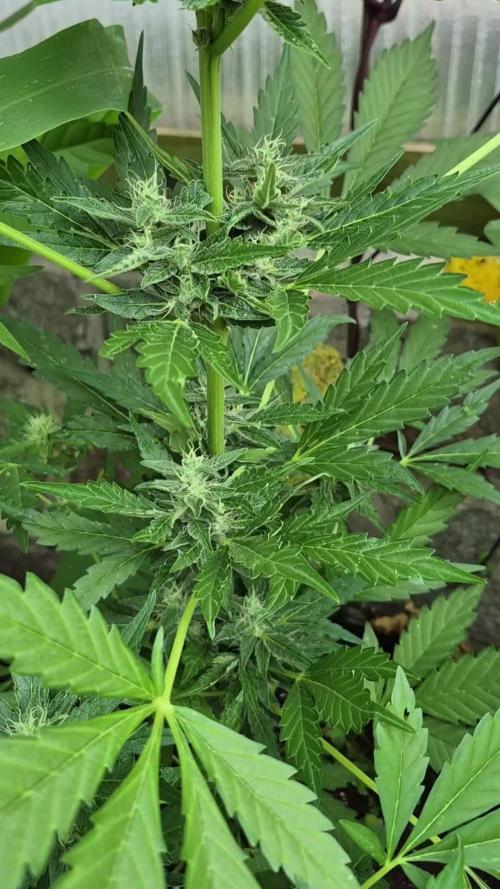
Nun geht es in die 9. Woche
Leider haben sich ein paar Blattläuse breit gemacht und ich habe die Pflanze erstmal etwas separiert und mit Brennesseltee behandelt. Ich hoffe der Geruch geht nicht zu stark auf die Blüten über.


@Ferinky
Follow
Hola y gracias por pasarte a ver mi diario.
Cuando compré esta semilla buscaba una variedad de rápida floración y con toques a naranja para completar mi cultivo de exterior.
La planta creció sin ningún problema excepto alguna carencia que presentó antes de tiempo, especialmente de nitrógeno.
Al ser un cultivo 100% orgánico y únicamente con riegos de agua del grifo sin añadir abonos líquidos era esperable, aunque el resultado final me deja muy satisfecho. Además, el hecho de añadir todos los nutrientes al sustrato me ha permitido facilitar la tarea del riego y no tener que realizar el lavado de raíces.
La planta se desarrolló en una maceta de 20L y ha producido 90g de cogollos secos, bastante duros y con una relación flores/hojas bastante buena.
El olor de las flores húmedas era bastante intenso y con matices dulces y cítricos.
Respecto a plagas y enfermedades ha sido muy resistente, no he apreciado signos de araña roja, pulgón ni trips gracias al aporte de harina de Neem en el sustrato.
Tampoco he sufrido el temido y habitual ataque de las orugas (ni la oruga de las hojas ni la del cogollo) gracias a las pulverizaciones en las fechas clave con Bacillus Thuringiensis.
Tampoco se ha visto afectada por el Oídio que normalmente aparece al final de la floración en la zona donde vivo, tampoco botrytis pese a ser cogollos densos y llenos de resina, por lo que la pastilla de Micorrizas y Trichodermas ha funcionado a la perfección, no sólo reforzando el sistema radicular sino también frente a los hongos invasores.
El clima también me ha acompañado este año, vivo en una zona cálida donde la temperatura suele ser óptima para el cultivo de exterior de cannabis, el mes de mayo llovió algún día de forma agradable, junio, julio y agosto fueron especialmente secos, solo llovió un par de noches a finales de agosto, y septiembre también ha sido muy respetuoso lloviendo solo 2 veces.
Por todo esto, siendo la primera vez que elaboro un supersoil, estoy seguro que para la temporada 2022 repetiré el sistema, haciendo algunos ajustes a la mezcla para evitar estas carencias que he comentado.
Quiero agradecer a Growdiaries.com la herramienta que nos brinda a los cultivadores (en mi caso cultivador clandestino) para poder realizar el seguimiento de nuestros cultivos y como, en mi caso particular, ha hecho que mi motivación y trabajo hayan sido una constante semana tras semana, por lo que ha influido directamente en el buen resultado final de la cosecha.
También agradecer a todo el que pasó por aquí durante el seguimiento ya que me dieron el apoyo necesario para mejorar en mi cultivo.
Un saludo.
Ferinky


@brpet
Follow
Plants are exploding. Seeing the power of RDWC now :-) Also found some mutants - leaves are growing in the the middle of the fingers.

shorts_status_processing








@Ultraviolet
Follow
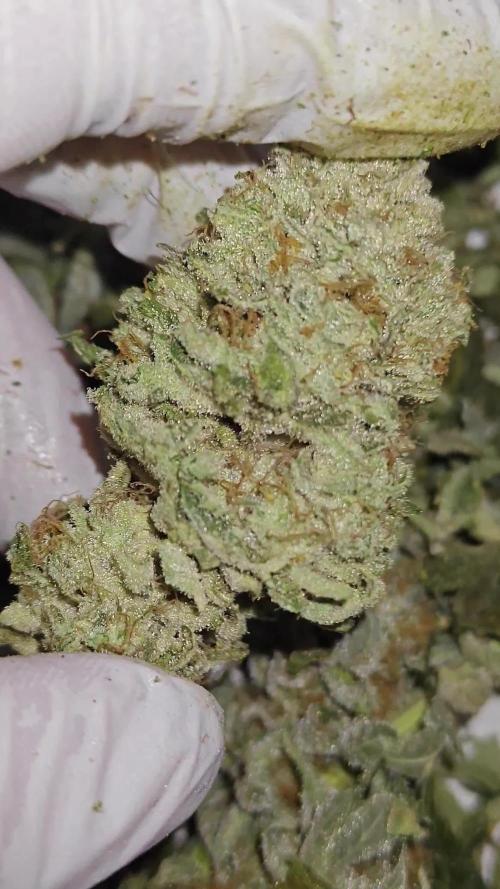
Apple Pie. mmmmmm
👋Top is a clean cut, no confusion for the plant, road ahead is clear, by completely removing the main growth tip, the auxin source is eliminated. The plant permanently halts vertical growth from that main stem and immediately sends its energy and hormones to the two new, evenly spaced branches just below the cut.
Fimming slightly different because a small tuft of the top growth is left behind, the auxin disruption is temporary and less severe. The plant recovers more quickly and sends its energy to multiple surrounding growth points, often creating four or more new shoots from the same spot. It will eventually regain some vertical dominance after a few weeks if left to its own devices, but with a little more LST, bending the apex to the same height as the rest of the internodes, this shatters dominance, hopefully creating around 8-9 main shoots growing at equal height once recovered and grown out.
Reduced environmental intensity for now and let her focus on dealing with this new stress for a week or two.
When H+ ions are added to soil, the first nutrient displaced from exchange sites is typically aluminum (Al3+), if it's present, followed by calcium (Ca2+), magnesium (Mg2+), and potassium (K+), because aluminum and these base cations have different binding strengths. The order of displacement depends on the lyotropic series, where ions with a higher positive charge and those with weaker binding strengths are displaced first.
The specific order of nutrient displacement is determined by the lyotropic series, which ranks the strength with which cations are adsorbed by soil particles:
Al3+: Most strongly adsorbed, so if present, it will be displaced by H+ ions, leading to increased solubility of aluminum and potential plant toxicity.
Ca2+: Displaced next, as it is more strongly bound than Mg2+ or K+ but less than Al3+.
Mg2+ and K+: Displaced after Ca2+.
The displaced nutrients can be lost from the root zone through leaching, becoming unavailable to plants.
As H+ ions increase, the proportion of acid cations (H+ and Al3+) on the exchange sites increases, while base cations (Ca2+, Mg2+, K+) decrease, resulting in a lower soil pH.
The amount of photosynthesis (water splitting) directly determines the availability of H+ ions (protons) in a plant.
90% of water is for cooling of photosynthetic apparatus the other 10% is split for its H+ among others things.
Carbon sugars, like glucose, do oxidize in soil through a process primarily driven by microorganisms, which break down these sugars for energy. This oxidation converts the sugars into carbon dioxide (CO2) through cellular respiration, a key part of the soil carbon cycle, though some carbon may also be incorporated into soil organic matter. The rate and extent of sugar oxidation depend on factors like oxygen availability, the presence of Fe oxides, and soil redox conditions, which can all influence the process.
My understanding of why we flush.
Just plain water, what does it do?
Strips the medium of salts and nutrients making it empty.
What does that do?
Triggers nutrient recycling within the plant.
What's nutrient recycling?
It is a natural part of plant senescence, which can be triggered once you know the switches. A 24:1 carbon-to-nitrogen ratio will also trigger.
Why won't it trigger autophagy for me?
Nitrogen needs to be gone, gone, gone almost. Ammoniacal (organic) nitrogen takes 4-5 times more water to separate it from soil particles than nitrates so what happens is most people jist flush the nitrates, leave all the ammoniacal in there and this prevents autophagy initiating.
Nitrogen decays differently depending on its form during the dry.
Ammoniacal nitrogen will oxidize in the air, leaving no trace. But nitrates do no decay and turn volatile and smelly and remain trapped until smoked, no matter how long you cure it does not oxidize. This is why you need to trigger it and begin the denitrification process prior to harvest to get rid of all the nitrates. Otherwise, you will smoke it.
Flush till autophagy begins, just make sure you add no nitrogen afterwards. Micronutrients for trichomes. Don't leave the medium empty for 2 weeks, that does nothing but reduce yield 10%ish. Trichomes are another thing. Trichomes themselves are not directly affected by flushing; rather, flushing affects the plant's nutrient uptake, which influences the development and final state of the trichomes. Trichomes are filled with antioxidants in the last weeks, which is what makes them cloudy. A lot of the processing of antioxidants requires energy and nutrients (mostly micronutrients ), so you don't want that soil empty for 2 weeks, you just want the carbon nitrogen ratio 24:1and no higher. She still wants what she needs to ripen.
Processing antioxidants is energy-intensive; heat and light accelerate the rate at which THC converts to CBN. This is why you lower DLI, lower temps. By doing so, you reduce the oxidative workload caused by photosynthesis, which opens up the oxidative capacity for the production of antioxidants. THC is mostly processed at night when the plant's oxidative capacity is generally moreso "free and available" for work
shorts_status_processing


@Yiyis_Grow
Follow
Semana tranquila. Algunas hojas inferiores se están poniendo amarillas por falta de luz. Este cultivo decidí no quitar hojas y dejar que las plantas tuvieran el mínimo de estrés, por lo tanto las hojas inferiores no reciben luz.
Las flores han aumentado bastante de tamaño y ya comienza a oler bastante rico el cuarto.
Están consumiendo prácticamente dos litros de líquido al día.
Buenos humos para todos!


