


Likes
Comments
Share

@Growfather1
Follow
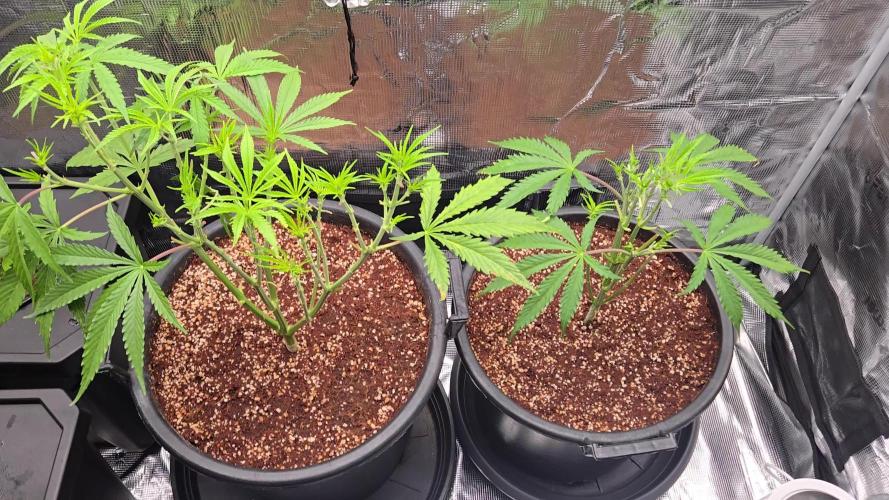
Hello everyone,
This week i throwed away the mac1 from expert seeds the roots were dead.
I put the amnesia in the flower tent and yesterday she got her first 6 hours of darkness and today she will sleep 9 hours and tomorrow 12 hours.
The other 2 plants will get one more week off 24 hours of light a day.
The clones are still alive and will update next week.
You all have a great day.


Likes
51
Share


@randyjustice
Follow
Chunking up rather nicely right now, and smelling incredibly potent! As you can tell from the picture several bud sites, two mail cola's and a few other primary cola's that are dominating the canopy of the plant! Cannot wait to harvest this sucker!

Likes
40
Share

@SubliminalSociety
Follow
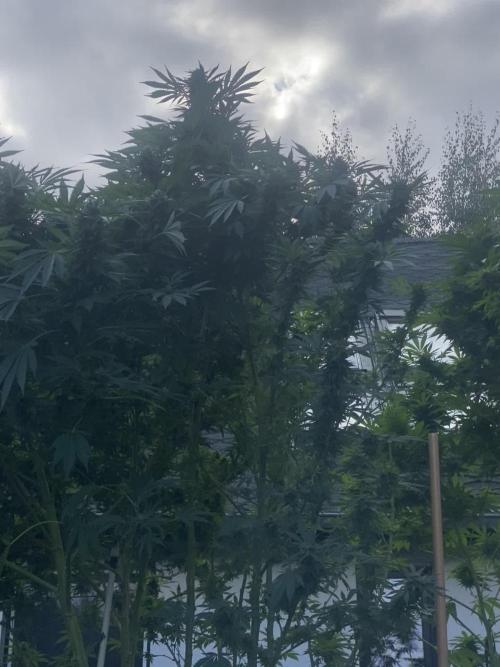
Week 25 - Frosty buds!
Finally some time this weekend to defoliate! And look what I found: lots of frosty buds.
The smell is delicious. Sweet lavender aromas, very warm. I like it a lot. Is this what she will taste like, too?
Harvest is close.

Likes
25
Share

@Salokin
Follow
Week 8 Flower | GMO × Triangle Mints BX
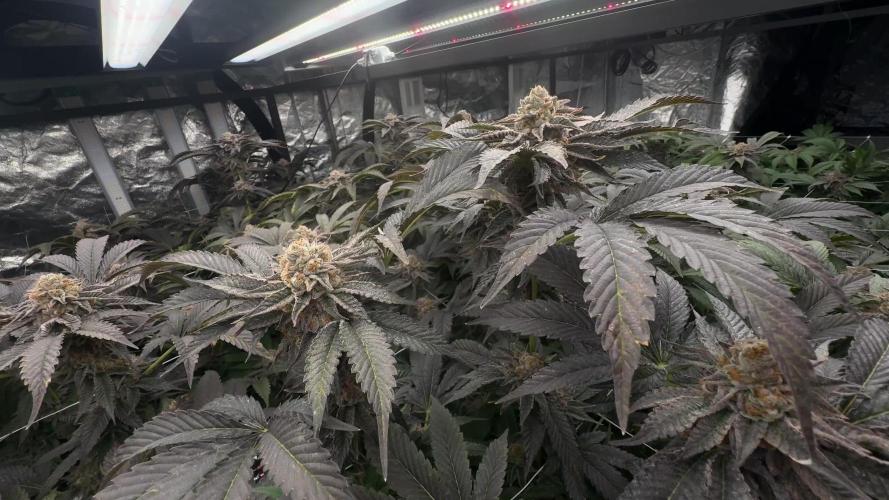
Week 15 overall, and we are in the final stretch. One week out from harvest and the room is telling that story loud and clear. The fade is deep and progressing perfectly — the plants are drawing down everything they have left, channelling it all into the buds in one last push. The purple expression that showed itself last week has deepened across multiple plants, the calyxes are swelling, and the trichome coverage is dense across every site from top to bottom.
Watering climbed again to 8L per plant per 24h — the root zone is pulling everything it can get in these final days. pH holding at 6.2, EC stepped further down to 1.2 mS/cm as the fade protocol does its work and the plant takes over. Height unchanged at 110cm, lamp still at 20cm — nothing moves from here. Humidity holding at 50%, day temp 25°C, nights 23°C.
Feed stack stripped back to the essentials for the final week: Athena Fade carrying the programme, Canna CalMag Agent 1.1 ml/l, Aptus Regulator 0.1 ml/l. Nothing else. Clean finish, no interference — let the plant do the rest.
The candy gas is relentless at this point. Harvest is next week. The GMO × Triangle Mints BX delivered exactly what was asked of it.
Next update Sunday. Stay tuned
Likes
11
Share


@SanderanderS
Follow
This grow was all about learning the process of hydroponics. Needles to say
It is not as easy as it looks and takes a lot of time to set up and so...
But along the way with help from several growmies it came to a unexpected result. 227 gram dry weight of good quality cannabis. This result ,I'm very happy ,has so much room for improvement that I can't wait for the next grow.
I like to thank Royal Queen Seeds for sending me these awesome genetics, I suspect this is a big part of the result, the freebies and a lot of weed.
Ofcourse I couldn't wait for the cure and started smoking. Man this stuff is sticky!! The smell is already hard to resist. The taste could be better,no cure yet,
Very fresh but you smell and taste the potential.
Being a long time haze smoker the effect is not exactly my thing but at night
after dinner with a cup of coffee that's more what this is.
Being a older person the hardest part of this contest is this damn diarie. Still find it difficult to find my ways. How many times I have to do this over 😤
I will grow this stuff again , never was a big fan of autoflowers but this outcome
made me a believer. The starting plugs that came with these seeds are from now on a absolute must have! You see the difference .
I cleaned the Aquafarm and it's ready for the other strain "Legendary OG Punch", that's now inside the growplug. Unfortunately to late for a full grow to be in competition but will make a diarie never the less.

Likes
7
Share


@darb35
Follow
30+ days in and they are going very strong.
No issues at all up to this point so decided to defoliate for some more light penetration and to focus on the top buds.
Likes
4
Share


@AustinRon
Follow
OG 4Q24 Harvest Log
Germination Date: November 20, 2024
Harvest: 2025-02-18T22:48:06-0600
Total Wet Weight: [ 3.084, kg]
Est Dry Weight: [ 0.6, kg]
Average Plant Height: [ 29.8, in]
Max Plant Height: [ 40, in]
Minimum Plant Height: [ 21.5, in]
Flower Day 70 - Harvest

Likes
13
Share

@Wilstang
Follow
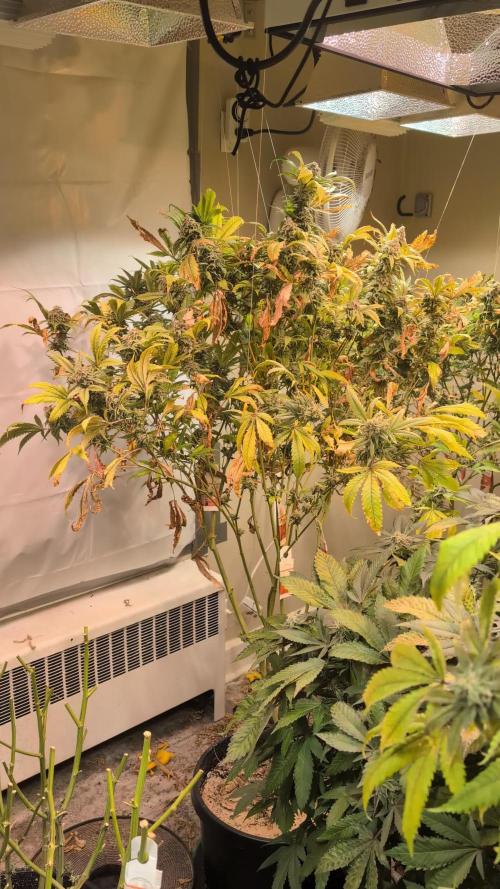
IPM
https://www.arbico-organics.com/product/mite-predator-phytoseiulus-persimilis-plus-sachets/mite-predators
https://www.arbico-organics.com/product/spidermite-destroyer-stethorus-punctillum-adults-larvae/pest-solver-guide-mites
Likes
6
Share


@GREENPHOENIX6262
Follow
*01/24 - Week 6 (Week 1 Flower) Her flowering has begun and bud sites are starting to become dense - All Veg nutes have been flushed and swapped for Flower nutes*
**01/27 - Week 6 ( Mid Week 1 Flower ) Her bud sites are densing up as she flowers - Nute and clean water feeds remain normal - swapping to 12/12 next week*

Likes
26
Share


@PedroAndHisPlants
Follow
Day 79 (First Grow, Flowering Phase):
Hey everyone!
It's the start of a new week, and we're now on day 79 of our first grow. The flowering phase is progressing beautifully, with the buds getting bigger and frostier day by day. 🌸✨
We've started to see the formation of orange hairs, which is a promising sign of the buds maturing. The plants are looking healthy and vibrant, and the SCROG net is helping to keep everything well-supported and evenly exposed to light.
Humidity issues from last week are still being monitored, and we're considering adding a dehumidifier to ensure optimal conditions as we move closer to harvest.
Thanks for all your support and suggestions. Any tips for these final weeks of flowering are always welcome!
Likes
69
Share

@GreenHobbit
Follow
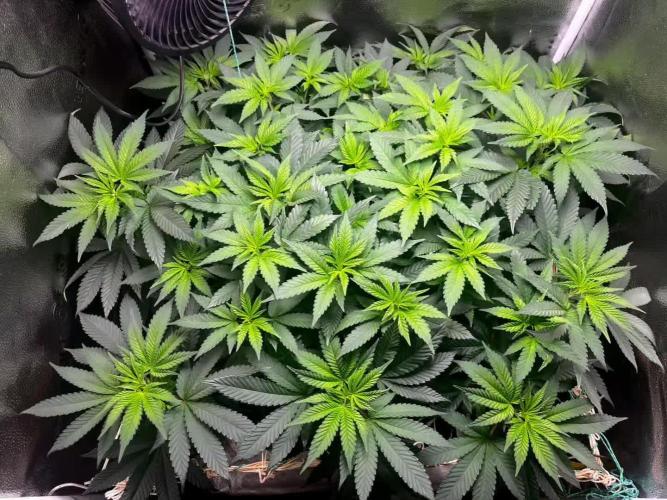
Woche 12 | Laughing Buddha | Der Umzug ins Hobbit-Megaprojekt
Diese Woche stand ein Meilenstein an.
Die Autos sind geerntet und gecurt, die Gorilla 720W hängt endlich an ihrem Platz und die Laughing Buddha durfte in ihr neues Zuhause umziehen.
Und was soll ich sagen?
Sie scheint den Umzug nicht nur gut verkraftet zu haben…
…sie scheint darauf gewartet zu haben. 😅
Das neue Zuhause
In den letzten Tagen wurde der große Growbereich aufgebaut.
* 120 × 120 cm SCROG-Fläche
* Zwei Netze (später zur Blüte sogar drei)
* Gorilla 720W LED Gen II
* Controller mit Sensorik
* Klimaanlage
* Luftbefeuchter
* Mehrere Umluftventilatoren
Auf den ersten Blick wirkt das Setup fast absurd groß für eine einzelne Pflanze.
Als die Buddha frisch eingezogen war, wirkte das Netz riesig und die Pflanze fast verloren.
Keine 24 Stunden später sah die Sache schon ganz anders aus.
Test der “Billig-Lampe”
Bevor die Laughing Buddha endgültig ihren Platz bekam, wurde noch eine günstige LED getestet.
Das Ergebnis war überraschend positiv.
Für eine preiswerte Lampe lieferte sie deutlich mehr Licht als erwartet und könnte für Anzucht, Stecklinge oder kleine Projekte durchaus interessant sein.
Trotzdem wurde schnell klar:
Für dieses Projekt spielt die Gorilla in einer ganz anderen Liga.
Der Unterschied in der Lichtverteilung ist enorm.
Erste Messungen mit der Gorilla 720W
Natürlich musste die neue Lampe ausführlich getestet werden.
Aktuell läuft die Gorilla auf:
* 50 % Leistung
* 50 cm Abstand
Gemessen wurden dabei rund:
374 PPFD
Das klingt zunächst wenig für eine 720W-Lampe.
Man darf aber nicht vergessen:
Die Fläche ist riesig und die Pflanze befindet sich noch mitten in der Vegetationsphase.
Der Vorteil liegt aktuell nicht in maximaler Intensität, sondern in der unglaublich gleichmäßigen Ausleuchtung.
Die Buddha bekommt jetzt Licht auf die komplette Krone statt nur auf die obersten Spitzen.
Klima läuft erstaunlich stabil
Die ersten 24 Stunden nach dem Umzug wurden genau beobachtet.
Temperatur:
* Nacht: etwa 21–22 °C
* Tag: etwa 23–24 °C
Luftfeuchtigkeit:
* meist zwischen 60–65 %
VPD:
* überwiegend zwischen 0,8 und 1,2 kPa
Genau der Bereich, den ich aktuell sehen möchte.
Besonders interessant:
Die stärksten Wachstumsschübe fielen genau in die Zeit, in der Temperatur, Luftfeuchtigkeit und VPD optimal zusammenarbeiteten.
Die Buddha scheint sich unter diesen Bedingungen ausgesprochen wohlzufühlen.
Die Reaktion der Pflanze
Und jetzt wird es verrückt.
Die Triebspitzen lagen nach dem Umzug vollständig unter dem Netz.
Nur etwa 24 Stunden später drückten sie bereits wieder nach oben.
Das Wachstum ist aktuell beeindruckend.
Die Krone wird breiter, dichter und gleichmäßiger.
Der Stamm hat mittlerweile eher die Dimension eines kleinen Baumes als die einer Zimmerpflanze.
Besonders erfreulich:
Die Mitte arbeitet genauso aktiv mit wie die äußeren Bereiche.
Genau das möchte man bei einem großen SCROG sehen.
Der Plan bis zum Urlaub
In zehn Tagen geht es für zehn Tage in den Urlaub.
Ursprünglich stand die Frage im Raum, ob die Buddha vorher noch in die Blüte geschickt werden soll.
Nach reiflicher Überlegung fiel die Entscheidung dagegen.
Der neue Plan:
* Weiter wachsen lassen
* Netz 1 füllen
* Etwa 10 cm Höhe gewinnen lassen
* Die Spitzen ins nächste Netz wachsen lassen
* Bis zum Urlaub weiter verteilen
Während des Urlaubs wird lediglich gegossen.
Nach der Rückkehr folgt:
* Große Bestandsaufnahme
* Triebe neu verteilen
* Alles auf eine Höhe bringen
* Unterhalb der Netze gründlich aufräumen
* Kurze Erholungsphase
Erst danach erfolgt der Wechsel auf 12/12.
Kontrolle statt Rekorde
Ursprünglich stand die Idee im Raum, etwa 72 Tops unter den 720 Watt zu platzieren.
Das bleibt weiterhin ein spannendes Ziel.
Allerdings wird die Kontrolle über das Blätterdach wichtiger genommen als eine möglichst hohe Anzahl an Trieben.
Lieber 50 bis 60 perfekt positionierte Speere als ein völlig überfülltes Netz.
Alles, was später nicht sauber ins Konzept passt, wird konsequent entfernt.
Am Ende zählt nicht die Anzahl der Triebe, sondern die Qualität des Canopys.
Fazit der Woche
Diese Woche hat gezeigt, welches Potenzial in dieser Pflanze steckt.
Der Umzug verlief problemlos.
Die Gorilla liefert exakt das, was ich mir erhofft hatte.
Das Klima arbeitet stabil.
Und die Laughing Buddha scheint gerade erst richtig in Fahrt zu kommen.
Noch steht sie mitten in der Vegetationsphase.
Noch laufen lediglich 50 % Lampenleistung.
Noch ist nicht einmal das erste Netz vollständig gefüllt.
Aber zum ersten Mal habe ich das Gefühl, dass dieses Projekt etwas ganz Besonderes werden könnte.
Die nächsten Wochen werden zeigen, wie weit die Buddha dieses Netz tatsächlich erobern möchte.
Eines steht fest:
Langweilig wird es definitiv nicht. 😎

Likes
77
Share


@Basementganja
Follow
Flowering slowly, likely due to the roots having low PH(4-5)..
I flushed her a few weeks back.. I'm done experimenting with nutrients for now; I had better results, with less issues with just using the basics.
*Special Nug picture - This Bud-site has a different shape/structure compared to every other nug on this plant.. Never seen this before, on any other strain.
Likes
10
Share


@Kardo
Follow
Die Cheese ist auch in 2 Wochen fertig sieht sehr buschig aus und hat dicke buds
Processing
Likes
12
Share


@medicalcannabelfast
Follow
Week 5 has jumped at me from outa no where :)
All the girls are growing well , I can’t wait to try these Mexican Airlines they are growing nice and problem free so far ,
We are at the stage I like the best when I get to see the bud sites start to swell and fatten themselves up with sticky tric’s and resin
Likes
10
Share


@Colectivegrow
Follow
Hoy es el día 1 (día 35 desde la germinación) de floración de nuestras 3 plantas de Tropicanna Poison XL AUTO. Las plantas han sido sometidas a un entrenamiento LTS con piezas 3D para ver cómo funciona este tipo de entrenamiento.
Los 3 fenotipos se diferencian claramente a simple vista, dada la diferencia de portes de cada una. La primera planta es la más alta y tiene un porte muy abierto. La segunda planta es más baja y tiene un porte más compacto. La tercera planta es de tamaño intermedio y tiene un porte intermedio.
Esperamos que este entrenamiento ayude a las plantas a desarrollar su máximo potencial. Seguiremos publicando actualizaciones sobre su evolución.

Likes
10
Share

@Spider-Genetix
Follow
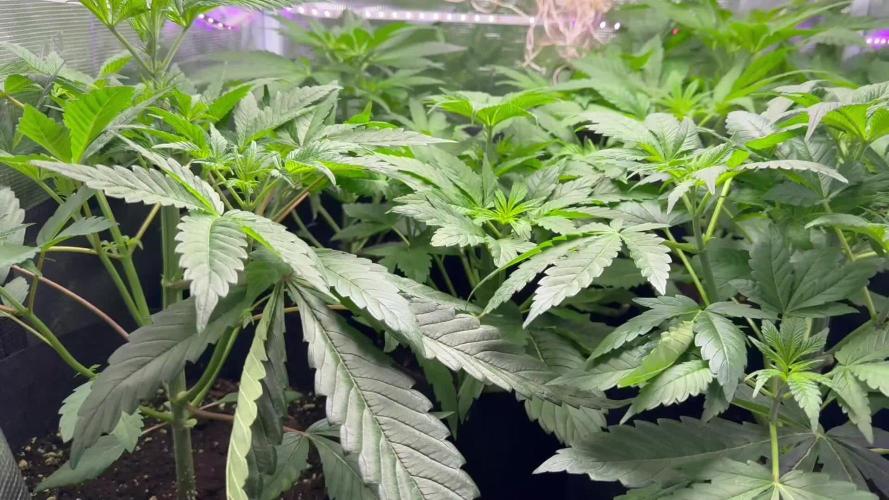
Upload One day earlier as usual, because they grow good and I have no time tomorrow :)
I Took the Pictures directly after the First 12h Dark Phase.
Compare them to last week, they do a Great Job.
Likes
119
Share


@Tropicannibis_Todd
Follow
💩Holy Crap Growmies We Are Back💩
Well growmies we are at 21 days in and everything is going great 👌
👉 Shes a stout little plant , chunky too , im gonna do a little bit of some low stress training 💪 Preflowers now showing 👍
Lights being readjusted and chart updated .........👍rain water to be used entire growth👈
👉I used NutriNPK for nutrients for my grows and welcome anyone to give them a try .👈
👉 www.nutrinpk.com 👈
NutriNPK Cal MAG 14-0-14
NutriNPK Grow 28-14-14
NutriNPK Bloom 8-20-30
NutriNPK Bloom Booster 0-52-34
I GOT MULTIPLE DIARIES ON THE GO 😱 please check them out 😎
👉THANKS FOR TAKING THE TIME TO GO OVER MY DIARIES 👈
Likes
25
Share


@Ultraviolet
Follow
Replaced nitrogen with omina, omina has 14.0.0. Stretch almost over, growth almost switched to full flowering. Increasing phosphorous and potassium, beauty of nature is it only takes what it needs.
Started to remove some weights as stems starting to show solid reinforcement and are ready to hold fat cola. Fingers 🤞.
Decreased hours of light to 10.
Extended hours of cold @ night from 2 to 6 hours @59 Farenheight with 2 hours both sides @ 70&77 respectively.


Likes
19
Share


@Cardiffgrown
Follow
Flower starting to form now for the fast buds the white widow is miles behind and so is the ww, first time in a new room & the mega pots has resulted in plants to big for my room the autopot ones look alot better tho get there eventually 😎soon hopefully the purple lemonade smells incredible.


Likes
2
Share

@DogDoctorOfficial
Follow
? Blueberry Muffin – Pheno A
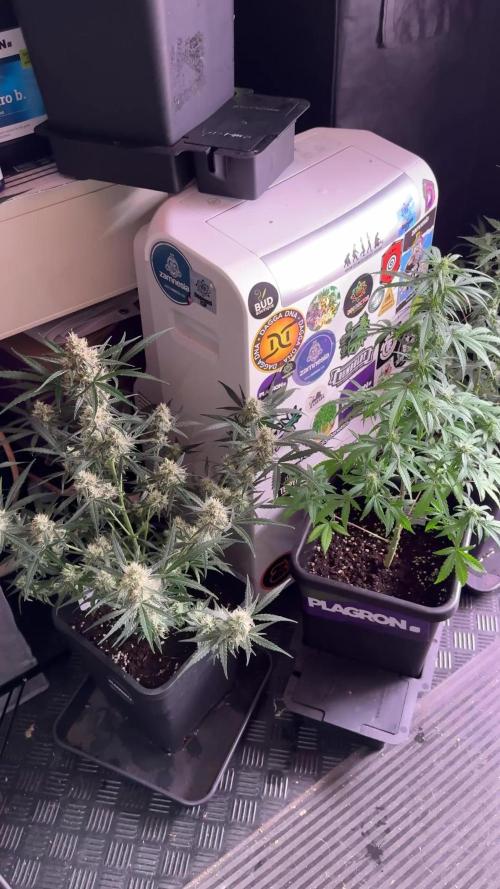
Week 8 | Okay… Now She's on Fire! 🔥
Welcome back to another week of the 8×8 Adventure! 💚🌱
If you're discovering this diary for the first time, welcome!
This project is an experiment in patience, genetics and observation. Twelve different cultivars are growing together under the same environmental conditions, lighting, irrigation system and general feeding strategy.
The biggest variable?
The plants themselves.
And Blueberry Muffin Pheno A continues to prove exactly why genetics matter so much.
She has never been the fastest plant in the room, but this week something has definitely changed.
This girl is on fire. 🔥?
🌱 A Quick Recap — How Did We Get Here?
Blueberry Muffin is being grown under a 12/12-from-seed schedule.
For anyone new to the concept, this means the plant receives a flowering light schedule from the beginning rather than spending several weeks under a traditional vegetative photoperiod.
The idea isn't to force the plant into becoming something it isn't.
Instead, we're allowing each genetic to show us what it can do when given the same basic conditions as every other plant in the room.
During the early stages, I followed what I like to call a "no-touch" philosophy.
Apart from necessary care, I avoided constantly manipulating the plants. There was no aggressive training programme and no obsession with making every plant look identical.
There was some gentle leaf bending and positioning when necessary, but for the most part:
I let them grow.
That has given us something I find incredibly valuable now that we're deeper into flowering.
We can actually see how naturally each plant wants to grow.
And Blueberry Muffin has developed into a tall, open and beautifully structured plant, with plenty of space between her flowering sites and excellent visibility throughout the canopy.
🌸 Flowering Development
And now we're getting into the fun part.
The flowers are becoming much more obvious this week, with fresh pistils developing throughout the plant and the individual flowering sites beginning to take shape.
She's still not the densest-looking plant in the room, but that's not necessarily a bad thing.
At this stage, I'm much more interested in how the plant develops over time than in trying to judge the final result too early.
The structure is allowing light and air to move through the plant, and the flowering sites are clearly developing.
We're entering the stage where the focus gradually moves away from producing more vertical growth and toward flower development, stacking and eventually bulking.
She's getting there.
And judging by this week's photographs…
she knows exactly what she's doing. 😄?
✂️ Defoliation — But Without a Calendar
This is also the point where we've started introducing some selective defoliation around the room.
And I want to explain this because it is very easy for newer growers to look at a diary and think:
"Week X means I have to defoliate on this exact day."
No.
That's not how I approach it.
There are twelve plants in this room, and they're not all developing at the same speed.
Some plants are ready for a little leaf removal now.
Others aren't.
Some may receive attention next week.
And some may barely need anything at all.
I'm also doing this entire project myself, so there is absolutely no reason for me to create artificial pressure by saying:
"Today is defoliation day for everybody."
Instead, I look at the plants and make decisions based on what they're showing me.
The goal isn't to remove as many leaves as possible.
The goal is to remove what I don't need, while keeping enough healthy foliage to support the plant.
For Blueberry Muffin, we're now selectively removing a few leaves here and there where they are blocking important flowering sites, creating unnecessary overlap, or simply no longer contributing much to the canopy.
It's a much more surgical approach than stripping the plant bare.
And honestly, I prefer it that way.
Grow with the plant, not against it. 🌱
🌿 The Slightly Light Green Colour
Now let's talk about something I mentioned last week.
Blueberry Muffin is still showing a somewhat lighter green colour compared with some of her neighbours.
It's particularly noticeable on some of the older leaves.
But importantly:
I'm not seeing anything that makes me panic.
The plant is flowering, producing new growth and developing healthy-looking flowers.
However, she is clearly a little more demanding nutritionally than some of the other plants in this room.
And this is where growing twelve different genetics together becomes interesting.
The entire room was asking for more nutrition, so we increased the overall feeding strength.
But Blueberry Muffin?
She's basically saying:
"Thank you… but I might need a little more." 😂
So now we're going to give her some time to respond.
Rather than immediately making another adjustment, I'll watch the new growth and overall colour over the coming days.
If the plant starts returning toward a deeper, healthier green without developing signs of excess nutrition, we'll know we're moving in the right direction.
This is one of those situations where observation is more valuable than chasing a number.
⚗️ Feeding Strategy
The current feeding has been increased slightly as flowering progresses and as the room's overall demand has increased.
At the moment we're running approximately:
Plagron Terra Bloom – 2.2 ml/L
Plagron Power Buds – 1 ml/L
Plagron Sugar Royal – 1 ml/L
Plagron Pure Zym – 1 ml/L
pH adjustment as required
Current solution:
EC: approximately 2.0 mS/cm
pH: 6.0
The important part here is that this isn't simply about pushing the EC higher because the plants are flowering.
The plants are communicating their demand through growth, colour, water consumption and overall development.
We've responded with a moderate increase and now we're watching.
If Blueberry Muffin continues improving, fantastic.
If she tells us that we've gone too far, we'll adapt again.
There is no prize for following a feeding chart blindly.
The chart is a starting point.
The plant gets the final vote.
💡 Lighting
We're currently maintaining a 12/12 light schedule, with the plants receiving a strong flowering intensity.
The canopy is getting approximately 800 PPFD.
For anyone new to PPFD, this is basically a measurement of how much photosynthetically useful light is reaching the plant canopy.
It doesn't tell us everything about light quality or plant response, but it gives us a useful way of understanding light intensity.
At around 800 PPFD, we're providing a substantial amount of light without trying to push the plants unnecessarily hard.
At this stage, I'm happy with where we are.
If the plants continue asking for more light and the environment allows it, there is always room to make adjustments.
But once again:
more isn't automatically better.
We're looking for the balance between light, temperature, CO₂, nutrition and plant health.
🌡️ Current Environment
The room continues to be remarkably stable:
🌡️ Day temperature: 29°C
🌙 Night temperature: 25.6°C
💧 Relative humidity: 60%
⚗️ pH: 6.0
⚡ EC: ~2.0 mS/cm
💨 CO₂: ~693 ppm
💡 Light schedule: 12/12
💦 Watering: approximately 1.3 L/plant/24h
She's growing in a 15-litre AutoPot system, with the root zone continuing to receive consistent access to nutrient solution.
That consistency is particularly useful during flowering because we're not constantly creating large swings in moisture availability.
The goal is simple:
Keep the root zone happy and let the plant concentrate on the flowers.
🔬 Structure & Personality
One of the things I really enjoy about Blueberry Muffin Pheno A is that she's becoming increasingly easy to read.
She's not trying to be the biggest or bushiest plant in the room.
Instead, she's developed a tall, open architecture with a strong central structure and numerous flowering branches distributed along the plant.
The photographs this week really show that personality.
And this is exactly why I wanted to run twelve different genetics together.
If I had only grown Blueberry Muffin, I might simply describe her as "a tall plant."
But when you see her standing beside eleven other cultivars receiving the same treatment, you start to understand that this is her genetic expression.
That's the fascinating part of this project.
🔮 Looking Ahead
For next week, I'm not planning to chase anything.
I'll continue monitoring the colour closely, particularly the newer foliage, while watching how the flowers develop and begin to bulk.
If she responds positively to the increased nutrition, we'll keep things stable.
If she tells us something different, we'll listen.
I'll also continue selective defoliation where necessary, but without forcing every plant onto the same timetable.
There is no need to create stress simply because the calendar says it's time.
We're now entering a stage where patience becomes increasingly important.
The framework has been built.
The flowers are here.
Now we let them do their job. 🌸
And Blueberry Muffin?
She's finally starting to show us why she took her time.
The quiet ones can surprise you. ?🔥
💚 Thank You
As always, thank you so much to everyone following the 8×8 Adventure.
Whether you've been here since germination or you've just discovered this diary, I genuinely appreciate every visit, comment, question and conversation.
This project has become much more than twelve plants in a tent.
It's an opportunity to observe how different genetics behave when we remove as many variables as possible and simply give them the same environment.
A huge thank you to GrowDiaries for giving us a place to document the journey and learn together.
To Zamnesia, thank you for the fantastic Blueberry Muffin genetics and for giving us the opportunity to explore what this cultivar can do under a 12/12-from-seed approach.
To Plagron, thank you for supporting the plants with your growing media and nutrients throughout this adventure.
And to Future of Grow LED, thank you for providing the light that allows us to put all twelve personalities under the same sun and see how differently they respond.
And finally, thank you.
Because growing becomes even more rewarding when we can share the successes, the mistakes, the questions and the lessons with one another.
Remember, this is simply my way of doing things and what is working for me in this particular environment.
There is no obligation to copy anything you see here.
Take what is useful, learn from it, adapt it to your own environment and, most importantly, learn to listen to your plants.
Growers Love, everyone. 💚🌱
See you next week with Blueberry Muffin Pheno A…
…and I have a feeling this little lady may have a few more surprises waiting for us. ?🔥