



@SwabianMadness
Follow
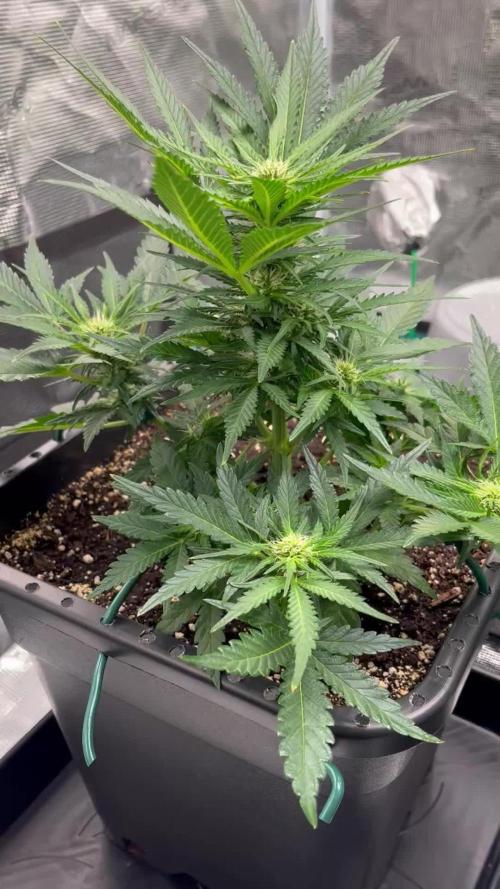
Give her every 1-2 Days one or the other time 2 Litres of Water. Add little bit Calmag when i mean she need it.
The Headbud get much Biomass for this soon Stage of Flower 💚 and when you push it your Fingers smell very sweet 🤤🙃
Next Week i‘ll defoliate her and maybe cut off some lower Stems


@Budtoker
Follow
Tent is virtually full. This is day 8 of flower and stretch has begun. 2 plants showing pistils.


@Ultraviolet
Follow
Lacewings seemed to have mostly killed themselves by flying into hot light fixtures. I may have left the UV on which was smart of me :) Done very little to combat if anything but make a sea of carcasses, on the bright side its good nutrition for the soil.
Made a concoction of ethanol 70%, equal parts water, and cayenne pepper with a couple of squirts of dish soap.
Took around an hour of good scrubbing the entire canopy.
Worked a lot more effectively and way cheaper.
Scorched earth right now, but it seems to have wiped them out almost entirely very pleased.
Attempted a "Fudge I Missed" for the topping. So just time to wait and see how it goes.
Question?
If I attached a plant to two separate pots but it was connected by rootzone, one has a pH of 7.5 ish the other has 4.5. Would the Intelligence of the plant able to dictate each pot separately to uptake the nutrients best suited to pH or would it still try to draw nitrogen from a pot with a pH where nitrogen struggles to uptake?
Food for stoner thought experiments!
Another was on my mind.
What happens when a plant gets too much light?
Well, it burns and curls up leaves.
That's the heat radiation, let's remove excess heat, now what?
I've always read it's just bad, or not good, but when I look for an explanation on a deeper level it's just bad and you shouldn't do it.
So I did.
How much can a cannabis plant absorb, 40 moles in a day, ok I'll give it 60 moles. 80 nothing bad ever happened.
The answer, finally. Oh great........more questions........
Reactive oxygen species (ROS) are molecules capable of independent existence, containing at least one oxygen atom and one or more unpaired electrons.
"Sunlight is the essential source of energy for most photosynthetic organisms, yet sunlight in excess of the organism’s photosynthetic capacity can generate reactive oxygen species (ROS) that lead to cellular damage. To avoid damage, plants respond to high light (HL) by activating photophysical pathways that safely convert excess energy to heat, which is known as nonphotochemical quenching (NPQ) (Rochaix, 2014). While NPQ allows for healthy growth, it also limits the overall photosynthetic efficiency under many conditions. If NPQ were optimized for biomass, yields would improve dramatically, potentially by up to 30% (Kromdijk et al., 2016; Zhu et al., 2010). However, critical information to guide optimization is still lacking, including the molecular origin of NPQ and the mechanism of regulation."
What I found most interesting was research pointing out that pH is linked to this defense mechanism. The organism can better facilitate "quenching" when oversaturated with light in a low pH. Now I Know during photosynthesis plants naturally produce exudates (chemicals that are secreted through their roots). Do they have the ability to alter pH themselves using these excretions? Or is that done by the beneficial bacteria?
If I can prevent reactive oxygen species from causing damage by "too much light".
The extra water needed to keep this level of burn cooled though, I must learn to crawl before I can run.
Reactive oxygen species (ROS) are key signaling molecules that enable cells to rapidly respond to different stimuli. In plants, ROS plays a crucial role in abiotic and biotic stress sensing, integration of different environmental signals, and activation of stress-response networks, thus contributing to the establishment of defense mechanisms and plant resilience. Recent advances in the study of ROS signaling in plants include the identification of ROS receptors and key regulatory hubs that connect ROS signaling with other important stress-response signal transduction pathways and hormones, as well as new roles for ROS in organelle-to-organelle and cell-to-cell signaling. Our understanding of how ROS are regulated in cells by balancing production, scavenging, and transport has also increased. In this Review, we discuss these promising developments and how they might be used to increase plant resilience to environmental stress.
Temperature stress is one of the major abiotic stresses that adversely affect agricultural productivity worldwide. Temperatures beyond a plant's physiological optimum can trigger significant physiological and biochemical perturbations, reducing plant growth and tolerance to stress. Improving a plant's tolerance to these temperature fluctuations requires a deep understanding of its responses to environmental change. To adapt to temperature fluctuations, plants tailor their acclimatory signal transduction events, specifically, cellular redox state, that are governed by plant hormones, reactive oxygen species (ROS) regulatory systems, and other molecular components. The role of ROS in plants as important signaling molecules during stress acclimation has recently been established. Here, hormone-triggered ROS produced by NADPH oxidases, feedback regulation, and integrated signaling events during temperature stress activate stress-response pathways and induce acclimation or defense mechanisms. At the other extreme, excess ROS accumulation, following temperature-induced oxidative stress, can have negative consequences on plant growth and stress acclimation. The excessive ROS is regulated by the ROS scavenging system, which subsequently promotes plant tolerance. All these signaling events, including crosstalk between hormones and ROS, modify the plant's transcriptomic, metabolomic, and biochemical states and promote plant acclimation, tolerance, and survival. Here, we provide a comprehensive review of the ROS, hormones, and their joint role in shaping a plant's responses to high and low temperatures, and we conclude by outlining hormone/ROS-regulated plant-responsive strategies for developing stress-tolerant crops to combat temperature changes.
Onward upward for now.
Next!
Adenosine triphosphate
(ATP) is an energy-carrying molecule known as "the energy currency of life" or "the fuel of life," because it's the universal energy source for all living cells.1
Every living organism consists of cells that rely on ATP for their energy needs. ATP is made by converting the food we eat into energy. It's an essential building block for all life forms. Without ATP, cells wouldn't have the fuel or power to perform functions necessary to stay alive, and they would eventually die. All forms of life rely on ATP to do the things they must do to survive.2
ATP is made of a nitrogen base (adenine) and a sugar molecule (ribose), which create adenosine, plus three phosphate molecules. If adenosine only has one phosphate molecule, it’s called adenosine monophosphate (AMP). If it has two phosphates, it’s called adenosine diphosphate (ADP).
Although adenosine is a fundamental part of ATP, when it comes to providing energy to a cell and fueling cellular processes, the phosphate molecules are what really matter. The most energy-loaded composition for adenosine is ATP, which has three phosphates.3
ATP was first discovered in the 1920s. In 1929, Karl Lohmann—a German chemist studying muscle contractions—isolated what we now call adenosine triphosphate in a laboratory. At the time, Lohmann called ATP by a different name. It wasn't until a decade later, in 1939, that Nobel Prize–-winner Fritz Lipmann established that ATP is the universal carrier of energy in all living cells and coined the term "energy-rich phosphate bonds."45
Lipmann focused on phosphate bonds as the key to ATP being the universal energy source for all living cells, because adenosine triphosphate releases energy when one of its three phosphate bonds breaks off to form ADP. ATP is a high-energy molecule with three phosphate bonds; ADP is low-energy with only two phosphate bonds.
The Twos and Threes of ATP and ADP
Adenosine triphosphate (ATP) becomes adenosine diphosphate (ADP) when one of its three phosphate molecules breaks free and releases energy (“tri” means “three,” while “di” means “two”). Conversely, ADP becomes ATP when a phosphate molecule is added. As part of an ongoing energy cycle, ADP is constantly recycled back into ATP.3
Much like a rechargeable battery with a fluctuating state of charge, ATP represents a fully charged battery, and ADP represents a "low-power mode." Every time a fully charged ATP molecule loses a phosphate bond, it becomes ADP; energy is released via the process of ATP becoming ADP.
On the flip side, when a phosphate bond is added, ADP becomes ATP. When ADP becomes ATP, what was previously a low-charged energy adenosine molecule (ADP) becomes fully charged ATP. This energy-creation and energy-depletion cycle happens time and time again, much like your smartphone battery can be recharged countless times during its lifespan.
The human body uses molecules held in the fats, proteins, and carbohydrates we eat or drink as sources of energy to make ATP. This happens through a process called hydrolysis
.
After food is digested, it's synthesized into glucose, which is a form of sugar. Glucose is the main source of fuel that our cells' mitochondria
use to convert caloric energy from food into ATP, which is an energy form that can be used by cells.
ATP is made via a process called cellular respiration that occurs in the mitochondria of a cell. Mitochondria are tiny subunits within a cell that specialize in extracting energy from the foods we eat and converting it into ATP.
Mitochondria can convert glucose into ATP via two different types of cellular respiration:
Aerobic (with oxygen)
Anaerobic (without oxygen)
Aerobic cellular respiration transforms glucose into ATP in a three-step process, as follows:
Step 1: Glycolysis
Step 2: The Krebs cycle (also called the citric acid cycle)
Step 3: Electron transport chain
During glycolysis, glucose (i.e., sugar) from food sources is broken down into pyruvate
molecules. This is followed by the Krebs cycle, which is an aerobic process that uses oxygen to finish breaking down sugar and harnesses energy into electron carriers that fuel the synthesis of ATP. Lastly, the electron transport chain (ETC) pumps positively charged protons that drive ATP production throughout the mitochondria’s inner membrane.2
ATP can also be produced without oxygen (i.e., anaerobic), which is something plants, algae, and some bacteria do by converting the energy held in sunlight into energy that can be used by a cell via photosynthesis.
Anaerobic exercise means that your body is working out "without oxygen." Anaerobic glycolysis occurs in human cells when there isn't enough oxygen available during an anaerobic workout. If no oxygen is present during cellular respiration, pyruvate can't enter the Krebs cycle and is oxidized into lactic acid. In the absence of oxygen, lactic acid fermentation makes ATP anaerobically.
The burning sensation you feel in your muscles when you're huffing and puffing during anaerobic high-intensity interval training (HIIT) that maxes out your aerobic capacity or during a strenuous weight-lifting workout is lactic acid, which is used to make ATP via anaerobic glycolysis.
During aerobic exercise, mitochondria have enough oxygen to make ATP aerobically. However, when you're out of breath and your cells don’t have enough oxygen to perform cellular respiration aerobically, the process can still happen anaerobically, but it creates a temporary burning sensation in your skeletal muscles.
Why ATP Is So Important?
ATP is essential for life and makes it possible for us to do the things we do. Without ATP, cells wouldn't be able to use the energy held in food to fuel cellular processes, and an organism couldn't stay alive.
As a real-world example, when a car runs out of gas and is parked on the side of the road, the only thing that will make the car drivable again is putting some gasoline back in the tank. For all living cells, ATP is like the gas in a car's fuel tank. Without ATP, cells wouldn't have a source of usable energy, and the organism would die.
Eating a well-balanced diet and staying hydrated should give your body all the resources it needs to produce plenty of ATP. Although some athletes may slightly improve their performance by taking supplements or ergonomic aids designed to increase ATP production, it's debatable that oral adenosine triphosphate supplementation actually increases energy.
An average cell in the human body uses about 10 million ATP molecules per second and can recycle all of its ATP in less than a minute. Over 24 hours, the human body turns over its weight in ATP.
You can last weeks without food.
You can last days without water.
You can last minutes without oxygen.
You can last 16 seconds at most without ATP.
Food amounts to one-third of ATP production within the human body.


@carjos
Follow
I been away from grow diaries several weeks now, quick video for documentation, mute sound in video please, Andie Capp is looking so tired between 11am-1pm. As well am feeding as needed. 2-3 ounces 4-5 times a day for Yao, and 0.5 - 1 ounce 2-3 times a day for Andie.


@MicroHidroGrow
Follow
Día 18. Estoy en la 3ra semana de crecimiento. Apliqué HST en las dos ramas altas para poder igualar la altura con las otras dos. Por el momento viene todo en marcha. Solamente hubo un poco de stress con hojas un poco arrugadas por exceso de nutrientes. Así que hoy rebajé la solución con un poco de agua. En 3 o 4 semanas debería estar en condiciones de cortar los esquejes que voy a necesitar para el sistema completo. Inicialmente voy a usar un módulo que ya tenía armado que hice con un cajón plástico. Ese es para 4 esquejes y la madre. Pero es muy chico para el espacio que tengo. Así que inicialmente usaré este y luego armaré uno para 9 o 7 plantas. Veremos cuan cómodo queda con 5 plantas por ahora, porque quizá prefiero hacer 7 plantas cómodas y no meter 9 y después no poder manejar el espacio. La idea es que la madre vaya al medio y los esquejes alrededor.
Día 21. Rocíe la planta con tierra de diatomeas como preventivo. Sigo aplicando HST para lograr que las ramas bajas tomen protagonismo,y ya que van a ser los esquejes que use. De todos modos estoy viendo en el crecimiento que la genetica no está bien estabilizada. Los bancos de semillas argentinos, hasta ahora han sido decepción en cada siembra que hice, por lo cual no me sorprendería que esta también lo sea. Estoy analizando la idea de pasar a floración la planta así cómo está en el indoor grande y arrancar con una genética europea que tengo guardada para la próxima. Porque correr riesgos innecesarios me costaría mucho tiempo. Por el momento mantengo la solución, ya que en crecimiento la suelo hacer durar 10 o 15 días. Principalmente cuando la planta tiene menos de 4 semanas. Esta semana que arranca voy a definir que hago con esta genética. De paso subo un video con la configuración casi terminada del indoor. Pero cuando esté funcionando se va a entender mejor.
shorts_status_processing


@Coboiii
Follow
On day 15 I gave her 33cl compared to 25cl/3days as usual.
Also expand her surface of watering like that she can make some flat roots.
On day 18, 4th and last feeding on this dosage.
As for now, the idea's to wait before starting train.

shorts_status_processing


@MG2009
Follow
09/16/2020
Will be 72 days at end of the week. Should be done soon. Will begin flush at end of week and watch her trich's.
09/20/2020
76 days and milky trichomes are abundant still clear here and there but no any amber at all will monitor daily till done.
This strain will ripen mid to late September in my area so I'm happy with that.
😊😊😊😊😊😊
She be ready to smoke for the Holiday season!
Keeping her going in a Perpetual grow smoking my indoor cut as I write can't wait to see how they compare to mother nature 's outdoor version.


@Roberts
Follow
Auto Opium is stopped stretching, and looks to be going into bulking. She had some selective defoliation around center, and will likely get more soon. She is on track to have some nice colas on her. Nothing more to report at the moment. Thank you Medic Grow, and Divine Seeds. 🤜🏻🤛🏻🌱🌱🌱
Thank you grow diaries community for the 👇likes👇, follows, comments, and subscriptions on my YouTube channel👇. ❄️🌱🍻
Happy Growing 🌱🌱🌱
https://youtube.com/channel/UCAhN7yRzWLpcaRHhMIQ7X4g


@FourVentiFarms
Follow
So since I had the mold and bud rot problems I had to divide my schedule of harvest and divide the product as well.
- Healthy buds are ones belonging to branches where there are no signs of rot/mold.
-Mid-healthy buds are untouched by disease but still belonging to a branch where there was some disease.
-Last category are the salvaged ones, where I cut them from bigger buds that had disease or they were in some part affected.
These 3 categories each have their own drying space and where harvested in this order to prevent spreading of spores and stuff. For the salvaged buds every time I removed a part with disease I cleaned the scissors with alcohol.
I only removed the sun-leaves + penguin leaves and will be doing a dry trim for the sugar leaves later on.


@NONSENSE
Follow
Hi, everyone!
The flowering going well.
The strain smell nice: lemon, earthy and is sooo sticky.
I planning to harvest within 3weeks.


@Buffynuffy
Follow
I’m actually Super happy they sprouted on the 1st it just makes keeping track of what day your on so much smoother l think, but I think one was having a hard time getting the shell
Off so I helped just I tiny bit!


@SlowerLowerGrower
Follow
I'm very happy with every aspect of this run. The buds are super frosty with a heavy head high that's great for relaxing after a long day. I recommend this strain to everyone looking for a trainable plant. She handled everything I threw at her. Amazing genetics. I'll be running Dinafem genetics again in the near future. Also made some full spectrum bubble hash and pressed it into some super clean rosin. Cold pressed at 170° for 45secs in a 25u bag

@Ribemarti
Follow
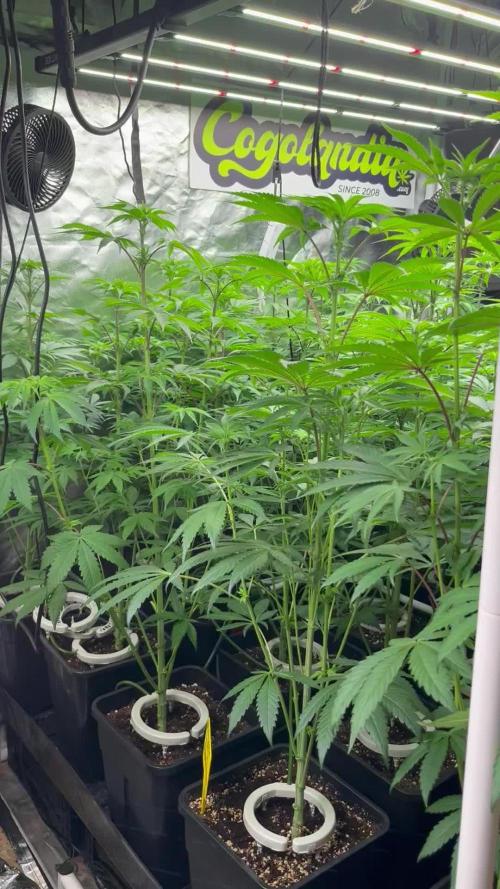
LAS PLANTAS MAS GRANDES YA MIDEN 1 METRO
ESTAN EMPEZANDO A SACAR LA FLOR, EN LAS PROXIMAS SEMANAS VEREMOS LA ALTURA FINAL DE LAS PLANTAS
ESTOY REGANDO CADA 3 DIAS SIGUIENDO LA TABLA DE BIOBIZZ Y ESTOY REGANDO CADA PLANTA CON 2 LITROS
E.C 1300
P.H 6,4 YA ESTAN PODADAS Y YA NO QUITAREMOS NADA MAS AHORA A ESPERAR QUE VAYAN SACANDO COGOLLITOS ,
PROXIMA SEMANA PONDREMOS 2 BARRAS A LOS LADOS DE 100W DE LED KAPPA


shorts_status_processing


@ThrashedTV_BakedByGlaze
Follow
Week 1 - 01/01 to 01/08 2021
HUGE THANKS TO @MARSHYDROLED and @VIPARSPECTRALED!
New surge protectors/heavy duty timers/the good cords.
The Dark Devil by @Sweet_Seeds is right on track with the Red Poison and Purple Lemonade from my other diaries. The LSD is a little behind but the genetics seems to keep it small if you get the wrong pheno. Will give it a week or so for it to really settle in with a root base before cleaning out my 5gal RootPouch pots from the last grow and getting them transferred into their final homes.
I have all my seedlings under the P1500 from Vipar as my veg light for the first few weeks to a month. It's SO nice to not have a blurple anymore, the light is way better in my room and on the eyes. The new diodes had every single seedling grow more in 6 hours than it did in the first 7 days under the blurp LED. The Dark Devil perked right up and threw another set of leaves in the first 6 hours under the new light.
I noticed a bit of spotting on the Dark Devil in my other diary so I added some Hydrogen Peroxide to the spray bottle and it cleared up. All four have been getting constant spritzing from the spray bottle to keep humidity up.
Excited to see how big i can get the autos under the new lights, will switch over from the Vipar to the Mars by end of week 2/mid week 3 once I transfer them and give them a day or so settle in.
Thanks for stopping in! Throw down a like and/or follow so i can return the favour 🙌
--
Check out my Diary of the Year 2020 entry 🙏
https://growdiaries.com/diaries/54258-fastbuds-original-auto-sour-diesel-grow-journal-by-glazedgrow
IG: @GlazedGrow
CannaBuzz: @GlazedGrow


@Ageddd
Follow
This week she is growing more buds every day and yellowing lower leaves, early flowering state...
Feeding schedule is for helping the plant to grow more bud sites in this stage..


@eldruida_lamota
Follow
Que pasa familia, vamos con la tercera semana de floracion de estas Rainbow Melon feminizadas de fastbuds.
Vamos al lío, de las 3 plantas, me quede con 2 por espacio, siempre pongo alguna semilla de más por si no abriese alguna por no perder ese hueco del indoor.
También se trasplantaron a su maceta definitiva, en este caso de 7 litros.
Tenían algo de shock por el trasplante pero ya fue solucionado.
El ph se controla en 6.2 , la temperatura la tenemos entre 20/22 grados y la humedad ronda el 50%.
Las flores empiezas a formarse y progresan a buen ritmo.
Hasta aquí todo, Buenos humos 💨💨💨

@BettyFlores
Follow
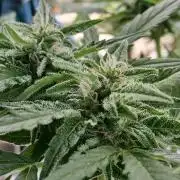
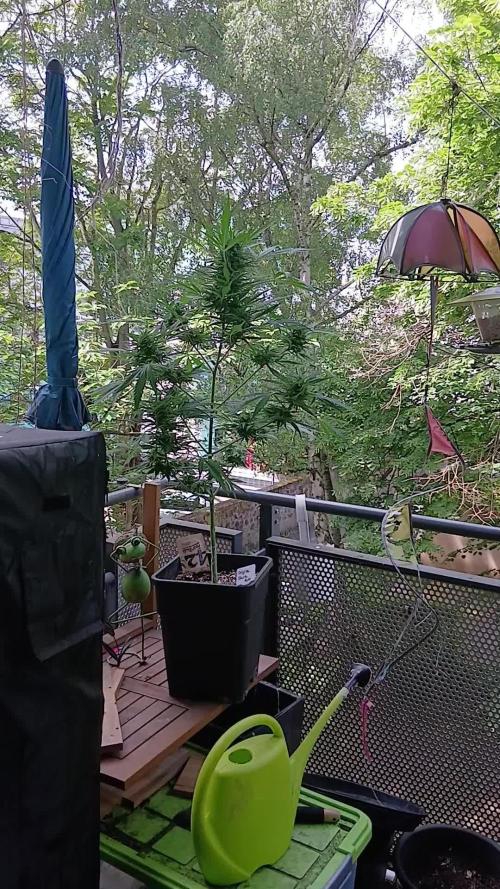
21.05.2026 Bald kann ich sie ernten. Zumindest sind die Trichome recht reif und in ein paar Tagen könnte es soweit sein. Sie riecht wirklich sehr stark und die gesamte Nachbarschaft darf daran teilhaben. Dieser pure skunkige Geruch ist einfach nur göttlich. Auch mit den Temperaturen geht es aufwärts und ich freue mich schon jetzt auf den nächsten FastBuds-Run.
Happy growing 🌸 💜

@Abendkraut
Follow
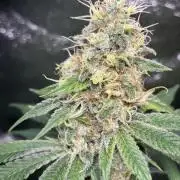
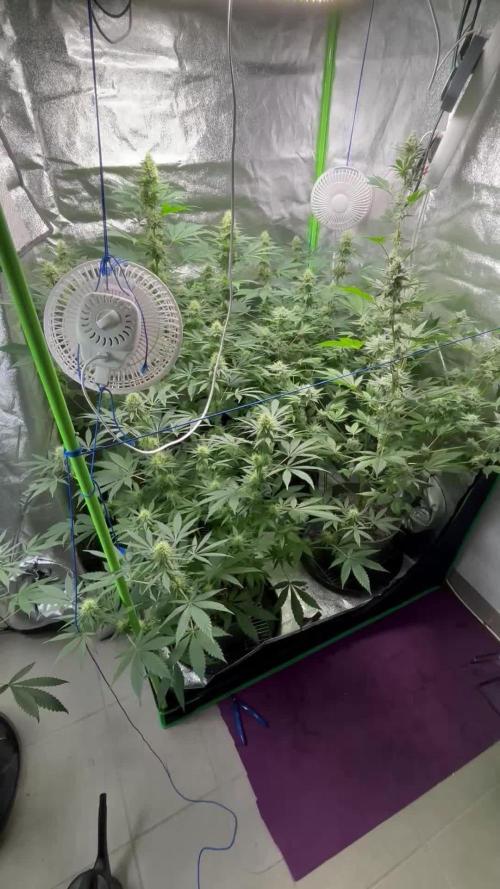
Buds keep growing bigger and compact, I haven't changed anything regarding the nutrients and kept it to every 3rd watering cycle.
Not doing much, just keeping an eye on humidity levels but other than that I don't want to stress them at all so no leaves plucking for 2 weeks.


@DieselKush
Follow
Nov.8 - Watered girls 250mL each, 0.25mL of each nutrient for each plant
Nov.9 - Moved these girls into Vivosun tent under Phlizon 1200w light from a Marz Hydro tent 5x5 with Marz Hydro ts 1000 light. We needed to move these girls to this tent and have our DWC in the bigger tent so the DWC plants don’t get too hot at the bottom
*once girls were transported to new tent the leaves turned to curl and lift upwards, the light is on veg and is 24” high
Nov.10 - Watered girls 250mL each, 0.25mL of each nutrient for each plant
Nov.10 - Decided we don’t like the blurple light and took one of our Mars Hydro lights from our big tent and switched it
Nov.11 - Watered each plant, 500mL, 1mL of each nutrient. Our girls drank soo fast so we are bumping it up a bit
Nov.12 - Our girl #1’s leaves are a little droopy and are looking a bit weird in some spots (darker green and almost wrinkled). Our girl #2 though is going great and we started some LST training on her today. Let her growww
Nov.14 - Started our girl #1 on LST her leaves are much happier now! Ohhh boy #2 is sprouting so nice she’s starting to fill out so well and she just blossomed once we started LST, she was facing upwards in less than 24h!!
Nov.15 - Our girls are thriving so I wanted to FIM #2 and my boyfriend wanted to Top girl #1
Let’s see how these girls groooww
Nov.15 - Watered each girl 250mL and 0.25 mL of each nutrient we are going to water them just enough to soak into the ground every day for them to soak up as much nutrients and drink as possible without over watering.