


Likes
Comments
Share

@Growbody
Follow
Herzlich willkommen zu meinem neuen Grow mit der Orange Sherbet Auto von 2Fast4Buds. Die Eltern sind Cookies Auto F5 x Tangie´matic, der Typ ist F3 Feminized Polyhybrid Autoflower. Der Strain war Winner of the American Autoflower Cup 2025, Kategorie Best Auto Hash. Die Aussicht auf frischen Orangensaftgeschmack macht mich wunderfizzig.
Wieder verwendet wurde für diesen Grow der 15Liter Stofftopf von ROOTiES, die Sonnenerde Bio Hanferde, BioBizz Wurmhumus, BIONOVA + zamnesias MonsterBud Mix Living Soil, zamnesias Smart Start Plugs und Plagrons Seedbooster Plus. Hat sich alles bestens bewährt.
Tag 64: 1,0 Liter Wasser. Die Orange Sherbet Auto von 2Fast4Buds hat viele Blütenspitzen auf einer Höhe.
Tag 66: 1,1 Liter Wasser.
Tag 67: Es gibt einen neuen Mitbewohner 🌱
Tag 68: 1,0 Liter Wasser.
Tag 69: ÖRE Bio-Protect hat mir neue Raubtiere geschickt 🦁
Tag 70: 1,0 Liter Wasser.
Schön, dass du dich für meinen Grow interessierst. Schau gerne wieder rein. Schöne Pfingsten 👋😎

Likes
8
Share


@Philippovic
Follow
Die Temperaturen sind seit einigen Tagen sehr niedrig, was ich versuche, möglichst zu regeln, indem ich den Lüfter bis auf 10 % gedimmt habe Und eine Heizmatte im Zelt habe. Tagsüber hält sich die Temperatur relativ gut bei 18-20° nachts fällt sie auf 16° wenn das Licht aus ist.
Die Pflanzen wurden entlaubt und beschnitten. Sie entwickeln sich toll und werden langsam schön purple ❤️

Likes
2
Share


@KannaGrowing
Follow
Esta semana, aumentamos a tope la potencia de los balastros, 660w.
Realizo la segunda y última poda baja en toda la sala, así nos aseguramos de que las plantas concentran los nutrientes en la parte alta, que es donde reciben más luz, además de facilitarnos el riego y el control de las mismas.
En los riegos alternados entre abono y agua cada tres días, eliminamos Bio Vega.
También realizo un segundo tratamiento foliar de Propolix, justo antes de que se apaguen las luminarias.

Processing
Likes
11
Share


@Leofongrow
Follow
31/10/2018 Ripen nutes bath (5mlL Ripen, 1mlL greenfuse bloom, 1drop4.5L SuperVit)

Likes
55
Share


@w33dhawk
Follow
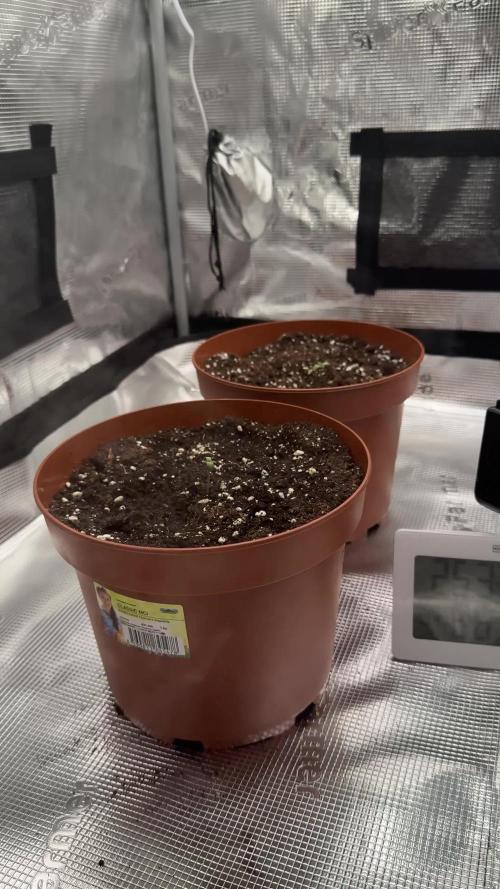
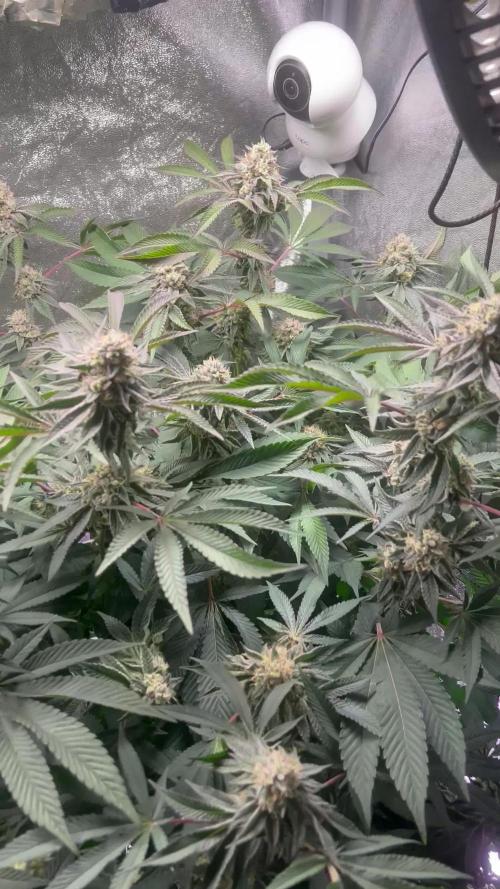
Anfang der 4. Vegi Woche sieht alles gut aus soweit bin zufrieden kann mich nur nicht entscheiden ob ich die untersten Fächer Blätter entfernen sollte oder nicht.....
Edit:12.02.21 habe mich heute morgen dazu entschieden die fächer blätter zu entfernen und hab danach alles nochmal richtig hin gebogen.....
Edit:13.02.21 hab heute mal die Wurzeln kontrolliert u d hab mich danach direkt entschieden die Ladys in die end töpfe zu Pflanzen das ganze hab ich dann mit 1l wasser mit Zusätzen angegossen und beim Nächsten giessen is Dann erst das komplette Medium dran mit durch giessen hab das gefühl das sie sonnst zu lange nass stehen bei der enge an Erde.....







Likes
11
Share


@GREENPHOENIX6262
Follow
Week - 4 - Thus far everything is running fine. Dropped a 4x4 Ac infinity net for better light coverage and introduced an Exhale 365 Co2 bag.
*End of Week 4 (Recap) - 08/21
Thus far all running smoothly - 1.5 - 2.0 Inch growth from Canopy
C02 bag running ( 2 weeks )
Pulled into trellis
Light Defo - Heavy nute feed


Likes
57
Share

@Arcadium
Follow
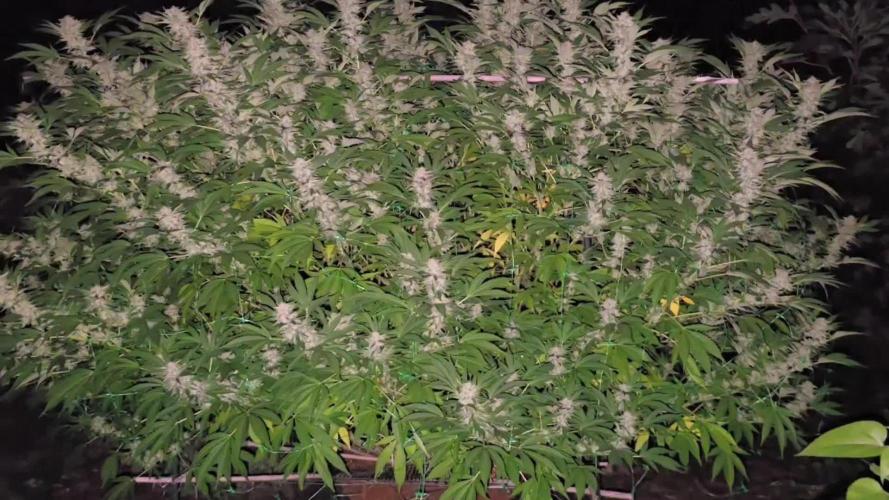
Smooth week, amazing weather, humid mornings but 23c every day no rain, lots of sun. Snipped 1 tiny bud with botrytis, but so far it's been incredibly resilient. Hoping to stretch at least another 2-3 weeks weather permitting. Only did Kelp / Diablo Monster Maxx this week and drip irrigation, weekly spray of BT and we're nearly there. Plan on washing, hang drying maybe an LB, rest straight to freezer for hash run.


Likes
42
Share


@Ganjagrandaddy
Follow
DAY 35 FLOWERING: Hi all. I hope you have been busy and stress free since the last update. It has been a fairly straight forward week for the ladies this week with all their efforts now being focused on building bud sites and developing terpenes. The smell has really picked up with any contact leaving a smell behind that is so candy swèet. I have also deliberately not watered for the past 6 days to stress them a little with a drying out and panic. As horrible as that may sound , it is to hopefully push the ladies to produce more oil/trichromes to stay supple and put out their scent to drag the pollinators in quicker. This has had a very positive effect on the Amnesia haze with a definable build up . Not as noticable on the Girl scout cookies but will hopefully be of a similar effect there too. The #1 GSC needed the watering yesterday though along with the critical cheese. Both had begun to show signs of too much stress so I gave them a biosys tea/ecothrive charge and top dress with life-cycle. They looked a lot happier 24 hrs later ( today) The other ladies will be fed later with their usual feeds but i will also give them a little biosys tea too. The drought has matured the buds on the G.s.c quite quickly and hopefully they will send lots of new pistils to refresh the flowers and bulk them up again.
A very stable week with no real issues. At the halfway point now with the bud porn the next stage. Life didn't get much better. Lol
Be safe and well
Likes
69
Share


@Qutro
Follow
Hi there,
Here we go with the 4th week of veg.
As soon as they woke up from the stress of the transplant, they were given another dose of training session . We topped them on the first day of the week. Not yet, but two days later we removed 4-4 large fan leaves each and it became clear how much the lower branches of Marshmallow OG didn’t develop in the shade. I already had the feeling that this variety was not genetically stable. These shots looked quite mutant. They seem to adapt more slowly to the hard plant trainings I use most of the time. On this day we also bent the branches with a tent hook to allow better light penetration to the lower parts.👨🏻🌾🌱
They show quite strong indica characteristics at this early stage of the vegetation which is also clearly visible in the shape of the leaves.
It is possible that the planned 6-week veg won’t be enough, as they need much more time to regenerate than most varieties I’ve grown so far. Never mind, maybe even this way the possibility of a harvest before Easter can be maintained.
After the hard training session they got only half dosage of nuts as they lost a lot of foliage. On the last day of the week watered them again with full dosage. 💦
All in all, they seem healthy but not very happy. I'm adjusting to them a bit and hopefully we'll be just fine for next week.
Running the Ts3000 on 65% 42 cm above the canopy which means 450-480 ppfd. 💡🌞
Have a lovely weekend everyone!


Likes
36
Share


@OGTrauma
Follow
Hi Potheads, During the course of the week there was a small addition of 3 More CFL LIGHTS through the use of Splitters and sockets thus freeing more outlets, the remaining were programmed to have different schedule that had increasing / peak /decreasing intensities of light sources according time before total blackout, harshly emulating outdoors but with the benefit of keeping thermals , consumption and electronics lifespam at range.
VEGGING WEEK TWO:
10 days of 21 vegging remaining if everything goes according to the plan but there is an impending menace that has to go out before putting plants to flower . Plants had a good growth response to the budget light, used soil and non-canon nutrient combos , but in the aspect plague control has been a bit more tedious, and even through im using an agressive product (Aceite de Springhill - Anasac) it does keep them at bay but it doesn't totally eradicate them, seeing a few small flying white dots and some moths when plants are shaken in search of bugs , having really low stretch horizontal plants does make harder to inspect the reverse of the leafs, some of them with clear signs of being chewed , and the bit size is like a hole made with a mechanical pencil and that can react to pesticide toxicity if overdose.
This is totally my fault because the reused soil with a lot of organic content is a perfect host for plagues and doing aggresive LST is easing the way to climb or jump towards the plants for any bug.
For plant placement inside the tent , u can use week 1, pic 1 for reference.
G13 Hashplant : The four specimens are the most affected by plagues persistence, because they have the most vegetal mass and trained branches that vermin can hide. In consequence, it also has received more spray doses of Aceite de Springhill (paraffin oil) and this losing battle contrasts absolutely with their spectacular growth , ramification and thick stems.
Santa Bilbo: The four specimens received topping with lst through last week, if there is a net above their cup, its because i already know that when it's stretches, it shows ALL her sativa ascendancy, don't believe in her morphology, preflowering is very messy indeed!. Also, The nutrient deficency didn't had heavy impact on the plants after they were transplanted and received both nutrient & plague control formulas.
Eleven Roses: All the plants were healthy but with different vigor, making the desition of the ones that will stay inside according to their reaction to topping. Eleven roses, althrough is declared 100% indica by her crushing effect, it can present phenos with longer internodal distance and flowering stretch , so i reccomend a bit of height control in it's grow stage as well.

Likes
43
Share


@valiotoro
Follow
Hello everyone 😎
Week 5 for my girl
She is doing very well,growing at fast pace and with a beautiful green colour on the leaves.
For the nutrient half grow half bloom & power buds 1ml/L
Spider Farmer SE7000 70%
Wishing you a happy Valentine & a day full of love❤️
Likes
10
Share


Likes
7
Share


@Ieiogrow94
Follow
Eccoci qui...
Tutto va per il meglio, questa settimana ho eseguito Lollipopping e Defoliation per far si che le cime principali sprigionino al meglio il loro vigore.
Siamo verso la fine del progetto ora bisogna solo aspettare la fine...
Grazie a tutti per il supporto🔥🌲❤️

Likes
45
Share


@BodyByVio
Follow
Beautiful flower full of trichomes. Smell and test fantastic. Very fast flowering. She was done on day 49 but I cut her down few days later.
I love the strain, the only thing that I will like this strain to have is a better yield. Beast quality buds I ever grew.
Likes
10
Share


@MoMedicalAlchemist
Follow
Transplanted from 3 gallon to 5 gallon pots im going to let recover and will probably be putting them into flower next week or the week after.Gettin the flip 43 day veg


