Processing
Likes
Comments
Share
@Ensign420
Follow
Week 02 Introduction This week has been a bit of a struggle. Had my first experience dealing with slime and brown algae. But I think adding enzymes and increasing the beneficial bacteria helped to fix the issue. Also experienced nutrient burn for the first time. My nutrient solution strength got as high as 671 PPMs. So backed it down to about 430 PPMs during the end-of-week reservoir change. Also cut Hydroguard (expired?), CaliMagic, and Superthrive from this grow. Now she's still stunted, but is starting to recover. Hopefully... [START OF WEEK 02] Day 01 - Monday - 08/10/20 - Total Days: 008 ----------------------------------- - [0830]: Still looks a bit yellow. But getting larger! --- Solution strength was at 248 PPMs. --- Just topped off with a bit of distilled water --- PH went up to 6.1 so PH'd down to 5.8 --- Ran the top feed for a bit to wet the hydroton. - [2130]: She's looking even more yellow now. --- Even the new leaves are really yellow. --- Decided to add more base nutes. --- Added 4ml of Sensi A --- Added 4ml of Sensi B --- Now at about --- Solution Strength went up to 304 PPM. --- PH was at 6, --- Also raised the water level a bit more. --- I really hope it's a nutrient deficiency and not an over-watering issue. --- Please live! Day 02 - Tuesday - 08/11/20 - Total Days: 009 ----------------------------------- - [0830]: Looking less droopy. But still yellow. --- Decided to do a reservoir change. --- 4.5gal of distilled water --- 8ml of Sensi Grow A --- 8ml of Sensi Grow B --- 8ml of Voodoo Juice --- 4ml of B-52 --- 4ml of CaliMagic --- 4ml of Hydroguard --- 4 drops of Superthrive --- PH'd down to 5.8 --- Solution strength: 302 PPM --- Since I didn't want to risk over-watering the rockwool, I did not to do a top feed, may do one tonight after the sleep cycle (lights are still set to go off at 10am and back on at 4pm). --- As I was doing a reservoir change, I noticed that the tubes and bucket were a bit slimy. Didn't really stink or anything. Is this normal? Maybe due to the Hydroguard and Voodoo Juice? --- I hope she gets better soon! - [2215]: Getting larger! But still yellow. --- Also can see a root growing through the net pot! Tiny little thing but it's there! Will have to start dropping water once more appear. --- After looking over a few DWC diaries using AN nutes, seems like my solution strength is still too low. Most around this stage average around 500 PPMs with about 4ml per gallon. --- Top fed for a minute to wet the top of the hydroton. --- Solution strength went down to 263 PPM. --- Added 8ml more of Sensi A --- Added 8ml more of Sensi B --- Now base nutes are at 16ml for 4.5 gal of water. --- PPMs went up to 411. --- Still lower than 500 PPMs, but that's okay. --- PH was at 6. Not sure if I should adjust PH using AN nutes. So going to not ajdust unless PH goes above 6.1. Day 03 - Wednesday - 08/12/20 - Total Days: 010 ----------------------------------- - [0830]: Looks like more root growth! --- She still looks yellow. But leaves are perky. --- PH was at 6.2 so lowered down to 5.8. --- Solution strength was at 394 PPMs --- Since roots are still growing, I decide to lower the water level a bit. Now water level is a bit below the net pot. - [2200]: Root is getting longer! --- Slime is returning. Not sure why. --- Solution strength: 357 PPMs --- PH: 6.1 --- Decided to add an enzyme along with more beneficial bacteria to hopefully cure the slime. --- Added 16ml of Sensizym --- Added 5ml of Hydroguard --- Added 8ml of Voodoo Juice --- New solution strength: 430 PPMs --- New PH: 6.1 --- Top fed for a minute. --- This slimy residue is really freaking me out! I hope the added enzymes will help eliminate the slime. --- Going to do a full reservoir sterilization/nutrient change over the weekend. Please survive until then girl! Day 04 - Thursday - 08/13/20 - Total Days: 011 ----------------------------------- - [0930]: I think the enzymes worked! There is little to no slime now! --- Although I think the root was also dissolved in the process. It's now just a little stub sticking just below the net pot. The enzyme is also suppose to dissolved dead roots too but guess that root was too weak? Not sure what happened there. But I think the slime is cured! --- Solution strength went down to 395 PPMs. Decided to add more base nutrients. --- Added 8ml of Sensi A --- Added 8ml of Sensi B --- Added 4ml of B-52 --- Solution strength went up to 598 PPMs. --- PH was at 6.1 --- As long as the PH is between 5.5 and 6.3, I'm not going to use PH Up or Down. But still will monitor PH levels. - [1715]: Checked up on her after her nap and shes looking alive but stunted. But no slime! --- Decided to add some sugars to help maintain the enzymes and beneficial bacteria. --- Solution strength was at 587 PPMs. --- PH was at 6.2 --- Added 8ml of Bud Candy --- Solution strength went up to 671 PPMs. --- PH also went up to 6.3 --- Lowered water level a bit to hopefully promote more root growth. --- Top fed for a minute. --- She is getting bigger, but still looks yellow. Day 05 - Friday - 08/14/20 - Total Days: 012 ----------------------------------- - [0915]: Leaves look a little burnt on the tips. Still no slime. --- Going to back off on the PPMs to hopefully fix the nutrient toxicity. --- Solution strength was at 632 PPMs --- PH was at 6.3 --- Added/Removed water until PPMs were at 536. --- PH was still at 6.3 --- Raised water up a bit, then top fed for a minute. - [2200]: Looking better. Still yellow though. --- Solution strength: 514 PPMs --- PH: 6.5 --- Added PH down. --- New solution strength: 518 PPMs --- New PH: 5.2 --- PH was kind of high. So decided to PH down. Had to use quite a bit to bring it down. But eventually got it to drop down to 5.3. A little low, but so far, the PH has always gone up so wanted to start it really low. --- Ran the top feed for a minute to re-saturate the top of the hydroton. Day 06 - Saturday - 08/15/20 - Total Days: 013 ----------------------------------- - [0830]: She looks stunted. leaves are still yellow. --- Solution strength: 514 PPMs --- PH: 5.6 --- Top fed for a minute. --- Not sure what to do at this point. Going to do another reservoir change soon. Hoping she lives until then. - [2145]: Looking pretty much the same. --- A bit of slime has returned. Since I've been diluting the nutrient solution, the enzyme ratio has dropped. So I guess this is expected. --- Also noticed that slime build up was on the air-stones. Never really checked the stones so not sure how long that has been there. Looks brown too, which can't be good. --- Going to do an H202 sterilization of the system (minus the net pot) tomorrow so did not add anything. --- Lowered the water level to below the net pot. --- Then top fed for a minute. Day 07 - Sunday - 08/16/20 - Total Days: 014 ----------------------------------- - [0900]: STERILIZATION DAY! --- Decided to skip today's night cycle for a deep clean. --- I'm hoping that skipping a night cycle won't be too stressful. --- Temporarily moved her to a new bucket. --- Used about a half of gallon of straight distilled water to flush out the net pot. --- Drained the system and wiped up all the brown sludge. Also removed the air stones and cleaned up all the goo. --- Filled the system with 2 gallons of distilled water and at least 30ml of food grade hydrogen peroxide (35% strength). --- Yea its a lot, but since I'm not going to sterilize the system overnight, I went with a really high doseage. Basically I kept adding until I started to see little bubbles start to form. --- Then I ran the water pump. - [0915]: Boiled the air stones in tap water for about 10 min. Then reconnected them to the airlines. --- I let the air stones and hose soak in the sterilization solution for about 5 minutes so the peroxide can absorb into the stones. Then ran the air stone to help mix and agitate the solution. --- Occasionally, I'd repeat the process of turning the air pump off for a few minutes to let the stones soak. - [1000]: Covered the top two row of holes of the net pot with some aluminum tape. Hopefully this solves the light leaking in through the hydroton. - [1200]: Used an old toothbrush and scrubbed the pump clean. Then drained the system. --- Refilled with more distilled water and peroxide. Again added a lot. --- Ran system again to sterilize even more. - [1530]: Drained the system and refilled with distilled water to rinse. --- Ran the system for a few minutes, then drained and rinsed again. --- Did this a few more times over about an hour. - [1630]: Added 4 gallons of fresh distilled water. --- Added 15ml Sensi Grow A --- Added 15ml Sensi Grow B --- Added 12ml of B-52 --- Added 16ml of Voodoo Juice --- Added 16ml Sensizym --- Solution strength was at 430 PPMs --- PH was at 5.6 --- I was going to add Hydroguard, but I think the bottle is expired. Since 2017 or 2018!? I think Hydroguard is good for up to 2 years from the date on the bottle or 6 months after opening. So not going to use from now on. I wonder if this could have contributed to the slime build up. --- Also removed the CaliMagic and Superthrive too. Going to only use AN products to eliminate the chance of incompatible nutrients. --- Placed her back in the bucket and top fed for a minute. --- Here's hoping for the best. Going to let it ride until morning! Please feel better! [END OF WEEK 02]
Likes
29
Share
@Hashy
Follow
******************************************** Week 16 Fade(week 12 flower) ******************************************** Light cycle=12/12 Light Power=110w 47% Extractor controller settings (during lights on). High temp= 26c Temp step=0c High Rh= 46% Rh step=0% Speed max=10 Speed min=5 Extractor controller settings (during lights off). High temp= 20c Temp step=0c High Rh= 50% Rh step=0% Speed max=10 Speed min=5 Smart controller settings (during lights on). Lights on=9.00am Smart controller settings (during lights off). Lights off=9.00pm VPD aim=1.0-1.5 DLI aim=30-40 EC aim=1.0-1.8 PH aim=6.0-6.5 💧💧💧💧💧💧💧💧💧💧💧💧💧💧💧💧 NPK= 0-0-0 Method= Automatic Feed=Fade nutes Neutralise=0.1ml/L Advanced Nutrients Flawless Finish=2ml/L Easy Ph down=0ml/L (1ml=24 drops, 1 drop=0.04ml) Easy Ph Up=0.0ml/L (1ml=24 drops, each drop is 0.04ml) Ec=0.33 PH=7.0/6.9 Runs=10 Run times=3mins (0.75L/0.375L each) Gap times= 17mins Total runtime=30mins(6.0L/3.0L each) Total flowrate= 0.25L/0.125L/min each Auto start time=10.00am Auto stop time=1.03pm 💧💧💧💧💧💧💧💧💧💧💧💧💧💧💧💧 ******************************************** ******************************************** 📅24/5/25 Saturday(Day 106) 📋 Put stakes in and spread her out a little now she has all this space to herself. 📅25/5/25 Sunday(Day 107) 📋 📅26/5/25 Monday(Day 108) 📋 💧 Automatic Fade nutes Ec=0.3 PH=6.5/6.2 Volume=6L Volume left=2L Volume used=4L Total runoff=0.7L Ec=2.1 PH=/6.8 💧 📅27/5/25 Tuesday(Day 109) 📋Lowered light power to 100w 📅28/5/25 Wednesday(Day 110) 📋Defoliate some spent leaves. 📅29/5/25 Thursday(Day 111) 📋 📅30/5/25 Friday(Day 112) 📋 Day 84 flower. 💧 Automatic Water Ec=0.2 PH=6.8/6.9 Volume=6L Volume left=1.5L Volume used=4.5L Total runoff=1L Ec=2.3PH=/6.7 💧 ******************************************** Weekly roundup. 📋 She's had a full week under the light to herself, she's almost ready. I'm tempted to chop at least the main top cola any day now and let the rest mature a little more. I may not complete another full week so this maybe my last weekly report before harvest. Back soon. Take it easy. ********************************************
Likes
13
Share
La fioritura sta procedendo molto bene e gli strains crescono ancora hanno risposto bene alla tecnica di lst e defogliazione. Run off 1.6 Ph 6.2
Likes
30
Share
Hello 👋 and welcome back. I've been really, really stoned for a month or two. I do enjoy a good cleaning. No need to be rushing this one, I've got a lot of stuff to tweak in the grow tent. Give it a good scrub to boot. Added a bunch of organic amendments to the medium and reloaded mineral content. Giving it a few weeks to let everything break down, settle in, and balance out before beginning, I'll be doing a thorough pH and EC prior to placing anything in the final pot and making sure to give it a good till in the top soil once everything is broken down into more palatable size. Organic fertilizer = organic matter that's still in the process of breaking down. Mineral fertilizer = salt mineral that's already broken down and ready for uptake in its current form. Synthetic mineral fertilizer = man-made minerals ready for uptake in their current form. Synthetic concentrated fertilizer = man-made concentrates that don't exist in nature. Adding this grow. 500g Horticultural charcoal. 454g Elite Shungite Coal (Fullerene C60). 1kg Spirulina is approx NPK 10%, 100g/1kg (N), 20% 200g/1kg (P), and 20% 200g/1kg (K). In 1 kg (1000g) of spirulina, you can expect approximately 50 mg to 177 mg of Zeaxanthin. 1 kg of moringa powder, approximate NPK : 4.8% N, 0.5% P, and 1.9% K. 500g Azomite. (Ultimate mineral micro nutrient). 1kg of Gaia green 4-4-4, 1kg of 4-4-4 fertilizer contains 4% which is equivalent to 40 grams of each in 1000g. 500g eggshells, 20grams of calcium per 500g. Generally, the more organic matter a plant breaks down, the higher the soil's electrical conductivity (EC) tends to be. This is because the breakdown of organic matter releases nutrients into the soil solution, which increases the concentration of dissolved ions that conduct electricity. Roots and microorganisms do not directly compete for electrical conductivity itself. However, they do interact in the rhizosphere, a zone around plant roots where microbes and plants compete for resources like nutrients and water, which can indirectly influence electrical conductivity. Plant roots release exudates (carbon) into the soil, providing energy and nutrients for microbes. In return, microbes can help plants access nutrients, particularly in the rhizosphere, where nutrient availability can be high. Both roots and microbes compete for the same resources, such as phosphorus (P) and iron (Fe). Factors like microbial decomposition of plant-derived chelators and the proximity of microbes to the root surface can influence this competition. Carbon 60 (Fullerene) can enhance plant growth by boosting microbial activity in the soil, improving water retention, and even increasing plant biomass and yield. It's not a fertilizer, but rather a soil amendment that acts as an ideal companion product for fertilization programs. Studies have shown that fullerenes can influence soil bacterial communities and potentially activate processes like nitrogen transformation in the soil. Some research suggests that fullerenes can increase the availability of nutrients and enhance plant growth. Buckminsterfullerene is a type of fullerene with the formula C60. It has a cage-like fused-ring structure (truncated icosahedron) made of twenty hexagons and twelve pentagons, and resembles a soccer ball. Each of its 60 carbon atoms is bonded to its three neighbors. Shungite coal, particularly the "precious Shungite" variety, is known to contain fullerenes, with a higher content found in Shungite of category 3. The most common fullerene, C60 (also known as buckminsterfullerene or a buckyball), is a well-studied example. The influence of water-soluble carboxylated light fullerene derivatives on the physiological plant state is not well studied. The addition of Spirulina is primarily for zeaxanthin, as it contains a lot. But on top of that, Hawaiian Spirulina is cultivated in open ponds using a combination of 100% fresh potable water from Hawaiian aquifers and ultra-pure, deep ocean water containing all 94 trace minerals & elements. It is then gently dried using patented Ocean Chill Drying technology and cold-pressed to ensure maximum nutrient levels. Spirulina, a blue-green alga, is rich in nitrogen, phosphorus, and potassium (NPK), making it an excellent source of nutrients for plant growth. Studies have shown that Spirulina can be used as a biofertilizer, effectively replacing chemical fertilizers, especially for nitrogen with a whopping, NPK of 10% (N), 20% (P), and 20% (K). Azomite needs no introduction; Just incase, Azomite delivers 70+ minerals and trace elements to boost BRIX, root strength, soil vitality, and yields. Micronized. Moringa is a highly nutrient-dense plant, often called the "miracle tree" or "tree of life" due to its impressive nutritional profile and potential health benefits. It's particularly rich in vitamins, minerals, antioxidants, and other bioactive compounds, making it a valuable resource for addressing malnutrition and promoting overall health. Containing over 92 verifiable nutrients, Moringa oleifera is found to be the most nutrient-dense plant on earth. As far as we know this is the only place online where we list all 92 (and more) nutrients of the Moringa tree and we list all 46 antioxidants of the Moringa tree too. Deep in the Himalayas is a tree called Moringa oleifera, also known as the drumstick tree, and throughout the subtropics, this tree is cultivated for its amazing health benefits. This amazing tree has the ability to grow in an array of conditions, and its health benefits are astonishing. The drumstick tree contains a staggering 92 nutrients and 46 natural antioxidants and as it also holds a number of anti-inflammatory compounds. The sheer number of nutrients found in this tree brings it to the top of the superfoods list, and in its native locations, it is said to have the ability to help treat more than 300 diseases and illnesses. To give you an idea, just a single serving of the Moringa tree contains: 4 times the amount of calcium in the same amount of milk. More vitamin C than 7 oranges. Double the protein and 3 times the amount of potassium in a banana. It's high antioxidant levels can help fight free radicals, potentially slowing down the ageing process and promoting longevity. It is thought to be able to help lower cholesterol levels and regulate blood pressure, due to the high levels of niacin and vitamins B3 and B10. A serving of 100g of this tree gives: Over 8g protein Over 400mg potassium Nearly 450mg calcium 164mg vitamin C 738 ¼g of vitamin A. Moringa also contains vitamins B1, B2, B3, B6, B7, A, C, K, E and D. Amino Acids: In addition, it contains various other nutrients, including the following essential amino acids: Threonine – a nutrient that helps metabolism and prevents fatty buildup in the liver. It also aids digestion. Isoleucine – good for a healthy brain and helps to give the body natural energy. Leucine – works hand in hand with isoleucine to increase energy levels. Phenylalanine – aids communication between the brain’s nerve cells and also helps to reduce hunger pangs as well as increasing alertness and improving memory. Tryptophan – supports your immune system, and its mood boosting ability helps to beat depression and anxiety-associated insomnia. It also reduces the risk of heart attack and lowers bad cholesterol levels. Lysine – aids the absorption of calcium into the bones, supports antibodies and regulates various hormones as well as inhibiting the growth of virus cells. Methionine – provides the body with sulphur as well as helping to lower cholesterol. It also supports the liver, kidneys, and helps keep skin, hair and nails healthy. Valine – helps to keep the mind calm. There are other amino acids in Moringa too, which are not essential to the body but are still beneficial in supporting health. These include histidine, alanine, glutamic acid, arginine, cysteine, proline, aspartic acid, glycine, serine, and tyrosine. Moringa seeds contain oils that hold high levels of oleic acid, which may act to reduce inflammation. https://amchara.com/detox-cleanse/92-nutrients-and-46-antioxidants-in-one-tree-maringa-oleifera/ 4.8% N, 0.5% P, and 1.9% K. Moringa can also serve as a natural source of nitrogen, potentially replacing chemical fertilizers. About 95% of the dry eggshell is calcium carbonate weighing 5.5 grams. The average eggshell contains about . 3% phosphorus and . 3% magnesium and traces of sodium, potassium, zinc, manganese, iron and copper. 1 ppm in water (mg/L) = 1 ppm in soil (mg/kg) If you use 10 grams of 10-20-20 fertilizer in 4 liters of water: Nitrogen: (10 grams * 10/100 * 1000000) / 4000 mL = 2500 ppm N Phosphorus: (10 grams * 20/100 * 1000000) / 4000 mL = 5000 ppm P Potassium: (10 grams * 20/100 * 1000000) / 4000 mL = 5000 ppm K In summary, to determine the precise ppm of an NPK fertilizer, you need to know the specific weight of fertilizer used, the volume of water, and the NPK percentages. The general formula and example calculations can help you make these conversions.
Likes
52
Share
Lacewings seemed to have mostly killed themselves by flying into hot light fixtures. I may have left the UV on which was smart of me :) Done very little to combat if anything but make a sea of carcasses, on the bright side its good nutrition for the soil. Made a concoction of ethanol 70%, equal parts water, and cayenne pepper with a couple of squirts of dish soap. Took around an hour of good scrubbing the entire canopy. Worked a lot more effectively and way cheaper. Scorched earth right now, but it seems to have wiped them out almost entirely very pleased. Attempted a "Fudge I Missed" for the topping. So just time to wait and see how it goes. Question? If I attached a plant to two separate pots but it was connected by rootzone, one has a pH of 7.5 ish the other has 4.5. Would the Intelligence of the plant able to dictate each pot separately to uptake the nutrients best suited to pH or would it still try to draw nitrogen from a pot with a pH where nitrogen struggles to uptake? Food for stoner thought experiments! Another was on my mind. What happens when a plant gets too much light? Well, it burns and curls up leaves. That's the heat radiation, let's remove excess heat, now what? I've always read it's just bad, or not good, but when I look for an explanation on a deeper level it's just bad and you shouldn't do it. So I did. How much can a cannabis plant absorb, 40 moles in a day, ok I'll give it 60 moles. 80 nothing bad ever happened. The answer, finally. Oh great........more questions........ Reactive oxygen species (ROS) are molecules capable of independent existence, containing at least one oxygen atom and one or more unpaired electrons. "Sunlight is the essential source of energy for most photosynthetic organisms, yet sunlight in excess of the organism’s photosynthetic capacity can generate reactive oxygen species (ROS) that lead to cellular damage. To avoid damage, plants respond to high light (HL) by activating photophysical pathways that safely convert excess energy to heat, which is known as nonphotochemical quenching (NPQ) (Rochaix, 2014). While NPQ allows for healthy growth, it also limits the overall photosynthetic efficiency under many conditions. If NPQ were optimized for biomass, yields would improve dramatically, potentially by up to 30% (Kromdijk et al., 2016; Zhu et al., 2010). However, critical information to guide optimization is still lacking, including the molecular origin of NPQ and the mechanism of regulation." What I found most interesting was research pointing out that pH is linked to this defense mechanism. The organism can better facilitate "quenching" when oversaturated with light in a low pH. Now I Know during photosynthesis plants naturally produce exudates (chemicals that are secreted through their roots). Do they have the ability to alter pH themselves using these excretions? Or is that done by the beneficial bacteria? If I can prevent reactive oxygen species from causing damage by "too much light". The extra water needed to keep this level of burn cooled though, I must learn to crawl before I can run. Reactive oxygen species (ROS) are key signaling molecules that enable cells to rapidly respond to different stimuli. In plants, ROS plays a crucial role in abiotic and biotic stress sensing, integration of different environmental signals, and activation of stress-response networks, thus contributing to the establishment of defense mechanisms and plant resilience. Recent advances in the study of ROS signaling in plants include the identification of ROS receptors and key regulatory hubs that connect ROS signaling with other important stress-response signal transduction pathways and hormones, as well as new roles for ROS in organelle-to-organelle and cell-to-cell signaling. Our understanding of how ROS are regulated in cells by balancing production, scavenging, and transport has also increased. In this Review, we discuss these promising developments and how they might be used to increase plant resilience to environmental stress. Temperature stress is one of the major abiotic stresses that adversely affect agricultural productivity worldwide. Temperatures beyond a plant's physiological optimum can trigger significant physiological and biochemical perturbations, reducing plant growth and tolerance to stress. Improving a plant's tolerance to these temperature fluctuations requires a deep understanding of its responses to environmental change. To adapt to temperature fluctuations, plants tailor their acclimatory signal transduction events, specifically, cellular redox state, that are governed by plant hormones, reactive oxygen species (ROS) regulatory systems, and other molecular components. The role of ROS in plants as important signaling molecules during stress acclimation has recently been established. Here, hormone-triggered ROS produced by NADPH oxidases, feedback regulation, and integrated signaling events during temperature stress activate stress-response pathways and induce acclimation or defense mechanisms. At the other extreme, excess ROS accumulation, following temperature-induced oxidative stress, can have negative consequences on plant growth and stress acclimation. The excessive ROS is regulated by the ROS scavenging system, which subsequently promotes plant tolerance. All these signaling events, including crosstalk between hormones and ROS, modify the plant's transcriptomic, metabolomic, and biochemical states and promote plant acclimation, tolerance, and survival. Here, we provide a comprehensive review of the ROS, hormones, and their joint role in shaping a plant's responses to high and low temperatures, and we conclude by outlining hormone/ROS-regulated plant-responsive strategies for developing stress-tolerant crops to combat temperature changes. Onward upward for now. Next! Adenosine triphosphate (ATP) is an energy-carrying molecule known as "the energy currency of life" or "the fuel of life," because it's the universal energy source for all living cells.1 Every living organism consists of cells that rely on ATP for their energy needs. ATP is made by converting the food we eat into energy. It's an essential building block for all life forms. Without ATP, cells wouldn't have the fuel or power to perform functions necessary to stay alive, and they would eventually die. All forms of life rely on ATP to do the things they must do to survive.2 ATP is made of a nitrogen base (adenine) and a sugar molecule (ribose), which create adenosine, plus three phosphate molecules. If adenosine only has one phosphate molecule, it’s called adenosine monophosphate (AMP). If it has two phosphates, it’s called adenosine diphosphate (ADP). Although adenosine is a fundamental part of ATP, when it comes to providing energy to a cell and fueling cellular processes, the phosphate molecules are what really matter. The most energy-loaded composition for adenosine is ATP, which has three phosphates.3 ATP was first discovered in the 1920s. In 1929, Karl Lohmann—a German chemist studying muscle contractions—isolated what we now call adenosine triphosphate in a laboratory. At the time, Lohmann called ATP by a different name. It wasn't until a decade later, in 1939, that Nobel Prize–-winner Fritz Lipmann established that ATP is the universal carrier of energy in all living cells and coined the term "energy-rich phosphate bonds."45 Lipmann focused on phosphate bonds as the key to ATP being the universal energy source for all living cells, because adenosine triphosphate releases energy when one of its three phosphate bonds breaks off to form ADP. ATP is a high-energy molecule with three phosphate bonds; ADP is low-energy with only two phosphate bonds. The Twos and Threes of ATP and ADP Adenosine triphosphate (ATP) becomes adenosine diphosphate (ADP) when one of its three phosphate molecules breaks free and releases energy (“tri” means “three,” while “di” means “two”). Conversely, ADP becomes ATP when a phosphate molecule is added. As part of an ongoing energy cycle, ADP is constantly recycled back into ATP.3 Much like a rechargeable battery with a fluctuating state of charge, ATP represents a fully charged battery, and ADP represents a "low-power mode." Every time a fully charged ATP molecule loses a phosphate bond, it becomes ADP; energy is released via the process of ATP becoming ADP. On the flip side, when a phosphate bond is added, ADP becomes ATP. When ADP becomes ATP, what was previously a low-charged energy adenosine molecule (ADP) becomes fully charged ATP. This energy-creation and energy-depletion cycle happens time and time again, much like your smartphone battery can be recharged countless times during its lifespan. The human body uses molecules held in the fats, proteins, and carbohydrates we eat or drink as sources of energy to make ATP. This happens through a process called hydrolysis . After food is digested, it's synthesized into glucose, which is a form of sugar. Glucose is the main source of fuel that our cells' mitochondria use to convert caloric energy from food into ATP, which is an energy form that can be used by cells. ATP is made via a process called cellular respiration that occurs in the mitochondria of a cell. Mitochondria are tiny subunits within a cell that specialize in extracting energy from the foods we eat and converting it into ATP. Mitochondria can convert glucose into ATP via two different types of cellular respiration: Aerobic (with oxygen) Anaerobic (without oxygen) Aerobic cellular respiration transforms glucose into ATP in a three-step process, as follows: Step 1: Glycolysis Step 2: The Krebs cycle (also called the citric acid cycle) Step 3: Electron transport chain During glycolysis, glucose (i.e., sugar) from food sources is broken down into pyruvate molecules. This is followed by the Krebs cycle, which is an aerobic process that uses oxygen to finish breaking down sugar and harnesses energy into electron carriers that fuel the synthesis of ATP. Lastly, the electron transport chain (ETC) pumps positively charged protons that drive ATP production throughout the mitochondria’s inner membrane.2 ATP can also be produced without oxygen (i.e., anaerobic), which is something plants, algae, and some bacteria do by converting the energy held in sunlight into energy that can be used by a cell via photosynthesis. Anaerobic exercise means that your body is working out "without oxygen." Anaerobic glycolysis occurs in human cells when there isn't enough oxygen available during an anaerobic workout. If no oxygen is present during cellular respiration, pyruvate can't enter the Krebs cycle and is oxidized into lactic acid. In the absence of oxygen, lactic acid fermentation makes ATP anaerobically. The burning sensation you feel in your muscles when you're huffing and puffing during anaerobic high-intensity interval training (HIIT) that maxes out your aerobic capacity or during a strenuous weight-lifting workout is lactic acid, which is used to make ATP via anaerobic glycolysis. During aerobic exercise, mitochondria have enough oxygen to make ATP aerobically. However, when you're out of breath and your cells don’t have enough oxygen to perform cellular respiration aerobically, the process can still happen anaerobically, but it creates a temporary burning sensation in your skeletal muscles. Why ATP Is So Important? ATP is essential for life and makes it possible for us to do the things we do. Without ATP, cells wouldn't be able to use the energy held in food to fuel cellular processes, and an organism couldn't stay alive. As a real-world example, when a car runs out of gas and is parked on the side of the road, the only thing that will make the car drivable again is putting some gasoline back in the tank. For all living cells, ATP is like the gas in a car's fuel tank. Without ATP, cells wouldn't have a source of usable energy, and the organism would die. Eating a well-balanced diet and staying hydrated should give your body all the resources it needs to produce plenty of ATP. Although some athletes may slightly improve their performance by taking supplements or ergonomic aids designed to increase ATP production, it's debatable that oral adenosine triphosphate supplementation actually increases energy. An average cell in the human body uses about 10 million ATP molecules per second and can recycle all of its ATP in less than a minute. Over 24 hours, the human body turns over its weight in ATP. You can last weeks without food. You can last days without water. You can last minutes without oxygen. You can last 16 seconds at most without ATP. Food amounts to one-third of ATP production within the human body.
Likes
9
Share
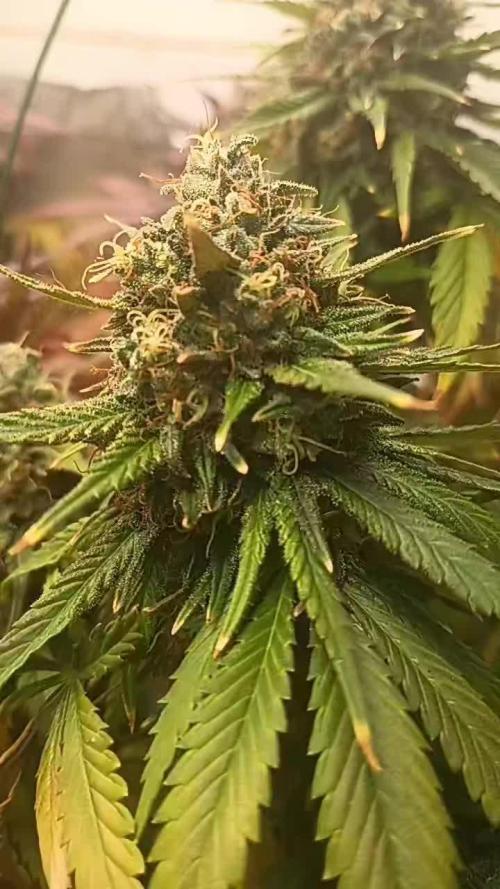
This plant looks so beautiful! I'm glad to see that both phenos of the big jeff look very similar and have the exact same shape of the leaves, that's a good signal, let's see how this lady keeps developing!! 💓💚💛👨‍🌾
Processing
Likes
28
Share
@JBOrganix
Follow
1 - (03/14) Starting my new seeds, my other order for the Barney's never came in the mail. Must be "lost"... Decided to go get something semi locally. Picked up 2 strains and got the free Early Miss as well. Germination has started as of 03/13, paper towel transfer at 03/14 (approximately 16 hours later). Tent is sanitized and the new LED I'll be running is almost here. (Decided to wait on the full spectrum) Following guidelines as per Crop Kings recommendation for germination. We'll see in the next 48 how well they have developed under the paper towel. This plant will be grown alongside the Early Miss and quite possibly the GSC from Sun West Genetics as well. The GSC and EM will have separate diaries, so be sure to check those out as well! This grown will be done in the Indo 4*2*5 tent. Thank you to everyone that chimed in on my last failed grows, I look forward to some success after the excellent suggestions I received from everybody. Super excited! Happy growing! 2 - 03/16 - Looks like a good start to the germination. 48 hours after they were dumped from the glasses. Waiting for those t roots to get a bit bigger yet. 3 - 03/17 - 72 Hours later, forgot to get in the tent and remoisten the paper towels last night, just got up at 4am and they were pretty dry. Tap root looks to have lost some moisture, I'm just hoping I didn't already fuck them up this time. Shouldn't have drank so much on my 30th. Happy Saint Patrick's day to y'all! Hopefully they suck up some water and bounce back by midday. Going to put them in jiffys or rock cubes tomorrow. 4 - 03/18 - Planted in their first pots. Due to the nature of my last grow, I've decided to start the other 2 girls in a jiffy. Placed the jiffy into a smaller pot (approx. .25g?) That is filled with my Mo Koko, gia green organics 4-4-4 all purpose, 40% worm castings and a higher 60-70% perlite ratio. I plan on testing the runoff from the pots and the Early Miss is in a felt pot, so I figured it would be a great idea to accommodate for the additional moisture those felt ones hang onto. Probably going to uproot the EM tonight and transfer it to a jiffy as well then get it into a plastic pot. (Edit - decided against it) I'm going to run two 3 gallon pot sizes for both of my autos and eventually upsize to a 5 gallon for the GSC PP. Going to get some nicer domes today. Getting pumped. Almost through the germination process and onto Day 1 of Veg. 😎 Video update later today! 5 - 03/19 - All the girls are popping up out of the soil and should shed the seedling casings within 24hrs. Off to a much better start! The EM somehow came out, big surprise to see it. Not as pronounced as the other girls, but nonetheless. Stoked. Ended my day by them officially being in Veg Day 1. 6 - 03/20 - Well yesterday was officially day 1 of week 1 in Veg and as of this morning all 3 girls look great. Definitely feeling more confident this time through. 7 - 03/23 - Made some adjustments to the diary, measured the girls and corrected my Veg days. Moving forward, I'll do week to week updates on the girls and daily pictures of growth progress. 8 - 03/26 - Day 7 for all the girls. CC is definitely on the weakest link list. The EM has shocked me entirely. GSC is progressing as I figured she should. Today I am finally going to scoop my new light. So stoked 🙌 Girls get to go into week 2 with a heavy adjustment on their total wattage. I'll update later this evening with a photo update and video of the new light and the girls. Thanks for following, don't forget to hit the like! Cheers 🌱 End of the week, new lights in the tent. Running a bit hot right now so I have some work cut out for me. On to the next week.
Likes
Comments
Share
@Budhunter
Follow
The breeder says day 45 is the day for harvesting.. when I reached that day I started looking closely the trichomes to see when best day to harvest.. usually I wait till more less 10%amber.. however I found a bud rot in one of the other plant on my tent so I decided to chop it down on same day afraid of spreading it to Apple blossom. If that had not happened I would wait maybe 2-3 days more.
Likes
7
Share
@603grower
Follow
Wish I took more pictures of her. Wicked good grow. She threw out some frosty baseball bats. Super easy to grow. She’s the only good plant to come out this run. Got a little more than 10 ounces off the earth box.
Likes
5
Share
Was going to chop beginning of week 9, waiting is all.
Likes
12
Share
Didn't have someone to come water the plants. 5 days away. Plants dried right out. Defoliated both and fed and watered. We will see what happens. Plant one has mostly orange hairs. Plant two is on the whiter side. Buds are still filling in. I have definitely learned that I need to move on to a more automated system for my lifestyle. Gonna try to make the best of the next few weeks and watch the trichomes turn. Day 66-67 flushed soil with pH water
Likes
32
Share
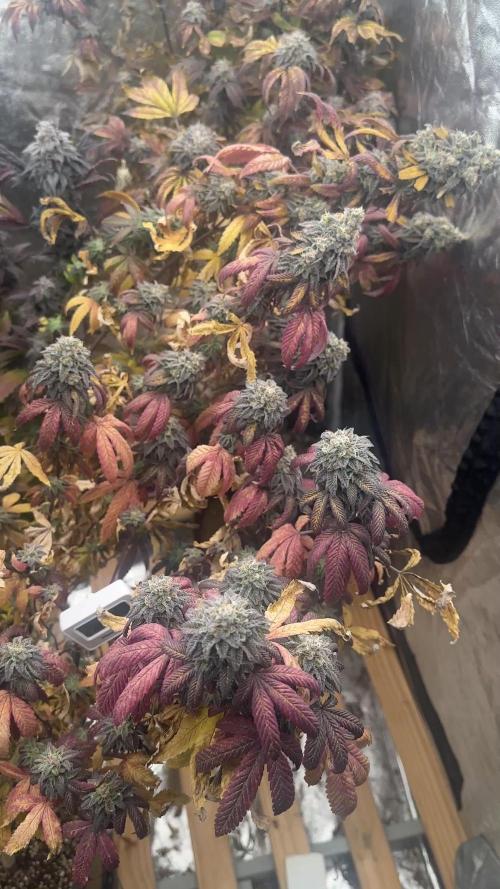
So the flower is a stunning colour and a lovely thick and dense flower , the smell and taste is fantastic , And the high is mild but a real nice euphoric head high and vapes a lovely gassy yet flavourful vape , I really am a fan of the balckberry kush gene , not only is it a joy too watch growing , but the end results are amazing too look at , hold , and vape , I think the photos in this diary speak for them selfs without all the fancy words , I highly recommend this strain and this seed bank as Dutch passion never fail too impress , A massive thank you too green buzz nutrients for all there help support and nutrients and Dutch passion for these free seeds too , I sometimes have too pinch my self that I am blessed with the support and help with free nutrients , seeds , and lights from kingbo , I just hope that I show all these amazing products off how they should be , Some of us are disabled ether physically or mentally and cannot compete with some of the growers on here diariys with the 500 word essays and big fancy words , But this for me is not a business , I do not make thousands of pounds too buy fancy lights or A/C units ect , Growing cannabis is a jail term for me if caught and with no financial gain at all , I turn absolutely everything into oils and tinctures And make my own medicine too treat autism and let me tell you it has given me a new lease of life , I have worked out that a single grow is costing me £500 in electric alone for a 3 month grow , and if I was not blessed with the help of green buzz nutrients and Dutch passion it would be much much more , I do not know people who smoke weed or any dealers if it too sell it even if I wanted too , so what I do is purely for medical reasons and the fear of getting caught , the noise of the fans , smell , and the cost is a real struggle some weeks , but it's all worth it when you know you have bottles of fantastic medicine in the freezer that you know will last you a very long time , Is a fantastic feeling , I really pray the day legalisation is soon for us, But for now I am so very thankful too grow diariys for this fantastic platform and all the sponcers for all there help ,
Likes
20
Share
Cherry Poppers is halfway through flowering week 4. The terps are really coming alive more and more each day. The stretch phase has concluded, and the buds are becoming increasingly resinous. I'll be giving them a final application of Great White with the upcoming feeding.
Likes
2
Share
Likes
32
Share
Likes
43
Share
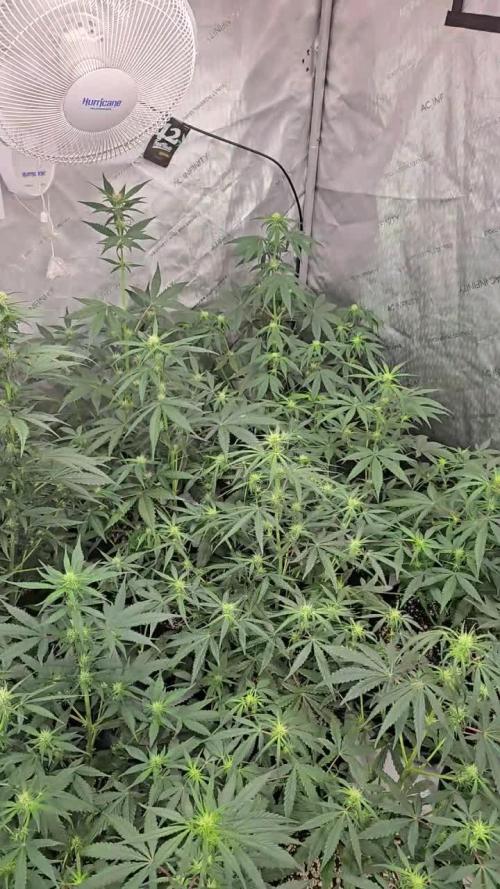
[DAY 71] - 5/12/2022 - TS1000 40 cm distance - 100% dimmer: 144 watt; - Light cycle 20/4; - Height: 68 cm from clay (the other one is 80 cm from clay); - 23° C - 70% RH during light - 19° C - 75% RH during night; - EC 1 - PH 6; - Defoliation. [DAY 72] - 6/12/2022 - 23° C - 70% RH during light - 19° C - 75% RH during night; - EC 1.3 - PH 6; - This week I changed the ratio between A (1.5ml/l) and B (2.5ml/l). [DAY 73] - 7/12/2022 - 22.5° C - 70% RH during light - 18° C - 80% RH during night; - EC 1.1 - PH 6. [DAY 74] - 8/12/2022 - 22° C - 70% RH during light - 18° C - 80% RH during night; - EC 1 - PH 6; - Tomorrow I will give her a big nutrients booster. [DAY 75] - 9/12/2022 - 22° C - 70% RH during light - 20° C - 75% RH during night; - EC 1.3 - PH 6; - Video. [DAY 76] - 10/12/2022 - 24° C - 68% RH during light - 21° C - 75% RH during night; - EC 1.6 - PH 5.9. [DAY 77] - 11/12/2022 - 24° C - 67% RH during light - 19.5° C - 73% RH during night; - EC 1.7 - PH 5.8.
Processing
Likes
6
Share
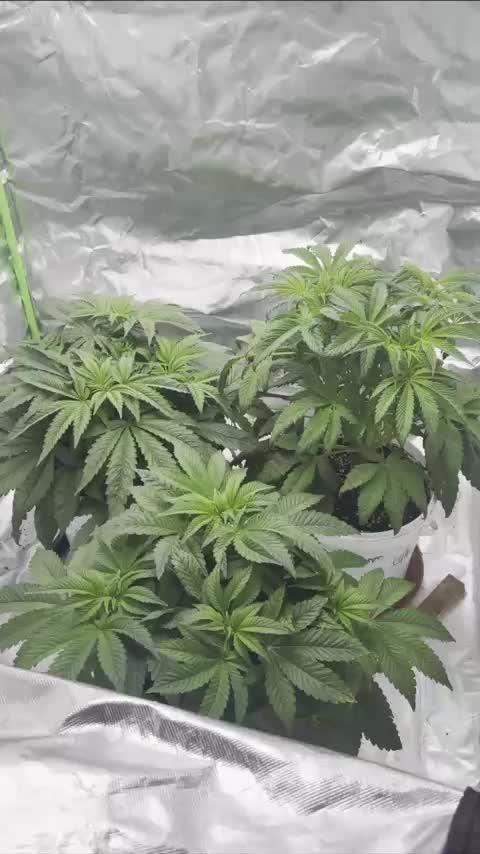
Changed nutrient solution in the veg tent. The girls look happy so I'm happy. 😁👍🏼 They're filling in nicely, it's just a matter of time. ♀️ *These plants are still in veg I put flower by mistake*
Likes
11
Share
Likes
14
Share
Getting spotting and burnt tips on the leaves, no idea why. The nutrient amount was 2ml/gal of Micro and Grow with 1ml/gal of RapidStart during the week before. Changed water on Nov 13th, FIM'd Nov 12th but it looks like I may have just topped it. Nov 14th - pH 6.1 -> 5.8 - PPM 480, 1.0 EC - Temp 75f, Humidity 50% Nov 15th - pH 5.6 (?) - PPM 460, 0.9 EC - Temp 71f, Humidity 65% Nov 16th - pH 5.8 - PPM 450, 0.9 EC - Temp 75f, Humidity 60% Nov 17th - pH 5.7 - PPM 440, 0.9 EC - Temp 75, Humidity 60% Nov 18th - pH 5.9 - PPM 430, 0.9 EC - Temp 80f, Humidity 60% Nov 19th - pH 6.0 - PPM 500, 1.0 EC - Temp 65, Humidity 70% - Added CalMag on the evening of the 18th Nov 20th - pH 6.0 - PPM 490, 1.0 EC - Temp 75, Humidity 50%
Likes
Comments
Share