


Likes
Comments
Share


@TheMayor4434
Follow
As we enter week five we notice some of the plants pre flowering. But not all so I decide to stick with veg nutrients until all are showing pre flowers. Half way through the week and the rest of the plants are showing pre flowers. Just in time as the plants that had pre flowered earlier on in the week are showing slight Newt burn on the tips suggesting It is time to change to bloom newts which holds less nitrogen. The magnified picture are of the pre flowers forming ( two little fuzzy hairs).
Interesting fact: it takes thousands of those little fuzzy hairs to form just one bud.


Likes
12
Share


@GREENPHOENIX6262
Follow
*Week 3 Flowering 09/17*
Fastbuds - Mimosa Cake (Auto) (2)
Thus far the flower transition has run smoothly and both plants are running accordingly
Nute feeds have increased
*Week 3 End of week Flowering 09/23*
Flowering for both Mimosa's is proceeding accordingly.
Light defoliation was applied
Light LST to heavy COLA's was applied, anchored to the trellis net.
*FRONT TENT (MIMOSA-2) QUICK VIDEO ADDED*

Likes
23
Share


@HomeGrownFamz
Follow
Just keeping the temps correct is always a challenge in certain indoor grow areas but a tube heater seems perfect. Fan heaters should never be used as they ruin the flavours of the final product. I used a very small fan heater in my first run (obviously not blowing at my plants) but they are too aggressive in heating the air in my opinion and results in on off operation causing fluctuations in temperature. I have purchased a cylinder ceramic heater that does the job perfectly. I know that the temperature in the tent will always be in the good zone.

Likes
17
Share


@420DeepGrow
Follow
Gracias al equipo de Seedsman Marshydro XpertNutrients y Trolmaster sin ellos esto no sería posible.
💐🍁 Tangerine Snow F1 Fast:
Esta gran cepa es un cruce de cuatro vías 75% sativa de (Boost x Tangelo) con (Lavender x Power Plant). Este híbrido Fast F1 proviene de la genética Cali y cuenta con excelentes terpenos cítricos, alta producción de resina para extractos, altos niveles de THC, muy buenos rendimientos y excelente resistencia al moho. Tangerine Snow F1 Fast se puede cultivar tanto en interior como en exterior. Los tiempos de floración en interiores son de entre 8 y 10 semanas, mientras que el tiempo de cosecha en las latitudes del norte es en septiembre, mientras que en el hemisferio sur los productores cosecharán durante marzo. Las regiones climáticas recomendadas son cálidas, secas, húmedas y cálidas. Se trata de plantas altas, semiramificadas, que superan los 200cm y que presentan un alto vigor con muy buena uniformidad. Al igual que muchas otras variedades con fuerte dominancia sativa, Tangerine Snow F1 Fast ofrece una excelente resistencia al moho, así como a las plagas y enfermedades de las plantas. La combinación de terpenos cítricos y mucha resina la convierten en una cepa de muy buen extracto, cuyo método de "lavado" produce muy buenos rendimientos de hachís. El perfil de terpenos cítricos recuerda a las mandarinas y mandarinas y también tiene notas dulces. La producción de THC ha sido verificada en laboratorio en un fuerte 24%, mientras que el CBD es bajo. El efecto es edificante y energizante, perfecto para usar durante el día y las primeras horas de la noche.
🌻🚀 Consigue aqui tus semillas:
💡TS-3000 + TS-1000: se usaran dos de las lámparas de la serie TS de Marshydro, para cubrir todas las necesidades de las plantas durante el ciclo de cultivo, uso las dos lámparas en floracion para llegar a toda la carpa de 1.50 x 1.50 x 1.80.
https://marshydro.eu/products/mars-hydro-ts-3000-led-grow-light/
🏠 : Marshydro 1.50 x 1.50 x 1.80, carpa 100% estanca con ventanas laterales para llegar a todos los lugares durante el grow
https://marshydro.eu/products/diy-150x150x200cm-grow-tent-kit
🌬️💨 Marshydro 6inch + filtro carbon para evitar olores indeseables.
https://marshydro.eu/products/ifresh-smart-6inch-filter-kits/
💻 Trolmaster Tent-X TCS-1 como controlador de luz, optimiza tu cultivo con la última tecnología del mercado, desde donde puedes controlar todos los parametros.
https://www.trolmaster.com/Products/Details/TCS-1
🍣🍦🌴 Xpert Nutrients es una empresa especializada en la producción y comercialización de fertilizantes líquidos y tierras, que garantizan excelentes cosechas y un crecimiento activo para sus plantas durante todas las fases de cultivo.
Consigue aqui tus Nutrientes:
https://xpertnutrients.com/es/shop/
📆 Semana 5:
Definitivamente se ha adaptado muy bien a su hábitat natural, voy con dosis muy suaves de nutrientes ya que ellas tienen prácticamente todo lo que necesitan. El canto de las aves la pone feliz.
Poco que agregar, buen sol y buen tiempo 😍

Likes
6
Share


@colla69
Follow
Everything going well so far, Res change on day 19 + started ScrOG
Day 21 will have the first 12h night.
Need to keep scrogging during the stretch.. but i won't be here -.-
UPDATE:
I will be going away at the and of this week for Approx 14 Days..
Day 25 [f3] I will move the plant to a bigger container so that it has enough water to survive on its own
Likes
7
Share


@Eddjack
Follow
Inizia a esplodere di gemme non sono molto grandi ho sbagliato in passato e la piccola ne ha risentito. Ora però si e ripresa e piano piano si sta facendo valere. manca ancora un po' alla fine del ciclo non vedo l'ora di fumarla tutta !
Dajeforte growes


Likes
86
Share


@Ageddd
Follow
-------------------------
| BLUEBERRY HARVEST |
-------------------------
After two sunny days it is harvest time !!
- Finally, 16 days of flush -
At first thought, the trimming would be easier compared to my previous plants, but when removing more leaves, more buds appearing too hahaha so it took like 4 hours or more..It is not the most accuurate trimming but i had not much time that day, i removed all the leaves and branches after weighting it all..
Like i said on the last post, im harvesting having in mind my bud preferences (the later the better), weather, humidity and sunlight, so the first of the cloudy/rainy days she was chopped in the moring, attending the principle of thc regeneration at night..
Got to say that, i wasnt expecting such production (8 days until it was well dried), this plant started as the season saver because the Cheese started to flower in march, revegged etc.. and i have been rewarded with this BB, a true genetic portent !! If i could, i would keep her as mother forever ^^
The quality is awesome, she looks more like a WW talking about that coat of thc..
Flavour without proper cure, is deep earthy at first, transitioning to a fruity, sweet one, it is a pleasure to smoke, delicious sweet aftertaste..
Maybe, this is the last year with this awesome climate, because im planning to leave Spain..
Thank you for follow and check !!! I hope you liked the diary :)
Song of the week : Radiohead - Codex
Good Vibes GrowDiaries !!
----------------------------------------------------------------------------------------------------------------------------------------------
000000000000
Likes
8
Share


@valiotoro
Follow
Pour la petite histoire j avais eu des graines d auto Mokum’s Tulip de Dutch Passion en cadeaux 🎁 sans ca je n aurai peut etre jamais commander cette variété et c est devenu une de mes préférés 🤩 un grand merci a Dutch Passion ❤️🔥
De la germination a la recolte vraiment trop facile c est ma premiere fois en indoor et je suis super satisfait du résultat !!
679gr avant séchage je ne sais pas trop a quoi m attendre en sec mais ca va etre lourd 🤩☄️
Pour l odeur je dirai un melange de fruits sucré de la fleur d oranger et de jus tropical 🌴 🍹j en ai l eau a la bouche !
A noter aussi que c est une plante tres robuste les branche ont supporter d enormes tetes sans aucun tuteur et soutiens,résistante a la moisissure et aux parasites
Elle est dans mon top 10 des meilleurs variétées autofloraison ❤️🔥

Likes
2
Share


@NocturnalGardner44
Follow
Adding this awhile after the fact... but me setup, bed is filled with small logs, sticks, leaves, hay, green grass, alfalfa, then redbud living soil on top 5lbs of worms added as well. Organic feeding, mainly lactic and baccilus, Kashi, knf inputs, fish shit, orca, king crab


Likes
5
Share


@Landomagic
Follow
This week is going great. Buds are becoming dense, pretty sure by the end of the week I’m gonna have to add a few bamboo sticks for support. The smell has definitely increased tri comb development has gone crazy new amber ones has already started forming and by the end of the week I’ll look at tri comb development again to see if more has gotten cloudy or amber as I will start to flush when I see 70% amber


Likes
3
Share

@Gram_Solo
Follow
Week 7
🌴🌴🌴🌴
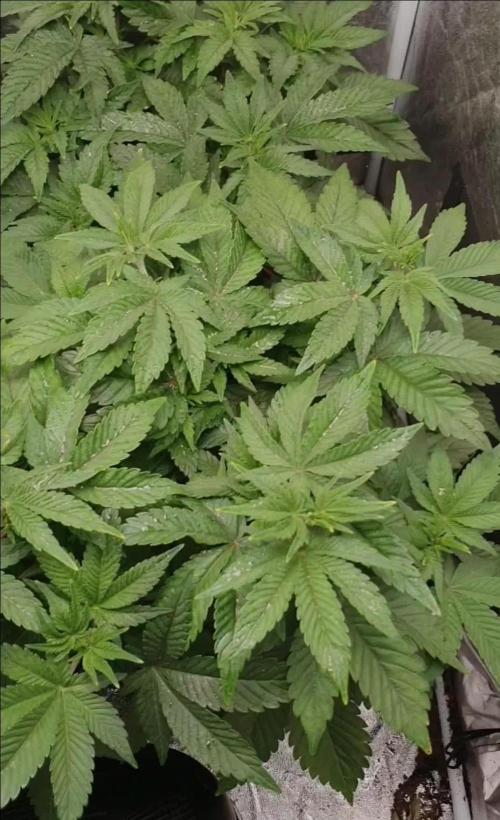
Lst has helped to keep our plants nice and compact we gonna try and fill up the tent space as much as possible for 4 plants.
We in a 3x3 atm. But I may tf them into the 4x4 very soon.
Got some yellow tips and paleness on a few leaves. Ph may need looking at or lowering my nute feed. Il do a flush before flowering
Roll on next week
💪😎👍

Likes
1
Share


@Baltimoregrower
Follow
So this week I added nutrients for the flowering stage. I gave her a little trim as well as added her netting. I flipped her on last Sunday PP
Likes
16
Share


@DniceWJ
Follow
Lsd is 75 days old and 35 days in flowering stage. Lsd is looking great I feel like she is growing slowly if any have any ideas on if I’m doing anything wrong. Day 76 I feel so much better she is like great I used my iPad and I could not believe it I seen trichome with my own eyes 👀 wow it was amazing.

Processing
Likes
9
Share


@Luv2Grow
Follow
Day 99 - Starting week 15 and it’s looking like she’s finally starting to come down to the end. Pistils are starting to shrivel up and not a whole lot or clear trichs anymore. So thinking she’ll get the chop towards the end of week 16.
Day 100 - Gave her 2 gallons of pH’d (6.6) water today. She’s got mostly cloudy trichs in there now so I’m thinking end of week 16 she’ll get the chop, so two more weeks. Nothing else really happening, just removing leaves as they die.
Day 101 - Nothing to update today, just updated pictures. Just waiting for her to finish up so I can chop.
Day 102 - Just some daily pictures to update today. Not much else going on until chop day.
Day 103 - Starting to get quite a bit of amber trichs in her even though most of her pistils look nice and healthy. If I get too many more ambers, I might have to chop her sooner than I though but as of right now , I’m looking at chopping her in about a week and a half.
Likes
18
Share

@valiotoro
Follow
Hello everyone, all good for this week 😎
They grow fast and with a beautiful green colour on the leaves!
In this grow i will be testing out Plagron Nutrients and Spider Farmer SE7000
Strawberry Gorilla from Fast Buds 🍓🦍
Likes
30
Share

@NoProbation4Weed
Follow
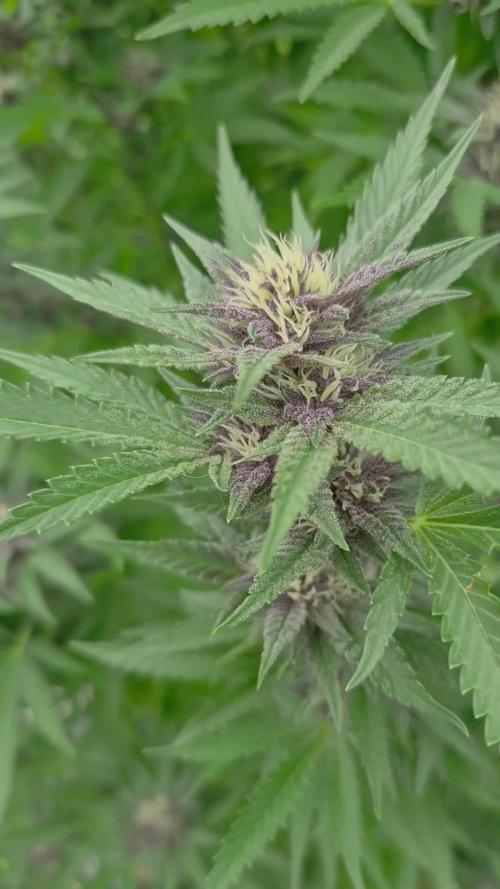
the indoor Plant got harvested and delivered 307g dry. the dry result is frosty, nice dense buds with loads of terpenes. Nice purple colour as well.
The flavour is dark berrys, mintz and cheescake in the background.
Outdoor is is week 4 of flower and the weather is good as well. Its not as warm anymore but at least dry days with sunshine. Today still no signs of powdery mildew or spider mites. She go the final defoliation this week so she can send all her energy into the buds for the last weeks. She is already stinky and you can smell it from far away. Very very intense terps tangy, minty, berry flavours.
Likes
6
Share

@Paying_Customer
Follow
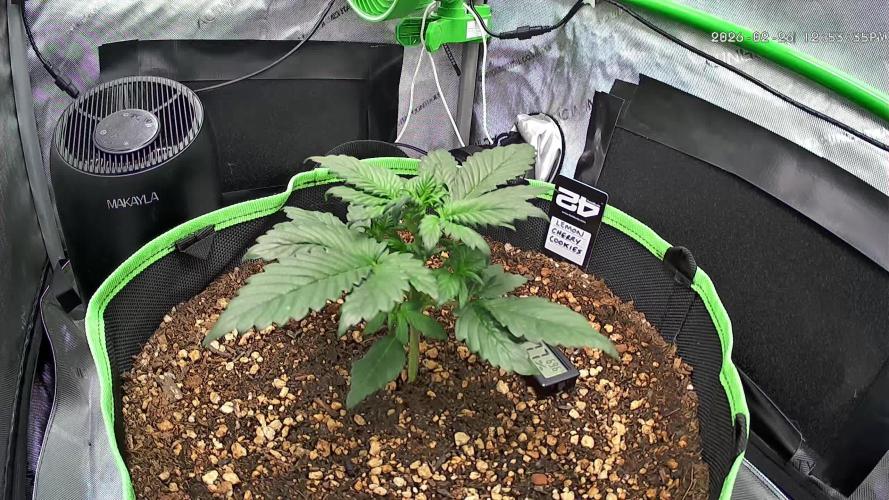
Did some LST to encourage bud sights to grow outward. Turned on side lights to give more light under the canopy.