


Likes
Comments
Share


@russrahl
Follow
Plants are looking good so far, added about 2ml/gal to the reservoir this week and plants responded well. They are all keeping short and stocky so far and should be able to start LST training in a few days I think. I also turned up the light to 750w and the air temps are now hovering between 24c-25c. Water temps are creeping up though in the 21c range, gonna wrap the buckets tonight in foil insulation and build a water cooler for this setup soon as well. Had some Ph issues during week 4 because my pen decided to go wonky. I tried to calibrate it again and had a hard time. So I busted out an older one and decided to calibrate it and see if it worked still... calibrated in a few min and sure enough res ph was well bellow 5. So water was changed as it was time anyway and ph’d proper just before lights out so we will see what happens tomorrow.

Likes
174
Share


@DreamIT
Follow
😬😆UnCoNvEnTiOnAl GrOwTh 😆😬
____________________________________________________________________________________________
🤪 23.01 ...
🤪 24.1 These days, I will work the honey cream a little and send it to bloom under the viparspectra lamp. I recently removed a plant under this lamp and in the few days it remained under there, I noticed a visual increase in the trichomes, I hope it keeps this line and makes me literally explode the flowers: D
🤪 25.1
🤪 26.1
🤪 27.1
🤪 28.1
🤪 29.1
______________________________________________________________________________________________________
📜👀 A look at the details of what I'm growing 👀📜
🍊💚 Red Mandarine F1 🍊💚🌱🍭 Sweet Seeds 🍭🌱
📋 Details 📋
⚧ Gender
▪️ Feminised
➰ Genes
▪️ 55% Indica / 45% Sativa
🎄 Genetics
▪️ Red Poison Auto (SWS39) хCalifornia Orange x Skunk hybrid)
🚜Harvest
▪️ 400 - 500 g / m²
🌷Flowering
▪️ 49 - 63 days
✨THC
▪️ 16%
✅CBD
▪️ 0,2%
🏡Room Type
▪️ Indoor
🌄Room Type
▪️ Outdoor
🕋Room Type
▪️ N/D
🎂Release Year
▪️ 2019
___________________________________________________________________________________________
👀📷🥇 Follow the best photos on Instagram 🥇📷👀
https://www.instagram.com/dreamit420/
🔻🔻🔻Leave a comment with your opinions if you pass by here🔻🔻🔻
🤟🤗💚Thanks and Enjoy growth 💚🤗🤟


Likes
1
Share


@Gods_Cannabis
Follow
Super sanas en su primer semana de vegetación, no muestran ninguna deficiencia y creo que les espera un buen futuro a estas pequeñas sin duda crecerán mucho mas.

Likes
59
Share


@Bakeryguy420
Follow
Guys and gals I'm back and am I suprised
Rhino Ryder number 2 start of week 8 of flowering one more week to go also did another flush today !! The fade is beautiful guys the smell is off the charts I keep my tent door open and my room smells amazing!!!


Likes
69
Share


@Natrona
Follow
Sour Jealousy Auto FastBuds 2025 Outside Grow
Week 7 May 11-17
FLOWER 1
Sour Jealousy has started to flower. She is 18” now after a 6-inch spurt. She really benefitted from last week’s rain. This week’s weather has been cloudy and sunny but the temps ranged from 93 high and low of 53 at night. I watered and fed 2x with Kelp 30 ml/g and TPS1 4ml/g. I included some garden pics and some cool boats. I live in a coastal area with 6 bridges. Since maritime law still governs commerce, the boats have the right of way to vehicles. On this day I got stopped by the bridge opening and was close enough to see the boats. A parade were luxury yachts.
Your likes and comments are appreciated. Thanks for stopping by.
Growers love 💚🌿
💫Natrona💫
Likes
35
Share


@SooSan
Follow
90x60x140 (Mars Hydro)
FC-E4800 (Mars Hydro)
Easy2go Aquavalve5 (Autopot)
Living Soil (Demetearth)
Bruce Banner (PEV Seed)
Gorilla GG4 (Ganja Farmer)
Cream Caramel (Sweet Seed)
Gorilla Gelato (Ganja Farmer)
Blueberry (00 Seed)
Kalini Asia (Zamnezia)
Biscotti Mintz (Barney's Farm)
Blackberry Cake (Sensi Seed)
Amsterdam Amnesia (Dutch Passion)
Gelato Cookie (Ganja Farmer)
Purple OG Punch (Ganja Farmer)
Sweet ZZ (RQS)
Rainbow Road (Paradise Seed)
Substrat ~50L:
30L Super Light Mix Biotechnologie
18L coco
2L perlite
1,7kg lombricompost
350g guano de chauve-souris
350g Zéolithe
350g Basalte
170g guano vers de farine
170g biochar
0,7g Endomychorise glomus intraradices
0,7g Bacillus Amyloliquefaciens
Paillage de luzerne alfalfa
Arrosage avec 2ml/L de mélasse de canne 1x par semaine
Pulvérisation avec 1% d’huile de neem jusqu'à la 2eme semaine de floraison


Processing
Likes
2
Share


@Valedor
Follow
Seguimos retirando las fan leaf's que ya no son tan necesarias en todas las nenorras, el sistema de las automáticas continua en el lavado de raíces, el sistema regular continua floreando y madurando, considero que la próxima semana estaremos cosechando la White widow y la mamá mía


Likes
18
Share


@MadeInGermany
Follow
Flowering day 19
since the time
change to 12/12.
Hey all together 😀.
This week she has developed beautifully ☺️.
I poured it 3 times with 1.2 l this week.
Tomorrow I will add the 2 g GHSC Powder Feeding Bio Bloom because the first blossoms are coming :-).
I checked all the leaves thoroughly for pests or diseases and everything is fine ☺️.
Next week I'll look at your roots as soon as the coconut is completely rooted.
As every week, the tent was cleaned and the entire technology checked.
The humidifier was also refilled every day 👍.
In the next few days I will remove the bottom shoots so that the energy doesn't end up being wasted in the small popcorn buds.
I wish you a lot of fun with the update.
Stay healthy 🙏🏻 and let it grow 🍀
You can buy this Strain at :
https://sweetseeds.es/de/red-mandarine-f1-fast-version/
Type:
Red Mandarine F1 Fast Version
☝️🏼
Genetics:
Red Poison Auto®️ (SWS39)
X
Tangie (California Orange x Hybrid Skunk)
👍
Vega lamp:
2 x Todogrow Led
Quantum Board 100 W
💡
Bloom Lamp :
2 x Todogrow Led
Cxb 3590 COB 3500 K 205W
💡💡☝️🏼
Soil :
Canna Coco Professional +
☝️🏼
Fertilizer:
Green House Powder Feeding
☝️🏼🌱
Water:
Osmosis water mixed with normal water (24 hours stale that the chlorine evaporates) to 0.2 EC. Add Cal / Mag to 0.4 Ec Ph with Organic Ph - to 5.5 - 5.8 .
Likes
5
Share


@EastCoastGrowShow
Follow
We are going to continue on with tying and tucking and spreading. I cannot wait to see what suprises this strain has, as I get the feeling her true colors will be wild.
This week I also show the HydroHalo system I have installed to better assist with watering these girls under the net.
There is a 5 gallon bucket with lid as resivior, tubing, T fittings x2, valves x2, a small submersible water pump, air pump with hose and air stone in the resivior to keep it aerated.

Likes
7
Share


@Nikkov
Follow
well, another week goes by and it's growing not like I expected hehehe but that's ok, living and learning, and for now I'll just wait for this cycle to end to start a new one and post it here and I'll tell you right away that I ordered a kit advanced nutrients starter and will test it on the new cycle. =D


Likes
4
Share

@fridge
Follow
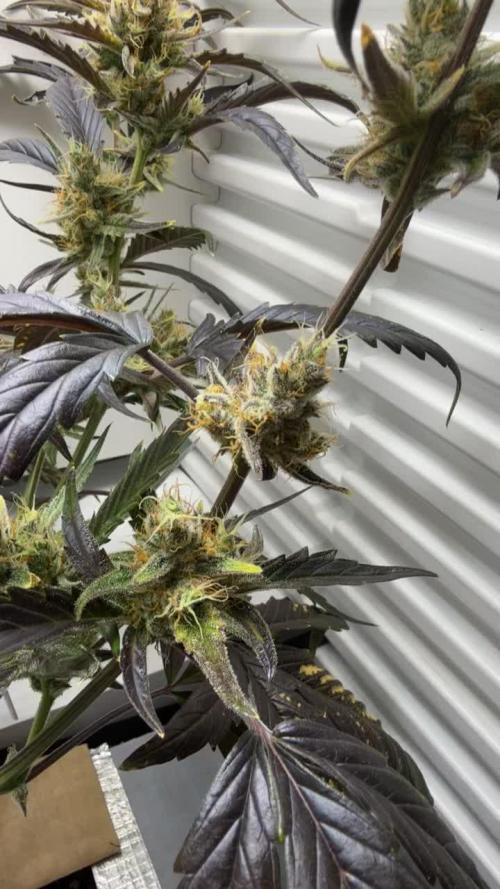
end of week 5 flower | the color shift was insane | very strong guava terps to smell | trichomes are insane | i kinda have to say this caught me off guard | very nice strain!
Processing
Likes
17
Share


@Fergie
Follow
hey guys so here are my c.a girls been away for a few weeks so hqvent been bleble to update . will get some more pics up this week , all going well and the fattening begins😀
Likes
7
Share

@GREENPHOENIX6262
Follow
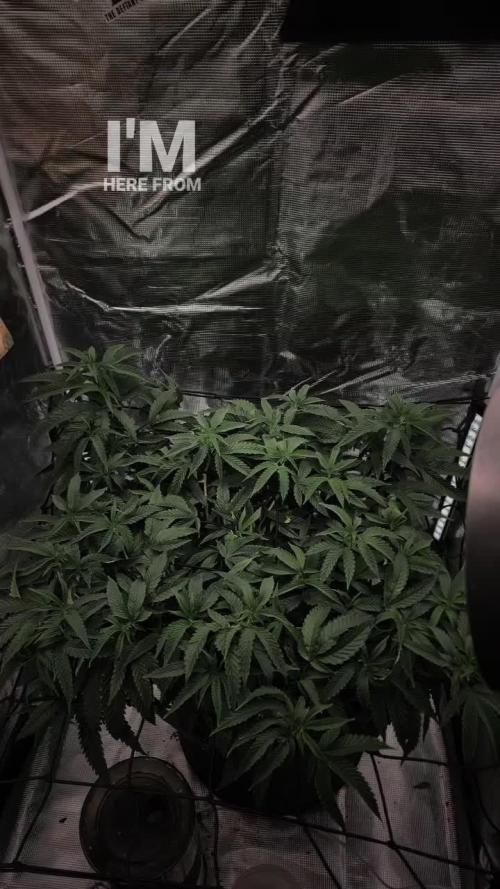
01/31 - HST SOG completed - rebounding accordingly - increased feeds to every other day between clean water and nute feeds - Lights have been picked up to make soon for SOG - looking to pluck clones in about 2/3 weeks

Likes
11
Share


@Chuckwaggon420
Follow
Starting to get heavy in here. Starting to fatten up like crazy putting on some more colors. They all have their own sweet smell with something in background but way sweet. Just doing build a bloom and molasses 1 time this week mollases is almost every watering. Just popping off leafs when dead and make sure Noone falls over lol.

Processing
Likes
13
Share


@Prozak
Follow
to mutch cold here 2 week with low temps at night cicle betwen 12 &16 graus in europe.
maybe this is the reason of that purple orange colors (:
Likes
Comments
Share

@Danylo
Follow
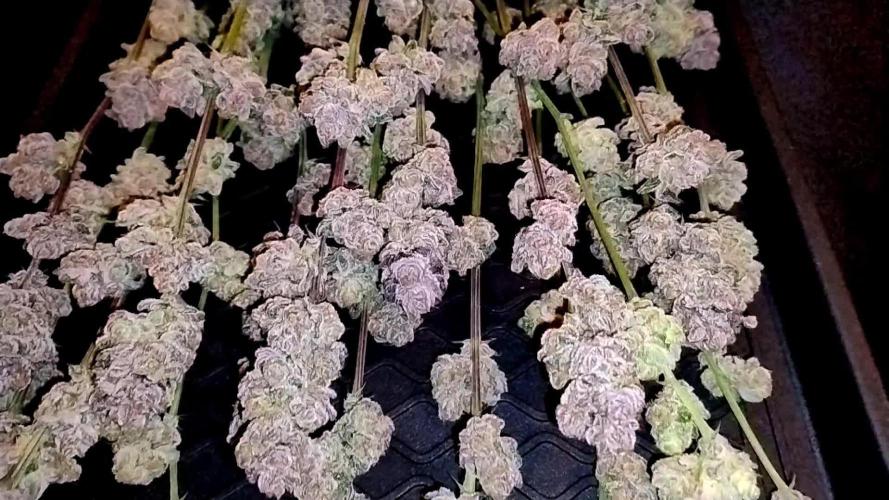
I am an irredeemable wet-trimmer.
Trimming this one was reasonably easy, but because there was so much of it ... it still took some time. Some of the "trim" was completely covered by trichomes but I treated her like any other plant in this regard and I'm satisfied with the results. The trim bucket looks ridiculous though. I added a pic of some of the last trim to the gallery.
I tried to make a few videos too - I think my videomaking style is called "spaceship flies over woodlands" so please don't judge.. at least there is no audio of me making plane noises.. 💩
Likes
8
Share


@JohnnyBarrel
Follow
Week 11
All is under control: plants are growing correctly, healthy, deep green… perfect size, a few weeks before flowering cycle; I did a second topping week 10 on everyone (+6 nodes): I would have a maximum size around 150 cm for discretion and space.
Still Aphids problem on the Royal Moby and I treated leaves by hand with Soap…making a mistake: too late in the morning so the sun burned some leaves.
This insects are still there but the infestation is contained for the moment.
I sprayed Neem oil on all plants.
Added more soil in each pot : 1.5/2L of humus worm + guano bat.
I observed a sort of burn on lhe extremity of leaves: possibly a sign of nitrogen excess.
I stopped nutrients for a while, adding just enzyme and Alga Mic.
Watering around 1.25L/2 days
Daylight 15h30 - 6h25/21h55
Sunny days, cloudy sometimes, windy (NNE)
T°= 13ºC N / 21°C D
Humidity 67%

Likes
Comments
Share

@Elcogollosagrado
Follow
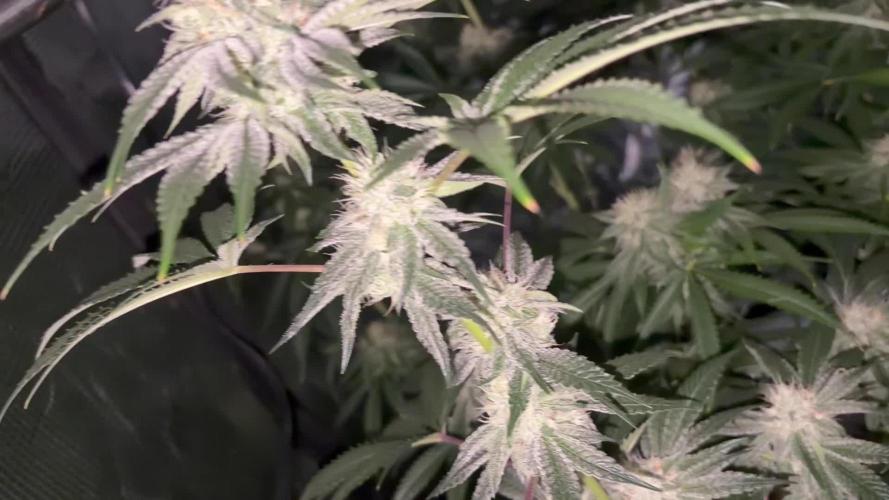
Para la semana 10 ya vemos como los efectos de la poda y el lollipopping sacan los satélites combinado a los fertilizantes
