


Likes
Comments
Share


@RickJames_Mcdank
Follow
So everything is going well now. She is all healthy and stron. Got her in first week of flower.
Only gave her plain water this week.
I added the Fluoresent to add some 6500k spectrum to my hps.
It really helps and looks good. I got rid of the mini scrog.
And decided to go allong with the LST because I wont be able to fill a SCROG.

Likes
38
Share


@Rap_a_cap
Follow
Skunky is in flowering, first stigma is appeared. Sweet Seed kept the promise of early flowering. All my three girls share the same grow profile with an exceptionally early flowering.
Today exactly 14.41 hours of light.
Average week temperatures 80°F
High humidity, some stormy days. New heat wave is coming.
All is going well but this plant has absolutely no smell, until now. Starting to defoliate the bottom canopy.
No issues, no pests, no need 4 feed.

Likes
82
Share


@BigBadLion
Follow
Heeey guys! Me again!
This week was full of surprises and one major mistake! Hahaha.
First of all, the 4th baby is now at a decent size! This was a huge surprise! She's all grown up and looks gorgeous! I'm probably going to move her to a proper pot size so she won't feel trapped! I also need to trim her again!
The other 3 are advancing at a proper speed.
Max is the one who has responded the best to the main-lining and LST as she seems to have barely gone thru any kind of physical damage
With Roko I made a huge mistake when I tried to bend her branches 😰 I broke her stem in the middle but managed to fix it on time I hope (first with tape and then with some soft wire). It seems one of her parts are getting more nutrients compared to the other one... but there's not a lot I can do if that's the case.
The 3rd baby is the one who had not suffered any kind of mayor "nutritional" problem if you compare her to her sisters (leaf colors, and some browning at the tips. The other tho has gone thru those issues but her? Nothing!) So I'm expecting a lot from this one!
I also made 4 timelapses!
Right now I'm also debating if I want to mainline for 8 colas or just stay at 4. My tent isn't big (80x80cm or 2.6~x2.6~) so I need to choose quickly if I want to risk it with so many plants in such small space!
Anyway, that's all for now! I hope you enjoy the photos and videos!
Any kind of tip would be great!
Thanks everyone!

Likes
14
Share


@Chedderbob112
Follow
Av had a good week been busy dunno exactly wot a want tae dae hear feel like a constantly want mere paitience is the key Rome essential built in a day

Likes
6
Share


@HappyPetals
Follow
I believe we are about to move into the flowering stage. I see a bit of the white hair.
I've given them probably their last mixture of grow+CalMag nutrients this week. We'll see how they are looking in the coming weeks and I'll switch to the flowering nutrients next.
They are well over 4ft and 3ft tall (excluding the pot) and they look like they will be huge! Looking forward to the next stage.

Likes
3
Share


@philippgrow
Follow
I defoliated my plants in week 7. The
plants have developed many new
shoots and look very healthy. The first
plants are clearly showing the spots
where they will form flowers.

Likes
43
Share


@Esoteric_growing
Follow
Hung them to dry today, very happy to say I have found 3 very very good keeper phenos which doesn’t surprise me as I have grown many seeds of this before. The pictures and video tell more than words can say.
I have named my favourite pheno ‘john wayne’ as I have a convoy swagger about my walk every time I look at her😂 I lost this pheno a few months ago and so relieved to have her back plus two other great phenos.
Barneys absolutely provides some real fire genetics and I have been a fan since blue cheese and pineapple chunk were released many years ago.
Likes
24
Share


@EllysGrow
Follow
Nachdem ich Banana Purple Punch RF3 geerntet habe, brauchen die anderen 2 Ladys noch etwas sich schick zu machen 😜

Likes
2
Share


@fabialien
Follow
Semana sel 2 de septiembre al 8 de septiembre 8 de septiembre, fotos del dia Jueves 5 de septiembre 2024.
Se regaron con Floralicius plus adicionado con Hidrol-pez + vitaminas.


Likes
121
Share

@SundancerS
Follow
German version below.
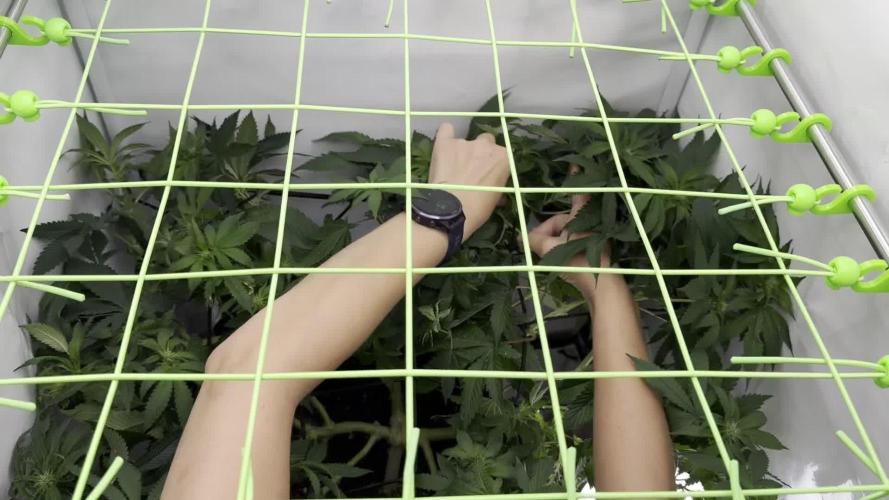
This week was all about training for The Tropical Ice Cream One. After having great success with a second SCROG net on our Permanent Marker, we decided to use the same approach for this grow. We picked up a new SCROG system at Mary Jane, and this week it finally got its first real job.
Setting up the net was the easy part. The real work started afterwards. Branch by branch, we carefully tucked every shoot into the second net and repositioned it. Our goal was to create an even canopy so every future bud site receives as much light as possible and can develop to its full potential.
It took several hours of patience, but the result was definitely worth the effort. The height difference across the entire canopy is currently only 2 centimeters. That is exactly what we aim for when building an even SCROG canopy.
Now it is time to keep our hands off and let her do the rest. She handled the training exceptionally well and can now settle into her new shape over the next few days. We are excited to see how the second SCROG net will influence flower development and yield during the coming weeks.
After all the stress from the training session, she was rewarded with an extra serving of Bio Heaven and Acti Vera as a little treat. 😁
________________________________________________________________________________________________________________________________________________________
Diese Woche stand bei der The Tropical Ice Cream One ganz im Zeichen des Trainings. Nachdem wir mit der Permanent Marker sehr gute Erfahrungen mit einem zweiten SCROG Netz gemacht haben, wollten wir dieses Konzept auch bei dieser Pflanze umsetzen. Auf der Mary Jane haben wir uns dafür ein neues SCROG System gegönnt, das nun endlich zum Einsatz kam.Der Aufbau war schnell erledigt, die eigentliche Arbeit begann aber erst danach. Trieb für Trieb wurde vorsichtig in das zweite Netz eingefädelt und neu ausgerichtet. Ziel war es, eine möglichst gleichmäßige Verteilung der zukünftigen Blüten zu erreichen, damit jede ausreichend Licht bekommt und sich optimal entwickeln kann.Das hat einige Stunden Geduld gekostet, aber das Ergebnis spricht für sich. Der Höhenunterschied über die gesamte Zeltfläche beträgt aktuell gerade einmal zwei Zentimeter. Genau so stellen wir uns ein gleichmäßig trainiertes Blütendach vor.
Jetzt heißt es erstmal Finger weg und wachsen lassen. Die Pflanze hat das Training hervorragend mitgemacht und darf sich in den nächsten Tagen in ihrer neuen Form entfalten. Wir sind gespannt, wie sich das zusätzliche SCROG Netz in den kommenden Blütewochen auf Ertrag und Blütenentwicklung auswirken wird.
Nach dem Stress des Trainings hat sie eine extra Portion Bio Heaven und Activera als kleines "Leckerlie" bekommen. 😁
Likes
14
Share


@BOMbolenath
Follow
Last week and this week is too hot. Plants are suffering with the heat but doing well.
Flowers groing and getting bigger.

Likes
35
Share


@valiotoro
Follow
A wonderful genetic thank you Fast Buds ❤️🔥🤩
The trim was super easy the buds are FAT & FROSTY full of resin 🤤
I’m very happy with the harvest 103g !!
For the light i’ve used the Spider Farmer SE-7000💡
Likes
9
Share


@HIAZ_urbanbudfarmer
Follow
Hi Gromie's, all is ok, humidity levels have been better since starting drip feeds due to water now in resovoir. Temps need to come up a bit. Have upgraded to a new Mars Hydro fce 4800 bar light. Really nice light , excited to see how it performs. Have increased nutes & feeding every 2 hours as of today . Plant is compact & close between nodes. Untill next week enjoy natures greatest gift smoke up🤘👍🤪
Likes
32
Share


@FlynnRyder
Follow
Alrighty, Guys I'm coming to some new realizations lol. Plants are doing way better with new root growth coming from the net pot sides horizontally. I was confused because it seems that a bit of the roots had died or rotted for no real reason. I have suspected the amino treatment and root accelerator was gunking them up. Needless to say, I am almost out and decided to exclude those additives and see what happens. I also ran out of Multi zen and decided to up the base nutrients to compensate. It would be great to get opinions on it all, The prices are so steep and honestly, I practically had the whole line up and it didn't really impress at all. Strangely I have some dc buckets in the center and they are doing really well on just micro, bloom, and cal-mag so save me from making some baizes haha. I noticed that the growth is a bit spread out but they are all from seed so I guess that expected. the bushiest of plants has some discoloration on the leaves but it seems to be killing it so I'm not too worried. At this point, I'd love to get any harsh criticism or to narrow down where I am making these mistakes. I came in expecting to flip from veg in 4 weeks but that doesn't seem possible from seed. I know a lot can be a strain but I still feel like even though I have all these controls I'm missing something. Oh everyone got topped for the first time and aside from some interesting patterns its all gravy baby. Let me know if I need to do something about that missing 400 ml of multizen haha.


Likes
21
Share


@Cali_Grown_420
Follow
Day 43, pH is at 6.0 currently. Plants are praying towards the light so that’s a good sign. Some spots still show up on a couple leaves, just a couple small spots, could still be adjusting. Will know in another day or so if the problem has been corrected or not.
Day 44, they seem to be responding better to the change in nutrients. They’re eating and still putting on growth. Some spots are appearing but that’s probably just still an affect of last weeks overload.
Day 45, PPMs have continued decreasing and they have consumed about 1.5 gals of water over the past 72 hours. I topped off their res a little bit and readjust pH to 5.9 (it rose to 6.6 because they’re consuming a lot of nutrients)
Day 47, Nutrients was almost gone, changed nutrients and bumped up to 800PPM (0.5 scale)
Day 48, the nutrient solution inside the buckets gets up to 78-79° by the end of the day (lights on). When lights go off, they drop down to about 70-72°. I built some insulation sleeves out of double layer bubble foil. Should insulated them enough to maintain their lower temp without increasing throughout the day. You can see in photos but in the video I also created tops for each of the buckets to help reflect light and heat from the buckets.
Day 49, plants are doing great PPMs are staying pretty stable meaning they have about the perfect ratio of nutrients which is 815PPM currently. Insulating the buckets was a great idea it’s kept the res temps stable and stopped them from rising throughout the day! Today marks day 14 of flower.
Likes
2
Share

@Altitonans_Fulmen
Follow
The thoughts shared in this journal are my own—a snapshot of personal understanding at the exact moment of writing. It is not intended as a reference of absolute fact, but rather as an exercise in ἐπίνοια (epinoia): an exploration of thought, intuition, and creative insight.
Epinoia(ἐπίνοια) is a Greek term meaning thought, intention, purpose, or conception, stemming from "mind" (nous) and "upon" (epi), representing the mind's reflective or creative process, used in philosophy (Aristotle, Gnosticism) and theology to discuss understanding and divine names, appearing once in the New Testament for the "intent of your heart" (Acts 8:22). It signifies the mind's operation to form ideas or designs, contrasting with raw data or innate perception, and in Gnosticism, it's an emanation of divine wisdom (Sophia).
"Φsis" is a stylized spelling of the Ancient Greek word φύσις (physis), which translates directly to "nature" or the intrinsic essence of a living thing.
Exploring the deep intersection of science, intuition, and creative insight often leads to breakthroughs that challenge our understanding of what is possible. When we approach high-performance cultivation not just as a hobby, but as an exercise in pushing a biological system to its absolute genetic ceiling, the results can transform from simple data points into profound proof of concept. Achieving a highly optimized environment requires a shift in mindset away from empty promises and directly toward verifiable proof, building true confidence through a detailed archive of past lessons and strategic adjustments.
This philosophy turns a standard space into a precise mass and energy balance equation, where every variable is managed to eliminate biological bottlenecks entirely. In a recent project four individual plants produced 344 grams, 280 grams, 445 grams, and 255 grams respectively, resulting in a total harvest of 1,324 grams, or 47.2 ounces, of dry product. Operating with a 600-watt light source inside a four-by-four footprint, this brings the final efficiency to an exceptional 2.21 grams per watt.
To put this in perspective, the standard traditional indoor benchmark has long been established at 1.0 grams per watt, while expert commercial operations target 1.5 grams per watt, and elite commercial systems push the envelope between 1.8 and 2.0 grams per watt. Reaching 2.21 grams per watt places the outcome squarely within the top 0.1 percent of global benchmarks, acting as a true statistical outlier that demonstrates what happens when flawless environmental parameters meet a cultivar pushed to its maximum potential. Reaching this level of mastery demands that we move past the common trap of the mirror fallacy, where the ego mistakes its own limited perspective for universal truth and views different ideas as personal threats. True progress requires curiosity and dismantling the illusion that our immediate viewpoint is the objective standard, shifting the focus instead toward how a system actually operates under the absolute laws of physics. In a high-performance setup, maximizing output is never about adding random additives or forcing growth, but rather about systematically removing the limitations that hold the organism back. By maintaining a perfect vapor pressure deficit, ideal root-zone oxygenation, and precise structural canopy training every single minute of the cycle, the plant is freed to express 100 percent of its DNA potential without any lingering genetic latency.
Managing a dense canopy inside a tight footprint presents the ultimate challenge of mitigating stagnant air and preventing moisture issues. Overcoming this bottleneck relies on a sophisticated synganic approach, which seamlessly marries the precise control of synthetic mineral inputs with the natural resilience of active organic living soil. This method transforms the room into a closed-loop system where the internal microclimate is entirely isolated from external weather fluctuations and pests. Rather than openly exhausting the atmosphere, the air is continuously recirculated, enriched, and scrubbed using 264-nanometer ultraviolet light.
The foundation of this thriving ecosystem is a comprehensive substrate composition designed to provide perfect aeration, structural integrity, and biological buffering. The primary media base integrates expanded clay aggregates, coir chunks, premium coco coir, sphagnum peat moss, horticultural perlite, vermiculite, pumice, and volcanic basalt rock. To continuously condition the soil and fine-tune mineral availability, the mixture is amended with agricultural gypsum, wollastonite, dolomitic limestone, basalt rock dust, micronutrient-rich volcanic ash, greensand, crushed seashells, biochar, and shungite. This mineral architecture creates an incredibly stable environment where active soil biology naturally prevents salt toxicity and ensures steady, reliable nutrition throughout the entire life cycle.
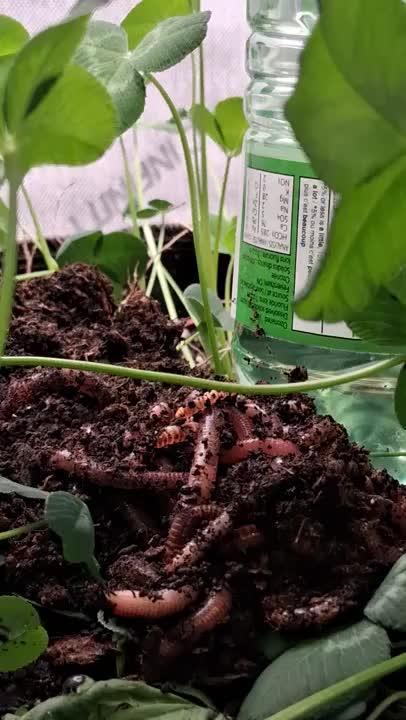
Living organisms within the substrate play a vital role in maintaining this delicate biological balance and breaking down organic material. Red wigglers continuously process organic matter into easily accessible plant nutrients while aerating the media; specialized predatory mites offer excellent biological control against common soil pests, and pillbugs excel at breaking down tough, woody elements. These biological components are further supported by a rich layer of organic amendments including high-phosphorus steamed bone meal, high-nitrogen dehydrated blood meal, fish bone meal, cold-processed kelp meal, dehydrated moringa powder, spirulina powder, and marine crustacean biomass rich in chitin. Combined with biological inoculants like mycorrhizal fungi, premium worm castings, and concentrated humic and fulvic acids, the entire system operates as a flawless biological transducer of light and energy.
Ultimately, shifting our perspective to view a grow space as a complete mass and energy balance equation changes the entire nature of agriculture. Success ceases to be a matter of luck or anecdotal habits and instead becomes the predictable result of meticulous design, patience, and the strategic elimination of failure. When science, biology, and engineering converge so harmoniously, we gain a deeper appreciation for the intricate natural systems that sustain life and growth. By sharing these detailed insights and refining our techniques, we can continue to unlock the absolute maximum potential hidden within the living world around us.
Comprehensive Substrate Composition:
1. Substrate Base & Aeration Media
Expanded Clay Aggregates (Hydroton Pebbles)
Coir Chunks & Horticultural Coco Coir
Sphagnum Peat Moss
Horticultural Perlite
Horticultural Vermiculite
Horticultural Pumice
Volcanic Basalt Rock
2. Mineral Amendments & Soil Conditioners
Agricultural Gypsum (Calcium Sulfate)
Wollastonite (Calcium Silicate)
Dolomitic Limestone (Calcium Magnesium Carbonate)
Basalt Rock Dust (Trace Mineralizer)
Azomite (Micronutrient-Rich Volcanic Ash)
Glauconite (Greensand)
Crushed Seashells (Calcium Carbonate Source)
Pyrolyzed Carbon Feedstocks (Biochar & Horticultural Charcoal)
Elite Shungite (Carbonaceous Mineraloid)
3. Organic Nutrient Amendments
Steamed Bone Meal (High Phosphorus)
Dehydrated Blood Meal (High Nitrogen)
Fish Bone Meal (Phosphorus & Trace Calcium)
Cold-Processed Kelp Meal (Ascophyllum nodosum)
Dehydrated Moringa Oleifera Powder (Botanical Nutrient)
Spirulina Powder (Arthrospira platensis / Cyanobacteria Nutrient)
Marine Crustacean Biomass (Shrimp & Crab Chitin)
4. Biological Inoculants & Organic Acids
Mycorrhizal Fungi Inoculant (Endomycorrhizae / Ectomycorrhizae)
Vermicompost (Premium Worm Castings)
Humic & Fulvic Acids (Concentrated Humates)
Human Body
65% Oxygen (in all liquids and tissues, bones, and proteins)
18% Carbon (everywhere)
10% Hydrogen (in all liquids and tissues, bones, proteins
3% Nitrogen (in all liquids and tissues, proteins
1,5% Calcium (lungs, kidney, liver, thyroid, brain, muscles, heart, bones)
1% Phosphorus (urine, bones, DNA)
0,35% Potassium (enzymes)
0,25% Sulphur (proteins)
0,15% Sodium (in all liquids and tissues) (in terms of salt)
0,05% Magnesium (lungs, kidney, liver, thyroid, brain, muscles, heart)
Plant
Mother-nutrients: Carbon 47%, Oxygen 43%, Hydrogen 4%.
Macro-nutrients: Nitrogen 3%, Phosphorus1%, Potassium1%, Calcium1%, Magnesium0.5%, Sulfur0.5%.
Micro-nutrients: All the rest combined 1%
More energy, more blueprint.
Although CO2 is a naturally occurring gas that both humans and plants use, it is invisible and odorless and can be fatal at high-levels. If you’re supplementing carbon dioxide in your grow room, ensure there are no leaks in any CO2 devices and always use a CO2 monitor and alarm.
0.02% Life unsustainable
0.03% Life OK
0.04% Current ambient atmospheric co2
0.04%-0.1% =400-1000ppm standard indoor co2.
0.1%-0.2% = 1000- 2000 ppm (prolonged exposure: drowsiness).
0.2%-0.4% = 2000-4000ppm (Headaches, fatigue, stagnation, stuffiness, poor concentration, loss of focus, increased heart rate, nausea).
1% is toxic
5% is quick death.
"Dabo vobis quod oculus non vidit, nec auris audivit, nec manus tetigit, quod in cor hominis non ascendit."
Processing
Likes
31
Share


@buddha61
Follow
6/17 - Watered today. 5 days since last watering. Made sure to add water slowly to the cups, as the medium I'm using is a coco/peat based medium, and I realize that peat becomes hydrophobic when it dries out, and the top was close to that. By watering pretty slow, it allows more of it to be absorbed vs just running through. Both Chinook Haze plants have 3 nodes already, and are starting their 4th.
6/18 - I watered yesterday, then life hit, and the plants were without lights for just over 24 hours. Looks like the newer area started to yellow a bit, which I assume will green again within a day or two now that the lights are back on.
6/19 - Plants are looking good to me. There seems to be a lot less vein swelling, so it appears the chance of overwatering that looked like it was coming on a week ago is subsiding. Got to let them grow some more before I start to chop them up in an attempt to mainline.
6/21 - Plants will be watered tomorrow. Other than that, it is just slowly moving along, and I am considering going to 1g pots soon. I believe I am going to try to go from solo cup to 1g to 5g this time, and I think that by doing so, I might not need to fertilize at all during veg at least. I figure if I can get 3-4 weeks out of the solo cup, then similar out of a 1g, by the time I get to 5g, I will be close to 8-12 weeks, and close to flipping time. I have dimmed the lights a bit, and raised them close to 33" above the 2 Chinook Haze plants in hope to induce a little stretch between nodes, but they still seem to be growing fairly compact.
6/22 - Watered the plants today. Could have probably waited another day, but I figure 5 days between watering was enough, and the cups did feel pretty light.

Likes
9
Share


@AlphaNoob
Follow
Just flushing this week, all seems okay so far happy and excited to see what’s to come
Likes
5
Share


@Brendanfromtherose
Follow
I've brought the PPM down again and kept the pH at 5.7-5.8, plant looks great first grow so very happy, Alot of Trichomes and don't know if I should be getting ready to flush and harvest, buds still getting fatter and she's still thirsty and drinking water but a lot of amber pistils and not sure if the crystals are clear or Milky but plant looks Great, just unsure when to harvest,
I've reduced nutes a little more and calyxs still fattening up, gonna hopefully start flushing at end of this week for about 2-3 days in my 4gallon bucket


