The Grow Awards 2026 🏆
Likes
Comments
Share
@Bluemels
Follow
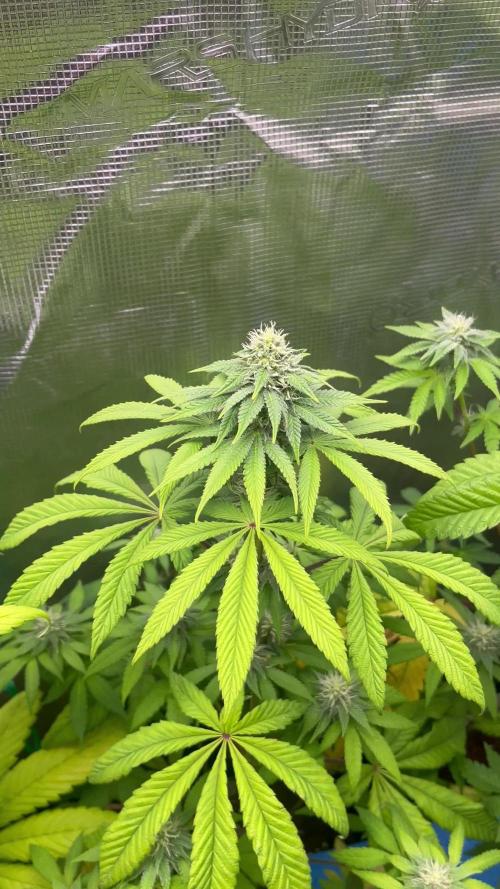
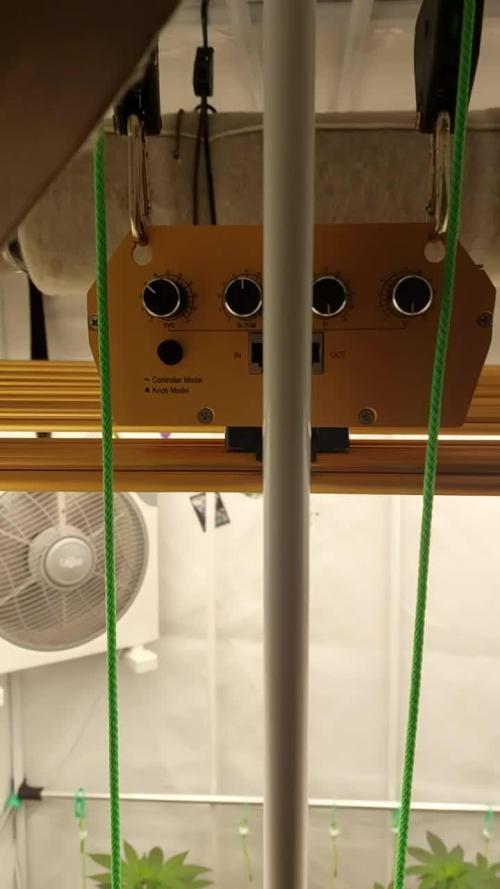
Auch wenn es nicht immer einfach ist Bedingungen so optimal wie möglich zu halten, habe ich bei die Grow eine Menge dazu gelernt. 3 Pflanzen sind einfach zuviel für meine kleine Growbox, ich bekomme die Technik kaum unter. Auch das Gießen ist sehr mühsam 😞 Ich habe um jeden Zentimeter gekämpft und gebastelt um die Lampe so hoch wie noch irgendwie möglich zu bekommen. Nun zu den Pflanzen, diese entwickeln sich stetig, aber doch sichtbar und noch keine Trauermücken 😇 Das entlauben hat den Pflanzen wohl augenscheinlich nicht geschadet, dafür kommt besser Luft durch und alle Kraft geht nach oben.
Processing
Likes
Comments
Share
@MG2009
Follow
06/23/2020 Here she is very well pollinated, and fattening up! I will post a video of her mid week to show her progress. The waiting begins. I'am really hopping #3 passes his flower structure (week 3 first pic) into the cookie cake for bigger buds, and less cookie like structure but either way taste should be great and potency off the charts!🙏 06/24/2020 Video 2 shows remains of Red Sky male, his pollen is a nice yellow. I kept 1.4grams and must of been 5 grams on floor and walls!
Processing
Likes
1
Share
@Chris87
Follow
This week I added a 4 inch duct on the lower left side right by the fan, so it pulls in fresh air from another room. Also, I made a bunch of 1 inch holes in my buckets, then lined them up with mold resisting drywall tape and finally I wrapped the buckets in shiny hvac tape, figured it would help with the light. I have 2 temperature and humidity probes, one by the canopy and the other one lower. I must say that I was pleased with the progress so far.
Likes
24
Share
Well I was worried about my girl for most of the last week since I repotted her. But as you can see, she bounced back. Just took her about 5 days. Roots started spilling over the side so I through some soil on it. The soil will be removed during the reveal when the other roots are exposed.
Likes
5
Share
Likes
11
Share
We have underestimated our number #3 all the time until last week... now it's a great little bush, always a little short, for heaven's sake, but the flower is not lacking and also very beautiful. https://seedsmafia.com/en/ https://www.mars-hydro.com/
Likes
7
Share
Que pasa familia, vamos con la quinta semana de floración de estas Black muffin F1 de Sweetseeds. Vamos al lío, me quede con 3 por espacio, siempre pongo alguna semilla de más por si no abriese alguna por no perder ese hueco del indoor. También se trasplantaron a su maceta definitiva, en este caso de 7 litros y el trasplante se realizó correctamente. El ph se controla en 6.2 , la temperatura la tenemos entre 20/22 grados y la humedad ronda el 50%. Las jodidas han estirado bastante, ya veremos que ocurre como va todo. Hasta aquí todo, Buenos humos 💨💨💨
Likes
Comments
Share
@SGCFarms
Follow
Day 20, Stacking and starting to smell! She’s definitely a beast and I’m excited to see how many tops she produces. The aroma is pungent and deep with earthy tones. Drinking about 2 gallons at this point, with full res changes twice a week. Will defoliate once to allow for more coverage.
Likes
Comments
Share
It’s a okay but one hermied on me but this is not something I wouldnt grow again
Likes
13
Share
@talanga
Follow
Incredible strong smell of melon, citrus , wood, earthy, it's wonderful!😁 She has no problems at all, the buds look thicker this week. Trichomes are milky white and translucent with some trichomes starting to have honey like head appearance. Not ready yet I will give her more time.💪👍
Likes
18
Share
Hey fellow green thumbs! 🌿💚 We’ve just wrapped up the third week of flowering with our Auto Fast Pete and Auto Northern Dragon Fuel from Super Sativa Seed Club. The excitement continues as our ladies flourish and develop beautifully. Let’s dive into the details! 🌟 Week 7 (Third Week of Flower) Progress: Day 43-45: Bud Development and Light Schedule Change • Auto Fast Pete: Pete is continuing to bulk up, . The aroma is intensifying, and the plant is stretching slightly under the new light schedule. 🌿🌸 • Auto Northern Dragon Fuel: Dragon Fuel is showing impressive bud development as well. The change in light schedule hasn’t slowed her down one bit. 🌱✨ Day 46-48: Adjusting to 12/12 Light Schedule • Light Schedule Change: This week, we changed the light schedule to 12/12 due to another autoflower in the tent that wasn’t flipping. We couldn’t take any risks, so now all our plants are on a 12/12 schedule. This adjustment has been seamless, and our ladies are adapting well. 💡🕛 • Environmental Conditions: • Temperature: 31°C • Humidity: 51% • Reservoir Details: • TDS: 400 • Temperature: 18°C • pH: 6.2 Maintaining these conditions to optimize bud development and plant health. 🌡️💧 Day 49: Observing and Fine-Tuning • Auto Fast Pete: The buds are continuing to grow and mature. The plant’s overall health is excellent, with vibrant green leaves and strong stems. 🌿🌼 • Auto Northern Dragon Fuel: The bud sites are more defined, and the plant is showing no signs of stress. The foliage is lush, and the buds are dense and sticky. 🌱🌟 🌟 Care Tips: • Light: Adjusted to a 12/12 light schedule to ensure consistent flowering across all plants in the tent. The plants are responding well to the change, with no signs of stress. 💡 • Autopot System: The Autopot system ensures a steady water supply, reducing the need for frequent manual watering. This system is great for maintaining consistent soil moisture, which is crucial during the flowering phase. 🌊 • Nutrient Monitoring: Keeping an eye on the reservoir’s TDS and pH levels to ensure the plants receive the right amount of nutrients and minerals. This week, we’re focusing on organic soil nutrition supplemented with regulator and CalMag. 🌿 • Environment Control: Maintaining a stable temperature of 31°C and humidity around 51% to create the perfect conditions for flowering. Adjusting airflow and positioning to optimize plant health. 🌡️💧 🌟 Genetics Spotlight: Auto Fast Pete: • Characteristics: Rapid bud development, strong structure, and early resin production. This strain is living up to its name with a fast and vigorous flowering phase. • Future Expectations: Continued bud swelling and resin production. Anticipate dense, aromatic flowers ready for harvest in the coming weeks. Auto Northern Dragon Fuel: • Characteristics: Robust structure, dense bud sites, and resilience. This strain is showing great promise for a high yield and potent flowers. • Future Expectations: Significant bud growth and increased resin production. This plant is gearing up for a heavy yield. 🌍🌿 Fun Fact: Did you know? 🌿✨ A 12/12 light schedule is typically used to induce flowering in photoperiod plants, but autoflowers can still thrive under this schedule, especially when sharing a space with other plants that need the light cycle adjustment. For all the in-depth action and detailed explanations, head over to my YouTube channel! 🎥✨ I’m sharing all the tips, tricks, and step-by-step guides to help you get the best results from your grow. This week has been particularly exciting, and there’s so much more to explore and learn together! 👉 Join me on YouTube Link in my profile 👈 🌟 Conclusion: Week 7 marks the third week of flowering, with both Auto Fast Pete and Auto Northern Dragon Fuel showing remarkable progress. The buds are developing beautifully, and the plants are thriving under our optimized care regimen, even with the new 12/12 light schedule. Stay tuned for Week 8, and happy growing! 🌿💚✨ #SuperSativaSeedClub #Week7Report #FastPete #NorthernDragonFuel #PlantMagic #GardeningJoy #NatureLovers #PlantPower #InspireGrow #YouTubeJourney Germination method 🌱 @thecannakan Genetics @supersativaseedclub_official Nutrition @aptusholland 🌿 @aptus_world 🌎 @aptus_es 🌍 @aptusbrasil 🌱 @aptus_thailand 🌿 @aptus_portugal 🌳 @aptususa_official 🍀 @aptusplanttechnz 🌺 @aptusplanttechaus 🍃 Ambient controls🎮 @trolmaster.eu @trolmaster.eu.support @trolmaster.support @trolmaster.agro Soil @promix_growers_eur @promix_cannabis LED - @lumatekeu Watering- @autopot_usa @autopot_global Love and attention- @dogdoctorofficial As always thank you all for stopping by, for the love and for it all , this journey of mine wold just not be the same without you guys, the love and support is very much appreciated and i fell honored and so joyful with you all in my life 🙏 With true love comes happiness 💚🙏 Always believe in your self and always do things expecting nothing and with an open heart , be a giver and the universe will give back to you in ways you could not even imagine so 💚 More info and complete updates from all my adventures can be found ⬆️link in the profile description ⬆️ Friendly reminder all you see here is pure research and for educational purposes only 💚Growers Love To you All 💚
Likes
10
Share
@Vincebld
Follow
Il n’y a pratiquement plus de feuilles où elles sont pratiquement toute jaunes MAJ 14/03 Je viens de les mettre dans le noir pour 48h je pense couper après.
Processing
Likes
15
Share
So all in all the strain took 98 from seed. It was easy to grow and forgiving aswell. The buds smells super sweet and are quite fluffy like a true sativa!
Likes
52
Share
Its time to prepare for war. *Blows bagpipe* FISH SH!T THE ORGANIC SOIL CONDITIONER (used twice before and always noticed instantly) Fish Shit is a living product! It provides a complex Microbial profile that includes thousands of different species of bacteria, fungi, and protozoa. This profile is closer to a natural ecosystem than anything you will find on the market. Fish Shit helps release essential oils and terpenes which contribute to the building of a myriad of flavonoids. Flavanoids play a key role in the development of the most potent aromas and tasteful flavors of a plant and its fruit. Fish Shit contains beneficial microorganisms that help plants maximize nutrient uptake. It does this by transforming nutrients into more usable forms and keeping these nutrients in the soil longer. During photosynthesis plants naturally produce exudates (chemicals that are secreted through their roots). Through these exudates, plants can attract the types of good bacteria that are beneficial to them at different points in their growing cycle. These good bacteria cover the roots and act as a barrier to the invasion of disease-causing organisms that may harm the plant. What Are Enzymes? Before we dive headfirst into how, exactly, enzymes can benefit cannabis plants, it helps to understand a little about what these microscopic proteins do. Essentially, enzymes facilitate chemical reactions. They do so by binding with a substrate and forming or breaking molecular bonds. In this context, the substrate is the molecule upon which an enzyme acts to boost the efficiency of a reaction. •substrate /sŭb′strāt″/ •noun •The material or substance on which an enzyme acts. A surface on which an organism grows or is attached. An underlying layer; a substratum. Enzymes are proteins with complex 3D shapes that feature regions called active sites. When the substrate binds to these active sites, it forms an enzyme-substrate complex that causes a chemical reaction to take place, temporarily changing the structure of the enzyme and ultimately causing molecules to either come together or break apart. As a result, molecular products are released, and the enzyme returns to its original shape. Specific enzymes are capable of binding with certain substrates, as the substrate fits into the active site more or less via a lock-and-key principle. Although, new research suggests a more accurate theory of "induced fit", in which enzymes and substrates undergo structural changes to facilitate the reaction. If you take the human body as an example, we have an abundance of enzymes in our saliva and digestive system. These molecules bind with substrates in these regions (food particles), working to break down the food we eat into usable parts before converting them to energy. Enzymes in cannabis work in a similar way to the example highlighted above. Typically, enzymes occur in soil naturally, but if your soil mix is lacking organic material, or you're growing hydroponically, then adding enzymes directly to the substrate is crucial. By using them in cannabis growing, enzymes not only help break down essential nutrients into smaller, more readily available pieces, but they also support the digestion of dead root cells, clearing a direct path for nutrients. Overall, enzymes make it easier for your cannabis plants to absorb all the elements they need to reach their full potential. For growers, a plant that reaches its full potential means a bucketload of juicy buds come harvest. This is essential if you want to reuse a pot with old systems left over like mine. Common plant enzymes include: •Cellulase •Xylanase •Beta-glucosidase •Hemicellulase •Amidase Amino acids are a crucial, yet basic unit of protein, and they contain an amino group and a carboxylic group. They play an extensive role in the gene expression process, which includes an adjustment of protein functions that facilitate messenger RNA Nitrogen, phosphorus, and potassium are the three main pillars of nutrient solutions and fertilizers, but there are countless other nutrients that your cannabis plants need to produce the best possible harvest. Amino acids are one of them. You may have noticed that amino acids get a lot of attention from bodybuilders and other athletes. That’s because they play a key role in the synthesis of protein, which, as you probably know, is super important for sports recovery and muscle growth. Amino acids are the building blocks of protein and the foundation of both plant and animal life. But what do amino acids do for cannabis? WHY IS PROTEIN IMPORTANT FOR CANNABIS? Just like proteins are important for the human body, they are equally important for the growth and development of plants. For example, proteins help plants: •Facilitate the growth of intracellular plant structures •Promote energy generation •Stimulate metabolic processes •Facilitate the absorption and transportation of nutrients So, where do plants get these vital proteins from? Well, unlike humans, plants can’t source proteins or amino acids from other organisms. Instead, they need to create their own amino acids, and then use these to build protein. That's why gardeners, much like athletes, go wild for amino acid supplements. Amino acids help plants by… • Increasing their production of chlorophyll, which ultimately improves their ability to photosynthesize • Serving as an easily absorbable form of nitrogen • Stimulating the synthesis of key vitamins • Improving their resistance to pests and diseases • Boosting the strength of their cells Amino acids also serve as the precursors to auxins, a group of plant hormones produced in the meristems—the apex of the stems where new leaves and stems are born. Auxins play a key role in the plant, activating genes for plant growth and development by triggering a multitude of vital plant functions. In other words, they determine what its size and architecture will look like. Auxins influence the development of branches, flowers, and roots, and even help to regulate the photoperiod response of the plant. Some amino acids, like cysteine, also work together with antioxidants like glutathione to help cannabis plants deal with oxidative stress, which can be caused by high-intensity lighting, some nutrient solutions, and high levels of CO₂. Unlike humans, plants can synthesize all the amino acids they need to survive and develop properly. Unfortunately, however, amino acid synthesis is a really high-energy process, and plants may struggle to produce enough amino acids when exposed to stress. WHAT FACTORS AFFECT A PLANT’S ABILITY TO SYNTHESISE AMINO ACIDS? Any kind of stress can affect a plant’s ability to produce enough amino acids. This includes: • Drought • Temperature extremes • Poor soil health • Pests • Diseases • Poor lighting • Lack of space • Poor root health WHAT DOES ALL OF THIS MEAN FOR WEED PLANTS? If you want to push your plants to their extreme in terms of floral growth and resin production, you should look into amino acid fertilizers. By making amino acids readily available to your plants, they’ll be able to use crucial energy to grow and bloom, rather than focusing on synthesizing amino acids themselves. Game of Inches, this is another Plants can absorb amino acids via their roots and leaves. They can also benefit from amino acids during both their vegetative and flowering phases. The fastest way for plants to absorb amino acids is via their leaves. The foliar application of amino acids is believed to improve the transportation of nutrients, increase transpiration, and boost photosynthesis. Hence, I recommend feeding your plants with foliar amino acid fertilizers. When doing so, however, carefully measure the amount of fertilizer you use, as—like with any nutrient—overfeeding can damage your plants. FOLIAR FEED AND SOIL SOAK • 1 crushed queen anne carrot • Add 2 tbsp of NPK Raw powdered water-soluble cane molasses • 20ml h2o2 • 1 crushed radish • 0.25 tsp NPK Enzymes • 0.25 tsp NPK Amino Acids • 50ml coconut water ( nature's own amniotic fluid packed with amino, enzymes ) + The sound of songbirds. Onto the predators 1250 -Green Lacewings Lacewings are extremely voracious predatory insects that feed on several pests. In adulthood, it feeds on pollen and nectar. In the larval stage, it feeds on aphids, thrips, and mealybugs at all stages of growth. It can also attack spider mites in moderate quantities. It is initially an aphid predator, but very effectively controls thrips and mealybugs infestations. It is so voracious that in the absence of prey, it will feed on its congeners. Lacewings are cannibalistic if there is no food available for them. It is therefore important to introduce them into an infestation situation, and not just preventively. •congener /kŏn′jə-nər/ •noun •A member of the same kind, class, or group. •An organism belonging to the same taxonomic genus as another organism. •A thing of the same kind as. or nearly allied to, another; specifically, in botany and zoology, a plant or an animal belonging to the same genus as another or to one nearly allied. Ideal temperature 20°C – 26°C Ideal humidity 60% – 70% Predatory stage life cycle 21 days Introduction rate 4 weeks Storage Refrigerator Use Immediately Are there any specific instructions on how to use this predator? Lacewings are available on small paper cards that you can hang to plant stems. On the cards are dozens of eggs ready to hatch. There are also sterile eggs they can feed on once they have hatched before they are ready to disperse in the foliage. It is important to use them quickly upon receipt to avoid cannibalism. If you don't use them right away, you can store the cards in the refrigerator for 24 to 48 hours to prevent the eggs from hatching too quickly. Avoid storing them for longer than this or you risk losing eggs. 1250 eggs are divided into 7.5 cards, 2500 eggs on 15 cards, and 5000 on 30 cards. The application rate is one card per square meter of growing surface. Is this predator best used for preventive or curative treatments? Lacewings are used as a curative solution. Anything else I should know? Lacewing eggs hatch approximately 24-72 hours after the cards are exposed to room temperature. When they emerge, the lacewings are just 1.5-2 mm long. They are very small so they are difficult to see. Once hatched, they will stay on the cards for a few hours and then disperse in the foliage. You quickly lose sight of them if you have not witnessed the hatching. They then live in the foliage for about 3 weeks. Often, you will see them towards the end of their larval cycle. After feeding for 3 weeks, they will triple and even quadruple in size. At that point, they are easier to see. But they remain very discreet insects, it is not abnormal not to see them. Egg carcasses left behind on the cards do not disappear after the hatching has happened. It's normal to see eggs still on the cards. Visually it is very similar before and after hatching. Also, on the boxes, there are sterile ephestia eggs which are used to feed the lacewings once hatched. Not all lacewing eggs are viable either. Only a certain percentage of lacewing eggs will hatch. Once hatched, the eggs are white. You can observe this using a magnifying glass. With, 5000 Stratiolaelaps Scimitus It is used to prevent or control thrips pupae, fungus gnats larvae, and root mealybugs in the soil. It can also be used for red mites in bird farms or hen houses. The adult is about 1 mm long and is medium brown with a beige triangle on its back. Another fun fact about them is they can survive without prey. They can eat algae and plant debris. This is why they can reproduce and stay in plants for long periods. Ideal temperature 15°C – 23°C Predatory stage life cycle 18 days Introduction rate 2 weeks Storage Room temperature Use Within one week Are there any specific instructions on how to use this predator? Sprinkle directly on the growing media. They can live in all types of substrates like potting soil, coconut fiber, rock wool, cedar mulch, etc. Stratiolaelaps establish easily so they are permanently fighting pests. One introduction is generally enough unless you have an infestation. In this case, introduce them at least twice at a 2-week interval for best results. If you grow your plants in a 100% mineral substrate, it will have to be released more often since there is less organic matter than in traditional soil. Do I need to take any specific precautions? Stratiolaelaps breed in the top layer of the soil. So it is important not to disturb them in the first days following their introduction. They don't like temperatures below 8 ° C. So be sure not to introduce them in a water-saturated or cold environment. Release them 24-48 hours after your last watering. They are very sensitive to chemical acaricides and diatomaceous earth. These methods are incompatible with their use.
Likes
220
Share
Week 0 : Sixshooter Hawkbo says Six Shooter is one of the top Fast Buds Strains, so i'm like "yeah man might as well run me some of these, i do like my weed top of the shelf!" so here it is with the six shooter , bought these direct during one of Fast bud's promotions, 3+2 x2 for the price of one, so yeah that' s a good deal ! germinating 5 let's see how many i end up keeping, depends on the rest of the seeds too ! overnight in a glass of water with a few drops of my kelp extract , protect it from the light , the next day looks like some already cracked, putting it in the RQS propagator, dont use your fingers to manipulated activated seeds , cover with some dirt, cover the propagator with a blanket to protect it from light and keep the temperature up. Let's see ! within a day three had cracked the surface, one was all squiggly from being put upside down but within a day it has straightened out, the two last ones took 3 more days to crack the surface, i'm saving them and keeping them closeby in case i need to replace any of the planted seeds. Six shooter have been great genetrics so far, i transplanted three of them on day 4. see you next week for more updates !
Likes
41
Share
@Growing88
Follow
Ripenes plant and deafling for penetration light pop corn buds,trichome is milky,wait other 2 week for harvest day
Likes
459
Share
@Ju_Bps
Follow
Hello my friends 👨‍🌾👩‍🌾, Continue to grow well 🌲🌲, very easy strain, Only one issue this week, I've broken 1 stems during the train 🤦‍♂️🤦‍♂️. The stem is broken more than 75%, I don't think will recover. But it's ok I've saved 3 nodes on this plants before topping. I'll could transplanted them next week in 11l and definitive pot, the Fat Banana should harvested ✂️✂️. And we'll have a better idea to prepare the scrog. Because still in 2l start to be very little lol...🤦‍♂️🤦‍♂️😳😳😅😅 💦 I give water each 2 or 3 days 350 and 400ml/plant Water + rhizo + tera vega Water + Rhizo + canazym PH@6 Lamp is 100% Thanks community for follow, likes, comments, always a pleasure 👩‍🌾👨‍🌾❤️🌲 Happy new year 🎉 🥂 family farmer 👨‍🌾👩‍🌾 See you next week 👊👊 Mars Hydro - TS 1000 https://www.mars-hydro.com/ts-1000-led-grow-light Mars Hydro - FC3000 https://www.mars-hydro.com/fc-3000-samsung-lm301b-led-grow-light Mars Hydro - SP3000 https://www.mars-hydro.com/sp-3000-samsung-lm301b-greenhouse-led-grow-light The High Chameleon - Vannila T https://www.thehighchameleon.com/shop/vanilla-t-5
Likes
16
Share
Ultimate #1 10 cm Ultimate #2 12 cm Ultimate #3 9 cm We are conducting a light experiment with these 3 #3 is solely under the Phlizon 600 watt LED Ultimate #1 is solely under the Mars Hydo TS 1000 Ultimate #2 is in the middle so getting most of the light from Mars Hydro and a bit from Phlizon Our belief is the #1 will have the biggest and most dense buds and that #3 will be the shortest and fluffiest buds. So sit back and and enjoy the ride let’s see what they do. These are in a 2x4 tent with Crè soil using solely BioBizz nutrients. All three seeds were direct from DutchPassion.