@GuerillaGorilla
Follow
2 october
What more can I say
Busy with harvest, last minute changes relocating stuff. Pfff
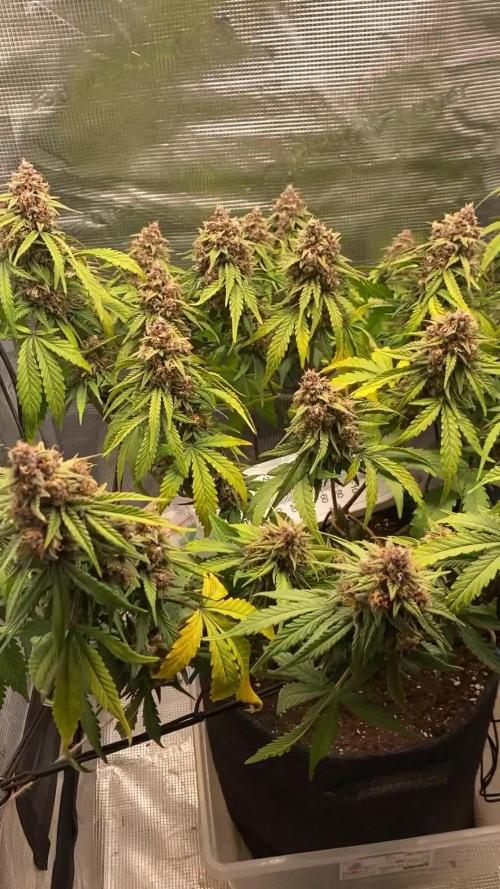
She has some time left. Some sunny weather once again. She is doing well.
I hope she holds on for another 3-4 weeks. My schedule is full. Sexbud is clming. The guerilla grow is coming to an end. Shit got hot..at last
Girls need it to finish😛



shorts_status_processing


@HanzGrowz
Follow
Well they definitely made progress in the flowering dept over the weekend! I came back home to find a nice amount of bud sites and pistil growth all around.
Bubba ya gotten so big it can’t fit under my lights in the tent with fan & filter, so it’s now been moved to the other tent. Kind of fucks with my auto grow I had planned, but not much I can do


@Mastr
Follow
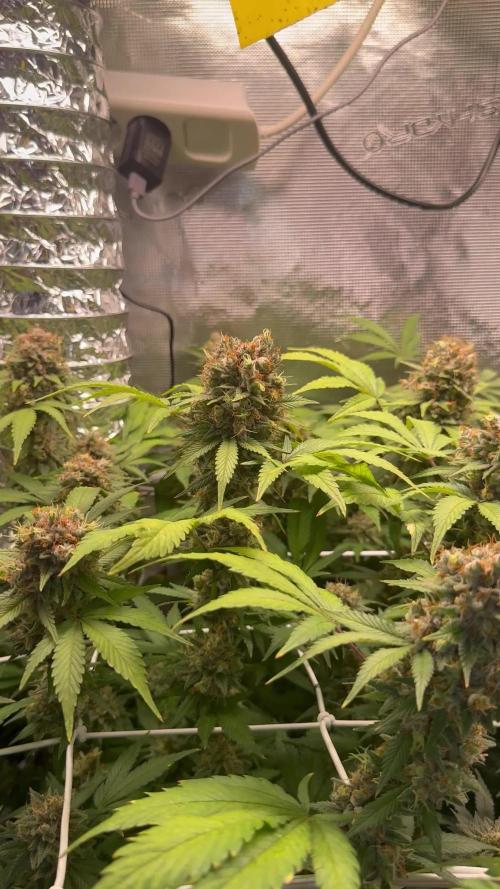
She so bushy bud are everywhere some off them can get really light I wish I was defoilated them but it's okay I let her grow till day 90 let see the result thanks for reading and looking into this diary happy growing
I add bio heaven for bud denser recommend by grower friends 💚

@Sobreruedas
Follow
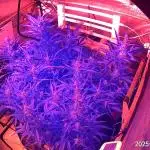
This is week 9, and I’ve started dialing things down as we approach the final stage.
I reduced the light intensity to around 600–650 PPFD to keep things a bit softer towards the end of flowering.
From here on, it’s just a matter of maintaining stable conditions until harvest time 🌸✂️💪



@Ultraviolet
Follow
Yellow butterfly came to see me the other day; that was nice.
Starting to show signs of stress on the odd leaf, localized isolated blips, blemishes, who said growing up was going to be easy!
Smaller leaves have less surface area for stomata to occupy, so the stomata are packed more densely to maintain adequate gas exchange. Smaller leaves might have higher stomatal density to compensate for their smaller size, potentially maximizing carbon uptake and minimizing water loss. Environmental conditions like light intensity and water availability can influence stomatal density, and these factors can affect leaf size as well. Leaf development involves cell division and expansion, and stomatal differentiation is sensitive to these processes. In essence, the smaller leaf size can lead to a higher stomatal density due to the constraints of available space and the need to optimize gas exchange for photosynthesis and transpiration. In the long term, UV-B radiation can lead to more complex changes in stomatal morphology, including effects on both stomatal density and size, potentially impacting carbon sequestration and water use. In essence, UV-B can be a double-edged sword for stomata: It can induce stomatal closure and potentially reduce stomatal size, but it may also trigger an increase in stomatal density as a compensatory mechanism. It is generally more efficient for gas exchange to have smaller leaves with a higher stomatal density, rather than large leaves with lower stomatal density. This is because smaller stomata can facilitate faster gas exchange due to shorter diffusion pathways, even though they may have the same total pore area as fewer, larger stomata. Leaf size tends to decrease in colder climates to reduce heat loss, while larger leaves are more common in warmer, humid environments. Plants in arid regions often develop smaller leaves with a thicker cuticle and/or hairs to minimize water loss through transpiration. Conversely, plants in wet environments may have larger leaves and drip tips to facilitate water runoff. Leaf size and shape can vary based on light availability. For example, leaves in shaded areas may be larger and thinner to maximize light absorption. Leaf mass per area (LMA) can be higher in stressful environments with limited nutrients, indicating a greater investment in structural components for protection and critical resource conservation. Wind speed, humidity, and soil conditions can also influence leaf morphology, leading to variations in leaf shape, size, and surface characteristics. Small leaves: Reduce water loss in arid or cold climates.
Environmental conditions significantly affect gene expression in plants. Plants are sessile organisms, meaning they cannot move to escape unfavorable conditions, so they rely on gene expression to adapt to their surroundings. Environmental factors like light, temperature, water, and nutrient availability can trigger changes in gene expression, allowing plants to respond to and survive in diverse environments.
Depending on the environment a young seedling encounters, the developmental program following seed germination could be skotomorphogenesis in the dark or photomorphogenesis in the light. Light signals are interpreted by a repertoire of photoreceptors followed by sophisticated gene expression networks, eventually resulting in developmental changes. The expression and functions of photoreceptors and key signaling molecules are highly coordinated and regulated at multiple levels of the central dogma in molecular biology. Light activates gene expression through the actions of positive transcriptional regulators and the relaxation of chromatin by histone acetylation. Small regulatory RNAs help attenuate the expression of light-responsive genes. Alternative splicing, protein phosphorylation/dephosphorylation, the formation of diverse transcriptional complexes, and selective protein degradation all contribute to proteome diversity and change the functions of individual proteins.
Photomorphogenesis, the light-driven developmental changes in plants, significantly impacts gene expression. It involves a cascade of events where light signals, perceived by photoreceptors, trigger changes in gene expression patterns, ultimately leading to the development of a plant in response to its light environment.
Genes are expressed, not dictated! While having the potential to encode proteins, genes are not automatically and constantly active. Instead, their expression (the process of turning them into proteins) is carefully regulated by the cell, responding to internal and external signals. This means that genes can be "turned on" or "turned off," and the level of expression can be adjusted, depending on the cell's needs and the surrounding environment. In plants, genes are not simply "on" or "off" but rather their expression is carefully regulated based on various factors, including the cell type, developmental stage, and environmental conditions. This means that while all cells in a plant contain the same genetic information (the same genes), different cells will express different subsets of those genes at different times. This regulation is crucial for the proper functioning and development of the plant.
When a green plant is exposed to red light, much of the red light is absorbed, but some is also reflected back. The reflected red light, along with any blue light reflected from other parts of the plant, can be perceived by our eyes as purple.
Carotenoids absorb light in blue-green region of the visible spectrum, complementing chlorophyll's absorption in the red region. They safeguard the photosynthetic machinery from excessive light by activating singlet oxygen, an oxidant formed during photosynthesis. Carotenoids also quench triplet chlorophyll, which can negatively affect photosynthesis, and scavenge reactive oxygen species (ROS) that can damage cellular proteins. Additionally, carotenoid derivatives signal plant development and responses to environmental cues. They serve as precursors for the biosynthesis of phytohormones such as abscisic acid () and strigolactones (SLs). These pigments are responsible for the orange, red, and yellow hues of fruits and vegetables, while acting as free scavengers to protect plants during photosynthesis.
Singlet oxygen (¹O₂) is an electronically excited state of molecular oxygen (O₂). Singlet oxygen is produced as a byproduct during photosynthesis, primarily within the photosystem II (PSII) reaction center and light-harvesting antenna complex. This occurs when excess energy from excited chlorophyll molecules is transferred to molecular oxygen. While singlet oxygen can cause oxidative damage, plants have mechanisms to manage its production and mitigate its harmful effects.
Singlet oxygen (¹O₂) is considered a reactive oxygen species (ROS). It's a form of oxygen with higher energy and reactivity compared to the more common triplet oxygen found in its ground state. Singlet oxygen is generated both in biological systems, such as during photosynthesis in plants, and in cellular processes, and through chemical and photochemical reactions. While singlet oxygen is a ROS, it's important to note that it differs from other ROS like superoxide (O₂⁻), hydrogen peroxide (H₂O₂), and hydroxyl radicals (OH) in its formation, reactivity, and specific biological roles. Non-photochemical quenching (NPQ) protects plants from damage caused by reactive oxygen species (ROS) by dissipating excess light energy as heat. This process reduces the overexcitation of photosynthetic pigments, which can lead to the production of ROS, thus mitigating the potential for photodamage. Zeaxanthin, a carotenoid pigment, plays a crucial role in photoprotection in plants by both enhancing non-photochemical quenching (NPQ) and scavenging reactive oxygen species (ROS). In high-light conditions, zeaxanthin is synthesized from violaxanthin through the xanthophyll cycle, and this zeaxanthin then facilitates heat dissipation of excess light energy (NPQ) and quenches harmful ROS.
The Issue of Singlet Oxygen!!
ROS Formation: Blue light, with its higher energy photons, can promote the formation of reactive oxygen species (ROS), including singlet oxygen, within the plant.
Potential Damage: High levels of ROS can damage cellular components, including proteins, lipids, and DNA, potentially impacting plant health and productivity.
Balancing Act: A balanced spectrum of light, including both blue and red light, is crucial for mitigating the harmful effects of excessive blue light and promoting optimal plant growth and stress tolerance.
The Importance of Red Light:
Red light (especially far-red) can help to mitigate the negative effects of excessive blue light by:
Balancing the Photoreceptor Response: Red light can influence the activity of photoreceptors like phytochrome, which are involved in regulating plant responses to different light wavelengths.
Enhancing Antioxidant Production: Red and blue light can stimulate the production of antioxidants, which help to neutralize ROS and protect the plant from oxidative damage.
Optimizing Photosynthesis: Red light is efficiently used in photosynthesis, and its combination with blue light can lead to increased photosynthetic efficiency and biomass production.
In controlled environments like greenhouses and vertical farms, optimizing the ratio of blue and red light is a key strategy for promoting healthy plant growth and yield.
Understanding the interplay between blue light signaling, ROS production, and antioxidant defense mechanisms can inform breeding programs and biotechnological interventions aimed at improving plant stress resistance. In summary, while blue light is essential for plant development and photosynthesis, it's crucial to balance it with other light wavelengths, particularly red light, to prevent excessive ROS formation and promote overall plant health. Oxidative damage in plants occurs when there's an imbalance between the production of reactive oxygen species (ROS) and the plant's ability to neutralize them, leading to cellular damage. This imbalance, known as oxidative stress, can result from various environmental stressors, affecting plant growth, development, and overall productivity.
Causes of Oxidative Damage: Abiotic stresses: These include extreme temperatures (heat and cold), drought, salinity, heavy metal toxicity, and excessive light. Biotic stresses: Pathogen attacks and insect infestations can also trigger oxidative stress. Metabolic processes: Normal cellular activities, particularly in chloroplasts, mitochondria, and peroxisomes, can generate ROS as byproducts. Certain chlorophyll biosynthesis intermediates can produce singlet oxygen (1O2), a potent ROS, leading to oxidative damage. ROS can damage lipids (lipid peroxidation), proteins, carbohydrates, and nucleic acids (DNA). Oxidative stress can compromise the integrity of cell membranes, affecting their function and permeability. Oxidative damage can interfere with essential cellular functions, including photosynthesis, respiration, and signal transduction. In severe cases, oxidative stress can trigger programmed cell death (apoptosis). Oxidative damage can lead to stunted growth, reduced biomass, and lower crop yields.
Plants have evolved intricate antioxidant defense systems to counteract oxidative stress. These include: Enzymes like superoxide dismutase (SOD), catalase (CAT), and various peroxidases scavenge ROS and neutralize their damaging effects. Antioxidant molecules like glutathione, ascorbic acid (vitamin C), C60 fullerene, and carotenoids directly neutralize ROS. Developing plant varieties with gene expression focused on enhanced antioxidant capacity and stress tolerance is crucial. Optimizing irrigation, fertilization, and other management practices can help minimize stress and oxidative damage. Applying antioxidant compounds or elicitors can help plants cope with oxidative stress. Introducing genes for enhanced antioxidant enzymes or stress-related proteins over generations.
Phytohormones, also known as plant hormones, are a group of naturally occurring organic compounds that regulate plant growth, development, and various physiological processes. The five major classes of phytohormones are: auxins, gibberellins, cytokinins, ethylene, and abscisic acid. In addition to these, other phytohormones like brassinosteroids, jasmonates, and salicylates also play significant roles.
Here's a breakdown of the key phytohormones:
Auxins: Primarily involved in cell elongation, root initiation, and apical dominance.
Gibberellins: Promote stem elongation, seed germination, and flowering.
Cytokinins: Stimulate cell division and differentiation, and delay leaf senescence.
Ethylene: Regulates fruit ripening, leaf abscission, and senescence.
Abscisic acid (ABA): Plays a role in seed dormancy, stomatal closure, and stress responses.
Brassinosteroids: Involved in cell elongation, division, and stress responses.
Jasmonates: Regulate plant defense against pathogens and herbivores, as well as other processes.
Salicylic acid: Plays a role in plant defense against pathogens.
1. Red and Far-Red Light (Phytochromes):
Red light:
Primarily activates the phytochrome system, converting it to its active form (Pfr), which promotes processes like stem elongation and flowering.
Far-red light:
Inhibits the phytochrome system by converting the active Pfr form back to the inactive Pr form. This can trigger shade avoidance responses and inhibit germination.
Phytohormones:
Red and far-red light regulate phytohormones like auxin and gibberellins, which are involved in stem elongation and other growth processes.
2. Blue Light (Cryptochromes and Phototropins):
Blue light:
Activates cryptochromes and phototropins, which are involved in various processes like stomatal opening, seedling de-etiolation, and phototropism (growth towards light).
Phytohormones:
Blue light affects auxin levels, influencing stem growth, and also impacts other phytohormones involved in these processes.
Example:
Blue light can promote vegetative growth and can interact with red light to promote flowering.
3. UV-B Light (UV-B Receptors):
UV-B light:
Perceived by UVR8 receptors, it can affect plant growth and development and has roles in stress responses, like UV protection.
Phytohormones:
UV-B light can influence phytohormones involved in stress responses, potentially affecting growth and development.
4. Other Colors:
Green light:
Plants are generally less sensitive to green light, as chlorophyll reflects it.
Other wavelengths:
While less studied, other wavelengths can also influence plant growth and development through interactions with different photoreceptors and phytohormones.
Key Points:
Cross-Signaling:
Plants often experience a mix of light wavelengths, leading to complex interactions between different photoreceptors and phytohormones.
Species Variability:
The precise effects of light color on phytohormones can vary between different plant species.
Hormonal Interactions:
Phytohormones don't act in isolation; their interactions and interplay with other phytohormones and environmental signals are critical for plant responses.
The spectral ratio of light (the composition of different colors of light) significantly influences a plant's hormonal balance. Different wavelengths of light are perceived by specific photoreceptors in plants, which in turn regulate the production and activity of various plant hormones (phytohormones). These hormones then control a wide range of developmental processes.


shorts_status_processing


@The_Projexx
Follow
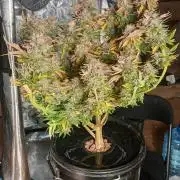
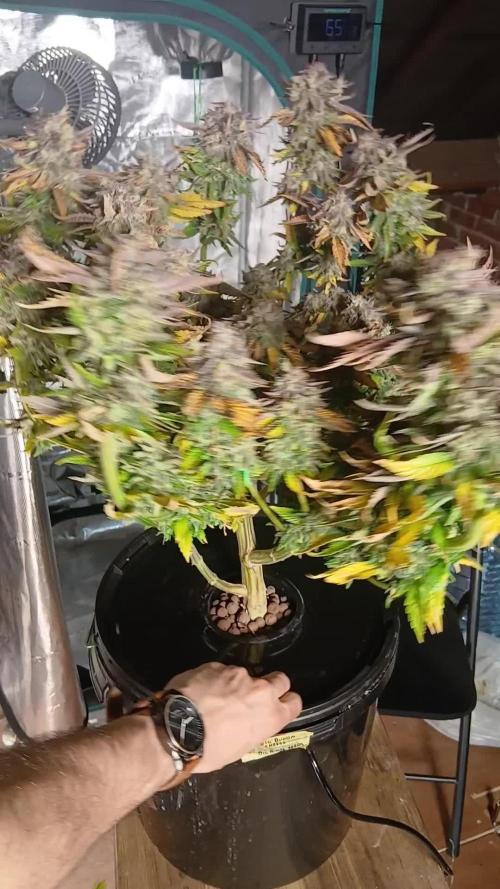
This is the start of flowering! I started 5 days ago so we should see some bud formation really soon done some heavy training on GG#1 . Waiting on GG#2 to shoot out abit more then i will start the sliding stake technique on her as well . Waiting on the more serious formation of flowers before i give a good PK spike . Other then that things are looking good in the garden and we are well on our way to the finish line .
Thanks everyone for your support keep rocking out!
-Happy Growing!



@MicroHidroGrow
Follow
Día 26. Estamos en la 4ta semana. Por ahora mantengo la solución y la planta sigue creciendo pero ya está casi para cortar los esquejes. La semana que viene seguro estoy cortando, y ya tengo que preaparar todo para pasar al otro modulo del infoor.
Decidi dejar de aplicar HST y apliqué una recnica con colgantes que bajan las ramas y las mantienen perpendiculares al piso. De esta forma las ramas laterales empiezan a subir. Está técnica me ha dado muy buenos resultados anteriormente.
El crecimiento ha sido acelerado y las ramas estan bastante gruesas.
Mañana voy a cambiar la solución. Vengo realmente contento con los resultados. Este experimento me va a permitir saber cuanto puedo llegar a sacar de este espacio y ver si me permite armar un ciclo para poder llegar a la próxima cosecha con remanente para poder ir guardando variedades diferentes. De paso ya tengo una referencia de cuantas semanas toma hasta poder cortar esquejes, y así saber en que momento poner la próxima semilla.
Puse unas semillas bastardas que tenía, y las pienso mandar a la terraza a florecer directamente en el invierno. Otra experiencia que si bien no ha dado grandes resultados, ha sumado al stock. La semana pasada no llegué a subir mucho. Pero mañana hago un update de cómo se han movido las ramas bajas. En el último video se muestran bien las ramas que pretendo convertir en esquejes. Seguro saque varios, así que habrá para regalar si logramos que enraizen varios.
De por cierto las manchas blancad que se ven, es tierra de distomeas que ha quedado desde la aplicación en 2da semana.
Día 28. Termina la 4ta semana de crecimiento con un muy buen ritmo. Hoy cambié la solución y mantuve la formulación anterior (1g/L de feeding grow y 0,5g/L de green jungle bioestimulante de crecimiento). La planta está fuerte y ramificada. Sostengo que los esquejes se van a cortar un poco antes de lo previsto. Calculando que son 5 semanas de crecimiento y 1 semana de enraizamiento de esquejes, voy a tomar 6 semanas para preparar la próxima madre. Así que siendo esta variedad de unas 10/11 semanas de flora, voy a poner a crecer la nueva madre en la 4ta semana de floración. La planta tiene distancia internodal corta/media por lo que observo, así que es un detalle a tener en cuenta. Ya me empieza a dar la ansiedad de ver que todo va saliendo y quiero ya poder pasar a floración. Va a ser jna nueva experiencia hacer una planta desde semilla en hidroponía, ya que siempre hacía sólo esquejes y la madre la pasaba a tierra a florar en otro lado, debido a que por las raíces no podía sacarla del sistema que tengo ahora. Pero resolví eso y voy a ver por primera vez la potencia de la hidroponia en una planta desde semilla. Le hice corte apical a las dos ramas más largas esperando ver una mayor ramificación, ya que tengo un espacio de 1,2m x 0,55m por llenar y administrar. Espero que todo siga en marcha. Nos vemos en la 5ta semana desde mañana.


@nurari
Follow
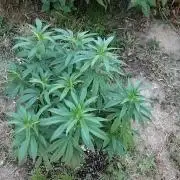
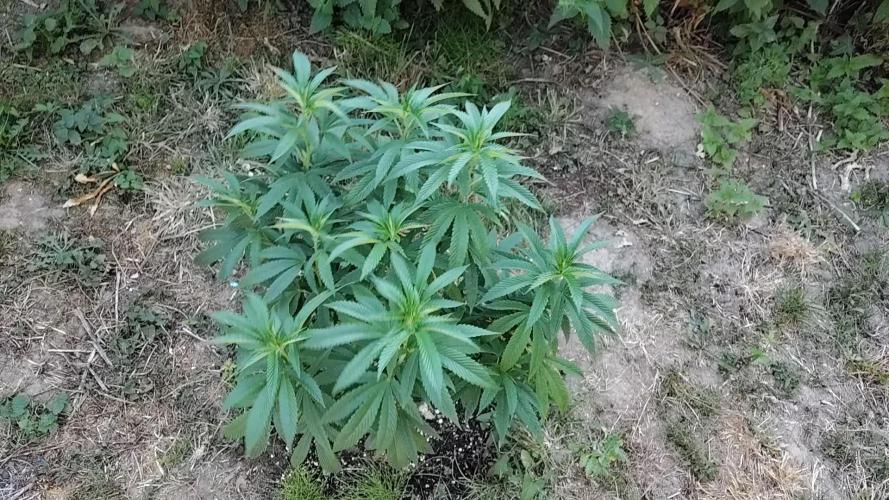
Из 6 растений, 2 уже собрано. Сейчас потребуется пару дней чтоб разобрать 3е, очистка пройдена.
2 растения дозревают, 1 ждет харвеста и уже пьет только воду...
надеюсь завтра будет время и оборву все веерные листья...

@Mati_86
Follow
huhu, also ich hab mit einem organischem trockendünger für beeren gedüngt. einfach 3 bis 4 EL als topdress auf die erde und dann gießen.... bin sehr zufrieden bis auf die kleine bakerman...sie bekommt durch ihre größe weniger Licht und wird nicht größer als 60 cm...evtl strecht sie noch etwas aber habe keine große Hoffnung das sie wachstumschübe bekommt.hatte 1 mal entlaubt und alle triebansätze die tiefer lagen weg genommen sodass nur buds wachseen wo licht ist...ihr kennt es evtl wenn outdoor viel kleinzeug hat macht die ernte net so viel spaß 😅😅
denke das die blüte in den nächsten tagen erkennbar wird✌️✌️


@Hazebuster888
Follow
In der sechsten Blütewoche haben sich die Blüten weiter verdichtet und an Größe zugenommen. Die Pflanze profitiert sichtbar von der erhöhten Lichtintensität und den zusätzlichen Netzen, die für Stabilität sorgen. Das Scrogging hat sich als äußerst effektiv erwiesen, da alle Blüten gleichmäßig Lichlt erhalten und sich prächtig entwickeln. Die Pflanze wirkt insgesamt sehr vital, und die Blütenstände zeigen eine schöne Harzbildung, was auf eine erfolgreiche Ernte hoffen lässt.


@UrbanBoer
Follow
Alike Lamb Breath this lady loves the cold weather, but the most important thing I’ve seen is just balancing light, nutrients, stress, and water. I am going to have fun now with these ladies, when it comes to LST all I am missing is a fan, but this will be an indication whether I really do need a fans to circulate airflow to mimic


@Richard_Harrow
Follow
Hello everyone, this girl marvels at such a pace, she develops without any problems and looks like a monster, I like her very much and I think she will be very beautiful in flowering🌺💚🌺🚀🚀🚀


@GoldenWeedGrower
Follow
Legend
Timestamp: 📅
EC - pH: ⚗️
Temp - Hum: 🌡️
Water: 🌊
Food: 🍗
pH Correction: 💧
Actions: 💼
Thoughts: 🧠
Events: 🚀
Media: 🎬
D: DAY, G: GERMINATION, V: VEGETATIVE, B: BLOOMING, R: RIPENING, D: DRYING, C: CURING
________________________________
📅 D77/B15 - 31/01/24
⚗️ EC: 1.2 pH: 6
🌡️ T: 19-22 °C H: 40-60% (Min-Max values taken from the app.)
🌊 2L
🍗 CalMag - Bloom A-B - Bud Candy - Big Bud - B52
💧
💼 Thanks to the TM+ Pro app and the use of the Humidifier now the T-H of the enviroment is correct and i got quite good VPD (Vapor Pressure Deficit) rate
🧠
🚀
🎬 Added Timelapse video
________________________________
📅 D78/B16 - 01/02/24
⚗️ EC: 1 pH: 5.9
🌡️ T: 19-25 °C H: 45-70 %
🌊 2L
🍗
💧
💼
🧠 Quite time to change res
🚀
🎬 Added Timelapse video, 3 pics and "TM+ Pro" App screenshots of T-H values daily graph, and quite perfect VPD daily rate
________________________________
📅 D79/B17 - 02/02/24
⚗️ EC: 1 pH: 6.2
🌡️ T: 19-25 °C H: 40-60%
🌊
🍗
💧 Added few drops of pH-
💼
🧠 The res was for many time on the upper side of pH range, so now I would like it to goes down to a more acidic solution. I'll do it on the next res change, maybe tomorrow
🚀
🎬 Added Timelapse video but today it was trunked because of a problem on the camera, but I posted it anyway
________________________________
📅 D80/B18 - 03/02/24
⚗️ EC: 0.15 pH: 6.6
🌡️ T: 19-25 °C H: 40-60%
🌊 RES Changed 💦💦💦. Flushing until tomorrow
🍗
💧
💼
🧠
🚀
🎬 Added Timelapse video and VPD, T-H graphs screenshots
________________________________
📅 D81/B19 - 04/02/24
⚗️ EC: 1 pH: 5.7
🌡️ T: 19-25 °C H: 45-65 %
🌊 15L
🍗 CalMag - Grow A-B - Bud candy - B52 - Big Bud
💧
💼 Some defolation and sistemation of buds
🧠
🚀
🎬 Added Timelapse video and VPD, T-H graphs screenshots
________________________________
📅 D82/B20 - 05/02/24
⚗️ EC: 1 pH: 5.4
🌡️ T: 20-25 °C H: 52-84 %
🌊
🍗
💧
💼 Little defolation and raised up the lamp
🧠
🚀 I forgot the humidifier on manual mode, so H increased until 80%and VPD went out of control
🎬 Added 4 pics, one is from timelapse set. Added Timelapse video and screenshots
________________________________
📅 D83/B21 - 06/02/24
⚗️ EC: 1 pH: 5.0
🌡️ T: 19-25 °C H: 45-70%
🌊
🍗
💧
💼
🧠 pH decreased a lot and it's a good thing it stay on the acidic side for a while
🚀
🎬 Added Tmelapse video and screenshots of VPD and T-H


@KivzBudz
Follow
Gestern hat die 5te Blütewoche begonnen. Hab jz mal obligatorisch einen Gelbsticker ins Zelt gehangen, falls sich doch mal eine Vieh in meinen Garten verirrt. Aber bis jz immer noch keine Probleme außer 3-4 kleine Fliegen denen ich immer sofort das Leben verkürzt habe. Läuft top.
Bilder werden geupdatet.


@Kawannabic
Follow
RESUMEN DE CULTIVO: Esta cepa es brutal, resiste muy bien las manipulaciones y genera cogollos grandes y prietos, también soporta una fertilización poco controlada y ligeramente excesiva. Perfecta para alguien con pocos conocimientos (este es mi primer cultivo)
OLOR: No tiene un olor fuerte, una buena opción para quien necesita disimular el olor del cultivo.
SABOR: Su perfil de terpenos es muy bueno pero suave, varia en funcion de la planta, algunas tenían un sabor ligero, especiado y tirando a lo picante pero una en particular si sacó matices de olor y sabor muy dulces y afurtados entre el mango y el platano realmente buenos, me encantaría tener una madre de ese ejemplar.
EFECTOS: Tiene altos porcentajes de THC, a tumbado a más de un amigo, me parece una buena opción si buscas una variedad potente.
LO MALO: Poco malo tengo que decir, aunque tampoco es tan sabrosa como me hubiera gustado. Seguiré buscando otras variedades pero seguro que repito.


@SybDarret
Follow
They are 43.5 and 50 cm tall.
One headed is the bigger one now but two headed seems more mature.
Both doing good and with white buds, they look almost the same so far.
I run out of Bloom Complex Soil so i'm giving them a new nutrient, Powder feeding by Green House Seed Co. Sativa version.
I hope they grow and develop fast because is summer time and i wanna go somewhere else xD
Added a video of each plant, i hope you enjoy 😺