




Likes
37
Share


@PapaNugs
Follow
This was a quiet week. The girls were recovering from their topping but were also flipping into flower. They have been getting water every two days and that seems to be an issue so I bought an auto watering drip system to install next week.
The orange sherbet is going well. She continues to develop. Slower than the cookies and strawberry banana but better than the purple lemonade.
Dimmed to 60%
Here are the lights details:
Medic Grow Mini Sun-2 150W LED
Model: MN150-022
Spectrum mode: V1
Efficacy: 2.8 umol/J
Thanks for stopping by!
You can find the light on Grow Diaries:
https://growdiaries.com/grow-lights/medic-grow/mini-sun-2-150-watts
You can find the light on Medic Grow's website:
https://medicgrow.com/

Processing
Likes
39
Share


@eldruidamx
Follow
Day 57. Watering with clean water.
The light schedule has been changed (12x12). Replaced lamp.
Day 58. Watering with fertilizers.
Day 59. Watering with clean water.
Day 60. Watering with fertilizers.
Day 61. Watering with clean water.
Day 62. Watering with fertilizers.
Day 63. Watering with clean water.


Likes
7
Share


@RunWithIt
Follow
Starting to get a bit hot in my area so I'm not sure if the autumn hues will show up as prevalent as before. But she's still kicking ass, doing her thing. We'll see.. I've just been feeding her liquid seaweed and molasses. I plan on throwing in 1 more dose of recharge by the end of the week. That should supplement the microbe content. I'm also planning on using overdrive on her the last two weeks. So two weeks from now. Other than that, I've been feeding 2-3 times per week with 1 pH 6.5-6.8 watering on in-between days.
I also wanted to mention that I'm a little worried one of my Banana daddies infected this girl with pm. So I'm keeping an eye out for that. Read on an article that spraying the spores with pH 8+ water kills and prevents it from forming. So I've been spraying her every night when the lights are out, then pumping the fans on high. Seems to be doing the trick, haven't seen any spores on her yet... but I digress, 👀 on her til' she's for sure in the clear.
I'm so glad i got my perpetual grow dialed in. I've swap outs well-vegged and ready to go when the time comes. Blessings on everyone who stumbled upon my garden. I hope you all have dope harvests 😎

Likes
13
Share


@NicoKh
Follow
Was a little bit challenging for me, due to the outdated nutrients table, mostly on the Flowering period, also little thing like i have to fill more the pots, also with this kind a strain and also with cuts instead of seeds, may be is better to don't do the topping and don't loose time and energy on the vegetative period. At the same time, more or less about the 8th week of flowering it starts to appear something like Alternalia or Overfeed of Phosphor still don't sure. All this issues have impact the grow in terms of the size of the branches and the whole plant, the size of the buds and the hardness.
In strictly terms about the strain, the quality is out of mind, amount of resin is crazy, just have to improve my skills and get bigger crops

Likes
1
Share


@MindFlowers68
Follow
Looking beautiful as she goes into the first week of flower. The temps have dropped to a reasonable level and get got some rain early in the week which was helpful. Then some days of sunshine. I was able to make another nice batch of tea this week. Looking forward to a harvest soon on the horizon!


Likes
7
Share


Likes
7
Share


@KannaKullektiv
Follow
Hiiigh friends 🙌
Welcome to week 8. 😍
Due to too much unwanted stress, flowering is delayed. The big lady was unable to withstand the training. Her neck is broken. But she is far from giving up and will fight to the end.. 😊
See you next week. 👋
Arturo for KannaKullektiv
🙏
Likes
3
Share

@Francuzzo
Follow
Ende Woche zwei der blüte und auf geht's in die dritte Woche. Sie entwickelt sich prächtig !!!

Likes
31
Share


@Wicked_Stix
Follow
Flipped these girls to flower on day 26. Most of them have been looking good and growing pretty fast. I topped off the reservoir and added a little maxibloom. All 8 plants are drinking a total of about 2 gallons of water per day now. I kinda slacked on training them this week, but I will try to get them spread out some over the next week. I have been pulling a few fan leaves from the bottom so they can get good air circulation.

Likes
5
Share


@Vegetoo420
Follow
End for this SLH ! Dutch classic I must ran ! Never forget the first time I smoke it in Amsterdam XXX !
Likes
2
Share

@NoProbation4Weed
Follow
It has now been 7 days since switching the light schedule to 12/12.
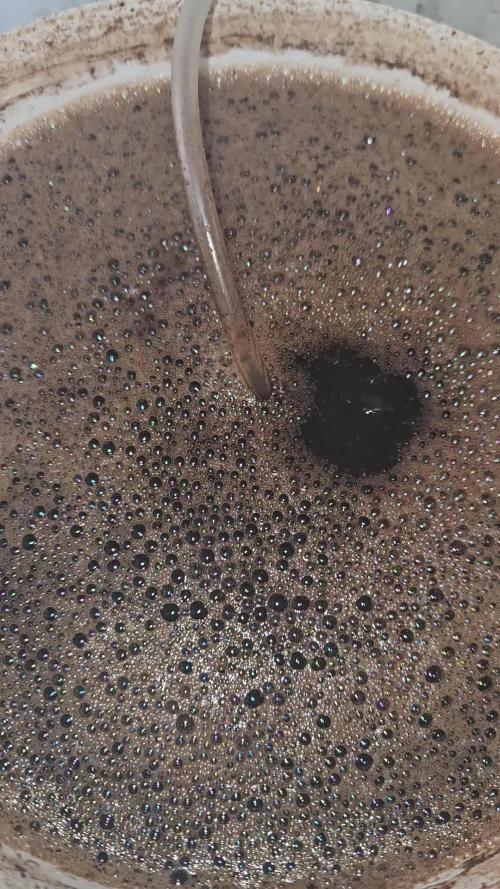
The plants received a compost tea feeding, and the wick irrigation system is working exactly as intended. So far, it has been performing exceptionally well.

Likes
11
Share


@Zurbena
Follow
We moved on to the second week.
The root has already reached the end of the pot.
I am amazed by the root development.
I did not expect such a big root and I think it could have been transplanted a little earlier.
On the twelfth day, he moved to a 22.7 L pot.

Likes
23
Share


@ElegantBuds
Follow
Good week this week.
The plant is growing and growing. I can’t complain.
One more week and then I will switch the lights to 12/12.
See you next week!

Likes
14
Share


@Mrs_Larimar
Follow
2024-08-31
One more Week and she will be harvested too, this is around her 5th. week in Flower,
and she buddes up very well, as long as it stays hot and dry she can stand, but if it starts to rain for days, iam going to cut her.
BREEDERS INFO
What exactly are the genetics in Auto Critical Orange Punch?
Auto Critical Orange Punch is a feminized autoflowering seed variety, the first Dutch Passion auto to use Critical genetics. The genetic base was Grandaddy Purple (Purps) x Orange Bud. This was called Orange Punch, and gave great potency and flavor. But yields were below average until she was crossed with an elite XXL Auto Kritical Bilbo. Auto Critical Orange Punch is one of our strongest strains with abundant yields and white buds that are completely covered with a thick layer of resin and beautiful orange flower hairs.
Auto Critical Orange Punch has thick compact buds that will provide a good yield in a relatively short period of time
Auto Critical Orange Punch is the autoflower seed version of our photoperiod Critical Orange Punch. This stable hybrid cannabis plant has roughly the same Indica and Sativa genetic content and can be regarded as a 50/50 variety. In this autoflower version, ruderalis genes (autoflower genetics) have of course also been crossed to make this strain flower automatically. This results in slightly more phenotype differences between the different plants than in the photoperiod version.
This strain can grow quite fast during the first 5-7 weeks of its life cycle. She grows strong branches that can bear long flowers. Blooms of 30-50 cm are no exception. She is classified as an XXL autoflower for all the right reasons! Her leaf structure is also that of a hybrid, she can grow very large fan leaves that convert a lot of light into energy. By the end of the flowering phase, the thickest branches with the heaviest flowers will need some support. By the 9th - 10th week, the buds will become so heavy that the branches can collapse under the weight.

Likes
34
Share


@BOMbolenath
Follow
The plant is developing well despite the high temperature.
During the week the weather got better, the plant is growing well.

Likes
17
Share


@Todzilla
Follow
2 Black Cherry Gelato BCG (love to smoke it, first time growing). Clones- from my clone guy.
1000w LED, 5 gallon xl & 15 gallon xxl Autopots,, coco/perlite 65/35, GH 3-part+ flourolicious, calimagic, SI, chelated iron, and humic acid , RO water, AC pro Controller and T8, 5x5 GG Tent with extension
Garage grow SoCal
This week I was out of town and let my grow grow. The autopots did their thing at about .6g a day for the 5g and over 1g a day for the 15g pot. I did battle multiple hot days in the garage.
We’re running just under 1000ppm with no issues. I ran out of bloom and used some powdered kool bloom and it worked well. Thinking of switching to jacks RO but it’s working so good now I don’t want to switch.
This weeks accomplishments:
I put the gelatos in fabric autopots, one 5g xl and one 15g xxl.
Scrogging to flatten the canpoy
Long term issues
Cooling and VPD targets during heat waves
Preventing pest and mold issues - my humidity crept up high when I was gone and I saw a few powder leaves which were promptly removed upon my return.
I hope you all are having as much fun as I am.
Best of luck gromies.
Check out my other purple push pop grow
I’ll be adding an outdoor light deprivation grow soon. Then we have side by side indoor versus outdoor grows in SoCal
Processing
Likes
150
Share


@RussianGrower
Follow
Hello my companions. I have been very busy with work lately and have spent very little time on my cultivation diaries. Soon I will be completely free, so I dedicate every minute to my plants and make a big tent. My Neville is 15 weeks old. It's the longest auto-blooming plant I've ever grown. I decided to give him 16 weeks to live and then harvest. I also started to prepare new plants for new diaries, but due to lack of time they were standing on the window without intense light for more than 3 days. Now I'm still germinating 2 plants to start a new diary of 8 plants. In General, I have very big plans and ambitions, and I hope that everything will be fine. I can't wait to finish the main work to fully devote myself to the plant.


Likes
22
Share


@Spliffi
Follow
Week 13👍🤙👍🌱
And it's Chop time. I made some bubble hash from the wet trim. First time and did not expect anything yet is was a success. Got a few drops. Will do one more bubble hash cycle with the dry trip. Overall the contest was nice. Still waiting on all the details.
Jon Dabs
Check them out here:
https://jondabs.com
@jondabs Instagram
The Sponsors
Check them out here:
Dutch Passion
https://dutch-passion.com/en/
Hydroponic.co.za
https://hydroponic.co.za/hydroponic/harvesting-and-growing-accessories/
Bud Juice
https://www.gohydro.co.za
The Best Grow
https://thebestgrow.co.za
Dynomyco
https://www.dynomyco.com
Nuclear Roots
https://www.nuclearroots.co.za
Photronic
https://shop.photronic.net
Special Thanks to Hydroponic.co.za. I buy all my products from them. Best service.
Daily updates coming...