


Likes
Comments
Share


@Elysian_gardens710
Follow
AK-47 Goxuak Autoflower by Genehtik is a truly awesome plant and really really fun to grow! My 1st thought was I wish I had know more when I ordered the seeds. I only bought 1 from the single seed centre .com 🤦♂️ Of all the plants our house sitters watched for us back in week 7, this is the only one they regularly ask about and want to know when its finished. Even they loved growing it! And they only spent a week with her and aren't gardeners 😄
Ashoka started in a Jiffy tomato pod and was transplanted almost as an afterthought. In fact we ran out of containers and had to improvise with the water pitcher. (We didn't have high hopes) Oops. The pitcher turned out to be a big benefit in that I could see the roots and diagnose and potential issues.
She has been in the same Fox Farms; Happy Frog soil ever since planting the pod into the pitcher. The soil held up good too. Ashoka didn't start showing any deficiencies until the end of week 6, around the middle of her stretch. Correcting this was very easy, we added the recharge at first but it didn't quite do it. We had to feed her Advanced Nutrients Bloom and Grow for about 2.5 weeks. But this Goxuak really never complained : 1:😎
Low Stress Training (LST) for Ashoka was a breeze! At 14 days she was 4" tall and too short to train. She doubled in height in a week and we started training around day 24. Just in the nick of time too! She entered flower about a week after that and stretched like crazy!🤪 the AK-47 gave us about 3 full weeks of nice flexible branches to train before hardening up. We ended up with a pretty even canopy and some solid colas too
I wanted to touch on the lighting as there isn't a lot of options on this platform. Ashoka spent her life under 2 different lights. 1st, she sprouted and spent the first 4 weeks vegging under 2x Viparspectra 600w(250 true watts) LEDs at an 18/6 light cycle. She finished her flower and fade under A Optic 8 (500 true watts) LED. At 18/6
At around day 60 I started flushing her.(well my house sitter Sam did the first time) We used Cyco Kleanse and flushed 5 Gallons thru her until the ppm was down to 350ish, I did the next 2 flushes. The 2nd I used Kleanse again getting the runoff ppm to ~120. Her final week I stopped ph-ing the water and just watered tap. I also gave her the 3rd and final flush with straight Ice cold tap water. She really showed a great fade!! Some buds definitely colored up too!!
Finally the Harevst:
I put her in a 5Gal bucket of ice in complete darkness for 4 days.😈 This was done with the intent to help her produce more resin and frost up. I can't say if it truly worked. She absolutely doubled the trichome production in those 4 days, but idk if it was the time or the darkness and ice. 🤷♂️🤷♂️ I kept her in a sealed closet with a oscillating fan and humidifier at 75°and 63%RH. On the 3rd day I lowered the RH to 50%. She got trimmed and put into jars on the 5th day after harvest. I am monitoring the humidity and burping regularly (8-10x a day)
Smoke Report:
Creamy pepper with a cherry syrup aftertaste.🤣🤪 I've only smoked a bowl so haven't tested the ashes. But she is curing nice. A bit harsh yet I expect will go away after a couple more days. The high is perfect tho! Just what we wanted. It creeps up on u. But you will be confused by the time you finish the bowl. A very cerebral high(I chopped her whole trichomes were only 10% amber) that was great with good company. My girl andI are both veteran smokers, but this bud still made us both giggly(a rarity). It's a good social smoke and was fun to be on around others. The only downsides were it caused a mild confusion and paranoia. Like I would forget what I was talking about then worry ppl were laughing at me for it(they were though) 🤣🤣
I plan to report more feedback after it had cured a couple weeks. I'll invite others people's opinions as well. Right now I can definitely say the AK-47 Goxuak from Genehtik it an autoflower I would recommend to anyone, but especially new auto growers. I will be ordering more next season if they ate available. Genehtik has won me over. They genetics were extremely stable and safe. No herms no deficiencies nothing but greatness!
🌱🌱🌱
I had to share! I was looking on the breeder Instagram page( @Genehtik_chile) and they used a few of my pictures of Ashoka to represent their AK-47 Goxuak auto. I really feel honored by this. I have only been growing for 5 months and know I'm not good, but it's inspiring and motivating when the breeder of the strain give you an attaboy like this. Thanks Genehtik! Stay tuned for my next autoflower run!!

Likes
17
Share


@MoneyGrowup
Follow
Glad with the results. The purple punch and the Blue gelato 41 already has a strong smell, girls are healthy all is going well.


Likes
32
Share


@Hawkbo
Follow
This week they are all just putting on some weight still a few weeks left to go. Pics were taken on Monday video on Tuesday. The aromas are pretty strong in the tent in general.
Shes closing in on the finish going to start the flush sometime this week I think just give it a long one. Took some pics with and without flash, using a 85mm and 40mm lense. The close ups are with the 85mm u can see the vibrance of the trichomes.



Likes
16
Share

@Bncgrower
Follow
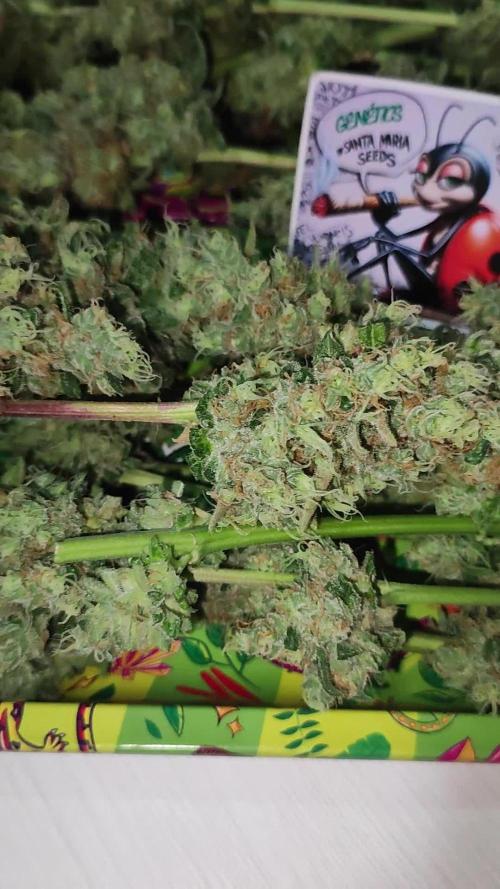
Harvested today, truly strong smell, cultivation was absolutely perfect from start to finish. Very happy with the result, anxious for the drying and curing process! Thank you for following along.. 🤜🤛🌱🌿🌲
Likes
25
Share


@Ultraviolet
Follow
ANTHOCYANIN production is primarily controlled by the Cryptochrome (CR1) Photoreceptor ( !! UV and Blue Spectrums are primary drivers in the production of the pigment that replaces chlorophyll, isn't that awesome!
1. Diverse photoreceptors in plants
Many civilizations, including the sun god of ancient Egypt, thought that the blessings of sunlight were the source of life. In fact, the survival of all life, including humans, is supported by the photosynthesis of plants that capture solar energy. Plants that perform photosynthesis have no means of transportation except for some algae. Therefore, it is necessary to monitor various changes in the external environment and respond appropriately to the place to survive. Among various environmental information, light is especially important information for plants that perform photosynthesis.
In the process of evolution, plants acquired phytochrome, which mainly receives light in the red light region, and multiple blue light receptors, including his hytropin and phototropin, in order to sense the light environment. .. In addition to these, an ultraviolet light receptor named UVR8 was recently discovered. The latest image of the molecular structure and function of these various plant photoreceptors (Fig. 1), focusing on phytochrome and phototropin.
Figure 1
Ultraviolet-visible absorption spectra of phytochrome, cryptochrome, phototropin, and UVR8. The dashed line represents each bioactive absorption spectrum.
2. Phytochrome; red-far red photoreversible molecular switch
What is phytochrome?
Phytochrome is a photochromic photoreceptor, and has two absorption types, a red light absorption type Pr (absorption maximum wavelength of about 665 nm) and a far-red light absorption type Pfr (730 nm). Reversible light conversion between the two by red light and far-red light, respectively(Fig. 1A, solid line and broken line). In general, Pfr is the active form that causes a physiological response. With some exceptions, phytochrome can be said to function as a photoreversible molecular switch. The background of the discovery is as follows. There are some types of plants that require light for germination (light seed germination). From that study, it was found that germination was induced by red light, the effect was inhibited by subsequent far-red light irradiation, and this could be repeated, and the existence of photoreceptors that reversibly photoconvert was predicted. In 1959, its existence was confirmed by the absorption spectrum measurement of the yellow sprout tissue, and it was named phytochrome. Why does the plant have a sensor to distinguish between such red light and far-red light? There is no big difference between the red and far-red light regions in the open-field spectrum of sunlight, but the proportion of red light is greatly reduced due to the absorption of chloroplasts in the shade of plants. Similar changes in light quality occur in the evening sunlight. Plants perceive this difference in light quality as the ratio of Pr and Pfr, recognize the light environment, and respond to it.
Subsequent studies have revealed that it is responsible for various photomorphogenic reactions such as photoperiodic flowering induction, shade repellent, and deyellowing (greening). Furthermore, with the introduction of the model plant Arabidopsis thaliana (At) and the development of molecular biological analysis methods, research has progressed dramatically, and his five types of phytochromes (phyA-E) are present in Arabidopsis thaliana. all right. With the progress of the genome project, Fi’s tochrome-like photoreceptors were found in cyanobacteria, a photosynthetic prokaryotes other than plants. Furthermore, in non-photosynthetic bacteria, a homologue molecule called bacteriophytochrome photoreceptor (BphP) was found in Pseudomonas aeruginosa (Pa) and radiation-resistant bacteria (Deinococcus radiodurans, Dr).
Domain structure of phytochrome molecule
Phytochrome molecule can be roughly divided into N-terminal side and C-terminal side region. PAS (Per / Arndt / Sim: blue), GAF (cGMP phosphodiesterase / adenylyl cyclase / FhlA: green), PHY (phyto-chrome: purple) 3 in the N-terminal region of plant phytochrome (Fig. 2A) There are two domains and an N-terminal extension region (NTE: dark blue), and phytochromobilin (PΦB), which is one of the ring-opening tetrapyrroles, is thioether-bonded to the system stored in GAF as a chromophore. ing. PAS is a domain involved in the interaction between signal transduction-related proteins, and PHY is a phytochrome-specific domain. There are two PASs and her histidine kinase-related (HKR) domain (red) in the C-terminal region, but the histidine essential for kinase activity is not conserved.
3. Phototropin; photosynthetic efficiency optimized blue light receptor
What is phototropin?
Charles Darwin, who is famous for his theory of evolution, wrote in his book “The power of move-ment in plants” published in 1882 that plants bend toward blue light. Approximately 100 years later, the protein nph1 (nonphoto-tropic hypocotyl 1) encoded by one of the causative genes of Arabidopsis mutants causing phototropic abnormalities was identified as a blue photoreceptor. Later, another isotype npl1 was found and renamed phototropin 1 (phot1) and 2 (phot2), respectively. In addition to phototropism, phototropin is damaged by chloroplast photolocalization (chloroplasts move through the epidermal cells of the leaves and gather on the cell surface under appropriate light intensity for photosynthesis. As a photoreceptor for reactions such as escaping to the side of cells under dangerous strong light) and stomata (reactions that open stomata to optimize the uptake of carbon dioxide, which is the rate-determining process of photosynthetic reactions). It became clear that it worked. In this way, phototropin can be said to be a blue light receptor responsible for optimizing photosynthetic efficiency.
Domain structure and LOV photoreaction of phototropin molecule
Phototropin molecule has two photoreceptive domains (LOV1 and LOV2) called LOV (Light-Oxygen-Voltage sensing) on the N-terminal side, and serine / on the C-terminal side. It is a protein kinase that forms threonine kinase (STK) (Fig. 4Aa) and whose activity is regulated by light. LOV is one molecule as a chromophore, he binds FMN (flavin mononucleotide) non-covalently. The LOV forms an α/βfold, and the FMN is located on a β-sheet consisting of five antiparallel β-strands (Fig. 4B). The FMN in the ground state LOV shows the absorption spectrum of a typical oxidized flavin protein with a triplet oscillation structure and an absorption maximum wavelength of 450 nm, and is called D450 (Fig. 1C and Fig. 4E). After being excited to the singlet excited state by blue light, the FMN shifts to the triplet excited state (L660t *) due to intersystem crossing, and then the C4 (Fig. 4C) of the isoaroxazine ring of the FMN is conserved in the vicinity. It forms a transient accretionary prism with the tain (red part in Fig. 4B Eα) (S390I). When this cysteine is replaced with alanine (C / A substitution), the addition reaction does not occur. The effect of adduct formation propagates to the protein moiety, causing kinase activation (S390II). After that, the formed cysteine-flavin adduct spontaneously dissociates and returns to the original D450 (Fig. 4E, dark regression reaction).
Phototropin kinase activity control mechanism by LOV2
Why does phototropin have two LOVs? Atphot1 was found as a protein that is rapidly autophosphorylated when irradiated with blue light.
The effect of the above C / A substitution on this self-phosphorylation reaction and phototropism was investigated, and LOV2 is the main photomolecular switch in both self-phosphorylation and phototropism. It turns out that it functions as. After that, from experiments using artificial substrates, STK has a constitutive activity, LOV2 functions as an inhibitory domain of this activity, and the inhibition is eliminated by photoreaction, while LOV1 is kinase light. It was shown to modify the photosensitivity of the activation reaction. In addition to this, LOV1 was found to act as a dimerization site from the crystal structure and his SAXS. What kind of molecular mechanism does LOV2 use to photoregulate kinase activity? The following two modules play important roles in this intramolecular signal transduction.
Figure 4
(A) Domain structure of LOV photoreceptors. a: Phototropin b: Neochrome c: FKF1 family protein d: Aureochrome (B) Crystal structure of auto barley phot1 LOV2. (C) Structure of FMN isoaroxazine ring. (D) Schematic diagram of the functional domain and module of Arabidopsis thaliana phot1. L, A’α, and Jα represent linker, A’α helix, and Jα helix, respectively. (E) LOV photoreaction. (F) Molecular structure model (mesh) of the LOV2-STK sample (black line) containing A’α of phot2 obtained based on SAXS under dark (top) and under bright (bottom). The yellow, red, and green space-filled models represent the crystal structures of LOV2-Jα, protein kinase A N-lobe, and C-robe, respectively, and black represents FMN. See the text for details.
1) Jα. LOV2 C of oat phot1-to α immediately after the terminus
Rix (Jα) is present (Fig. 4D), which interacts with the β-sheet (Fig. 4B) that forms the FMN-bound scaffold of LOV2 in the dark, but unfolds and dissociates from the β-sheet with photoreaction. It was shown by NMR that it does. According to the crystal structure of LOV2-Jα, this Jα is located on the back surface of the β sheet and mainly has a hydrophobic interaction. The formation of S390II causes twisting of the isoaroxazine ring and protonation of N5 (Fig. 4C).
As a result, the glutamine side chain present on his Iβ strand (Fig. 4B) in the β-sheet rotates to form a hydrogen bond with this protonated N5. Jα interacts with this his Iβ strand, and these changes are thought to cause the unfold-ing of Jα and dissociation from the β-sheet described above. Experiments such as amino acid substitution of Iβ strands revealed that kinases exhibit constitutive activity when this interaction is eliminated, and that Jα plays an important role in photoactivation of kinases.
2) A’α / Aβ gap.
Recently, several results have been reported showing the involvement of amino acids near the A’α helix (Fig. 4D) located upstream of the N-terminal of LOV2 in kinase photoactivation. Therefore, he investigated the role of this A’α and its neighboring amino acids in kinase photoactivation, photoreaction, and Jα structural change for Atphot1. The LOV2-STK polypeptide (Fig. 4D, underlined in black) was used as a photocontrollable kinase for kinase activity analysis. As a result, it was found that the photoactivation of the kinase was abolished when amino acid substitution was introduced into the A’α / Aβ gap between A’α and Aβ of the LOV2 core. Interestingly, he had no effect on the structural changes in Jα examined on the peptide map due to the photoreaction of LOV2 or trypsin degradation. Therefore, the A’α / Aβ gap is considered to play an important role in intramolecular signal transduction after Jα.
Structural changes detected by SAXS
Structural changes of Jα have been detected by various biophysical methods other than NMR, but structural information on samples including up to STK is reported only by his results to his SAXS. Not. The SAXS measurement of the Atphot2 LOV2-STK polypeptide showed that the radius of inertia increased from 32.4 Å to 34.8 Å, and the molecular model (Fig. 4F) obtained by the ab initio modeling software GASBOR is that of LOV2 and STK. It was shown that the N lobes and C lobes lined up in tandem, and the relative position of LOV2 with respect to STK shifted by about 13 Å under light irradiation. The difference in the molecular model between the two is considered to reflect the structural changes that occur in the Jα and A’α / Aβ gaps mentioned above.
Two phototropins with different photosensitivity
In the phototropic reaction of Arabidopsis Arabidopsis, Arabidopsis responds to a very wide range of light intensities from 10–4 to 102 μmol photon / sec / m2. At that time, phot1 functions as an optical sensor in a wide range from low light to strong light, while phot2 reacts with light stronger than 1 μmol photon / sec / m2. What is the origin of these differences? As is well known, animal photoreceptors have a high photosensitivity due to the abundance of rhodopsin and the presence of biochemical amplification mechanisms. The exact abundance of phot1 and phot2 in vivo is unknown, but interesting results have been obtained in terms of amplification.
The light intensity dependence of the photoactivation of the LOV2-STK polypeptide used in the above kinase analysis was investigated.
It was found that phot1 was about 10 times more photosensitive than phot2. On the other hand, when the photochemical reactions of both were examined, it was found that the rate of the dark return reaction of phot1 was about 10 times slower than that of phot2. This result indicates that the longer the lifetime of S390II, which is in the kinase-activated state, the higher the photosensitivity of kinase activation. This correlation was further confirmed by extending the lifespan of her S390II with amino acid substitutions. This alone cannot explain the widespread differences in photosensitivity between phot1 and phot2, but it may explain some of them. Furthermore, it is necessary to investigate in detail protein modifications such as phosphorylation and the effects of phot interacting factors on photosensitivity.
Other LOV photoreceptors Among fern plants and green algae, phytochrome ɾphotosensory module (PSM) on the N-terminal side and chimera photoreceptor with full-length phototropin on the C-terminal side, neochrome (Fig. There are types with 4Ab). It has been reported that some neochromes play a role in chloroplast photolocalization as a red light receiver. It is considered that fern plants have such a chimera photoreceptor in order to survive in a habitat such as undergrowth in a jungle where only red light reaches.
In addition to this, plants have only one LOV domain, and three proteins involved in the degradation of photomorphogenesis-related proteins, FKF1 (Flavin-binding, Kelch repeat, F-box 1, ZTL (ZEITLUPE)), LKP2 ( There are LOV Kelch Protein2) (Fig. 4Ac) and aureochrome (Fig. 4Ad), which has a bZip domain on the N-terminal side of LOV and functions as a gene transcription factor.
4. Cryptochrome and UVR8
Cryptochrome is one of the blue photoreceptors and forms a superfamily with the DNA photoreceptor photolyase. It has FAD (flavin adenine dinucle-otide) as a chromophore and tetrahydrofolic acid, which is a condensing pigment. The ground state of FAD is considered to be the oxidized type, and the radical type (broken line in Fig. 1B) generated by blue light irradiation is considered to be the signaling state. The radical type also absorbs in the green to orange light region, and may widen the wavelength region of the plant morphogenesis reaction spectrum. Cryptochrome uses blue light to control physiological functions similar to phytochrome.
It was identified as a photoreceptor from one of the causative genes of UVR8 Arabidopsis thaliana, and the chromophore is absorbed in the UVB region by a Trp triad consisting of three tryptophans (Fig. 1D). It is involved in the biosynthesis of flavonoids and anthocyanins that function as UV scavengers in plants.
Conclusion
It is thought that plants have acquired various photoreceptors necessary for their survival during a long evolutionary process. The photoreceptors that cover the existing far-red light to UVB mentioned here are considered to be some of them. More and more diverse photoreceptor genes are conserved in cyanobacteria and marine plankton. By examining these, it is thought that the understanding of plant photoreceptors will be further deepened.

Likes
1
Share

@ChitownCannaChica
Follow
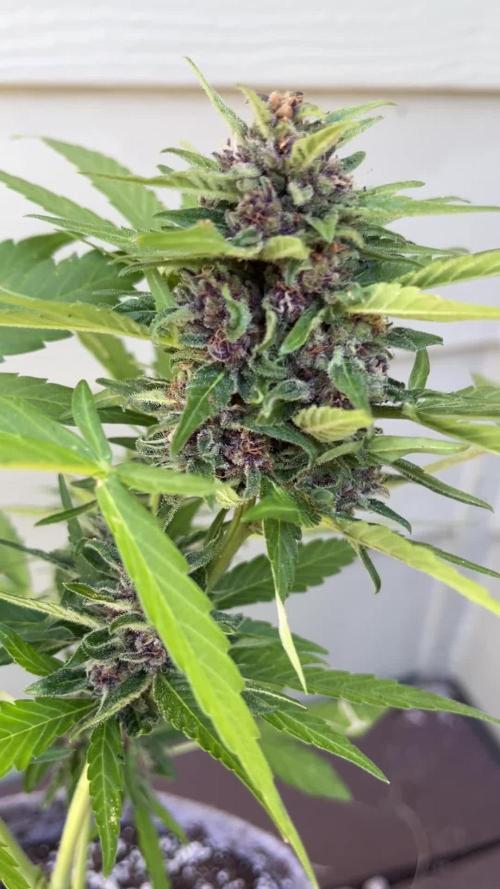
Temps dropped by 10-17 degrees- especially at night. Have not given any nutrients, just hose water. She seems to be doing fine. Ipm weekly and the cold is making her slow down a touch. Other than that, the frost is developing nicely and countering all this plant has been through with the temp swings, bouts of rain, bouts of dryness, wind, sun, no sun, etc- I should get a decent little harvest! Smell is divine! Has these sweet vanilla pine aromas with a deep purple bud. Probably chopping next week!🏻💚
Likes
46
Share


@eldruida_lamota
Follow
Que hay familia, vamos con la cuarta semana de vida de estas Candy Rain de Zamnesia, para el concurso POWER BUDS Plagron x Zamnesia CONTEST.
Vaya color verde que se están marcando, se ven bien sanas.
Esta vez regué con una aplicación de Sugar Royal, 0.8 ml x litro de agua y power bud 0.5 ml x litro, por supuesto controlando siempre el Ph, que ahora mismo lo dejamos en 6.
La temperatura máxima está en 23.5 grados y la humedad está entorno al 55%.
E practicado una apical a 1 de 5 porque en el armario pondré 4 y como me sobra una pues la dejaré en otro indoor, aún así subiré fotos igualmente.
Hasta aquí es todo, la cuarta semana de crecimiento, hoy cambiaremos el foco a 12/12 e iremos viendo cómo progresan y se empiezan a formar las flores estas próximas semanas.
Os comento que tengo un descuento y para que compréis en la web de Zamnesia de un 20%, el código es ZAMMIGD2023
The discount 20% and the code is ZAMMIGD2023
https://www.zamnesia.com/
Hasta aquí todo, buenos humos 💨💨💨


Processing
Likes
5
Share


Likes
42
Share


@Ganjagrandaddy
Follow
Hi Grow room buddies. Here we have another generous sponsors run of Zamnesia Autos. Ordering was a simple process with a great delivery and after sales welcome to the brand. A nice touch indeed. Rhe pack I recieved was well wrapped and secure with no signs of being tampered with in any way. A really nice package of goodies was found inside from plant labels to grinders and plenty of nice stickers to decorate too.
I chose the 3 strains as 1 I love as a strain in the amnesia haze and the Gsc is one i have fancied growing for a while. The sticky beast looks like a great new strain to sample too.
I used the cup of water soak for 24 hours to soften the seed casing and dissolve any protective coatings they may have . After 24 hours they were still all sealed but had at least sunk so I left them a further 12 hours. I then put them allnjnto a light mix to hopefully germinate under my lights but at a good distance away and in a heated propagator . Within a few days I saw a few heads popping up and signs of most being awake by disturbed soil. Sadly leaving them for a few more days resulted in 6 making the surface but the only Sticky beast that got through , opened a second set of leaves and keeled over with a stragulated looking stem halfway up ??. I recovered her in her fallen state in the hope she may still fight on but it isn't looking good. ( see pics !) With only 5 making it to this point , I have had to fill the gaps with other seeds. A little disappointed to get 4 failures but hopefully Zamnesia will ensure this is looked at ?.
I now have 3 very healthy looking Amnesia Haze and 2 sprightly looking Girls scout cookies to play with. I have now got them into their 30L pots and have done on them to encourage a little moisture while they settle in. Fingers crossed........
Likes
13
Share


@PopsCycle
Follow
Harvest day - Runtz Auto from @kannabiaglobal / @kannabiaseedsfr / @kannabiaseedsde / @kannabiaseedsint @kannabiaseedsus
Nutrients: @atami_deutschland / @atami.international / @stefan_atami / @daniel_atami
Soil: @promixgrowers_eur / @promixgrowers_global / @promixgrowers_unfiltered / @promixmitch
LED: @powerlux_spain
Tent: @secretjardin_
Thank you to everyone who follows and supports my work 🙏🏻💚
This means a lot to me and you should know you are a part of it and only with you all this is possible, you are the best community 😎
Growers love, love for everyone

Likes
20
Share


@Ganja_Victoria_Aus
Follow
She smells outstanding, super sticky. I'm waiting for super patience

Likes
9
Share


@CampaCavallo
Follow
Allora ragazzi?! Come va? Spero bene come questa cucciolotta di Fast Buds 👍🏽
.... Ma qualcuno di voi ha riconosciuto questo seme misterioso? Io qualche idea ce l'avrei, e voi? 🎄😘
Processing
Likes
4
Share


@Snuffys_garden
Follow
Off and running with some flowers starting to show up and swell. Had some nutrient deficiencies I had to address but looks like all is dialed in now. Started using Fish Shit and some Grow Big to help with deficiencies and this seems to have helped, but I will continue to monitor and update. 🌱🤙
Likes
48
Share


@BudsBanditUK
Follow
Plant has now been moves outside in the terrible british weather. The plant is absolutely loving it. So many buds have developed and now turning a nice purple colour. Also now has a very sweet smell.


Likes
21
Share


@Bak2Blk
Follow
Yall see the yellowing of the leaves closest to the top? I've since switched my nutes over to Tiger Bloom and I've thrown in some Cal-mag into the mix. They'd gotten kinda droopy but since I changed their nutes up a bit, they've been perky af even tonight as it's getting close to lights out. I switched them over to flower on Sunday. They're already starting to stretch in just a few days which tells me that they're feeling much better. My last video... even though it's not loaded correctly is from tonight. It's 11pm, lights are out in an hour and they're still perky. Love it!! 😍😍😍
4/6/23: Yall.... the plant in the back right hermied!!! OMFG. The 2 tallest branches had seeds on them... just popped up because they weren't there yesterday or at least I didn't notice. The seeds were concentrated at the top, I didn't find any on the rest of the plant but with as bushy as they are, there may be more. I cut those 2 tallest branches down to below where the seeds were but I will be watching that plant and the rest like a hawk for more seeds. I didn't find any on the other 3 plants but still I'm saddened. Unsure of why this one plant is hermie'ing. Smh
