


Likes
Comments
Share

@GoodTimesOrganics
Follow
Welcome Back!💚
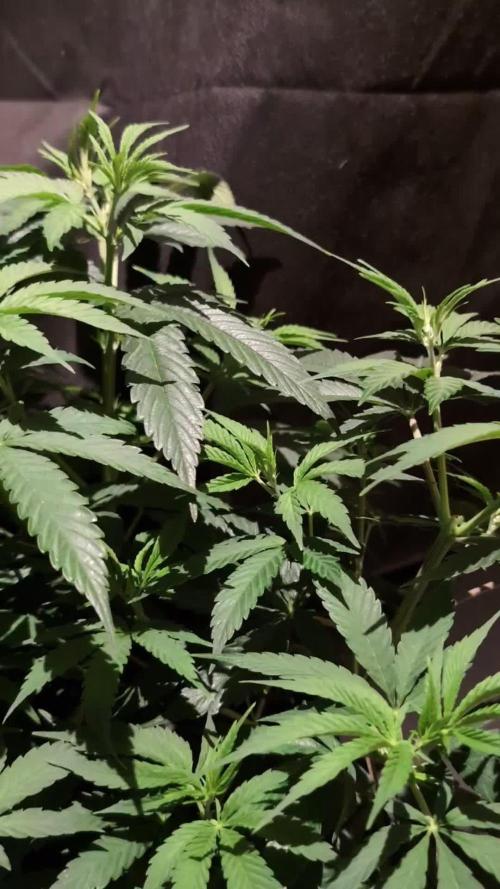
Nach der siebten Woche des Wachstums und dem zweiten Topping, war es Zeit die Pflanze am 07.02.2026 in die Blüte über zu leiten.
Sie hat inzwischen eine richtig buschige und breitgefächerte Struktur.
Durch das anwenden der LST Technik wird das Höhenwachstum gut im Zaun gehalten.
Die Umgebungsgegebenheiten sind OK:
—————
🌞 Temp: 21°C
🌚 Temp: 18°C bis 19°C
💨 RH: 54%
VPD: 0,85 kPa
—————
Viele Grüße 👋

Likes
2
Share


@HIAZ_urbanbudfarmer
Follow
Plant at the front #3 has had slowed growth but buds are filling out pretty well now, pretty sure she is a Orange sherbet. Back 2 are on week 3 day 17!!! & Are going Awesome, buds stacking up & down every branch! Going to get some really good Cola's of them! They are loving the 730watts!’ of light, back left plant looks like a Tropicana Cookies, going to do some defoliation on her & tie branches down a bit to open up middle of plant to allow more light & air to lower bud sites.

Likes
2
Share

@eldruida_lamota
Follow
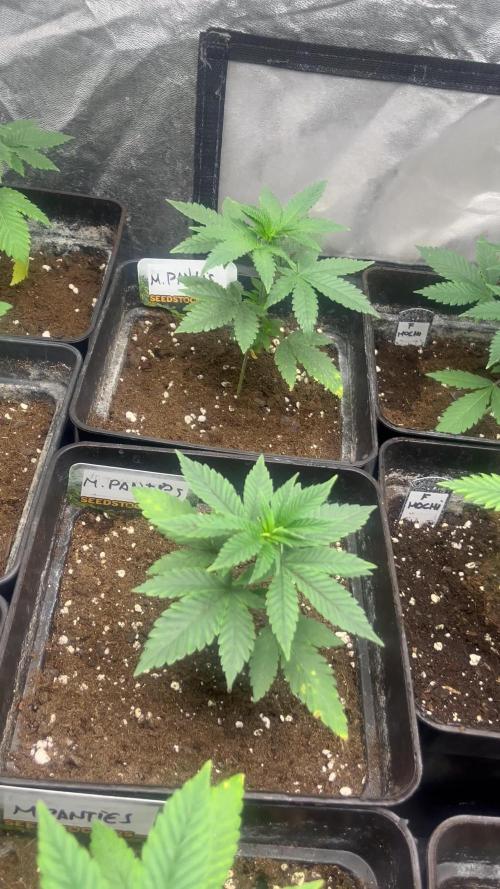
Que pasa familia, vamos con la cuarta semana de vida de estas Mandarin Panties feminizadas de Seedstockers.
Vamos al lío, las plantas se trasplantaron a macetas de 7 litros.
El ph se controla en 6.5, la temperatura la tenemos entre 24/22 grados y la humedad ronda el 70%.
El ciclo de crecimiento puse 20h de luz, el foco está al 50% de potencia.
Me gustaría estar más encima este cultivo pero la salud me está impidiendo un poco este 100% con el proyecto. Con suerte la semana que viene andaré mejor.
- os dejo por aquí un CÓDIGO: Eldruida
Descuento para la tienda de MARS HYDRO.
https://www.mars-hydro.com
Hasta aquí todo, Buenos humos 💨💨💨

Likes
14
Share


@StickyFingah420
Follow
Crecimiento fuerte y vigoroso, una planta muy linda y resistente a las bajas temperaturas. Se comportó bastante bien con la dieta de nutes que le dí ya que no sufrió carencia ni bloqueo de nutrientes.
Espere cogollos de alta calidad cubiertos por una gran capa de resina aromática.
Su humo es relajante y sabe muy rico a berries y un fondo diésel terroso.
Muchas gracias a la gente de Fast Buds por la oportunidad de cultivar genéticas de alta calidad.
Ahora solo queda esperar a darles un buen curado y así catar toda la paleta de sabores y aromas en su máximo esplendor, hasta entonces!.
Likes
3
Share


@MicroHidroGrow
Follow
Día 36.
Estamos en 6ta semana. Los esquejes se atrasaron debido a que han sido días muy fríos y no he logrado enraizarlos. Decidí poner el extractor de aire junto con la bomba de aire, así solamente se prende 15 minutos cada hora. Así estoy logrando temperaturas mayores a 24°C en el indoor y así voy a lograr el enraizado. La planta ya tiene un tamaño que ocupa casi todo el indoor. Pero lo importante es que la voy guiando y ya estoy proyectando como va a ir cada rama. El tamaño va a exceder lo que esperaba, pero aún así creo que si logro lo que tengo en mente, voy a sacar muy buenos resultados. Igual no me voy a arriesgar demasiado, así que si contando 10 días desde ahora, no logro que los esquejes enraicen, voy a pasar la madre a floración sola. Cómo pueden ver, las ramas están bastante gruesas, y el la ramificaciones van ganando su lugar cada una. Las raíces son demasiado grandes, aunque sé que voy a poder poner la planta en el sistema de arriba igual, aunque me voy a tener que ayudar de algo para meterlas. Es importante no utilizar las manos, ya que se pueden transmitir muchos hongos.
Voy a seguir actualizando e ir viendo que pasa. Pero ya estamos en los últimos días de crecimiento, haya o no esquejes. Incluso puede que ya pase la planta al indoor de arriba para darle mayor libertad de crecimiento. Esto me va a servir para tlmar en cuenta en la próxima camada que se vendrá. La idea de esto es hacer las cosas rápido, y no en gran tamaño. Pero siendo que ya estoy en el baile, no me queda otra que bailar.
Día 40
Los esquejes no estaban enraizando, así que decidí cambiarlos de lugar y los puse arriba de la luz, donde les da calor y luz tenue. Espero que ahora si agarren.
Y hoy fue el gran día, pasé la planta madre al módulo de arriba. Pero lo voy a dejar una semana más creciendo. De esa forma veo si los esquejes llegan a agarrar a tiempo. Y además tuve un problema en el trasplante. Primero que la planta se hizo más grande que lo esperado, y la raíz también. Cuando la pasé, hubo contacto de la raiz con prácticamente todo lo que había cerca. Sumado a que se enredó en el oxigenador, así que quedó una pidra difusora en la raíz.
Dado el alto riesgo de haberla contaminado con algún hongo, le puse una solución de agua con agua oxigenada, recirculando continuamente, para lavar las raices y de paso bajar el stress de teansplante. Mañana veremos cómo arranca el día.
En el aprendizaje me llevo que en la madre, es mejor hacer un corte en el primer nudo, o dejar las ramas del segundo y quitar las del primero. Y así que queden sólo dos ramas, para luego dejar a los esquejes en el medio. Eso planeo hacer con la próxima variedad.
Entre tanto ahora sólo me preocupa que la raíz no se haya contaminado en el traspaso. Ya en 8 días estaré pasando a floración si no hay esquejes. Si llegan a agarrar, habrá que dar unos días de crecimiento hasta que alcancen a la madre en altura. Pero ya está todo en definición. Ahora sólo queda esperar y seguir guiando a la planta. Ya tengo ganas de poner la próxima, pero falta bastante para eso. Tengo 10 semanas de flora, así que recién en 5 semanas voy a poner la nueva madre.
Likes
34
Share


@Grey_Wolf
Follow
Barneys Farm Pineapple Chunk Take 3
10th February 2022
Another Great week of flowering weather , even tho the daytime temps reach 40c
the plants seem to be thriving 😀 with this one in particular 👌
I have not needed to add anything to this soil I made which goes to show that I made it almost perfectly this time around.
One major difference to this lot is that I grew a crop of sweet corn in it last summer , followed by a full bed of
leafy green vegetables such as Spinach , Kale , Silverbeet , Lettuce and Chard.
I am now seeing the first signs that the girls need more but I am still waiting for the Guano to arrive 😏
Despite this
She is cruising along really well and I predict a harvest in about 7 weeks .
Loving it !! 😎
Thankyou for stopping by 👍

Likes
33
Share


@Hydro_sweetness
Follow
Hey guys welkome back in week 12 of the Sensi Seeds Silver Haze, we are almost there just a few more weeks to go befor she is done! For this week i upped her water volum cause they drink 2 times faster, i also added 1 extra ml of ultimate PK for the buds to explode, the buds are allreday start to feel prety compact and they give a of smells sweet minty, pine and citrus!
Buds also covered in sticky resin and i was thinken to give them a tiny bit of controlled stress to let them produce more THC, any of you guys have experiance? Let me know
The NL x Haze clones are groenig nice, the one on the right wil be cutter down in to clones and i Will prepare hem for the outdoor season and the left one will be put under 12/12 as soon the Silver Haze are done.
Thats it for now hope you guys enjoy my diarie, see you all back in week 13, i think i will decide in that week how long she will need to finish off!

Processing
Likes
7
Share


@SybDarret
Follow
They are 45 and 50 cm
Both of them look pretty, each one is different from the other but they are beautiful 😍
Taller still being fat, her leaves are turning darker and i like it.
The smaller have more branches, so i think in the end they both will yield about the same, or maybe smaller yields more. Let's see.
Both plants don't look like other diaries i've been following 😯
They have a strong fruity sweet smell, But not as strong as PE.
Watered yesterday with nutrients, i'm not sure if keep feeding them or not. I guess if i give them one more week (maybe cut them on feb 11) their colas may gain some weight, specially lower buds.
Added a video of each plant, i hope you enjoy 😺


Likes
4
Share

@JeyGanesha
Follow
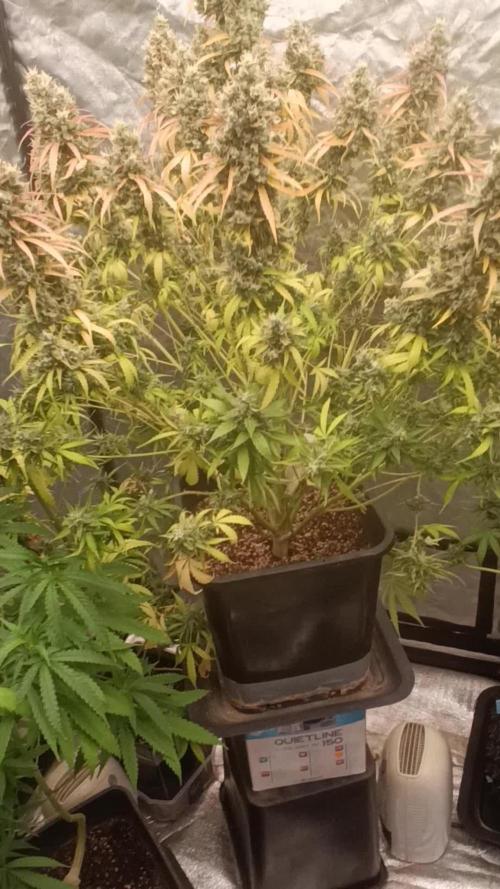
Ieri 24/7/2025 ho messo fuori in giardino del mio brother questa matanuska....qui dovrebbe esplodere 😂😉👍💪.spero che in questi 2 mesi di fioritura ci siano belle giornate di sole da dare alla pianta tutto il fullpower che ha bisogno,💪🙏
Likes
Comments
Share

@Vet_J
Follow
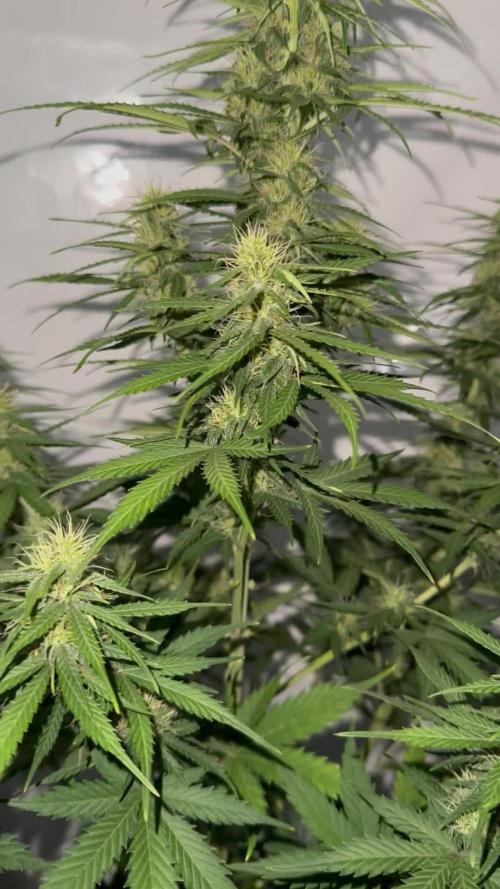
Growth is going great again
The previous problem has been resolved. The yellowing of the leaves has not spread upwards
I did a final defoliation this week. I didn't want to do an aggressive defoliation, I just removed the damaged leaves and those that were directly on the buds.
This week it looks healthy, the buds are slowly thickening, I will slightly increase the dose of flowering fertilizer at the end of the week.
It already absorbs three liters of water quite quickly and there is no water coming out of the pot, so I will increase it to four liters.

Likes
4
Share


@2x2UkGrow420
Follow
Had to tie up branches to take the weight of these heavy ass nugs, can’t want to taste this smell orangey as f**k! 🔥🔥🔥 started flush midway through the week.


Likes
44
Share


@UKauto
Follow
Last week for her now. Had her last feed other day and starting her flush tomorrow.
She's put a bit of weight on like and stinking more and more 👌🏻
Looking like a lush fade coming in over this last week too.
Next entry will be the harvest ✌️🏻

Likes
4
Share


@lotero
Follow
Las amnesia están malitas. Ns exactamente por qué es. El único fallo que creo haber cometido ha sido regar de más, supurando por abajo un par de veces.
He regado cada 4-5 días (muy poco) así q ns si el sustrato está muy compacto y por eso no traga ni como airearlo


Processing
Likes
33
Share


@Ferenc
Follow
Day 72: 600W LED, 18 hours on 6 hours off the same with ventilation. Ferilization is the same except BlackBerry Kush and LSD-25 they are being flushed. Water intake also remains the same 200ml per day. Humidity approx 35 percent.
Day 74: BlackBerry Kush and LSD-25 have to be harvested this week Friday so no more water. Colorado Cookies and Northern Light next week so started flushing them. Glueberry OG needs a bit more time.


Likes
2
Share


@MarianoDoBom
Follow
Seguimos com as meninas agora no scrog, estão desenvolvendo bem, daqui a pouco começamos com a fase de engorda.

Likes
17
Share


@Skipi007
Follow
The second week of flowering, last bigger cut, I accidentally broke one of the smaller top ones 😔😤, the girl is doing well 👍
Day 63: the eighth week went without major changes, the girl shows no shortcomings and grows nicely.