


Likes
Comments
Share


Likes
43
Share

@DE_BW
Follow
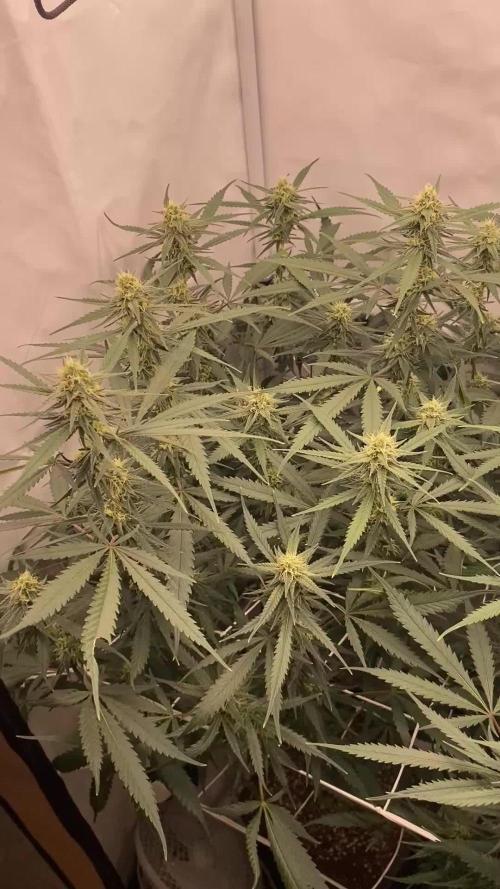
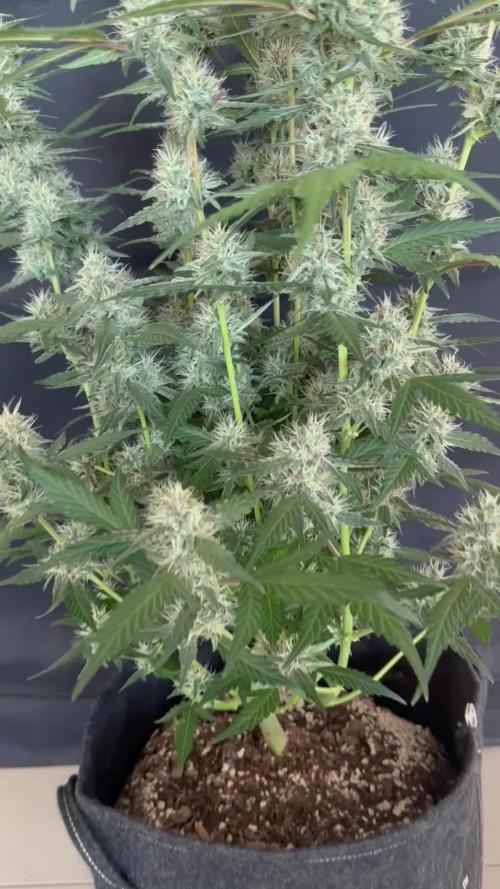
The Guava Runtz continues to stack buds beautifully across the entire plant, with the flowers steadily swelling and gaining density. A noticeable frost layer is starting to develop, coating the buds and sugar leaves with an increasingly thick blanket of trichomes. This week I performed a defoliation after discovering some feeding damage on the leaves, and starting with the next watering I will transition from Big Bud to Overdrive for the final flowering phase.
Likes
18
Share


@Grower_Of_Persia
Follow
my dry and cure style is this:
4 days of hanging upside down to get water activity lower to around 0.6 in 50% humidity and 26 C temp (i know its a little high but we are in a hot summer right now and i cant get it lower even with air conditioner) and then after 4 days of drying i remove leaves and stalks, trim buds and move them to jar for the rest of their life :D . and in the first 4 days of curing i open the jar door and let hem get some fresh air in the jar for about 5 minutes and close the jar door again, after 4 days of curing like that buds are smokable but they will get better as they getting cured about 1 month.
buds are one of the hardest as fucking rocks type of buds! very dense , compact , sticky , smelly , amazing at every aspect
growing stage was 56 days and flowering stage was 75 days total (harvested tops at day 64th)
the total weight of dry buds was : (plant #1 & #3 top buds 56 G + lower buds 22 G ) 78 G + (plant #2 top buds 47 G + lower buds 18 G ) 55 G + (plant #4 top buds 120 G + lower buds 67 G ) 187 G = 367 G

Likes
34
Share


@Ultraviolet
Follow
Yellow butterfly came to see me the other day; that was nice.
Starting to show signs of stress on the odd leaf, localized isolated blips, blemishes, who said growing up was going to be easy!
Smaller leaves have less surface area for stomata to occupy, so the stomata are packed more densely to maintain adequate gas exchange. Smaller leaves might have higher stomatal density to compensate for their smaller size, potentially maximizing carbon uptake and minimizing water loss. Environmental conditions like light intensity and water availability can influence stomatal density, and these factors can affect leaf size as well. Leaf development involves cell division and expansion, and stomatal differentiation is sensitive to these processes. In essence, the smaller leaf size can lead to a higher stomatal density due to the constraints of available space and the need to optimize gas exchange for photosynthesis and transpiration. In the long term, UV-B radiation can lead to more complex changes in stomatal morphology, including effects on both stomatal density and size, potentially impacting carbon sequestration and water use. In essence, UV-B can be a double-edged sword for stomata: It can induce stomatal closure and potentially reduce stomatal size, but it may also trigger an increase in stomatal density as a compensatory mechanism. It is generally more efficient for gas exchange to have smaller leaves with a higher stomatal density, rather than large leaves with lower stomatal density. This is because smaller stomata can facilitate faster gas exchange due to shorter diffusion pathways, even though they may have the same total pore area as fewer, larger stomata. Leaf size tends to decrease in colder climates to reduce heat loss, while larger leaves are more common in warmer, humid environments. Plants in arid regions often develop smaller leaves with a thicker cuticle and/or hairs to minimize water loss through transpiration. Conversely, plants in wet environments may have larger leaves and drip tips to facilitate water runoff. Leaf size and shape can vary based on light availability. For example, leaves in shaded areas may be larger and thinner to maximize light absorption. Leaf mass per area (LMA) can be higher in stressful environments with limited nutrients, indicating a greater investment in structural components for protection and critical resource conservation. Wind speed, humidity, and soil conditions can also influence leaf morphology, leading to variations in leaf shape, size, and surface characteristics. Small leaves: Reduce water loss in arid or cold climates.
Environmental conditions significantly affect gene expression in plants. Plants are sessile organisms, meaning they cannot move to escape unfavorable conditions, so they rely on gene expression to adapt to their surroundings. Environmental factors like light, temperature, water, and nutrient availability can trigger changes in gene expression, allowing plants to respond to and survive in diverse environments.
Depending on the environment a young seedling encounters, the developmental program following seed germination could be skotomorphogenesis in the dark or photomorphogenesis in the light. Light signals are interpreted by a repertoire of photoreceptors followed by sophisticated gene expression networks, eventually resulting in developmental changes. The expression and functions of photoreceptors and key signaling molecules are highly coordinated and regulated at multiple levels of the central dogma in molecular biology. Light activates gene expression through the actions of positive transcriptional regulators and the relaxation of chromatin by histone acetylation. Small regulatory RNAs help attenuate the expression of light-responsive genes. Alternative splicing, protein phosphorylation/dephosphorylation, the formation of diverse transcriptional complexes, and selective protein degradation all contribute to proteome diversity and change the functions of individual proteins.
Photomorphogenesis, the light-driven developmental changes in plants, significantly impacts gene expression. It involves a cascade of events where light signals, perceived by photoreceptors, trigger changes in gene expression patterns, ultimately leading to the development of a plant in response to its light environment.
Genes are expressed, not dictated! While having the potential to encode proteins, genes are not automatically and constantly active. Instead, their expression (the process of turning them into proteins) is carefully regulated by the cell, responding to internal and external signals. This means that genes can be "turned on" or "turned off," and the level of expression can be adjusted, depending on the cell's needs and the surrounding environment. In plants, genes are not simply "on" or "off" but rather their expression is carefully regulated based on various factors, including the cell type, developmental stage, and environmental conditions. This means that while all cells in a plant contain the same genetic information (the same genes), different cells will express different subsets of those genes at different times. This regulation is crucial for the proper functioning and development of the plant.
When a green plant is exposed to red light, much of the red light is absorbed, but some is also reflected back. The reflected red light, along with any blue light reflected from other parts of the plant, can be perceived by our eyes as purple.
Carotenoids absorb light in blue-green region of the visible spectrum, complementing chlorophyll's absorption in the red region. They safeguard the photosynthetic machinery from excessive light by activating singlet oxygen, an oxidant formed during photosynthesis. Carotenoids also quench triplet chlorophyll, which can negatively affect photosynthesis, and scavenge reactive oxygen species (ROS) that can damage cellular proteins. Additionally, carotenoid derivatives signal plant development and responses to environmental cues. They serve as precursors for the biosynthesis of phytohormones such as abscisic acid () and strigolactones (SLs). These pigments are responsible for the orange, red, and yellow hues of fruits and vegetables, while acting as free scavengers to protect plants during photosynthesis.
Singlet oxygen (¹O₂) is an electronically excited state of molecular oxygen (O₂). Singlet oxygen is produced as a byproduct during photosynthesis, primarily within the photosystem II (PSII) reaction center and light-harvesting antenna complex. This occurs when excess energy from excited chlorophyll molecules is transferred to molecular oxygen. While singlet oxygen can cause oxidative damage, plants have mechanisms to manage its production and mitigate its harmful effects.
Singlet oxygen (¹O₂) is considered a reactive oxygen species (ROS). It's a form of oxygen with higher energy and reactivity compared to the more common triplet oxygen found in its ground state. Singlet oxygen is generated both in biological systems, such as during photosynthesis in plants, and in cellular processes, and through chemical and photochemical reactions. While singlet oxygen is a ROS, it's important to note that it differs from other ROS like superoxide (O₂⁻), hydrogen peroxide (H₂O₂), and hydroxyl radicals (OH) in its formation, reactivity, and specific biological roles. Non-photochemical quenching (NPQ) protects plants from damage caused by reactive oxygen species (ROS) by dissipating excess light energy as heat. This process reduces the overexcitation of photosynthetic pigments, which can lead to the production of ROS, thus mitigating the potential for photodamage. Zeaxanthin, a carotenoid pigment, plays a crucial role in photoprotection in plants by both enhancing non-photochemical quenching (NPQ) and scavenging reactive oxygen species (ROS). In high-light conditions, zeaxanthin is synthesized from violaxanthin through the xanthophyll cycle, and this zeaxanthin then facilitates heat dissipation of excess light energy (NPQ) and quenches harmful ROS.
The Issue of Singlet Oxygen!!
ROS Formation: Blue light, with its higher energy photons, can promote the formation of reactive oxygen species (ROS), including singlet oxygen, within the plant.
Potential Damage: High levels of ROS can damage cellular components, including proteins, lipids, and DNA, potentially impacting plant health and productivity.
Balancing Act: A balanced spectrum of light, including both blue and red light, is crucial for mitigating the harmful effects of excessive blue light and promoting optimal plant growth and stress tolerance.
The Importance of Red Light:
Red light (especially far-red) can help to mitigate the negative effects of excessive blue light by:
Balancing the Photoreceptor Response: Red light can influence the activity of photoreceptors like phytochrome, which are involved in regulating plant responses to different light wavelengths.
Enhancing Antioxidant Production: Red and blue light can stimulate the production of antioxidants, which help to neutralize ROS and protect the plant from oxidative damage.
Optimizing Photosynthesis: Red light is efficiently used in photosynthesis, and its combination with blue light can lead to increased photosynthetic efficiency and biomass production.
In controlled environments like greenhouses and vertical farms, optimizing the ratio of blue and red light is a key strategy for promoting healthy plant growth and yield.
Understanding the interplay between blue light signaling, ROS production, and antioxidant defense mechanisms can inform breeding programs and biotechnological interventions aimed at improving plant stress resistance. In summary, while blue light is essential for plant development and photosynthesis, it's crucial to balance it with other light wavelengths, particularly red light, to prevent excessive ROS formation and promote overall plant health. Oxidative damage in plants occurs when there's an imbalance between the production of reactive oxygen species (ROS) and the plant's ability to neutralize them, leading to cellular damage. This imbalance, known as oxidative stress, can result from various environmental stressors, affecting plant growth, development, and overall productivity.
Causes of Oxidative Damage: Abiotic stresses: These include extreme temperatures (heat and cold), drought, salinity, heavy metal toxicity, and excessive light. Biotic stresses: Pathogen attacks and insect infestations can also trigger oxidative stress. Metabolic processes: Normal cellular activities, particularly in chloroplasts, mitochondria, and peroxisomes, can generate ROS as byproducts. Certain chlorophyll biosynthesis intermediates can produce singlet oxygen (1O2), a potent ROS, leading to oxidative damage. ROS can damage lipids (lipid peroxidation), proteins, carbohydrates, and nucleic acids (DNA). Oxidative stress can compromise the integrity of cell membranes, affecting their function and permeability. Oxidative damage can interfere with essential cellular functions, including photosynthesis, respiration, and signal transduction. In severe cases, oxidative stress can trigger programmed cell death (apoptosis). Oxidative damage can lead to stunted growth, reduced biomass, and lower crop yields.
Plants have evolved intricate antioxidant defense systems to counteract oxidative stress. These include: Enzymes like superoxide dismutase (SOD), catalase (CAT), and various peroxidases scavenge ROS and neutralize their damaging effects. Antioxidant molecules like glutathione, ascorbic acid (vitamin C), C60 fullerene, and carotenoids directly neutralize ROS. Developing plant varieties with gene expression focused on enhanced antioxidant capacity and stress tolerance is crucial. Optimizing irrigation, fertilization, and other management practices can help minimize stress and oxidative damage. Applying antioxidant compounds or elicitors can help plants cope with oxidative stress. Introducing genes for enhanced antioxidant enzymes or stress-related proteins over generations.
Phytohormones, also known as plant hormones, are a group of naturally occurring organic compounds that regulate plant growth, development, and various physiological processes. The five major classes of phytohormones are: auxins, gibberellins, cytokinins, ethylene, and abscisic acid. In addition to these, other phytohormones like brassinosteroids, jasmonates, and salicylates also play significant roles.
Here's a breakdown of the key phytohormones:
Auxins: Primarily involved in cell elongation, root initiation, and apical dominance.
Gibberellins: Promote stem elongation, seed germination, and flowering.
Cytokinins: Stimulate cell division and differentiation, and delay leaf senescence.
Ethylene: Regulates fruit ripening, leaf abscission, and senescence.
Abscisic acid (ABA): Plays a role in seed dormancy, stomatal closure, and stress responses.
Brassinosteroids: Involved in cell elongation, division, and stress responses.
Jasmonates: Regulate plant defense against pathogens and herbivores, as well as other processes.
Salicylic acid: Plays a role in plant defense against pathogens.
1. Red and Far-Red Light (Phytochromes):
Red light:
Primarily activates the phytochrome system, converting it to its active form (Pfr), which promotes processes like stem elongation and flowering.
Far-red light:
Inhibits the phytochrome system by converting the active Pfr form back to the inactive Pr form. This can trigger shade avoidance responses and inhibit germination.
Phytohormones:
Red and far-red light regulate phytohormones like auxin and gibberellins, which are involved in stem elongation and other growth processes.
2. Blue Light (Cryptochromes and Phototropins):
Blue light:
Activates cryptochromes and phototropins, which are involved in various processes like stomatal opening, seedling de-etiolation, and phototropism (growth towards light).
Phytohormones:
Blue light affects auxin levels, influencing stem growth, and also impacts other phytohormones involved in these processes.
Example:
Blue light can promote vegetative growth and can interact with red light to promote flowering.
3. UV-B Light (UV-B Receptors):
UV-B light:
Perceived by UVR8 receptors, it can affect plant growth and development and has roles in stress responses, like UV protection.
Phytohormones:
UV-B light can influence phytohormones involved in stress responses, potentially affecting growth and development.
4. Other Colors:
Green light:
Plants are generally less sensitive to green light, as chlorophyll reflects it.
Other wavelengths:
While less studied, other wavelengths can also influence plant growth and development through interactions with different photoreceptors and phytohormones.
Key Points:
Cross-Signaling:
Plants often experience a mix of light wavelengths, leading to complex interactions between different photoreceptors and phytohormones.
Species Variability:
The precise effects of light color on phytohormones can vary between different plant species.
Hormonal Interactions:
Phytohormones don't act in isolation; their interactions and interplay with other phytohormones and environmental signals are critical for plant responses.
The spectral ratio of light (the composition of different colors of light) significantly influences a plant's hormonal balance. Different wavelengths of light are perceived by specific photoreceptors in plants, which in turn regulate the production and activity of various plant hormones (phytohormones). These hormones then control a wide range of developmental processes.
Likes
4
Share

@DickJones
Follow
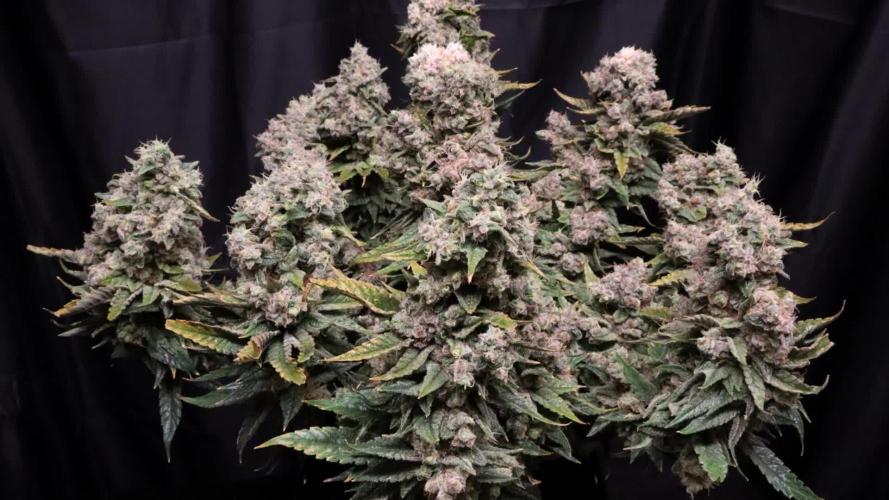
Bubble Gum was definitely the greatest yielder of the 3. So much flower I could not get in with the scissors to cut the leaves off at the stem. Very excited to see the final weight.


Likes
6
Share

@sanibelisl
Follow
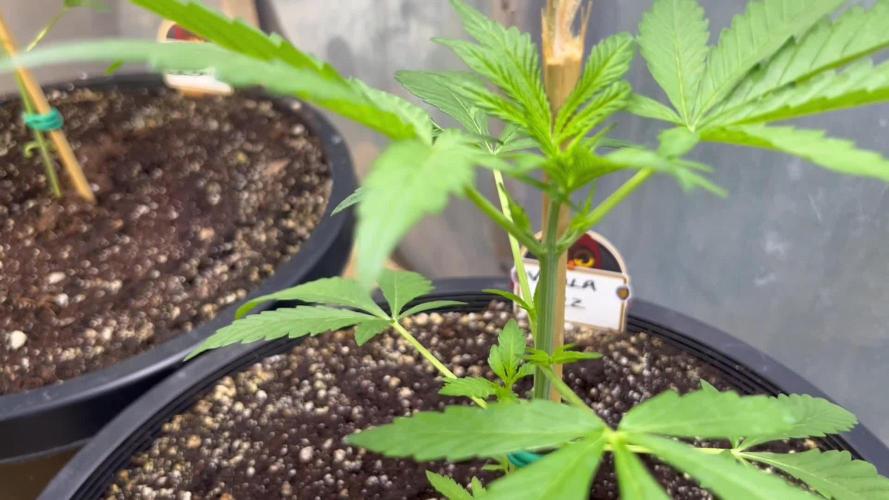
Girls had a great week at summer camp! Smiles are found everywhere regarding their new homes. Plenty of room to grow and wiggle their toes in the amended formula 707, which is doing what was expected retaining moisture nicely, bringing the watering to a minimum.
All three girls received merit badges for hiking(survived transplanting), water sports(2 liters), light tolerance(supplemental lighting), physical fitness(color and strength)and kite flying(added a fan). They are all looking forward to this weeks activities.
Girls seem to like what they’re getting at the chow hall, green and growing daily, strong and upright. Plenty of good stuff in the soil.
A fan was added and the benefits are three fold, dry out the top layer of soil, pest control, makes them stronger.
I will update as needed.
***update, the girls are looking good this morning, well rested, well nourished, vibrant. Their roots must be really liking the 707 as evident by the rapid growth. Measured them this morning with the H. W. At8 in. the V. F. at 8.5 and the 91 Grapes at 10 in. And at least an inch wider as well. No water will be needed today.
Note. The greenhouse may be better suited for growing mushrooms than cannabis. Pine trees and shade. No direct sunlight until after 2pm. Dappled sun all morning long, so installed a T-5 4 foot ArgroLed 6550(k) daylight led fixture above the girls. That was a bright idea!
***update, New Video includes new homemade lighting.
*** update, new videos.
Before 7/14 After 7/15 videos of the girls being sprayed with a folier dose of silica. I had forgot to add the silica on Sunday when I had watered them and they needed it! I would not be able to water them again until at least Friday so delivered it via a foliage spray. Worked wonders , will apply again in a week. Let me know what you think.
***update, OMG going to ignore a few people here who seem to interested in my financial status, whom i care to promote and what i do, so let's put this to rest... i'm a hobbyist cannabis grower who enjoys cultivating autoflowers... i'm not paid nor sponsored by anyone , i simply like and trust the genetics from Night Owl Seeds and in my opinion so should anyone else who desires quality autoflower genetics, please feel free to use the breeder of your choice as i don't want any issues because i prefer one over another(happy mOuse).
***update, Three Girls!!! pics will follow. ** ok pics are here. I labeled most of them so should be self explanatory. Can’t seem to get any sunny afternoons. It’s a little disappointing as it is the only time the greenhouse gets direct sunlight. Watered last Sunday, today is Wednesday and they are good no water needed, 707 on the job! Such a difference from the coco grow where I was I nutrient mixing slave.lol

Likes
24
Share


@Grnhead
Follow
The smell is really starting to come in. Bought 2 sets of 80 mm internal fans to increase the airflow through the plant and in the box. Many of the lower leaves are curling down and I think it was a mixture of the high morning humidity and the lack of air flow. Now there are 5 internal fans and a large external fan, and it should be more than enough air flow. Growth is starting to slow finally, the height is perfect right now but I have a feeling it’s going to keep getting taller. I keep tying her down as best as I can.

Likes
6
Share


@Grey_Wolf
Follow
Mephisto Genetics Double Grape 4th week of Flowering 29th December 2019
This plant is really starting to impress me with it's smell and stickiness. Also the main stem seems to filling in with bud beautifully with very little spacing between branches that arent covered with bud growth. I gave her a 1/3rd of a cup of Mr B's Green Trees Bloom mix and a 1/4 tspoon of Great White.
Thats it for this week See you back here in 2020 😁


Processing
Likes
45
Share


@SupaDank
Follow
End of day 41 flower and will be flushing both girls on day 42 flower. Overall the buds don’t seem as fat as it should be but hopefully during the flush they should gain some weight. I took a bunch of clones so those will be going to flower soon and now I have a better understanding of how to treat these girls during the flowering stage. Also popped two Blueberry seeds so I will have a journal on that soon.


Likes
25
Share


@PrairieFrostGrow
Follow
*********Week 6 (Flower week) - January 14 to 20, 2020 (Days 36 to 42 from germination)
The week went by pretty quick and overall and started to show more positivity. She finally set her buds 👍 and has taken off with more growth😃.....stretching. Wrestled with the idea that she might be a photo rather than an auto, had that one before, and wanted to ensure she was not. Moved her into the veg tent and with the lower light intensity and temperature she seemed to relax and finally set her bud sites......she is an auto......so why the heck so long to flip? Genetic issue or normal growth pattern??? Again, happy to see the growth but she will not be a producer of quantity so hoping the quality will be there😯😕😯
Have done some further cleaning on the bottom and removed a couple of small growing nodes. The branches were tiny and I want to keep her focused on the thicker branches she already has. Introduced Massive this week for bud density. She has become tall and lanky over the last two weeks. Not at all the growth pattern I was expecting.......would have definitely bent her top over had I known she would go like this😩 Wondering if I should bend over SW2 or not now😕
Keeping wet and happy is a balance. She was good with 2L last week and by the end of the week now she wants close to 3L. I also bumped up the CalMag on one of the feedings a bit to help ensure she doesn’t show issues. Won’t be using CalMag much longer as we are getting later in flower.
Not sure how much longer to feed......will go another full 2 weeks for sure. I suspect she will run a full 10 weeks, then if allowing a 2 week flush you only go through week 8. Really don’t know what she is going to do at this point😕😕
Going to be interesting if her sister follows everything in the same manner.......she is in a 1 gal pot...downsides from 3 gal........live and learn Baby!!!👏👍
Little more detail:
Jan 14/20 - Day 36
- only given 1L of plain water, pH 6.1
- no nutrients.
- thinking she maybe a photo period......if so then I need to back up her medium to and end of veg state and get ready to run her in 12/12 to flip her.......had happen with a Dinafem pack before.
- that would suck.....another 7 weeks to go if she is.
Jan 15/20 - Day 37
- 2L water - Dual Fuel & CalMag @ 0.5ml/L - 450ppm & pH to 5.7
- She is now 18" tall!!!!! A little odd compared to other diaries for this strain??
- Side branches firming up but the low ones are still soft.
- Her Main stem is still soft as well.....more of what you expect in veg not flower......as a comparison.
- Nodes growth is still odd, some nodes have four fan leaves for example?
Jan 16/20 - Day 38
- 1L plain water only today.
- She did not drink a lot yesterday.
- SW1 & SW2 moved to veg tent under T5.
- ThinkIng I will shock them a bit and see what happens. If a photo she should calm down and show signs of new growth.....too many hairs popping but grasping at straws here.....if she is an auto she should form buds in a couple of days???
- Set the temp in the tent to 82 degrees and humidity to 55%.
- Moved light to 14” off top cola.
Jan 17/20 - Day 39
- Nothing given today. No water.....dry out day.
- She looked good this morning.....perky and happy
- Leaves opened up and exposed buds........give her another day or so.......she is an auto......just really slow consistently through all stages.
Jan 18/20 - Day 40
- 2L full feed plus 1L plain water added to reduce the ppm and not shock her.........740ppm and 6.1pH.......total watering 3L
- nothing in PM.....pot still wet.
- concerned about bud sites not getting enough light so moved her back into the flower tent in evening.
- replaced CO2 in tent.
- Very happy today and good growth with leave up.
- 22” tall and 24” wide..
Jan 19/20 - Day 41
- 3L feeding again today. Full strength again but added Piranha and Voodoo Juice at 2ml/L as well.....975 ppm 5.9 pH.
- full strength was 1275ppm so added plain water to bring down a bit.
- runoff: 1130 ppm and 5.7 pH.....Start bringing up the pH now to 6.1.
- Cut off two more low bud sites with tiny branches.
- Tied her down more now to help make her wider. Reached up to a couple of the higher nodes I had left alone previously.
- Seeing a Kush style long branches. She is now the tallest in the tent!
Jan 20/20 - Day 42
- Awesome night after stripping. She is taller again and looks happy, more vibrant!
- 2L plain water 6.2 pH in AM.
- 2L plain water Sensyzime @ 2ml, LW8 & Rezin @ 1.5ml = 75 ppm 5.9 pH. In PM.
- She seems happy. Filling out more on the side branching.
- Bud sites are getting larger but still small overall........if like everything else with girl.......just give her time......patience😩😩😃👌
Have a great week fellow growers.......
Likes
40
Share


@BudXs
Follow
3 phenos that I can identify so far:
1) A purple punch leaning crown tipped
2) A "caterpillar nug"
3) A dosi leaning crown tip
Should be interesting! Its snowing ! The frost on these plants is unbelievable, and the density of the flowers the same

Likes
37
Share


@DaddyPrime2
Follow
5/5/2024
Pistils pistils pistils
5/8 these plants are fucking exploding! Super exciting to see them like this. Pistils everywhere and they’re just STACKING! don’t even see budlets yet, just pistils. The structure of these plants is beautiful. They handle training fairly well. I topped one and super cropped it and did a bit of lst. I was feeling impatient so I decided to see what happened if I pushed the one a little harder and left the other to grow naturally.
Likes
22
Share


@CrazyFlowers07
Follow
Hola a todos aqui estamos en la tercera semana y este finde empiezo ya el low strees training !! Vamos a ver como cambia estructura la planta

Likes
6
Share


@Aleks555
Follow
Zamnesia - Pineapple Express (F1 Auto) - 76 Days
The time has come—harvest day! It's bittersweet to say goodbye to this incredible journey, but all great things must come to an end. The Pineapple Express (F1 Auto) has been a true wonder, delivering both in strength and flavor, with an aroma that's unforgettable. This strain produced the hardest buds we've ever grown—rock-solid and packed with resin, the likes of which we’ve never seen before.
A massive thank you to Zamnesia for providing these remarkable seeds! And an extra special shoutout to Xpert Nutrients for the outstanding fertilizers. The results speak for themselves—your nutrients truly work miracles, creating those dense, powerful buds that we're so proud of.
Stay tuned for the final photo and video showcase of this incredible harvest. We're thrilled to share it with you all!
Xpert Nutrients – The Key to Powerful Harvests
When it comes to achieving the best results, we trust only proven solutions. And with Xpert Nutrients, our plants are getting nothing but the best! These nutrients are not just a product, they’re a true catalyst for growth and powerful yields. Thanks to a balanced formula, each dose nourishes our plants with essential elements, promoting their health, strength, and abundant harvests.
Every cycle with Xpert Nutrients shows progress. We see incredible results: dense, resinous buds, rich aromas, and, of course, yields we can be proud of. With these nutrients, there are no compromises – only maximum performance!
Thank you, Xpert Nutrients, for your continuous support and for helping us unlock the full potential of our plants. The results speak for themselves!
Likes
4
Share

@fadedgreentaurus
Follow
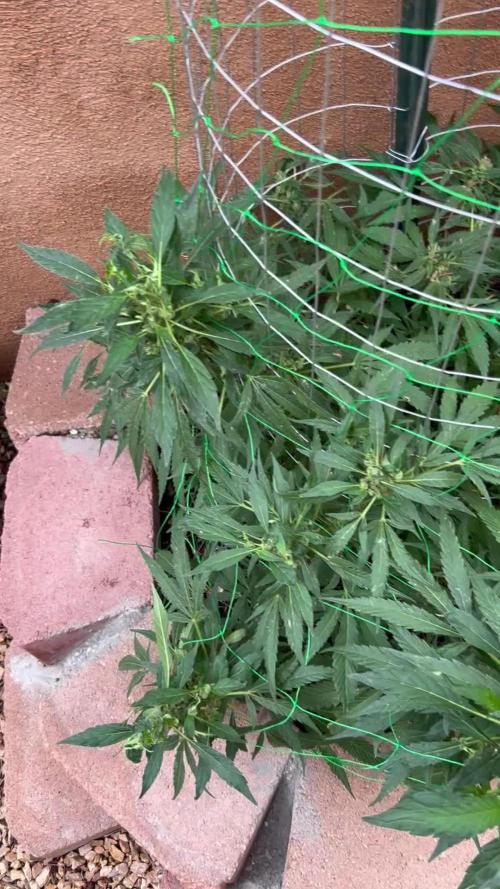
Cover crop breaking through lots of visible beneficial insects dirt smells good. Primed for the rest of veg/preflower.
It with mycorrhizae molasses humic fulvic liquid this water will hit with the remainder of the alaska fish emulsion the next few watering plan on keeping kelp mycorrhizae and molasses. Mostly applying top dress going through flower as well as some potash and the remainder Pk blend I prepared.
Ph a little higher than I wish might be a culprit of some over watering gonna allow a long dry retest and go from there those that have overcame the hormonal flowering shit are beginning to take off. Been amending the gravel and dirt surrounding my planting area and water around it too trying to encourage further outward root spread.
Likes
38
Share


@Green_Mountains
Follow
I started these seeds on Friday, January 29, 2021. Planted them on Sunday, January 31st in Happy Frog soil in a manure pot.
I've struggled with keeping the temp below 80F while keeping the humidity up. It was around 57%. I had to turn my exhaust fan on medium and the temp is currently 75.7F and the humidity is at 49%. This is with 2 cool mist humidifiers in a 2X4 foot tent. I do have 2 other small fans blowing as well. One inside and one at the intake vent outside the tent.
This is my first grow so any advice will be greatly appreciated!! I'll post the end of week one pics later this weekend!


Likes
6
Share


@KivzBudz
Follow
Overall I’m very happy to end my first run like this. I think I made a pretty decent job and I can’t wait to try the finished product after curing.
Happy growing everyone! 🍀🌱

Likes
Comments
Share


@BruWeed
Follow
18/10 - Cumple 6 semanas en etapa de floracion. Su evolución fue muy rapida y los cocos se encuentran muy bien desarrollados. El banco recomienda dejarla en floracion de 8 a 9 semanas.
Se encuentra muy resinosa con mucho olor. La parte principal parece un arbol.
No tuve ningun problema en toda su etapa. Los nutrientes los tomo de forma perfecta, las chalas se encuentran verdes y perfectas. Solo en la parte baja estan un poco amarillas pero es normal por que la luz no llega.
Podes seguirme en instagram como @bruweed_arg