





@DreamIT
Follow
Sponsored by:
🎆ANESIA SEEDS🎆-💡VIPARSPECTRA💡-💐GREEN BUZZ LIQUIDS💐-🛠️WEDRYER🛠️
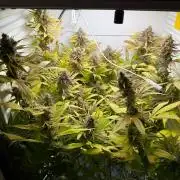
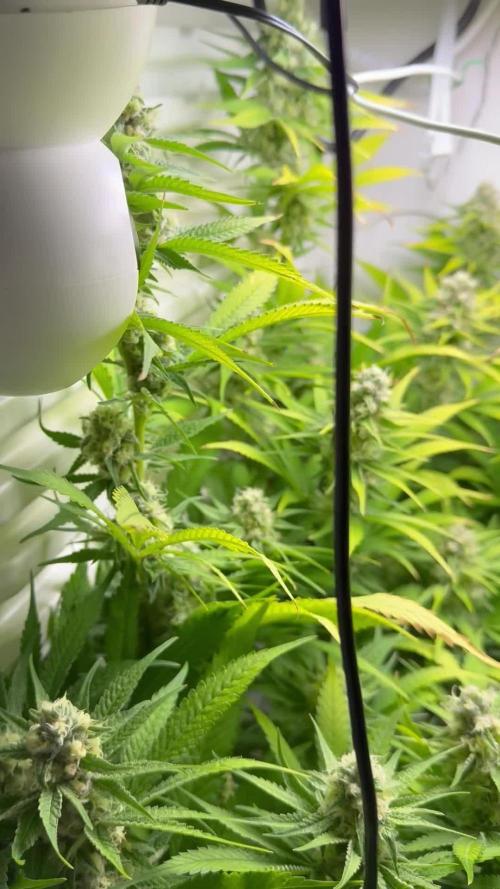
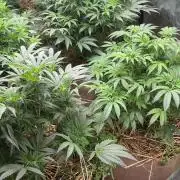
28/7 they grow monstrously well, next week they come into bloom
2/8 it took a few days of absence to discolor the leaves and dry out the soil. Today I will be watering properly with Green buzz nutrients fertilizers before sending them into bloom
__________________________________________
Personal advertising (contains affiliate links)
__________________________________________
🦄 The varieties of Anesia seeds all have an extremely high content of THC and cannabinoids. They were bred specifically for the effect and therefore find wide applications for medical purposes as well.
✅https://bit.ly/Anesiaseeds_
__________________________________________
Did you know that Green Buzz Liquids fertilizers are 100% vegan? A complete line of products ready to give the best to each of your plants! Visit the site and see my journals to see how they work 🦄
🤯 And with the code "dreami t" you will immediately receive a 15% discount on your purchases
✅https: //bit.ly/GreenBuzzLiquidsPro
__________________________________________
👀 Are you looking for a good lamp to start with? 👀
🌞Viparspectra has something more than the others, take a look at their site.
⏩ Use "GDVIP" for an extra discount on amazon or "DREAMIT3" for an extra 5 %% discount
👀 Search for it on Amazon
✅Amazon USA: https://amzn.to/30xSTVq
✅Amazon Canada: https://amzn.to/38udUVe
✅Viparspectra UE: bit.ly/ViparspectraUE
✅Viparspectra USA: bit.ly/ViparspectraUS
______________________________________________
🌈 Tired of blowing on your weed hoping it dries quickly? Check out the Wedryer website! You will find a well-made accessory that will help your weed dry in just 8-10 days without the annoying risk of finding mold or other annoyances! (no affiliate links)
✅https: //bit.ly/Wedryer_
______________________________________________
📷🥇Follow the best photos on Instagram 🥇📷
https://www.instagram.com/dreamit420/
Backup
https://www.instagram.com/dreamit4200/
🔻🔻Leave a comment with your opinion if you pass by here🔻🔻
🤟🦄💚 Thank you and good growth 💚🦄🤟




@DogDoctorOfficial
Follow
# 💙 Project Blue Tent – Week 12 💙
## Blue Waffle F1 – Pheno B
### 🌸 466 Photos. 600 Photos. One Ridiculously Frosty Girl! ❄️😂
Hello everyone, and welcome back to another chapter inside Project Blue Tent! 💙🌱
And my friends...
I REALLY DON'T KNOW WHAT TO SAY ANYMORE! 😂❄️
Well, actually, I do. I have plenty to say, because this beautiful girl deserves her own report!
Last week, we talked about the incredible uniformity we're seeing throughout this tent. Four plants, two different cultivars, the same environment, the same irrigation system, and the same nutritional program.
And this week?
Her sister is looking ridiculously beautiful too!
But today, we're giving the spotlight to Blue Waffle F1 – Pheno B, because even when plants share the same room and the same conditions, each one deserves to have her own story documented.
And honestly, what a story she's giving us.
The flowers are stacking. The buds are developing. The frost is becoming increasingly impressive, and the whole plant is showing us why I love documenting every stage of a grow.
We've made a few small adjustments to the environment, increased the power of the overhead LEDs, and left the nutrient recipe unchanged.
No unnecessary interventions.
Just a beautiful ecosystem, some seriously frosty flowers, and a grower who's spending far too much time staring at them.
😂💙🌸
Let's get into it!
## 🌿 PHENO B – SAME ROOM, SAME ENVIRONMENT, SAME BEAUTIFUL STORY
If you've been following Project Blue Tent, you'll already know how much work went into getting these girls to this point.
The long vegetative period gave us the structure. The topping and training helped organize the growth. The SCROG supported the canopy, and the second layer of support helped us manage the flowering structure after the stretch.
We also improved the available space inside the tent by moving the extraction equipment outside and raising the main lights.
All those decisions helped us establish the environment we're working with today.
And now?
We're watching the flowers develop within that structure.
Blue Waffle F1 Pheno B is approximately 145 cm tall, and the overall framework is already established. We're not looking to reshape the plant every week or make changes just to have something to report.
At this stage, I'm much more interested in observing the flowers, following their development, and seeing how the plant responds to the environment.
And she's giving us plenty to look at!
## 🌸 THE FLOWERS ARE STACKING BEAUTIFULLY
One of the things that really catches my attention this week is the flower development.
Look at those close-ups!
The flowering sites are becoming increasingly defined, the buds are developing along the branches, and the amount of visible resin in the photographs is absolutely beautiful.
The white pistils are still prominent, and the flowers are continuing to develop.
This is such an interesting stage because the plant is gradually shifting our attention away from the structure and toward the flowers themselves.
Earlier in the project, we were talking about stretch, canopy management, training, defoliation, and support.
All of that work established the framework.
Now we're looking at what that framework is carrying.
And Pheno B is certainly giving us a reason to keep the camera ready.
She's stacking. She's budding. She's developing.
And she's looking ridiculously frosty!
😂❄️💙
## ❄️ THE FROST IS REAL, MY FRIENDS!
I know I keep saying it.
And I know I'm probably going to keep saying it next week too.
But LOOK AT HER!
😂😂😂
The close-up photographs show an incredible amount of detail across the developing flowers and surrounding sugar leaves.
And that's precisely why I enjoy taking the time to photograph these plants properly.
From a distance, you can appreciate the overall structure and the way the flowering sites are distributed.
Get closer, though, and there's an entirely different world waiting to be discovered.
The trichomes. The pistils. The tiny details across the flowers.
It's beautiful to see, and it's even more satisfying when we can document those details and compare them with the previous weeks.
And the best part?
Her sisters are looking just as impressive.
This isn't a story about one plant doing all the work while the others watch.
The entire tent is giving us something to appreciate.
But today, Pheno B gets the spotlight.
And she's absolutely shining! 💙🌸❄️
## 📸 PHOTO STACKING – 466 PHOTOS AND 600 PHOTOS COMBINED!
Now, let's talk about something a little different in this week's report.
The photography!
For this girl, we managed to create two separate photo stacks.
One combines 466 photographs, while the other combines 600 photographs.
And yes, my friends, that's a lot of photographs!
😂📸
We weren't able to take this plant out of the tent and move her into the studio setup, so we had to work with the conditions available to us inside the grow room.
It's not the same as stacking photographs in the studio, where we have much more control over the environment and the shooting conditions.
But we made it work!
And honestly, I'm happy with the results.
The two stacks give us a closer look at the flowers and allow us to appreciate details that can be difficult to capture in a single photograph.
More importantly, they give everyone following this diary a better view of what's happening throughout the flowering structure, including the lower portions of the buds.
Because the top of the plant isn't the whole story.
There's plenty happening further down, too, and I want to document as much of that development as possible.
These photographs are another way of bringing the community closer to the plants.
We can't all stand inside the tent together, so let's bring the tent to the community!
😂💙
And if you're interested in photography, this is also a nice opportunity to see what can be achieved through stacking hundreds of images, even when we're not working in a dedicated studio.
Are the results identical to studio stacking? No.
Am I happy with what we managed to achieve under the circumstances?
Absolutely!
Two stacks. Hundreds of photographs. One very frosty Pheno B.
I'll take that!
📸❄️🌸
## 🔬 WHY PHOTOGRAPH THE LOWER FLOWERS?
This is something I particularly wanted to highlight this week.
When we photograph a flowering plant, it's very easy to concentrate on the most accessible tops.
They're usually easier to reach, easier to frame, and often the first places our eyes are drawn to.
But the plant is a three-dimensional structure.
There are flowers at different heights, branches extending in different directions, and flowering sites that don't all sit in the same position relative to the main lights.
That's why I wanted to make these stacks available.
They help us look more closely at the flowers beyond the most obvious parts of the canopy.
And that matters for documentation.
We're trying to record the plant as a whole, not simply collect a few attractive photographs of the uppermost flowers.
The more detail we can preserve, the better we can appreciate the development we're documenting.
The stacks aren't a substitute for observing the whole plant, of course, but they're a fantastic addition to the diary.
And personally, I love having the opportunity to show everyone a little more of what's happening inside this beautiful ecosystem.
## 💡 MORE LIGHT FROM ABOVE – A SMALL BUT INTERESTING CHANGE
This week, we increased the power of the overhead LEDs.
We're now running the main lighting at the highest level we've decided to use in this 1 × 1 metre tent.
Notice the wording!
We're not necessarily running the equipment at its absolute maximum output. We're using the maximum level we've currently planned for this particular setup.
I honestly don't think we need to push everything to 100% just because we can.
The goal is to give the plants an appropriate amount of light while maintaining a balanced environment.
Light intensity is an important factor in plant development and flower production, but more light doesn't automatically mean more weight.
The response depends on how much light actually reaches the canopy, how the plants tolerate it, and whether the surrounding conditions remain suitable.
So we're increasing the available light without treating maximum output as the objective in itself.
And now we observe.
How will the flowers continue developing?
How will the plant respond to the additional light?
How will the environmental adjustments work alongside the lighting?
Those are the questions we're interested in answering as the project progresses.
We're not making promises about the outcome.
We're documenting the experiment.
And that's what makes this interesting!
💡🌿
## 🌡️ SLIGHTLY LOWER TEMPERATURES AND HUMIDITY
Alongside the lighting adjustment, we've also reduced the temperature by approximately one degree and lowered the relative humidity slightly.
We're making small adjustments rather than changing the entire environment.
The structure is established, the equipment is working, and we're happy with the overall direction of the grow.
So there is no reason to introduce unnecessary changes everywhere at once.
We want to maintain a comfortable environment while observing the plants as flowering progresses.
The increase in lighting power makes it particularly important to keep paying attention to the relationship between light intensity, temperature, humidity, and the plants' overall condition.
It's all connected.
And this is where I think a well-organized ecosystem really makes a difference.
You can adjust one part of the system while keeping the rest as consistent as possible.
That gives you a much clearer picture of what you're observing.
The temperature has come down a little. The humidity has come down a little. The lights have gone up a little.
And the nutrition?
Exactly where it was.
No need to change everything just because we've adjusted a few settings.
## 🌱 NUTRITION – KEEPING THE RECIPE CONSISTENT
The nutrient recipe remains unchanged this week.
We're continuing with the PLAGRON Hydro line, and we're keeping the same mixture in the reservoir.
Our current recorded recipe is:
- PLAGRON Hydro A — 2.2 ml/L
- PLAGRON Hydro B — 2.2 ml/L
- PLAGRON Power Buds — 1 ml/L
- PLAGRON pH Plus — 0.03 ml/L, recorded quantity
- PLAGRON pH Minus — 0.03 ml/L, recorded quantity
Hydro Roots is not part of the current recipe.
We're keeping the nutrition consistent while making the environmental adjustments, which means we're not introducing another variable into the picture.
The current recorded pH is 6.01, and the last recorded EC is 2.24 mS/cm.
Those readings give us a reference point, but we shouldn't automatically assume they're unchanged without taking fresh measurements.
For now, the important point is that the recipe itself remains the same.
We're observing the plants, maintaining the system, and recording what happens.
Consistency is part of the experiment too!
## 💧 IRRIGATION AND DRAINAGE – STILL PART OF THE BIG PICTURE
The automatic irrigation and drainage system continues to play an important role in this setup.
All four plants share the same reservoir, and the system allows us to maintain a consistent approach across the tent.
That's particularly useful for this project because we're documenting the individual plants while keeping the shared inputs as consistent as possible.
The irrigation system doesn't need to be the star of every report.
When everything is working as expected, that's already a positive result.
Our job is to keep an eye on the system, monitor the plants, and make adjustments when there's a reason to do so.
And that's the philosophy we're following this week.
Keep things running smoothly, avoid unnecessary changes, and let the plants continue developing.
💧🌿
## 🕸️ THE STRUCTURE IS READY – NOW THE FLOWERS TAKE CENTRE STAGE
Remember how much work went into creating this structure?
The topping and training.
The original SCROG.
The management of the flowering stretch.
The defoliation.
The second SCROG for additional support.
The changes to the extraction system and the available vertical space.
All those steps helped us reach the stage we're at now.
The plant has an established framework, and the support system remains in place.
We're not trying to redesign her this week.
Instead, we're observing how the flowers develop throughout the existing structure.
And this is one of the most satisfying parts of a long grow.
You make decisions weeks earlier, sometimes without knowing exactly how everything will look when the plant reaches flowering.
Then time passes.
The plant develops.
And eventually, you can stand back and appreciate the result of all that work.
That's what I'm enjoying right now.
The structure has done its job.
Now the flowers are telling their story.
## 💡 TWO LUMIFLORA FIXTURES – THE LOWER CANOPY MATTERS TOO
Our two LumiFlora 150W full-spectrum under-canopy fixtures remain part of the setup.
The main LEDs provide the primary lighting from above, while the LumiFlora fixtures supplement the lower portions of the canopy.
This is an interesting experiment because the plants have substantial vertical structure, and the light reaching different parts of the plant naturally varies with position.
We're interested in observing how the lower flowering sites develop as the plants progress through flowering.
We're not assuming that supplemental lighting will automatically produce a particular result.
We're watching, documenting, and learning.
And this week's photo stacks complement that experiment beautifully.
They allow us to inspect the flowers more closely and give the community a better view of the details we're observing.
The lights are one part of the experiment.
The photographs are another part of the documentation.
Together, they help us tell a more complete story of what's happening inside Project Blue Tent.
## F1 UNIFORMITY – THESE SISTERS ARE INCREDIBLE
And now we come back to something that continues to amaze me.
The similarity between these plants!
We have four individual plants sharing the same tent, with two different cultivars represented.
Blue Waffle F1 and Pickle Lemon Haze F1.
They're sharing the environment, irrigation, reservoir, and general cultivation approach.
And when I look across the room, the similarities in their development are genuinely impressive.
Similar overall structure.
Similar flowering progression.
And now, increasingly impressive flowers across the tent.
Of course, we're still keeping individual diaries because each plant deserves to be documented separately.
Even when two plants look remarkably similar, we shouldn't assume they'll remain identical throughout the entire flowering cycle.
The subtle differences are part of what makes these comparisons interesting.
But right now?
I'm extremely happy with what we're seeing.
And I have to say, Blue Waffle F1 Pheno B is absolutely holding her own.
Her sister looks incredible too, and so do the other girls.
Four plants. Two cultivars. One beautiful ecosystem.
What a pleasure it is to document this!
💙🌸
## 🌿 SOMETIMES THE BEST DECISION IS TO LEAVE THINGS ALONE
One of the biggest lessons from this stage of the project is that not every week requires a major intervention.
There was a time when we were constantly managing the structure, training branches, opening the canopy, and making room for the stretch.
Now, the main structure is established.
The support is in place.
The irrigation is running.
The nutrition remains consistent.
And the flowers are developing.
So we're making a few deliberate adjustments to the environment, but otherwise, we're allowing the plant to do what she needs to do.
There's always a temptation to change something simply because another week has passed.
But that isn't a good reason by itself.
If the system is working, sometimes consistency is the most valuable thing we can provide.
We observe.
We record.
We learn.
And we intervene when there's a genuine reason.
That's how I want to approach the rest of this journey.
## 🌸 CURRENT GROW CONDITIONS
- Cultivar: Blue Waffle F1
- Phenotype: Pheno B
- Flowering: Week 12
- Height: Approximately 145 cm
- Light schedule: 12/12
- Day temperature: 27°C, last recorded
- Night temperature: 27°C, last recorded
- Relative humidity: 59%, last recorded
- pH: 6.01, last recorded
- EC: 2.24 mS/cm, last recorded
- Solution temperature: 25°C, last recorded
- Substrate temperature: 24°C, last recorded
- CO₂: Approximately 666 ppm, last recorded
- Pot size: 8 L
- Watering volume: Approximately 1.6 L per plant per 24 hours, recorded value
- Main lighting: Increased this week to the maximum planned level for this tent
- Under-canopy lighting: 2 × LumiFlora 150W full-spectrum fixtures
- Nutrient program: PLAGRON Hydro
- Nutrient recipe: Unchanged this week
The environmental readings above are the last recorded values shown in the diary. This week's temperature and humidity were reduced slightly, but the new readings have not yet been provided.
## 🔭 WHAT I'M WATCHING NEXT
At this stage, my attention is on the details.
I'm watching the flowers continue developing.
I'm watching the pistils and the way the buds are forming.
I'm watching the overall appearance of the plant and the visible resin across the flowers and sugar leaves.
I'm interested in how the plants respond to the increased overhead light intensity and the slightly cooler, less humid environment.
And I'm particularly interested in continuing to document the lower flowering sites.
The two photo stacks have already given us a fantastic opportunity to look more closely at Pheno B.
I want to keep building that photographic record as the plant progresses.
Because every week adds another piece to the story.
And we're not finished yet!
## 💙 FINAL THOUGHTS – SHE'S FROSTY, AND HER SISTERS ARE TOO!
My friends, if I had to describe this week in a few words, I'd say:
Same room. Same environment. Same beautiful cultivar sisters. And a whole lot of frost!
😂💙❄️
Blue Waffle F1 Pheno B is looking fantastic.
The flowers are stacking.
The buds are developing.
The frost is beautiful.
The structure is established.
The nutrient recipe remains unchanged.
We've slightly reduced the temperature and humidity, increased the overhead LED power, and continued observing the plants without making unnecessary changes.
And we also managed to create two photo stacks, combining 466 and 600 photographs, giving us a closer look at the flowers and the lower parts of the buds.
I'm genuinely happy with the results.
It's not the same as taking the plant into the studio, but it gives us another way to appreciate and document the incredible details we're seeing.
And honestly, I think that's what matters.
We're working with the conditions available to us, finding ways to improve our documentation, and sharing the results with everyone following the project.
I also have to say how much I'm enjoying this entire ecosystem.
Four plants. Two cultivars. Shared conditions. Individual diaries.
The similarities between these girls are fascinating, and the flowers are becoming more impressive every week.
But today, Pheno B gets her moment.
And she deserves it.
We've done the structural work.
We've established the system.
We've made a few small environmental adjustments.
Now we're watching these beautiful flowers develop.
Let's see what the next week brings!
More flowers. More photographs. More observations. And hopefully, even more reasons to stand in front of the tent and say...
"MAN, SHE'S FROSTY!"
😂💙🌸❄️
## 🙏 A HUGE THANK YOU
A huge thank you to Zamnesia for making Project Blue Tent possible and giving us the opportunity to document these beautiful Blue Waffle F1 and Pickle Lemon Haze F1 plants individually.
Thank you to PLAGRON for the Hydro nutrient line supporting this project.
A massive thank you to Mars Hydro for the irrigation and drainage system helping us maintain consistency throughout the tent.
Thank you to Zamnesia for the Phytonaut LED lighting, curved scissors, and clip fans that have become important parts of this ecosystem.
And a special thank you to LumiFlora for the 150W full-spectrum under-canopy fixtures that we're using to explore supplemental lighting beneath the canopy.
Thank you to GrowDiaries for providing the platform where we can document the entire journey, including the experiments, the photographs, the unexpected moments, and the lessons we learn along the way.
And, of course, thank you to everyone following Project Blue Tent!
Your support makes sharing these individual diaries even more enjoyable.
We're continuing to learn, observe, photograph, and appreciate every stage of the journey.
Four plants. Two cultivars. One beautiful ecosystem.
And four girls giving us plenty of reasons to smile.
Growers Love, happy growing, and take care everyone! 🌱💙🌸



@Ultraviolet
Follow
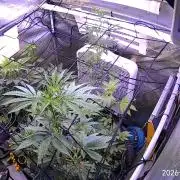
😍 Beauty. Empty water with NPK raw enzymes, amino and humic/fulvic. Checking the EC of the pot, ranges vary but overall sitting around d 1.2-1.6ms/cm. I can notice tips on one, ever so slightly yellow, hints that ec is on the line.
See how long she can go with just water. So far, so good. They are at that size when the growth snowball really starts to pick up. Upped ppfd, first sign of flower showing on 1 plant. Applied a fair bit of IR, which has stretched the stems; they know if they want to reach the high ppfd they need for flower, then they need to stretch accordingly. All you can eat buffet made to order.
Plant perception allows plants to sense the direction, intensity, quality, and duration of light, using this information to direct growth, optimize photosynthesis, and adjust development. This ability to "see" light and respond accordingly is a fundamental survival mechanism.
The interaction between microorganisms and the plant rhizosphere creates an active environment that directly contributes to soil electrical conductivity (EC), facilitating nutrient availability and, consequently, enabling better plant growth. A healthy, microbially active rhizosphere acts as a living, conductive bridge that converts locked-up resources into bioavailable, charged particles (ions) that the plant can directly use to grow. Microbes break down organic matter and minerals, releasing ions (N, P, K, etc.) slowly and in alignment with plant needs. Unlike synthetic fertilizers that dump a high concentration of salts at once (causing instant, great EC osmotic shock), microbial processes provide a steadier stream of nutrients. Beneficial microbes produce osmolytes, antioxidants, and signaling molecules (like auxins and ACC deaminase) that help plants manage drought, salt, and temperature stress. Microbial exopolysaccharides (EPS) create hydrated biofilms around roots, maintaining a more stable water environment. If an excessive amount of soluble nutrients or salts is added (e.g., heavy compost, manure, or excessive mineral amendments), the total dissolved solids can still exceed the plant's tolerance threshold. Intense evaporation, drought, or extreme heat can concentrate salts in the soil solution regardless of how active the microbes are. (Balance). The ability of microbes to buffer the soil is finite. If the input exceeds the biological processing speed, osmotic stress can occur. This is where high CEC comes in useful. Because of this active exchange, the plant creates a localized chemistry that favors what it needs: If the plant needs calcium, it increases exudates that favor calcium solubilization and exchange. The plant can alter the pH immediately around the roots to make specific nutrients more available while locking up others. It doesn't need. The high CEC acts as a buffer against over-fertilization or pH swings. Instead of nutrient antagonism (where too much of one thing blocks another), the microbial activity helps balance nutrient availability. In a high-CEC organic system, the plant acts as a manager, utilizing microbes and root chemistry to pull exactly what it needs from the "bank" of soil nutrients. Nature knows best. I let her feed herself now.
If a leaf is photosynthesizing, it makes ATP (via light reactions) and sugars. If a root is respiring, it burns sugars to make ATP for itself. They do not share a common, transferable "pool." While you don't get a "bigger ATP pool" by adding root ATP to leaf ATP, growing organically allows for better energy allocation. In organic systems, mycorrhizal fungi and bacteria break down nutrients. This requires less direct energy expenditure from the plant to seek out raw minerals compared to hydroponics/synthetic, where the plant might have to push harder roots to find uptake points. Healthy, microbe-rich roots need less energy for defense and can focus on absorption. Plants send sugars (made in leaves) down to roots to feed microbes, which in turn bring back nutrients/salt ions to create a EC of 0.5ms/cm. This symbiotic loop means the plant spends less energy on acquiring nutrients, leaving more energy available for building biomass.
Leaves make Glucose (Sugar) via Photosynthesis. Sugars travel to the roots. Roots use that sugar to fuel respiration to gain nutrients. Nutrients travel back up to fuel more Leaf growth.
Organic growing doesn't create a larger combined ATP pool; it creates more efficient energy usage and resource allocation. Because the plant isn't wasting energy fighting for nutrients or managing osmotic stress from synthetic salts, it has more metabolic energy left over to put into growth.
High Transpiration Rate. Stronger Mass Flow. More water/nutrients to roots. Increased uptake.
It is a "pull" system that acts as the primary conveyor belt for plant nutrition.


@JUNGLE_B4RNS
Follow
6 weeks in soil, everything is doing great, genetics are good and did respond well to topping !
Gonna clean them a bit ( after taking the pictures), by plugging off the inner leaves and lollipopping the 2 lowest sides shoots .
Watering with some BIO 8-2-2 , plants will break down this source of Nitrogen quicker than breaking down the one available in BIO Soil. As these ladies are eating like monsters I don’t want them to run out of anything if possible.
Another last week before putting everyone under a trellis and start scrogging. I will be able to start to see which lowers shoots are going to reach to top !
( I’m looking for a job in the Cannabis industry as Master Grower, Mineralogist, Quality Control 🐞 )


@TgOgFaRms
Follow
I recently had the opportunity to grow the Toof Decay x Walter White strain from Mephisto Genetics, and it was my first experience with this particular strain. While I'm still in the process of forming a solid opinion, I can share my initial observations.
The bud structure of this hybrid strain didn't feel as dense as I had hoped during the trimming process. 😕 However, I was impressed by the beautiful purple hues displayed by the buds. The colors were certainly visually appealing. 💜
Although I haven't had the chance to test it yet, I'm eagerly looking forward to experiencing the effects of Toof Decay x Walter White. 🌬️💨 At this point, I would rate it a 7.5 out of 10.
As my journey with this strain continues, I'm excited to see how it develops and how its effects unfold. Stay tuned for more updates! 🌱🔜
Happy growing and exploring new strains! 🌿✨


@sanibelisl
Follow
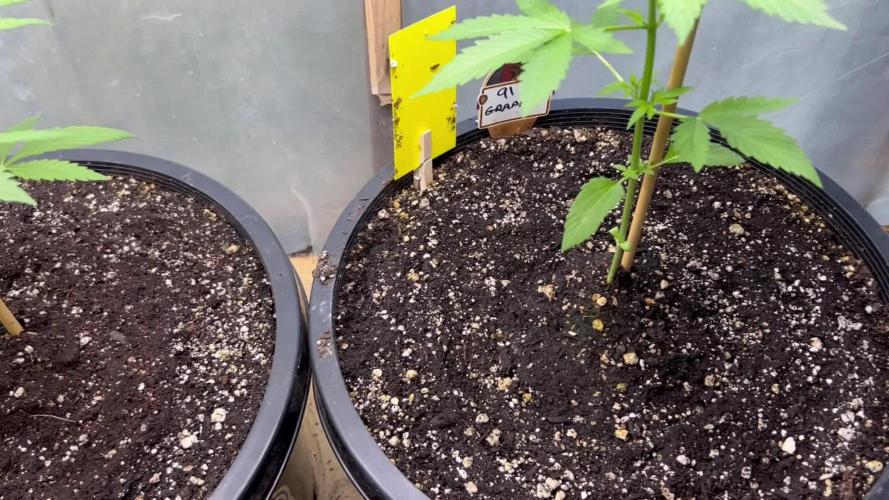
Girls had a great week at summer camp! Smiles are found everywhere regarding their new homes. Plenty of room to grow and wiggle their toes in the amended formula 707, which is doing what was expected retaining moisture nicely, bringing the watering to a minimum.
All three girls received merit badges for hiking(survived transplanting), water sports(2 liters), light tolerance(supplemental lighting), physical fitness(color and strength)and kite flying(added a fan). They are all looking forward to this weeks activities.
Girls seem to like what they’re getting at the chow hall, green and growing daily, strong and upright. Plenty of good stuff in the soil.
A fan was added and the benefits are three fold, dry out the top layer of soil, pest control, makes them stronger.
I will update as needed.
***update, the girls are looking good this morning, well rested, well nourished, vibrant. Their roots must be really liking the 707 as evident by the rapid growth. Measured them this morning with the H. W. At8 in. the V. F. at 8.5 and the 91 Grapes at 10 in. And at least an inch wider as well. No water will be needed today.
Note. The greenhouse may be better suited for growing mushrooms than cannabis. Pine trees and shade. No direct sunlight until after 2pm. Dappled sun all morning long, so installed a T-5 4 foot ArgroLed 6550(k) daylight led fixture above the girls. That was a bright idea!
***update, New Video includes new homemade lighting.


@Abendkraut
Follow
First week of flowering and I can see them all growing tall gaining a few cm/per day. First set of pistils are visible on all 4 ladies.
I started adding Terra Bloom 2ml/L every other day.


@Canna96
Follow
Hey now, hope everyone is staying safe, good week for the Red Hot Cookies, she is still looking a little deformed with her leaves, but she is green and healthy. The Medic Grow is still running at 30% in the V1 or vegetative stage which is the mostly blue spectrum. I am watering them every other day or so with a small syringe around the edge of the solo cups. I am hoping to transplant them i about 48 hours to 3.4 gallon airpots and hook them up to an automatic fertigation system that feeds every 6 hours or so.
I hope everyone has a peaceful weekend, thanks for stopping by, Stay Safe and Blaze On!!! 💪
Website: https://medicgrow.com/
https://growdiaries.com/grower/medicgrowled


@gr3g4l
Follow
última semana de abono, uno de Bud y agua para ir lavando. Tal como están de prietos los cogollos entiendo que la Botritys estará por ahí esperando el momento para atacar y no quiero darle ese placer.
Como puede observarse salió una bién moradita. Me gusta la diversidad de colores, sabores, matices etc
pero no me deja claro cual seria el fenotípo que más se asemeja a la MambaNegra xd. Ni tampoco su producción. Tendré que hacer una media de una serie de fenotipos diferentes.


@Pottstradomus
Follow
Okay so im just impulsively training this plant. Cut a hole in a 7 gal pot and transplanted.
The plant got stressed out from me working it through the hole in the side of the pot. She's recovering nicely.
This might be a waist of time but I enjoy spending time in the tent 😎


@Imatail
Follow
🌱 Started from seed June 5th and she wasted no time getting established. Early growth was strong with a compact, bushy shape, perfect for training. I topped her young to keep a flat canopy, and she responded by throwing out strong, healthy side branches.
🌿 Veg was short and efficient, and the stretch built thick, sturdy colas without getting lanky. Light defoliation throughout flower kept airflow up and let light reach every bud site.
🍇 Terps are loud — sweet berry notes with a fruity kick that makes you want to keep smelling her. Trichomes ripened evenly, and I took her even higher on amber than usual for that deep, heavy, sedative effect.
✂️ Harvest day — dense, frosty buds with a beautiful structure. She stayed healthy from start to finish and was a pleasure to grow. Can’t wait to see how she smokes after a long, slow cure.

shorts_status_processing


@Barcelona_Farmers710
Follow
Esta semana transplantamos nuestras plantas en tiestos de 7 litros de tela y un par de ellas en 11 L de maceta de tela. Utilizamos Azos y Mykos siempre para esa etapa con las recomendaciones de la fábrica, este cultivo Probaremos el delta 9 un compuesto de algas marinas. Espero que os guste Farmers!🍁


@SgtDoofy
Follow
April 23
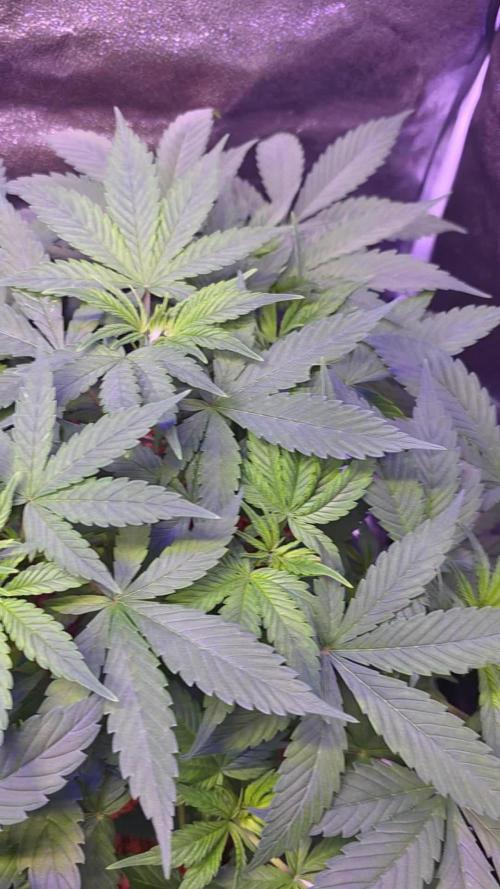
Fading leaves and turning purple. I'm making sure to do my due diligence in removing all dead leaves between the buds as they die, so that I'm not having dead leaves stuck in the bud as it dries. Trichomes aren't quite where I want them yet. The ones nearest the light are orange, but not much orange is anywhere else.


@SecretHerb-Sanctuary
Follow
Das Prachtstück hat die Strapazen des Trainings längst weggesteckt und präsentiert sich in der sechsten Woche mit einer beeindruckenden Vitalität. Das Blattwerk ist so dicht gewachsen, dass man kaum noch durchsieht – die Fast Buds Genetik zeigt hier ihre volle Power. Ich bereite meine Hübsche nun mit einer großen Entlaubung auf den nächsten Schritt vor, um die Luftzirkulation zu verbessern und die Lichtwege für die kommenden Blütenstände freizumachen. Sobald die gewünschte Größe erreicht ist, erfolgt die Umstellung auf den 12/12-Zyklus, um das volle Potenzial dieser Lady zu entfesseln.


@Growverse420
Follow
Week one of flower is complete! These babies are really starting to fill out. I’m definitely going to need to stay on top of defoliating in order to maintain a good airflow and avoid pockets of humidity throughout flower. The 4 Chicken n Wafflez are growing vigorously and with great, similar structure, except for the back left, which may be squatter because of the fan that was above it for the first several weeks after transplant. I’m excited for the next couple of weeks to see this tent really start to see this tent come into its own. Happy Growing!


@LittleBigTrees
Follow
Put them both into 10ltr pots at the end of last week.
The sun hasn't been about to much so they haven't done much but they are getting taller and stretching a bit.
I've got more seeds but will probably take cuttings from these two as they will be more mature and must be closer to showing sex 👍

shorts_status_processing


@Mr_nugs_lover_David
Follow
She's looking super healthy and and strong can't wait to see this beautiful strain in full flowering stage, I'm feeling a very good stretch,shed definitely a big girl,she's eating very well, no deficientes or nutrients burn so far. Let's see how this wonderful organic lady performs.
On August 9th I start to see the change from vegetative stage to flowering stage,she looks super healthy and strong,I missed some watering a few days ago,however she is perfectly fine and happy,she's a dream to grow.


@The_Doctor_Green
Follow
En este final de la semana 3 de floración a los nutrientes que venianos agregando, le sumamos el NIRVANA de advanced nutrients 2ml x L.
Le quite algunas hojas el día 20 , algunas que estaban amarillas y otras que tapaban algun cogollo de las ramas bajas que no quite.
Algunas hojas tienen las puntas amarillas pero no se notan cambios negativos aun., pero no logro saber que problema está teniendo.
Pero en términos generales todo marcha bien.🤞🤞🚀🚀
