


Likes
Comments
Share


@24Gamez
Follow
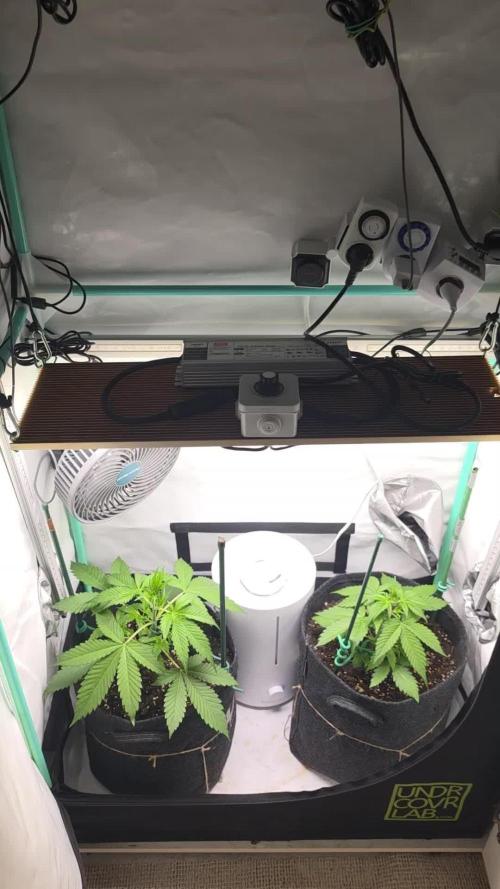
Wow a long week, experiment definitely started showing differences but also mistakes were made. First I missed a watering a let them get too dry soil starting to stay a dark color and threw me off... But watered and fed anyway but I think because I was using pH drops to test water (didn't know how easy it is to break the meters) I may have made concentration too acidic or soil turning acidic. I don't think there is any nutrient burn just deficiencies (calcium and phosphorus) but I could be wrong. Ordered cal-mag just in case. One thing I've noticed not sure if it is only because 5 gal pots but plants 1 nd 2 looking massive. I may only use 5 gal pots next time but still early to tell. If anyone wants more info on what I'm trying to test or see something I'm doing wrong plz comment. PS soil is waaaay different than hydro lol


Likes
4
Share

@Naujas
Follow
21 diena!!! Mergaitė atrodo kiek maža, bet tuo pačiu ir sveika :) Šią savaitę pradėjau naudoti LST, ir ji taip pat gavo šiek tiek @plagron maistinių medžiagų, kurios jai labai patinka :) Sėkmės visiems :).

Processing
Likes
24
Share


@Grnhead
Follow
This was a fantastic plant to grow, and although it doesn't have the strongest resistance to mold, I think that if I were to grow it again I could avoid the issue.
I am starting to figure out how to maximize my grow space! Come check out my next grow when you get a chance!


Likes
9
Share


@Cogollo_eu
Follow
**Encontrarás la traducción a español al final de la descripción**
From/Desde: 09/09/19 || To/Hasta: 15/09/19
From day/Desde día: 08 || To day/Hasta día: 14
Ocean Grown Cookies Diary / Diario de las Ocean Grown Cookies:
https://growdiaries.com/diaries/38831-oceangrown-cookies-blues-sisters
-----IMAGES & VIDEOS-----
V1 - Transplanting day. I'm using 10 l Aeropots as final recipient. I've used:
- Small layer of ATAMI HydroRokz (perlite) at the bottom of the pot, just for cover bottom holes and to retain a bit of humidity
- Over the perlite i placed 1l of mixture with BioBizz "All Mix" and Volcanic Soil
- Again over, 1l of mixture with BioBizz "Light Mix" + Volcanic Soil & Guano
- And filled the rest with BioBizz "Light Mix" + Volcanic Soil
It's the second time that i broke half of the roots of a plant doing a transplant, It happened to me just for not being careful enough to hold the soil by the lower part. While this is no good, no further signs of that mistake other than the recorded video ;).
V2 - Quick show up on how to correct the color of photos taken under red/ping/purple light.
First I merge the HDR image from 3 bracketed shots, then I apply my custom color adjustment in the HDR resulting image.
As i show in the video, to correct the red light, you have to enhance the blue and green curves, just play with a point in the curves until you find the best adjustment for each of both curves. Then you should go to tones, and play a bit with reds, pinks & purples... and.... Voilá, you can see the results, easy and effective..... but no more easy than using the right white spectrum.
P1 - Cookies Showdown before transplant
P7 - Volcanic soil and Guano
-----WEEK SUMMARY-----
This week was very easy, i didn't do anything to these babies apart from the transplant. This is the first time im mixing something with the soil, I hope not to overfeed the Cookies with the nutes, as i'm going to use the same nutrients i was using.
The first 10 days they were growing in my 60x60x40 tent (DP60), with a terrible chinese light that i always use the first week wen I plant.
PandaGrow 100W (50W draw) - http://www.pdgrow.com/index.php?m=Show&a=index&cid=12&id=53
So after transplanting when i place the plans under the Quantum Board or the Platinum LED, i've notice it on them immediately, they really don't like this kind of chinese lights.
Thus after the transplant the plants has started to grow and wide much more and much quickly.
-----WATERING CALENDAR-----
12/09/19 DAY 11 - 1,5 l after transplant with all week nutrients @ 0.8 EC & PH5.8
*****ESPAÑOL*****
-----IMÁGENES & VÍDEOS-----
V1 - Día de transplante. Transplantaré a AeroPots de 10 l. Para el transplante he usado:
- Una capa pequeña de ATAMI HydroRokz (perlita) en el fondo de los tiestos, sólo para cubrir los agujeros y retener un pelín de humedad.
- Encima de la perlita he puesto 1 l de mezcla de BioBizz "All-Mix" con tierra volcánica
- De nuevo encima he puesto otro litro de mezcla de BioBizz "Light-Mix" con guano y tierra volcánica
- El resto está relleno con una mezcla de BioBizz "Light-Mix" con tierra volcánica
Es la segunda vez que se me parter unas raíces por la mitad en un transplante, eso me pasa por no ser lo suficientemente cuidadoso como para agarrar el sustrato por su parte baja. Esto no es algo bueno, pero he de admitir que aparte del mal rato de que se te partan las raíces, a la planta no le sucede nada de nada, sigue creciendo al mismo ritmo que su hermana.
V2 - Un ejemplo rápido de como corregir la iluminación de una foto tomada bajo un espectro rosado o rojizo
En el vídeo primero compilo el HDR compuesto de 3 fotografías horquilladas y una vez compilado le aplico mi ajuste de color.
Como muestro en el vídeo, para corregir este tipo de luces hay que realzar las curvas de color azul y verde, simplemente con un punto por encima de la mitad de la línea media hasta encontrar los puntos más adecuados para tu luz. una vez encontrados, sólo hay que ir a los tonos y ajustar un poquito el rojo, rosa y morado.
P1 - Muestra de las Cookies antes del transplante
P7 - Tierra volcánica y Guano
-----SUMARIO SEMANAL-----
Esta semana ha sido muy sencilla, no les he hecho absolutamente nada a las pequeñas a parte del transplante. Esta es la primera vez que mezclo algo con el sustrato y espero no sobrealimentar las cookies ya que voy a seguir usando los mismos nutrientes que he usado con anterioridad y de la misma manera.
Los primeros 10 días han crecido en mi tienda de 60x60x40 (DP60), con una luz china terrible:
PandaGrow 100W (50W draw) - http://www.pdgrow.com/index.php?m=Show&a=index&cid=12&id=53
Siempre uso esa luz los primeros días de cada cultivo, por lo que al cambiarlas a la Quantum o al Platinum LED lo noto al toque, realmente no les gusta nada la luz china esa, inmediatamente se ponen a crecer y ensanchar mucho mas.
-----CALENDARIO DE RIEGO-----
12/09/19 DÍA 11 - 1,5 l después del transplante con todos los nutrientes semanales @ 0.8 EC & PH5.8

Likes
2
Share


@MrJac_GHZMono
Follow
6ta semana comenzó el 22/07/2019 esta vez hicimos poda de bajos por la humedad de la ciudad así puede circular mejor el aire y controlamos la presciencia de hongos, no lo queríamos hacer por miedo a la producción final pero las nenas reaccionaron muy bien y se noto en como comenzaron a engordar y a crecer sus flores, en realidad como que lo agradecieron, también esto ayudo a que le llegara mejor la luz a las ramas mas bajas.
Esta vez sumamos al riego los productos de floración de Top Crop en sus dosis bajas (Top Bloom, Top Candy) ya que algunas estaban presentando carencias de Fósforo y Potasio.


Likes
1
Share


@InsideAz
Follow
Added a second scrog net for the taller plants last Friday. Constantly defoliating to increase light penetration but not trying to stress the plants. (Selective leaf picking)
Plants loved the tea I have them last week. Visual improvements in every plant 2 days later.
Top dressing later this week on 9/29:
5 tablespoons Gaia green 444
5 tablespoons Gaia Green 284
15 tablespoon Wiggle Worm Earth Worm Castings
Light increased to 75%

Likes
2
Share


@Almo420
Follow
I'm just all to excited with how the next two weeks are gonna span out😁
Started giving only water this week as the plants are fading fast, and im seeing an amber trichome here or there.
Not to long now!😄
Likes
28
Share


@MadeInGermany
Follow
Info:
Unfortunately, I had to find out that my account is used for fake pages in social media.
I am only active here on growdiaries.
I am not on facebook instagram twitter etc All accounts except this one are fake.
Have fun with the update.
Flowering day 26
since time change
to 12/12.
Hey everyone 😃.
Another great week goes by.
Last week, instead of 2 g of GHSC Powder Feeding, I only gave 1.5 g p l of substrate so that I can give you another 1 g per l of substrate next week so that it lasts until the end :-).
It is developing very well and the buds are starting to grow :-).
The week was poured 3 times with 1.1 l each time. once of them GHSC Enhancer was added :-).
The bottom shoots have now also been removed :-).
As always, the humidifier was refilled every day and the lady was checked for her health.
I hope you enjoy the update.
Stay healthy and let it grow 😊🍀.
You can buy this Strain at :
https://www.royalqueenseeds.de/feminisierte-hanfsamen/115-amnesia-haze.html
Type:
Amnesia Haze
☝️🏼
Genetics:
Original Amnesia Haze
👍
Vega lamp:
2 x Todogrow Led
Quantum Board 100 W
💡
Bloom Lamp :
2 x Todogrow Led
Cxb 3590 COB 3500 K 205W
💡💡☝️🏼
Soil :
Canna Coco Professional +
☝️🏼
Fertilizer:
Green House Powder Feeding
☝️🏼🌱
Water:
Osmosis water mixed with normal water (24 hours stale that the chlorine evaporates) to 0.2 EC. Add Cal / Mag to 0.4 Ec Ph with Organic Ph - to 5.5 - 5.8 .

Likes
34
Share


@PrairieFrostGrow
Follow
**** Week 3 Veg - December 26/20 to Jan 1/21 *****
That is two weeks in solo cups and this will be transplant to 1 gal pots week. The girls are doing fine and not always perked up but I think a new home will help change that. They have been happy and noticed that when they were given a stronger feed at the end of last week they responded very well the next day and looked very healthy. Add that I am starting to see some purpling on the stem and I think they are ready for full on veg cycle to kick in.
Not a lot of excitement her either Growmies😀 just to early with nothing go on other than making sure they are alive each day 😂😂 So for this week we will give the roots a new home, step up the ppm on veg feeding. Add in microbes to help the root development and keep the environment in the same 82 degrees and humidity in the mid 60's.......I am not supplementing with CO2 so keeping everything a little lower with feed, light, and humidity. They are growing veg well with the blue light and are very happy with the current 28" distance. Will maintain and let them grow into the light more until I see negative signs and then start raising the light with them as they grow.
That's what I have to add at the start of the week.......see how the days unfold😀
Little more detail........
Dec 26/20, Day 15 Veg
- Dry out day
- Let the microbes in the media do their thing and start pushing root growth harder than what has been happening.
Dec 27/20, Day 16 Veg
- Gave the girls a little splash of the left over nutes from 1 gal girls two days ago to add a little oxygen and they can take the extra microbes and bacteria right now😀
- 100ml with Microbial Mass and Piranha @ 2ml/L = 650ppm and 5.7pH
Dec 28/20, Day 17 Veg
- 100ml each girl with the full line for this week. No other additives, just the IPP line = 700ppm and 5.7pH
- This was also from the big girls.....I am thinking that they are ready for transplant so will give them a little high feed today.
Dec 29/20, Day 18 Veg
- It is transplant day.......we need to keep this party moving along. She may not have the root mass I am after but I am moving forward.
- Prepared 1 gal pots with Mycorrhiza added to the holes.
- Gave each girl 500ml watering with full strength IPP line for week 1 veg = 700ppm and 5.8pH
- Root mass on these girls was very poor......there were roots.......keep stepping up the microbes with all of the girls!!!!!!
Dec 30/20, Day 19 Veg
- they were just watered heavier yesterday........dry out day today
- think it is a CalMag only feeding tomorrow for all the ETS girls.
Dec 31/20, Day 20 Veg
- feed day today since it has been a couple of days.
- 500ml with CalMag @ 2ml, Gold Storm @ 7ml, Sea Storm @ 5ml, Blackstorm @ 2ml, Vitamin B @ 0.5ml = 525ppm and 5.7pH
- keeping the humic and fluvic acids going in, plus Kelp and CalMag👍
- the girls are happy and seeing forward movement everyday, looking for more aggressive though from the girls.
Jan 1/21, Day 21 Veg
- doing very well......like really well💪
- didn’t push them today and left them alone for watering, pots of course still had some weight and I didn’t expect them to need today.
- Optic Folier Overgrow given today. Folier spray to give them just an extra boost since everything is otherwise dialed in👍
Finishing off the week very strong!!!!!! They have been looking very healthy and perky everyday. The roots are a concern and will be taking it easy on the nutrients for another week yet and keep up the microbes and beneficials. Will get them in line......my hope is too keep their time in the 1 gals down to two weeks max......maybe 10 days??
Looking very nice ETS.......you find yourself just staring at them and realize you just waisted 5 minutes😂😂😂


Likes
10
Share


@Ananas_Comosus
Follow
Sunday, 14-08-2022
Plant continuing to look good and is in flower. Secondary stems from mainlines so tall I decided, in the moment and not planned at all, to tied them down yesterday. I realize this is not fully in line with quadlining but I went for it. Supplemented feed today with my Beneficial Booster. Foliar sprayed the last two nights with The Amazing Doctor Zymes Eliminator for IPM. Except for testing before use, I followed instructions exactly and have noticed no phytotoxicity. Will report on effectiveness next week after completing initial 3 day treatment tonight.
Likes
9
Share


Likes
11
Share


@JuicyBuds__BLM
Follow
6/21
Wellllllllll she is still yellowing out like crazy. Very very very hungry girl. Moved the lights down to pull out some purp. I hardly have to defoliate at this point since she is consuming so many of her own leaves. I just carefully pull out the crispy leaves.
6/25
She is still yellowing out and is extremely hungry. Ive been feeding more than the recommended amount and shes still showing deficiencies. If you are growing in coco, i recommend you dont flush this girl. If youre running RO water, definitely dont flush this girl. Shes hungry till finish, no doubt.
The trichomes are ridiculous on her. Ridiculous. Ive never seen more frost on a cannabis plant. Ever. She just keeps putting on more and more weight and frost. All of her leaves are sprayed in trichomes. The picture i just uploaded is from today. Although her trichomes are still mostly milky, i think she is nearing the end of her life.
I will be uploading more pics tonight and a video to show all the foxtailing she is doing. All of her buds, even the ones down below, have the exact same pyramid-with-crown structure. Beautiful. A+++++
____PS____
Here she is in all her glory folks. I took a bunch of photos and a video to show her sputnik-crown structure and stacked trichomes. You can see the green girls in preflower in the background for reference of color developement. She is going to be finished very very soon. Man, i cannot wait to harvest and cure this girl.
Processing
Likes
11
Share


@growsmoke420
Follow
End of Week 3 into Week 4 and She's Growing BEAUTIFULLY without an Issue to Note. Huge Fan Leaves with Short Internode Spacing. I'm continually Tucking Leaves as an Alternative to Defoliation n it seems to be Working Nicely. Lower Node Growth Shooting toward the Top of the Plant. Her First Pistils have appeared so this Week She'll be getting "Transition" Feeding at 1/2 Dosage with Full CalMag Plus and a Light Dose of Liquid KoolBloom.
Likes
15
Share


@Black_Widow
Follow
Привет садоводы
Четвертая неделя и пурпурный цветет
сегодня я полил ее простой водой , Bio Bloom и Fulvic
удалил некоторые испорченные листья в глубине куста
Проводишь пальцами по листьям и остается запах какойто лаванды , но в тоже время понимаешь , что пахнет виноградом , черным, изабелла сорт

Likes
165
Share


@SlowpokeFuegobud
Follow
🐟 🐠 🐙 🐡 🐟 🐠 🐙 🐡 🐟 🐠 🐙 🐡 🐟 🐠 🐙 🐡
Welcome to week 8, dear fish lovers! 💙
The fish is alive and well! 😌
We made a photo shoot but somehow I wasn't inspired to do something extraordinary, stay tuned for some later-art of the fish! 🙏 🐟
I totally surprised learned about how to monitor the runoff when you make a hydro-coco grow, haha! 😎
So I started to monitor my drain.
Interesting.
The Tropicana Cookies is very very resilient, peeps! 😉 Had to cope with extreme EC circumstances.
Well actually I learned THAT you have to monitor it, but didn't look into how exactly yet this week. 😅 But I monitored it and watered whatsoever. 💧
Poor fish, I know!
What would Patanjali have said..... mmmh.. maybe that you can see how clear or clouded your mind is just by looking at the leaves of your fish plant. OM. ✨
Thanks, growmies, for checking in! 💚 💚 💚 😘
Always remember, we are not our thoughts, nor are we our emotions, or experiences, we are limitless, immortal and divine souls making a 3D experience. 🙏 ❇️
____________________________________________________________________
Strain info:
Tropicana Cookies Auto is the perfect variety for growers of all levels, especially beginners as this strain performs very well outdoors and indoors, and can produce up to 500gr/m2 in 56-63 days without needing extra maintenance. Reaching up to 110cm, this strain grows fairly tall with medium-sized branching, showing its mixed heritage. Definitely the right choice for those with a high tolerance looking to get their hands on the strongest autoflowers out there. Thanks to the 27% THC, you can expect an extremely powerful and long-lasting high that’ll boost your mood and give you that extra push you need to start your days on the right foot. This variety offers the whole range of citrusy and woody flavors with a strong candy-sweet background that will keep you coming back for more and more.
Bud description
Tropicana Cookies Auto produces gorgeous dark purple flowers, so expect really dark buds with gorgeous hues of pink, purple and blue, and thick dark-orange hairs that get completely covered in resin by harvest time, giving them an almost shiny-white appearance.
This variety develops a typical Indica-like structure and very few sugar leaves that will make your trimming sessions a breeze. But make sure to store your trimmings as the gorgeous flowers reek of a mouth-watering blend of lemon peels, orange juice, and sandalwood that gives it almost a citrus candy-like flavor that makes for the most aromatic hash and extractions.
Smoke report
Thanks to the 27% THC, Tropicana Cookies Auto’s effect starts with an energizing head rush that gets your mind up and running while leaving you in a nice calm state. As the Indica-dominant side kicks in, the powerful cerebral effect gradually moves downwards and hits your whole body with a deep relaxation that leaves you with a joyful stoney sensation that alleviates chronic pain while leaving you in an overall happy and positive state of mind.
It’s the perfect daytime and nighttime strain as it can boost your mood and enhance a night out with friends but can also quiet your mind as you get ready for a good night of sleep. No matter the scenario, expect a powerful high that lasts for hours on end.
Plant appearance
Tropicana Cookies Auto reaches up to 110cm and develops a tall main cola with shorter side branches, typical of hybrid strains. You can expect a stocky yet tall main cola with medium-sized side branches and thin fan leaves that fade into a yellowish hue with a beautiful dark purple tint. Thanks to the excellent selection, this variety develops a short internodal spacing that makes the medium-sized flowers look like they’re growing stacked on top of each other. It’s the ideal choice for growers who want to get big yields without having to deal with huge plants, as this monster yielder can produce up to 150g per plant while growing relatively short.
Grow tips
This variety grows super dense buds so make sure to space out the branches by tying them down, this way you improve airflow which helps prevent mold and other pests. Tropicana Cookies auto reek of a delicious sweet and sour smell so make sure to flush thoroughly to enhance the aromas even more. This terpene heavyweight finishes with lots of resinous sugar leaves that make for fantastic hash and extractions so remember to have your trim bucket ready!
Flavor
Tropicana Cookies Auto boasts remarkably sweet flavors that resemble a blend of lemon peels and fresh orange juice, with subtle floral undertones that make it the perfect choice for extractors looking for unique terpene profiles.
Expect an overall citrusy zest that’ll coat your whole mouth and leave a delicious tropical candy-like flavor aftertaste. The sweet and sour flavors get balanced out with a herbal background that gets stronger as you exhale and gradually opens up, bringing out the whole range of woody, floral, and spicy flavors, making it the perfect choice for the most flavorful extracts.
https://2fast4buds.com/seeds/tropicana-cookies-auto
_________________________________________________________________________________
SETUP:
80x80x180 cm Zelsius
240W Full Spectrum LED IR UV dimmable
DW240H-A6-HS
Heatsink color red
LED Chips:
512pcs SAMSUNG LM301H + 24pcs Osram 660nm + 8pcs Osram IR 730nm + 8pcs UV 385nm
Color mix: 2700K + 4000K
2,8umol/J
Driver HLG-240H-C2100B
Coverage: veg 5x3ft / flower 4x2ft
Product size: 628x205x68mm
Green Buzz Nutrients
Shouts go out to my sponsors @GreenBuzzNutrients, thanks so much for your support! ❤️
If anyone would like to try their amazing organic products, use code GD42025 for generous 25% discount (for orders of minimum 75€) ✨
https://greenbuzznutrients.com/
Mills Nutrients
Biobizz Lightmix
custom exhaust fan 320/270cm³/h
Carbon Active Granulate 240cm³/h
tab water pH 8 - EC 0,25 with Calmag to 0,5
Advanced Hydroponics pH minus Grow + Bloom to pH 6.2
🐟 🐠 🐙 🐡 🐟 🐠 🐙 🐡 🐟 🐠 🐙 🐡 🐟 🐠 🐙 🐡
Likes
67
Share


@HazeyBobby
Follow
The week starts Monday Jan-27, being day 27 of flowering.
Plants are looking very good and healthy, albeit some bigger buds at this stage is missing.
Carried out more defoliation of upper leaves on the CBD. Only trimming fan leaves on one side of a bud site in alternate fashion. Strategy is to expose more bud sites to light. Leaves are getting sticky and glistening brightly.
Feeding a high EC nutrient mix whilst monitoring run-off EC which remains below feed EC. The canopy is still thick with beautiful luscious green leaves typical of an Indica.
Light is maintained at 30cm above the canopy, with daily fertigation at lights on - watering just over 2L per day. Maintaining an average RH in the space at 50%.
---- updates for prior 4 weeks --------------------------------------------------------------------------------------------------------------------------------------------------------------------------------------
-----------------------------------------------------------------------------------------------------------------------------------------------------------------------------------------------------------------------
The week starts Monday, Jan-20 still flowering away.
Bud sites are beginning to take form and the ScrOG setup looks full, ready for the development of some large buds.
Removed a few more leaves from above the canopy which were blocking bud sites below. Also cut small stems (with bud sites) below the canopy from both plants which were unlikely to grow strong. It's now looking clearer below the canopy.
The canopy is still thick with beautiful luscious green leaves typical of an Indica. Run-off EC has been slowly rising over the weeks but still under the feed EC - will be keeping my eyes on this.
Light is maintained at 30cm distance from canopy, with daily fertigation at lights on - watering almost 2.5L per day. Maintaining an average RH in the space at 50%.
-----------------------------------------------------------------------------------------------------------------------------------------------------------------------------------------------------------------------
The week starts Monday, Jan-13 in flowering stage.
The plant is growing thick and fast, with very short node intervals creating a thick canopy.
Carried out substantial defoliation of almost all the big fan leaves and a few little stems that were not likely to make it above the canopy. Avoided defoliating the major cola branches. This encourages the plant not to waste resources on a node which is only going to produce “popcorn” buds.
The plants reacted well to the defoliation and were looking good by the end of the light cycle for the day. The net is completely full and this will be the last week of applying any LST as part of the ScrOG setup.
Light is maintained at 30cm distance from canopy, with daily fertigation at lights on - watering almost 2.5L per day. Lowered the average RH in the space to 50%.
-----------------------------------------------------------------------------------------------------------------------------------------------------------------------------------------------------------------------
The week starts Monday, Jan-06 in flowering stage.
The net is filling up nicely with the ScrOG process being enjoyable - just tucking branches nicely under squares once stretched enough. The Indica dominant strain is really shining with incredible dense growth and thick branches that don't bend as easily as it's Sativa neighbour.
Light is maintained at 30cm distance from canopy.
-----------------------------------------------------------------------------------------------------------------------------------------------------------------------------------------------------------------------
My grow setup includes;
- Secret Jardin DS120W tent (120cm x 60cm x 180cm) placed inside the bedroom. Passive intake of air is from a closed off section of the room where the central heating boiler sits - the intake is warm air (20 degC.) and fairly dry (40% RH) during the winter months.
- Mars Hydro SP250 LED light
- extraction fan - AC Infinity Cloudline T6
- ventilation fans
- aquarium heater
- small oil heater
- small dehumidifier
- 20L Airpots and 3.5L general pots for seedling stage
- Canna Coco substrate and nutrients
- pH and EC/TDS meters
- Thermo/Hygro meter
Likes
32
Share


@Hawkbo
Follow
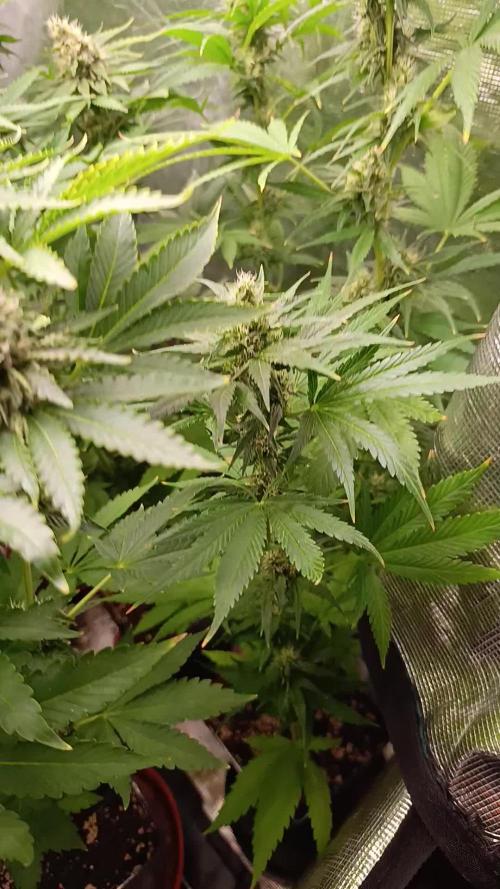
This week they are all just putting on some weight still a few weeks left to go. Pics were taken on Monday video on Tuesday. The aromas are pretty strong in the tent in general.
Shes closing in on the finish going to start the flush sometime this week I think just give it a long one. Took some pics with and without flash, using a 85mm and 40mm lense. The close ups are with the 85mm u can see the vibrance of the trichomes.
Likes
6
Share

@420DeepGrow
Follow
📆 Semana 6
El cultivo entra de lleno en la fase de engorde. Los cogollos aumentan de volumen día tras día gracias al apilado continuo de cálices, mientras la producción de resina se intensifica y comienza a cubrir cada vez más las hojas cercanas a las flores. La genética de floración rápida empieza a mostrar una estructura más compacta, mientras que la de dominancia sativa continúa ganando tamaño de forma progresiva sin perder ritmo.
El consumo de agua y nutrientes permanece muy elevado y la respuesta de las plantas sigue siendo excelente. Mantener una nutrición estable, un riego constante y un ambiente bien controlado será fundamental para sostener el ritmo de crecimiento durante las próximas semanas.
⚡ EC: 1.9
💧 pH: 6.2–6.5
🌡️ Agua: 21 °C
🌫️ Humedad: 55–60 %
💡 Intensidad: 1050–1100 PPFD
🔥 Nota de cultivo: A partir de ahora el objetivo es mantener la estabilidad del cultivo, evitando excesos o carencias para favorecer la máxima densidad, acumulación de resina y expresión de terpenos.
Seguimos creciendo fuerte! 💪
