The Grow Awards 2026 🏆
Likes
Comments
Share
Essendo l'erba da portarmi in ferie e poi avrei staccato tutto... Queste 2 piante si sono prese la piena potenza delle lampade e son venute molto bene!! Sono molto soddisfatto del risultato!!! Mi spiace di non aver messo le foto dall'inizio perché è stato veramente un bel crescendo!!
Likes
18
Share
So my microscopic camera came on the weekend after checking the trichomes to my surprise i was advised to harvest asap due to have some amber already. they were receiving full nutes up until 4 days ago. since then I've been flushing. i was still receiving high runoff ec readings after 2 days of flush so have since put around 30 litres of water through each plant all now have ec of around 0.3/0.4. thinking of doing the same tomorrow to wash last of the nutes out then will put them into 48hrs of darkness before chopping unless anyone can advise me different?
Likes
6
Share
Week 4 of flower 👍🏾
Likes
4
Share
@GroloCup
Follow
After a questionable start, she's up and going, so the grow off is official! I have plugged in some organic items into a Pro Mix HP base to get this lady out of the blocks organically and get that root system spread out through the nursery pot. I fed some wicking cord through the drainage holes to make a sip system, basically bottom watering to deepen the root system development. I layered the soil into the pot so the available nutrients increase as the roots descend. I added a little mycorrhizae in the soil where the seed was placed to get things cooking and used Recharge adjusted to 6.0 pH to buffer my amended starter mix. Now that she's showing a little more vigor, I'm adding a little Kelp, CalMag+, and MegaCrop for her to sip on... A little organo-salt treatment that will make sure she's got all she needs available to allowing her to really blow up!
Processing
Likes
18
Share
Buenas noches familia, siento el retraso fue un día largo pero sigue siendo viernes. Pues ya estamos en la recta final y esta noche tiraremos el lavado de raíces. Están formando buenas flores, y desprenden un agradable olor. Nuestras northern light xL No están compactando mucho pero si empezaron a explotar. Una semana sin productos ya. Ph 6,5 todavía regulamos hasta el final el ph. (IMPORTANTE) cambiar bombilla pal siguiente cultivo.😂 Nos vemos la semana que viene.
Processing
Likes
35
Share
@rhodes68
Follow
9/3 Day 50 of the grow I cannot complain at all,reduced the nuet list to what they are getting from here out 9/5 Everybody always takes pics of their plants at their best thought it might help to see otherwise, well here they are at their worst. Dried out intentionally as part of last stage of flower, like to get them conditioned for drying. Five minutes later all happy again after the water. Fed Bio-Grow/Bio-Bloom/Karo syrup as a boost to bio 9/7 Re-adding Big Bloom (Fox Farms) to nuet mix, plants seem to be missing it and I agree. Once a week at 3 tps/gal 9/8 Fed each .75 gal full nuets Moved Becky and Ceila towards edges to lower light to them. Seem very sensitive to it but the other two are just soaking it up so moving them into the center. Pics later at lights out. Greatly preferring the dark leaf pheno (Anna and Deb) over the light leaf (Becky and Ceila), Have two of each and the first grow was also dark leaf. Plants are more compact, drink a little less, easier to maintain, and I think will end up producing at least as much as the larger sativa leaning plants. Some defoliation on all Changing nuet list add Fox Farm Happy Frog Cavern Culture 1-12-0 for the P think thats the nuet hole, three tablespoons top dressed one time application... for now. See how it goes
Likes
35
Share
Likes
4
Share
This week I've been pulling the top fan leaves to stop the plant growing taller and to allow the side branches to catch up. I also started feeding them. I will probably repot and switch to flower next week now they've all outgrown their mutations.
Likes
15
Share
@dank604
Follow
Well the older (28 day) gal is doing great, bent the main stem quite a bit along with a few side budsites, excited to see how much is stretches out in the new tent. The younger (21 day) gal is doing her thing - power veg mode, interesting to see even though she's a week younger, she's just doing her own thang ;) I may need to trim a few leaves off her to get light to the bud-sites underneath. happy growing y'all! 😎
Likes
14
Share
@MG2009
Follow
12/30/2021 5 Biscotti Skunk, 5 Lemon OG, 4 Grape Skunk. Starting veg at 18 hours for 4 or 5 weeks of veg and into flowering. Will reppot this week into 6" pots then into 3 gallon pots. One maybe going to 20 gallon fabric pot, if I got an extra one but I'll see 🙏🏻 Potted up to 6" pots 1,Biscotti Skunk 1,Grape Skunk 1,Biscotti Skunk Hoping to start a staggerd grow where I can trim only 3 plants a week. Into pots I added 1 tsp per 6" pot of Coast of Maine stonington plant food 5-2-4 added to happy frogs .30-.30-.05 NPK they should fill out quickly in time for reppot in 2-3 weeks.
Processing
Likes
70
Share
@MephistoGenetics, Hi all the happy people here in GrowDiaries. This is my second cultivation ever and it will be fun to try a bigger space than my closet grow. First, I'm just going to say I'm done with the construction of my new growroom. The room is 2.14 meters by 1.7 meters and has a ceiling height of 2 meters. It provides a floor area of ​​3.6 square meters. I use a 54 Watt Lightwawe T5 for germination and 2 Pcs 400 Watt HPS lamps. I have a channel fan that replaces the room air about 40 times an hour to get a comfortable environment in the room, the air enters a fresh air intake from the outside. The air is purified through a carbon filter to then leave the room to the rest of the basement. Then I use that heat to heat the rest of the basement. I will use 10 pcs 15 liter Autopots to grow with and a 100 liter water tank that supplies the pots of water and nutrition. I will grow completely organically in soil and will watercure my buds to get the best possible medicine for me. But there are no cultivation rooms to be displayed here, so I continue with what is most important. I am very excited to see how the new growroom will work and how this Illuminauto 21 - Sour Crinkle will turn out. Illuminauto 21 - Sour Crinkle (Grape Crinkle x Sour Crack) Two of our fastest and frostiest varieties collide to make a sweet and sour delight! Expect super frosty, compact nugs that won't be a toke for novices. Destined to be a great strain for extraction work too! Plant size - Small - Medium Cycle time - 60-65 days from sprout Indica/Sativa - 80/20 Frost level - Extra Ridiculous https://www.mephistogenetics.com/product-page/illuminauto-21-sour-crinkle -------------------------------------------------------------------------------------------------------- 2017-09-25. Week 5 starts. Added a video of the girls. Gave the girl water and nutrients. This girl is 27 cm high and have grown 7 cm in 7 days. I flushed the girl yesterday with 40 liters of tap water. Im lowering the humidity in the room with a dehumidifier and try to have 50% air humidity. ---------------------------------------------------------------------------------------------------------------------------------- 2017-09-29. Installation of the New light rail in the grow room. Its Advanced star light V 5.0. Added a video of it.
Likes
52
Share
Lacewings seemed to have mostly killed themselves by flying into hot light fixtures. I may have left the UV on which was smart of me :) Done very little to combat if anything but make a sea of carcasses, on the bright side its good nutrition for the soil. Made a concoction of ethanol 70%, equal parts water, and cayenne pepper with a couple of squirts of dish soap. Took around an hour of good scrubbing the entire canopy. Worked a lot more effectively and way cheaper. Scorched earth right now, but it seems to have wiped them out almost entirely very pleased. Attempted a "Fudge I Missed" for the topping. So just time to wait and see how it goes. Question? If I attached a plant to two separate pots but it was connected by rootzone, one has a pH of 7.5 ish the other has 4.5. Would the Intelligence of the plant able to dictate each pot separately to uptake the nutrients best suited to pH or would it still try to draw nitrogen from a pot with a pH where nitrogen struggles to uptake? Food for stoner thought experiments! Another was on my mind. What happens when a plant gets too much light? Well, it burns and curls up leaves. That's the heat radiation, let's remove excess heat, now what? I've always read it's just bad, or not good, but when I look for an explanation on a deeper level it's just bad and you shouldn't do it. So I did. How much can a cannabis plant absorb, 40 moles in a day, ok I'll give it 60 moles. 80 nothing bad ever happened. The answer, finally. Oh great........more questions........ Reactive oxygen species (ROS) are molecules capable of independent existence, containing at least one oxygen atom and one or more unpaired electrons. "Sunlight is the essential source of energy for most photosynthetic organisms, yet sunlight in excess of the organism’s photosynthetic capacity can generate reactive oxygen species (ROS) that lead to cellular damage. To avoid damage, plants respond to high light (HL) by activating photophysical pathways that safely convert excess energy to heat, which is known as nonphotochemical quenching (NPQ) (Rochaix, 2014). While NPQ allows for healthy growth, it also limits the overall photosynthetic efficiency under many conditions. If NPQ were optimized for biomass, yields would improve dramatically, potentially by up to 30% (Kromdijk et al., 2016; Zhu et al., 2010). However, critical information to guide optimization is still lacking, including the molecular origin of NPQ and the mechanism of regulation." What I found most interesting was research pointing out that pH is linked to this defense mechanism. The organism can better facilitate "quenching" when oversaturated with light in a low pH. Now I Know during photosynthesis plants naturally produce exudates (chemicals that are secreted through their roots). Do they have the ability to alter pH themselves using these excretions? Or is that done by the beneficial bacteria? If I can prevent reactive oxygen species from causing damage by "too much light". The extra water needed to keep this level of burn cooled though, I must learn to crawl before I can run. Reactive oxygen species (ROS) are key signaling molecules that enable cells to rapidly respond to different stimuli. In plants, ROS plays a crucial role in abiotic and biotic stress sensing, integration of different environmental signals, and activation of stress-response networks, thus contributing to the establishment of defense mechanisms and plant resilience. Recent advances in the study of ROS signaling in plants include the identification of ROS receptors and key regulatory hubs that connect ROS signaling with other important stress-response signal transduction pathways and hormones, as well as new roles for ROS in organelle-to-organelle and cell-to-cell signaling. Our understanding of how ROS are regulated in cells by balancing production, scavenging, and transport has also increased. In this Review, we discuss these promising developments and how they might be used to increase plant resilience to environmental stress. Temperature stress is one of the major abiotic stresses that adversely affect agricultural productivity worldwide. Temperatures beyond a plant's physiological optimum can trigger significant physiological and biochemical perturbations, reducing plant growth and tolerance to stress. Improving a plant's tolerance to these temperature fluctuations requires a deep understanding of its responses to environmental change. To adapt to temperature fluctuations, plants tailor their acclimatory signal transduction events, specifically, cellular redox state, that are governed by plant hormones, reactive oxygen species (ROS) regulatory systems, and other molecular components. The role of ROS in plants as important signaling molecules during stress acclimation has recently been established. Here, hormone-triggered ROS produced by NADPH oxidases, feedback regulation, and integrated signaling events during temperature stress activate stress-response pathways and induce acclimation or defense mechanisms. At the other extreme, excess ROS accumulation, following temperature-induced oxidative stress, can have negative consequences on plant growth and stress acclimation. The excessive ROS is regulated by the ROS scavenging system, which subsequently promotes plant tolerance. All these signaling events, including crosstalk between hormones and ROS, modify the plant's transcriptomic, metabolomic, and biochemical states and promote plant acclimation, tolerance, and survival. Here, we provide a comprehensive review of the ROS, hormones, and their joint role in shaping a plant's responses to high and low temperatures, and we conclude by outlining hormone/ROS-regulated plant-responsive strategies for developing stress-tolerant crops to combat temperature changes. Onward upward for now. Next! Adenosine triphosphate (ATP) is an energy-carrying molecule known as "the energy currency of life" or "the fuel of life," because it's the universal energy source for all living cells.1 Every living organism consists of cells that rely on ATP for their energy needs. ATP is made by converting the food we eat into energy. It's an essential building block for all life forms. Without ATP, cells wouldn't have the fuel or power to perform functions necessary to stay alive, and they would eventually die. All forms of life rely on ATP to do the things they must do to survive.2 ATP is made of a nitrogen base (adenine) and a sugar molecule (ribose), which create adenosine, plus three phosphate molecules. If adenosine only has one phosphate molecule, it’s called adenosine monophosphate (AMP). If it has two phosphates, it’s called adenosine diphosphate (ADP). Although adenosine is a fundamental part of ATP, when it comes to providing energy to a cell and fueling cellular processes, the phosphate molecules are what really matter. The most energy-loaded composition for adenosine is ATP, which has three phosphates.3 ATP was first discovered in the 1920s. In 1929, Karl Lohmann—a German chemist studying muscle contractions—isolated what we now call adenosine triphosphate in a laboratory. At the time, Lohmann called ATP by a different name. It wasn't until a decade later, in 1939, that Nobel Prize–-winner Fritz Lipmann established that ATP is the universal carrier of energy in all living cells and coined the term "energy-rich phosphate bonds."45 Lipmann focused on phosphate bonds as the key to ATP being the universal energy source for all living cells, because adenosine triphosphate releases energy when one of its three phosphate bonds breaks off to form ADP. ATP is a high-energy molecule with three phosphate bonds; ADP is low-energy with only two phosphate bonds. The Twos and Threes of ATP and ADP Adenosine triphosphate (ATP) becomes adenosine diphosphate (ADP) when one of its three phosphate molecules breaks free and releases energy (“tri” means “three,” while “di” means “two”). Conversely, ADP becomes ATP when a phosphate molecule is added. As part of an ongoing energy cycle, ADP is constantly recycled back into ATP.3 Much like a rechargeable battery with a fluctuating state of charge, ATP represents a fully charged battery, and ADP represents a "low-power mode." Every time a fully charged ATP molecule loses a phosphate bond, it becomes ADP; energy is released via the process of ATP becoming ADP. On the flip side, when a phosphate bond is added, ADP becomes ATP. When ADP becomes ATP, what was previously a low-charged energy adenosine molecule (ADP) becomes fully charged ATP. This energy-creation and energy-depletion cycle happens time and time again, much like your smartphone battery can be recharged countless times during its lifespan. The human body uses molecules held in the fats, proteins, and carbohydrates we eat or drink as sources of energy to make ATP. This happens through a process called hydrolysis . After food is digested, it's synthesized into glucose, which is a form of sugar. Glucose is the main source of fuel that our cells' mitochondria use to convert caloric energy from food into ATP, which is an energy form that can be used by cells. ATP is made via a process called cellular respiration that occurs in the mitochondria of a cell. Mitochondria are tiny subunits within a cell that specialize in extracting energy from the foods we eat and converting it into ATP. Mitochondria can convert glucose into ATP via two different types of cellular respiration: Aerobic (with oxygen) Anaerobic (without oxygen) Aerobic cellular respiration transforms glucose into ATP in a three-step process, as follows: Step 1: Glycolysis Step 2: The Krebs cycle (also called the citric acid cycle) Step 3: Electron transport chain During glycolysis, glucose (i.e., sugar) from food sources is broken down into pyruvate molecules. This is followed by the Krebs cycle, which is an aerobic process that uses oxygen to finish breaking down sugar and harnesses energy into electron carriers that fuel the synthesis of ATP. Lastly, the electron transport chain (ETC) pumps positively charged protons that drive ATP production throughout the mitochondria’s inner membrane.2 ATP can also be produced without oxygen (i.e., anaerobic), which is something plants, algae, and some bacteria do by converting the energy held in sunlight into energy that can be used by a cell via photosynthesis. Anaerobic exercise means that your body is working out "without oxygen." Anaerobic glycolysis occurs in human cells when there isn't enough oxygen available during an anaerobic workout. If no oxygen is present during cellular respiration, pyruvate can't enter the Krebs cycle and is oxidized into lactic acid. In the absence of oxygen, lactic acid fermentation makes ATP anaerobically. The burning sensation you feel in your muscles when you're huffing and puffing during anaerobic high-intensity interval training (HIIT) that maxes out your aerobic capacity or during a strenuous weight-lifting workout is lactic acid, which is used to make ATP via anaerobic glycolysis. During aerobic exercise, mitochondria have enough oxygen to make ATP aerobically. However, when you're out of breath and your cells don’t have enough oxygen to perform cellular respiration aerobically, the process can still happen anaerobically, but it creates a temporary burning sensation in your skeletal muscles. Why ATP Is So Important? ATP is essential for life and makes it possible for us to do the things we do. Without ATP, cells wouldn't be able to use the energy held in food to fuel cellular processes, and an organism couldn't stay alive. As a real-world example, when a car runs out of gas and is parked on the side of the road, the only thing that will make the car drivable again is putting some gasoline back in the tank. For all living cells, ATP is like the gas in a car's fuel tank. Without ATP, cells wouldn't have a source of usable energy, and the organism would die. Eating a well-balanced diet and staying hydrated should give your body all the resources it needs to produce plenty of ATP. Although some athletes may slightly improve their performance by taking supplements or ergonomic aids designed to increase ATP production, it's debatable that oral adenosine triphosphate supplementation actually increases energy. An average cell in the human body uses about 10 million ATP molecules per second and can recycle all of its ATP in less than a minute. Over 24 hours, the human body turns over its weight in ATP. You can last weeks without food. You can last days without water. You can last minutes without oxygen. You can last 16 seconds at most without ATP. Food amounts to one-third of ATP production within the human body.
Likes
10
Share
Chopped her down after 2 days of darkness before a slow dry for 1-2 weeks Keeping humidity at 58-63 and temperature in mid to low 60s.
Processing
Likes
24
Share
@Grey_Wolf
Follow
High Level From Eva Seeds 13 weeks of Veg completed 13th of Jan 2020 So last week was aproximately the Half Way mark for this Grow and Ive started to prepare for the Flowering stage by adding support lines (plant yo-yo's) to the Branches. Both plants are looking good and I fed them both a feed of some of the DR Greenthumbs "High tea" that I brewed up over the last 24 hours. At the month of this Month (Jan) I'll start to add the Dr Greenthumbs Bud & Bloom soil Booster that is part of the Full "Super Soil" Kit. I'm hoping for a Good haul off these two girls , especially plant 1 so I need to provide all the energy I can to the Girls during the Flowering stage. Thanks for stopping by and I'll be back next week. 👍
Processing
Likes
13
Share
@Prozak
Follow
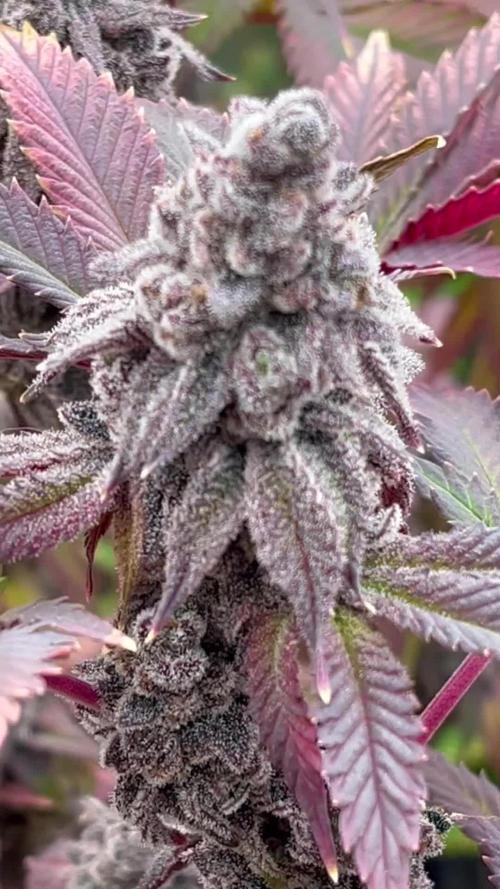
to mutch cold here 2 week with low temps at night cicle betwen 12 &16 graus in europe. maybe this is the reason of that purple orange colors (:
Likes
5
Share
God guys, so mad I am so disappointed. Cookies seedbank -1000 stars. Die brand cost me so much money. Imagine startet with 16 plants now 6/6 lemon cherry pop are ladyboys. 4/6 hollywoods ladyboys the other two know under control but looking already sus. Tie die 1/3 didn’t sprout 1/3 killed today because ladyboy the other one also under control and looking sus. Only last real men fighter is Trump Runtz. It’s so sad grow looked pretty good and know noting left.
Processing
Likes
10
Share
@BodyByVio
Follow
After 21 days in turbo cloner I transplanted 4 Sweet seeds Green Poison into 1 gallon plastic pots filled with Cana coco. Few days later I transplanted another 4 clones into DWC! Stay tuned! Coco feed at 700ppm Dwc feed at 480ppm