


Likes
Comments
Share


@Homegrown93
Follow
This is my best auto flower grow so far. I’m kinda bummed I didn’t let her finish completely, I think she had about another week and a half left. She was just getting too big and barely any light was penetrating the other ladies I had vegging. She still gave me a great harvest and nice looking flowers.



Likes
13
Share


@YOUNGSTERBR
Follow
semana evolutiva, acertando os fatores que faltavam, mantendo o VPD, coloquei a Tela de SCROG para segurar o topo que já tinha ultrapassado a borda do vaso, os demais ramos continuo puxando para a borda, até agora nenhum Pistilo, fechando 4 semanas muito bem, sem estresse e com diferentes intensidades de técnicas em cada Auto, to fazendo meus próprios testes, coloquei as Auto do vaso mais largo para Green House que eu fiz, para posicionar os vasos do Indoor na posição final e adicionar a tela de SCROG, as Auto Outdoor adoraram a casa nova! seguimos..

Likes
7
Share


@Billsbudz1942
Follow
Start to finish 11 weeks, dense, sticky trichombe filled buds. Recommend lollipoping also she didn’t like drying up so changed to daily feeds. Happy growing
Likes
18
Share


Likes
91
Share


@Fire_Farmer
Follow
Week 2 Day 6 Flower
Super happy with this grow so far!
I've been defoliating them every couple or few days up until last night when I removed all the lower growth which didn't make it to the canopy/net and a fair amount more leaves which shaded branches.
Going into week 3 of flower I will continue to defoliate if need be but I don't think I will have to do much we will see if they stretch more growth or slow down and start flower production.
Thanks for looking in everyone
Happy Christmas
Fire Farmer 🔥👨🌾

Processing
Likes
8
Share


@TheFairyBudMother
Follow
Adding in a 65 W Horticulture Lighting Group quantum board has really helped my dessert cheese develop! This plant has nice even growth and thick stems and branches! It’s shorter than the sativas, with fatter leaves.
The ambient humidity has been dry. I used a cool steam vaporizer with some lavender and eucalyptus oils to add some h2o to the air and gas out potential insects. Having the remaining pots in larger containers has helped stabilize the humidity.
Added nematodes day 37


Likes
2
Share


@RoccosForest
Follow
Plants growing slowly, having a problem with mold and I went and got hydrogen peroxide and that seems to control the area of it when sprayed.


Processing
Likes
8
Share


@U2malone
Follow
Still not flowering but she’s gaining height , by the end of next week if no signs of flowering I will accept that she is a photo plant . I am more confident she is a female 🤞🏽. Finding this seed has got me well into it now. Thanks to all you guys , you have given me plenty of info ,have got another two plants started which I will start a journal for soon . Feel like I’m a member of this great community now , one way to keep busy at these trying times . Happy growing everyone 💪🏽👍🏽
Likes
40
Share


@Secretflower
Follow
Hello my friends,
...June 5, 2022..Day N°75..
...Flowering day N°29...
Fifth week of flowering for my 2 Feminized Runtz Gum, 2 Feminized zkittzy Gorilla and 2 Feminized Banana Sherbet. They are fine and they growing healthy. The flowers developing very good.
I gave them water with some Hybrid and Booster powder from Green House Feeding and some Cal-Green from Metrop.
My babys are under a Mars-Hydro SP 3000 at 70% of power and at 40 cm of the canopy.
www.originalsensible.com
www.mars-hydro.com
That's all for now my friends, thx for passing through here.
Wish you the best with your green projects.
See you soon..💨💨💨

Likes
5
Share


@cookingwithninja
Follow
I would like to reveg, for next round or just pop new. I have plans to make an ultimate strain. I want to chop in 7 days but I made some seeds. Xmas try would be nice after 14 day dry. everything is precalculated pushing to finish faster

Likes
42
Share


@Ultraviolet
Follow
Thank you. Gave her a cocktail to help with stress. Added 1st net for lateral support, not so much now, but for later. Blue light is absorbed by photoreceptor proteins called phototropins, which trigger a hormonal response that causes cells on the shaded side to elongate, making the plant bend toward the light. Try and fill this side a little. She is quite big already, just needs to find her stride again after the undue torture.
5 apex stems with 20-30 mini cola, let them develop a little, with the apical dominance shattered, all those 20-30 will all compete with each other as soon as that stretch is initiated. Key to a good stretch is making sure the plant is cycling efficiently, with large ATP conversions occurring lights out.
For now, I'm keeping light intensity high. A plant will slow its vertical growth in very high light intensities, leading to a more compact form with thicker stems and leaves. This response is a protective mechanism against light stress, which can damage the photosynthetic apparatus and lead to symptoms like leaf scorching, yellowing, and brittleness. Instead of growing taller, the plant invests its energy into creating a more robust, stress-tolerant structure.
Providing plants with necessary antioxidants helps protect the photosynthetic apparatus by scavenging reactive oxygen species (ROS) that cause damage from excess light.
UV light exposure can impact the xanthophyll cycle by either enhancing its photoprotective role or causing damage, depending on the intensity and type of UV radiation. UV exposure can trigger the synthesis of more xanthophyll cycle pigments to increase the plant's capacity to dissipate excess energy, but it can also cause direct damage, particularly to Photosystem II, and may lead to a decrease in the de-epoxidation state (DEPS ratio) which indicates a reduced capacity to dissipate excess energy.
Plants can respond to UV stress by increasing the synthesis of xanthophyll cycle pigments, such as violaxanthin and zeaxanthin, to improve their photoprotective capacity. UV-induced changes in xanthophyll cycle pigments can be linked to a plant's overall tolerance to high radiation stress. The xanthophyll cycle helps protect against photoinhibition, which is especially important when the plant is exposed to high levels of both UV and visible light. High doses of UV radiation can directly damage photosynthetic components, including the proteins, lipids, and pigments in the thylakoid membranes. Exposure to UV radiation can have a mixed effect on the de-epoxidation state (DEPS ratio) of the xanthophyll cycle pigments. In some cases, UV can inhibit the conversion of violaxanthin to zeaxanthin, resulting in a lower DEPS ratio and a reduced capacity for energy dissipation. However, the total pool of xanthophyll cycle pigments may increase, and this enhanced pool size could provide a greater potential for photoprotection despite a lower DEPS ratio.
The xanthophyll cycle works alongside other mechanisms, such as the accumulation of flavonoids (UV screens), to protect the plant from UV-induced damage.
Blue light repairs 100% UV-induced damage in plants through a process called photoreactivation, which uses a light-dependent enzyme called photolyase. This enzyme uses energy from blue and UV-A light to directly reverse the damaging pyrimidine dimers in the DNA caused by UV-B radiation, a key mechanism for maintaining the plant's genetic integrity.
After carbon, light, water, temperature, and nutrients, the limiting factor of a plant's growth is often its own internal factors or the amount of a key ingredient. Chlorophyll concentration is one such factor, as the amount of this pigment limits how much light can be captured for photosynthesis. Other factors include chloroplast number, respiration rate, and the concentration of carbon dioxide in the atmosphere, as plants are often in a CO2-deficient condition.
60x60x18=64800seconds x 700 = 45,360,000moles. 45DLI
Exposure to 165 µW/cm² of ultraviolet-B (UV-B) light for 3600 seconds = 1 hour, a extremely high, acute dose triggering stress responses and protective mechanisms.
.
The plant's photoreceptor protein, UVR8, senses the UV-B radiation. This triggers a signaling cascade that activates specific genes to protect the plant from damage. In response to the UV-B signal, the plant ramps up the biosynthesis of protective compounds like flavonoids, phenolic acids, and anthocyanins. These compounds absorb UV radiation and accumulate in the epidermal layers of leaves to shield inner photosynthetic tissues. The plant may increase leaf thickness or deposit more cuticular wax, creating a physical barrier to the radiation. The plant will produce more enzymatic and non-enzymatic antioxidants to neutralize the reactive oxygen species (ROS) produced by the UV-B radiation. The plant activates enzymes, including photolyases, to repair DNA damage caused by the UV-B. These repair mechanisms are critical for preventing permanent genetic mutations.
While protective measures are activated, a high dose delivered over a short period can cause stress that overwhelms the plant's defenses.
Photosynthesis is highly sensitive to UV-B. A high dose can inactivate Photosystem II (PSII), damage thylakoid membranes within the chloroplasts, and reduce chlorophyll content, which lowers the plant's overall photosynthetic capacity. Despite repair mechanisms, high UV-B doses can inflict persistent damage on the plant's DNA. The overproduction of reactive oxygen species can cause oxidative stress, leading to the oxidation of lipids and proteins and disrupting cellular function.
Likes
11
Share

@DevelGrow
Follow
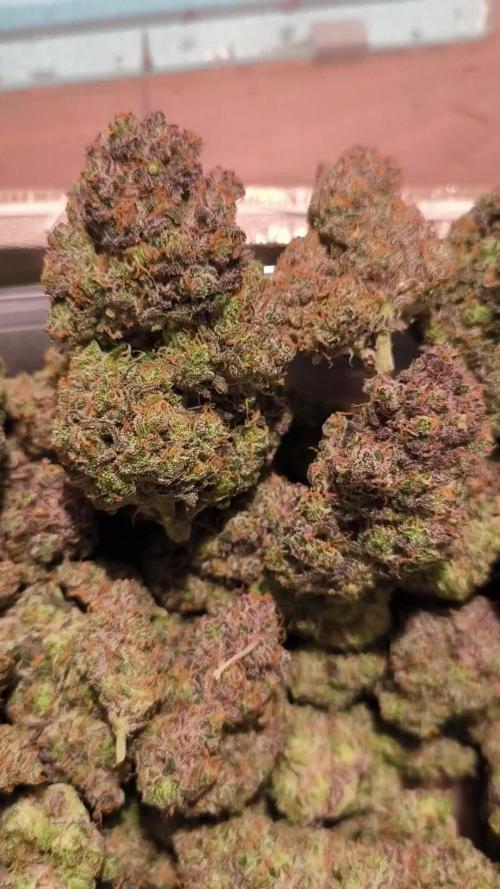
Eine wunderschöne Pflanze dichte harte harzige stinkende Buds! Mischung aus Erdbeere und 💩 😁 mit einem süßen Abgang! Es sind wirklich Monster buds geworden!✌️🍀💚🍀


Likes
40
Share


@valiotoro
Follow
Hello everyone week 8 has passed ☀️
They are very well growing at fast pace and with a beautiful green colour on the leaves🤩a lot of buds everywhere🍋
The weather is perfect this year a lot of sun,not too High temperature and the humidity around 50%😎
Some defoliation just 2-3 leaves max to let the sun penetrate the lower buds✂️
Homemade nutrient 100% bio🍌
I force the plants to flower in my garage 100% lightproof😎
So every morning and every night i remove all the plants from my garage at the same hours 💪
See you next week 🤩

Likes
29
Share

@DogDoctorOfficial
Follow
Week 3 Flower – Sundae Driver
From Seed to Now
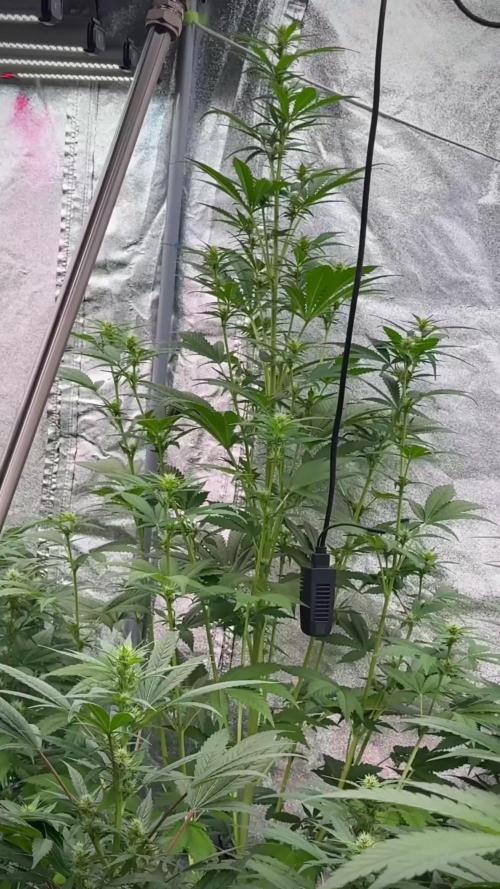
This journey started just five weeks ago from seed. We ran a very short veg, only about two weeks, before flipping to flower. Even with the short veg, these Sundae Driver phenos have been relentless growers: strong branching early on, healthy node spacing, and an impressive stretch once the light cycle changed. In Week 1 of flower, we switched to 11 hours on / 13 hours off to encourage a faster transition, and by Week 2, the girls had already shot past the 111 cm mark. Now, in Week 3, they’re tall, thriving, and showing no signs of slowing down.
The girls are reaching for the sky, tall, elegant, and stretching with no signs of slowing down. Each day they surprise me with just how much vertical growth they’re putting on. I’m curious (and a little nervous!) to see how big they’ll eventually get.
Nutrients & Additives
This week, we introduced a new layer to the feed program by combining Plagron additives with our existing Aptus lineup. Here’s the full mix (all at 1 ml/L):
• Plagron Power Buds – Bud stimulator to support mid-flower.
• Plagron Green Sensation – All-in-one bloom booster with PK, sugars, and micronutrients to push flower development.
• Plagron Sugar Royal – Amino-acid-rich formula to help boost energy and aroma production.
• Aptus Regulator – For plant strength, nutrient efficiency, and stress resistance.
• Aptus CalMag Boost – Maintaining balanced calcium and magnesium levels under high growth rates.
The idea is to test how the Plagron additives perform alongside Aptus products. So far, the results look promising.
Training & Canopy Management
No heavy training, just gentle leaf tucking. Large fan leaves are being bent or tucked under branches so light can reach the bud sites without removing too much foliage. This keeps the plant energy flowing while opening up the canopy naturally.
Environment
• Day Temp: ~26°C
• Humidity: ~67%
• VPD: ~1.10 kPa (not textbook perfect, but the plants are adapting beautifully)
• pH: ~6.5
• Soil Moisture: Letting it dry down to ~19% before watering, sometimes even closer to 9% in hotter moments.
Lighting & Gear
The girls are thriving under the Future of Grow LED fixtures, with the filtered, even spectrum keeping the canopy happy. I’ve also introduced an automated irrigation system in the tents, still testing whether to fully hand over watering duties to the system or keep a hybrid approach with some hand-watering for closer control.
Extras & Comfort
Yes, I had a little fun with the camera this week, a casual photo session in the "studio" (plants only in their natural “outfits”), and a special shout-out to Zamnesia for their incredibly comfortable gear. Think rugby-polo style shirts, perfect for long hours in the grow or behind the camera.
What to Expect Next Week
• Expect: First signs of full flower set, with more defined pistils and the earliest stacking patterns starting to show. You may also see a slowdown in vertical growth as the plants redirect more energy to flower production.
• Not to Expect: Heavy trichome development just yet, it’s still a bit early for full resin production, though sugar leaves may start to sparkle.
• Keep an Eye On: Environmental stability. With humidity in the upper 60s, watch for microclimate pockets that could encourage mold once flowers start stacking.
Closing Reflection
From seed to now, this run has been a fast, exciting climb. A short veg, an early flip, and now a careful mix of trusted Aptus products with new Plagron additives, it’s been an experiment in precision and adaptability. The girls are loving their environment, thriving under Future of Grow LEDs, and pushing toward their full flowering potential. The next few weeks will tell just how much they can deliver, but one thing’s for sure: the journey so far has been beautiful.
🔗 Gear links available on request
💬 Always here to talk flower, stretch, or any topic regarding gardening
📲 Don’t forget to Subscribe and follow me on Instagram and YouTube @DogDoctorOfficial for exclusive content, real-time updates, and behind-the-scenes magic. We’ve got so much more coming, including transplanting and all the amazing techniques that go along with it. You won’t want to miss it.
• GrowDiaries Journal: https://growdiaries.com/grower/dogdoctorofficial
• Instagram: https://www.instagram.com/dogdoctorofficial/
• YouTube: https://www.youtube.com/@dogdoctorofficial
⸻
Explore the Gear that Powers My Grow
If you’re curious about the tech I’m using, check out these links:
• Genetics, gear, nutrients, and more – Zamnesia: https://www.zamnesia.com/
• Environmental control & automation – TrolMaster: https://www.trolmaster.eu/
• Advanced LED lighting – Future of Grow: https://www.futureofgrow.com/
• Root and growth nutrition – Aptus Holland: https://aptus-holland.com/
• Nutrient systems & boosters – Plagron: https://plagron.com/en/
• Soil & substrate excellence – PRO-MIX BX: https://www.pthorticulture.com/en-us/products/pro-mix-bx-mycorrhizae
• Curing and storage – Grove Bags: https://grovebags.com/
⸻
We’ve got much more coming as we move through the grow cycles. Trust me, you won’t want to miss the next steps, let’s push the boundaries of indoor horticulture together!
As always, this is shared for educational purposes, aiming to spread understanding and appreciation for this plant. Let’s celebrate it responsibly and continue to learn and grow together.
With true love comes happiness. Always believe in yourself, and always do things expecting nothing and with an open heart. Be a giver, and the universe will give back in ways you could never imagine.
💚 Growers love to all 💚
Likes
14
Share


@ConspiracyFly
Follow
Gorilla glue auto:
It keeps growing and forming buds... 50 centimeters
This week I put in a dehumidifier to see if the humidity goes down... 70% humidity
I increased the dimmer to 80% with the distance of 40 centimeters
Gorilla glue#4 photoperiod:
In the 5th week of gorilla glue 4 I did the first topping on the plant...


Processing
Likes
10
Share


@BodyByVio
Follow
This week I top all 8 Green Poison ( 4dwc and 4 coco ) clones. They look healthy and happy and few days later I already start to low stress training (LST) them.
